
Serval is a domestic wild cat.
Domestic servals are prized for their distinctive wildcat appearance, which they are. Recently, breeders discovered that this species is easily tamed and is playful and good-natured when handled with care. Exotic pet lovers quickly took note and began to acquire this beautiful exotic animal.
Content
Breed characteristics
The serval is an exotic and rather expensive pet with a cheetah-like exterior and a fairly independent, freedom-loving character.
|
Original title |
Serval |
|
Country of origin |
Africa |
|
Weight |
8-18 kg |
|
Height (at withers) |
40-65 cm |
|
Life expectancy |
11-15 years old |
|
Kitten price (with pedigree) |
50,000 – 1,200,000 rubles |
|
Kitten price (without pedigree) |
from 30,000 rubles |
To understand what to expect from an exotic Serval, we suggest you read a brief description of the breed, compiled from reviews by breeders:
|
Parameter |
Level |
Points |
|
Size |
|
5 out of 5 |
|
Intelligence |
|
4 out of 5 |
|
Playfulness |
|
4 out of 5 |
|
Health |
|
3 out of 5 |
|
Picky eating habits |
|
2 out of 5 |
|
Activity |
|
5 out of 5 |
|
Friendliness |
|
2 out of 5 |
|
The need for communication |
|
3 out of 5 |
|
Molting |
|
3 out of 5 |
|
Attitude towards children |
|
2 out of 5 |
|
Attitude towards strangers |
|
2 out of 5 |
|
Cost of maintenance |
|
4 out of 5 |




Appearance
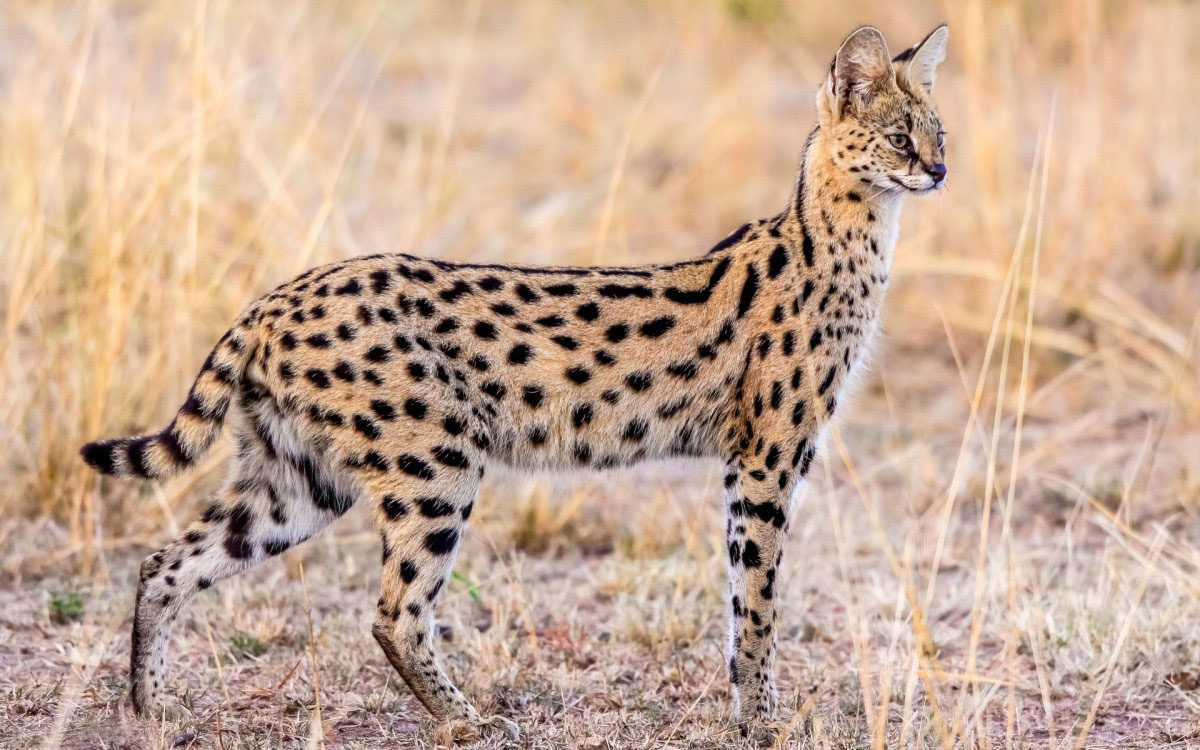
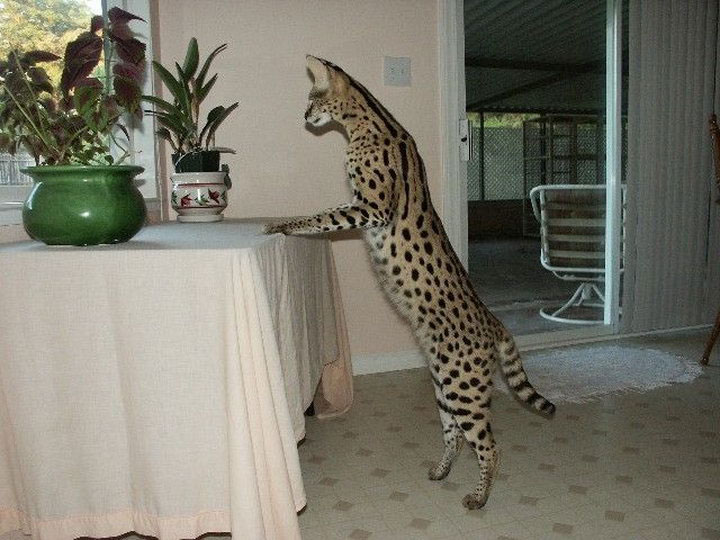
ServalThe bush cat, also known as the African bush cat, is distinguished by the pride and grace of an African predator. Its size is small compared to other African cats and downright gigantic when compared to a common domestic cat. These spotted cats weigh between 8 and 18 kg. Their height ranges from 40 to 65 cm, and their body length can reach 130 cm.
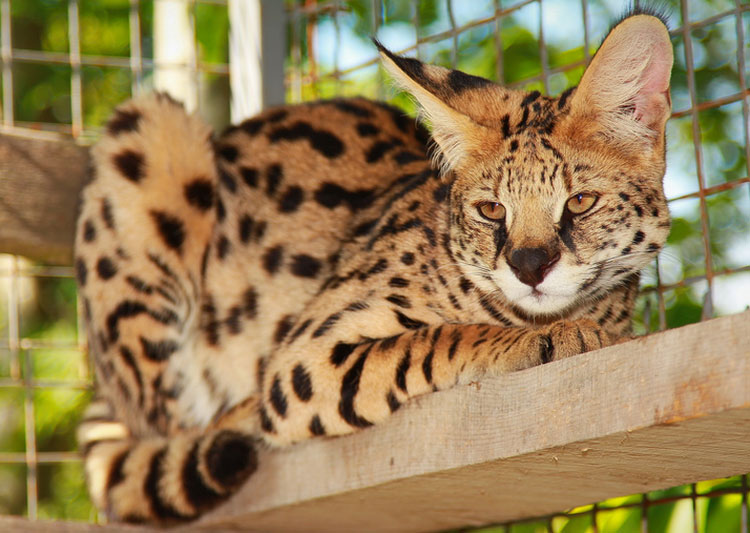
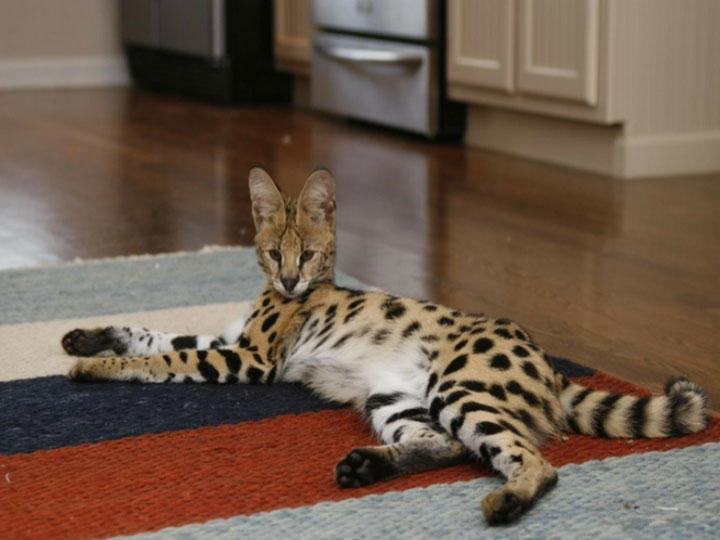
The head is relatively small, the muzzle is not elongated, but the ears are quite large, set high, and well-furred inside. The bridge of the nose and nose are wide. The eyes are almond-shaped and large.
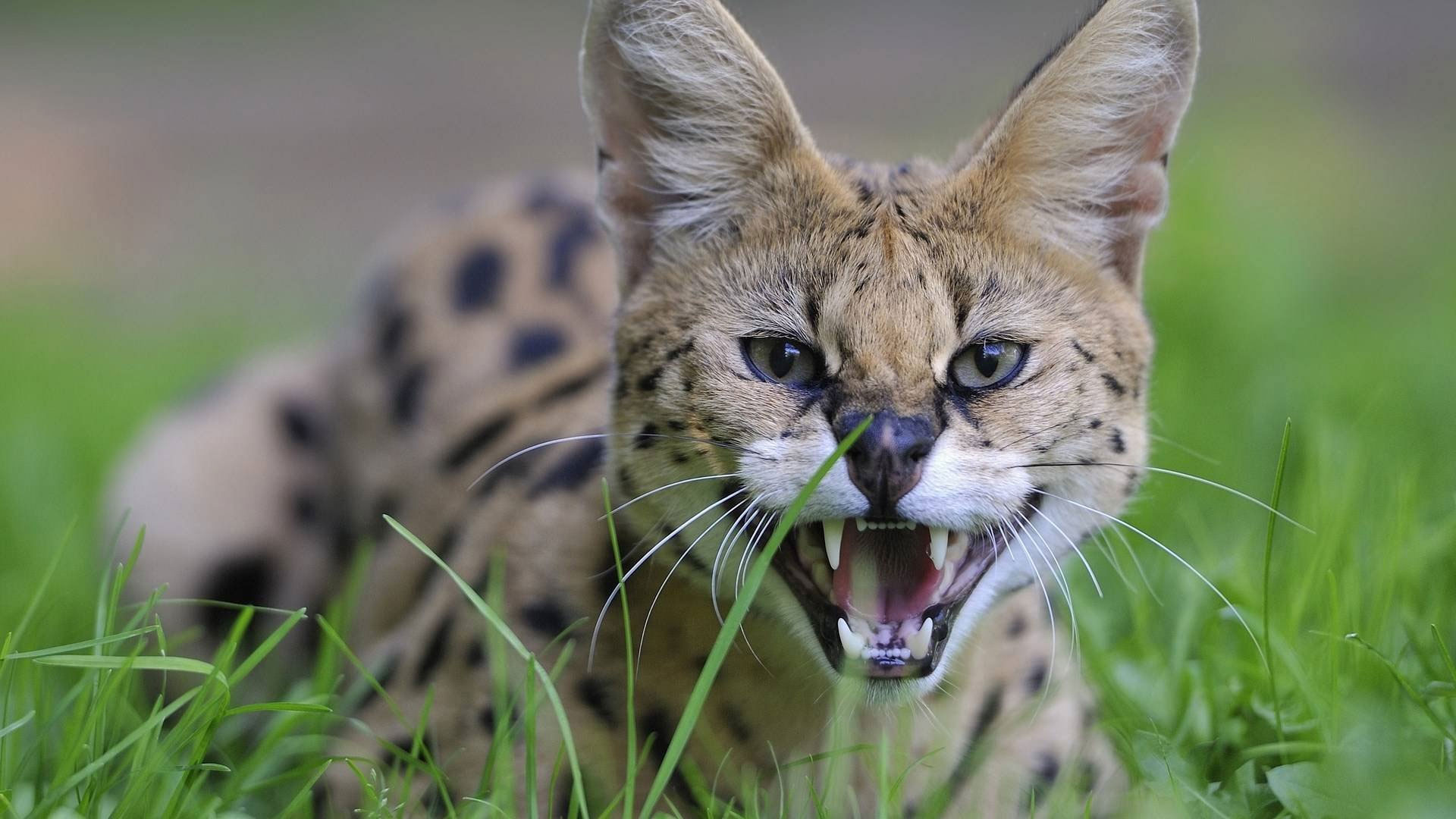
Servals are true top models in the feline world. They have the longest limbs relative to their bodies, with their hind legs slightly longer than their front legs.
The coat is short, dense, and shiny. The base color is golden brown. Lighter, almost white, patches are visible on the chest, belly, and face, and the cat's main feature is the contrasting black spots arranged in stripes. Coloration may vary slightly depending on its geographic origin. Servals from steppe regions have large spots and a light background, while wildcats are darker.
Serval hybrids
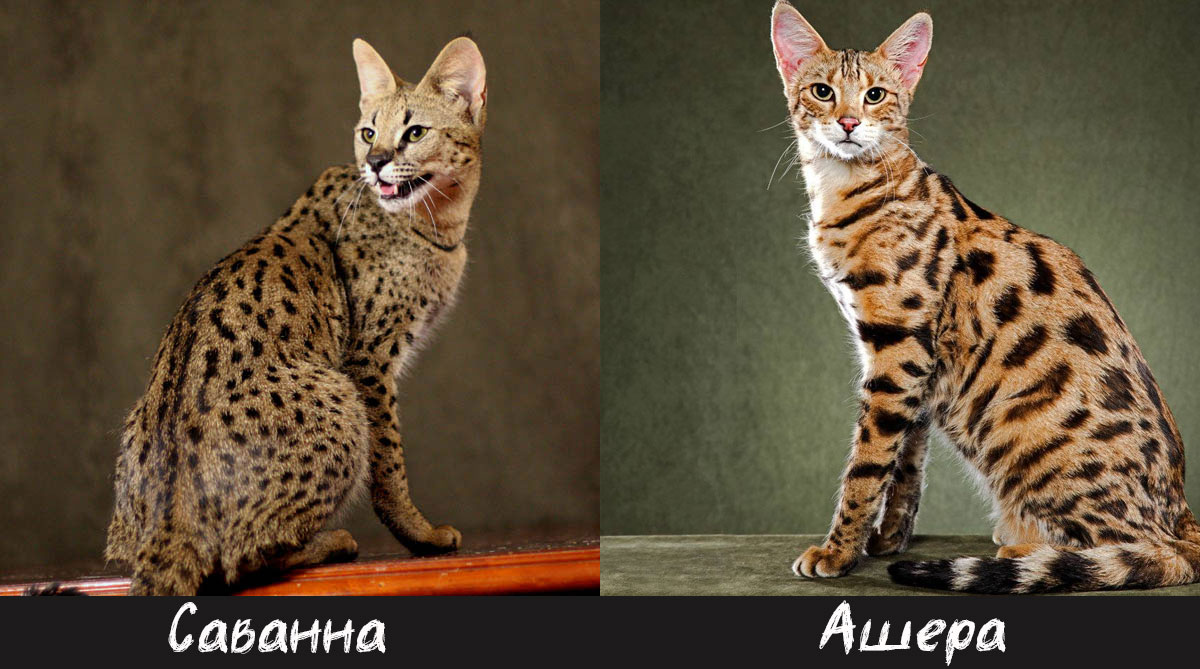
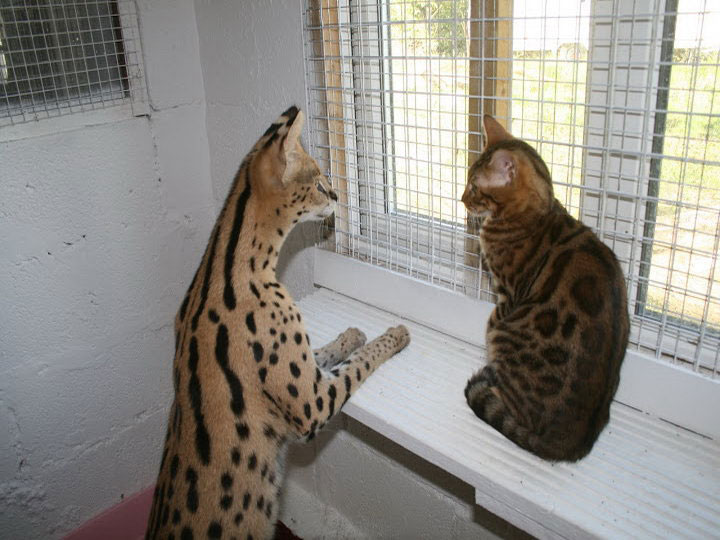
In captivity, servals sometimes mate with common domestic cats. A new breed, called SavannahThere was also information about the emergence of a hypoallergenic breed with a beautiful name. AsherahThey later turned out to be the same shrouds, the price of which the scammers had greatly inflated.
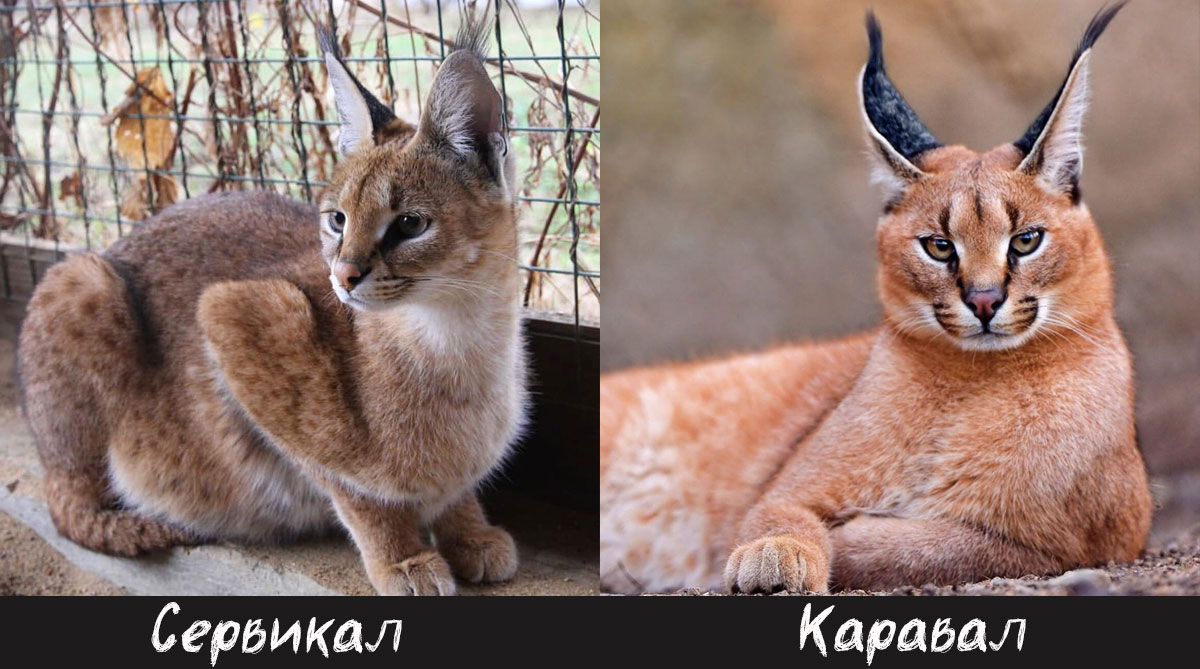
In addition, matings between bush cats and steppe lynxes and caracals often prove quite successful, resulting in so-called Servicals or Caravals.
Servals in the wild
Servals are found throughout almost all of Africa, with the exception of the southern part of the continent. There are 14 subspecies, some of which are endangered.
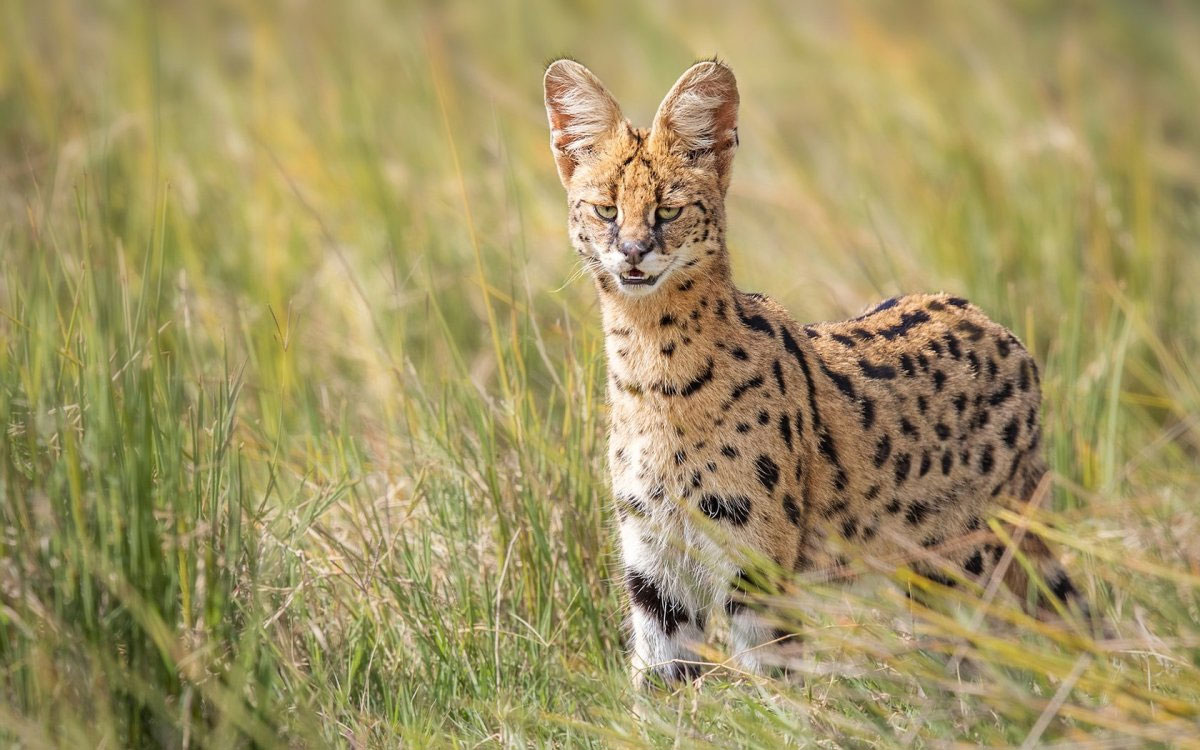
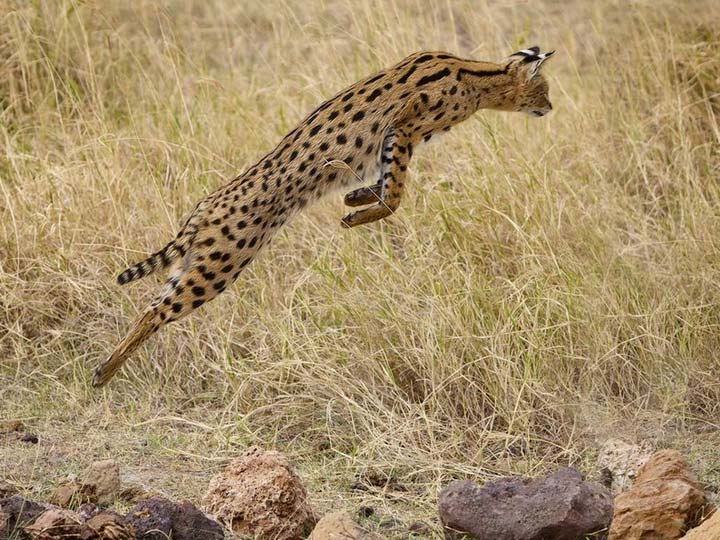
In the wild, servals inhabit shrubs and grassy areas near water. They are active primarily at dusk and dawn. Thanks to their long limbs and well-developed hearing, servals move carefully through tall grass, scanning the air for prey. Their hunting tactics are similar to those of caracalThe serval dislikes pursuits, preferring ambushes and long leaps. From a standing start, it can leap 3 meters high and up to 5 meters long. Servals often have to dig rodents out of their burrows. They climb tree branches to chase arboreal animals and are good swimmers.
Servals lead a solitary life and try to avoid any kind of conflict.
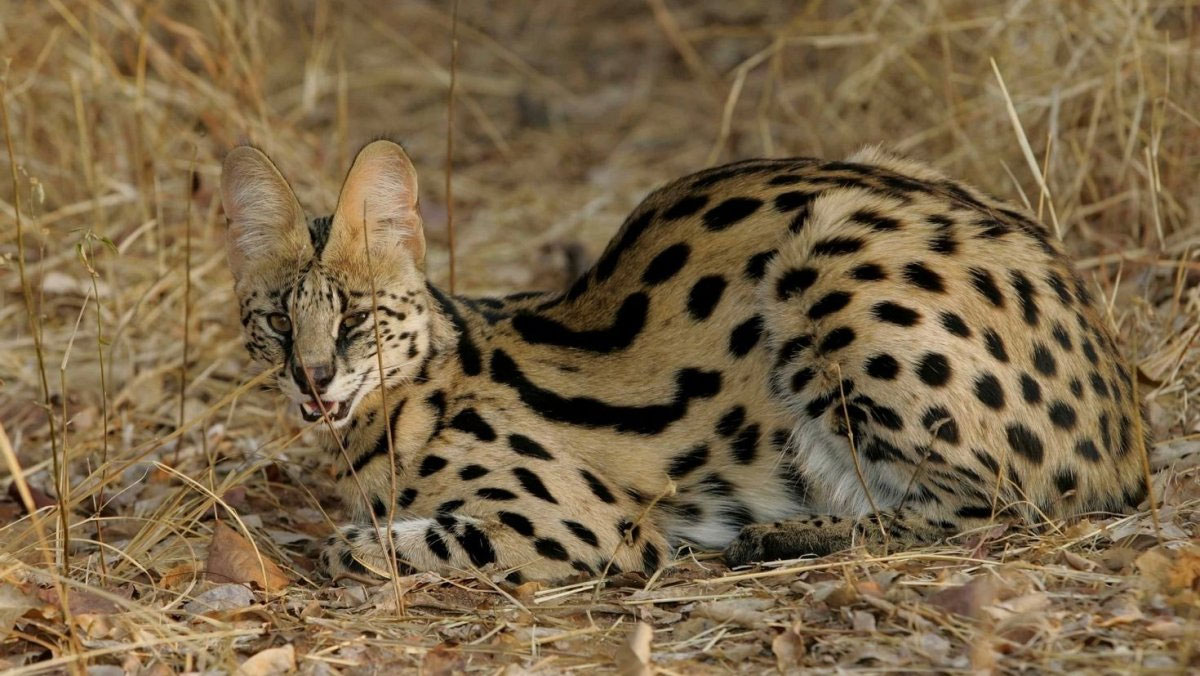
They reproduce throughout the year. During courtship, both the female and male rest for a few days and hunt together. Gestation lasts 65-75 days. A litter typically consists of two or three kittens. The mother nurses them for up to five months, and at around a year old, they begin to fledge.
Breed description: character, intelligence and habits
Domestic servals raised in captivity are surprisingly friendly and affectionate animals that pose virtually no danger to humans. However, they are strongly discouraged for families with small children who have not yet learned to respect animals.
Servals are generally sociable, playful, and intelligent. They are very affectionate and gentle with all family members. They prefer to sleep in a bed and are rarely aggressive toward strangers. Only if they have not previously interacted with other people may they avoid contact. It can even be said that there is a certain timidity and shyness in the serval's personality. These cats need to feel protected and know that there is a safe place nearby.
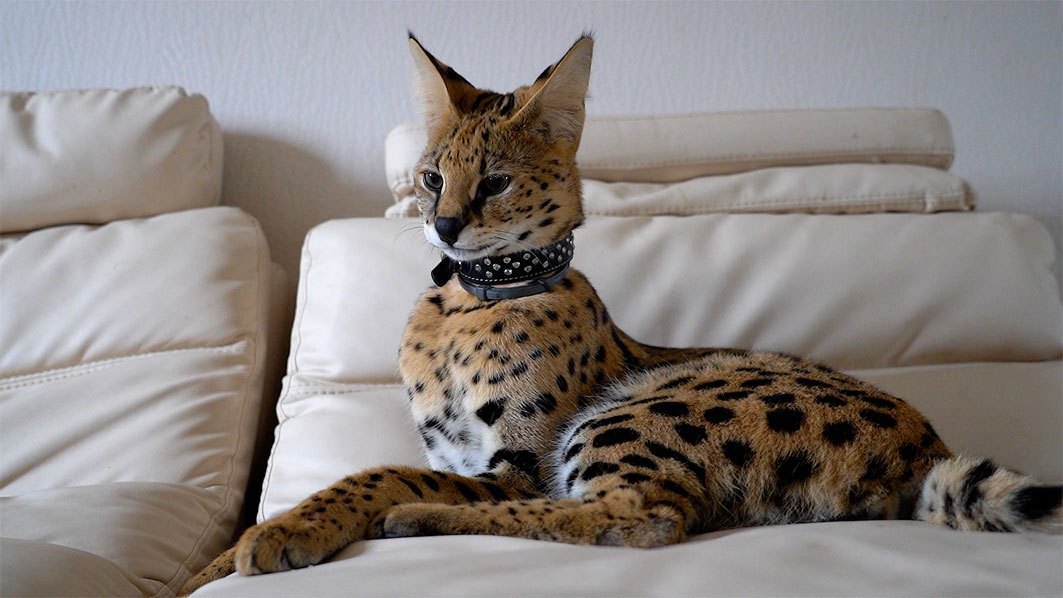
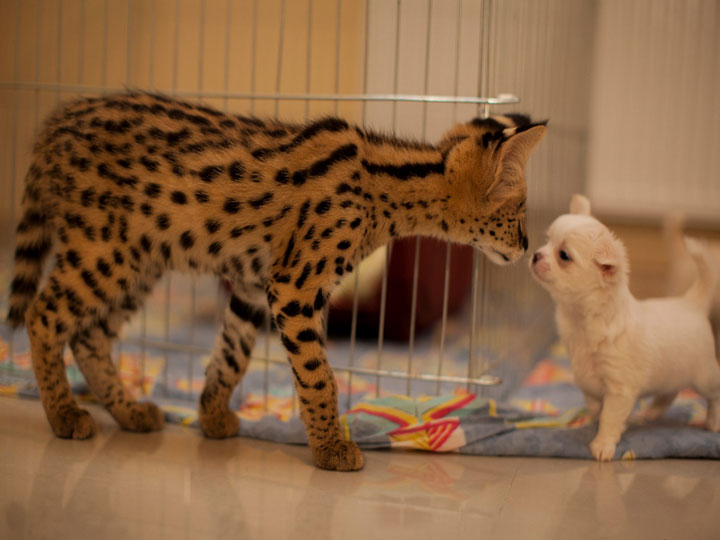
Servals are naturally curious, eager to learn new games and explore previously unfamiliar territories. They generally get along well with other cats. Cohabitation with dogs depends on the dog's personality. A serval will be happy to make friends and play together, as long as they are not aggressive. Rodents, birds, and ferrets remain potential prey for the cat, so avoid tempting them, much less scolding them for their usual hunting instincts.
Servals are highly intelligent and quickly learn house rules. They are also easy to train and can learn several commands. They differ from the average cat in their size and quick reaction time, and they also love water.
Keeping a serval at home
Can you keep a serval at home? It's recommended to keep them in a private home with an attached run and easy access from a separate cat room. It's important that the animal always has a place to hide or simply retreat to rest. Servals are sometimes kept in apartments, but this isn't the best option. Servals need plenty of exercise to maintain good physical condition and health.
Servals do not require special care, they do not have a specific smell and are very clean.
Until recently, they weren't even aware of the possibility of professional grooming, so they've become accustomed to maintaining their own hygiene. However, to maintain a neat appearance during the seasonal shedding period, many owners brush their cats using natural bristle brushes or special mittens. Caracals can be offered baths as a treat, but they don't need to be washed with professional shampoos or conditioners. Servals use a litter box filled with litter, which differs from a cat's litter box only in size.
It's also worth noting that servals begin to actively mark their territory upon reaching sexual maturity. Therefore, castration/neutering is recommended for animals not intended for breeding.
Video about keeping a serval at home:
Peculiarities of education
Raising a serval requires a lot of patience, and it's important to take into account a number of specific features and not ignore the advice of breeders.
Serval kittens love to chew, much like puppies. Lots of toys will help distract the kitten from valuables. It's recommended to spray electrical wires and appliances with special cat anti-gnaw sprays, available at regular pet stores. Never yell or hit the cat, as it may be unforgiving. A clear "no!" command, reinforced by a spray of water, will be more effective. Avoid playing with your kitten's hands or feet; as they grow older, they will view these as toys and may scratch, bite, or ambush you.
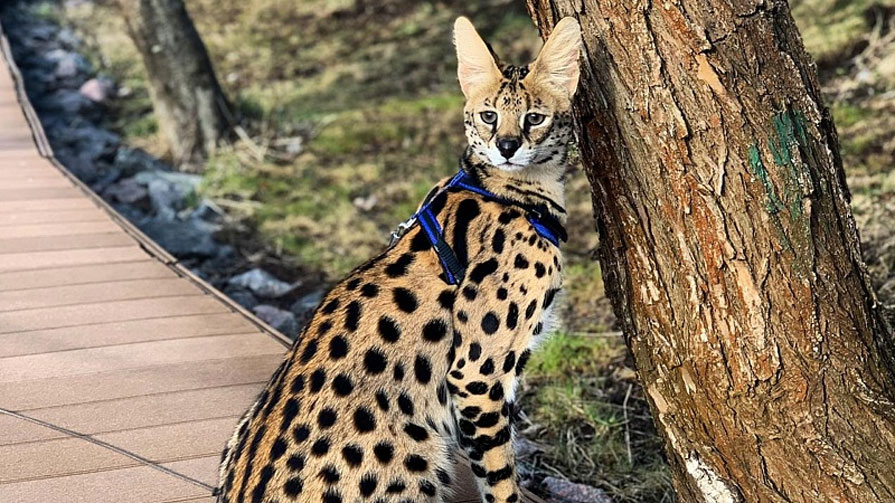
Leash training should be started as early as possible. A kitten should feel absolutely safe outside with its owner; this is the key to success.
What to feed a serval
A serval's diet should be such that it doesn't even begin to yearn for the African savannah. In the wild, rodents and birds make up the bulk of its diet. Snakes, lizards, and insects make up a smaller portion. Naturally, you won't have to hunt grasshoppers for your cat; a proper menu of meat (beef, veal), mice, rats, and poultry is sufficient. As a compliment from the chef, quail eggs and offal can be offered. Vitamin and mineral supplements are essential. Water should always be freely available.
Health
Servals generally have robust health and a strong immune system. With proper care and nutrition, they rarely get sick. However, before getting this unusual pet, it's worth making sure there's a veterinarian nearby who can provide qualified care. Servals are vaccinated with standard cat vaccines. Servals have a lifespan of 13-15 years, with some individuals reaching 20 years.
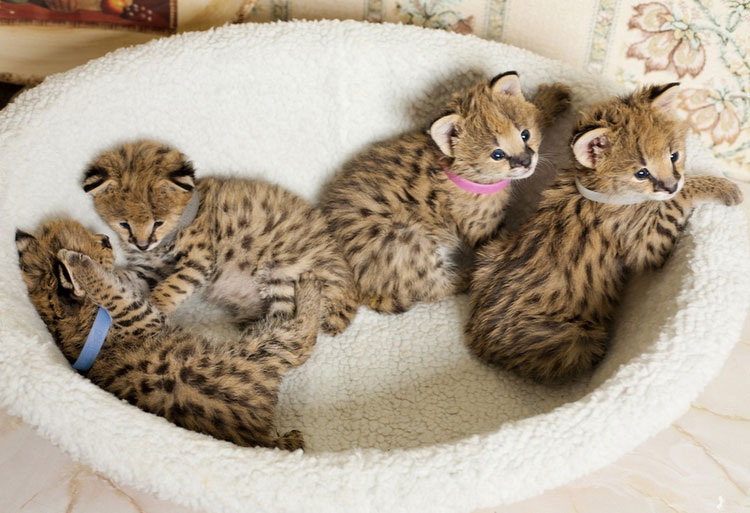
Choosing a Serval Kitten and Price
The optimal age for a kitten to move to a new family is 2-3 months. During this period, the kitten begins to get used to smells and routines. It chooses a "favorite" person and begins to become a full-fledged member of the family. At this age, active training, including getting used to walks, and other activities, begins. Older servals will have a harder time adapting to a new home.
It's crucial to buy exotic animals from breeders, not resellers. The pet and its parents should have a full set of documents confirming its origin and health. But more importantly, it should be socialized with people from an early age.
If the animal was caught in the wild or raised in a closed enclosure, this can lead to significant behavioral and training problems later on.
The cost of servals depends on many factors. Breeders set their own prices, based on the average market price for a serval in the country, which in Russia is 400,000 rubles. In some catteries, kittens can cost $8,500 or more. In other CIS countries, the price of a serval is usually slightly lower – $7,000-$7,500. Kittens for breeding are always more expensive than those sold as pets for spaying/neutering. The key when buying an exotic animal is to avoid scams.
Photos
Photos and pictures of kittens and adult domestic servals:
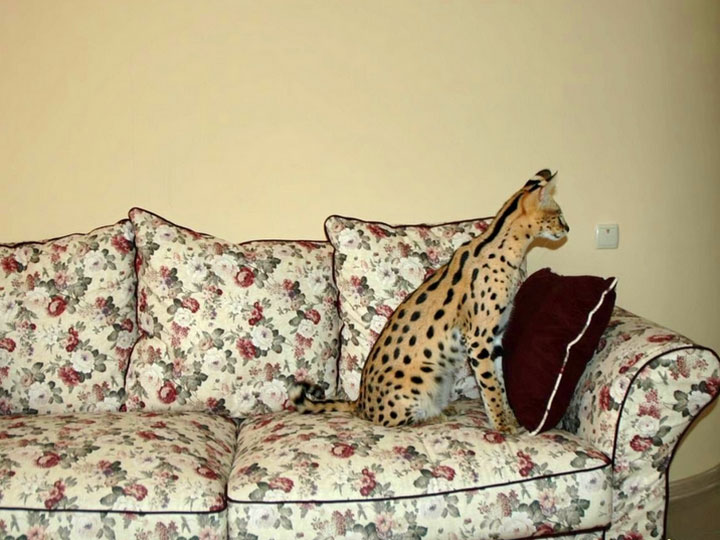
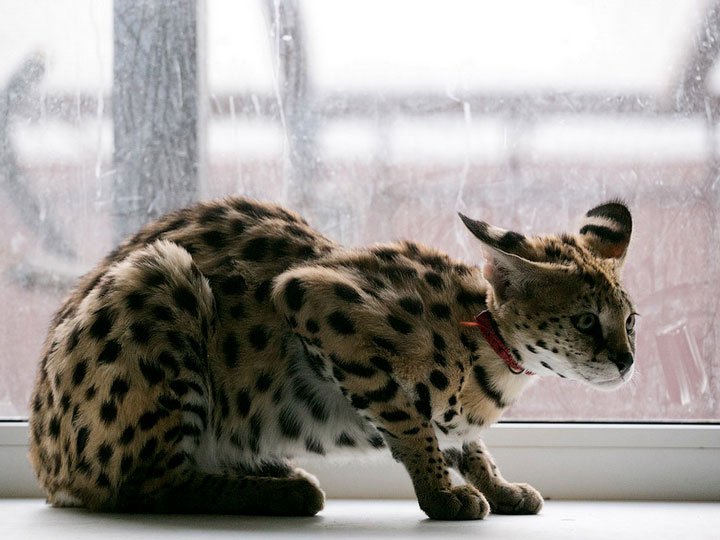
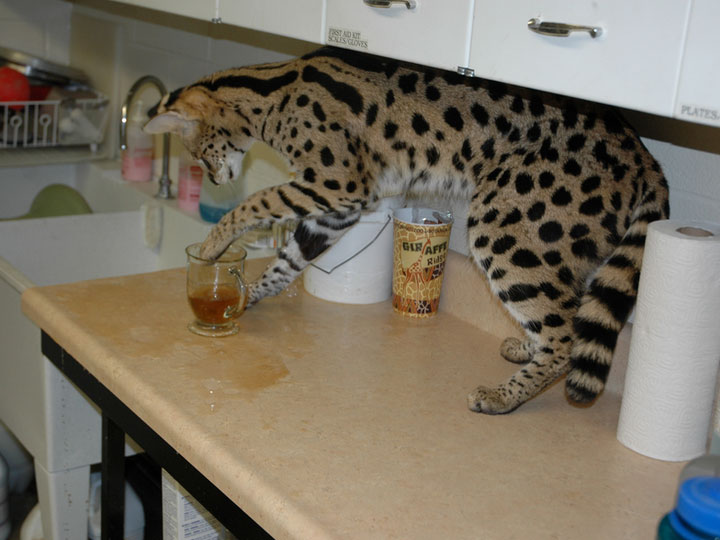
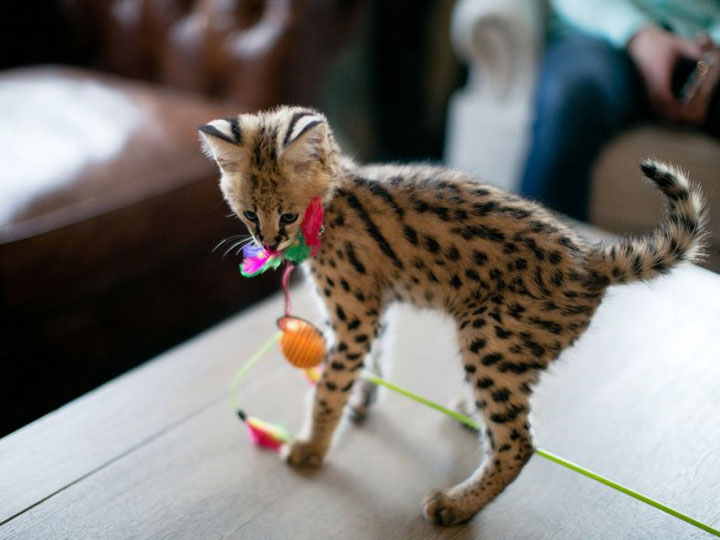
Video about the Sevral breed
Read also:
- Serengeti (a domestic cat with a "wild" coloring)
- Jungle cat (house, swamp cat)
- Wild Cats: Breeds with Photos and Names


Add a comment