
Saint Bernard (dog breed)
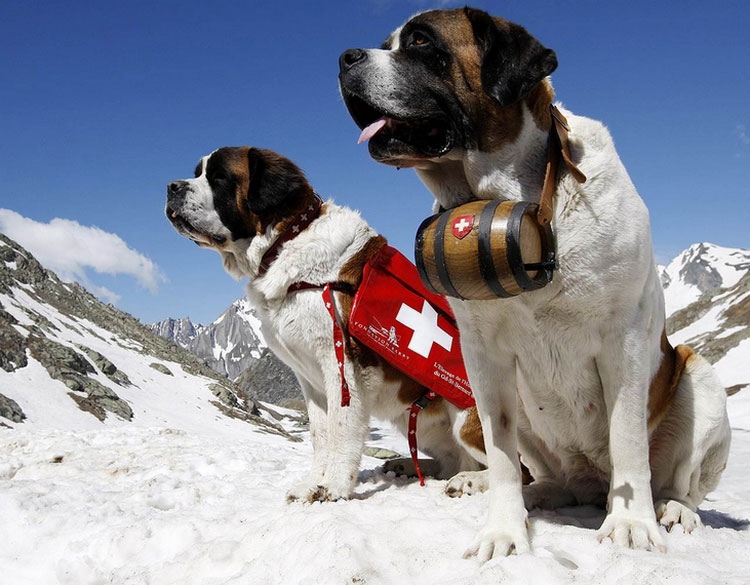
Is there anyone who hasn't heard or read about the Saint Bernard dog? These large rescuers, wine barrels slung around their necks, search for people trapped in avalanches. The breed's popularity peaked in the late 1990s and early 2000s after the release of the film "Beethoven." Since then, its popularity has waned. Today, Saint Bernards are becoming increasingly rare to encounter, even at dog shows. People mostly keep small dogs for apartments, while private homes require guard dogs that are wary of strangers and fierce, which Saint Bernards are not.
Content
History of origin
St. Bernards most likely descended from Asian Molossian dogs brought by Roman legions into Helvetia (modern-day Switzerland) and local dogs. In the eleventh century, monks led by Archdeacon Bernard de Menthon established a shelter for pilgrims and travelers at the Great Saint Bernard Pass. Around the 12th century, due to numerous deaths in snow and avalanches, they decided to use dogs that had previously served as monastery guards for search and rescue.
Numerous written accounts of rescues, as well as oral stories and tales from French soldiers who crossed the pass in the 19th century, spread throughout the region, making bicolor rescue dogs incredibly popular. People from all over Europe flocked to Switzerland to find them. Local residents, capitalizing on this excitement, sold all bicolor dogs, regardless of their origin, as rescue dogs.
A legendary representative of the breed is Barry the dog. During his 12 years of service, he saved approximately 40 people. His most famous case was the rescue of a boy, whom the dog carried 5 km through deep snow to a monastery. For several decades after his death, in some areas of Switzerland, all rescue dogs were called "Barry dogs."
In the early and mid-19th century, many monks' dogs couldn't withstand the cold winters and died from diseases resulting from inbreeding. The monks decided to introduce new bloodlines into the breed, specifically NewfoundlandThis crossbreeding resulted in the first long-haired St. Bernards. The monks continued to keep the short-haired dogs for themselves, while the long-haired ones were given away or sold.
St. Bernards have been known by various names around the world: in England, they were known as "sacred dogs," and in Germany, as "Alpine dogs of St. Bernard." The writer Daniel Wilson first called them "St. Bernards." This name was officially adopted in 1880. Since 1884, the "Swiss Stud Book" has been maintained, with a St. Bernard named Leon listed as the first entry. The next 28 entries were also dedicated to St. Bernards. That same year, the first Swiss Club for Breed Lovers was founded, and two years later, the International Cynological Congress recognized the breed and published its standard. Since then, the St. Bernard has officially become the national breed of Switzerland.
Video about the St. Bernard dog breed:
St. Bernards in literature and cinema
St. Bernards have become the heroes of many literary works and films. This is all thanks to their excellent trainability, reputation as top rescue dogs, good-natured nature, and attractive appearance.
St. Bernard in literature:
- Cujo is the main character in the novel Cujo by Stephen King.
- Lel is a St. Bernard in the Strugatsky brothers’ story “The Hotel at the Dead Mountaineer”;
- Boatswain is a St. Bernard dog belonging to one of the main characters in Astrid Lindgren's story "On the Island of Saltkrok."
- Buck (a St. Bernard-collie crossbreed) is the main character in Jack London's novella The Call of the Wild.
St. Bernards in film:
- Beethoven is the main character in the film "Beethoven" (a total of 8 films were made from 1992 to 2014).
- Felix is the main character in the film "Felix - The Family's Best Friend" (1997).
- Jack London's "The Call of the Wild" has been adapted into at least eight films.
- Bagheera is the heroine of the film "Where are you, Bagheera?" (USSR, 1977).
- Fik is a St. Bernard puppy in the Czechoslovakian animated series "Maxipyos Fik".
- Cujo is a film adaptation of the novel of the same name.
Appearance
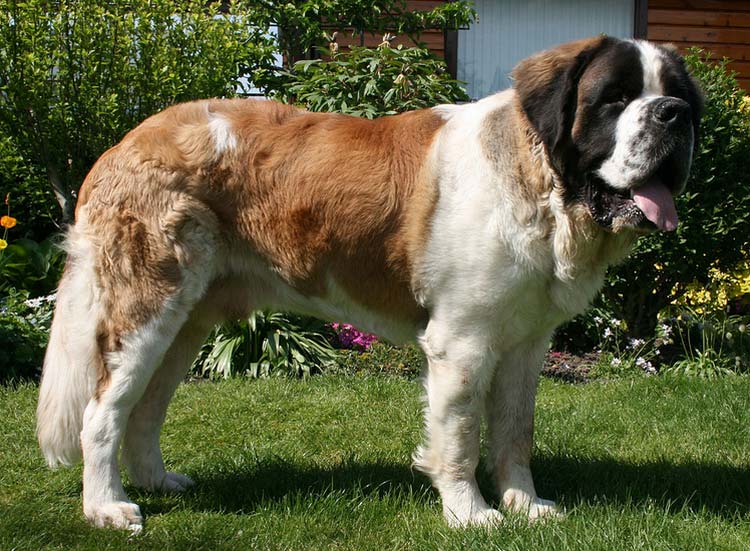
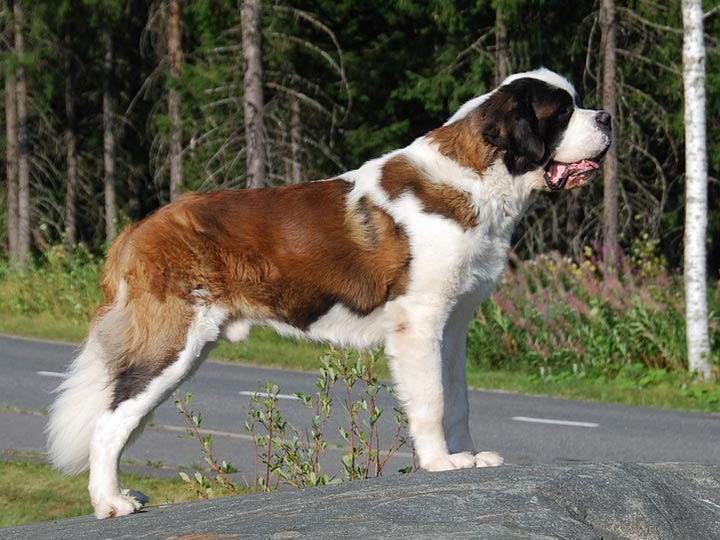
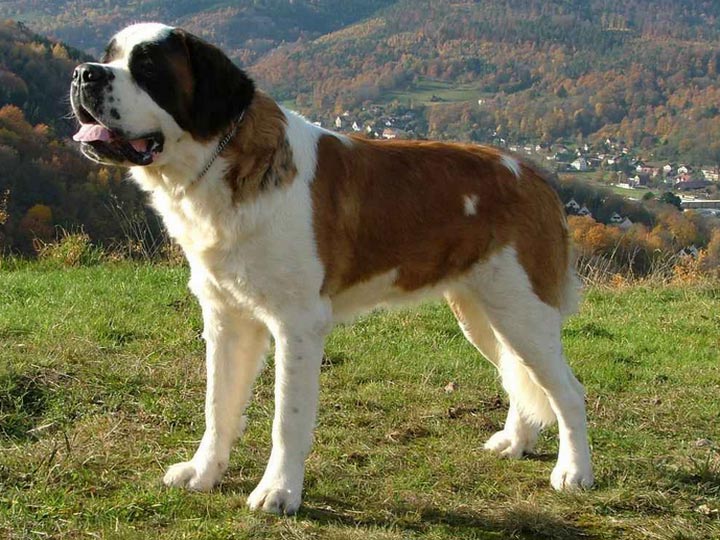
The St. Bernard is a large, massive dog with a strong, compact build and a distinctive bicolor coat. The height at the withers for males is 68-70 cm, and for females, 65-68 cm. The modern standard distinguishes two varieties: short-haired and long-haired. Dogs of the two types are similar in everything except the length of the topcoat.
Important proportions of the constitution:
- The height to length ratio of the body is 9:10;
- The total length of the head is slightly more than 1/3 of the height;
- The length of the muzzle is slightly more than 1/3 of the length of the head.
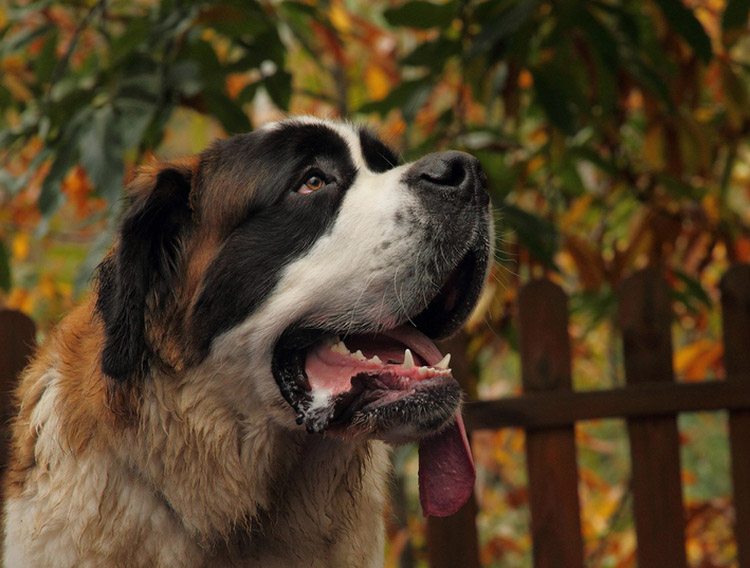
The skull is strong and broad. The forehead blends steeply into the muzzle. The superciliary arches are well developed, and the furrow between the eyes is well defined. The skin on the forehead forms small folds. Overall, the head is massive and expressive. The muzzle is uniformly broad with a straight nasal bridge, which has a small groove. The flews are well developed, elastic, and drooping. The corner of the mouth is always noticeable. The jaws are massive and equal in length. The bite is pincer- or scissor-shaped. The nose is angular, with wide-open nostrils, and is black. The eyes are medium-sized, dark brown, and set moderately deep. The ears are medium-sized, set high, and shaped like a triangle with a rounded apex. The front edge lies close to the cheekbones.
The neck is fairly long and strong, with a moderately developed dewlap. The body is strong, well-balanced, and muscular. The withers are prominent. The back is straight. The croup is slightly sloping and falls harmoniously to the base of the tail. The tail is strong and heavy. When at rest, it hangs down. The underline is slightly tucked up. The chest is moderately deep and barrel-shaped. The limbs are straight and parallel.
The coat is bicolor. The base color is white with scattered red or brown spots. A dark mask and slight darkening of the spots on the body are permitted. The coat is double:
- The shorthaired variety has a thick, short guard hair that lies close to the body. The undercoat is abundant. The hair on the tail and thighs is slightly longer. The standard for the shorthaired variety was adopted in 1959.
- The longhaired type has a straight, long topcoat. The undercoat is abundant. The muzzle and ears are short, and the haunches and croup may be slightly wavy. Feathering is clearly visible on the front and hind legs, and also covers the tail abundantly.
Character
Saint Bernards have a phlegmatic temperament. They treat their owners well, demonstrating devotion and respect, as well as all family members. They readily interact with other animals in the household and try to avoid conflict with them. They prefer to interact with large, tall dogs and may treat smaller breeds with slight disdain. Saint Bernards do not strive to dominate, are not capricious or cunning, remember kindness, and are incapable of betrayal. They are not aggressive or stubborn. In most cases, defending their territory is limited to barking and a defensive posture.
Saint Bernards have a kind and helpful nature. They aren't born to be children's friends, but any dog, with the right training, can learn to properly interact with a child. In winter, sledding with a Saint Bernard harnessed to it will be a joy for both your children and your pet. These dogs consider their primary duty to be helpful.
Purpose
These dogs are easy to train and raise. Saint Bernards have proven themselves to be excellent rescuers, companions, and service dogs. Rescue Saint Bernards are popular on ski slopes, used to search for trapped climbers and skiers. In addition to their keen sense of smell and ability to navigate, Saint Bernards have unrivaled intuition, which alerts them to an impending avalanche.
Training and education
The first steps in training a St. Bernard should begin when the dog is still young. Animals quickly become bored with training, but their love for their owner and desire to please compel them to obey new commands. St. Bernards successfully undergo general training, but this breed is not intended for closed-type training.
The sooner a St. Bernard is socialized, the better. If you delay teaching them good manners, the dog may become intimidating. And who likes a 200-pound animal rushing at you, even if its intentions are friendly? A well-trained St. Bernard, for its kindness and gentleness, will earn the love and adoration of everyone around it.
There's a belief that St. Bernards don't need training because their rescue instinct is innate. This isn't actually true. While the instinct is there, it's used as a foundation for their work.
By nature, a St. Bernard strives to please its owner and becomes very upset if it sees dissatisfaction. Therefore, when training, try not to use the "stick"; stick to the carrot. Your calm, kind, and consistent attitude are all your dog needs to obey. If you let your St. Bernard know that training can be fun and that you'll appreciate it, it will be more eager to learn. As a result, training will be easier and more relaxed.
Features of care and maintenance
Their large size makes them difficult to keep in an apartment. A private home with a spacious yard and the opportunity for long walks is ideal. Even short-haired dogs are not afraid of snow and frost. Saint Bernards readily accompany their owners on all journeys and obey them unquestioningly.
A Saint Bernard needs only to be brushed a couple of times a week. During the shedding season, daily grooming with special brushes is required. To ensure the puppy doesn't resent brushing, it's important to accustom it to the process from puppyhood. Their skin is oily and water-resistant. Therefore, it's not recommended to bathe Saint Bernards too frequently, as this strips them of their natural protection. All St. Bernards, without exception, are characterized by increased salivation. Leisurely walks in the forest are ideal for maintaining good physical condition for St. Bernards. Regular walks can also help prevent various musculoskeletal problems.
Diet
A Saint Bernard doesn't need to be fed by the bucketful. A healthy adult dog's stomach holds no more than two liters. Their diet should be highly nutritious: meat-based diets or good dry food. A natural diet includes cereals, meat and fish dishes, and vegetables. It's important to follow portion control and avoid overfeeding dogs, as they are prone to obesity and digestive problems. If you don't know how to prepare dog food or don't want to, consider dry food. It's best to look for premium-grade foods and diets for large and giant breeds. Feeding amounts are calculated by weight. For example, a dog weighing 80-90 kg should eat less than 1 kg of dry food per day.
Particular attention should be paid to nutrition during the puppy's period of active growth, when the musculoskeletal system and its own immunity are intensively developing.
Feeding standards:
- Young St. Bernard puppies are fed six times a day. At this age, puppies need cottage cheese and milk. Later, it's best to replace these with fermented milk products.
- Three-month-old puppies are fed 4 times a day.
- Once dogs reach 5 months of age, they are transferred to three meals a day.
- A St. Bernard that has reached the age of 7 months is transferred to adult food, twice a day.
Health and life expectancy
Like many other large and giant dog breeds, St. Bernards are not known for their robust health, especially in terms of their musculoskeletal and cardiovascular systems. Life expectancy rarely exceeds 11-12 years, with an average lifespan of 8 years. Furthermore, St. Bernards are often prone to inflammatory eye diseases and are prone to entropion. Representatives of the breed are predisposed to dermatitis and bloat.
Choosing and pricing a St. Bernard puppy
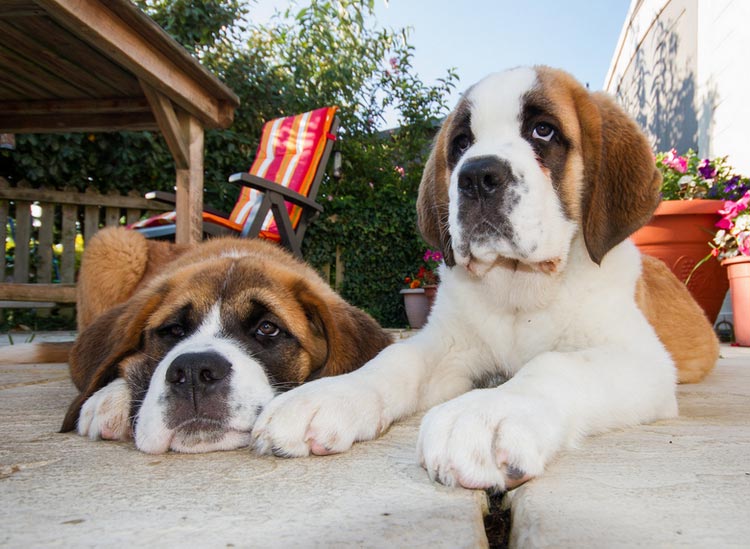
Why do puppy prices vary so much? Is it worth paying extra for paperwork, and what should you look for when choosing a good puppy? These are the questions most often asked by potential buyers.
Don't jump at the first puppy you find in an online ad. It's crucial to spend some time researching breeders and representatives of the breed. They all vary greatly in build, coat, and color. Only an experienced breeder can tell whether the puppies will grow up long-haired or short-haired. Dogs can be more calm or more active in temperament.
Stay in touch with the breeder from whom you purchased your St. Bernard puppy. A good breeder will be happy to check in on the puppy's progress and can offer valuable advice on training and care, if needed.
A few words are worth mentioning about pedigree. People are increasingly buying dogs "for themselves," disregarding character and health, which is precisely what guarantees pedigree. Females bred "for health" or males bred "for joy" can have a host of hereditary diseases and a poor temperament, which their owners usually overlook. Puppies are sold at a lower price, which is precisely what the average buyer wants.
Puppy prices vary widely. The average price for a puppy from a kennel is 30,000 rubles. Dogs without a pedigree typically cost 10,000-15,000 rubles.
Photos
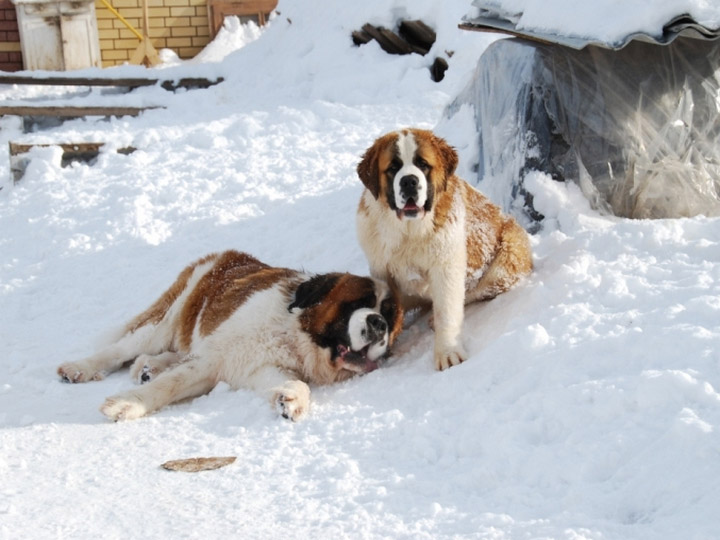
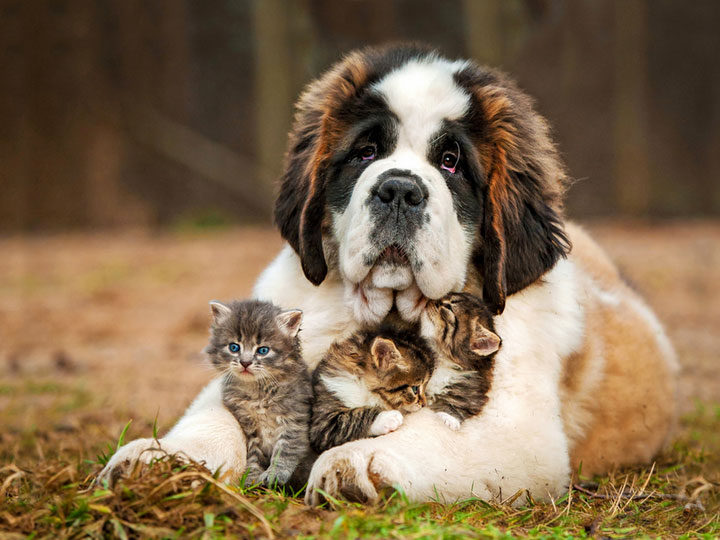
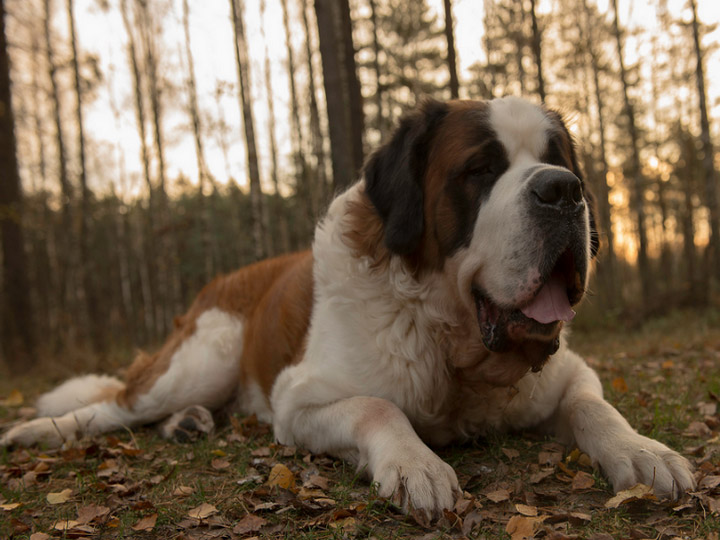
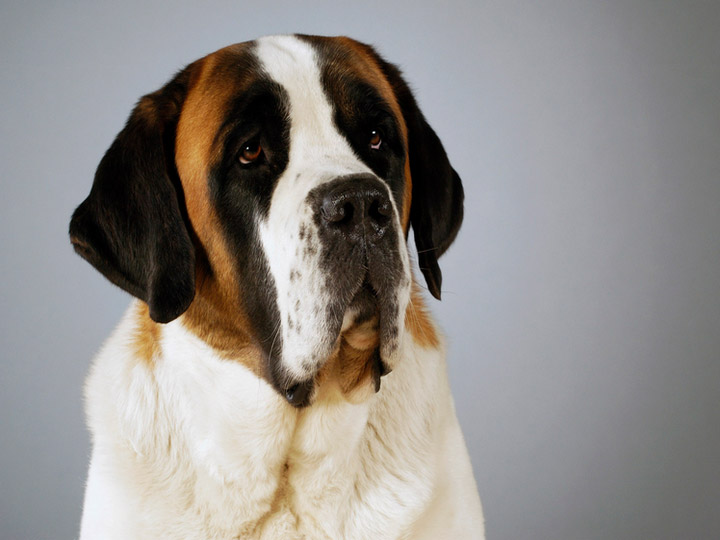
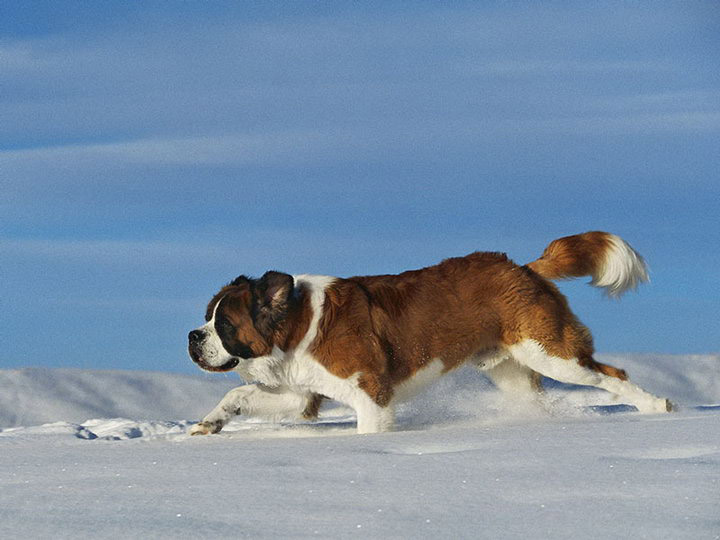
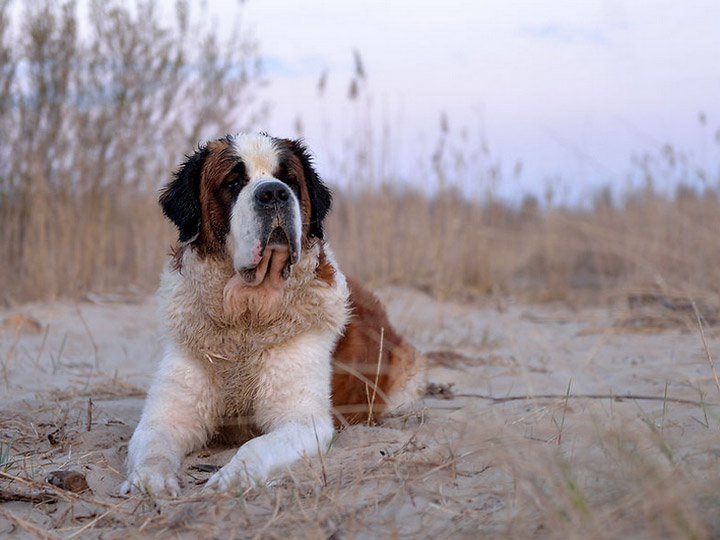
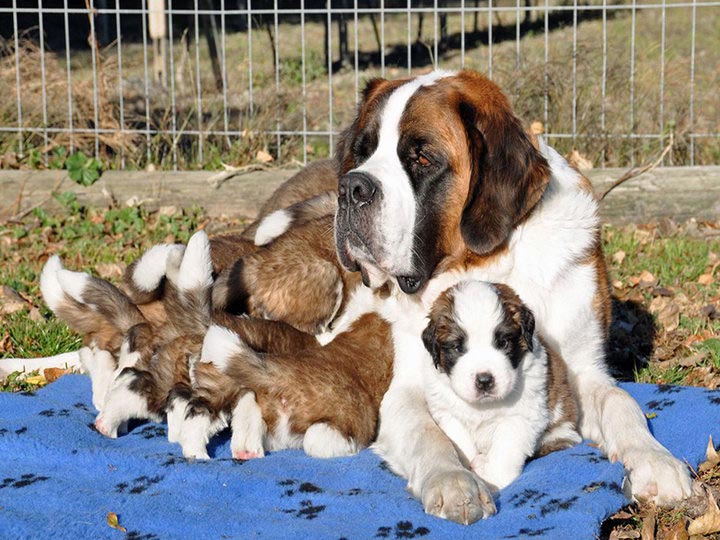
Photos of St. Bernard dogs:

Read also:
- British Longhair (Highlander) cat
- Bearded Collie (Birdie, Bearded Collie)
- What dogs help rescue climbers: breed


Add a comment