
Savannah (cat)
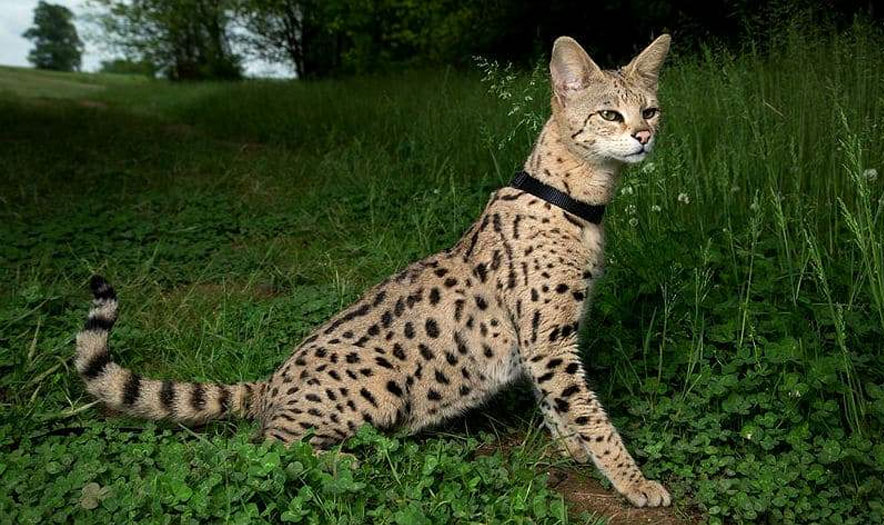
The Savannah is a rare breed of large hybrid cat with a luxurious cheetah-like coat, the agility of a panther, and a truly canine devotion.
Content
Breed characteristics
Today, Savannah cats are considered among the most expensive pets, as they combine the appearance of a predator with the character of a devoted domestic cat.
|
Original title |
Savannah |
|
Country of origin |
USA |
|
Year of breed appearance |
1986 |
|
Weight |
8-12 kg |
|
Height (at withers) |
25-50 cm |
|
Life expectancy |
12-17 years old |
|
Kitten price (depending on generation) |
$2,500 – $9,000 |
To understand what to expect from such an unusual pet as the Savannah, we suggest familiarizing yourself with the characteristics that experienced breeders attribute to representatives of this relatively young breed:
|
Parameter |
Level |
Points |
|
Size |
|
5 out of 5 |
|
Intelligence |
|
4 out of 5 |
|
Playfulness |
|
5 out of 5 |
|
Health |
|
5 out of 5 |
|
Picky eating habits |
|
3 out of 5 |
|
Activity |
|
4 out of 5 |
|
Friendliness |
|
3 out of 5 |
|
The need for communication |
|
4 out of 5 |
|
Molting |
|
3 out of 5 |
|
Attitude towards children |
|
3 out of 5 |
|
Attitude towards strangers |
|
3 out of 5 |
|
Cost of maintenance |
|
4 out of 5 |



History of the breed's origin
The Savannah cat was born in America. It was the 1980s, the heyday of serval breeding farms and catteries.
The story begins with Juti Frank, the owner of a cat farm. She asked her neighbor, Susie Wood, for a cat. serval, to mate with her pets. By chance, in addition to the farm cats, the serval also impregnated her Siamese cat, Juti, who lived in her house. The cat-love affair resulted in the birth of the world's first Savannah kitten, a girl.
And just 10 years later, the first standards were edited. Judy Frank is considered the creator of the breed, as it was she who succeeded in crossing a male serval with a Siamese cat.
Later, such famous cat breeders as Patrick Kelly and Joyce Sroufe worked on this issue, and in 1996, the Savannah standards were submitted to TICA for consideration, but the breed received official registration only in 2001.
There are many interesting stories associated with the Savannah breed. The most common one concerns the swindler Simon Brodie, who, taking advantage of a favorable opportunity, passed off a Savannah as a new breed, the Ashek, and took a down payment from a potential buyer. He disappeared shortly thereafter. The success of his scam lay in the rarity and high price of the Savannah breed. Such scams are still common today.
Why are Savannah cats so highly prized? Because their breeding process is complex. This is due to the size difference. Male Savannah cats are several times larger than females of the common cat breed.
Another complication arises from significant differences in gestation periods. While a serval's normal gestation period is 75 days, a domestic cat's gestation period is 65 days. This situation often leads to miscarriage or premature birth. Furthermore, servals are picky, and not every partner is suitable for breeding.
General characteristics of the breed
Savannah cats vary in size and appearance depending on their generation. The closer the animal's relationship to the wild Serval, the larger the individual will be and the more pronounced the traits of its famous ancestor.
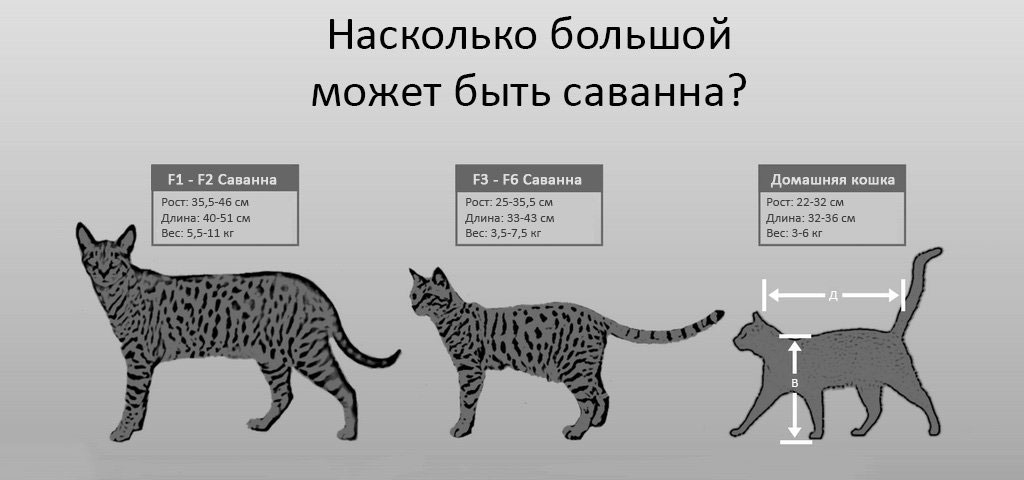
Hybrid levels
Depending on the distance of kinship of a particular individual with the Serval, the following hybrid levels (generations) of the Savannah are distinguished:
|
Hybrid |
Parents |
Percentage of Serval genes |
Peculiarities |
|
F1 |
Serval cat and domestic cat |
50% |
Large, very similar to the Serval, have an independent character |
|
F2 |
Domestic cat and F1 hybrid cat |
25% |
Large, have recognizable features of the Serval, but a more docile nature |
|
F3 |
Domestic cat and F2 hybrid cat |
13% |
Medium size, similar in color to the Serval, but with a body build closer to that of a normal cat |
|
F4- F5 |
Domestic cat and F3 and F4 hybrid cat |
less than 10% |
Medium size, more like a domestic cat with a leopard print |
That's why, when choosing a Savannah kitten, it's crucial to clearly understand the hybrid's level, so as not to be disappointed with the adult animal's appearance. F6 Savannahs can even differ in color from Servals, so these pets are significantly less expensive than F2-F3 kittens.
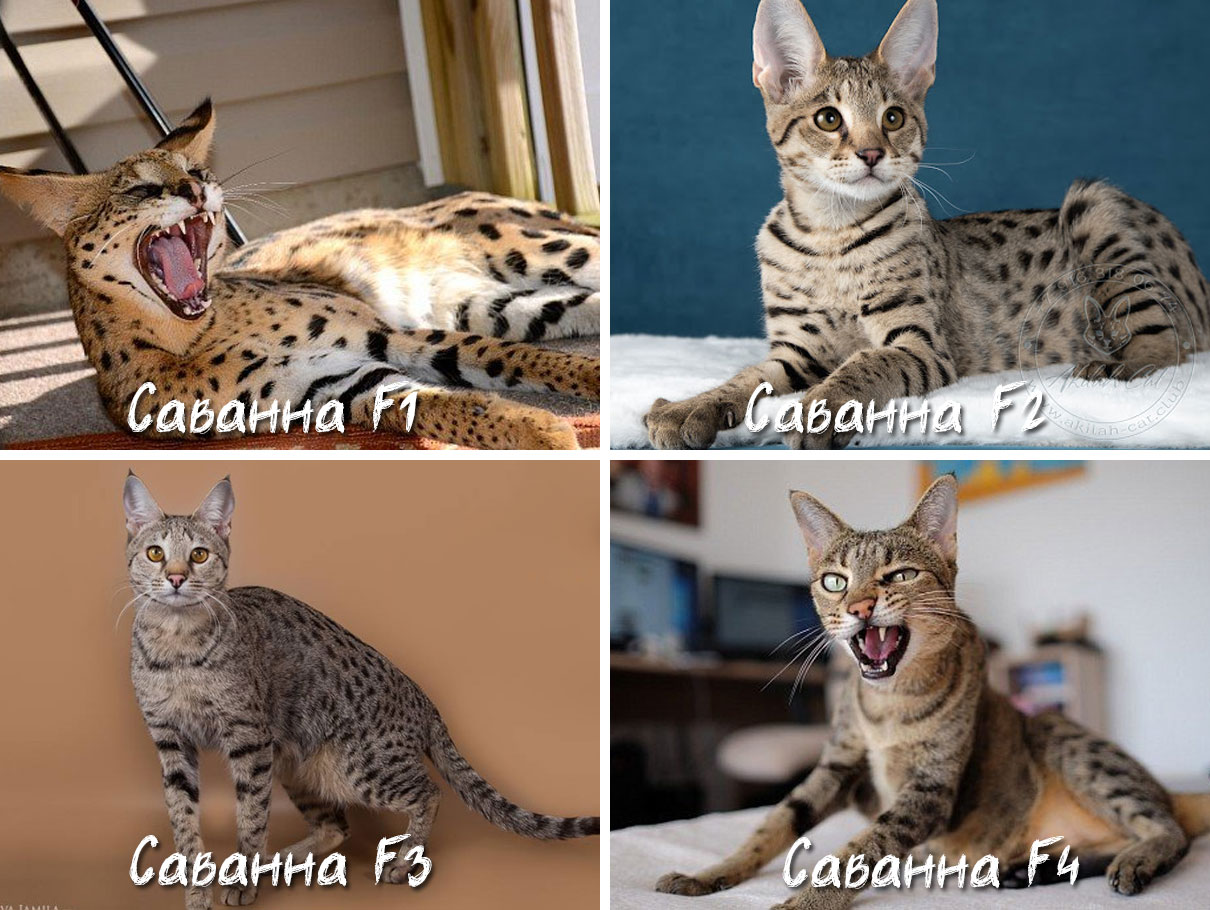
The most expensive kittens are F1 kittens, due to a number of complications that arise when crossing a Serval with a domestic cat, including significant differences in size and gestation periods. Such pregnancies often fail and pose a risk to the cat.
Appearance
In appearance, these cats strongly resemble small cheetahs, retaining the grace and elegance inherent to the wild Serval. They have a beautiful, elongated body with strong muscles. In terms of strength, their skeleton is considered medium-sized, but their height gives them a larger, heavier appearance. Their limbs are slender and high, their paws are oval-shaped and have beautiful toes.
Savannahs take a long time to grow. They don't reach their full size until their third year. Although they're already almost fully grown in their first year, they only gain 1-2 centimeters in the next two years. Their muscles are fully developed in their second year.
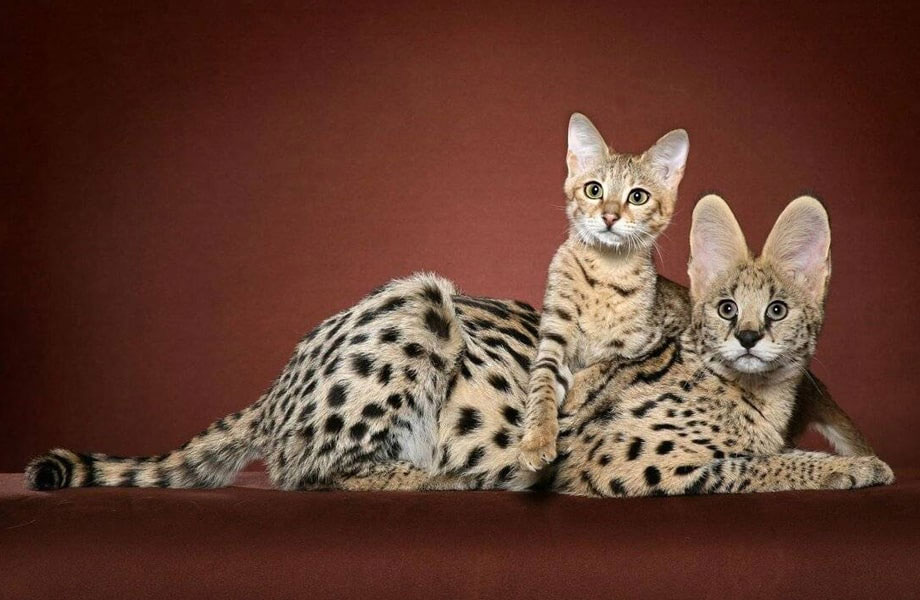
The hips and shoulders of these cats are distinguished by their massiveness and muscularity. An aristocratically slender neck is crowned by a small, triangular head, the top of which reaches level with the brow ridges. The Savannah's straight tail has a contrasting, vibrant coloring.
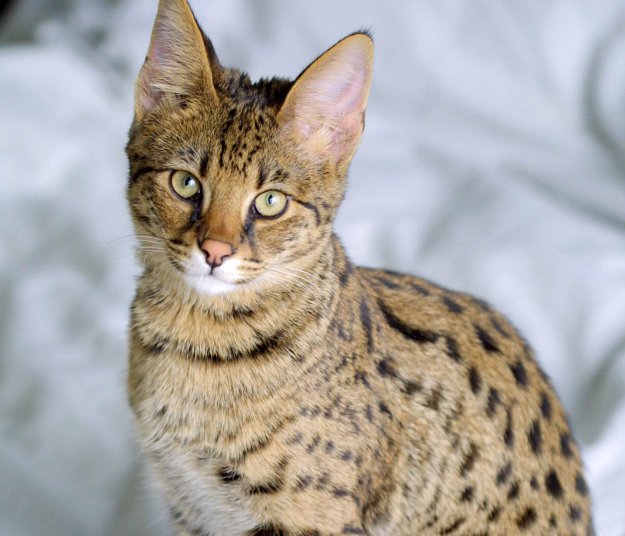
Their muzzles feature neat whisker pads that flow smoothly into prominent cheekbones. Their heads are crowned with large, wide, rounded ears. Their oval eyes are outlined in black, with black stripes running from the inner corner of the eye to the nose. Their nose is wide, with a drooping tip.
The most prized Savannahs are considered to be those with smoky black, tabby, black, and silver-spotted patterns. Regardless of color, Savannahs must have black lips.
Savannahs must have a spotted coat. Only spotted individuals meet the TICA standard, which aims to match the wild Serval's coat pattern to that of its domesticated relative. These typically feature dark brown or black spots scattered throughout the coat. But beyond the classic spotted pattern, many Savannahs have non-standard color shades. This is because they are crossed with different cat breeds. Non-standard colors include:
- lilac;
- chocolate;
- marble;
- cinnamon and other shades obtained from different breeds of cats.
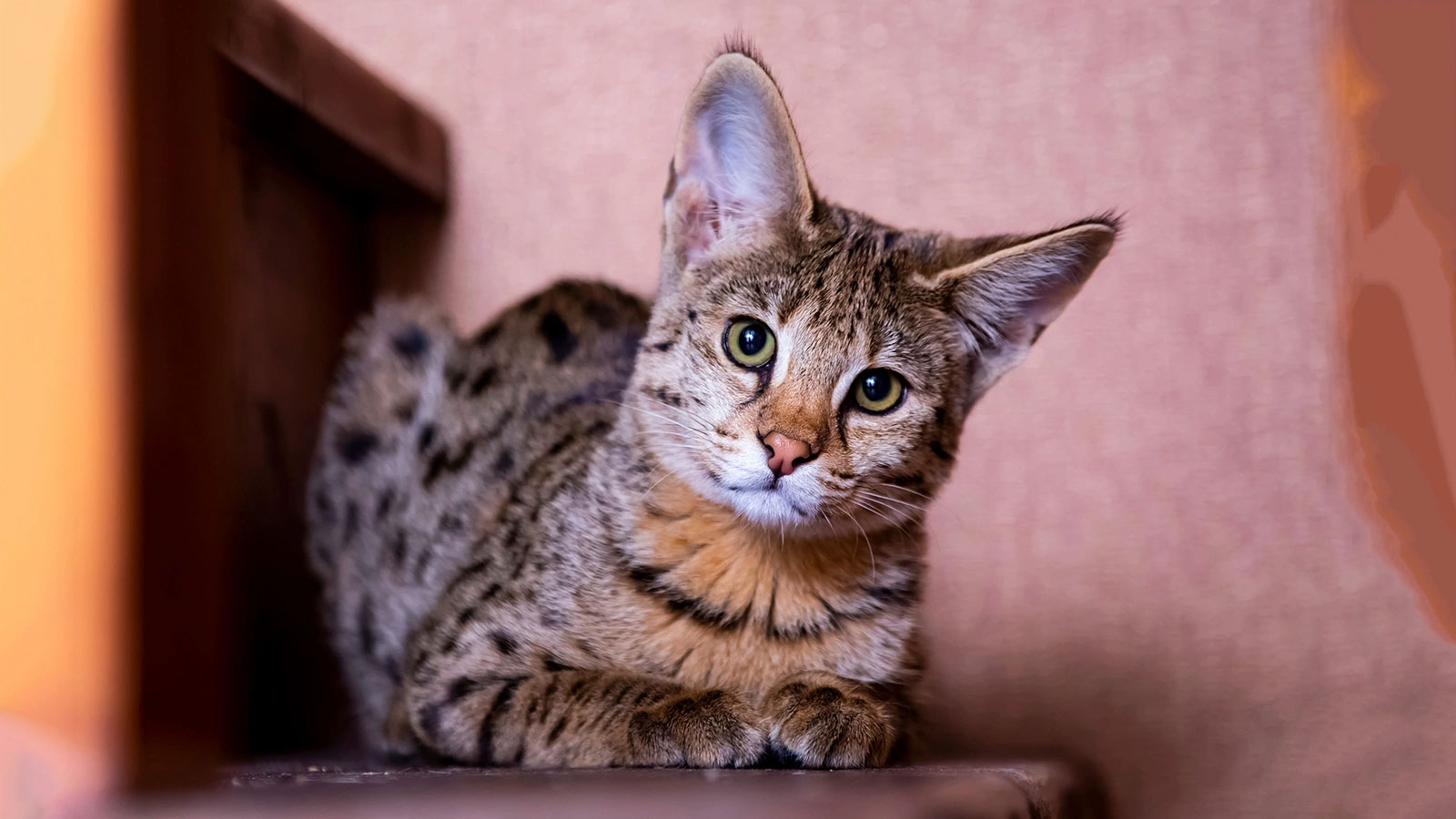
Savannah hybrid cats are bred to the fifth generation. F5 kittens are almost completely normal cats and bear minimal resemblance to their wild relatives. Therefore, first- and second-generation animals are considered the most valuable according to the breed standard, and therefore the most expensive. When it comes to breeding, females are more valuable than males, as Savannah cats are sterile until the fourth generation.
Character
Savannah cats are friendly and inquisitive, energetic, and cheerful by nature. They are bold animals, so they prefer a large, tidy home and garden.
Cats love jumping and other active activities, so city apartments aren't ideal for them. They also enjoy swimming and playing in water. Savannahs also dislike being alone and constantly crave company.
One of the most important factors in raising a Savannah is early socialization. Cats who interact with people from birth and spend all their time with them learn fundamental behavior patterns that will last a lifetime.
However, much also depends on the individual characteristics of the pet. For example, a single litter may include lively and energetic Savannah kittens and fearful, unsociable animals. It's important to know that a fearful kitten will likely remain the same behaviorally as an adult. Such Savannahs don't get along well with people and, if possible, avoid them. Conversely, kittens drawn to people from childhood make wonderful pets, ready for any surprises and changes.
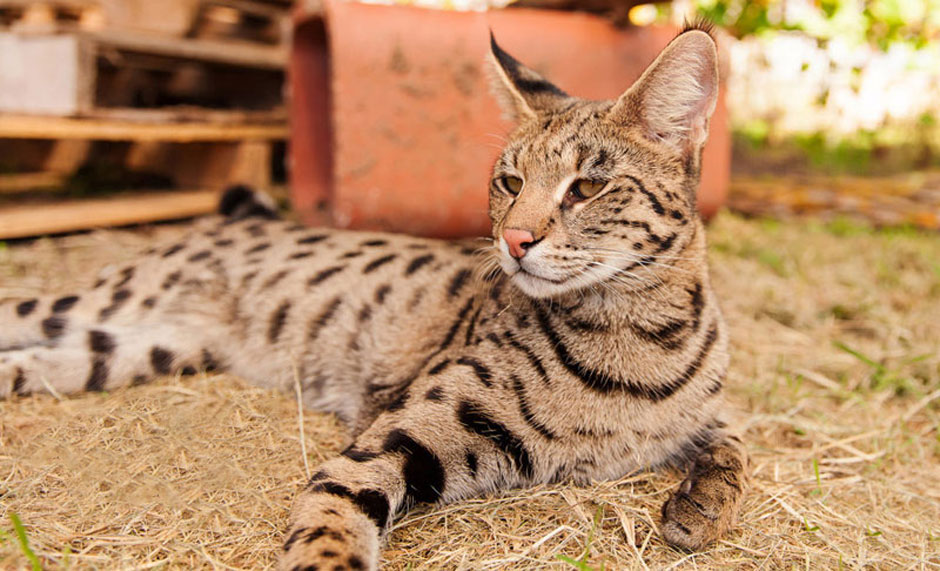
For a Savannah cat to grow up calm and well-behaved, socialization and interaction must be natural and everyday. If you ignore a kitten and entrust its care to its mother cat, the kitten will not perceive humans as part of its family, and therefore, trust between owner and pet will be elusive. It will be an obedient and intelligent animal, but timidity and mistrust will be evident in its every gesture.
Their ability to leap three meters allows them to gain a vantage point in almost any home. They love to conquer refrigerators, tall cabinets, and other elevated areas.
Savannahs are inquisitive and highly intelligent cats. Therefore, they are easily trained to follow the established rules of the family in which they are raised. They are even very easy to toilet train. However, this only applies if the owner devotes a lot of time to their pet, keeps them company, talks to them, and trains them.
Savannahs are inquisitive and active. This trait constantly pushes them toward adventure. One of this exotic pet's favorite activities is exploring hard-to-reach places. They will certainly develop a strategy for opening a door or cabinet. Therefore, when buying a Savannah kitten, be prepared to strengthen the protection of forbidden areas.
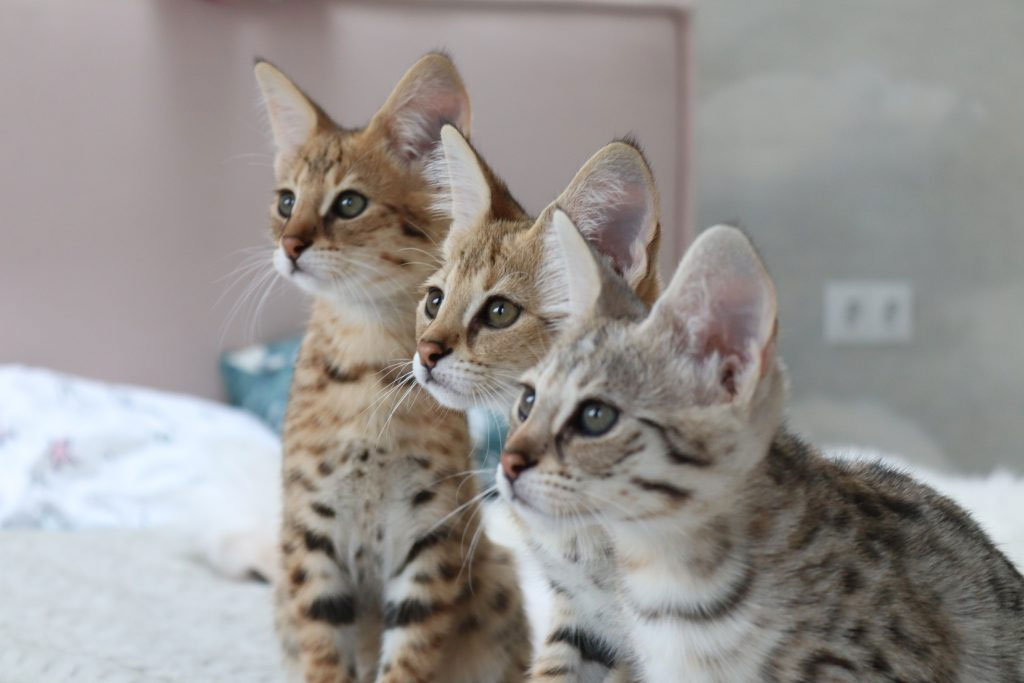
Their high energy often exhausts other pets in your home. They get along well with other cats and easily assume the role of leader among all the cats living in their neighborhood. And thanks to their similar behavior and intelligence, they have a particular fondness for dogs.
Savannah is a devoted friend of his owner and is very loves little children.
Savannah cats become so attached to their people and are so devoted that their behavior has even been compared to that of dogs. Like dogs, they can follow people around, following them closely. Some breeders report that their pets wait at the door when they leave and lie there until they return. And if a new person comes into the house, the cat approaches and sniffs them like they own the place.
Disqualifying faults
Among the most common reasons for disqualification of a Savannah breed representative are:
- color defects (rosette spots, “medallions” on the chest are unacceptable);
- small size of the ears (the Savannah, like the Serval, has fairly large ears);
- polydactyly (the presence of extra toes on the front or back paws);
- behavioral disorders (animals that are too fearful or too aggressive).
Rules of care and nutrition
If you dream of owning such a unique animal, it will be useful to learn how to properly care for a Savannah cat and what living conditions are suitable for this breed.
Conditions of detention
F1 hybrids are distinguished not only by their impressive size but also by their rather independent nature. These cats have wild Serval blood in their veins, so they are often difficult to train and socialize. The ideal environment for such a pet is a spacious enclosure on a country property.
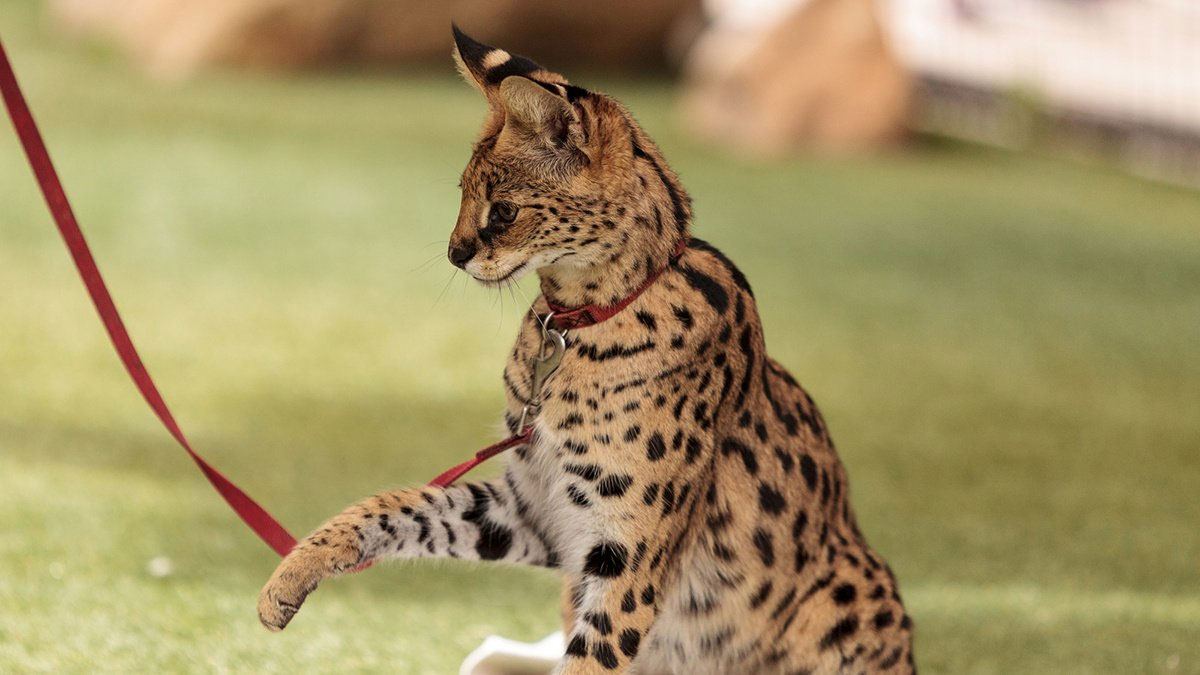
F2 and F3 hybrids are better suited for close human companionship. These cats perfectly combine an exotic appearance with a peaceful nature. However, don't expect Savannahs to be exceptionally docile and easygoing. These cats should be trained by experienced trainers who understand the complexities of cats.
F4 and F5 hybrids differ from domestic cats only in their slightly larger size and distinctive fur pattern. Care for these individuals is no different from that of a regular shorthaired cat.
Care
Savannah cats are easy to groom. To keep your cat feeling confident and well-groomed, brushing them once a week with a special brush is sufficient. However, during shedding season, you should brush them daily.
Additionally, take care of her eyes by rinsing them once a week with cotton pads soaked in special solutions, which are now available at any veterinary pharmacy. And, of course, bathe your beautiful cat weekly—they love playing in the water. Your pet will thank you for this with her cheerful disposition and affection.
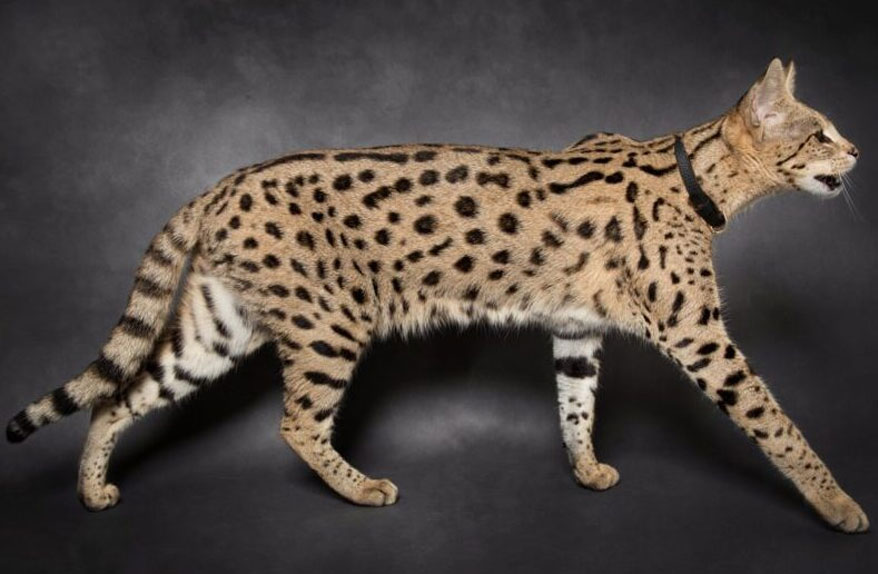
Indoors, cats prefer high places, so remove anything from the attic that you wouldn't want to see broken. Don't be fooled—a Savannah cat can conquer a three-meter bar just as easily as a renowned Olympic athlete.
These animals love to chew on everything, so to protect your pet's health, make sure there are no plants containing alkaloids in the house, such as violets or milkweed.
Nutrition
Savannahs are also relatively undemanding when it comes to food. The best diet for Savannahs is a natural diet based on animal proteins, vegetables, fruits, and cereals. This breed always requires raw meat (lean poultry, veal, and beef). Also, don't forget about vitamin and mineral supplements, yeast, table salt, and sprouted grains, which are rich in vitamin B.
Avoid feeding your cheetah food that contains a lot of grain. Savannah cats' digestive systems don't digest grains well. Milk and dairy products are also off-limits, as they can cause digestive upset.
Tip! If you don't have time to understand the Savannah's feeding needs and calculate calories and nutritional balance, switch her entirely to super-premium food. After that, you'll only need to refill her food and provide fresh water.
Health
Representatives of this breed have good immunity to most diseases and are generally in good health.
Savannahs are free of breed-specific diseases, but all cats, starting from the F2 hybrid, are sterile and cannot produce offspring.
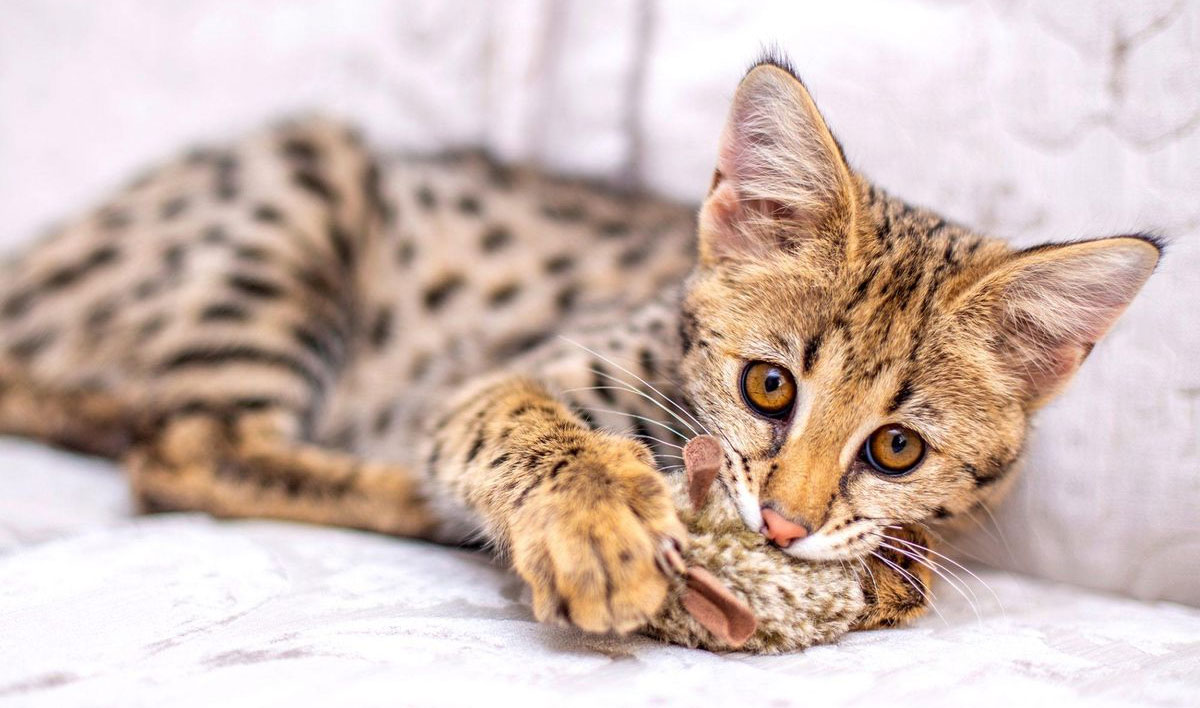
If you've got a beauty like a Savannah, make sure your pet gets her vaccinations up to date—this will help protect her from any problems. And most importantly, remember, your cat needs long, daily walks in the fresh air.
In good conditions, representatives of the breed live up to 20 years.
Where to buy a Savannah kitten
The best breeding kennel in terms of gene pool today is considered to be “A1 SAVANNAHS”, created by Joyce Sroufe, a breeder.
Generally, buying a Savannah is difficult. Not only is it a young and popular breed, but it's also expensive. Looking at it purely from a financial perspective, the Savannah is the most expensive of all cats currently sold worldwide.
But it doesn't stop there. Savannah prices vary significantly within the breed itself. For example, a promising F1 kitten can fetch up to $60,000-$90,000, F2-F3 kittens can sell for $25,000-$30,000, and F4-F5 kittens will set buyers back less than $5,000.
Video review of the Savannah cat breed
Read also:


Add a comment