
Sarcoptic mange in dogs: treatment for a sarcoptic mite bite
Sarcoptic mange in dogs is a common parasitic disease, also known as "scabies." In this article, we'll detail the characteristics of the pathogen that causes the disease in dogs, humans, and other animals, as well as discuss how the disease is diagnosed and what treatment is recommended for a sarcoptic mange mite bite.
Content
The causative agent of the disease
Ticks are the most common arthropods on our planet. Scientists identify approximately 48,000 species of ticks, including those that carry dangerous diseases.
|
Name |
size |
habitat |
Diseases caused |
|
Ixodes |
2.5 – 4 mm (increases up to 10 mm) |
on the surface of the skin |
transmissible: encephalitis, borreliosis, babesiosis and ehrlichiosis, etc. |
|
Sarcoptoidea |
0.01 – 0.8 mm |
in the upper layer of the epidermis |
sarcoptic mange (scabies) |
|
Trombidiformes (Demodex) |
0.3-0.4 mm |
near the hair follicles |
demodicosis |
There are also many species-specific sarcoptic mites:
- Sarcoptic mange (scabies) in dogs is caused by a type of sarcoptic mite called Canis;
- Notoedrosis (scabies) in cats is caused by a type of sarcoptic mite, Notoedres;
- In cattle and horses, a similar disease is caused by the sarcoptoid mite Psoroptes bovis;
- Scabies acrodermatitis in humans is caused by Sarcoptes Scabiei.
Sarcoptoid mites – microscopic parasites that are invisible to the naked eye. You can see what the mite that causes sarcoptic mange in dogs looks like in the highly magnified photo.
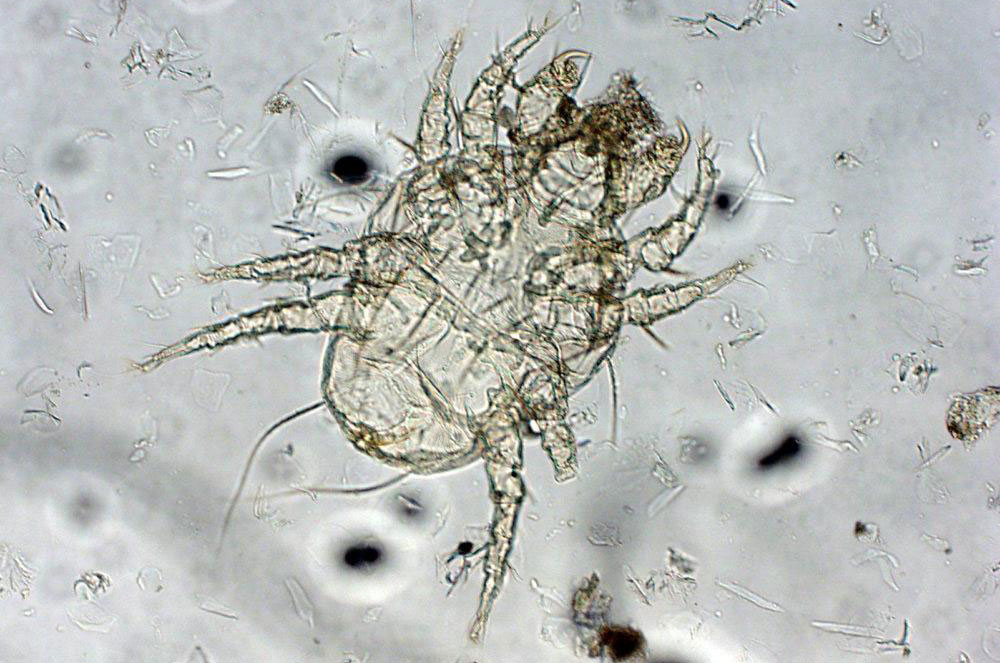
By penetrating the epidermis, Sarcoptes mites feed on lymph and skin scales, gnawing passages in which they lay eggs. Scientists have established the following facts about Sarcoptoidea mites:
- the life cycle is 1 month (for males) and 1.5 months (for females);
- each female lays about 60 eggs;
- During the development process, sarcoptes go through the larval and protonymph stages;
- the biological cycle (development into a sexually mature adult) takes 15–19 days;
- outside the victim’s body, the tick can survive for 1-3 weeks (depending on environmental conditions);
- both low and very high temperatures are destructive to ticks;
- Sarcoptoidea has no seasonality (infection is possible all year round).
Dogs most often become infected with mange due to improper housing (for example, in shelters), as well as in grooming salons and public areas. Direct contact with an infected animal, as well as sharing bedding and grooming items, can pose risks.
Symptoms of scabies in dogs
The description of the main symptom of scabies is identical for all animal species (and humans) - it is a fairly severe itching that intensifies in the evening hours and is not relieved by anti-allergy medications.
Itching typically appears 1.5 to 2 weeks after infection. This symptom is caused by both the activity of the mites themselves and their larvae, as well as an allergic reaction to the Sarcoptes mite's waste products. This reaction varies from dog to dog, so the intensity of itching in the initial stages of the disease can range from above average to severe.

Symptoms increase as the number of parasites increases:
- Localized itching that quickly spreads to new areas.
- Severe scratching, which most often becomes infected with bacteria or fungi, causes secondary inflammation, significantly worsening the condition of the skin (thickened areas covered with crusts, hyperpigmentation).
- Partial hair loss in damaged areas of the skin.
- The dog may refuse food.
Most often, the disease begins in the ears, elbows or hocks, abdomen and groin area, but without proper treatment it can spread to other areas up to the entire surface of the dog's body.
Diagnosis of scabies
The diagnosis of sarcoptosis is complicated by factors such as:
- difficulty in identifying the pathogen (only 50% of skin scrapings give a positive result);
- secondary infection;
- similarity of symptoms with such diseases as (food allergy, demodicosis, flea dermatitis, dermatophytosis, pyoderma).
Only an ELISA test provides a reliable result, but this serological test is unavailable for animals in most regions of Russia due to its high cost. Typically, when scabies is suspected, veterinarians rely on the dog's symptoms, an increased pedal reflex, and a positive response to a trial of therapy.
Treatment of sarcoptosis in dogs
To completely overcome sarcoptic mange in dogs, a fairly long-term, comprehensive treatment plan will be required (the plan takes into account the life cycle of the mite).
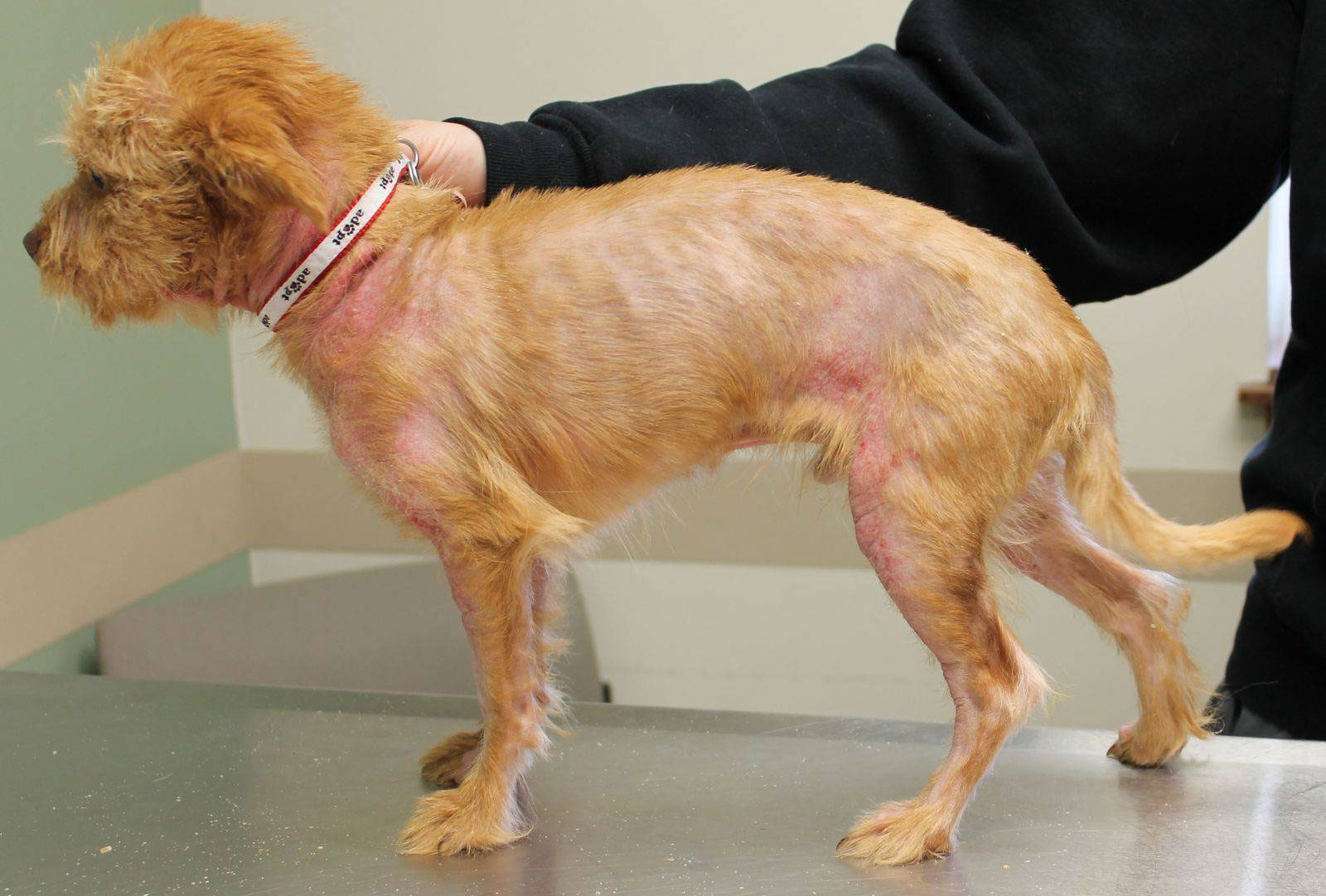
When deciding how to treat scabies, the doctor selects medications from the following groups for the patient:
The treatment regimen may also include other supportive medications aimed at enhancing the body's protective and restorative functions.
Important! Areas where the infected animal is kept must be treated. To combat Sarcoptes, you can use special sprays, pyrethroid solutions, or treat the area with an ultraviolet lamp.
If there are other dogs in the house, they should also receive preventative treatment even in the absence of obvious symptoms.
With proper treatment, sarcoptic mange in dogs is completely cured within 1-2 months. It's important to note that noticeable improvement in the animal's condition occurs approximately two weeks after the start of therapy, when the parasite population is significantly reduced, itching subsides, and acute inflammation at the scratched areas subsides.
Does sarcoptosis occur in humans?
Although the mites that cause sarcoptic mange in dogs and notoedric mange in cats have certain differences and do not infect animals of other species, they can all cause symptoms of the disease in humans.

As in animals, the first sign of a human infestation with Sarcoptoidea mites is severe, uncontrollable itching. The mite, which is not native to human skin, has a very short lifespan (it cannot complete its full development cycle). Mites that come into contact with humans from dogs may have time to lay eggs. The larvae that hatch from these eggs cause itching and redness but quickly die.
Thanks to this characteristic, sarcoptic mange in humans does not require specific treatment. Symptoms resolve if a dog living with people receives adequate treatment and recovers.

However, there are also scabies mites that cause full-blown disease in humans—Sarcoptes scabiei. If infected by this species of mite, the disease will not resolve on its own and requires long-term treatment.
Prevention
The main prevention of scabies is drugs that prevent infection with ectoparasites, which are available in the following formats:
- tablets (Simparica, NexGuard, Bravetko etc.);
- drops on the withers (Parasiticide, Fortline etc.);
- sprays (ProVET Insectostop, VET`S BEST, Sentry Natural Defense, etc.);
- collars.
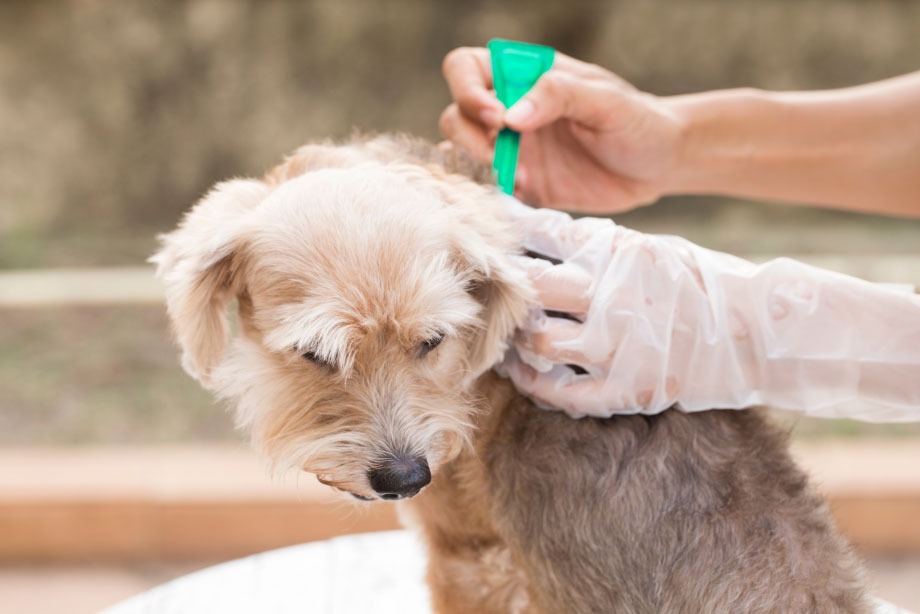
It is also important to prevent pets from coming into contact with stray or wild animals, especially dogs showing signs of skin diseases. In areas where animals are kept in large numbers, it is important to regularly clean enclosures and maintain sanitary standards.
Veterinarian's advice
Read also:
- Lipoma in dogs: what does it look like and how to remove it
- Dermatomycosis in dogs: symptoms and treatment
- Hives in Dogs: Symptoms and Treatment


Add a comment