
Sarcoma in dogs: symptoms and treatment
Sarcoma is a malignant tumor that develops from connective tissue cells. Osteosarcoma, a bone lesion, is diagnosed in 90% of dogs. Veterinary clinics are also visited for growths on the genitals. Sarcoma in dogs is amenable to palliative treatment, and the animal has a chance of recovery, but only if promptly consulted by specialists. More often, however, tumors are mistaken for injuries or inflammation, leading to attempts to treat them at home, which significantly reduces the chances of a positive outcome.

Causes of tumor development
Malignant tumors of the musculoskeletal system in animals account for 4% of all oncological diseases, with osteosarcoma of the paws accounting for 90% of cases. The exact causes of the disease remain unknown, but even a simple fracture that heals poorly can trigger tumor formation.
Experts identify embryonic abnormalities, exposure to chemical carcinogens, radiation exposure, and genetic predisposition as the main common causes of the disease. Osteosarcoma is most often diagnosed in Great Danes, Rottweilers, St. Bernards, Moscow Watchdogs, and Irish Setters, with males representing the largest percentage of patients.
Age is also a factor in tumor development. Bone sarcoma is not common in young dogs; it typically affects older animals over 6 years of age. Small breeds and dogs weighing less than 30 kg (66 lbs) are also less likely to develop osteosarcoma.
How the disease develops
Osteogenic tumors can occur in any bone, but the extremities are most commonly affected (70% of cases). The remaining 30% involve the jaw, spine, skull, and ribs, but the chest is almost never affected. When the paws are affected, tumors form in distal areas with active growth points.
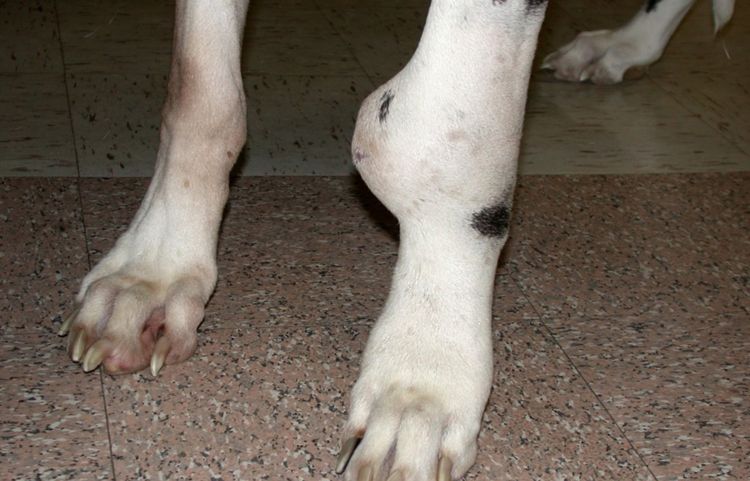
The tumor originates within the bone. Tissue destruction progresses from the center to the periphery, affecting the medullary canal. The primary lesion quickly metastasizes, which intensifies the pain. There are several types of sarcoma in dogs' paws:
- osteoblastic – damage to bone tissue;
- fibroblastic – damage to the soft tissues of the extremities;
- anaplastic, in which fatty tissues are involved;
- chondroblastic – cartilage tumors;
- Fibrous histiocytoma is a lesion of muscle tissue.
Symptoms
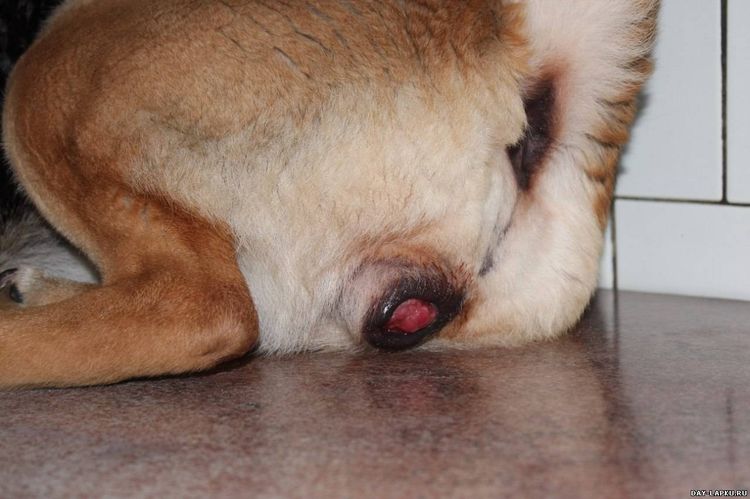
Sarcoma in dogs is often detected late, as the process is not immediately visible to the naked eye. The first sign of concern is unexplained lameness in the paws or dysfunction of other parts of the musculoskeletal system (for example, if the tumor develops on the jaw, the animal will have difficulty opening its mouth and chewing). Pain is mild in the early stages, so the animal does not show any discomfort and continues to lead a normal life. The second sign of concern is frequent fractures. A third clear sign is the appearance of a tumor. The affected area becomes red and swollen, and a vascular pattern appears on the skin.
Diagnostics
The primary diagnostic method for osteosarcoma in dogs is radiography. In cases of severe pain, radiographs are taken under sedation, allowing images to be taken from different angles. Radiography allows for early detection of the disease and a 10% chance of complications. These images clearly show the lesion, with blurred tumor edges, bone lysis, and increased bone density.
Radiography confirms the diagnosis in most cases, but a morphological examination, or biopsy, can help determine the tumor's nature. Biopsy is performed in both closed and open techniques. The first involves aspiration of material from the affected area, penetrating the needle into the bone marrow space. This method determines the extent of the tumor's metastasis. The open technique allows for the collection of a large amount of material and the determination of the tumor's morphological identity, thereby establishing a definitive diagnosis.
The dog's blood is drawn regularly. In malignant tumors, elevated leukocytes and alkaline phosphatase levels are present, indicating tumor progression and metastasis to distant sites. During diagnosis, it is necessary to differentiate malignant tumors from postoperative osteomyelitis, fungal bone lesions, and the presence of cysts.
Treatment
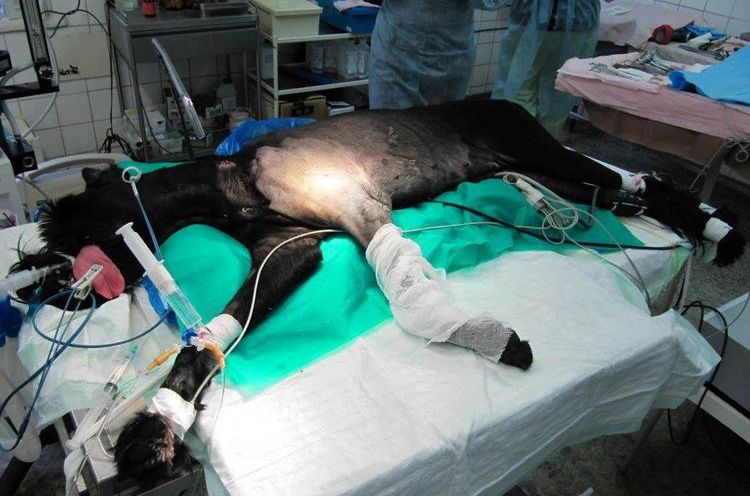
Bone sarcoma in dogs requires surgical intervention. Unfortunately, removing the tumor without amputating the limb is very difficult, but veterinarians may sometimes offer their patients an allograft or bone grafting, but only if the pathological process involves less than 50% of the bone.
In later stages, even amputation doesn't always produce the desired results. This is especially true for flat bone diseases with simultaneous soft tissue damage. Post-surgery, relapses and secondary infections often occur.
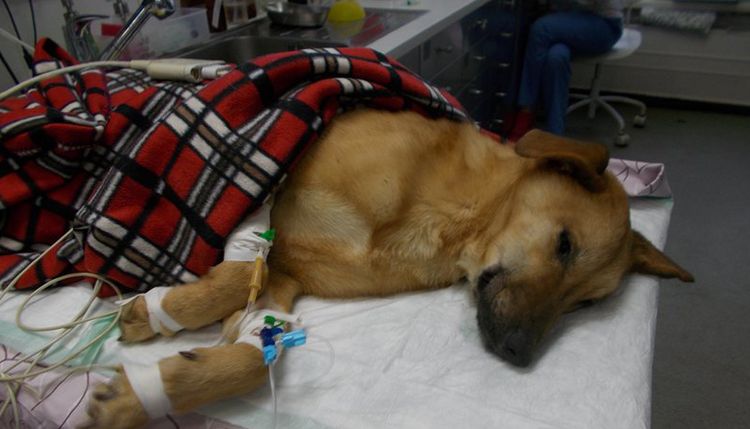
Medications are prescribed concurrently with surgery. Nonsteroidal anti-inflammatory drugs (NSAIDs) are used for pain relief, including carprofen, meloxicam, and tepoxalin. Bisphosphonates are prescribed to slow bone loss. Narcotic medications are indicated in the first days after surgery or in the later stages of the disease. Tramadol is most commonly prescribed.
To stop the pathological process, a course of chemotherapy is administered after surgery. The standard protocol consists of 4-6 treatments, spaced 3 weeks apart. Chemotherapy destroys any remaining cancer cells and prevents the development of metastases.
Radiation therapy is considered a palliative measure. It is not curative or prevents the spread of cancer cells, but it does support the animal's condition. In most cases, after a course of radiation, the dog's pain subsides and lameness decreases. The only contraindication to this treatment is bone destruction.
Prognosis is very difficult to determine, even with prompt treatment. Without veterinary treatment, a dog can survive for about three months on average. With chemotherapy, about 50% of dogs survive for a year, and another third survive for almost two years. Moreover, the older the dog, the more difficult it is to predict the outcome of treatment.
https://youtu.be/j29Feg0h-Hk
Read also:
- Periodontal disease in dogs: symptoms and treatment
- Mastocytoma in Dogs: Symptoms and Treatment
- Histiocytoma in Dogs: Causes and Treatment


Add a comment