
The most unusual animals in the world
Nature has no shortage of imagination—this can be safely stated by looking at the diversity of fauna present on our planet. Among animals, there are both incredibly cute specimens and funny, and sometimes even terrifying, species. Some are unique in their appearance, while others are unique in their habits or habitats. The adaptability, amazing physiology, and unusual skills of our smaller brothers demonstrate how diverse and multifaceted this planet is. Let's look at photographs and read brief information about the most unusual and beautiful animals of our planet. peace.
Amazing wildlife
These animals may not have loving owners, but that doesn't bother them in the least. They continue to amaze people with their unique abilities.
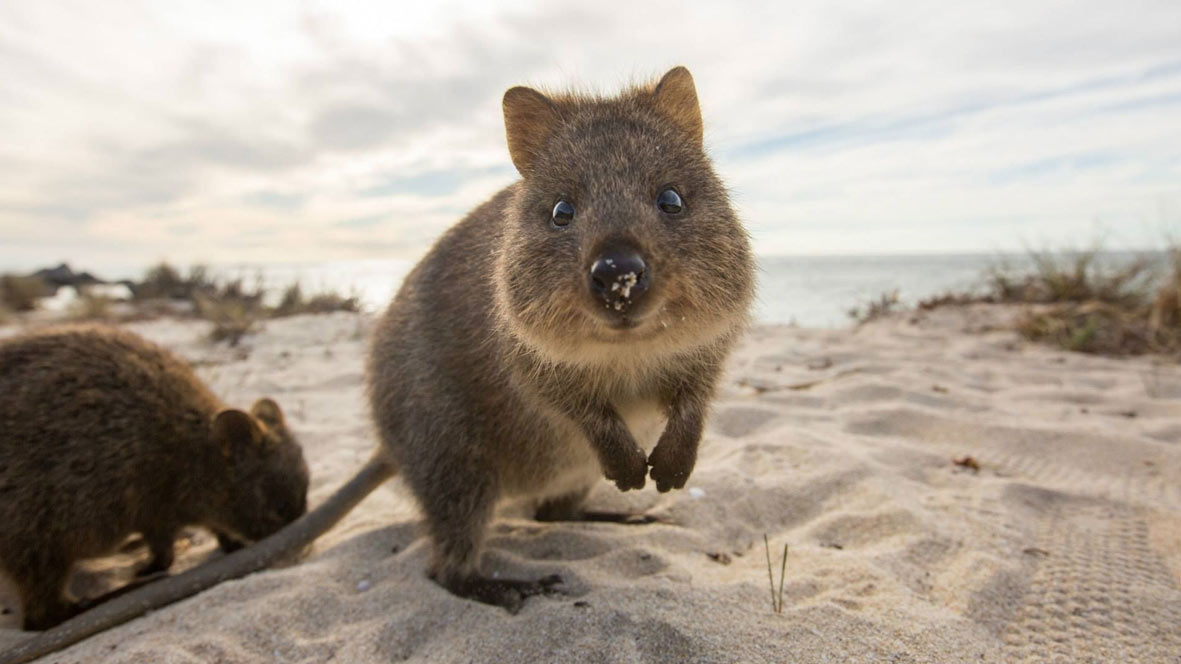
Quokka
This small marsupial has gained popularity for its irresistible smile and outgoing nature, which many perceive as a "love of selfies." The short-tailed kangaroo's face truly does appear to be constantly smiling.
Like large kangaroos, the baby kangaroo lives in Australia, but unlike its larger relatives, it has a small tail that serves no purpose as a support. The animal's body is no more than 50 cm long, and its weight ranges from 2.5 to 5 kg.
Lesser slow loris
This little fellow is often confused with lemurs because of its large, wide-open eyes, but this is not the case at all, as the animal belongs to the Loris family, or more precisely, the monotypic genus Xanthonycticebus.
Lorises inhabit the forests of Southeast Asia. Besides their exotic appearance, they attract scientists with another interesting feature: their diet includes a large number of poisonous insects, which many other forest dwellers avoid. Another unique feature of the loris is its seasonal color change.
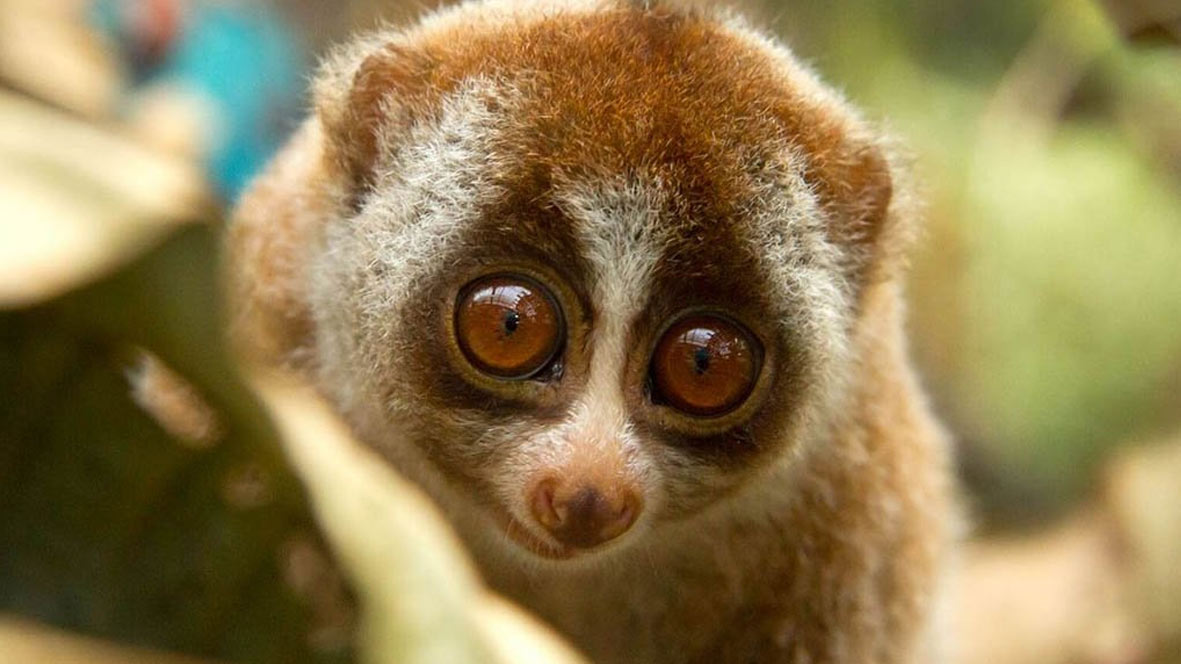
Despite its cuteness, you definitely wouldn't want this little creature in your home, as it's venomous. The animal's elbows contain glands whose secretions, when mixed with saliva, form a highly toxic compound. It even ranks first in the top ten most venomous animals known to the general public.
Star-nosed mole
This curious, unusual animal resembles both a mole and a horror movie character. Its defining feature is its unusual nose, which sports 22 pink tentacles. These tentacles can move in multiple directions at lightning speed. These papillae are extremely sensitive, permeated with a dense network of nerve fibers that allow it to receive information about an encountered object in a split second and determine whether it is edible.
The speed of its tentacles' movement is so high that humans are often unable to detect their movements, yet the star-nosed mole can sense more than 13 objects per second. This fact was only possible to establish thanks to slow-motion video footage.
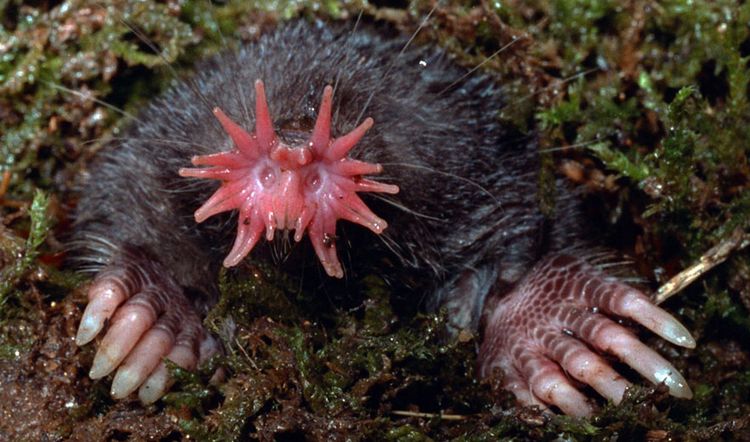
It's no coincidence that these animals resemble moles so much: they also dig underground tunnels, not only in search of food but also to safely reach bodies of water, where they spend much of their time chasing small prey. On the surface, these architects carve a small mound of excavated soil for themselves, creating a resting area there once grass has grown over it.
Giant isopod
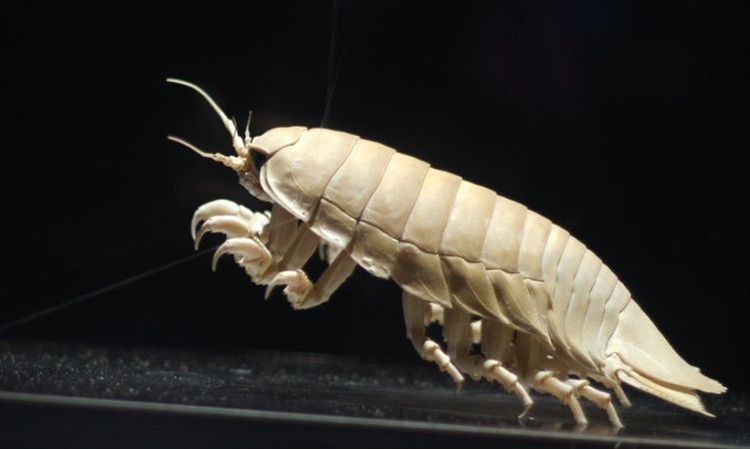
Many women are terrified of woodlice, which infest damp places in the home or under various logs. It's impossible to even imagine what would happen if they accidentally encountered a giant isopod—a monster that reaches almost 80 cm in length. Indeed, woodlice are their closest relatives, but they have adapted to a permanent life on land.
The isopod prefers the quiet, dark depths of the sea, where it can grow its exoskeleton to 1.7 kg without alarming others. These unusual animals feed primarily on carrion that settles on the seafloor, but can go for several years without eating.
Despite their terrifying appearance, they are extremely timid by nature, so when faced with any danger they tend to curl up into a tight ball and, in this form, try to wait out the trouble until better times.
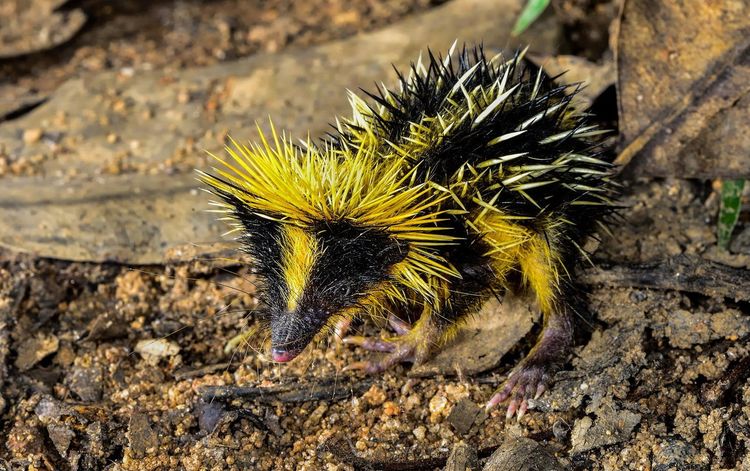
Striped tenrec
In appearance, this amazing, outlandish creature resembles a cross between a hedgehog and a giant bee, whose quills have acquired an unusually bright color. It lives only on the island of Madagascar and is found nowhere else on earth.
The unusual striped tenrec is best known to rice harvesters, as rice paddies are its favorite habitat. The animal's brightly colored spines aren't just for show: they're used to attack its enemies in times of danger. This vibrant color deters and causes many of them to retreat before they can attack.
The spines along the midline of the back are particularly massive and long, because in addition to their defensive function, they also serve another: the large spines vibrate softly and produce distinctive sounds. This allows striped tenrecs to communicate with each other even over long distances, allowing females and males to find a mate.
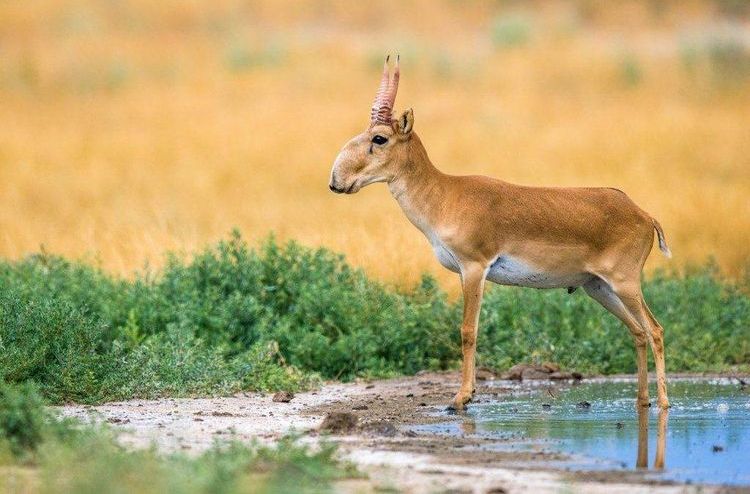
Saiga antelope
Due to their exotic and unusual appearance for an even-toed ungulate, people who encounter saigas for the first time often perceive them as sick animals. In fact, their faces always wear an offended or surprised expression behind their proboscis, even when the saiga is genuinely happy and content.
Representatives of this unusual species are among the most ancient individuals in modern fauna. They lived back in the days when their neighbors were saber-toothed tigers and thickly furred mammoths. The earliest mentions of saigas date back to the late Valdai glaciation, when humans were nowhere to be found. This amazing species is currently considered endangered, a result of uncontrolled hunting.
Palm Thief
The name of this fantastical arthropod doesn't bode well for its good character. And it does: the claws of this enormous crab can easily crush the finger of an adult human. The palm thief's body length reaches 40 cm and weighs 4 kg. This explains why they are so sought after: the flesh of this crab is as tender as that of other arthropods.
The palm thief owes its name to its eating habits: a true gourmet, this crab considers the flesh of ripe coconuts its greatest delicacy. To obtain this dessert, it emerges from the water at night and searches for coconuts on the shore. Sometimes, during the search, it can climb quite high up a palm tree trunk thanks to its powerful claws. Having found a coconut, it easily cracks open its shell and can consume almost a third of the calorie-rich, aromatic flesh in one go.
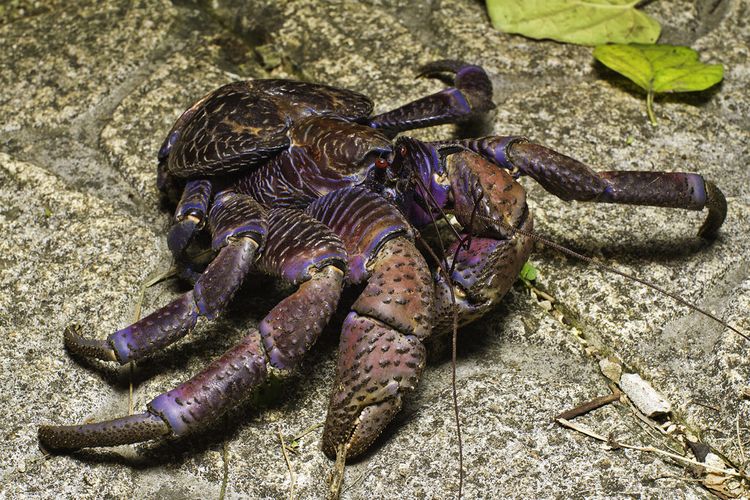
The palm thief's eyesight is far from perfect, and its disposition is not the friendliest. Therefore, it is likely to attack a person if it encounters them during the palm harvest. Such an encounter can leave deep scars on the body, and sometimes even the loss of a finger.
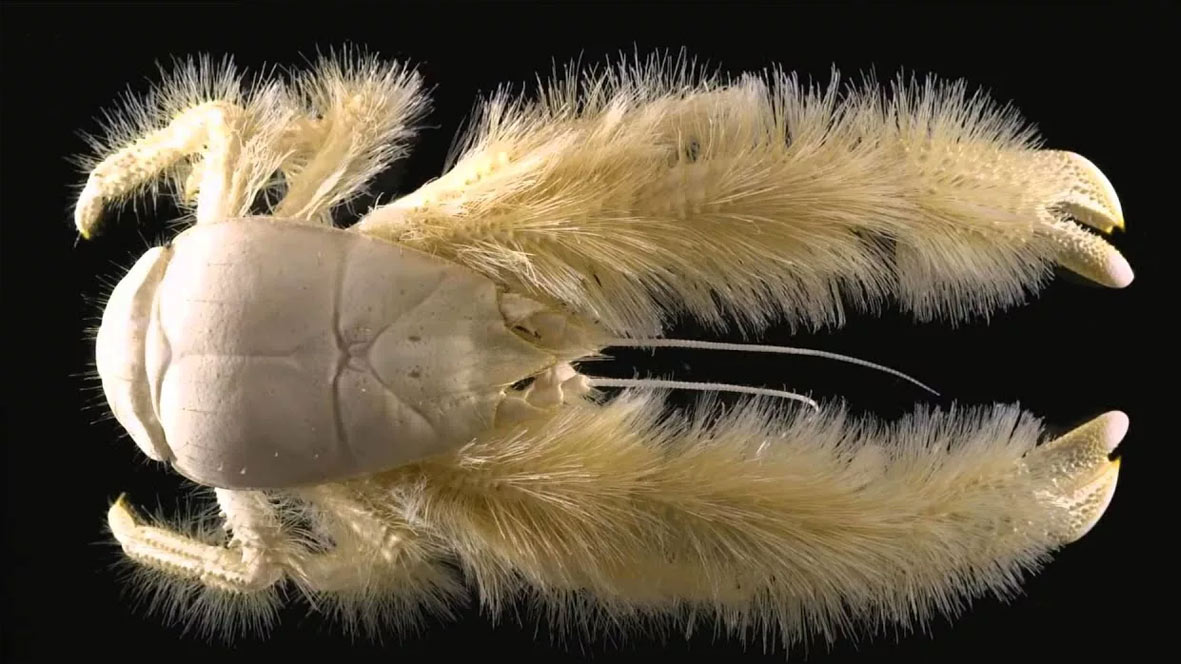
Fluffy Kiva
This deep-sea dweller is also known as the "Yetti Crab." Scientists gave it this name for the whitish bristles covering the claws and legs of this amazing creature. The crab measures no more than 15 cm, and its complete lack of pigment is due to its habitat—it lives at a depth of 2,200 meters.
Like its classic relatives, the deep-sea crab is carnivorous. However, it is inedible due to the high accumulation of sulfur compounds in its body.
Capybaras
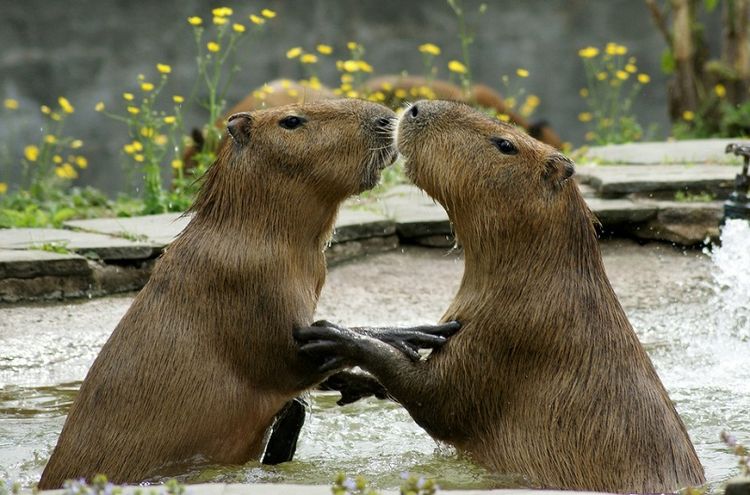
These amazing animals will be a favorite of guinea pig lovers, as the capybara is a true water pig. It is currently the largest rodent on the planet that feeds exclusively on plants.
They say "as scared as a hare" about cowards, but the correct phrase is "as scared as a capybara": despite their impressive size (up to 70 kg in weight and up to 1.35 m in length), capybaras are incredibly timid. It's not uncommon for them to succumb to loud, sharp noises and die of a broken heart. To avoid such fear, they prefer to live in large families of 10-20 individuals. Within their families, they maintain very warm relationships, and such caring mothers as capybaras are rare in the wild, as mothers can recognize their young even after long separations, when they are already adults. Upon seeing their young again, a mother begins to whistle joyfully and make clicking sounds, along with a characteristic purr that indicates the animal is happy.
Snake-necked turtle
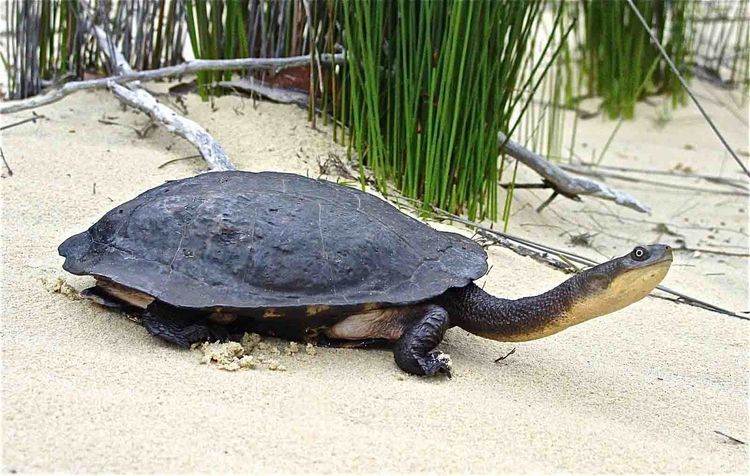
In Australia, the homeland of these amazing, bizarre turtles, they are often mistaken for snakes. This is because this animal has a disproportionately long neck, so they can't fold their heads into their shells when threatened, like other turtles; it simply doesn't fit. However, when balancing in the water, the neck can be extended very far, allowing them to successfully hunt insects.
It's also mistaken for a snake when the snake-necked turtle gradually emerges from the grass, its shell not yet visible. Of course, this resemblance has had a negative impact on the species' population. But in exchange for the lost ability to hide its body, it has acquired another defense mechanism—a foul-smelling spray that deters enemies in times of danger.
Unusual pets
Some people want to stand out in everything they do. Unsatisfied with ordinary cats and dogs as pets, they decide to get something more exotic.
Anteaters
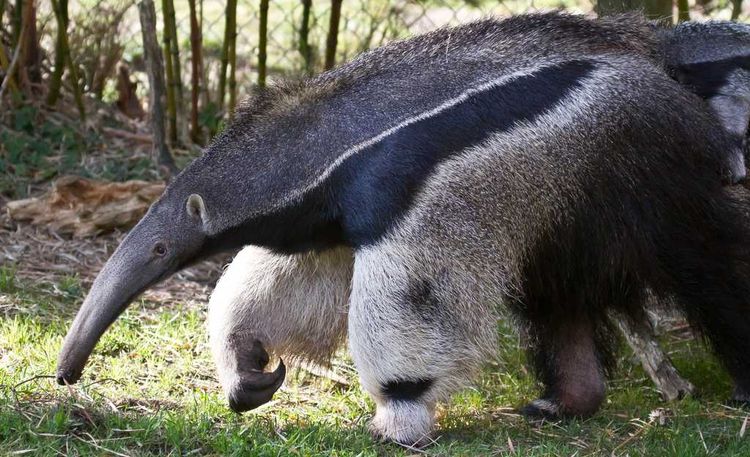
These amazing pets aren't found in every home, but their owners claim that anteaters are very sociable and loving pets. Surprisingly, they can quickly remember not only their own name, but also the names of the people they share their home with.
Anteaters are very fond of food, so the refrigerator should be equipped with special latches, as opening the refrigerator and removing all the food is no problem for this animal. Thanks to their 60 cm long tongue, anteaters can penetrate any narrow bottle. Incidentally, they are particularly fond of beer, so you shouldn't leave them alone with open beer bottles.
Buffalo
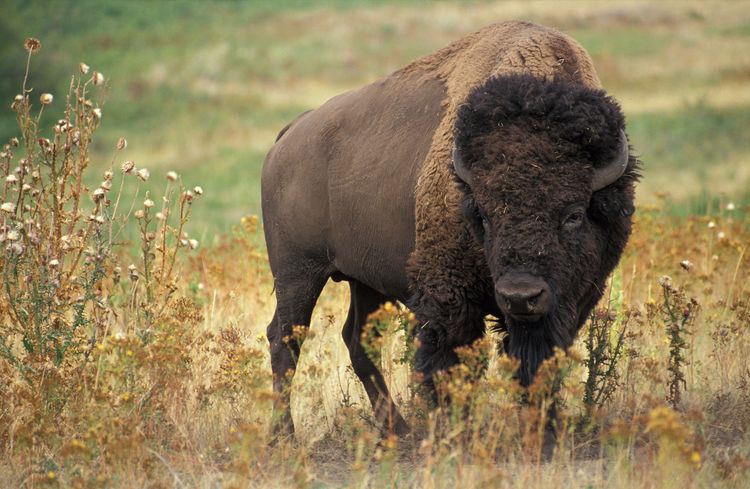
The largest domestic animal to live with its owners is Bailey the Baby, a bison from Canada. Bailey the Baby weighs just under a ton at just two years old, but when fully grown, he could weigh over 1.2 tons.
The owners of this great joy claim that the bison's behavior is remarkably reminiscent of a puppy: it licks hands, cuddles, asks to go for walks, and misses its owners.
It's surprising that there are people who are willing to sacrifice their interior and renovations for the sake of such a pet, since the floors are damaged by the bison's hooves, and all interior doors are simply knocked down by the bison if he needs to go to another room.
Hippopotamus
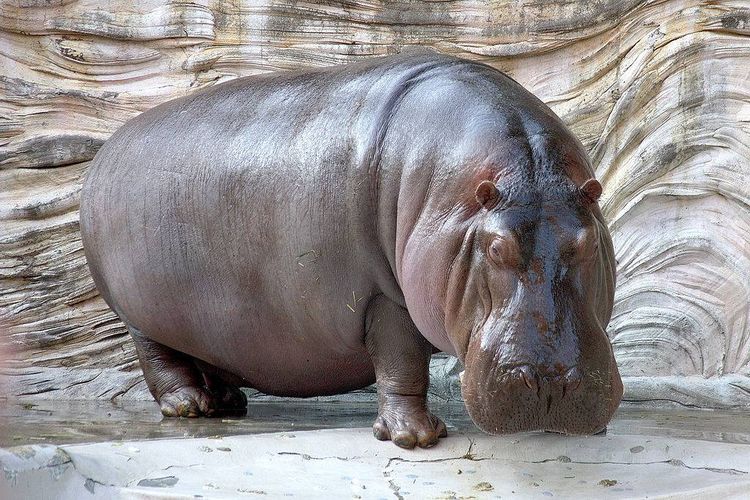
This 2.5-ton animal found refuge in the home of farmers living in Limpopo. The baby hippo had been injured in a flood as a cub, so compassionate people took the little one in with the hope of quickly nursing her back to health and releasing her back into the wild. They named her Jessica and began treating her.
But during her treatment, her owners became very attached to Jessica, and all attempts to release her into the wild ended in failure: the hippopotamus simply refused to leave. In the wild, hippos care for their young for many years, so this remarkable attachment is in their DNA.
It is unknown how exactly, but after 5 years, it was possible to come to an agreement with the animal so that it would sleep on the porch with the owner’s dog.
At the age of 10, the hippopotamus began interacting with her fellow hippos in the wild (a herd of hippos lives near the farm), but in the evening, Jessica invariably returns home and spends the night on her favorite porch.
Minipig
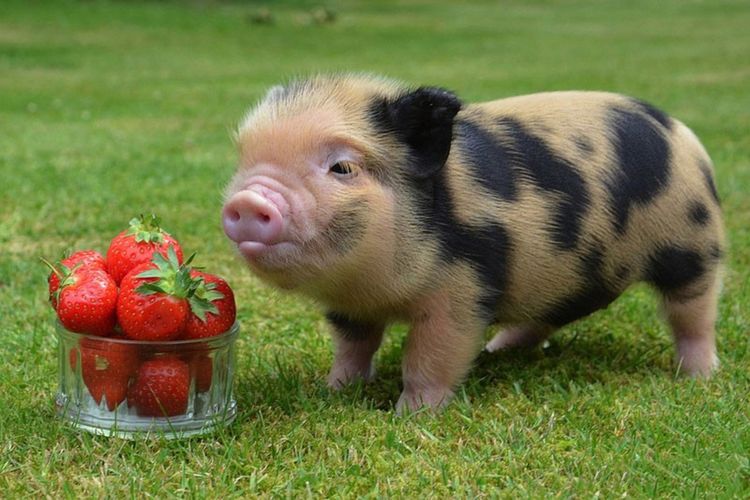
A few years ago, keeping amazing miniature pigs—minipigs—at home became fashionable. These truly adorable animals can easily rival cats and dogs, especially considering they're hypoallergenic due to their lack of fur.
But some people dislike halftones, so they keep real pigs as pets. Most admit that this wasn't a conscious decision, but rather the result of a mistake, when the minipig they bought suddenly grew into a huge boar.
Owners of these pets claim that pigs are incredibly clean, love to be held, and demand to be scratched behind the ears. Problems with toileting are easily solved: pigs very quickly learn to use the litter box; the main thing is to hit it and not miss.
Chameleon
The unusual Chamaeleonidae lizards, popular for their ability to change their color to match their surroundings, are native to Africa and neighboring islands. There are over 90 species of these lizards in the wild. The smallest grow just over 3 cm, while the largest can reach 60 cm in length.
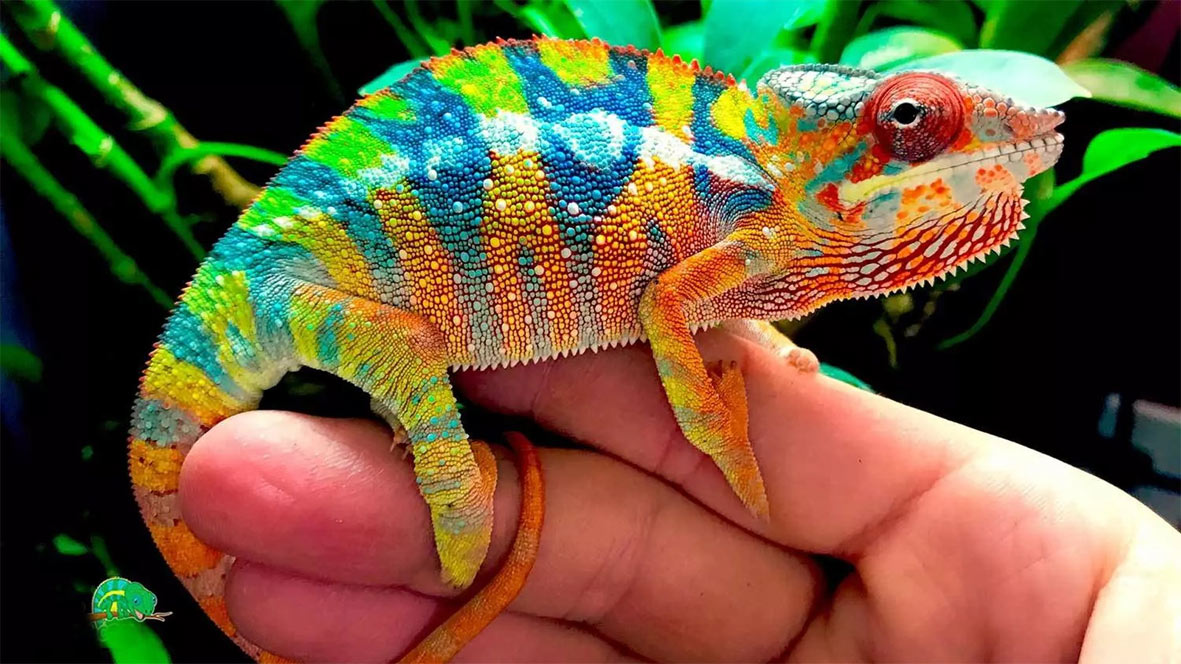
Chameleons' primary diet consists of various insects and larvae. When properly cared for, these incredible animals can delight their owners with their exotic appearance for up to 8 years, although their lifespan in the wild rarely exceeds 2 years.
We invite you to see what these unusual creatures look like not only in photos but also on video, and learn how to care for a chameleon at home:
Iguana
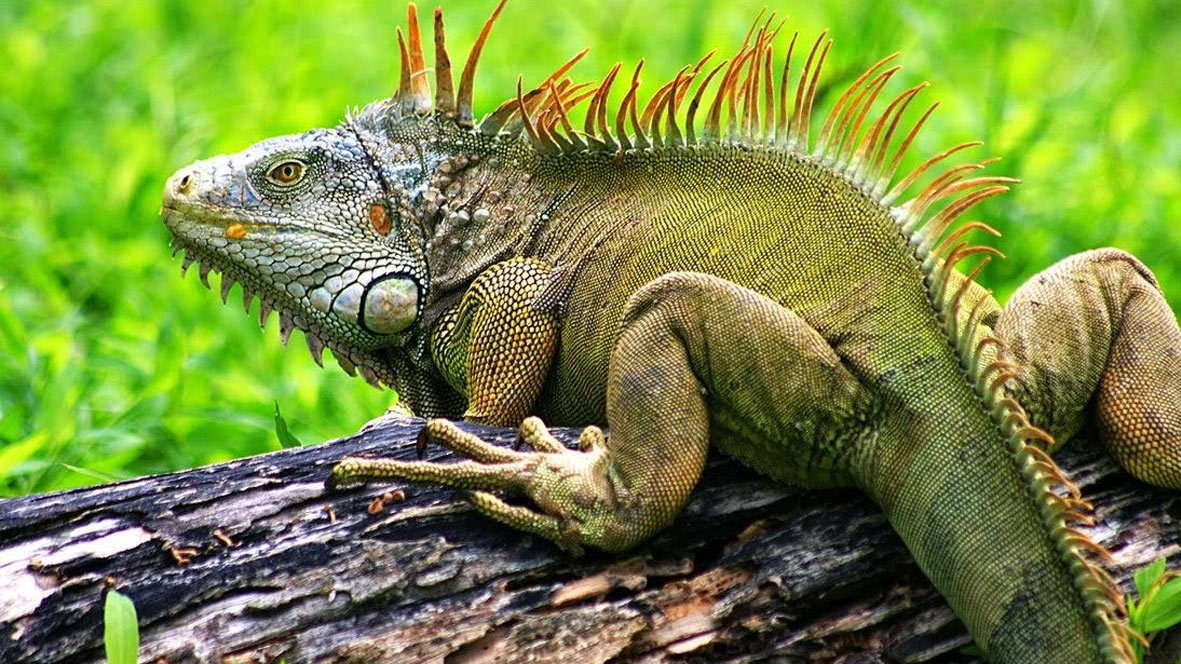
Many consider iguanas to be the most amazing creatures on the planet, somewhat related to real dragons. There are a huge number of species of these mysterious creatures living around the world.
Interesting fact! Most iguanas, despite their intimidating appearance, are very peaceful, even in the wild. Moreover, iguanas are herbivorous lizards.
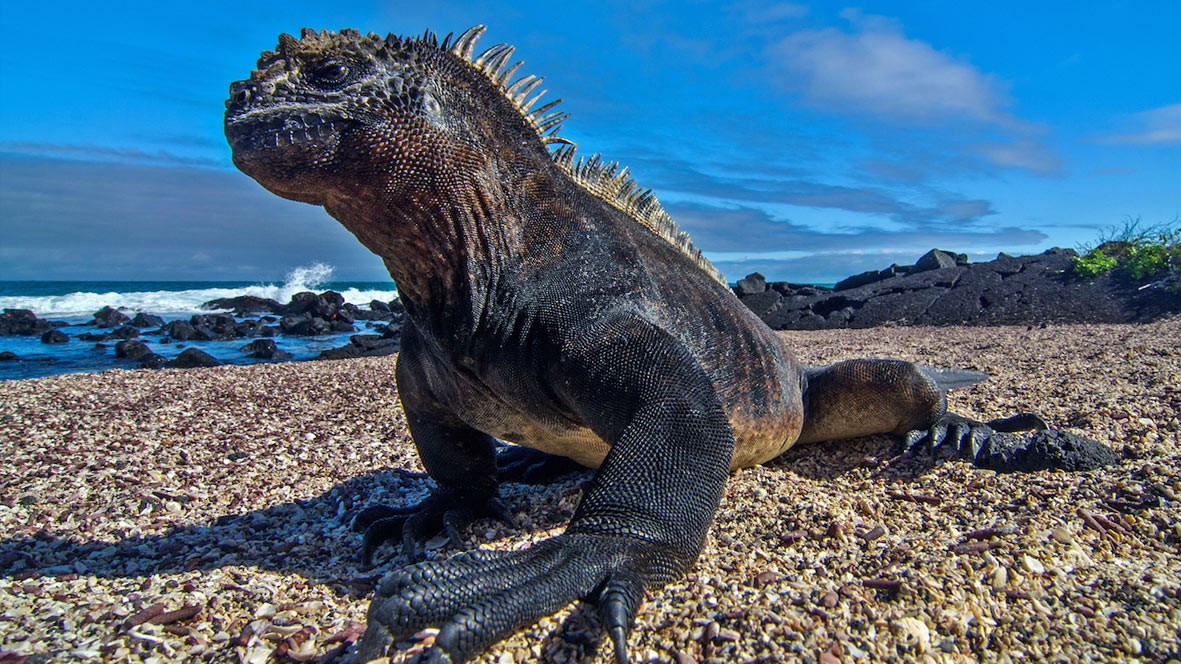
One of the largest is the Marine Iguana, which lives in the Galápagos Islands and spends most of its life in the sea depths. It can reach 2 meters or more in size.
Another common species is the Green Iguana (common). These unusual creatures live in the tropical forests of the Dominican Republic and the Caribbean islands. If you try searching for "iguana," you'll likely see this enormous reptile.
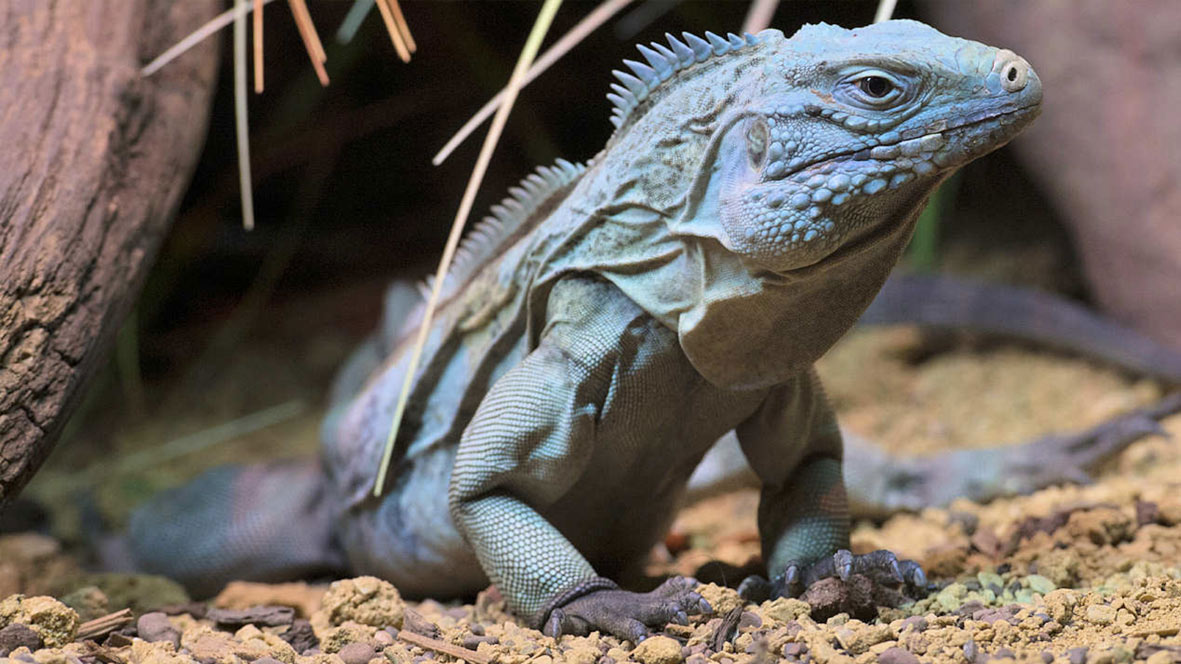
Blue Iguanas are the rarest and most mysterious of their relatives, as well as the largest. They can weigh up to 14 kg.
There are also small varieties, whose body size does not exceed 15 cm.
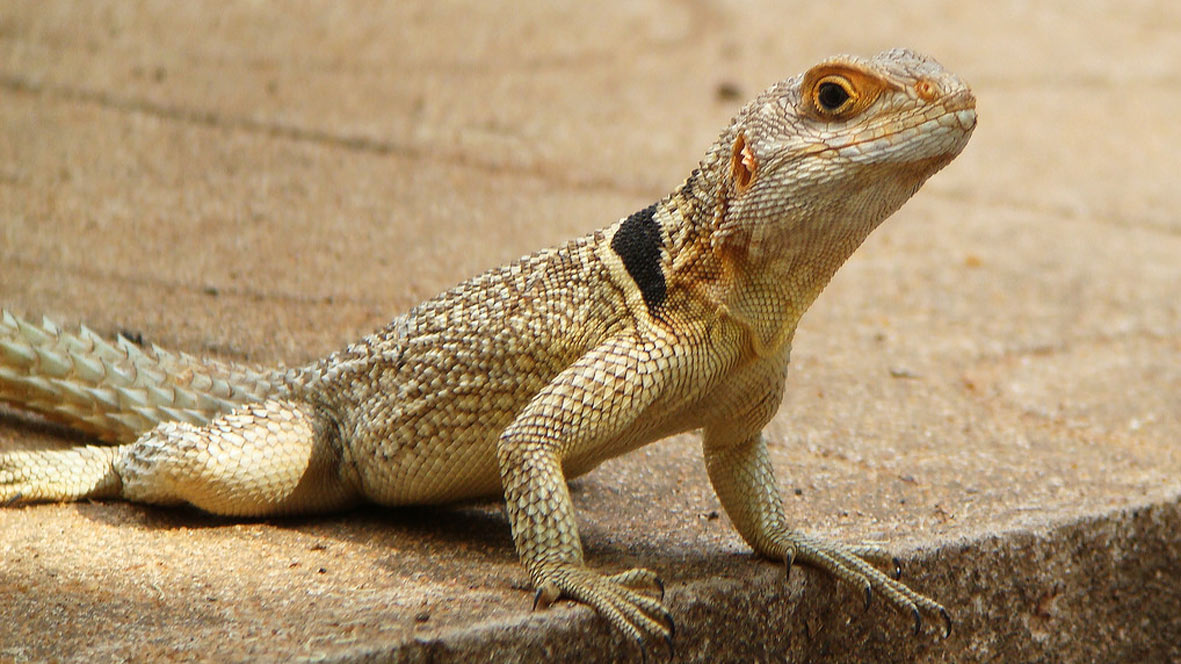
These amazing creatures can live up to 20 years in captivity, so you should think carefully before buying such a pet.
Little Hand (Aye-Aye)
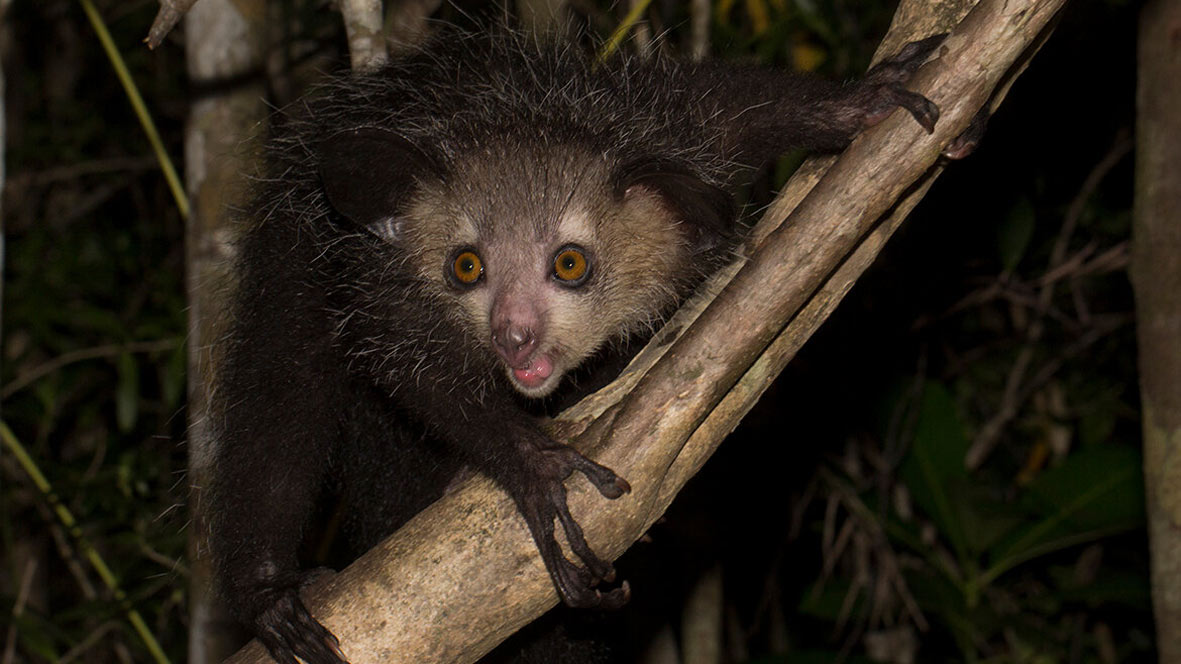
These little-known and unexplored mammals can be found as pets in Madagascar. Although at first glance, this little creature might be mistaken for a rodent, it is actually a prosimian.
The animal is nocturnal. Its body is no more than 44 cm long and weighs 3 kg, but its bushy tail can reach 60 cm. The aye-aye not only made it to the top of the "unusual animals on the planet" list, but also Red Book, as an endangered species. It's quite rare to encounter this lemur in the wild, so scientists still can't say what their lifespan is in the wild. In captivity, young lemurs live up to 26 years.
Marmoset
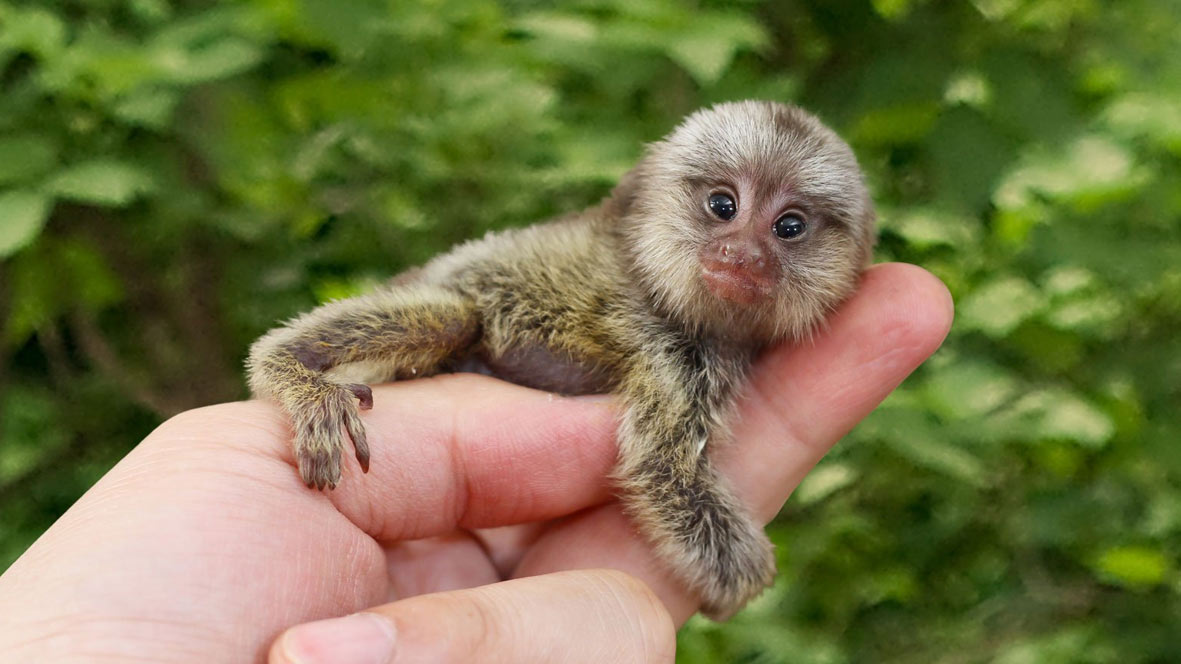
These most unusual creatures living on our planet are classified as miniature primates. Marmosets are the smallest monkeys, which explains the increased interest in them among pet lovers.
In the wild, cubs live in the forests of the Amazon, Ecuador, Peru, Bolivia, and southern Colombia. If provided with good living conditions, cubs in captivity can live up to 16 years.
Ocelot
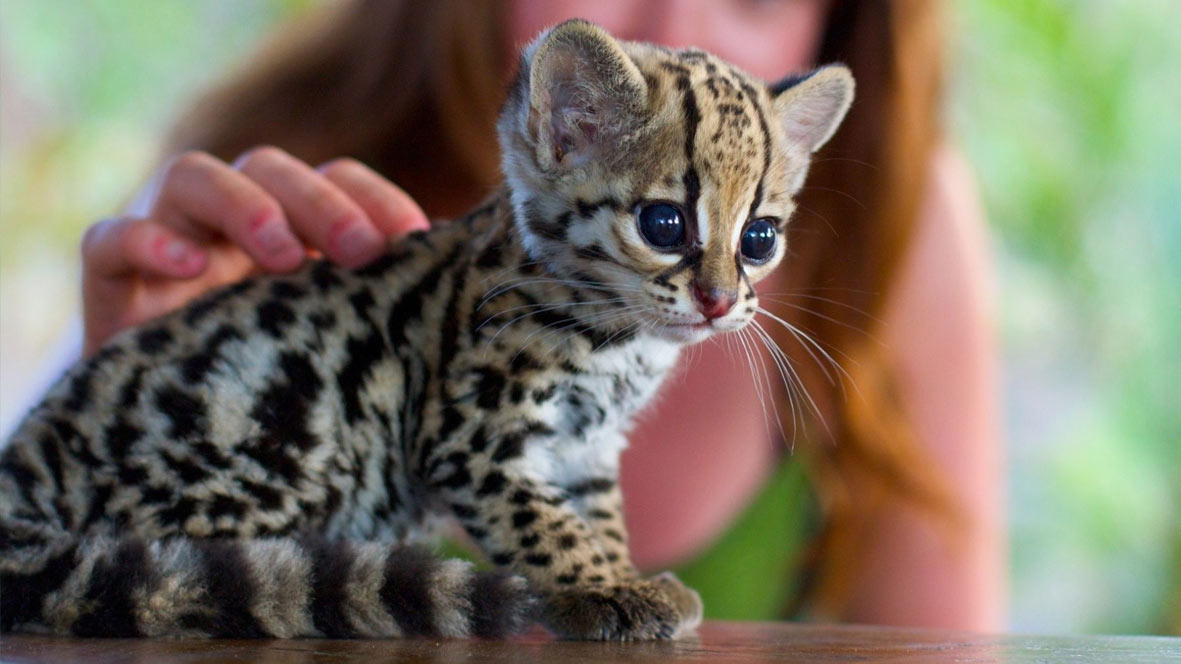
These Karsavians shouldn't be confused with domestic cats. This is Leopardus pardalis, a dwarf leopard. These animals grow up to 50 cm at the withers and weigh 10-16 kg.
Ocelot They are often found in the homes of exotic lovers (a representative of this species lived in the home of the famous artist Salvador Dalí). While contemplating the astonishing appearance of this "big cat," it's important to remember that, first and foremost, it is a fairly large predator with natural instincts to match.
As pets, ocelots live up to 25 years, although in the wild they only live about 14.
Fennec fox
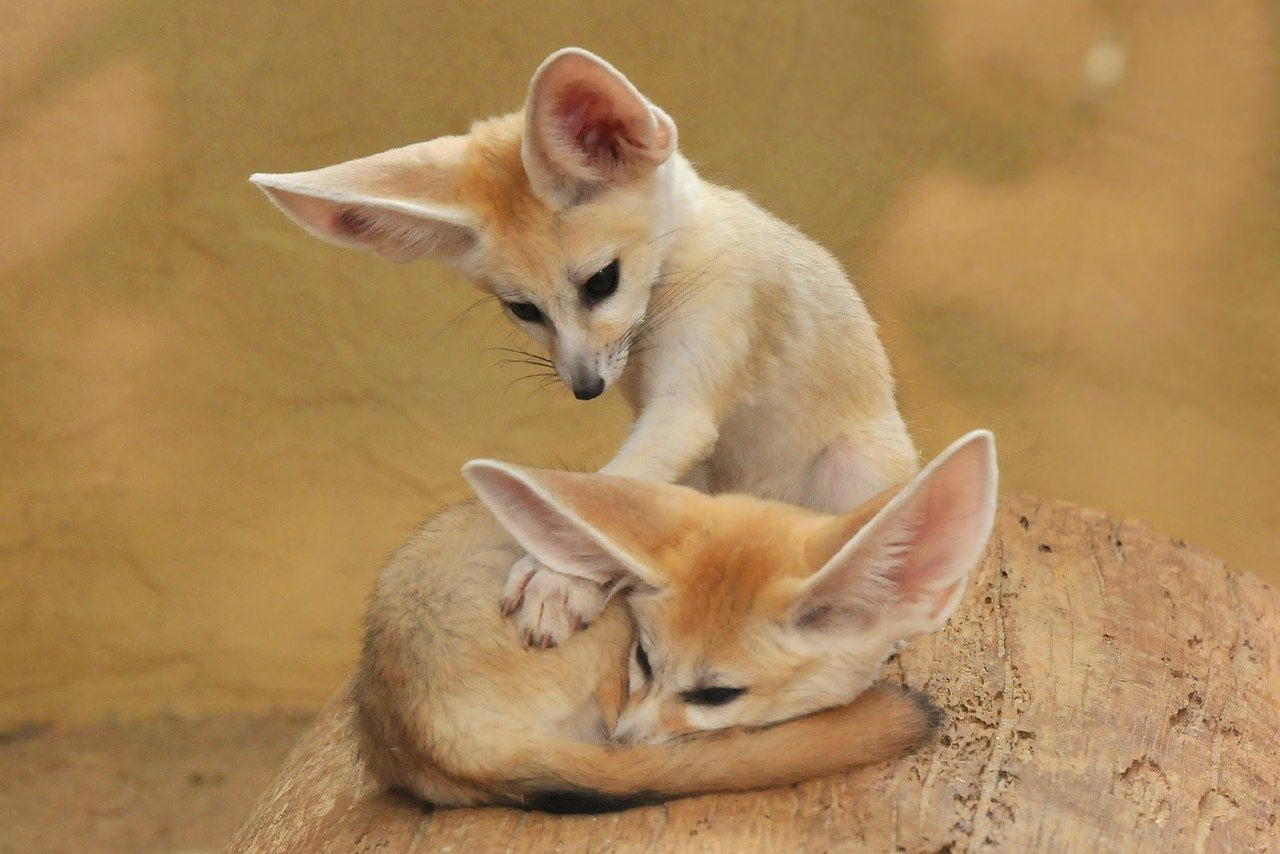
Those who searched the internet for what the world's most unusual animals look like often came across this animal with a photo and the name "dwarf fox."
This smallest, most wondrous canid inhabits the deserts of North Africa, where it constructs long burrows with numerous hiding places. The young fennec fox's diet includes small vertebrates, eggs, insects, as well as fruits and plant roots. It also enjoys carrion, although it does not hunt due to its small size. An adult fennec fox weighs 1.5 kg and stands approximately 20 cm at the withers.
They are easily tamed, like other canines, and can live in captivity for up to 20 years.
Nature's possibilities are unique. It can give us truly devoted friends among those fauna we least expect, and it can also amaze us with its imagination and the abundance of animal forms that seem unusual and strange to us. In fact, they are no less beloved children to nature than humans.
The rarest animals on the planet
We also invite you to watch a video about unique living creatures that remain on our planet in single copies.
We invite you to add your candidates to our TOP of the most amazing creatures on the planet by writing in the comments who you would like to add to the list.
Read also:


Add a comment