
Samoyed is a dog breed
At first glance, the breed's name may seem strange and even a little creepy to many. However, the Samoyed dog breed has absolutely nothing to do with eating its own kind. The Samoyed, or Samoyed dog (also known as the Samoyed Laika and the Samoyed Spitz), or the Sami Laika are all the same breed.
Content
History of origin
The breed's name derives from the time when dogs were used as companions by the Samoyed tribes. The Samoyed dog is considered one of the most ancient breeds native to the North. In ancient times, Samoyeds were used as sled dogs and for hunting walruses and bears. The Samoyed Laika was also used as an excellent guard dog for large herds of reindeer. This breed has original Russian roots. It is believed that native Samoyeds can still be found in the far north of Russia, but the purity of these individuals is questionable.
Sadly, at one point, the population of these fluffy beauties was virtually lost. Samoyeds were saved only thanks to the efforts of foreign enthusiasts, who brought Samoyed Laikas to Europe in the late 19th century. The breed's revival in Russia only began in 1989, when Polish woman Beata Sarley brought two magnificent Samoyeds from Denmark: a female and a male.
Video review of the Samoyed dog breed:
Appearance and standards
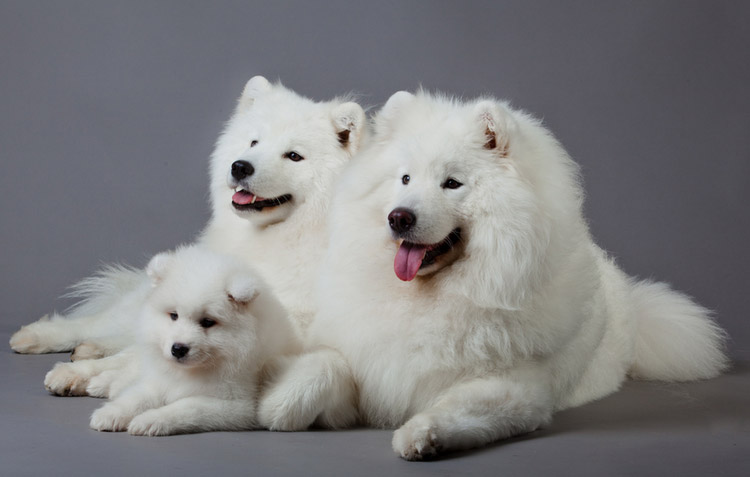
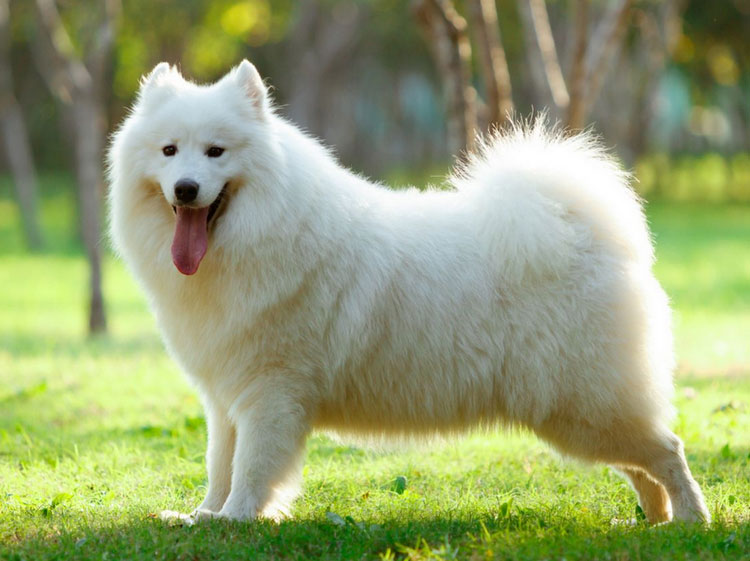
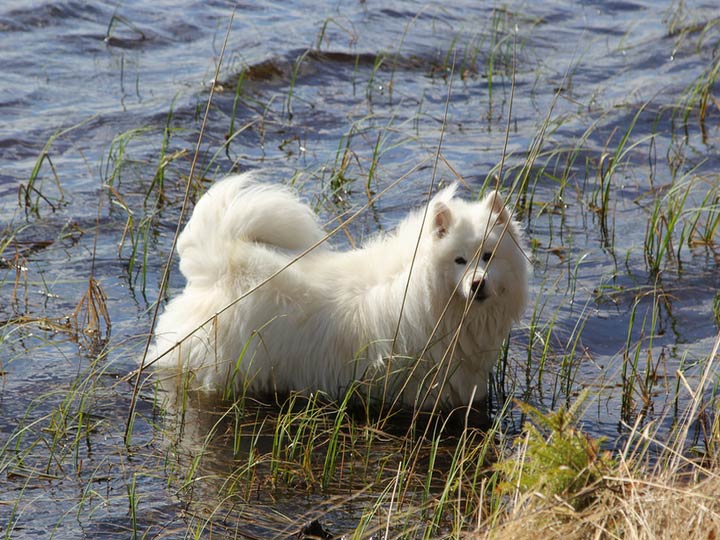
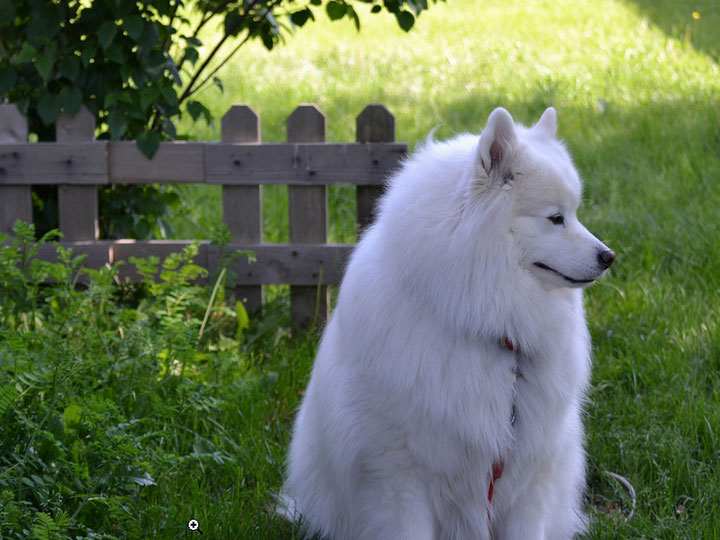
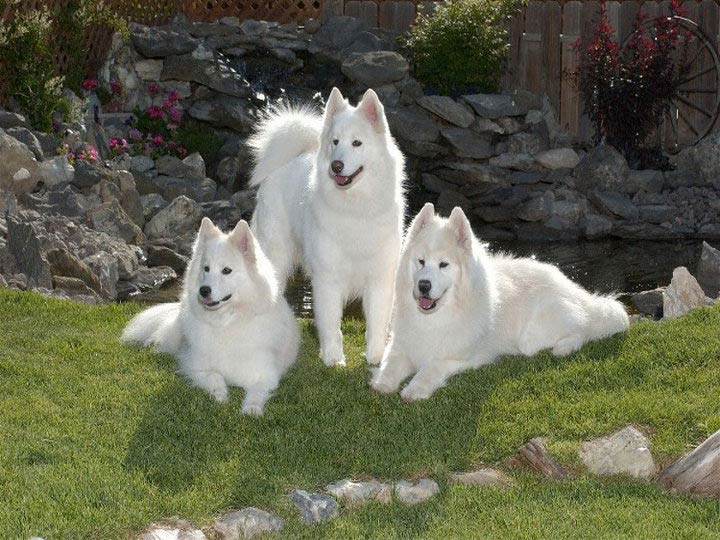
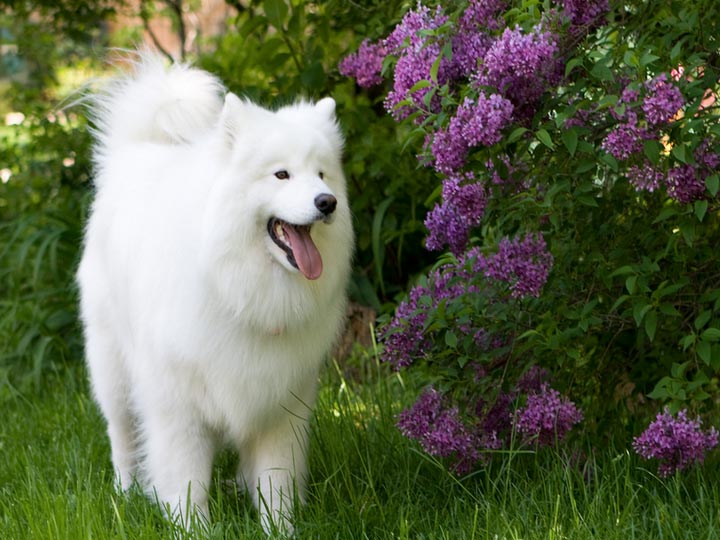
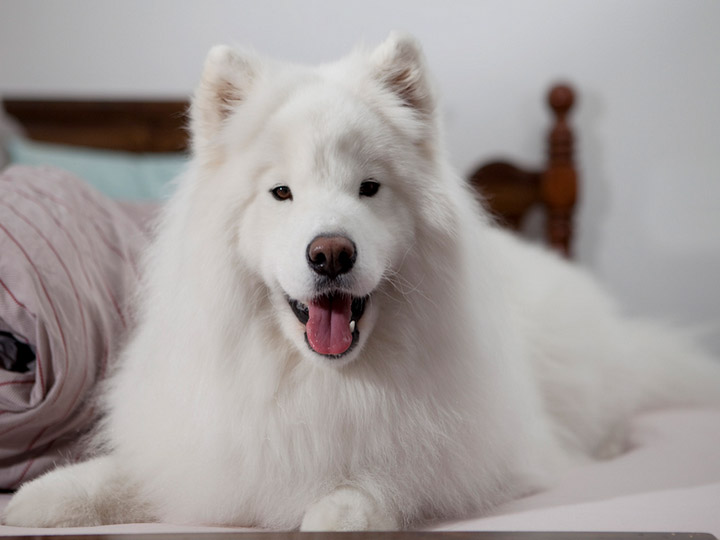
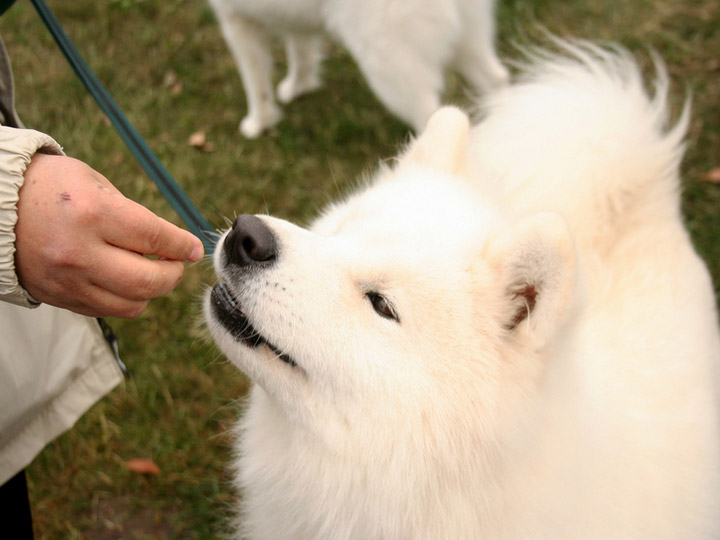
These adorable creatures are characterized by a harmonious build and a medium-sized body covered in thick white fur. Their appearance exudes self-confidence and extraordinary dignity. Their facial expression resembles a smile, created by the combination of the shape of their eyes and the dark corners of their mouth, which curl up playfully. Samoyeds are medium-sized dogs. Their height at the withers ranges from 53 to 57 cm. Their fluffy white fur weighs 20 to 25 kg.
Head and muzzle
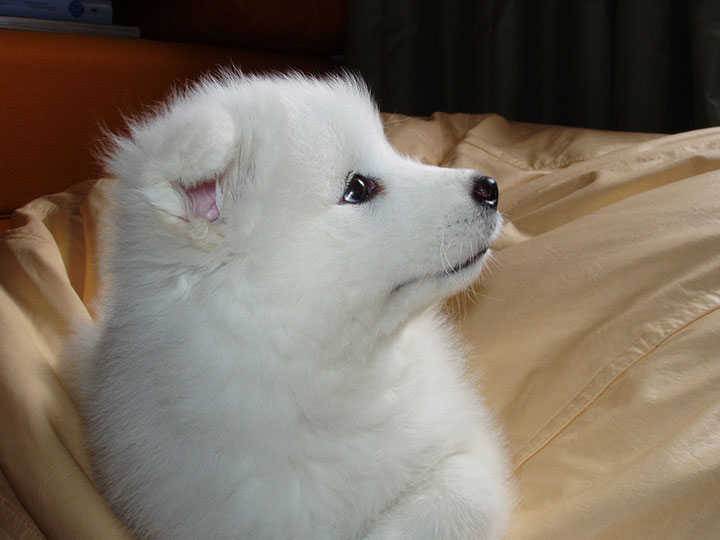
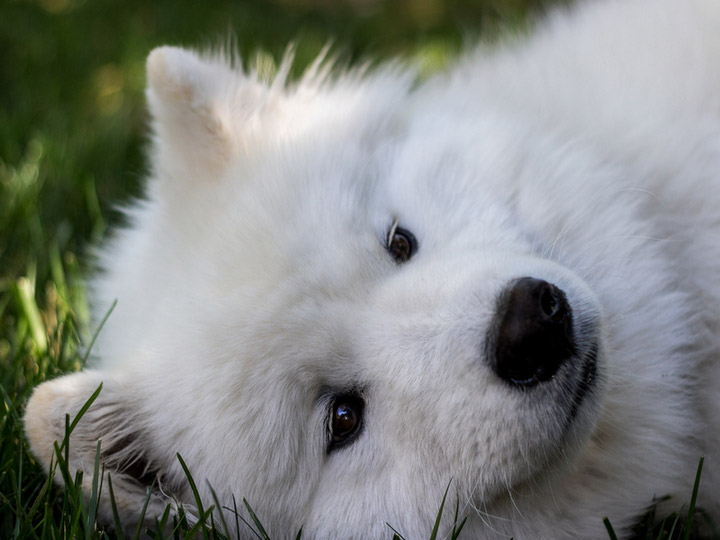
The head is wedge-shaped. The skull is slightly domed, wide between the ears. The stop is well defined, but not too sharp. The nose is black, but at certain times of the year or during life, it may become lighter, creating a so-called "snow nose." The dark rim must remain. The jaws are strong, with a perfect, correct bite. The lips are dry, thin, usually well-pigmented, and black. The eyes are dark brown, set wide apart and slightly slanted. The eyelids are also black. The Samoyed's ears are small, erect, and triangular in shape.
Frame
Samoyeds have a strong, slightly elongated build. Their body length is approximately 5% longer than their height at the withers, and their depth of chest is slightly less than their height. The back is of medium length and straight. The loin is short, strong, and straight, and the croup is slightly sloping. The legs are well-spaced, well-muscled, and parallel. The tail, carried in a partial curl, lies flat on the back.
Coat and color
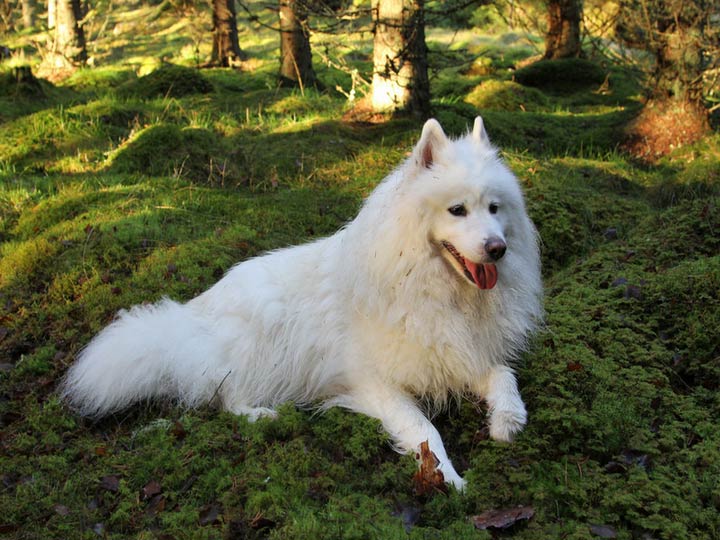
The Samoyed's coat is very thick and double, consisting of a short, soft, dense undercoat and a harsher, long, straight outer coat. A thick ruff around the neck and shoulders is desirable. The head and legs are short. The tail is well-furred. Females have a slightly shorter and softer coat than males. A well-groomed coat always has a beautiful shine. Color ranges from white or cream to biscuit-white.
Character and psychological portrait
This is an extremely intelligent and loyal dog breed, characterized by its independence. Because Samoyeds have lived alongside humans for thousands of years, they possess an almost human-like understanding. Samoyeds do not tolerate loneliness well. They simply cannot stand living in a kennel. This is an extremely active breed that requires long walks in the fresh air. These dogs are completely distrustful of strangers, as they are not aggressive. In fact, aggression in Samoyeds is a fault in the breeding process. This dog can be stubborn, but never aggressive. The dog has an excellent sense of danger. He is always very obedient on walks, and even off-leash, he will never harm others. However, he can be overly curious.
Samoyeds get along well with other pets, including cats. However, due to their innate hunting instinct, a neighbor's cat may become a prey item for a Samoyed. The Samoyed is known for its resonant bark, but it almost never howls (except when sad or bored).
Samoyeds are known for their exceptional friendliness. They get along well with children, loving their company and tolerating almost all their antics. While this dog will never bite or harm a child, its activity can easily knock over a toddler who isn't quite yet fully confident. Furthermore, American doctors recommend this breed for those prone to frequent depression and for lonely people.
This is a wonderful companion dog that requires constant companionship. Of course, to ensure a loyal, kind, and obedient dog, training begins in puppyhood. Don't overindulge this dog, but don't be too strict with it either.
Training and exercise
Samoyeds are very stubborn dogs and have an opinion on every occasion. However, they are quite trainable, quickly learning phrases, intonations, and commands, and will do anything for treats. In addition to learning basic commands, it's important to properly raise your Samoyed and teach them proper behavior at home and outside. All family members should have the same expectations, with no concessions or temporary permissions.
Samoyeds are highly trainable and often participate in agility, freestyle, and other sports, but are definitely not intended for guard or security work.
It's important to understand that this is a playful and cheerful creature, and the training system should be built around this. The dog quickly tires of monotony and will avoid training at all costs. Standard training in a circle is not the best option for a Samoyed.
Physical activity
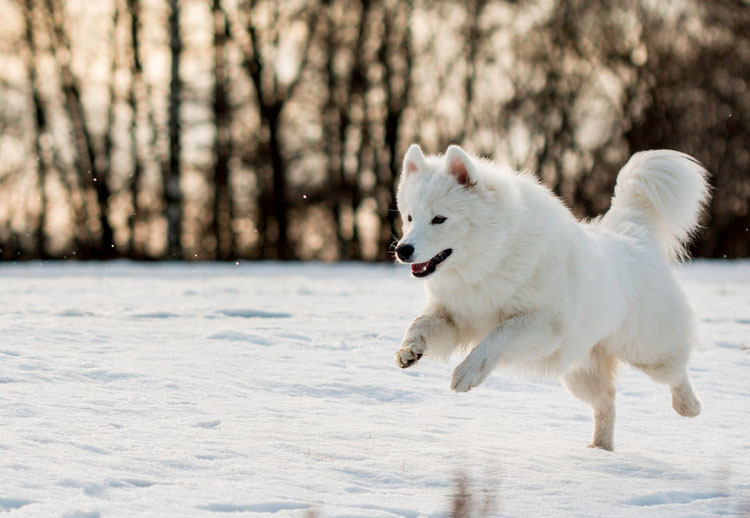
The Samoyed isn't a dog for the lazy, not only because of its difficult grooming but also because it requires a lot of walking. Up to six to seven months, a puppy should be taken out up to five times a day for 15-20 minutes. Adults need only two walks, but the exercise must be very good, otherwise health problems and inappropriate behavior cannot be avoided. At least once a week, a Samoyed should be allowed to run freely off-leash. It's a good idea to have your pet as a jogging companion.
Content
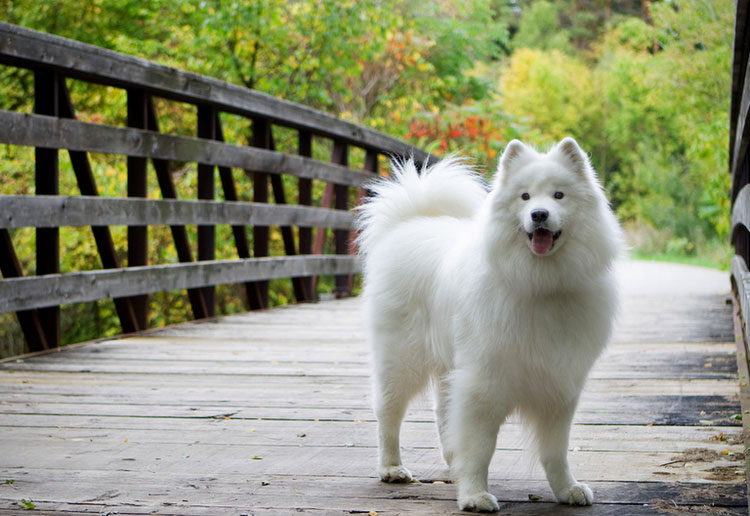
Samoyeds can be kept in both a private house and an apartment. The key is to ensure they get enough exercise. Samoyeds don't have a strong doggy odor and are quite tidy indoors, but they shed heavily, so grooming and regular cleaning will require a lot of time. Samoyeds tolerate car travel well, especially if they are accustomed to it from puppyhood.
A Samoyed puppy's favorite game outside is "vacuum cleaner." The puppy picks up everything, both right and wrong, and this is where you should focus your attention.
Care
To keep your dog looking well-groomed, it's essential to brush their luxurious coat regularly (at least 2-3 times a week, and daily during shedding season). Use slicker brushes, combs, massage brushes, and deshedding brushes.
Bathing your pet should be done as needed, but this is generally not necessary frequently, as their coat is self-cleaning. For bathing, it is recommended to use only professional shampoos, balms, and conditioners designed for white Spitz dogs, which gently cleanse and prevent overdrying the skin and coat. The eyes and ears require additional care and should be cleaned as needed. Their nails should wear down naturally during walks; if this doesn't happen, they should be trimmed to the desired length as they grow.
Diet
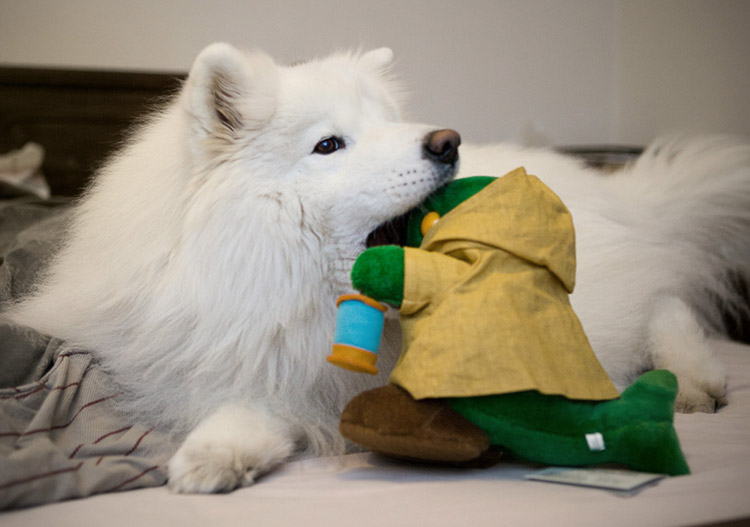
Regarding nutrition, it's worth noting that these dogs have a sensitive digestive system, so they shouldn't be fed low-quality dry food. Premium foods are preferable. super premium or natural food.
It is recommended to include the following products in the Samoyed’s diet:
- Lean meat and offal (stomachs, hearts, lungs);
- Porridges (rice and buckwheat);
- Fermented milk products (cottage cheese, kefir, fermented baked milk and yogurt) according to tolerance.
- Vegetables and greens;
- Fish fillet and eggs 1-2 times a week;
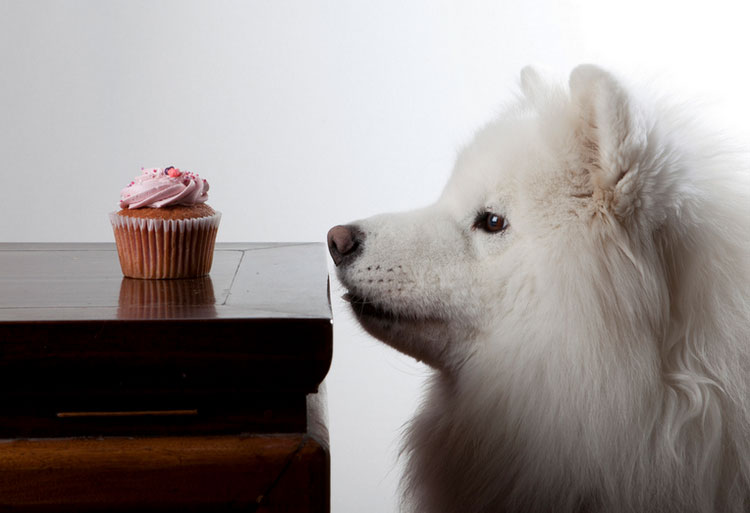
As a treat, you can give your dog berries, fruits, and biscuits.
Health, disease and life expectancy
Samoyeds are generally strong and resilient dogs, but years of selective breeding have negatively impacted their genetics and left a long list of potential hereditary diseases:
- Eye diseases. Cataracts, glaucoma, and progressive retinal atrophy are the most common. Congenital diseases also include retinal dysplasia, where abnormal retinal formation leads to vision loss or decreased vision. Some dogs are prone to inverted eyelids;
- Diseases of the endocrine system, including diabetes mellitus and hypothyroidism;
- Congenital portosystemic shunt is characterized by impaired blood flow in the liver and accumulation of toxins;
- Renal dysplasia can lead to failure;
- Aortic stenosis is a narrowing of the aorta that interferes with normal blood flow. It occurs in dogs over one year old and is more common in males than females.
- Hip dysplasia of varying degrees;
- Congenital deafness occurs;
- Among the skin diseases typical for Samoyeds, inflammation of the sebaceous glands stands out.
Dogs must undergo all preventative measures, including vaccinations and treatment for external and internal parasites. Proper care, maintenance, and feeding, as well as regular veterinary examinations, will help prevent or detect any ailments early.
The Samoyed's lifespan is 12-15 years. These dogs often remain active and cheerful until their final days.
Choosing a Samoyed Puppy and the Price
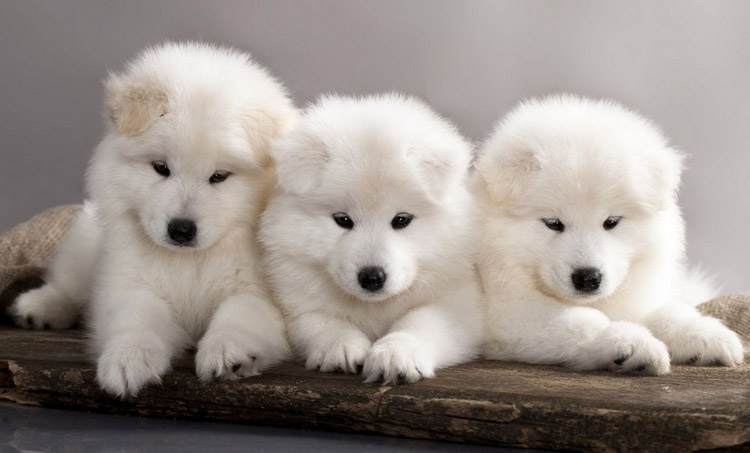
Before choosing a puppy, it's important to consider why you chose a Samoyed. This is a versatile breed that can be a companion, a shepherd, a sled dog, or even a hunter. And of course, individual dogs can be elite, winning first place at shows and participating in breeding programs. The breed's versatility doesn't mean that every puppy can be raised to be a sled dog, a companion, and a hunter all at once. Each type of activity requires a personality and talent that the breeder will suggest based on the personality and talent of the parents, as well as the puppy's behavior.
It's best to buy a Samoyed puppy from a kennel or breeder with good recommendations. A puppy card (which can later be exchanged for a pedigree), a tattoo, health documents (parents tested for genetic diseases), and a veterinary passport (which should not be blank) will indicate vaccinations, illnesses, medical interventions, and preventative measures.
Puppies of this breed are considered quite expensive, and their price can vary depending on the puppy's qualities, pedigree, health, purity, and the reputation of the kennel or breeder. The average price for a non-show-bred puppy of this breed is 20,000-30,000 rubles. Puppies with potential can cost significantly more.
Photos
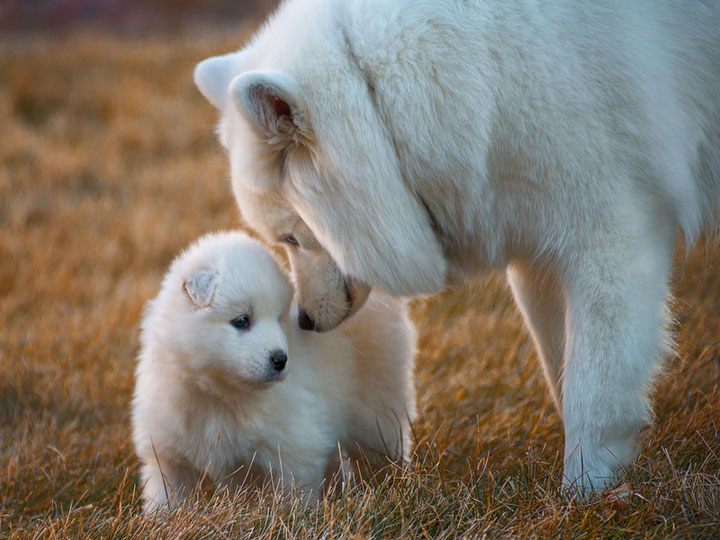
Photos of Samoyed dogs:
Read also:


1 comment
Svetlana
Gorgeous Samoyed puppy
Arch Beauty Walter is an excellent companion, promising for shows, breeding, and sport. He is bold, sociable, and spirited. He has already been shown once and won third place in Best Baby!
Works with a handler and a dog trainer. Raised outside of an apartment! Tied, vaccinated, and microchipped. Contract, breeder assistance, discounts on food, classes, and pet supplies available. Boarding available while you're away.
Located in Arkhangelsk, worldwide delivery.
Tel. 8-921-721-22-78
Add a comment