
The fastest cat in the world
Running speed for a cat is a relative concept. It largely depends on the distance covered: domestic cats can only demonstrate high performance in sprints, when the total distance covered does not exceed a few meters. Wild cats run much faster than their domesticated counterparts: this is due to the body type of certain breeds and the need to cover long distances during hunting or forced migration.
Content
- 1 The fastest cat in the world: the domestic version
- 2
- 3 Anatomy, Physiology, and Biomechanics: Why the Egyptian Mau Is a Sprinter Among Cats
- 4 Comparing Domestic and Wild Cats: Which is Faster and Why?
- 5 Health and fitness factor
- 6 Educational comparisons and interesting facts
- 7 Wildcats: Strength, Speed, and Agility
The fastest cat in the world: the domestic version
The speed of a particular breed is determined by the following factors:
- Strength and length of paws;
- Total muscle mass;
- Activity and energy of animals.
According to felinologists, the fastest cats in the world are:
- The Egyptian Mau. In some cases, its speed can reach 45 km/h, but only when running relatively short distances. This breed's impressive performance is enabled by its well-developed leg muscles and excellent ability to brace itself for maximum momentum before the start.
- Abyssinian and Somali cats. The key to their success is their long, powerful legs and strong tail, which allow for perfect balance while moving. Both breeds, distinguished by their coat length, can reach speeds of 38-40 km/h.
- SavannahThis breed is closely related to the African wild cat, the serval. This family connection allows the serval to easily reach speeds of 35 km/h in a matter of seconds and maintain this speed for quite a long time.
- Siamese This breed is more common in Russia than other exotic felines. This makes it the fastest domestic cat among those most familiar with. Its flexible body, elongated, compact head, and thin but strong legs enable the Siamese breed to run at speeds of 35-37 km/h.
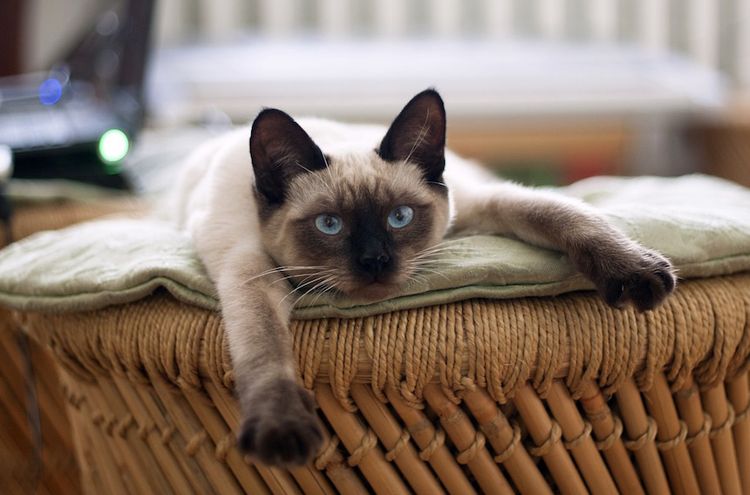
Anatomy, Physiology, and Biomechanics: Why the Egyptian Mau Is a Sprinter Among Cats
Many cite the Egyptian Mau as the fastest domestic breed, but few explain the reason for its remarkable speed. These cats have longer hind limbs than forelimbs, as well as a unique fold of skin running from the flank to the hip, allowing them to straighten their hind legs more when running, increasing their stride length and acceleration. They can reach speeds of up to 48 km/h (30 mph)—a striking example of the evolutionary specialization of feline biomechanics.
Comparing Domestic and Wild Cats: Which is Faster and Why?
There's a huge gap between the speeds of domestic animals and wild predators worldwide. The table below shows the maximum recorded speeds:
| Type of cat | Possible speed |
|---|---|
| Egyptian Mau | ~48 km/h |
| Domestic cat (average) | ~43 km/h |
| Cheetah | up to 104 km/h |
Despite the incredible speed of the cheetah, the fastest land mammal, most domestic cats can run faster than humans, and even the fastest human on the planet is slower than them.
Cheetahs can reach speeds of up to 104 km/h (64 mph), accelerating to this speed in just a couple of seconds (0–85 km/h (0–53 mph) in 2 seconds), but this is still significantly slower than the Egyptian Mau when compared in terms of body mass and acceleration.
Health and fitness factor
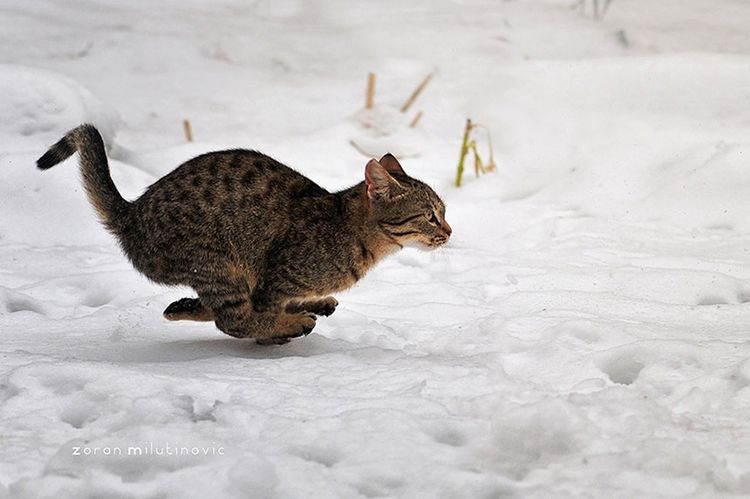
Not every pet can reach their top speed. Weight and health are critical factors. The breeds mentioned above are faster when they are at a healthy weight, have freedom of movement, and are motivated (for example, by playing or chasing a toy). Obesity, especially common among pets, significantly reduces speed and agility—excess weight hinders acceleration and reduces jumping efficiency.
Educational comparisons and interesting facts
-
In amusing experiments, the speed of a human sprinter was compared with that of domestic cats—the cat, even the most ordinary one, won easily.
-
Scientists are trying to create models of animal speed, taking into account leg length, weight, muscle strength, and air resistance. It turns out that an ideal ratio of parameters at the waist of ~50 kg (roughly the weight of a cheetah or a large dog) yields optimal maximum speed.
Wildcats: Strength, Speed, and Agility
Among wild cats, the cheetah is the acknowledged leader in speed. It can reach a top speed of 130 km/h (81 mph). This predator can reach this speed in 2-3 seconds, maintaining this intense pace for several minutes.
Over longer distances, the world's fastest wild cat reaches speeds of up to 70 km/h. It can maintain this pace for several hours. This wild cat's unique body type allows it to achieve such impressive speeds:
- Long tail to maintain balance while moving;
- A small, rounded head combined with a long neck;
- Powerful legs covered with solid muscles;
- Deep chest.
An additional advantage is the inability to retract the claws. Remaining external, they act as a kind of grip for the animal, allowing it to maintain balance and provide additional momentum during takeoff.
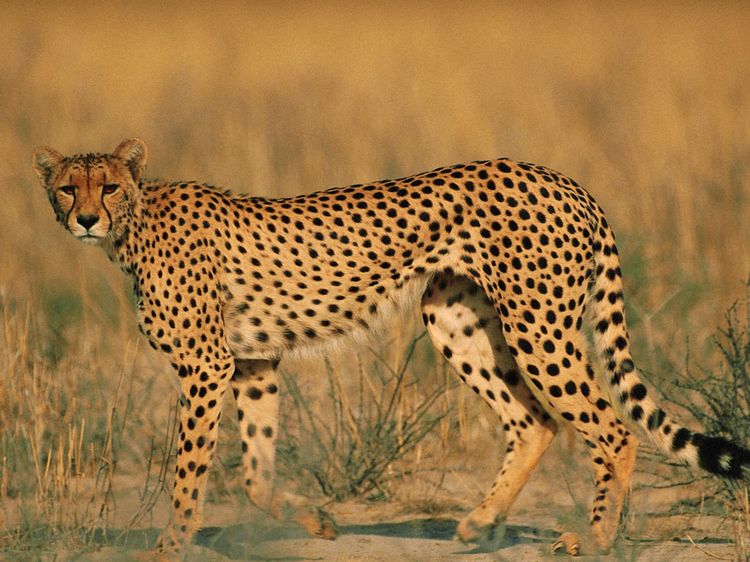
The need for large hunting areas, the specific nature of the game they hunt, and their habit of living alone are gradually leading to the extinction of the fastest wild cat. Today, the cheetah is an endangered species, not due to poachers, but to drastic environmental changes. Shrinking hunting grounds and declining numbers of potential prey are causing the early death of young individuals under six months of age. Specialized organizations and volunteers are working to restore the population and preserve the species in the wild.
Read also:
- Why do cats' eyes glow in the dark?
- Cats and kittens are the most popular animals
- Sleeping on their owner: why do cats do it?


Add a comment