
How fast do cats run?
We decided to find out what the maximum running speed of a cat is, and discovered that animals can run at speeds exceeding human world records. However, they are unable to sustain this maximum effort for long; extreme running quickly leads to problems—the animal begins to gasp for breath and loses strength. Therefore, felines use their astonishing speed in two situations: fleeing a serious opponent and hunting potential prey.
How fast do domestic cats run?
Wild cats are forced to demonstrate their superior running abilities when hunting birds and rodents and escaping from larger predators. However, this doesn't mean domestic cats can't run fast.
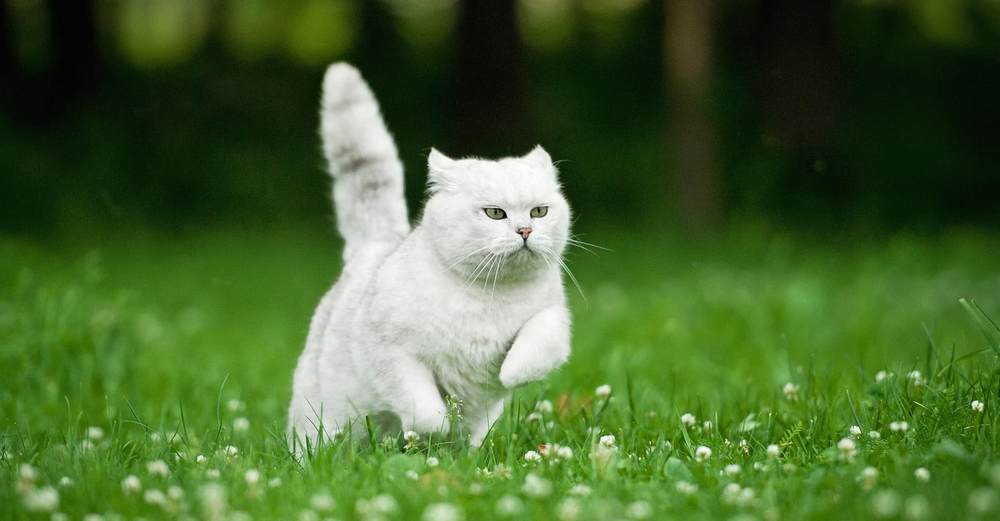
How fast you run depends on several factors:
- Weight. Overweight pets are inherently unable to maintain good physical fitness. The more fat they have, the slower their movements. Therefore, it's important to maintain a proper diet and prevent obesity by regularly engaging in active play.
- Height. Larger pets have greater strength, pushing off the floor and ground with their paws and developing excellent speed. A Maine Coon will always outrun a less agile Munchkin or Persian.
- Heredity. Egyptian Mau breeds are naturally superior running dogs. They have an extra fold of skin at the base of their hind legs, which gives the appearance of a slightly drooping belly. This characteristic allows Egyptian Mau dogs to run and jump with a significantly wider stride than other breeds.
- Evolution. By culling weaker specimens, nature has endowed cats with a sophisticated musculoskeletal system and running technique, allowing them to reach incredible speeds almost from the first step.
Maine Coons, Bobtails, Orientals, Abyssinians, Somalis and Bengals are also considered excellent runners.
On average, any domestic pet can run at 13.5-13.8 km/h (8.5-8.7 mph). Even at a leisurely jog, speeds rarely drop below 8 km/h (5 mph). Champion felines can reach speeds of 45-50 km/h (28-31 mph), exceeding human achievements. The Egyptian Mau can challenge Usain Bolt's record of 44.72 km/h (27.5-31 mph).
Running technique
When accelerating, a cat takes strides, each of which is six times longer than its body length. All four paws are engaged. From the side, it's noticeable that the animal uses a paired hopping technique:
- Pushes off with its hind legs and literally flies, stretching its body as much as possible.
- Lands on the front legs and by this time the rear legs are activated again, giving another powerful push.
Claws extend from the pads to grip the surface and provide increased propulsion, aiding in fast running. Incidentally, it's precisely because of extended claws that cats sometimes slip on painted floors, laminate, or linoleum. Their claws don't find traction and slip on smooth floors.
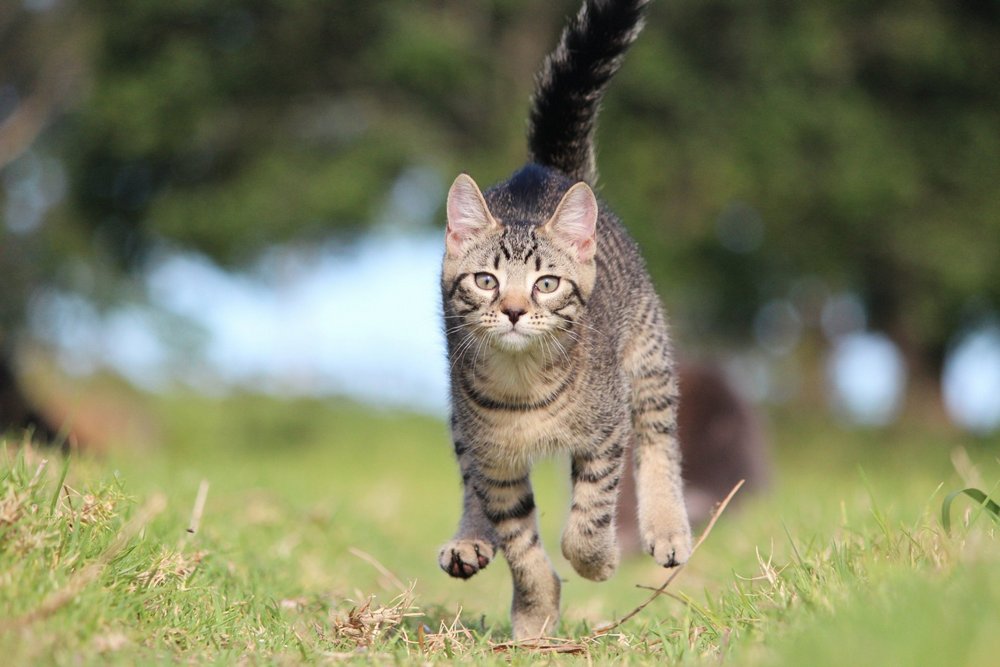
Another aid is the luxurious tail. Its function is to maintain maneuverability. When running, it helps the pet maintain balance and control direction. A breed like the Bobtail, which is naturally tailless, doesn't need an additional balance aid. However, cats that have lost their tail due to injury may have trouble adapting to running and regaining their previous speed.
Duration of fast running
Despite their high speed, cats cannot run for long—a disadvantage common to both wild and domestic animals. A lion hunting an antelope quickly abandons the chase if it fails to catch its prey within a few minutes. A cat fleeing a dog seeks a tall tree in which to hide from its enemy.
Low endurance is caused by the heart muscle, which is physiologically unsuited to sustained exercise. Extreme running leads to stress and rapid breathing, which can be life-threatening.
A video showing the best members of the species running will help you see the amazing speed of these pets. But even the stolid cat, when in danger, can reach speeds of up to 30 km/h, often exceeding that of its owner.
Read also:
- Why does a cat chase its tail?
- Why do cats run around the apartment after using the toilet?
- My cat is afraid of everything and hides: what to do?


Add a comment