
Red Basset Fauve de Bretagne
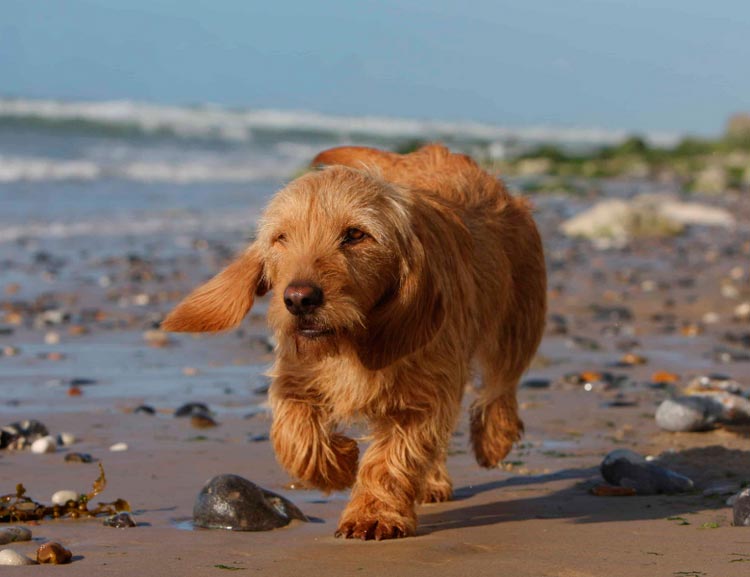
The Basset Fauve de Brittany is a rare hunting dog breed, recognizable by its short legs, long body, and wiry red coat. This stocky hound was developed in France and is used to hunt foxes, hares, roe deer, and wild boar, as well as following blood. It is bred for working trials. The Basset Fauve de Brittany also makes a wonderful companion and family dog; it is intelligent, energetic, friendly, and great with children.
Content
History of origin
The Basset Fauve de Bretagne was developed in the late 19th century, when hunters sought to create a smaller version of the large, red Basset Fauve de Bretagne. At the time, it was at the peak of its numbers and popularity, renowned for its working abilities, but was ill-suited for hunting on foot. It is not known for certain which breeds were involved in the breeding program, but it was likely Vendée and other bassets, wire-haired dachshunds.
Until the 1980s, Basset Fauves de Bretagne were bred only in France. They were then exported to the United Kingdom, the Netherlands, Belgium, Italy, and several other countries, where hunters appreciated their working qualities. The first Basset Fauves were brought to Russia in 2013. Throughout the world, including France, the breed is considered rare and scarce.
Hunting with a red Basset Fauve de Bretagne
The Red Basset Fauve de Brittany is a passionate, energetic, and hardy hound with an excellent sense of smell. It works equally well alone or in a small pack. It is resourceful, courageous, and tenacious. It moves quickly and easily through swamps and sneaks up quietly and stealthily through bushes. In experienced hands, training and coaching are easy. The Red Basset Fauve de Brittany is very responsive and outgoing, quickly understanding what is expected of it. It is used as:
- hound for small game (hare, rabbit, fox);
- hound for ungulates (roe deer, wild boar);
- bloodhound;
- works on birds in the manner spaniel.
Today, more and more people are turning their attention to the Basset Hound for its distinctive appearance and docile nature. It has proven itself as a family dog, companion, and athlete.
Appearance
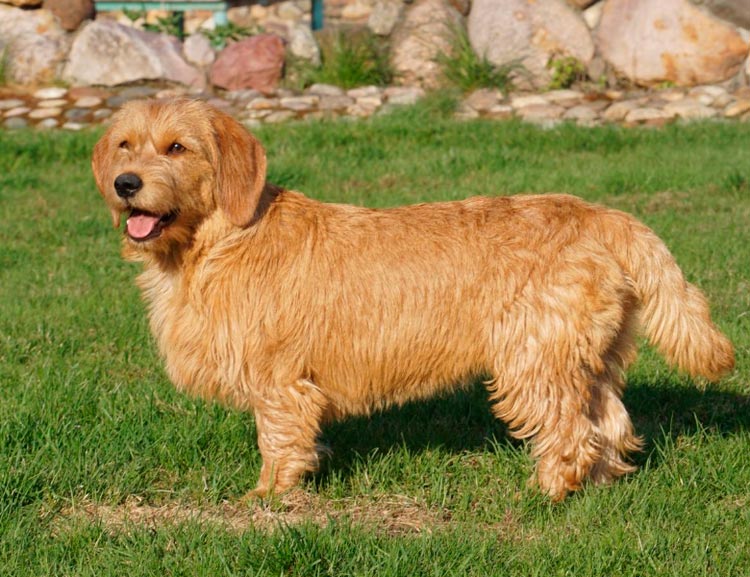
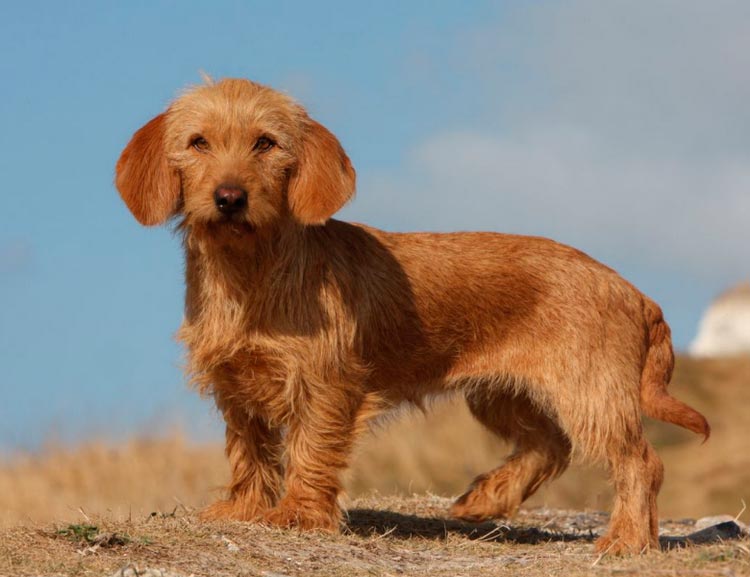
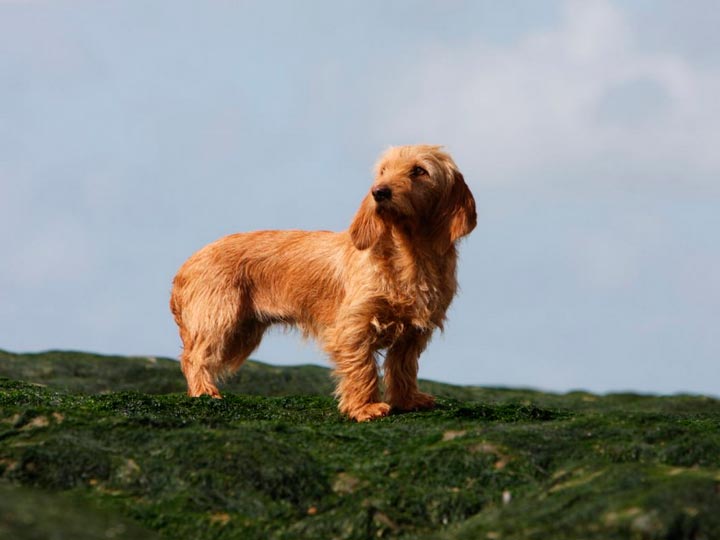
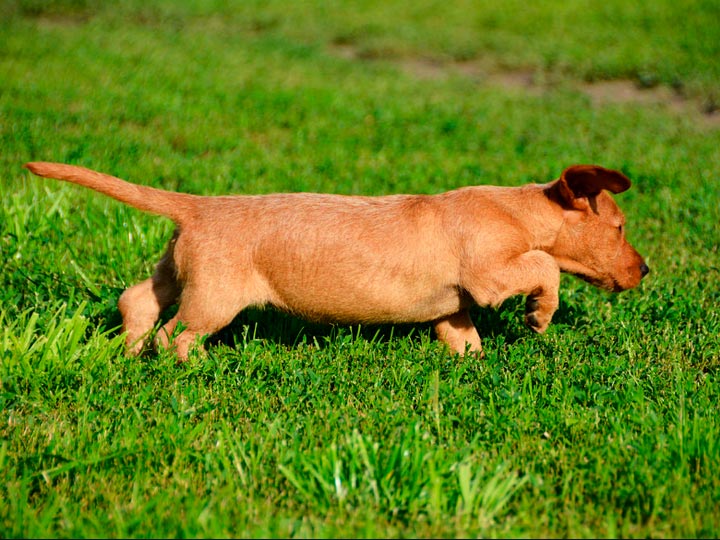
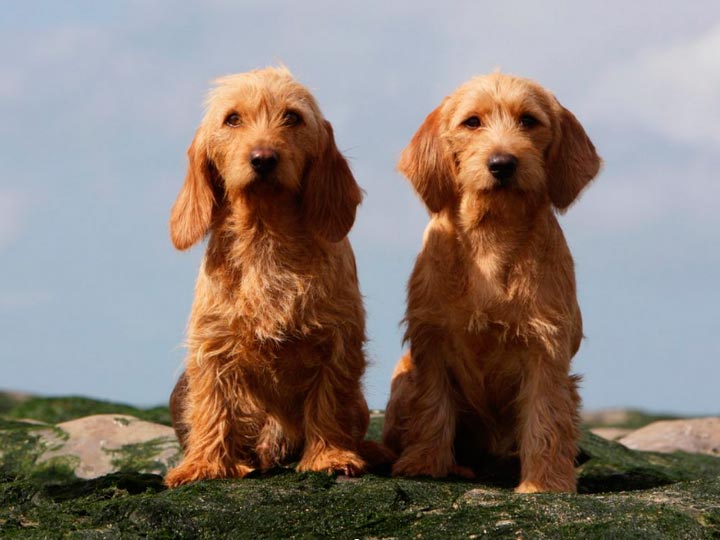
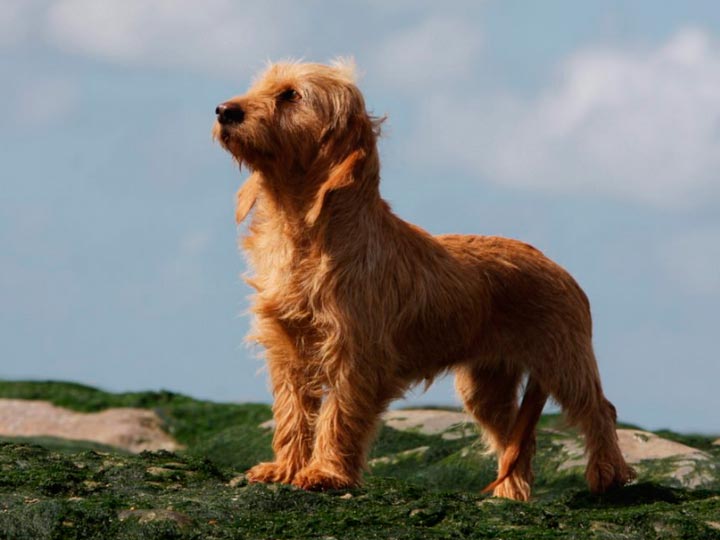
The Basset Fauve de Brittany is a small, stocky dog with an elongated body and a wiry, red coat. It is very energetic and hardy. Sexual dimorphism is pronounced.
- Height at withers: 32-38 cm;
- Weight: 15-18 kg
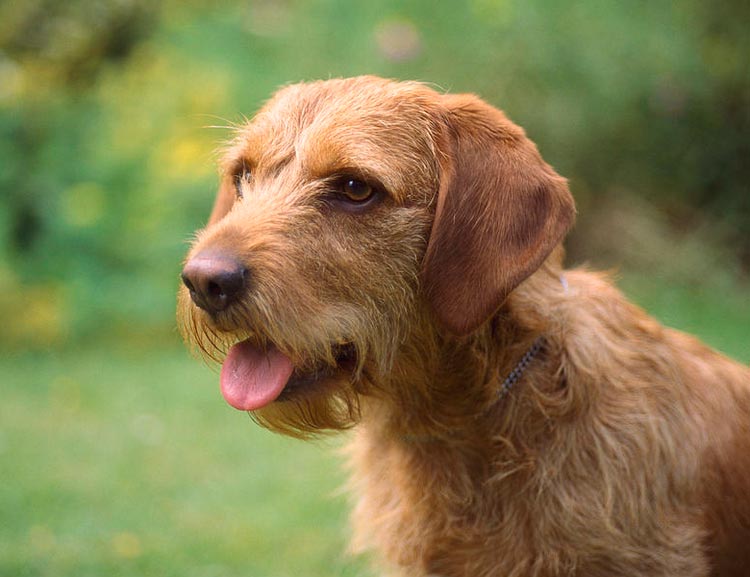
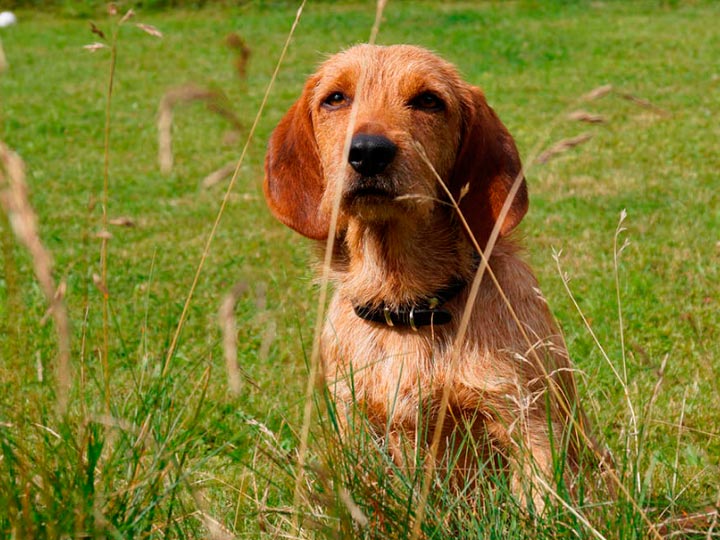
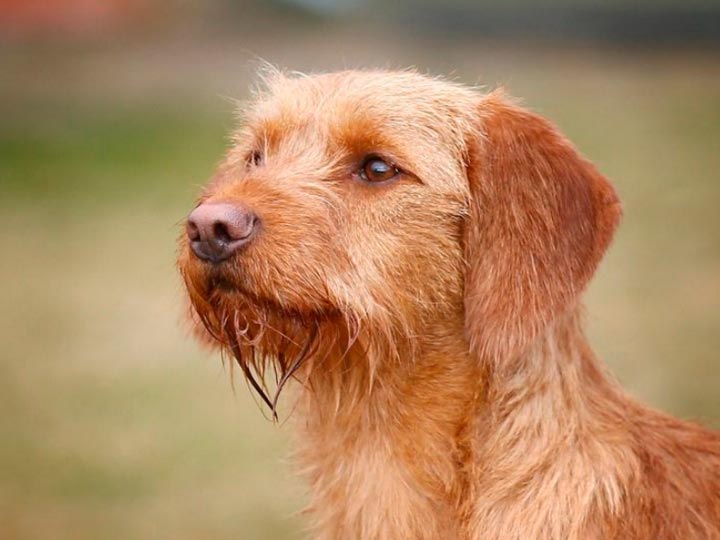
The skull is elongated with a prominent occipital protuberance. The muzzle is fairly long, pointed rather than square. The earlobe is black or dark brown. The lips cover the lower jaw. The whiskers are not very abundant. The bite is scissor-shaped. The eyes are dark brown, not protruding, and not too deep-set. The ears are set at eye level, pointed, and drooping. The neck is short and muscular.
The body is elongated, with a broad back and loin. The chest is deep and broad, with well-sprung ribs. The underline rises smoothly to the groin. The tail is medium length, thick at the base, and carried in a sickle shape. The limbs are short, strong, with good bone and muscle. The paws are compact, with tightly arched toes. The pads are tough, and the nails are strong.
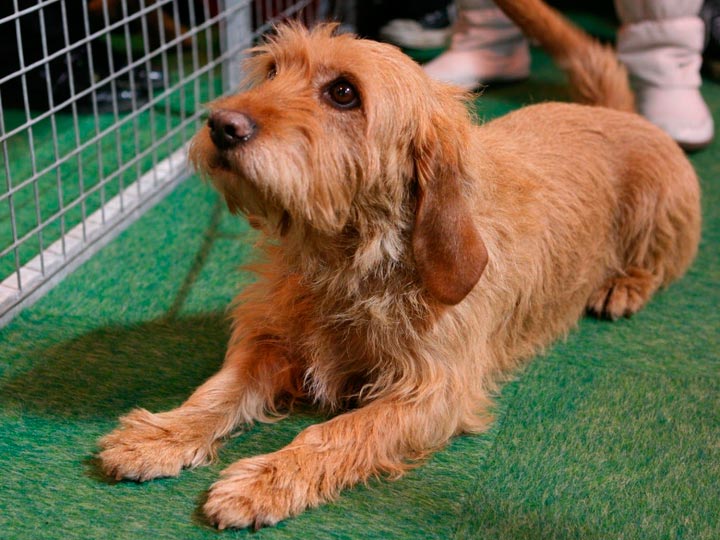
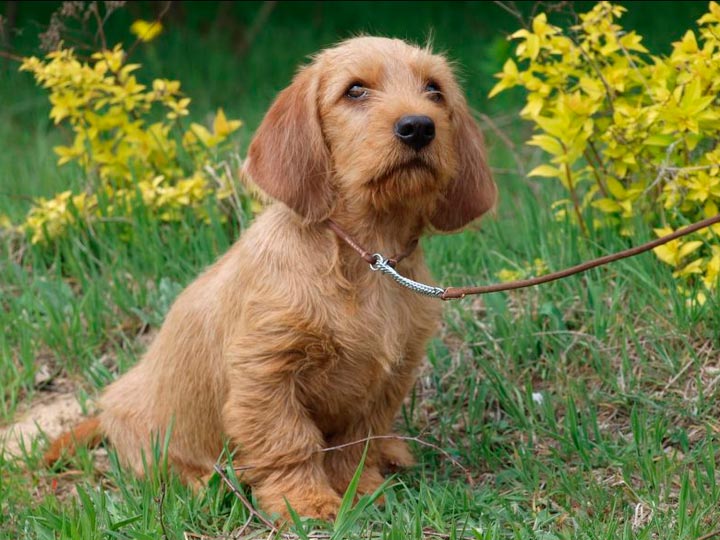
The skin is elastic, fairly thick, and free of folds. The coat is coarse, very harsh, and fairly short. The head is not heavily feathered. The coat color is red (ranging from deep red to wheaten). A white spot on the chest is undesirable.
Character and behavior
The Basset Fauve de Brittany is a passionate hunter, a wonderful companion, and a family dog. He is affectionate, sociable, even-tempered, very intelligent, and people-oriented. He is easily trained and adapts to the pace of family life. Like other hounds, he is quite independent and self-sufficient. He has a keen sense of smell and a keen sense of trail.
The Basset Fauve de Brittany is a true optimist by nature and strives to involve everyone around him in his playful activities. He is sociable and quickly finds common ground with all family members. He gets along well with children of all ages and is patient and affectionate with younger children.
Owners note that the Brittany is cheerful and friendly, often even with strangers. They are very sociable. They get along well with other pets, including cats. They may chase away neighbors' cats and other small animals.
The Red Basset Fauve de Brittany does not tolerate prolonged loneliness. It is best suited for families where someone is home most of the time. It has a watchful instinct and will always announce the arrival of guests. Some Basset Fauve de Brittanys can be prone to excessive barking, but are never aggressive.
Content Features
The Basset Fauve de Bretagne is well suited to apartment life. Large breeders typically keep their dogs in spacious enclosures, but the Basset Fauve de Bretagne is absolutely not suited to living alone in a yard.
The energetic and resilient Basset Fauve de Brittany requires adequate physical and mental stimulation. Walks should last at least two hours daily, with rare exceptions. This will help maintain a healthy tone and release pent-up energy. These short dogs love to run through forests or fields and enjoy various retrieval tasks. They are eager to work and be useful, and often enjoy participating in various sports.
Bassets de Brittany aren't exactly known for their cleanliness. On walks, they'll delve into the thickest brush and happily scamper through a swamp. But the upside is that their wiry coat is self-cleaning, leaving it clean after drying. The lack of a distinctive doggy odor is also a plus.
Care
The red Basset Fauve de Brittany doesn't require much grooming. Its smooth, wiry coat doesn't stick to anything and is easy to brush, so frequent washing isn't necessary. Occasional trimming is necessary.
Seasonal shedding is not pronounced. Hair will be noticeable indoors if not regularly brushed and trimmed. Nails should be trimmed regularly to prevent excessive growth and splitting. Ears should be checked weekly and cleaned as needed. Teeth should be kept healthy.
Health and life expectancy
Studies have shown that the average lifespan of the Basset Fauve de Brittany is 11-14 years. The main causes of death were traffic accidents, cancer, heart failure, and kidney failure.
A survey of the owners of the base allowed us to establish a predisposition to diseases of the reproductive system, hearing apparatus and eyes (corneal ulcer, cataracts). The percentage of these diseases is small. The breed is considered to be free of these diseases.
Where to buy a puppy
The Red Basset Fauve de Brittany is a rare and little-known breed, even in France. These dogs appeared in Russia only recently, in 2013. Puppies are primarily purchased for shows and as companions, but hunters have also appreciated their working qualities. You can learn about breeders and planned litters on the website of the Red Basset Fauve de Brittany Breeders and Owners Club.
The motto of the French breed club is "Hunting First." Breeders in France highly value Bretons and are reluctant to sell puppies abroad, especially as show dogs.
Price
The cost of puppies of a rare breed usually ranges from 30,000 to 70,000 rubles.
Photos and videos
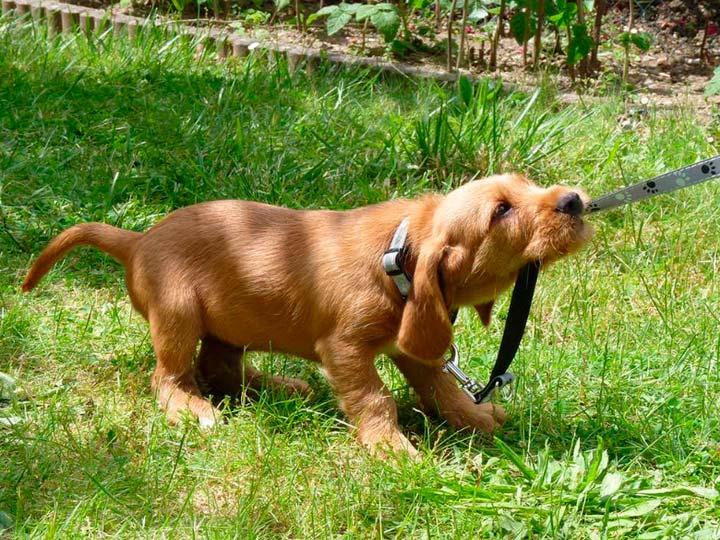
The gallery contains more photos of the Red Basset Fauve de Bretagne breed.
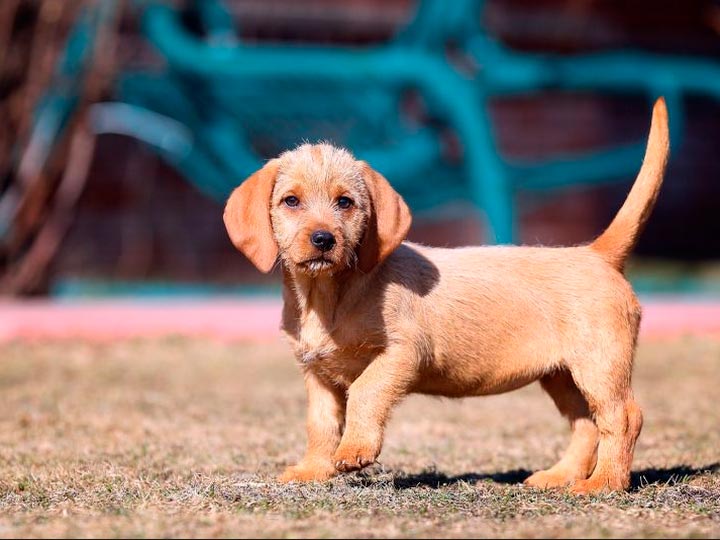
Video about the Red Basset Fauve de Bretagne dog breed
Read also:


1 comment
Igor
A very wonderful dog. Judging by the description, she's not prone to tantrums, tantrums, or "shopping."
Add a comment