
Vomiting blood in a dog
Vomiting is a reflexive reaction of the body, involving the expulsion of stomach contents through the mouth. Hematemesis (vomiting blood) is almost always a sign of a serious underlying condition. Therefore, if your dog is vomiting blood, it's a reason to immediately contact a veterinarian. Taking any measures on your own is strongly discouraged, as it's important to find and immediately eliminate the underlying cause.

Symptoms of hematemesis in dogs
When a dog vomits, the stomach and abdominal muscles contract sharply, while the esophageal sphincter relaxes. Due to increased intra-abdominal pressure, the stomach contents are expelled through the esophagus and mouth. Vomiting may be preceded by increased salivation, frequent swallowing, and restlessness.
In case of hematemesis, the dog's vomit may contain:
- scarlet or dark red blood;
- blood clots;
- semi-digested blood, resembling brown coffee grounds in appearance.
Caution! Vomiting should not be confused with regurgitation, which is the expulsion of food from the esophagus before it reaches the stomach. The causes of vomiting and regurgitation are completely different, and the latter can be much more dangerous.
According to the nature of the course, hematemesis is divided into forms:
- acute, posing a threat to the life of the animal;
- moderate severity, which may go away on its own;
- mildly expressed, dangerous because it is often chronic.
Bloody vomiting may be accompanied by tarry stools (melena), which is caused by the presence of blood in the feces. The dog may also experience lethargy, poor appetite, increased heart rate, and elevated body temperature.

Causes of vomiting blood
The development of hematemesis can be caused by a gastrointestinal disease (for example, infectious gastroenteritis). Vomiting blood can occur when blood from other organs and internal cavities enters the stomach, as well as in cases of acute liver failure (for example, infectious hepatitis). One possible cause of hematemesis is the presence of a viral infection or endoparasites in the dog's body.
Vomiting blood is often the result of irritation or injury to the gastrointestinal tract or respiratory system, caused by the ingestion of foreign objects, toxic plants, pesticides, or household chemicals that are toxic to dogs. Factors that can make a dog vomit Medications, including hormonal medications and nonsteroidal anti-inflammatory drugs (diclofenac and ibuprofen), can cause blood clots. Hematemesis also often develops in the late stages of cancer.
Important! Since bloody vomiting often indicates a serious illness, and blood loss itself is dangerous, if this symptom is detected, consult a specialist immediately. Before seeing a veterinarian, the owner should ensure the dog is completely calm, stop feeding, and only give water in small amounts.
Diagnostics
During your appointment, your veterinarian will thoroughly examine your pet for any mechanical injuries, trauma, or other sources of possible bleeding. They will also review your pet's medical history to determine whether any previously diagnosed medical conditions could have triggered the vomiting.

A thorough medical history is crucial to determine the cause of hematemesis. The vet will ask the dog's owner to provide as much detail as possible about the dog's behavior and vomiting patterns, including the amount and consistency of vomit, frequency, duration, and timing of the episodes.
- Vomiting immediately after eating most often occurs with diseases of the gastrointestinal tract.
- Diseases of the liver, pancreas or gallbladder can be accompanied by frequently recurring, debilitating bouts of vomiting.
- A characteristic sign of kidney failure or diabetes is the presence of ammonia or acetone odor from the mouth.
- A rotten smell may indicate advanced stomach or intestinal diseases, and if a dog has not been able to go “big” for several days, it may have intestinal obstruction.
- The combination of bloody vomiting, general weakness and elevated temperature gives reason to suspect an acute infectious disease: leptospirosis, parvovirus enteritis or intestinal plague.
To diagnose the causes of hematemesis, blood tests (complete blood count, biochemistry, and coagulation tests), urine, and stool tests are performed. If necessary, an ultrasound and/or X-ray of the abdominal organs, as well as an endoscopy of the esophagus, stomach, and small intestine, are prescribed.
Treatment
Treatment is prescribed based on the results of a diagnostic examination and, in many cases, is administered in a hospital setting. It involves addressing the cause of the hematemesis and providing restorative therapy.
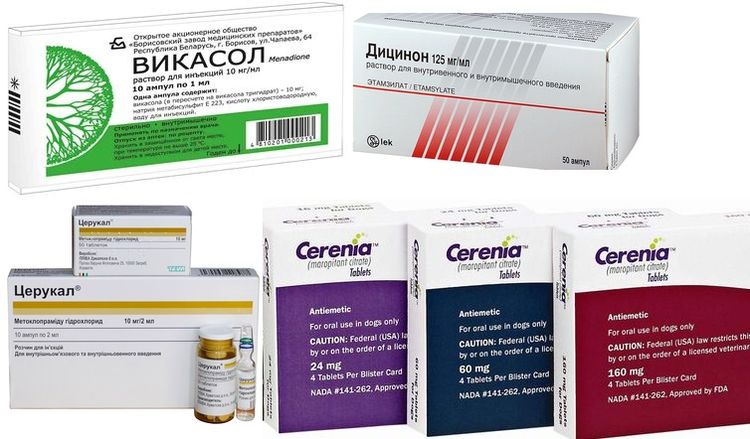
The dog is placed on a fasting diet for several days. To maintain vital functions and restore fluid and electrolyte balance, intravenous drips with Ringer's or Ringer-Locke's saline solution are administered. If necessary, the dog may be given a blood transfusion or pain medication (depending on the pain intensity, from No-Spa to opiates). Treatment for hematemesis also includes the use of hemostatic agents (Vikasol, Dicynone, Gordox) and antiemetics (Cerucal, Serenia).
If poisoning is the cause of bloody vomiting, the dog may be prescribed a one-time dose of activated charcoal, and medications such as Smecta, Enterosgel, Regidron, and specific antidotes (Menadion, Pralidoxime) are used to relieve the intoxication. For hematemesis caused by acute gastritis or gastric ulcers, antihistamines are prescribed to inhibit gastric secretion, gastroprotectors that protect the gastric mucosa from the effects of pepsin and hydrochloric acid (Omeprazole, Quamatel), and antibiotics.

If a large number of helminths or other endoparasites are detected in the intestines, treatment is used veterinary drugs for deworming dogs Alben, Albendazole, Caniverm, Dirofen, Drontal and others.
Treatment of diseases of the liver, gall bladder or pancreas (pancreatitis) that cause vomiting of blood in dogs cholecystitis or cholangitis) is aimed at reducing pain, relieving spasms, supporting the body, and necessarily includes therapeutic fasting.
Once the bloody vomiting has completely stopped, the dog is switched from a fast to a soft diet, which should be maintained for at least 5-7 days. Only easily digestible food, preferably liquid, should be fed in small portions. During the recovery period, it is advisable to provide the pet with a calm lifestyle, avoid physical activity, limit walks to 10-15 minutes, and try to isolate the recovering dog from other animals during walks.
Read also:


1 comment
Viola https://lad-unity.com
My neighbors had a Labrador vomit blood. The dog died. So, be very careful and contact a veterinarian immediately.
Add a comment