
Russian-European Laika (REL)
The Russo-European Laika is a domestic breed of medium-sized hunting dog. The REL is prized primarily for its versatility, endurance, and passion for work. The Laika has a challenging personality, but a properly trained dog will become a loyal friend and reliable companion.
Content
History of origin
The Russo-European Laika emerged from the systematic crossing of Arkhangelsk, Karelian, Vogul, Khanty, Kostroma, Kirov, Mari, and other Laika types bred in various regions of the USSR. The result was a breed group dominated by black and white coloring—a trait that was determined to be preserved. Kennels were established in Leningrad, Moscow, Kirov, Yaroslavl, Vologda, Novgorod, and other major regions. A male named Putik, born in 1946, served as the standard for the REL. His parents were the Khanty and West Siberian Laikas.
In 1980, the Russian-European Laika breed was recognized by the International Cynological Federation and assigned to Group 5, along with two other Laikas – the West Siberian and East Siberian.
Video about the Russian-European Laika (REL) breed:
https://youtu.be/-VENC3W3mSI
Purpose
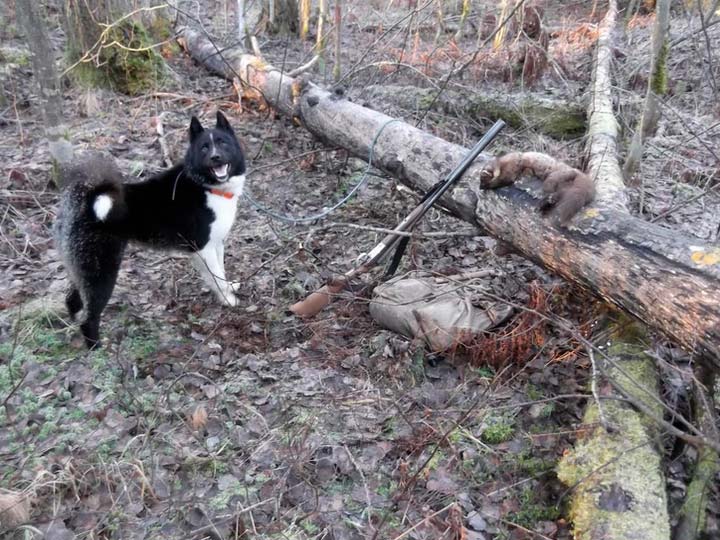
First and foremost, the Russo-European Laika is a versatile hunting dog that can be trained to hunt virtually any game, from ducks to bears. It performs best in forested areas and is widely used by hunters pursuing various species. The Laika is well suited for hunting fur-bearing animals, as well as ungulates. When searching for an animal or bird, the dog attracts attention with its bark and holds the prey until the hunter arrives, but if the prey escapes, it pursues it silently.
Russian-European Laikas are very hardy and well-adapted to work in harsh climates. They are energetic and agile, possessing excellent hearing, smell, vision, hunting instinct, and orientation.
A very keen sense of smell and a desire to work allow you to use huskies In search and rescue services—police and customs. However, due to very poor and difficult training, Laikas are rarely used as service dogs.
Appearance
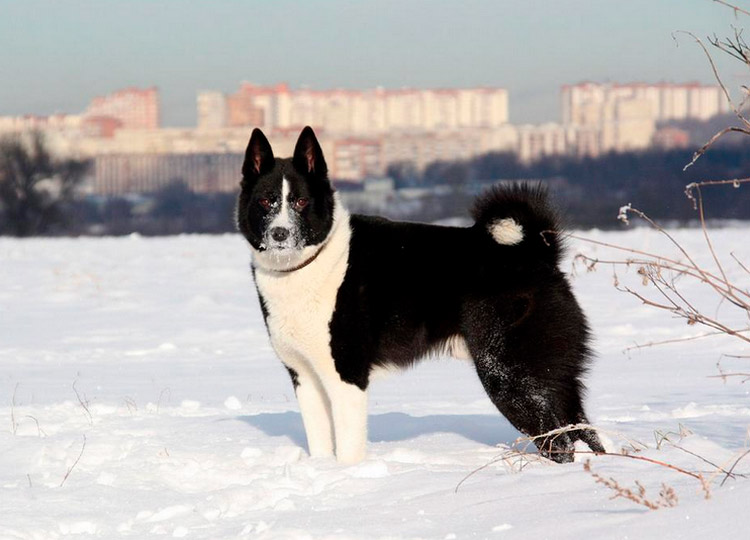
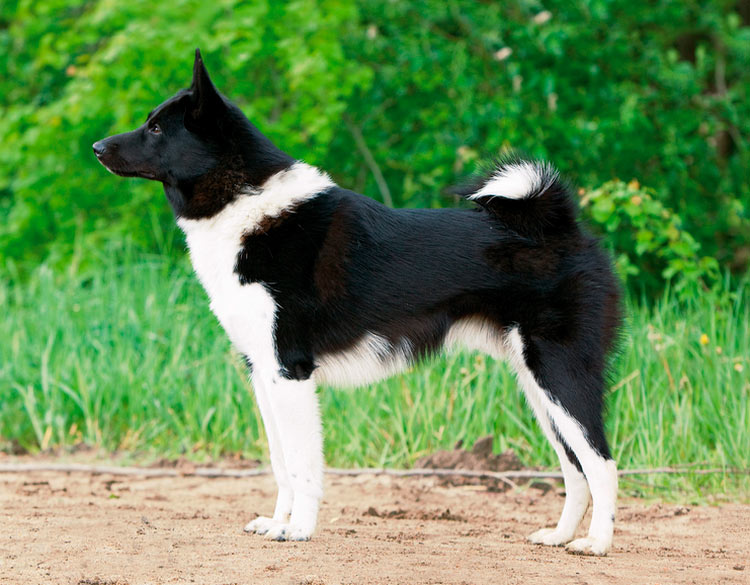
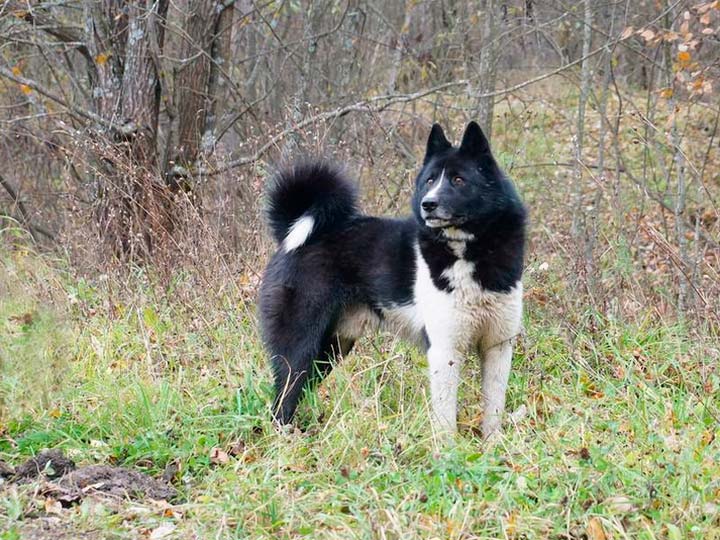
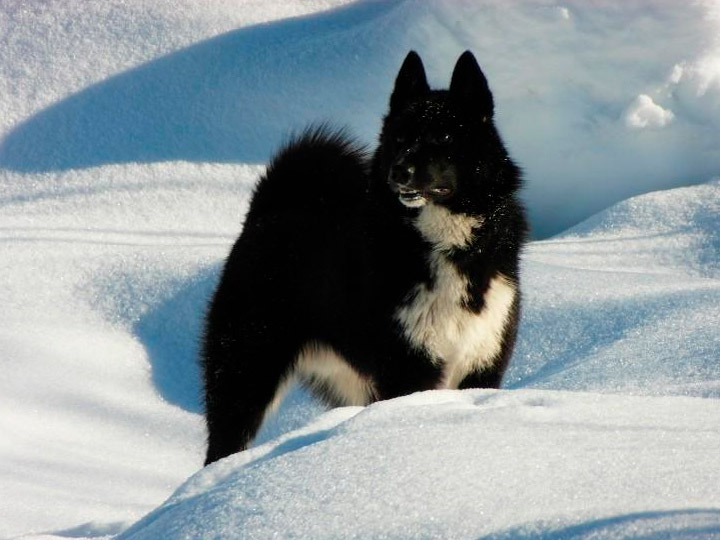
The Russo-European Laika is medium-sized, strong, and dry. Males stand 52-58 cm tall, while females stand 48-54 cm tall. Sexual differences are clearly defined.
The muzzle is pointed and dry, slightly shorter than the skull. The stop is not sharply defined, but is enhanced by slightly protruding superciliary ridges. The cheekbones are well developed. The skull is slightly longer than it is wide. The occipital region is rounded. The lips are dry, close-fitting, and do not droop or form flews. The ears are erect, mobile, set high, wide at the base, pointed at the tip, and triangular in shape. The eyes are small, moderately slanted, oval, and dark brown. The gaze is lively. The teeth are large, well-developed, and meet in a scissor bite.
The neck is muscular, oval in cross-section, equal in length to the length of the head, set at an angle of 45-50 degrees to the body. The chest is broad, deep, and oval in cross-section. The back is strong, straight, and not too long. The loin is short, moderately arched. The croup is slightly sloping, the belly is slightly tucked up. The body is square in format, with a stretch index of 100-105. The height at the sacrum in males is 1-2 cm less than at the withers, and in females it is the same or 1 cm lower. The legs are dry, straight, and parallel, their length slightly exceeding half the height. The circumference of the metacarpus is 10-12 cm in males and 9-11 cm in females. The paws are oval, with well-knit toes. Dewclaws It is advisable to remove the tail. The tail is curled into a ring or sickle over the back and may be held close to the hip. When straightened, its length should reach the hocks or be 1-2 cm shorter. The skin is elastic, dense, and not loose. The muscles are dry and well developed. The skeleton is strong.
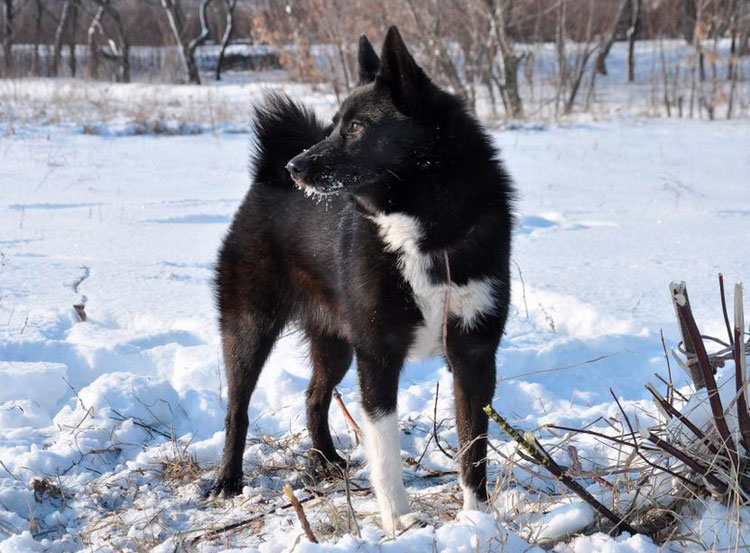
The coat is harsh, consisting of a straight topcoat and a well-developed, dense, lush, and soft undercoat. It is short and dense on the head and ears, and forms a "ruff" on the neck and shoulders. Laikas have sideburns on their cheekbones. The hair on the withers is slightly longer, especially noticeable in males. The legs are covered with short, harsh, dense hair, which is longer on the back, forming feathering without feathering. The paws have short hair, forming a brush between the toes. The tail is well-furred with straight, harsh hair, which is longer on the underside. The coat is black and piebald or a solid color: black or white. Speckling on lighter areas is undesirable.
Character
The Russian-European Laika has a very spirited and strong character, which not everyone can handle. It is fearless, possesses a strong will toward prey, and is very assertive and independent in its work. It is ready to pursue prey for days, constantly barking, and advances gently. Its behavior is balanced. It is an active dog with a well-developed sense of direction. Laikas are not known to be aggressive toward people; only in rare cases, usually due to poor training, do they exhibit excessively aggressive behavior. They are excellent watchdogs.
The REL is usually wary and jealous of strange dogs. It has a strong territorial instinct and will only share a home with dogs that have established a hierarchical relationship. It views all other dogs entering its property with hostility. It is very willful, vocal, and prone to running away. It is rarely tolerant of small children – the Laika demands respect and respect for its personal space. It often plays happily with older children, but rarely obeys.
With proper training and regular interaction, they become very attached to their owners. They choose one person as their owner and are fond of other family members, but don't show much devotion.
Education and training
Russo-European Laikas are difficult to train, especially as puppies. Even as adults, they remain very independent and freedom-loving. They constantly try to escape and evade commands. Only when hunting can this dog truly reveal its intelligence, ability to independently assess a situation, and make decisions.
The Laika is very stubborn and needs to be trained to obey from the very first day it arrives in the home. It needs to be shown who's boss. Training is somewhat complicated by the fact that strong pressure, and especially physical punishment, should not be used; the dog needs to feel protected. Socialization plays a crucial role in training. A dog that grows up alone and doesn't learn to interact with other dogs and other animals causes its owner numerous problems, to the point of making it impossible to take it hunting with other people and dogs.
The basic commands you need to teach a husky are: "Heel!", "Come!", "Sit!", "Speak!", and "Quiet!" Training should be done regularly, constantly reviewing the material covered, while being assertive and patient.
To fully develop a Laika's hunting instincts, it takes a great deal of effort and time spent in the forest and fields. As they mature, these dogs are intelligent and develop a close bond with their owner. Furthermore, through experience, a Laika can learn to vary its search width: for birds, it minimizes it, while for fur-bearing animals, it widens it. A Laika can be trained to find fox holes, making it suitable for hunting with a fox terrier or other denning dogs. Training is best left to experienced hunters familiar with the nuances of working with this breed.
Content Features
City life is very dangerous and challenging for a working Laika. The dog can't satisfy all its needs on a leash, and without strict supervision, it can run away and get lost, get hit by a car, or get into other unpleasant adventures. The optimal environment for a Laika is a crate or a chained dog near a kennel, with regular walks over a large area. This active dog is not suitable for the elderly, those who prefer quieter activities, or as a pet for a child. Some hunters keep a Laika in an apartment, but it's worth noting that this is not the best option for either the owner or the dog.
A Laika requires ample exercise. A puppy should only be walked on a leash and collar; a harness can be purchased for an adult dog. However, providing a full-time walk on a leash is impossible; a Laika needs to be allowed to run freely from time to time, and should only be released when fully obedient. However, even then, there's no guarantee that the dog won't get carried away, get lost, or run off in search of adventure. Many hunters have found GPS collars, which help track their dog's location, to be a lifesaver in such situations.
Care
Grooming a Laika is simple. To maintain a neat appearance, brush the dog 2-3 times a week, and usually daily during shedding season – this speeds up the shedding process and prevents clumps of down. Bathe the dog as needed, but no more than once a month. It's best to avoid bathing during cold weather. Inspect the ears weekly and clean the outer ear canal if necessary. Trim the nails every 3-4 weeks. After hunting, inspect the dog for ticks, even if the dog has been treated for external parasites on time.
Nutrition
Owners of the Russian-European Laika claim that these dogs are completely unfussy eaters. But this doesn't mean you can ignore basic feeding rules and feed them whatever you want. Their diet should be balanced in ingredients and contain everything they need for a healthy and fulfilling life. During periods of intense physical activity or before hunting, calorie intake should be doubled or tripled. The Laika's digestive system is better suited to digesting natural foods. Approximately 50% of their diet should consist of meat and offal, with the remainder consisting of cereals and vegetables. If desired, you can introduce your dog to prepared food, at least premium, suitable for active medium-sized breeds.
Health and life expectancy
The Russian-European Laika is a healthy breed, with no serious hereditary diseases. These dogs are known for their strong immune system, endurance, and excellent adaptability to various conditions. Diseases are usually caused by improper care, nutrition, or housing, which are entirely dependent on the individual. Despite their strong immune system, Laikas require annual preventative vaccinations. This is especially true for dogs that hunt and regularly come into contact with wild animals. Furthermore, they are treated year-round for external parasites, fleas, and ticks, which can carry dangerous parasitic infections.
Their lifespan is typically 13-15 years. Working hunting dogs very rarely survive this long – they get lost, get run over, or die from predators. Furthermore, Laika owners regularly have to deal with injuries sustained while hunting.
Choosing and pricing a puppy
In the CIS and neighboring countries (Poland, Germany, the Baltics) there is a large population of factory-bred REL with accumulated stable exterior and working qualities.
When choosing a puppy, it's important to pay attention to the working qualities of the parents, as demonstrated in trials and live hunting. Most hunters only participate in shows once or twice to obtain a hunting passport, so these assessments are of little importance. Clubs or specialized forums can help you gather the necessary information about breeders and their pets.
By 1.5 to 2 months, the puppy should meet the standard. When choosing a puppy from a litter, you can trust the female's owner, ask an expert for help, or rely on your own intuition—whichever you prefer, as they say.
How much does a Russian-European Laika cost?
The average price of a Russo-European Laika puppy in Russia is 25,000-30,000 rubles. The price is largely influenced by the breeder's location and the working ability of the parents.
Photos
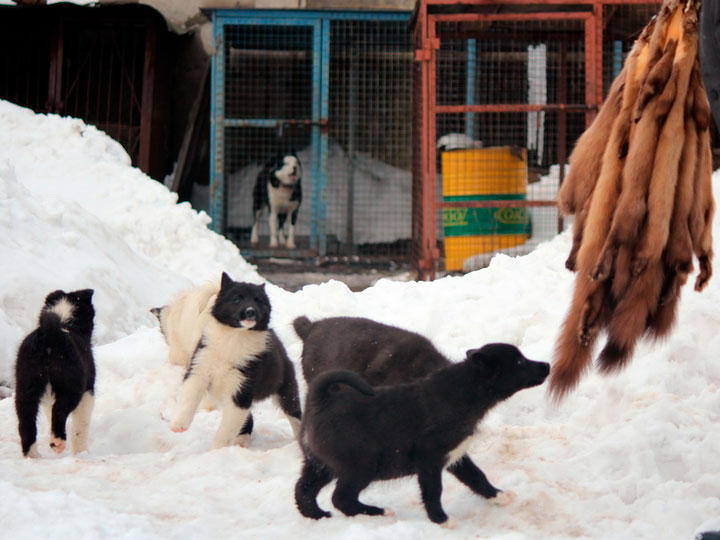
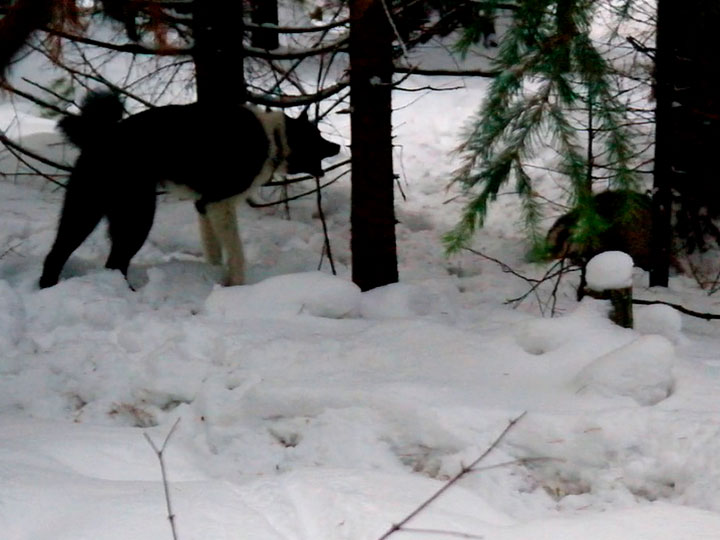
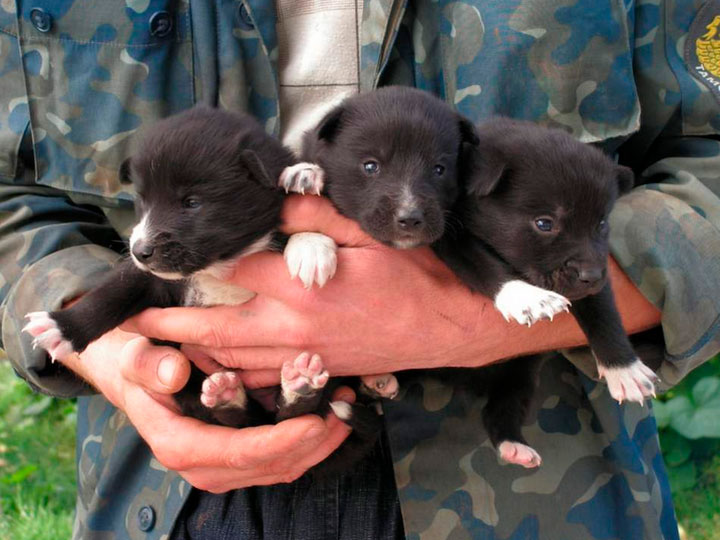
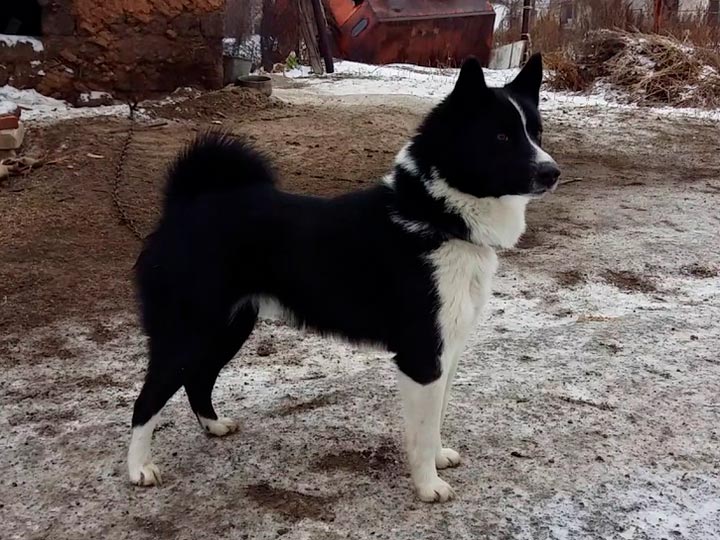
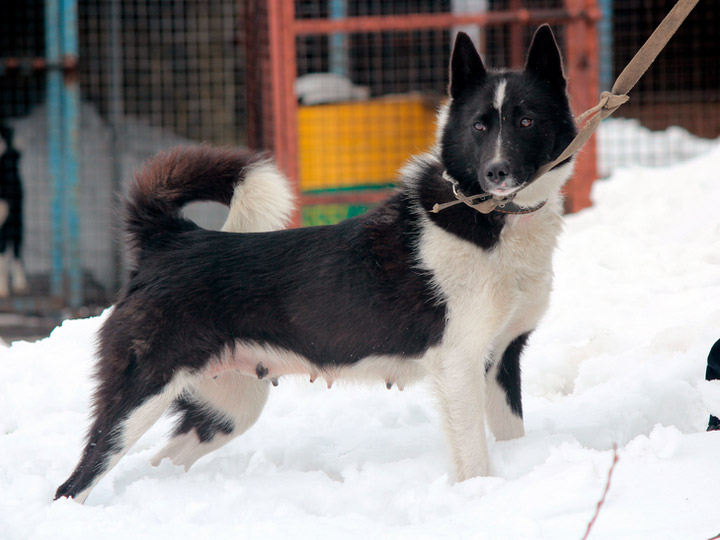
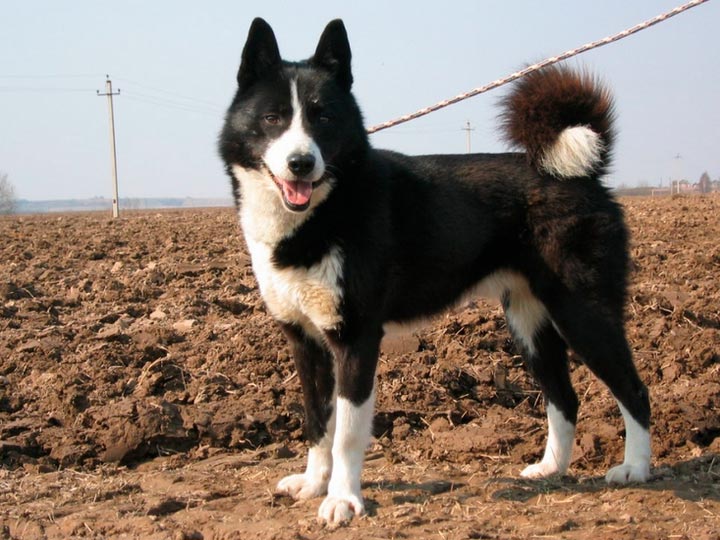
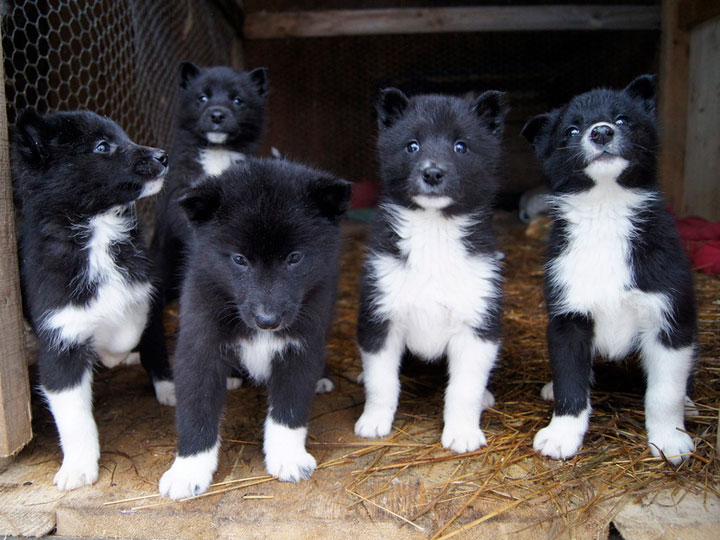
The gallery contains photos of puppies and adult dogs of the Russian-European Laika breed.
Read also:


Add a comment