
Russian hunting spaniel
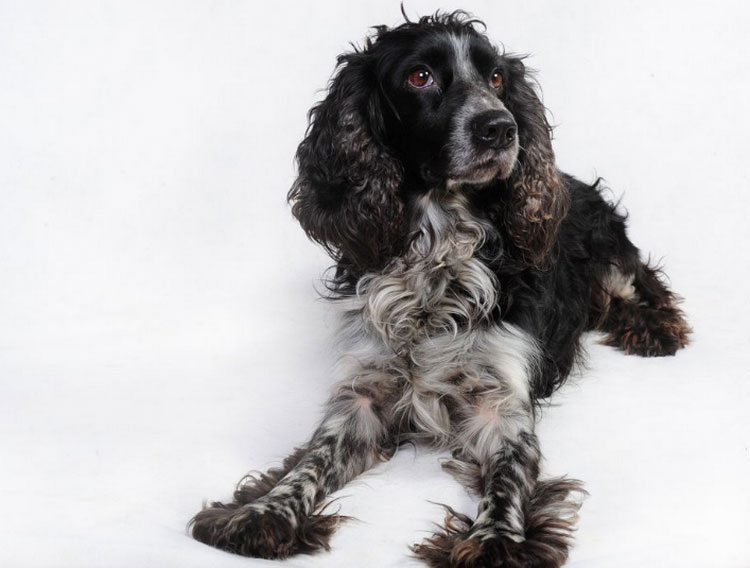
The Russian Hunting Spaniel is the only domestic gundog. It is used for hunting various game birds, sometimes following blood. Besides being a good working dog, the Russian Spaniel is also a wonderful companion. The breed is not recognized by the FCI, but is registered with the RKF.
Content
History of origin
There are over 10 spaniel breeds worldwide, and the Russian hunting spaniel ranks high in popularity and working ability. Since the breed is not recognized by the International Cynological Federation, its numbers outside its homeland and the CIS are very limited.
The first spaniels were brought to Russia, mainly cockers, brought from England, they belonged to the royal family. These small dogs were used for pheasant hunting, which was very fashionable at the time in Western Europe.
Most of the imported spaniels were cockers, but they didn't perform well in Russian conditions. Therefore, in the early 20th century, breeders began selecting more temperamental and long-legged dogs for breeding, also infusing them with Springer blood. By the late 1930s, a diverse population had formed that didn't fit the standard of any existing breed, but shared a number of common traits. Breeding efforts were concentrated in Leningrad and Moscow, with a few dogs in Sverdlovsk. During the war and post-war years, the development of the Russian spaniel was halted, but then resumed with renewed vigor. A preliminary standard was drawn up in 1949 and subsequently revised twice, in 1966 and 2000.
Video about the Russian Hunting Spaniel dog breed:
https://youtu.be/O4PSW8w_AYY
Appearance
The Russian Hunting Spaniel is a small, well-proportioned dog with an elongated body and a strong, lean constitution. The muscles are well developed and moderately defined, the skin is elastic and dense, and the coat is long.
The breed standard highlights several important proportions:
- The height at the withers for males is 40-45 cm, for females – 38-43 cm.
- The oblique length of the body (from the anterior protrusion of the sternum to the ischial tuberosity) is 115-120% of the height at the withers in bitches and 110-115% in males;
- The height to the elbow is equal to 1/2 of the total height;
- The length of the skull is equal to the length of the muzzle.
The head is moderately long and lean. The skull, viewed from above, is oval; in profile, the lines of the skull and muzzle are parallel. The stop is distinct but smooth. The muzzle is long, slightly narrower than the skull. It is well filled under the eyes and tapers slightly toward the nose, which should be black. The lips are dry and tight, pigmented to match the coat color. The teeth are strong, healthy, and complete. The bite is a scissor bite. The eyes are brown or dark brown, oval-shaped, set straight, and moderately large. Light brown eyes are permitted in brown and white and brown dogs. The ears are long, hanging, lying close to the cheekbones, set at eye level or slightly higher. The auricle is lobe-shaped, very mobile, and should reach the nose.
The neck is moderately long and oval in cross-section. The topline slopes downwards from the neck to the base of the tail. The withers are slightly higher than the height of the sacrum. The back is broad. The loin is slightly arched. The croup is of moderate length and slightly sloping. The tail is an extension of the croup, thick at the base, mobile, and straight. When relaxed, it is carried level with the back; when excited, it rises slightly higher. The chest is moderately broad, deep, and sufficiently long, with well-developed false ribs. The abdomen is moderately tucked up, with a smooth transition to the groin. The limbs are dry and well-boned, straight and parallel when viewed from the front. The hind legs are set wider than the front legs, with well-defined angulations. The paws have tightly closed toes and are arched.
In working dogs, the tail may be docked halfway.
The coat consists of an undercoat and a topcoat. The outer coat is moderately long, shiny, straight or slightly wavy, and lies close to the body. On the head and front of the legs, the hair is short and straight. It is moderately long on the top of the neck, back, sides, and croup. It also extends to the underside of the neck, chest, belly, and back of the legs. On the underside of the tail and ears, the feathering is long, soft, and wavy. Between the toes, the hair is dense, forming brushes.
Colors
The coat of the Russian Hunting Spaniel can be of several colors, which create a large number of colors.
Acceptable coat colors:
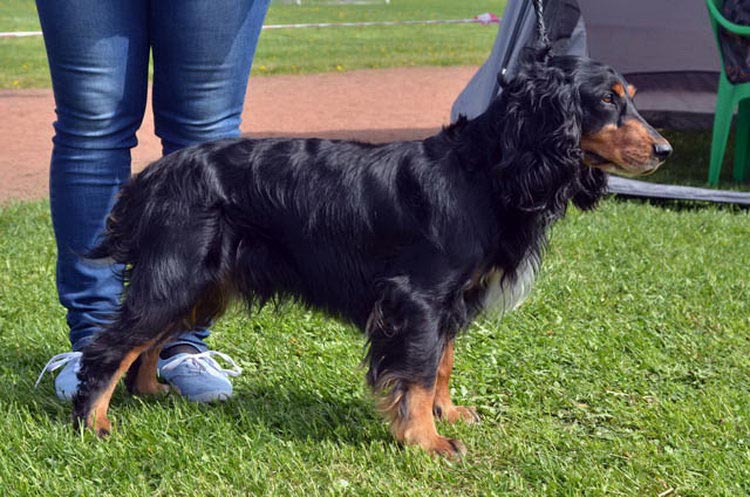
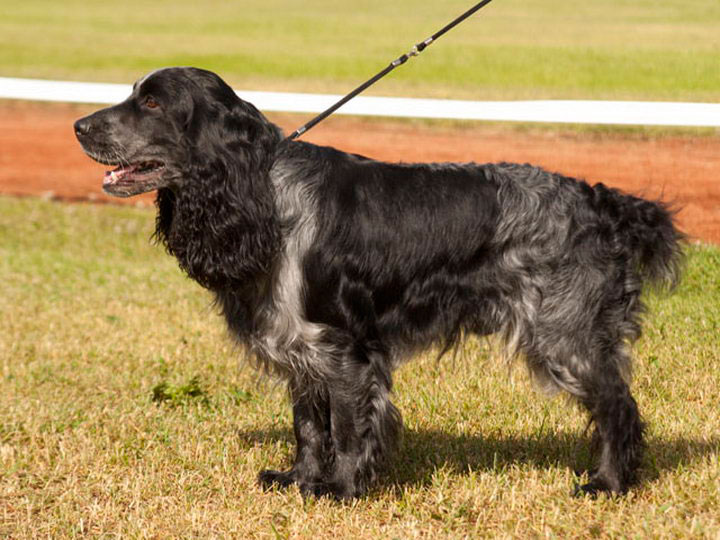
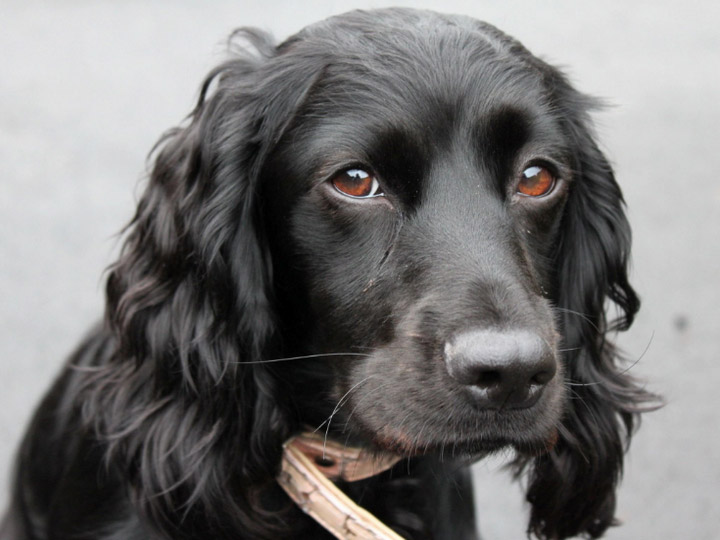
- Black - It is important that solid black dogs have dark eyes and a smooth, not curly or wavy coat.
- Brown – very rare in all its shades (liver, coffee, chocolate). Unfortunately, brown coloring is often associated with undesirable fur, which is prone to matting and requires frequent trimming. Eyes are typically light brown, and all these negative traits are passed on to their offspring.
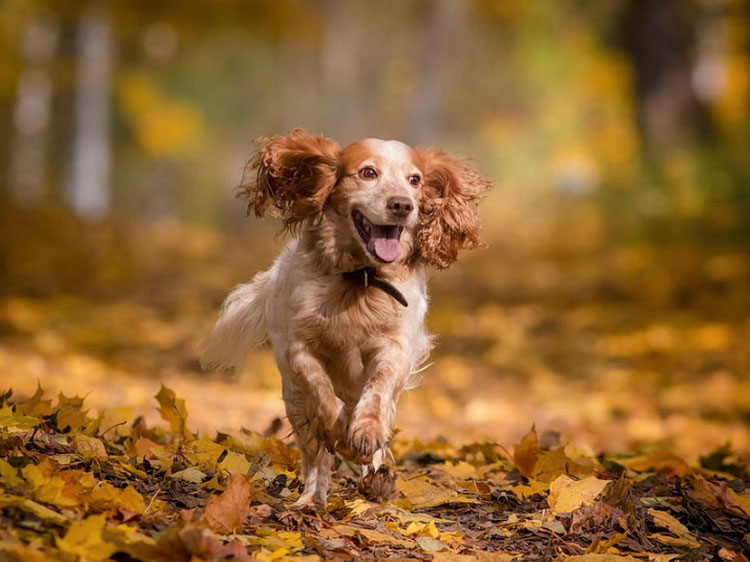
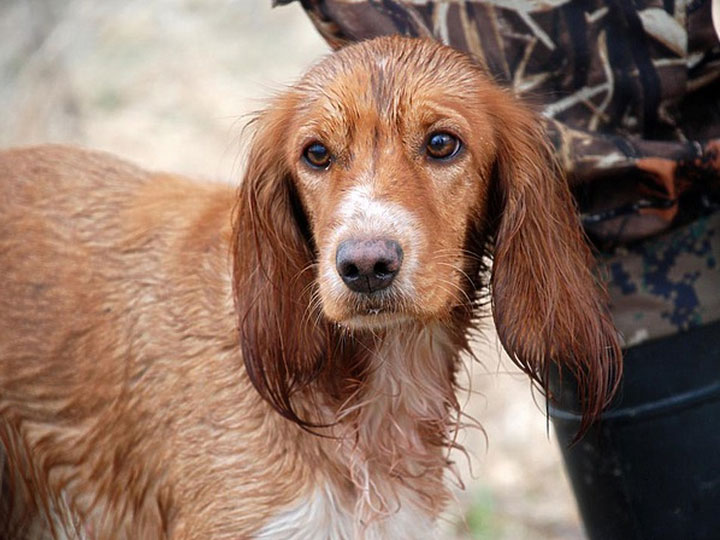
- Red is an interesting and promising color, but still very uncommon. Red dogs must have a dark nose and dark brown eyes.
For convenience, spaniel colors are divided into groups:
- Solid - may have white markings on the throat, chest, tip of the tail, belly, paws, muzzle, forehead or without them.
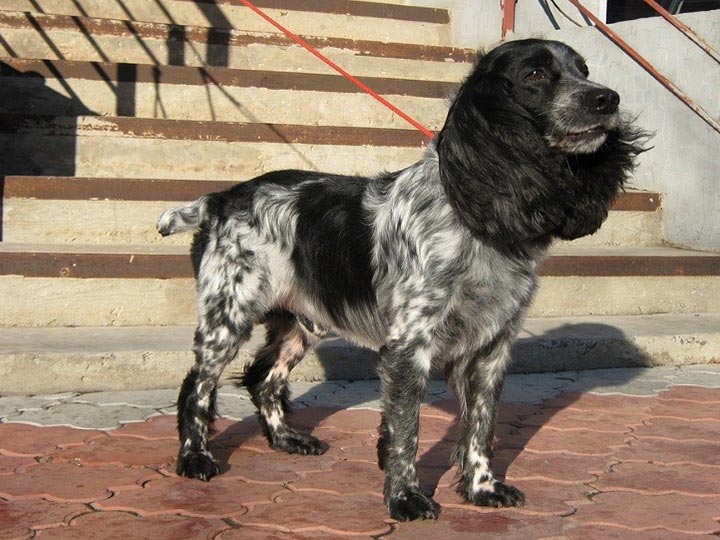
- Piebald – large and small spots appear on a light gray or white background, covering the entire body. The color of these spots determines the coat pattern. There are two types of piebald: contrasting and spotted. The same colors are common as for solid colors. Black and piebald dogs are the most common; they are easily visible during hunting at dusk, and their coats are generally of good quality.
With age, piebald dogs of contrasting color become covered with sparse speckles, and by the age of 10 they are very difficult to distinguish from light-speckled dogs.
- Tan markings are red markings located in specific areas: on the ears, cheeks above the eyes, paws, chest, and under the tail. Tan markings are present in all coat colors. They are not visible against a red background, but dogs can carry the recessive gene that causes them.
Character
The Russian Hunting Spaniel is a passionate, active, persistent, and strong dog that is devoted to its owner, obedient, and quite emotional. The breed is characterized by a balanced, active temperament and a friendly attitude toward people. Some males may try to dominate the pack, but with proper training and a strong owner, this flaw is quickly corrected.
Their territoriality makes them good watchdogs, but deliberately cultivating aggression is believed to impair their hunting skills. They are reluctant to be handled by strangers, often retreating or wriggling, but generally do not snap. As for their behavior toward other animals and children, much depends on the dog's socialization and upbringing.
Training and exercise
Spaniels are easy to train, but at a young age, when puppies are hyperactive and inattentive, they should not be overworked. A spaniel requires a firm hand and a determined owner who will work with the dog despite its stubbornness and independence. Spaniels can begin training after 4-5 months, but only after they have mastered basic obedience commands.
Physical activity should be very high. The dog should be walked 2-3 times a day, preferably for at least an hour. It's also good if the pet has the opportunity to run freely in the open air without a leash from time to time.
Hunting with a Russian Spaniel
The Russian Hunting Spaniel is a gundog used to hunt field, forest, marsh, and meadow game. It is an excellent swimmer and dives for wounded ducks. The dog's job is to locate the bird, flush it, and then, on command, retrieve the wounded bird. Although rare, Russian Spaniels are also used for blood-sniffing.
Hunters use the abbreviation ROS among themselves and on internet forums to refer to the breed.
Work style
When searching, the spaniel moves at a light, fast gallop. Upper scenting is preferred, but the spaniel may lower its head below the level of its back when transitioning to tracking. A well-trained dog will determine the optimal search pattern based on the terrain and wind direction. It maintains constant contact with its owner, periodically glancing back at them, and in areas with tall vegetation, it will leap out of the grass, making a swooping sound. This allows it to catch the scent currents of the air and visually pinpoint the owner's location. When the spaniel scents prey, it suddenly perks up and alerts the hunter to the bird's location. As it rises, the dog stops. The downed bird is quickly located and retrieved with a gentle grip.
Content Features
Spaniels don't adapt well to outdoor life. Not only can they freeze in extreme cold, but they also require constant contact and interaction with their owner. This breed is recommended for those planning to keep a dog indoors or in an apartment. The amount of damage a puppy may cause during its growing years depends on its personality. Adult dogs are generally calm in apartments. Their only drawback is their shedding coat, which can be everywhere during the shedding season. If the dog is well-groomed and bathed regularly, there won't be any odor.
Grooming and hygiene procedures
Spaniel grooming involves regular brushing and trimming the hair around the anus, prepuce, and between the paw pads. Dogs that aren't shown can have their feathering trimmed in the summer, as it can easily catch burrs. Keep in mind that after trimming, the coat grows thicker, making it more difficult to maintain.
Spaniels are bathed as needed. They should be thoroughly bathed with shampoo and conditioner, usually every two to three months. Their eyes and ears are also monitored. Excessive tearing is a characteristic of the breed. It's important to keep the tear ducts dry and clean, and to closely monitor the conjunctiva for the first signs of inflammation. Ears are cleaned once a week. If necessary, remove hair from the ear canal, as this can contribute to wax accumulation. To prevent ear infections, it's crucial to dry the ears thoroughly after bathing or swimming in water. Nails are trimmed once a month using special scissors or pruning shears.
It's crucial to accustom your dog to proper hygiene from an early age. An adult spaniel simply won't allow anything to be done to him that he doesn't like.
The breed doesn't have any particular oral health problems, but it's a good idea to brush your dog's teeth once a week to prevent tartar buildup.
Feeding
It's best to decide on a diet early on and introduce your pet to natural or commercial foods from puppyhood. Both options are acceptable. Much has been written and discussed about the advantages and disadvantages of the two types, but the choice is always up to the owner.
Health and life expectancy
Overall, the breed is relatively healthy genetically. Most illnesses are caused not so much by heredity as by improper care or nutrition. The most common health problems in spaniels include:
- Otitis;
- Conjunctivitis;
- Food allergy;
- Obesity.
Life expectancy is usually 11-13 years.
Choosing and pricing a puppy
Hunters know very well how important it is to take a puppy from working parents. Hereditary inclinations will certainly manifest themselves in practice. When choosing a dog, you have two options. The first is to find a puppy from an unplanned mating, without papers, but at a lower price, and take the seller's word that it's a litter from true working parents. The second option is to choose a puppy exclusively from kennels that are more rigorous in selecting breeding stock, and dogs with high conformation scores and working certificates confirming their hunting skills.
A real working spaniel must have diplomas in the main types of game birds.
Of course, it can be difficult for beginners to understand all the intricacies, titles, and ranks, so many turn to the Service Dog Club for help or find spaniel experts on specialized forums.
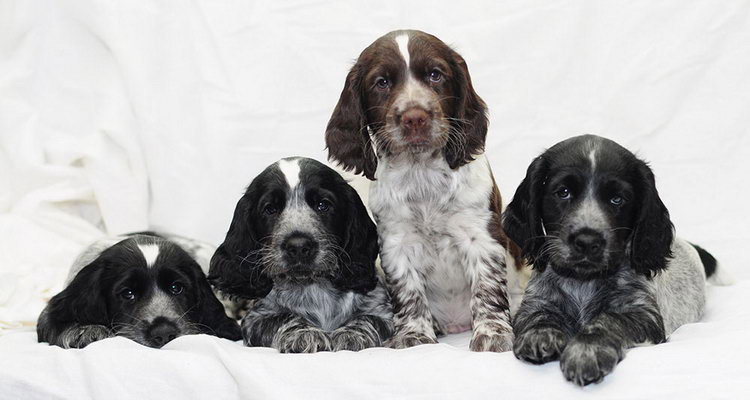
There's no point in examining a puppy before it's a month old, when neither its character nor its appearance are evident. Younger puppies are usually chosen, usually between 8 and 10 weeks old. An active, energetic, and playful puppy will be avid hunters. More phlegmatic puppies are better suited to apartment life. Puppies should be healthy in appearance. By 3 months, they should have been dewormed and had their first vaccinations.
The price of a puppy varies widely. You can buy a dog from someone else for a nominal price. Sometimes you'll see ads for Russian hunting spaniels for 500-1000 rubles. For puppies from working parents but without papers, the price typically ranges from 5,000-15,000 rubles. Puppies from kennels with titled breeders and working certificates cost 15,000-25,000 rubles.
Photos
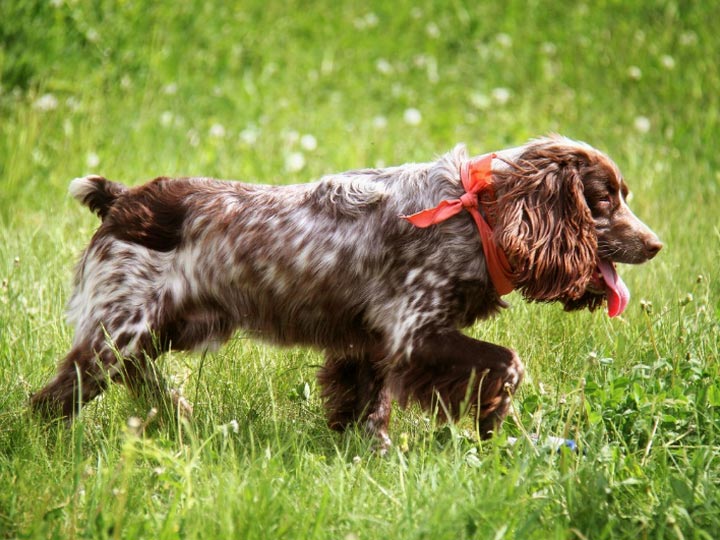
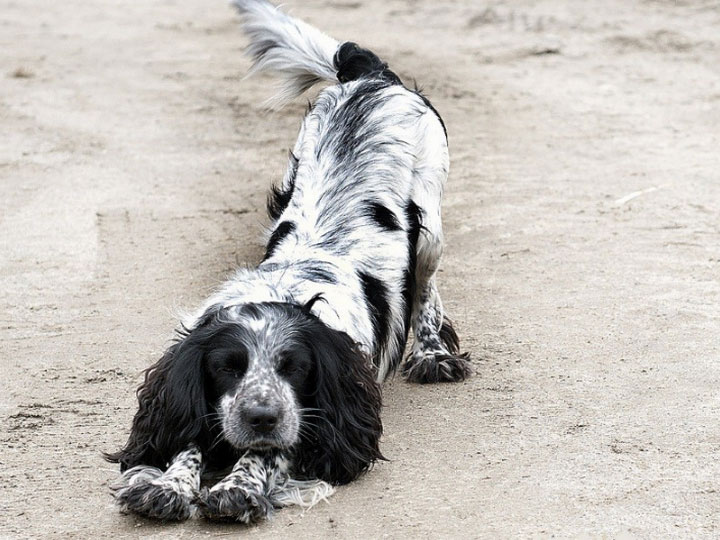
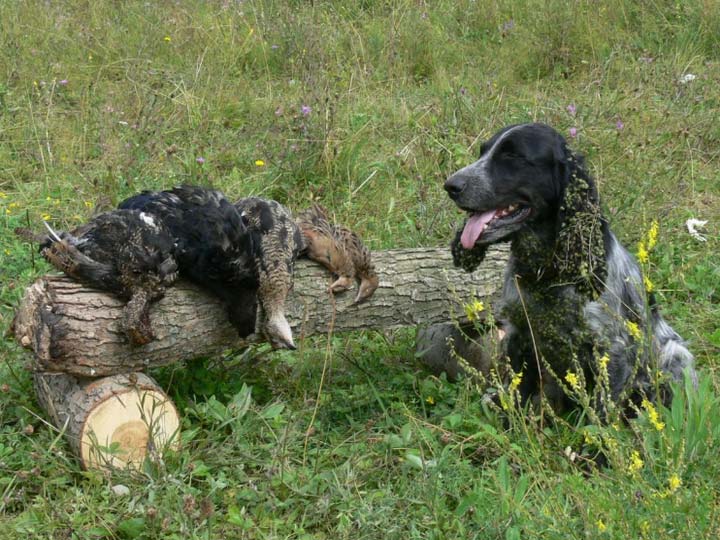
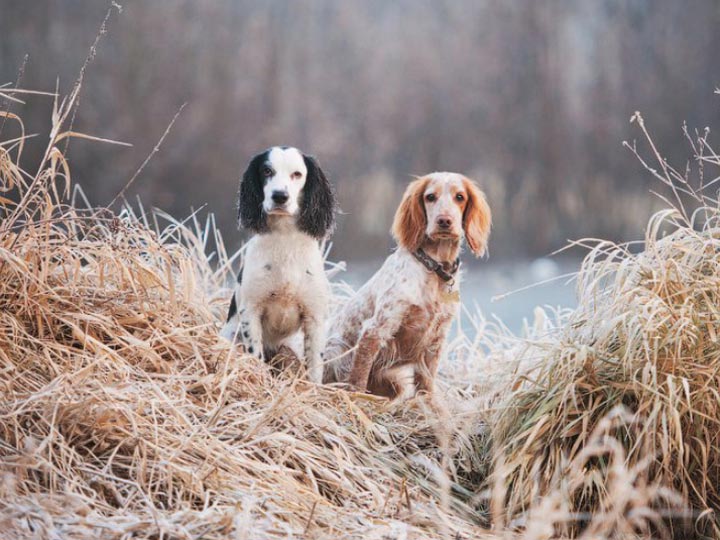
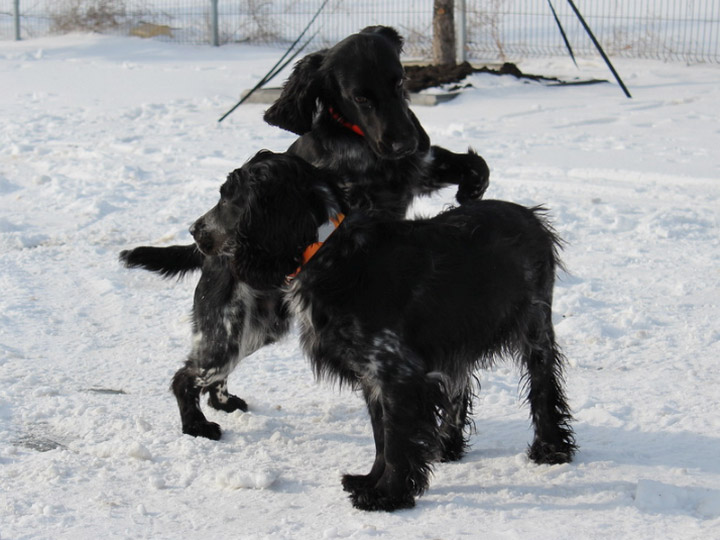
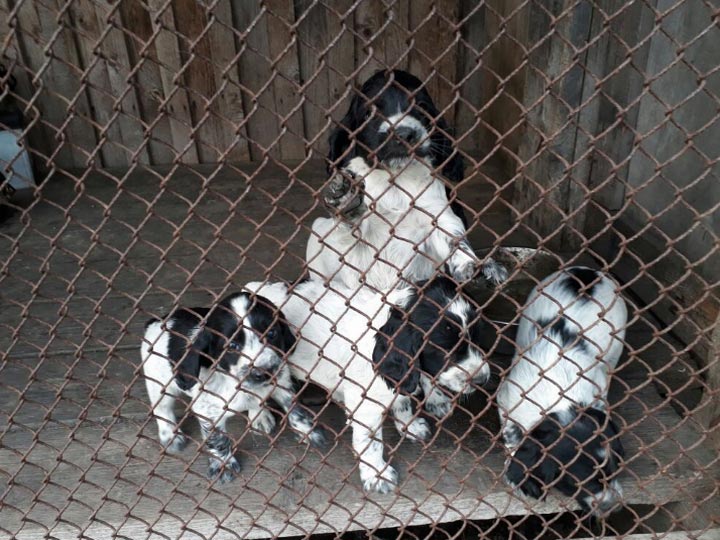
The gallery contains photographs of puppies and adult dogs of the Russian Spaniel hunting breed:
Read also:


Add a comment