
Russian Piebald Hound (Anglo-Russian Hound)
The Russian Piebald Hound is a hunting dog breed that has existed for over a hundred years and is known for its excellent working qualities. However, it has not yet been accepted by the International Cynological Association. Another name for the breed is the Anglo-Russian Hound.
Content
History of origin
Before Ivan the Terrible, hunting with hounds was unknown in Rus', and if it was heard of, it wasn't practiced. After the tsar captured Kazan, he divided the traditional Russian territories and appointed Tatar princes to rule them, and with them came dogs. These were fast and energetic dogs for chasing and capturing game. At that time, there was no distinction between greyhounds and hounds.
The first mention of hounds dates back to the 18th century. They began to be imported from England during the reign of Empress Anna Ioannovna. Initially, these were deerhounds, or deerhounds. Later, foxhounds, dogs that hunted foxes, followed. It is believed that their subsequent breeding gave rise to the Russian breed. Later, hunting books also mentioned Ostrovsky and Yaroslavl hounds.
In 1925, the standard for the Anglo-Russian Hound was approved. Since then, crossbreeding with other breeds has been prohibited. Adjustments were made in subsequent years, and in 1951, the name was changed to the Russian Piebald Hound.
Video review of the Russian Piebald Hound dog breed
https://youtu.be/bgdOEkUbOR0
What should a Russian Piebald Hound look like according to the standard?
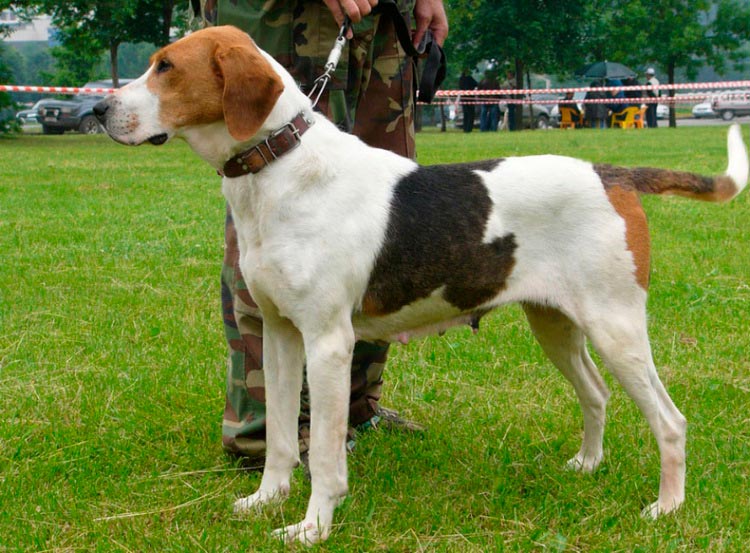
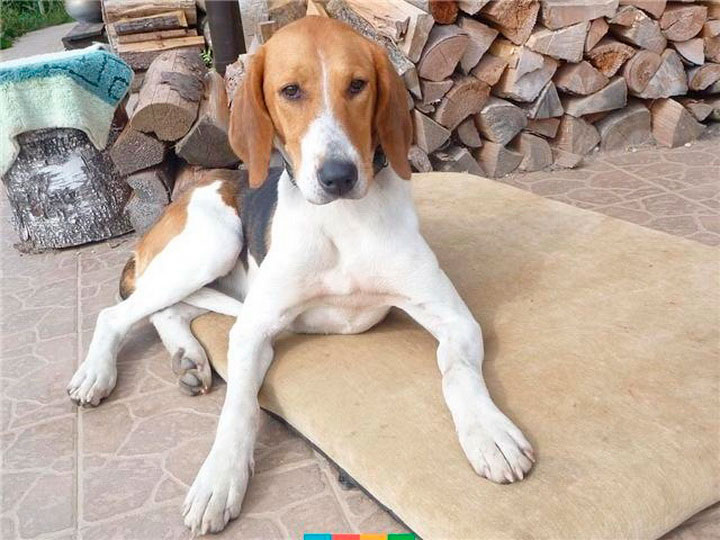
The Russian Pied Hound is above average in size, with a strong constitution. Sexual dimorphism is well-defined. Males stand 58-68 cm tall, while females stand 55-65 cm tall.
The head is dry, voluminous, but not wide. The skull is elongated, with a gently sloping stop. The muzzle profile is almost rectangular. The nose is large and black. The lips are tight-fitting. The ears are pendant, thin, not long, triangular in shape with rounded tips, lying close to the head, set high, and may or may not be folded. The eyes are medium in size, brown or dark brown, with round or slightly slanted eyelids. The bite is scissor-like, and the teeth are white, large, and strong.
The neck is round, set at a 45-degree angle to the body. The chest is deep and wide, with barrel-shaped ribs that reach to the elbows and below. The belly is slightly tucked up. The back is straight, the loin is wide, short, and convex. The croup is slightly sloping. The forelegs are straight, dry, and parallel. The hind legs are muscular, well-boned, and well-angulated. The paws are round or oval, with tightly knit toes. The claws point toward the ground. The tail is sabre-shaped, tapering to a point, reaching the hock or 2-3 cm shorter, and carried high.
The skin is dense, elastic, and free of folds. The muscles are well developed. The skeleton is strong and broad. The hair on the legs, head, and ears is short, while on other parts of the body it is 4-5 cm. The hair is longer on the withers and back of the thighs, but not so long as to form a feathering. The tail is covered with hair evenly along its entire length, which visually makes it thicker.
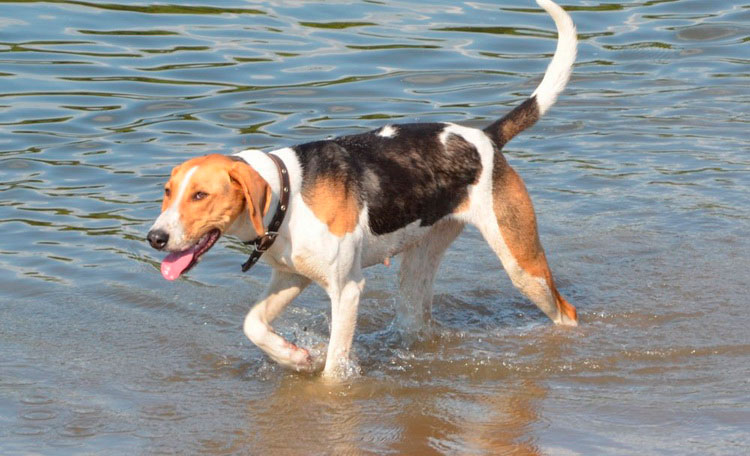
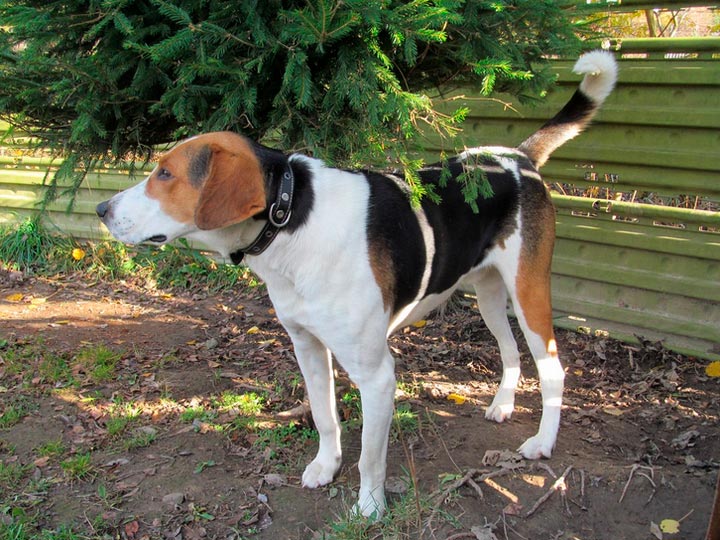
The characteristic color of the Anglo-Russian hound is black and piebald with blush. The size of the spots is not limited, even to the saddle cloth, which can cover the entire body. Tan (blush) covers the shoulders, back, and head. Small darts (dark spots) are permitted on the temples and legs. The belly is always white. Gray-piebald with blush and crimson-piebald with slight speckling are also permitted.
Character
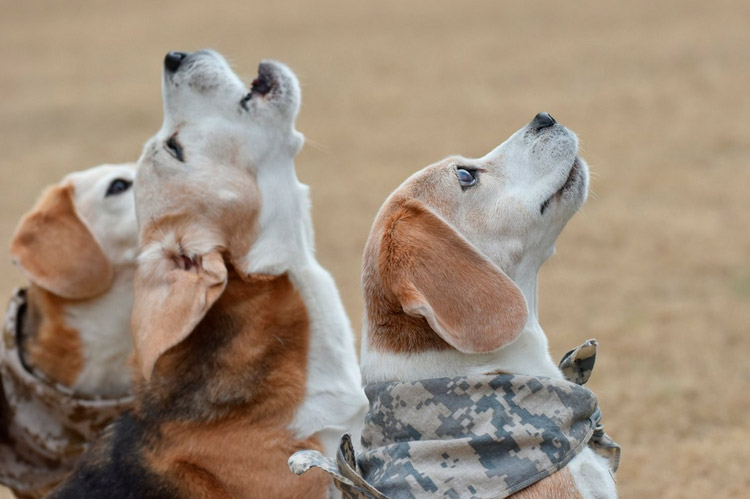
As befits a hunting dog, the Russian Piebald is energetic, tenacious, and agile. It is easily trained, obedient, intelligent, and quite peaceful. It can warn of the approach of guests, both familiar and unfamiliar, but it is absolutely unsuitable as a guard dog.
It's worth noting that the hound has a generally willful and freedom-loving nature and doesn't get along well with other pets. It loves chasing birds and cats. It's generally good with children and enjoys active play, but rarely becomes a babysitter.
The Russian Piebald Hound is best suited as a companion for a person who loves hunting and needs an assistant.
Education and training
A Russian Piebald Hound should be trained with moderate strictness. If this dog senses weakness, it will regularly exploit it. The owner of such a dog must have a strong character. It's important to not allow the hound to relax or to disobey commands.
Only an experienced dog handler can train a hound well. In skilled hands, the dog will become an excellent hunting companion and a good, obedient companion.
A hound requires early, gradual training. The ideal time for training is between 8 and 10 months of age, when the dog is already mature and strong. Hunting breeds do indeed possess most instinctive skills, but they need to be continually developed and done correctly.
Hunting with the Russian Piebald Hound
The Russian Piebald Hound is trained to locate and persistently chase game. This process is accompanied by a distinctive, usually very loud, bark. The hound's voice is resonant and powerful. Therefore, a good hound must have an impeccable sense of smell, a balanced mind, and a strong constitution.
When hunting with a hound, a person's task is to track the route of the dog and the trajectory of the animal it is pursuing. Hunters often equip their assistants with GPS navigators, which significantly simplifies the work with them. These dogs' primary prey are hares and foxes, but they can also tackle wolves and lynxes. A hunter can usually easily recognize the animal they're pursuing by their dog's voice. When tracking, the hound should trot, and when pursuing, gallop.
Content
It is better to keep the Russian Piebald Hound in an enclosure with an insulated kennel. The dog needs regular walks and good exercise. Experts believe that hounds living in apartments have a weakened hunting instinct. This is only beneficial for dogs kept as companions. They are generally tolerant of other pets, but socialization should begin early. It's best to walk the hound on a leash; if it senses a scent, it may begin tracking and get lost or run into traffic.
Care
Hounds don't require much grooming. Bathe them as needed, usually after hunting or shedding. Brush their coat 2-3 times a month if they live in an enclosure, and 1-2 times a week if they live in an apartment.
Feeding
Most owners feed their hounds a natural diet. The basis of the diet is meat, offal, and cereals with added vegetables. It is also advisable to supplement the diet with fermented milk products, eggs, and honey. The calorie content of a single serving depends on the dog's size and activity level. During hunting season, the amount of protein and carbohydrates in the diet should be increased by 10-15%. During the period of active growth, the puppy is necessarily fed vitamin and mineral complexes, and then they are given periodically in the autumn-winter and winter-spring periods. If desired, dogs can be fed with ready-made food above the premium class.
Health and life expectancy
The Russian Hound is a healthy breed. With proper care and maintenance, they rarely get sick. However, there are a number of diseases to which they are genetically predisposed:
- hip dysplasia;
- degenerative myelopathy;
- myositis;
- malignant hyperthermia;
- conjunctivitis.
Furthermore, hunting dogs are quite prone to various injuries, dislocations, and fractures. All dogs should be vaccinated against rabies, and working hounds, which regularly come into contact with wild animals, are even more so. Their lifespan is typically 11-12 years.
Choosing a puppy
There are no significant differences in temperament between hounds of both sexes. Incidentally, hunters don't distinguish between males and females; they divide dogs into male and female hounds. Breeding is usually done by hunters; few dare to register their activities as kennels. The breed isn't officially recognized, so the population isn't divided into show and working dogs.
The puppy is selected taking into account the working qualities and temperament of the parents. An inexperienced person would be better off enlisting the help of a hunter or dog trainer who understands all the breed's characteristics. However, it's important to remember that no matter how good a dog's working abilities are, they won't be able to demonstrate their abilities without a good mentor, proper training, and practice.
Price
The price of a Russian Piebald Hound puppy varies widely. Most ads for sale are posted by hunters and breed enthusiasts. Prices for dogs without a pedigree range from 5,000 to 15,000 rubles. Pedigree puppies start at 15,000 rubles. Adult dogs, ready for hunting and with good working qualities, can cost up to 100,000 rubles.
Photos
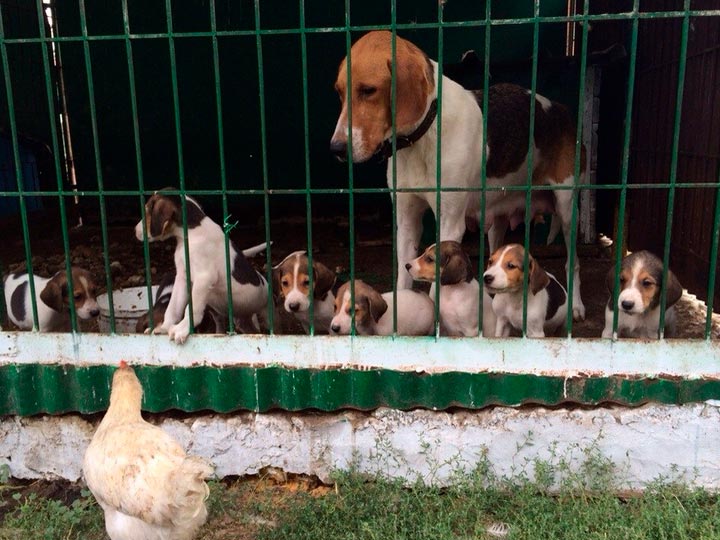
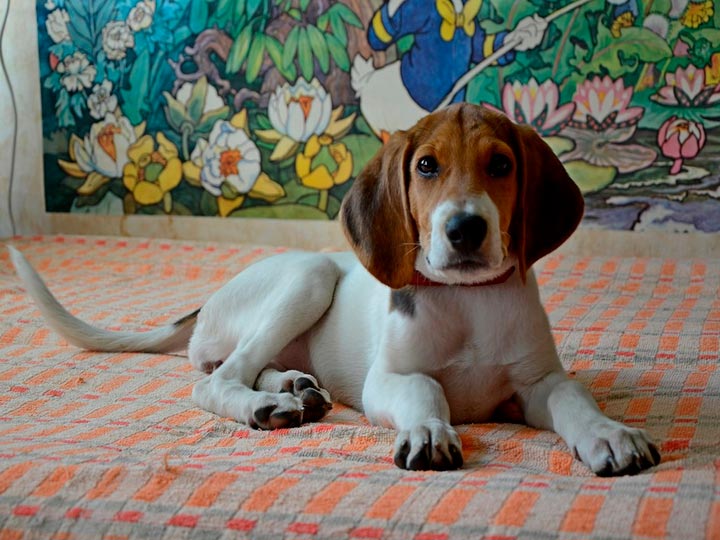
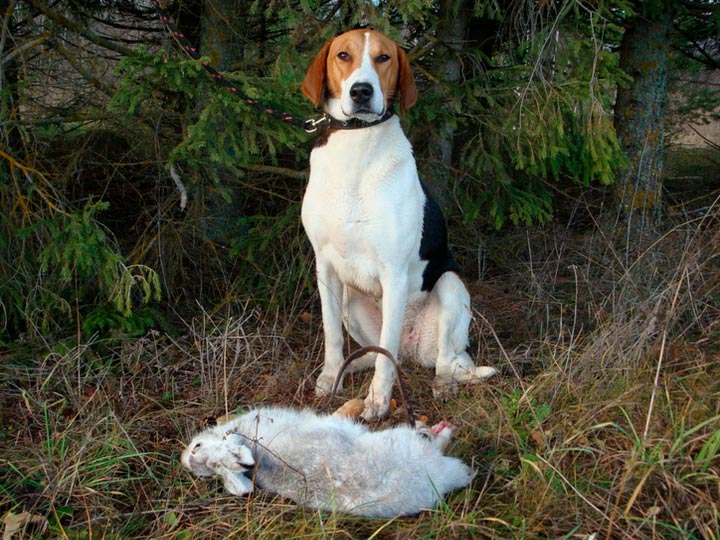
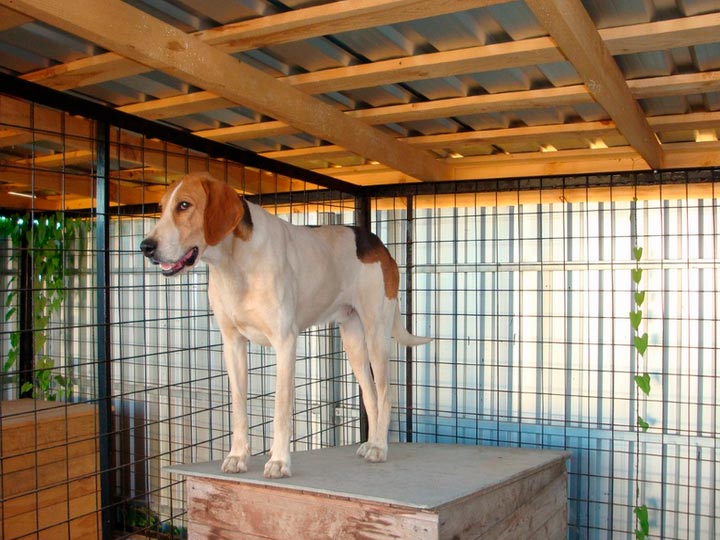
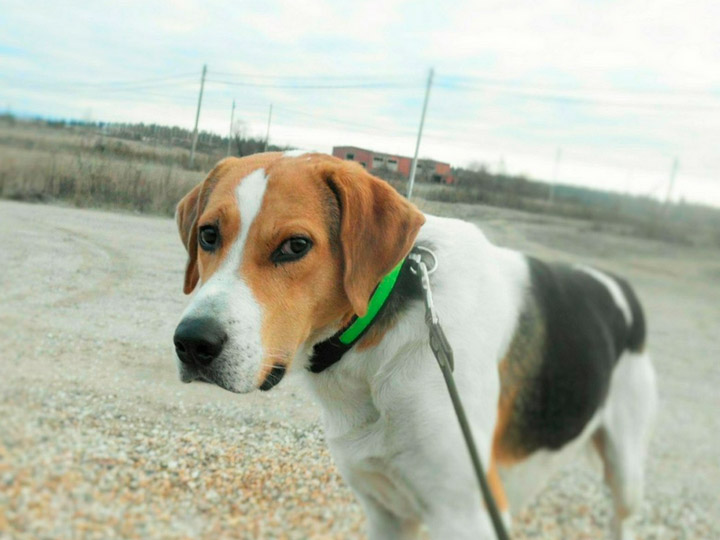
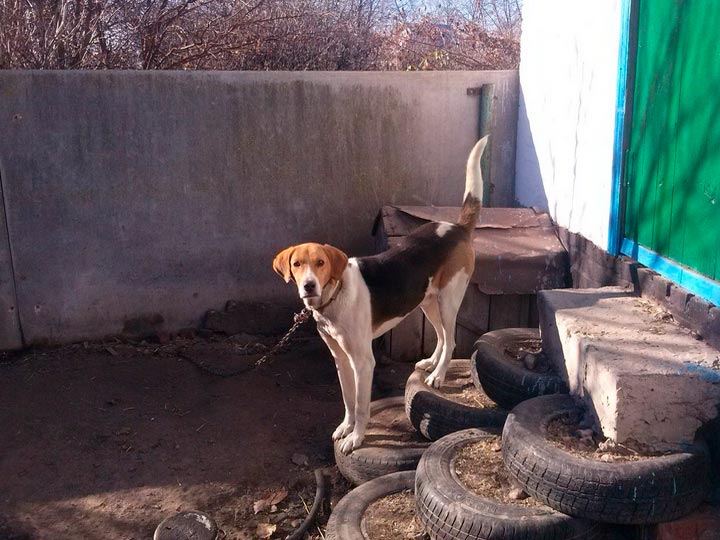
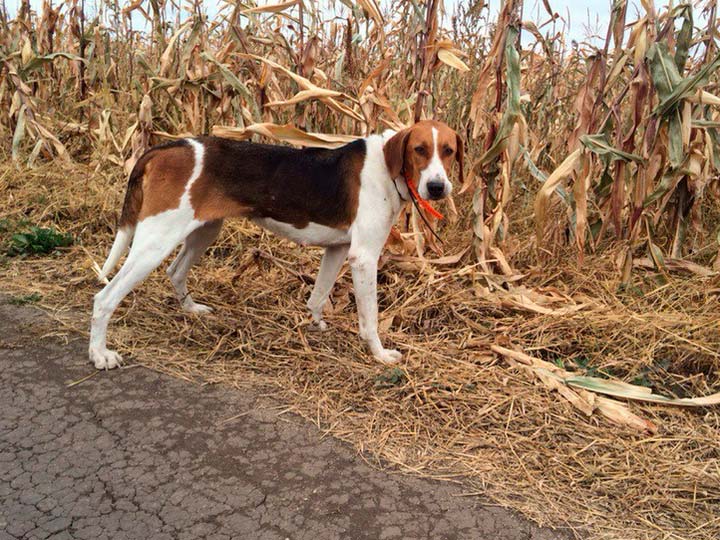
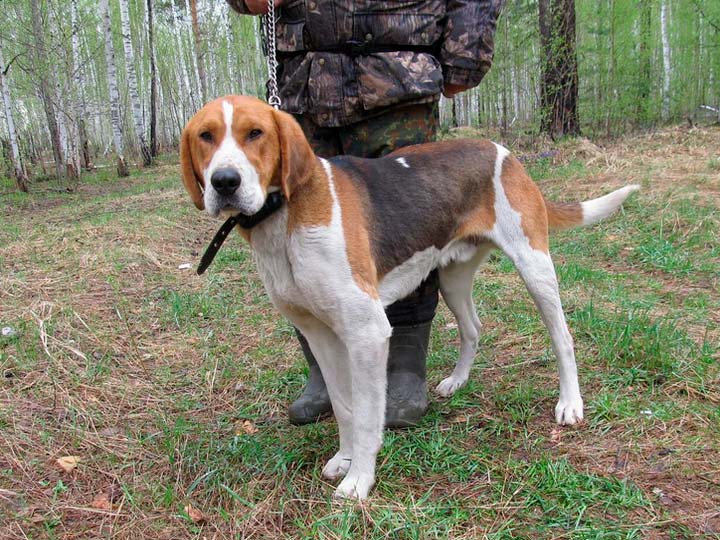
Photos of Russian Piebald Hound puppies and adults. This gallery features photos of hounds in everyday life and on the hunt.
Read also:


Add a comment