
Russian hound
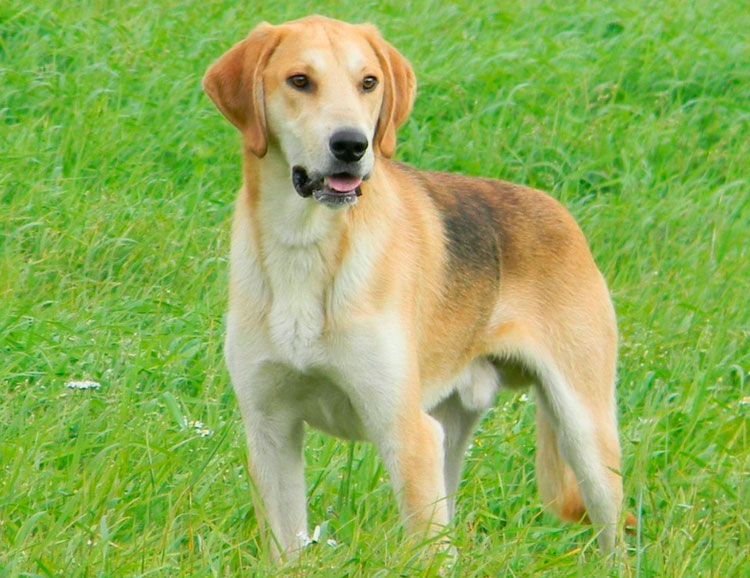
The Russian Hound is a relatively new breed of dog, unremarkable in appearance but highly prized by Russian hunters for its working abilities. It is primarily used to hunt hare and fox, but can also hunt other game.
Content
History of origin
The origins of the modern Russian hound's ancestors remain a matter of debate. At one time, the renowned cynologist Sabaneyev claimed that all Russian hounds were descended from Tatar hunting dogs. These, in turn, descended from Chinese hounds, which were infused with the blood of greyhounds from the Arabian Peninsula. In Rus', various local dogs and Laikas (Ostroushki) were mixed with them. Subsequently, under the influence of climate, natural selection, and human demands on hound skills, a relatively homogeneous type of hound emerged.
Hunting with hounds has long been very popular in Rus'. Breed uniformity is not a concern. Numerous packs existed, each belonging to a different landowner in different provinces, and each conducted breeding activities as they saw fit. The dogs varied greatly in appearance and working ability. Many of them became extinct, and only a few played a role in the formation of the modern Russian hound.
Today, two domestic breeds of hounds are officially recognized in Russia: Russian piebald and the Russian hound itself. The main difference between them is their coloring.
Breeding of Russian hounds began at the turn of the 19th and 20th centuries. The first standard was approved in 1895. By 1917, a stable type with a distinctive phenotype and working qualities had emerged. However, large-scale breeding of the Russian hound as a breed began in Soviet Russia after the adoption of a new standard in 1925. The Lebedev dogs (dogs of A. A. Lebedev from Vyazma, descendants of the famous Kamynin hounds) and Alekseev dogs (dogs of M. I. Alekseev from the Moscow province) played a significant role in the breed's development. The current standard was adopted by the RKF in 2015.
Usage
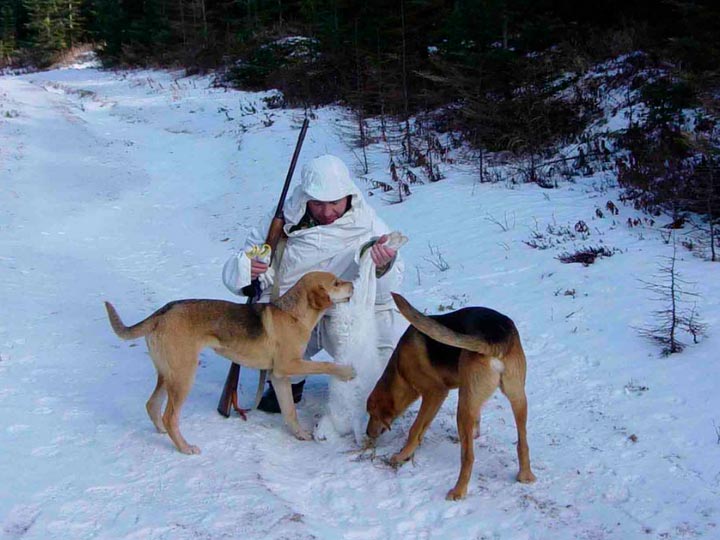
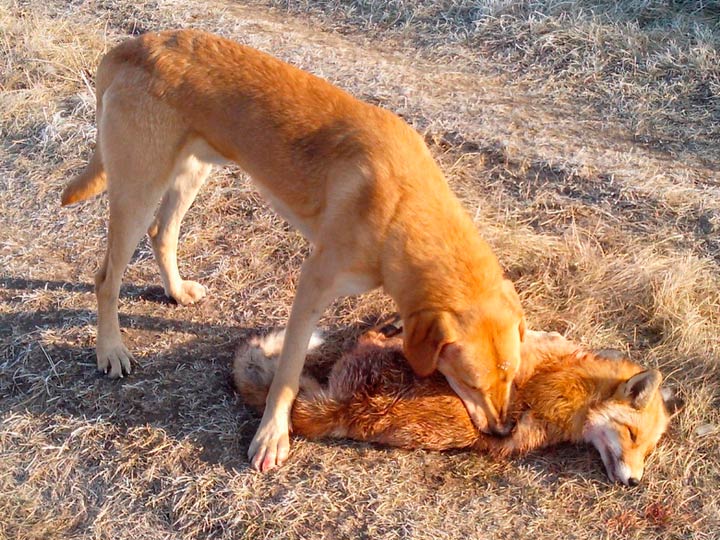
The Russian hound, like many others, must locate game by scent and drive it with vocalization. Characteristic traits of these dogs include exceptional endurance, agility, tenacity, a persistent bark, and a pronounced ferocity toward animals, despite their very friendly nature. Russian hounds' primary prey include foxes and hares, but they can also hunt wolves and ungulates. They can hunt alone or in a small pack. The Russian hound is very hardworking and not prone to excessive vocalization. They often zealously guard their prey from all but their owner.
Appearance
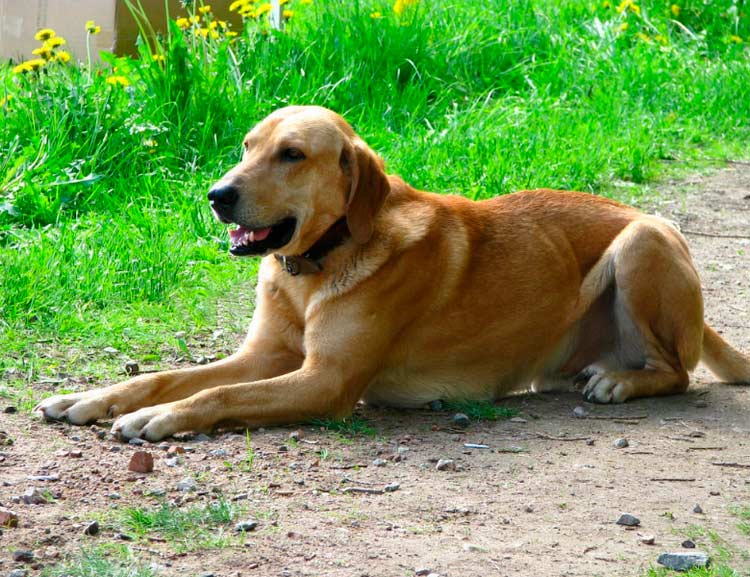
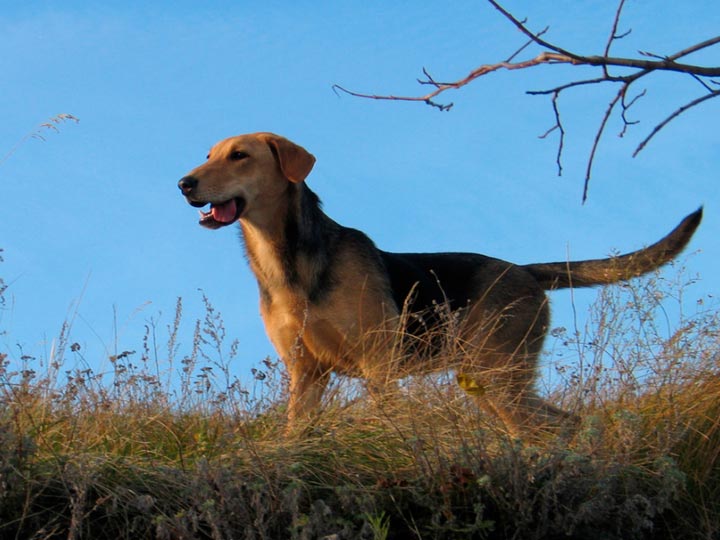
The Russian Hound has no particularly distinctive appearance. It is a well-proportioned dog with a broad bone structure, well-developed muscles, and a strong build. It has a thick, short coat of crimson, tan, or saddle-colored.
- The height of the males is 58-68 cm, weight is 25-30 kg;
- The height of female dogs is 55-65 cm, weight is 25-30 kg.
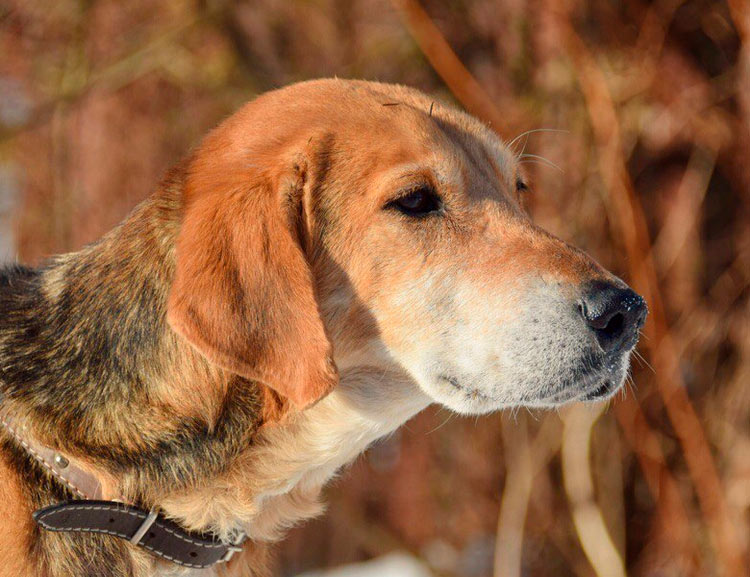
The head is wedge-shaped, with a smooth stop, and is lean. The skull is flat on top. The ears are small, set high, and hanging. The eyes are obliquely set and are brown or dark brown. The neck is lean, approximately the same length as the head, and set at an angle of 30-35 degrees to the axis of the body.
The Russian hound must be high-fronted, that is, the height at the withers is 1-2 cm greater than the height at the sacrum.
The body is strongly built and proportionate. The withers are well developed. The back is straight and broad. The loin is short, wide, and slightly arched. The croup is slightly sloping and wide. The belly is tucked up. The tail gradually tapers to a point, reaching to the hocks, and is thick at the base. The limbs are bony, lean, and muscular. The paws are oval and tightly knit.
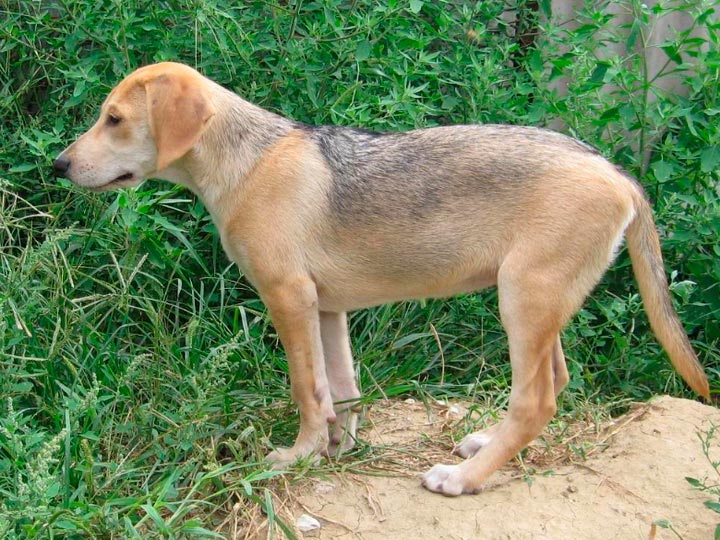
The hair is short on the ears, head, and paws, and longer on the body. It forms a slight scruff around the neck. The tail is medium-length. The undercoat is soft and dense. Colors with or without small white markings on the chest and paws:
- saddle-backed;
- light saddle;
- crimson (red-yellow, becoming lighter towards the extremities);
- tan (grayish with light tan markings).
Character and behavior
The Russian Hound has a calm, balanced temperament, weighs and considers its actions. It is quite friendly, reserved with strangers, and non-aggressive. Its watchdog qualities are moderate, but it lacks protective qualities.
The Russian Hound's calm and measured demeanor at home changes when the dog finds itself in the wild, where it can demonstrate its agility and endurance. The Russian Hound quickly bonds with its owner and is affectionate with other family members. It is quite obedient and responsive, but to ensure close interaction during hunting and complete mutual understanding, it will require considerable training and education. With proper training, it is indifferent to livestock and poultry and gets along well with other dogs.
The Russian Hound was bred for hunting and is not suitable for any other work.
The Russian Hound has the character and behavior typical of a hunting dog. It can be stubborn, somewhat independent and self-sufficient, and is not inclined to perform circus tricks or commands it considers unnecessary. It is very freedom-loving and will not miss an opportunity to escape, find, and chase prey. It is not particularly playful, and therefore does not make a good companion for children.
It is recommended that a Russian hound be adopted by someone who is familiar with the specifics of training and communicating with hounds.
Content Features
The Russian Hound is a relatively easy-to-care-for dog. Physiologically, it is better suited to year-round outdoor living in an enclosure. A hound's enclosure should be fairly spacious, approximately 20 square meters (20 sq. m) with a roof and wooden floor. When constructing the enclosure and fence, keep in mind that hounds easily dig under and jump over fences less than 1.5 meters high. Outdoor living does not preclude regular walks. A Russian Hound's true joy is chasing an animal for hours and then catching it.
It is absolutely not recommended to keep the Russian Hound in an apartment.
Care
To groom the coat, use a brush with wide, close-set teeth and rounded ends, or a bristle brush. Comb the coat as needed. Bathe as needed. Nails should be trimmed if they don't wear down naturally to maintain proper paw alignment. Ears should be inspected and cleaned regularly.
Health and life expectancy
There have been few studies on the health of Russian hounds, so it's generally accepted that they are hardy, robust dogs with virtually no hereditary health problems. The following are quite rare:
- hip dysplasia;
- myositis;
- ophthalmological diseases;
- malignant hyperthermia.
Most often, diseases are caused by poor living conditions, nutrition or old age. Life expectancy is 10-13 years.
Choosing a puppy
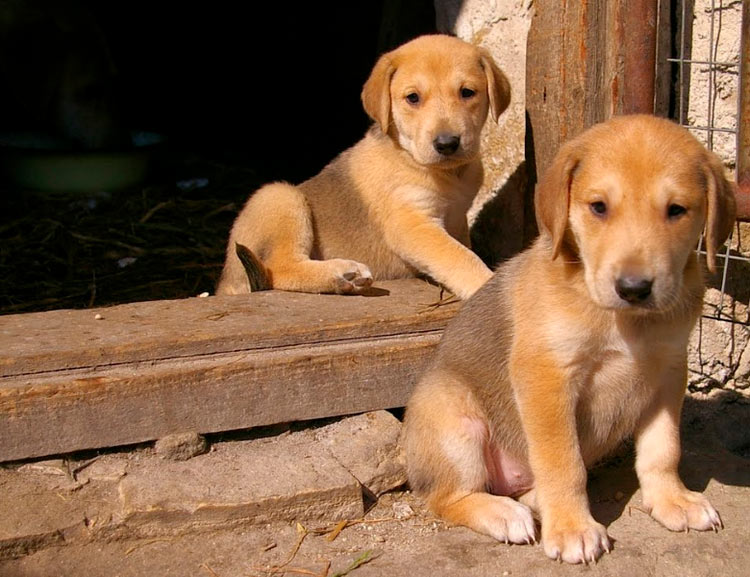
When searching for a Russian Hound puppy, it's best to start by choosing a breeder with good working dogs. This doesn't guarantee that all the puppies will inherit the best qualities, but it significantly increases the chances. Those without experience choosing and caring for hounds are better off trusting the breeder or enlisting the help of a knowledgeable hound handler, as there are many nuances involved. It's essential to pay attention to the puppy's character and potential. It should be healthy and developed in accordance with its age.
To avoid problems in the future, it's essential to check for proper documentation. The litter's parents should have pedigrees, and the puppy should have a birth certificate (puppy card), not just a veterinary passport with vaccination records.
Price
The price of a Russian Hound puppy varies widely. Adult dogs are often given away for free, mostly hounds that didn't live up to the hunter's expectations. Puppies without papers typically sell for no more than 5,000 rubles. Meanwhile, puppies from working parents, whose breed characteristics are documented, start at 15,000 rubles. Adult working dogs can cost 50,000 rubles or more, and a promising youngster can fetch the same price.
Photos and videos
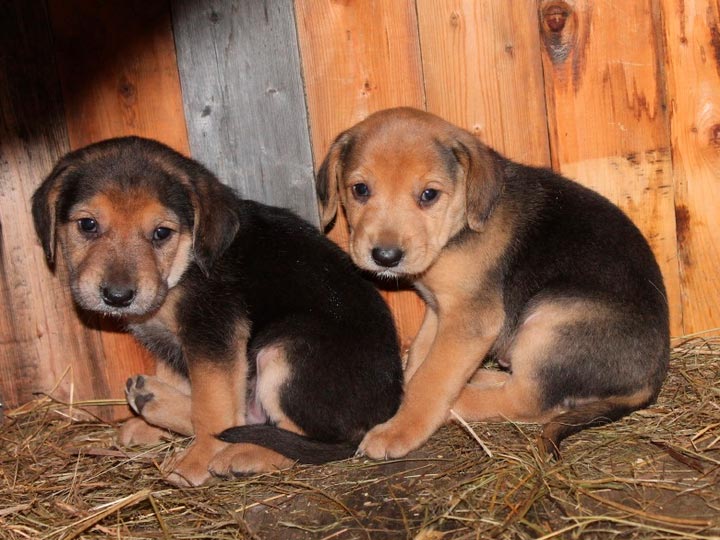
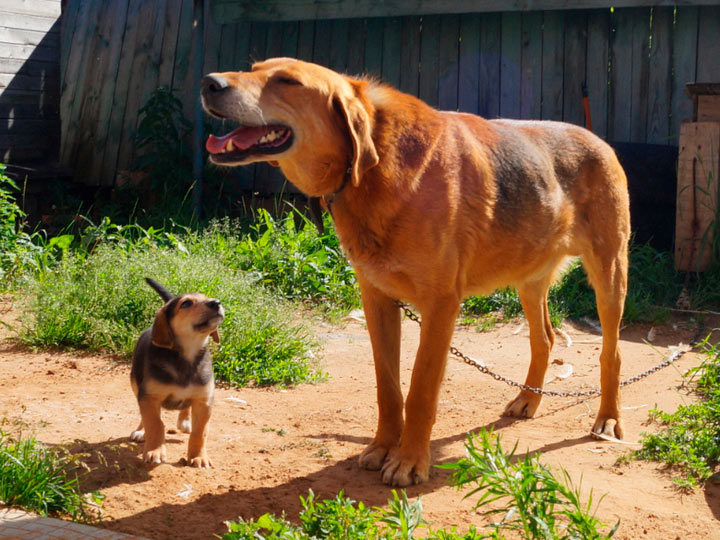
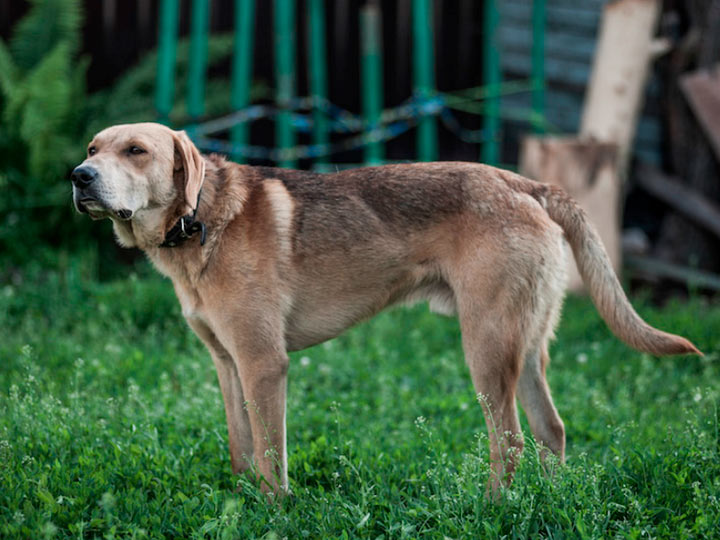
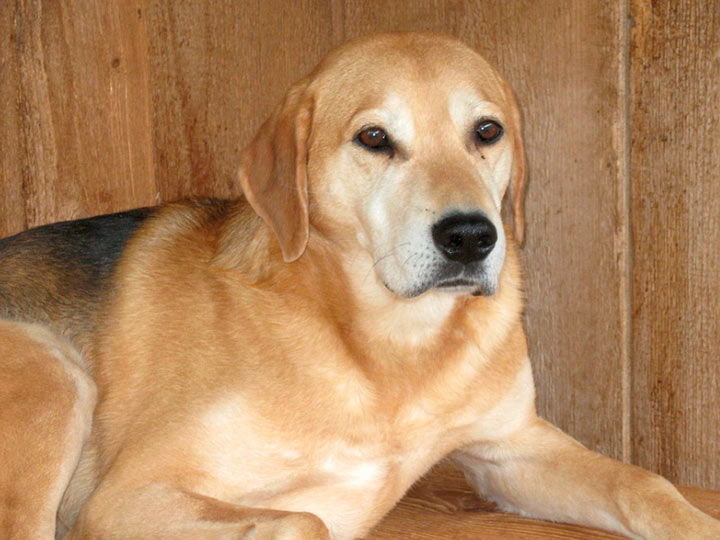
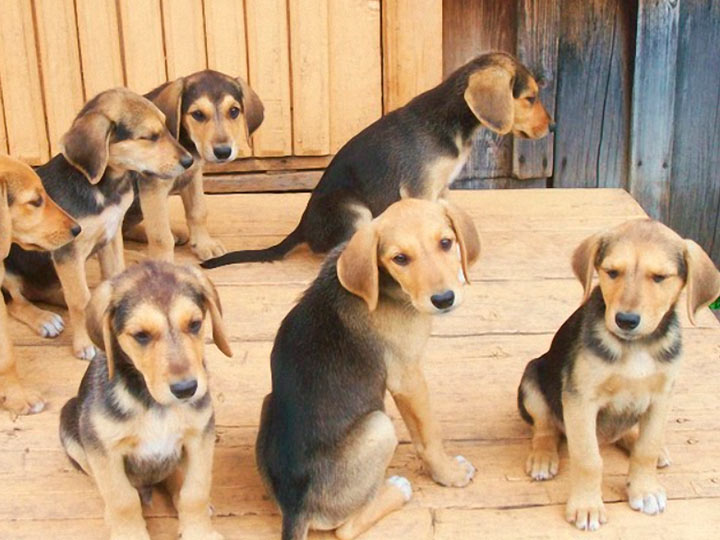
The photographs presented in the gallery show what Russian hounds of different ages, genders, and colors look like.

Video about the Russian Hound dog breed
Read also:


Add a comment