
Russian Blue cat
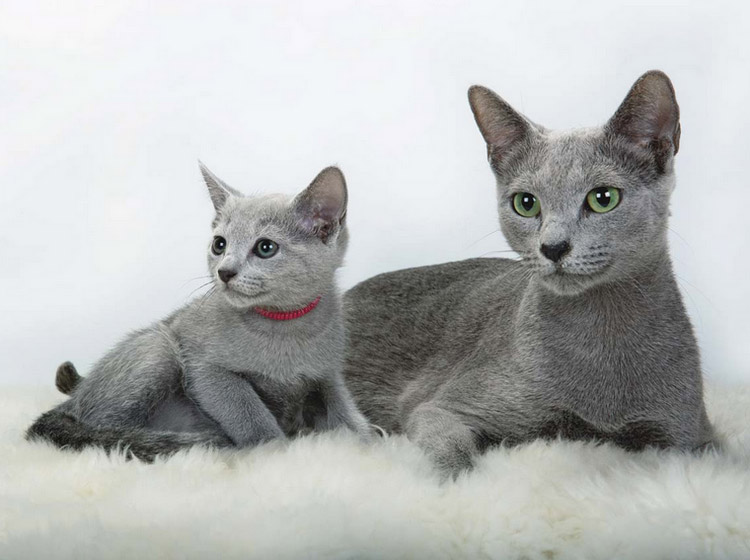
Russian Blue cat The German Shorthair can confidently claim to be one of the most elegant and refined breeds in the world. Judge for yourself: malachite-colored slanted eyes, a small, graceful body, and a luxurious blue coat.
Content
History of origin
The history of the Russian Blue can be described as a mystery. There are numerous theories about its origin, but none provides sufficient evidence. Many believe these cats were native to Russian forests. Over time, people appreciated their hunting skills and began to domesticate them. Arkhangelsk sailors never set sail without blue cats, who resolutely protected food supplies from rats.
The first written mention of Russian Blues appears in the chronicles of Peter the Great. He had a beloved cat named Vaska, who is considered a representative of this breed. During the reign of Catherine the Great, Russian Blue cats were presented as valuable gifts to ambassadors of foreign countries.
Native Russian cats contributed the main characteristic of the breed – soft, dense blue fur – but they were of a slightly different type, stronger, and green eyes were rare.
A more reliable history can only be traced back to the late 19th century. In 1893, Karen Cox brought several kittens from Russia to England and began breeding them. In 1903, a book on cats was published in London, in which the breed was already named the Arkhangelsk Blue. However, the official name Russian Blue and standard were not adopted until 1935. At that time, the cats were registered in the UK stud book.
Thanks to English breeders, the breed was revived after World War I. Until the 1960s, Russian Blues were crossed with SiameseTo increase the number of Russian Blues and make them more refined. The effects of this crossbreeding are still found today in the form of blue-point kittens born to standard blue parents. In the 1950s and 1960s, the breed began to be actively bred in the United States. In America, Russian Blues were also crossed with representatives of the Siamese-Oriental group. Since the breed developed simultaneously on the two continents, some differences emerged in the lines and final standards. The Russian Blue is recognized by major international organizations: FIFE, WCF, CFA, TICA, and others. In the 1980s, the breed began to return to Russia. Stud cats were primarily imported from Czechoslovakia and other European countries. The breeding efforts were quite successful, and the breed quickly found its admirers.
Video review of the Russian Blue cat breed:
Appearance and standards
The Russian Blue cat is one of those creatures that may not initially make a stunning impression, but then many find themselves thinking that the more you look at them, the more you like them.
Head and muzzle
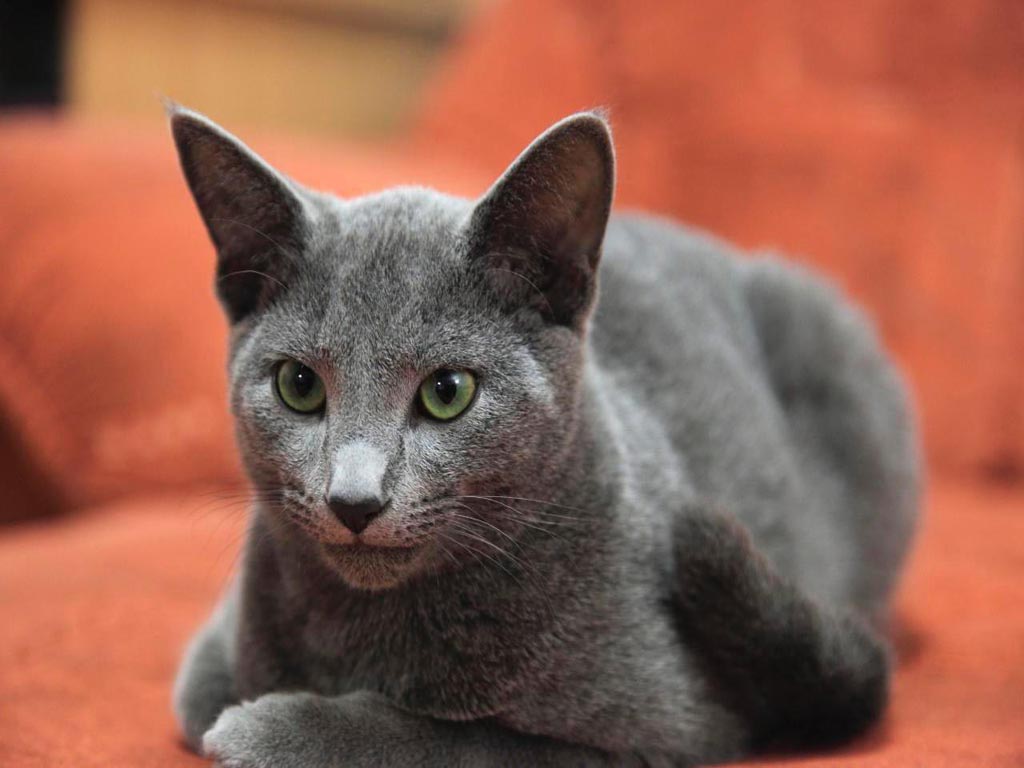
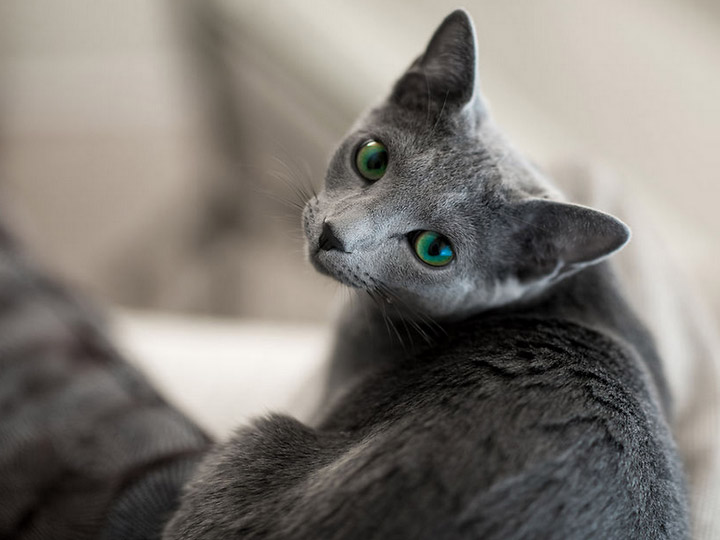
The head is shaped like a modified wedge. The nasal bridge is straight. The whisker pads are well developed. There is no pinch. The eyes are almond-shaped, large, and set wide apart. The iris color is any shade of green; a solid, rich green is preferred. The ears are large, set upright, wide at the base, and pointed at the tips. The nose is gray-blue. The chin is strong.
Physique
The body is light and elongated. The skeleton is not too heavy, and the muscles are moderately well developed. The legs are long, light, and slender. The paws are rounded. The pads are dark lavender. The tail is straight, tapering smoothly to a fine tip.
Coat and color
The coat is double (undercoat and guard hairs are of equal length), giving it a very dense appearance. The hair lies loosely on the body and is soft and silky to the touch. The color is uniform throughout the body, a bright blue; lighter shades are preferred. The guard hairs are tipped (the tips are devoid of pigment), giving the coat a silvery sheen.
Character
Russian Blues also have a unique personality. They are peaceful, kind, and always obedient to their owners, but can sometimes be a bit stubborn and freedom-loving. They are shy and reserved with strangers. These blue beauties are not known for wandering, preferring to be homebodies; they are very friendly and sociable with their family.
Representatives of this breed are distinguished by their extreme curiosity and activity (not to be confused with hyperactivity). It's said of these pets: "They're interested in everything." If you're sorting berries for jam, she'll help with her paw. The owner, having laid out the tools, may soon discover that the kitty needs them too, and she'll quickly roll the object she likes into a secluded spot. The children are painting with brushes? Your furry helper will be right there. Not a single family event will pass without her participation. But don't think that all this will be done abruptly, ignoring your shouts. Absolutely not! Russian Blues are very shy and timid by nature. Therefore, all these pranks will be carried out with an endearingly timid face, which makes it difficult to scold.
As mentioned earlier, Russian Blue cats are excellent hunters. They are capable of tracking and catching prey anywhere, sparing neither time nor effort. Their prey includes mice, rats, and birds, as well as flies, moths, and woodlice. Anything that moves attracts their attention.
Russian Blue cats are often very active and playful. If you decide to adopt a Russian Blue cat, be prepared for additional expenses, namely, an elevated house and a special ladder. These animals have a well-developed hunting instinct. When prey is scarce, this instinct is expressed through play. They can dart after tiny specks of dust and chase flies all day long. Furthermore, Russian Blues are the best jumpers of their breed, able to leap onto a cabinet without a running start. Therefore, a raised house is essential for this pet. Otherwise, be prepared for the cat to make a den somewhere in the attic.
Avoid keeping hamsters, birds, and other small animals with this natural hunter. She won't leave them alone, and one fine morning she'll still end up having your pet for breakfast. And scolding her for this is pointless—it's just instinct.
The Russian Blue cat is renowned for its gentle nature. It is obedient and tactful. This intelligent creature loves to show off its character, despite its delicate and gentle nature. Its best qualities are revealed during interactions with its owner. It responds to everything: a person's tone, speech, and gestures. It is neither vindictive nor harmful. The Russian Blue enjoys sitting next to a loved one, but if it doesn't want to be held, it will show its temper.
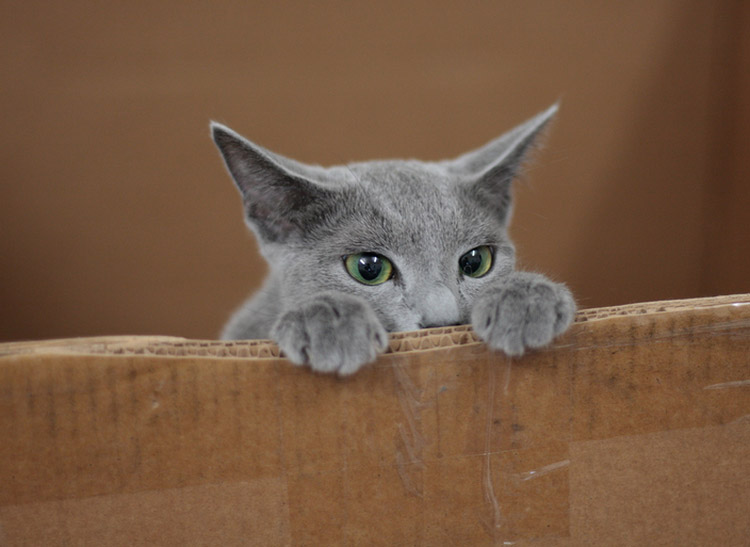
Due to their innately ideal upbringing and natural wariness, the Russian Blue cat may appear cold. In reality, this reserve and shyness with strangers will subside once the animal develops trust.
The Russian Blue cat is an excellent pet for even the largest family. However, it is equally popular with lonely elderly people. This cat is a good listener and can calm people during times of adversity and depression.
The Russian Blue gets along even better with children. When playing with a child, the cat temporarily loses its aristocratic arrogance and happily participates in the children's games. It's worth noting this cat's restraint. When interacting with people, the cat will not unleash its claws, even if they are mistreated. The only conflict the cat might have is with a domestic dog, but that's a different story.
The Russian Blue cat's personality has been shaped for decades. They don't require training or mandatory commands, like most cats of other calm breeds. Trying to change their personality can traumatize them for the rest of their life, turning them into a weak-willed, apathetic creature. Russian Blue cats can be trained, but the only true method is through affection and calm. However, training is rarely necessary. Usually, the cat understands the purpose of a litter box and scratching post right away.
Maintenance and care
There are no specific care recommendations, but it's worth noting a certain shyness, which shouldn't be confused with cowardice. This wariness around strangers will remain, so don't drag the cat out from under the bed in the presence of guests. Early socialization can help alleviate this. Russian Blues prefer stability and don't tolerate travel or changes in their familiar environment well. Adaptation takes a long time for kittens and adults alike. If a cat has free access to the outdoors, it will happily venture out, hunt, and bask in the sun, but is unlikely to stray far from home.
Care
Grooming is surprisingly easy. Russian Blues are exceptionally clean creatures and will groom themselves at every opportunity. Bathing them frequently is not recommended. Only during heavy shedding periods should you bathe and brush your pet.
Because of their cleanliness, blue cats are often picky about litter box cleanliness. If the owner doesn't keep up with it, the cat will find another spot.
In rare cases, long claws don't wear down easily on their own and interfere with the cat's ability to move freely, especially on carpeted surfaces. In these cases, they need to be carefully trimmed with scissors or special pruning shears.
This cat loves elevated areas. Its ideal personal space is its own roofed house, located at a moderate height from the floor. It feels uncomfortable sleeping in the open, so bedding and beds are not for it.
It's best to use a metal food bowl, preferably one that's stable. The litter box should be placed away from the pet's usual location, such as the bathroom.
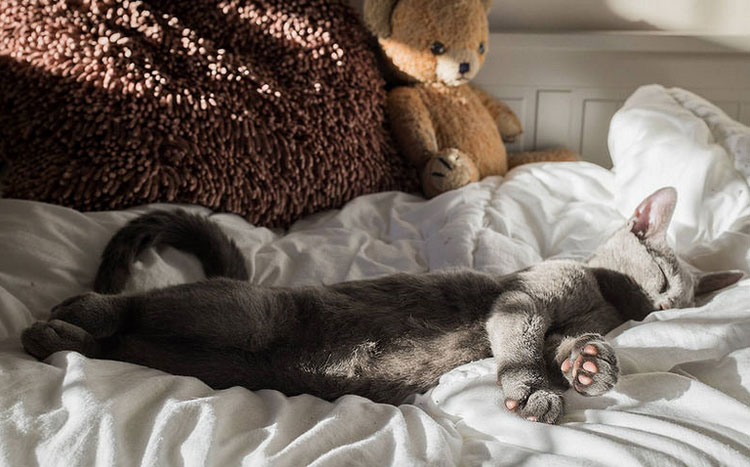
The cat will feel comfortable even in a small space, as it's a fairly small animal. The Russian Blue doesn't require frequent walks, although it enjoys fresh air. It can play with anything: one day you'll see a cat enthusiastically attacking a teddy bear, and the next, it'll be chasing a ball of yarn.
Diet
This breed is not picky about nutrition; a well-balanced diet and sprouted herbs are enough to ensure that the Russian Blue cat feels great and brings joy for many years to come.
If you've chosen a natural diet, it's important to know that animals are fed both dairy and meat. The best meats are chicken and lean beef. As for dairy products, it's best to feed cheese, cottage cheese, natural yogurt, and sour cream. It's not recommended to feed Russian Blue cats cow's milk or fatty fish.
If you decide to use pet food, choose good quality products:
- Hill's;
- Sheba;
- Advance;
- Royal Canin.
Premium-quality products will help maintain your pet's beautiful coat and health. Even better, create a combination diet of 75% dry food and 25% canned food.
If you notice that your Russian Blue's fur has turned brown, the cause is most likely foods containing copper: liver, legumes, shellfish.
Typical diseases
Russian Blue cats are a natural breed, developed by nature. Therefore, they enjoy excellent health and a strong immune system. There are also no genetic diseases. The only concerns are the common ailments common to all cats.
Health and life expectancy
The breed is free of any known genetic diseases or predispositions to specific illnesses. Breeders have worked hard to achieve this. However, this doesn't mean the cat is immune to illness. Like any other cat, it is susceptible to a variety of infectious and non-infectious diseases. However, many can be prevented with timely vaccinations, proper care, and a balanced diet. The average lifespan is 13-14 years.
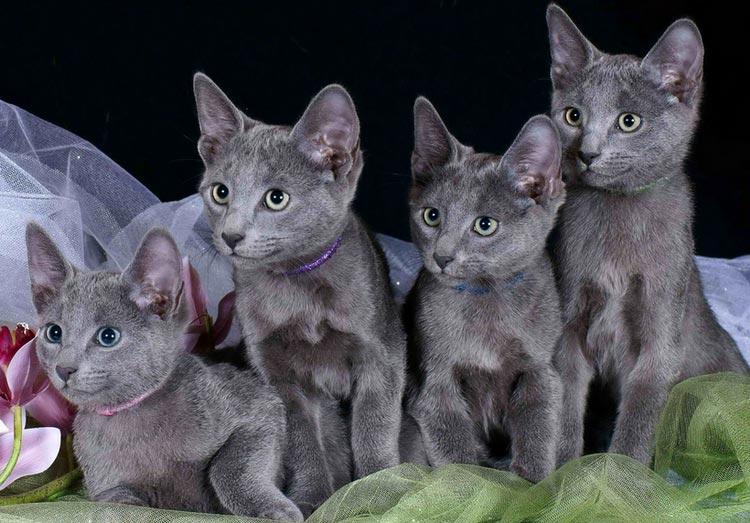
Choosing a Russian Blue kitten and its price
Before purchasing a pedigree kitten, you need to decide whether you want a pet or plan to participate in shows and breed. This will directly affect the price and purchasing requirements.
As early as three months, you can visually determine what the kitten will grow into. The first shedding occurs, the eyes change color, the body becomes slender, and the fur becomes thick and soft. Eye color doesn't fully develop until one year of age, but even at this age, the irises shouldn't be yellow or streaked. The fur shouldn't be too dark, and don't believe breeder claims it will lighten. The kitten should be healthy, friendly, and playful.
There are numerous kittens of various classes and ages available for sale on the market, resulting in a fairly wide price range. Kittens born to pedigree parents with documents but not registered with a club will never be officially considered purebred or participate in shows. These kittens cost an average of 5,000 rubles. Kittens with documents cost between 10,000 and 40,000 rubles. The price depends on the quality and bloodline of the parents, the status of the cattery, and the litter's prospects. Mixed breeds and similar-looking stray kittens, often passed off as Russian Blues, cost up to 2,500 rubles.
Photos
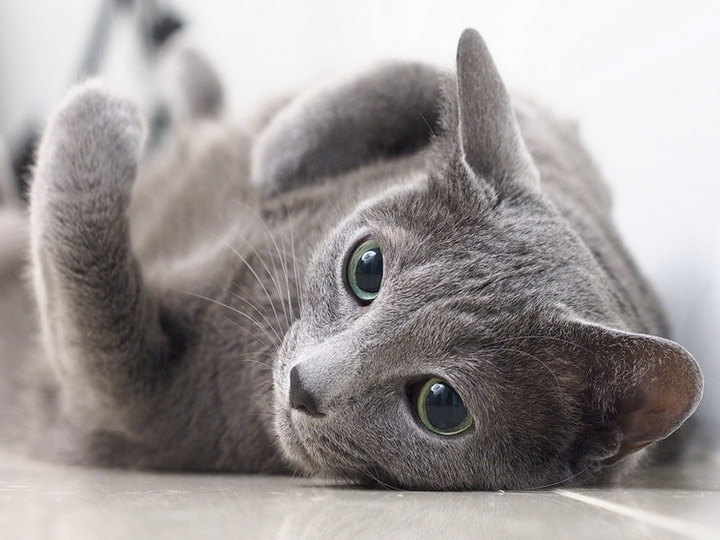
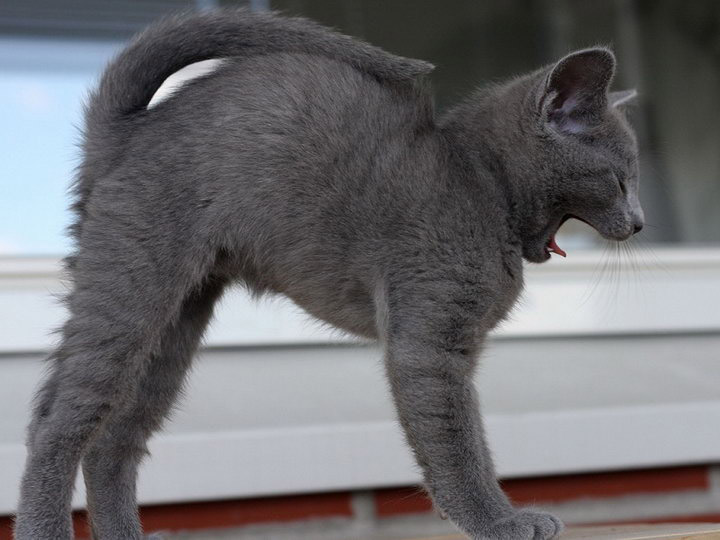
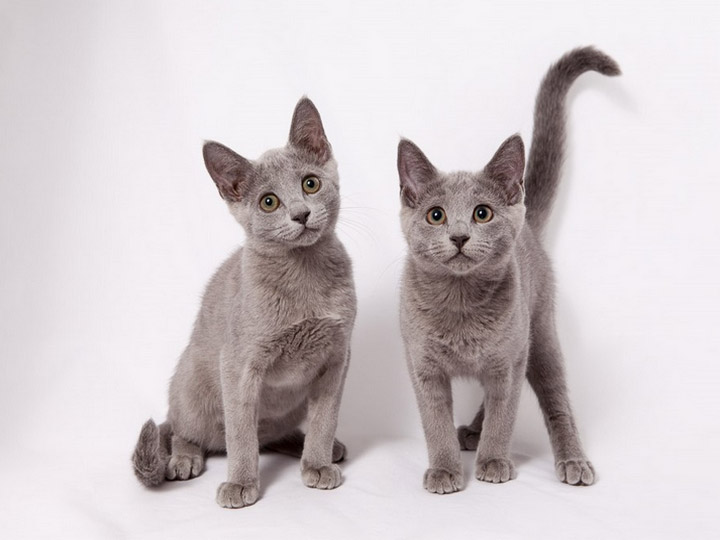
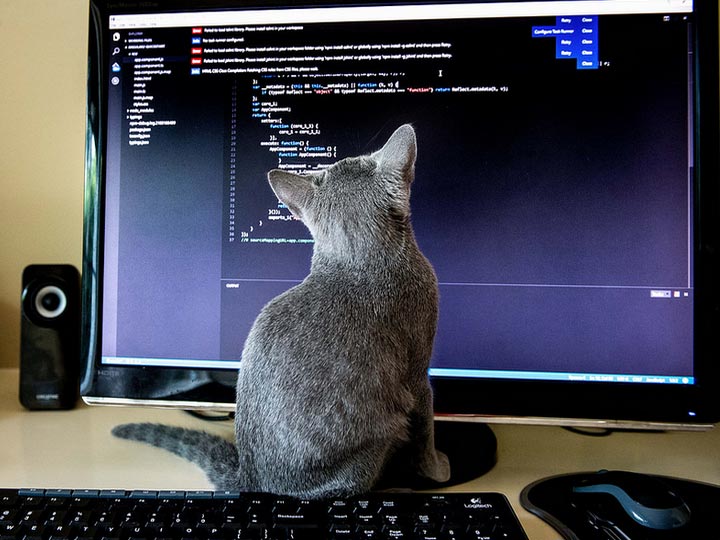
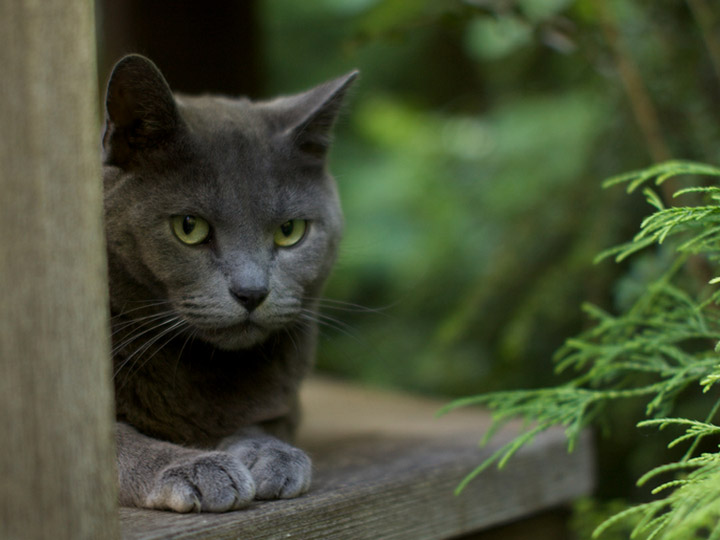
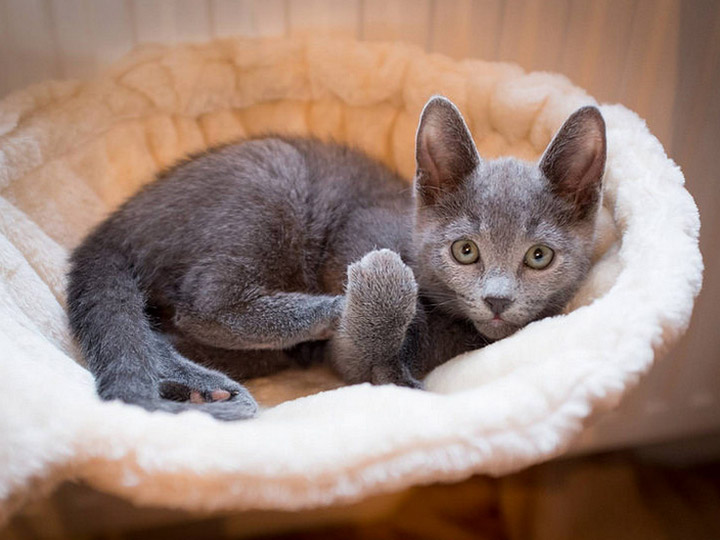
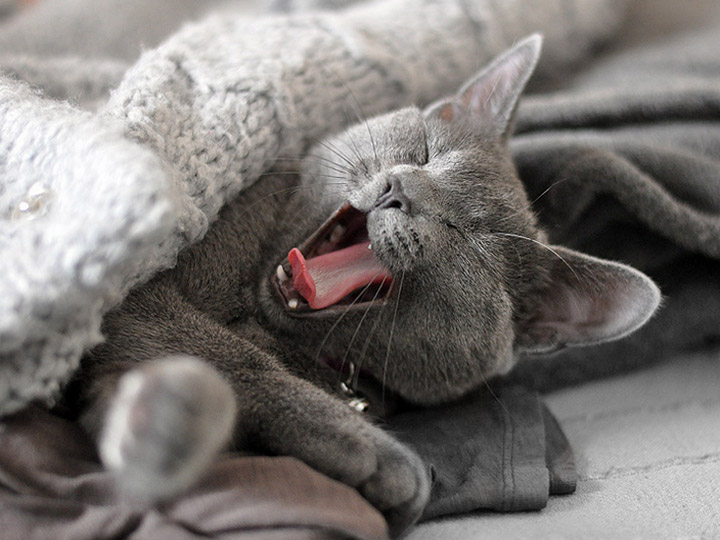
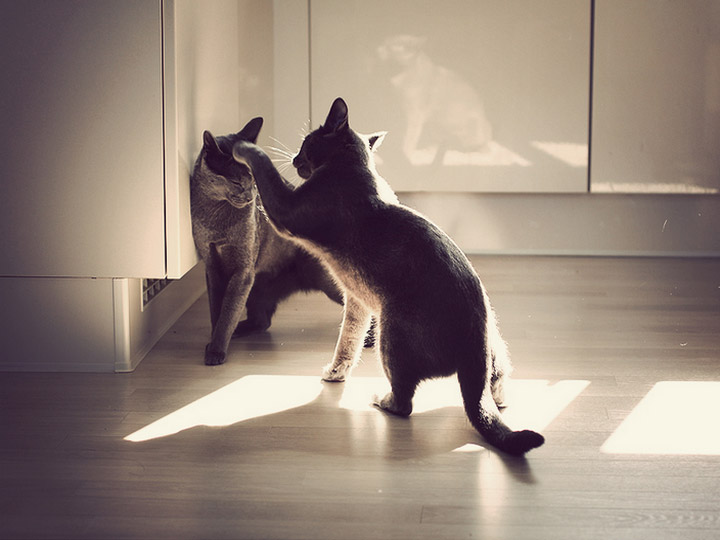
Photos of Russian Blue cats and kittens:
Read also:


Add a comment