
Pink discharge in a cat
If you notice pink discharge in your cat, it's important not to self-medicate but to take them to a veterinarian. Only a specialist can determine the cause and advise on the next steps. Self-diagnosis in such cases is not only ineffective but also fraught with complications and serious consequences. Nevertheless, it's important for cat owners to have a general understanding of the nature of such symptoms.

Content
Possible reasons
One of the main difficulties is determining the nature of the discharge, as it may be related to natural processes or have a pathological origin. In either situation, the owner must closely observe the pet to respond appropriately and promptly.
Physiological processes
In some cases, pink discharge may be due to natural processes that do not pose a threat to the cat's health. Options within normal limits Their appearance is considered to be at certain stages of pregnancy:
- During the first stage of pregnancy, when unfertilized eggs are gradually released from the uterus, discharge is considered normal. It has a pinkish tint and poses no danger to the mother or her future offspring. Any discharge during pregnancy is potentially dangerous and should prompt a consultation with a veterinarian.
- Shortly before birth (usually around 63-65 days), the female begins to lose her mucus plug, so any pink discharge on the fur may be the mucus plug's remnants. The color of the mucus plug can vary from transparent to a greenish tint.
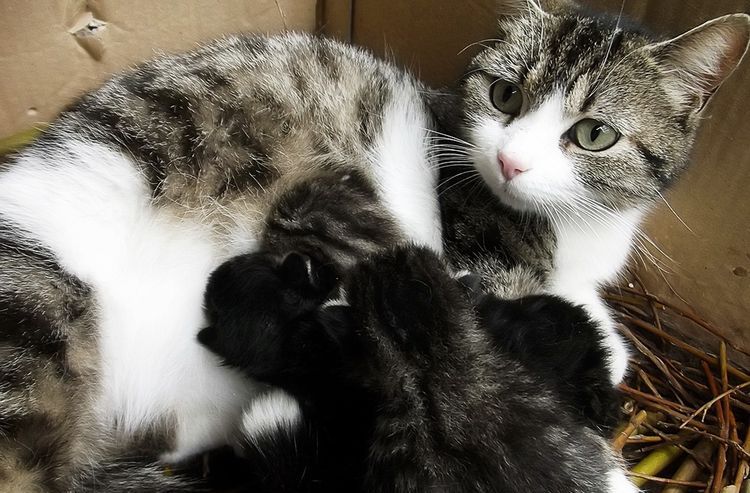
- Postpartum discharge. While it may be reddish-brown with green flecks during the first few days, over time it usually becomes mucous-like and takes on a clear or pinkish tint. On average, it lasts up to 3 weeks, and if it has a characteristic "metallic" odor, it is considered normal. The appearance of any unusual odors is a sign of a problem.
Pathological conditions
The appearance of pink discharge may indicate the development of inflammatory processes and serious diseases in a cat, which, if left untreated, can lead to irreversible consequences. This symptom may indicate:
- Urogenital infections (urinary tract, bladder, uterus) are often accompanied by discharge, which can be pink or opaque, sometimes with a reddish tint. It may be odorless but has a thick consistency.
- Vaginitis is an inflammatory process in the vagina that can be acute or chronic. Ulcers appear on the mucous membranes, and the cat may experience a discharge, which may be slimy or cloudy. The cat will often groom herself under her tail and may even attract male cats, so it's important not to confuse vaginitis with heat and seek veterinary attention promptly. Failure to treat vaginitis promptly can lead to the development of more complex conditions (cystitis, pyometra, etc.).
- Trauma to the vagina or uterus in cats will be accompanied by profuse bloody or pink discharge. If inflammation develops, pus may appear.
- Endometritis is an inflammation of the mucous membranes or walls of the uterus, which can occur in two forms: acute and chronic. In the chronic form, the female goes into heat on time, but fertilization does not occur, or the fetuses die in utero. The acute form often develops after birth (2-6 days later) due to the delayed delivery of the placenta and infection of the cervix.
- Pyometra Pyometra is a complex purulent inflammation of the uterus. It is considered a disease of unspayed, nulliparous cats or cats withdrawn from breeding, but is increasingly common in young animals (up to 3 years old). Pyometra can develop in a closed form: the cervix remains closed, and pus, along with blood and mucus, accumulates in the cervix, which can lead to peritonitis, intoxication, uterine rupture, and ultimately, death. In the open form, discharge (brown, pink, or whitish) flows freely from the sac, especially when the cat is lying down or standing.
Important! Numerous cases of pyometra in cats are caused by the use of hormonal medications to suppress sexual activity (Contrasex, Stop-Intim, etc.).
In spayed cats, pink discharge can also be a sign of the above-mentioned conditions (for example, vaginitis or other diseases). Their development is most often associated with:
- Incomplete removal of the ovary during sterilization. Even a small piece of hormone-secreting tissue, which due to its small size would not be visible on ultrasound, can eventually transform into an inflammatory or tumorous process.
- Removal of only the ovaries, without removing the uterus, which continues to function, so the risk of developing inflammation and neoplasms in it remains fully intact.
- Decreased general immunity due to chronic infectious diseases (leukemia, immunodeficiency, coronavirus) or other health disorders.
What to look out for
Cats are very clean animals, so owners may not always notice the presence of discharge or identify its color. The only thing that may attract attention is the appearance of matted clumps of fur in the vulva area. It's also important to be aware of other signs that may indicate potential illnesses:
- frequent (every 10-15 minutes) licking of the perineum;
- loss of appetite;
- sluggish, apathetic behavior;
- increase in body temperature;
- anxiety and displays of aggression;
- frequent rubbing of the butt against the floor;
- increase or decrease in the number of urinations;
- increase in abdominal volume.
If your cat exhibits one or more of these symptoms, you should immediately contact your veterinarian for a full examination to determine the cause of this behavior and receive treatment recommendations.
Read also:
- How does a cat behave after mating?
- How many kittens does a cat give birth to for the first time?
- How to help a cat give birth at home


Add a comment