
Rhodesian Ridgeback (African Lion Hound)
The Rhodesian Ridgeback is the only breed native to South Africa to have received FCI recognition (their compatriots Boerboels (They haven't yet received this honor.) Originally, the dogs were used to protect livestock, homes, and hunt primarily large game; another name is the African Lion Hound. Today, Ridgebacks are increasingly being kept as companions and guard dogs.

Content
History of the breed's origin
The ancestors of modern Ridgebacks lived among the Hottentots, the natives of South Africa, since time immemorial. Their distinctive feature was the ridge—a narrow, long strip of skin along the back where the hair grows backwards. Few breeds can boast this characteristic—three, to be exact: the African and Thai Ridgebacks, as well as the indigenous Vietnamese Phu Quoc dogs.
In 1505, the Englishman Thiell described the native inhabitants of South Africa and couldn't help but mention their unusual dogs with a crest on their backs. Europeans only learned more about the virtues of African lion hounds with the onset of active colonization in the 17th century. The Dutch, Germans, French, and English who arrived in South Africa brought livestock and four-legged companions (bulldogs, terriers, Great Danes, pointers, and others), which they crossed with the local stock. Furthermore, uncontrolled crossbreeding between local and imported dogs occurred constantly.
Ridgebacks are natural hunters and excellent guard dogs, and were traditionally kept on farms to protect homes and livestock.
In the late 19th century, Cornelius Van Roer, an African farmer of European descent, became interested in Ridgebacks. He spent 35 years breeding and improving the breed. For a time, African hounds were even called "Van Roer dogs." The dominant trait—the ridged back—was retained despite extensive crossbreeding.
The first breed description based on the Dalmatian standard was developed by Frederick Barnes in 1922. It was revised and approved by the Kennel Union of South Africa (KUSA) in 1926. In 1963, the FCI accepted the current standard and officially registered the Rhodesian Ridgeback breed under No. 146.
Video review of the Rhodesian Ridgeback (African Lion Hound) breed
https://youtu.be/cfJ7mBfzBew
Appearance and standards
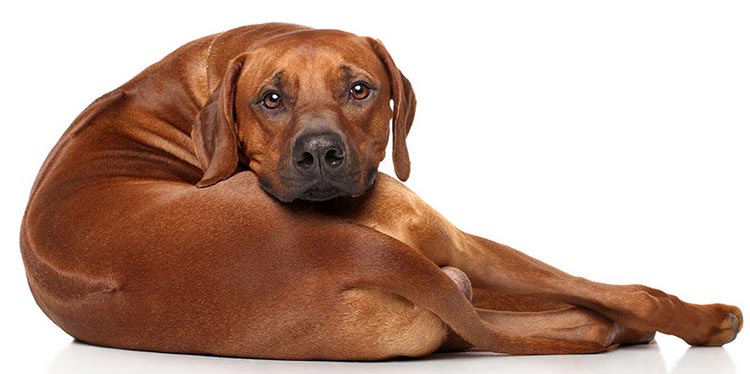
The Rhodesian Ridgeback is a well-balanced, agile, strong, and muscular dog, symmetrical in all its outlines, capable of fast, long-distance running. Its movements are light and elegant. It stands 60-70 cm tall and weighs 28-35 kg. In many ways, the breed is similar to the Hungarian Vizsla.
Head and muzzle
The skull is medium in length and level between the ears. The ears are set high, wide at the base, have rounded tips, and lie close to the head. The eyes are moderately spaced and round. Their color, from light to dark brown, should match the coat color. The cheeks are smooth. The jaws are strong and have a correct bite. The nose is acceptable in both black and brown colors; the degree of pigmentation should correspond to the color of the eyes. When at rest, the head is free of wrinkles.
Torso
The chest is not wide, but quite roomy and deep. The ribs are moderately springy, not rounded. The tail is carried slightly curved, strong, and gradually tapers to a point. The back is level. The limbs are strong and well-boned, with well-defined muscles and strong tendons.
Coat and colors
The coat is short and dense, fitting well to the body, glossy and shiny. Color can range from light reddish to wheaten. A small amount of white markings on the chest and toes, as well as light shading on the muzzle, ears, and tail, are permitted.
Ridge
The ridge on the back is formed by hair growing in the opposite direction to the main coat. A proper ridge is perfectly symmetrical, starting behind the shoulders and extending down the back to the hip area, gradually tapering to an average width of about 5 cm. Two identical curls, located in the upper third, are essential.

Character and psychological portrait
The Rhodesian Ridgeback is even-tempered, determined, active, intelligent, and independent. He will make a devoted friend and a fearless guard and helper. He takes the protection of his family and property, including his car, very seriously. He is capable of analyzing the situation and making decisions. At the same time, he is sensitive, prone to touchiness and stubbornness, and he senses and understands his owner's moods. He absolutely does not tolerate loneliness or unfair treatment.
In normal circumstances, Ridgebacks are neither aggressive nor timid: they are self-confident and indifferent to strangers. They are always alert and curious, with a well-developed hunting instinct. They don't bark unnecessarily, and only bark loudly when necessary.
With other dogs, they are friendly, either interested or indifferent. They do not start or provoke fights. They generally dislike cats, but can coexist peacefully with domestic animals. Small animals and birds are considered potential prey.
Ridgebacks generally get along very well with children. With an older child, the dog will happily walk and frolic, and if necessary, will defend them. Younger children will allow them to cuddle their ears and study their teeth, and when they tire of the excessive attention, they will get up and leave.
Ridgebacks are absolutely not suitable for people who cannot devote enough time and attention to their pet, those who are not going to take a responsible approach to training and education, as well as elderly and timid individuals who tend to allow the dog to dominate.
Training and exercise
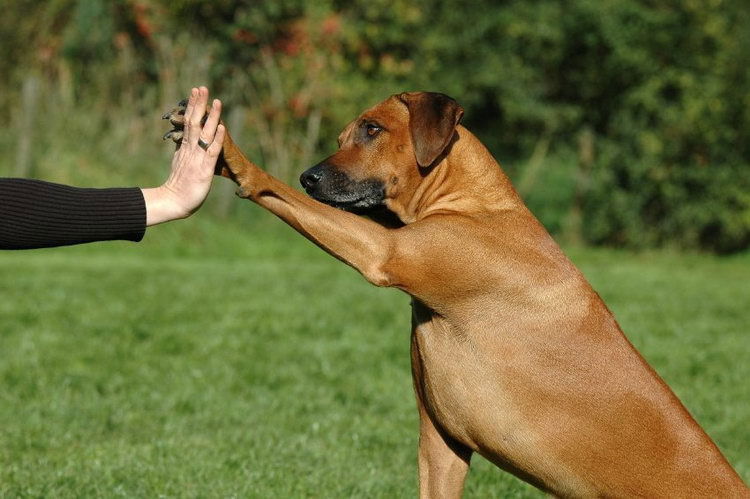
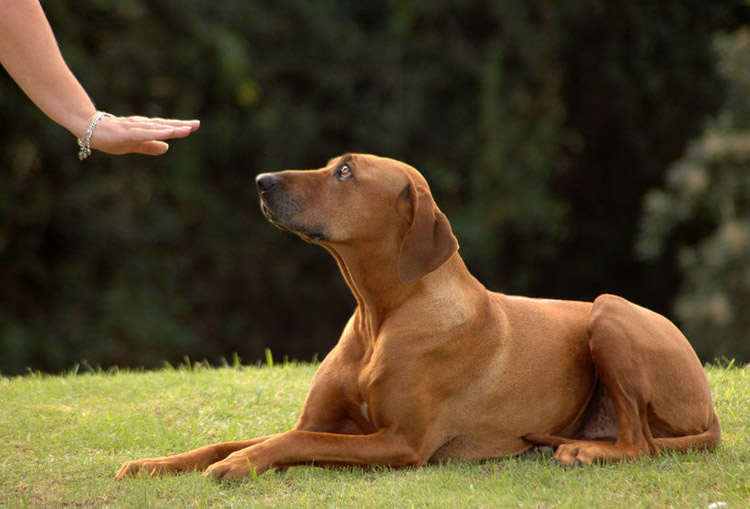
The Ridgeback is a versatile and talented dog that is highly trainable. It possesses hunting, guard, and protection qualities, and can excel in various sporting competitions. Of course, this is only possible with consistent and consistent training.
Ridgebacks are highly intelligent dogs, capable of analyzing the situation and making independent decisions, and therefore will not unquestioningly follow all commands (like some service breeds), but will do what is required of them only if they deem it necessary.
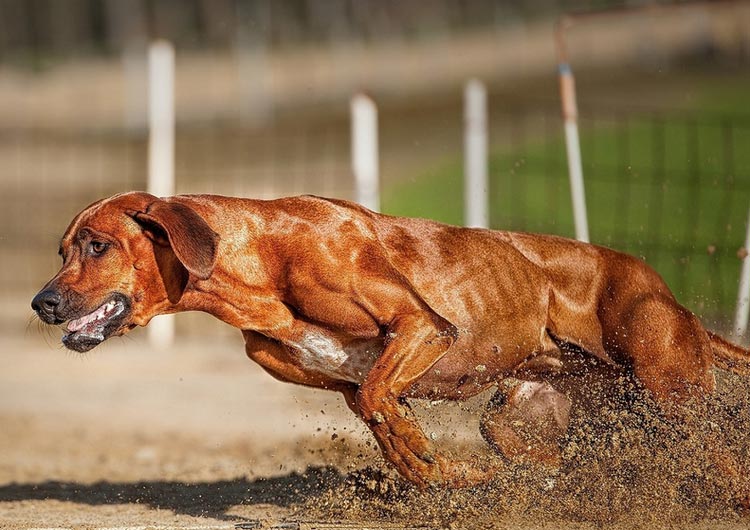
They need a lot of exercise. Walks twice a day should be at least an hour long, ideally interspersed with training and play. This dog makes an excellent companion for jogging or cycling. Ridgebacks are especially energetic as puppies up to 1.5 years old; as they mature, they become calmer and less destructive.
Content
Ridgebacks are not suitable for permanent outdoor living, even with a kennel and insulated kennel. They are often kept in apartments, but a private home with a yard is ideal. However, time spent outdoors alone does not equate to active walks, games, and training sessions with their owner. Ridgebacks have no distinctive odor. The only minor annoyance is their short, wiry coat scattered around the house. As their puppy grows, many owners encounter problems with damage to items.
Care
Minimal grooming is required. It's recommended to brush the dog 2-3 times a week using special mittens or thick natural bristle brushes. This will significantly improve the condition of the coat and reduce shedding in the home. Ridgebacks are bathed 2-4 times a year, typically before shows or after the end of the shedding season. It's also important to maintain eye and ear hygiene; they should be kept dry and clean. Teeth should be brushed at least twice a week. Rope toys can be offered as an additional preventative measure against tartar buildup. Ridgebacks have virtually no undercoat, so in winter they should be dressed in overalls or a blanket.
Feeding
Feeding should be approached responsibly, as the quality of the food and diet largely determines the health of your pet. The type of feeding should be determined in advance; there are two types:
- Ready-made industrial feed;
- Natural products (food prepared specifically for dogs).
You shouldn't mix the two types of food. Ready-made complete feeds Foods above premium (which can be fed to dogs) include all the necessary ingredients, and improperly adding natural products to them will cause a nutritional imbalance. Natural feeding implies a diet consisting of animal proteins (fish, meat, poultry, and organ meats) – approximately 70%, grains – 20%, and vegetables and fruits – 10%. Fermented milk products and eggs are sometimes included.
At each age, a diet is selected that will fully meet all the needs of the body.
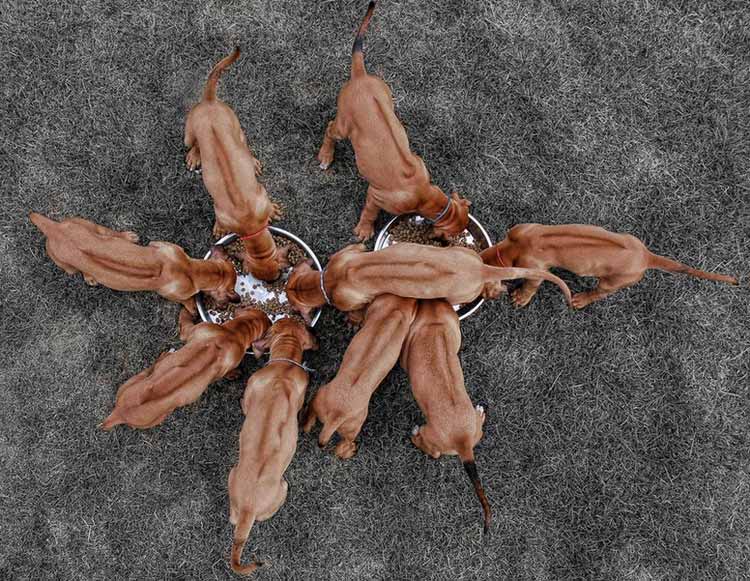
- Puppies up to 4 months old are fed 4-5 times a day;
- From 4 to 6 months – 3-4 times;
- From 7 to 12 months – 2-3 times;
- From 1 year of age they switch to two meals a day.
It's best to feed your pet an hour to an hour and a half after walks. Clean drinking water should always be readily available.
Health, disease and life expectancy
African hounds are strong and resilient dogs with strong immune systems and a high resistance to many diseases. Most often, the illnesses they develop are hereditary or acquired due to improper housing, care, and nutrition.
Hereditary diseases of Ridgebacks:
- Congenital deafness is diagnosed in puppyhood and is not treatable;
- Cataracts can be congenital or appear spontaneously at any age;
- Allergies are a very common problem; in addition to food, reactions can be caused by insect bites, pollen, and other things;
- Hip dysplasia develops due to unbalanced nutrition and genetic predisposition;
- Dermoid sinus is a condition in which the skin does not adhere tightly to the spine; it can occur in a latent form or as an infectious process.
Common illnesses associated with improper care and nutrition:
- Ear infections;
- Acute viral diseases;
- Osteochondrosis;
- Volvulus of the stomach and intestines;
- Tartar and periodontal disease.

Average life expectancy is 10-11 years.
Choosing a puppy and price
Don't risk buying a Rhodesian Ridgeback puppy without papers. Any purebred dog born from a planned litter has a tattoo, puppy card, and veterinary passport with vaccination records.
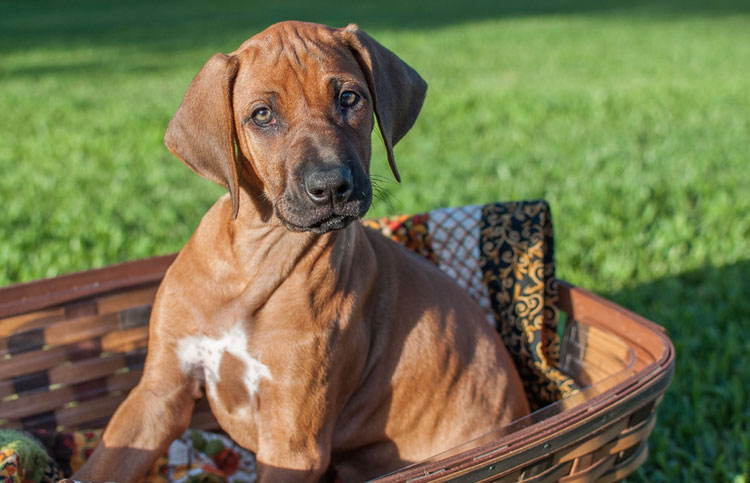
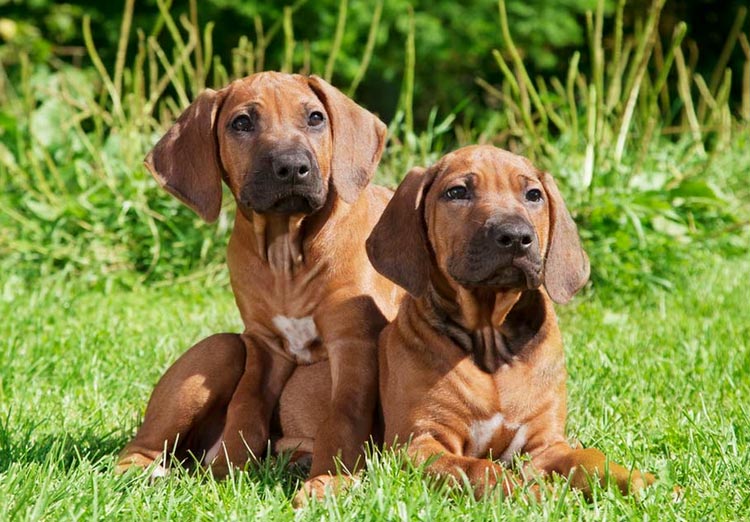
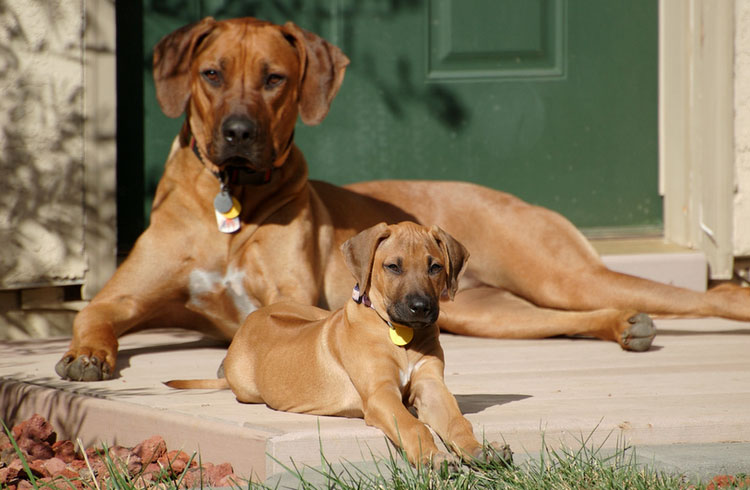
When visiting a breeder, pay attention to more than just the puppies. Their parents (appearance, personality, achievements, illnesses, etc.) will help you imagine what the puppies will grow up to be. The breeder's living conditions and commitment to their craft are also important factors. At the time of purchase, the little Ridgebacks should be roughly the same size, active, curious, and apparently healthy.
The ridge is the breed's primary characteristic, but puppies are sometimes born without one or the ridge is malformed. Such puppies are usually sold for much less; the problem is purely aesthetic; they are not allowed to breed or compete in shows, but it has no effect on health. Don't trust breeders who claim the ridge will appear later or become longer.
Ridgeback puppy prices
Ridgeback puppies and dogs are quite expensive. On average, prices range from 25,000 to 50,000 rubles. Some puppies with potential for breeding or show careers can cost significantly more.
Photos
Photos of Rhodesian Ridgebacks

Read also:


Add a comment