
Riesenschnauzer (Giant Schnauzer)
The Giant Schnauzer is a working dog breed with an excellent exterior and a rich personality. It is easily trained in almost any area. It is used for guarding, escorting, searching for people and forbidden objects, for sports, and, less commonly, for herding livestock. In addition, it is a devoted friend and companion. It requires careful training and regular grooming. Another name for this breed is the Giant Schnauzer.
Content
History of origin
At the beginning of the 20th century, cynologists wrote, talked, and speculated a lot about the origin of the Giant Schnauzer breed. (German: Riesenschnauzer), but no reliable data was ever found. A description of very similar dogs can be found in the book "The Dog and Its Breeds" by the German cynologist Fitzinger, 1876. The author talks about the Bavarian wolfhound, a strong and fairly large dog that farmers used for guarding and herding livestock. As a separate breed, they were first presented in Munich in 1909. A total of nine dogs were exhibited under the name Giant Schnauzer. For a long time, they were also called "Munich Schnauzer." Today, the Schnauzer family includes three breeds: the Giant Schnauzer (Riesenschnauzer), medium schnauzer (mittel schnauzer) And Zwergschnauzer (miniature schnauzer).
The first breed standard was published in 1923. The Giant Schnauzer's popularity peaked in Russia in the 1980s and 1990s, and one of the most famous owners and admirers of the breed was Yuri Vladimirovich Nikulin. Today, it's rare to see these elegantly groomed beauties on the street.
Appearance
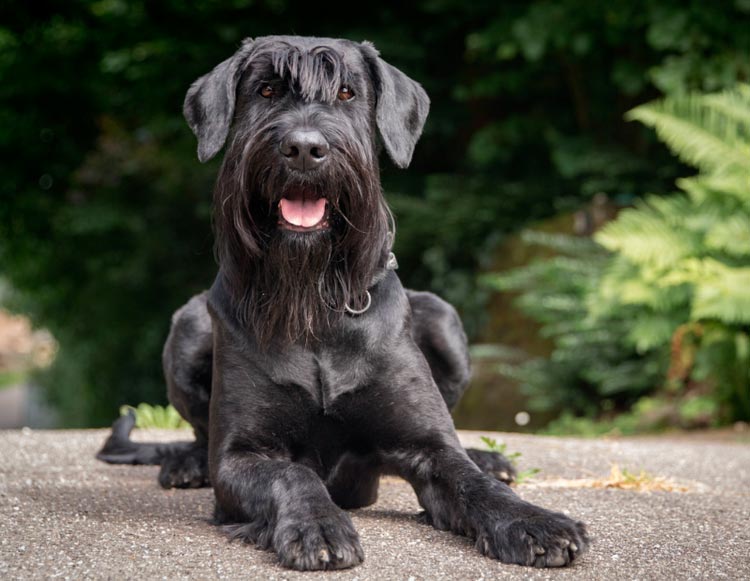
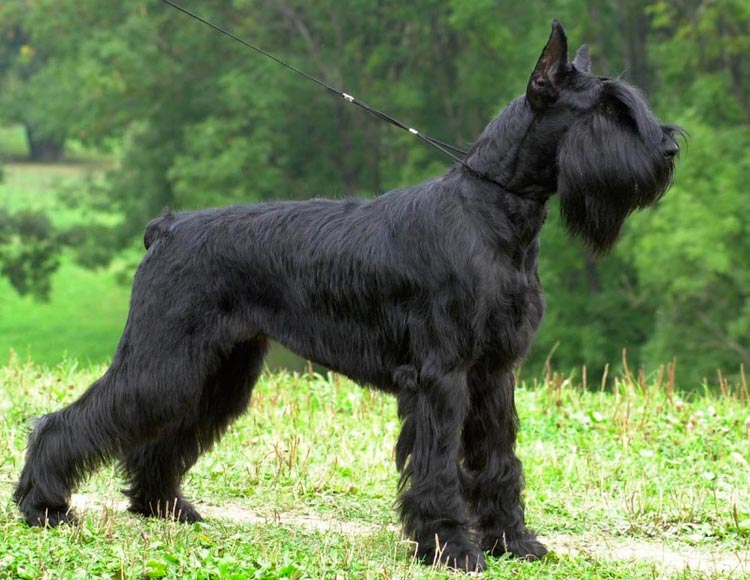
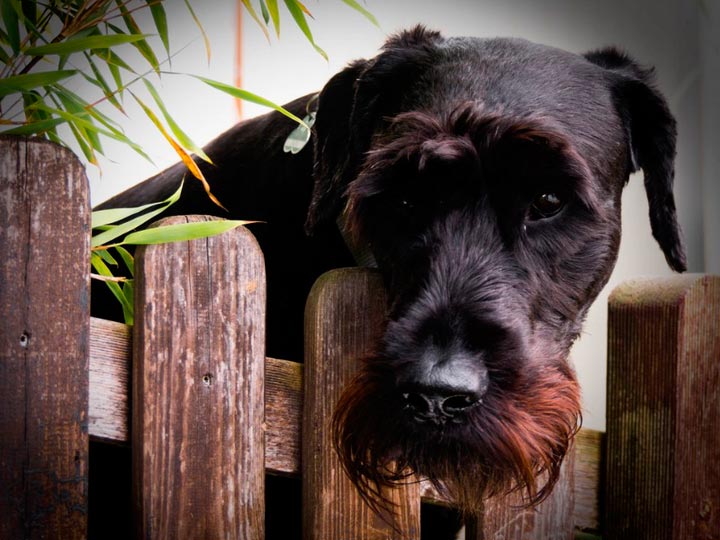
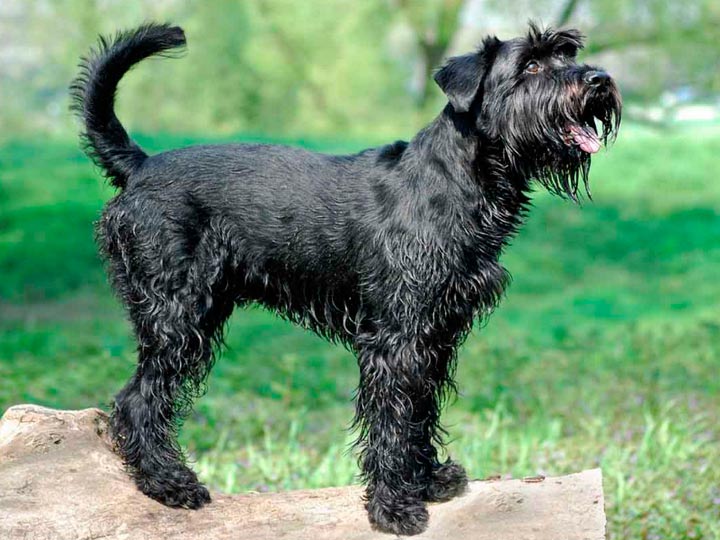
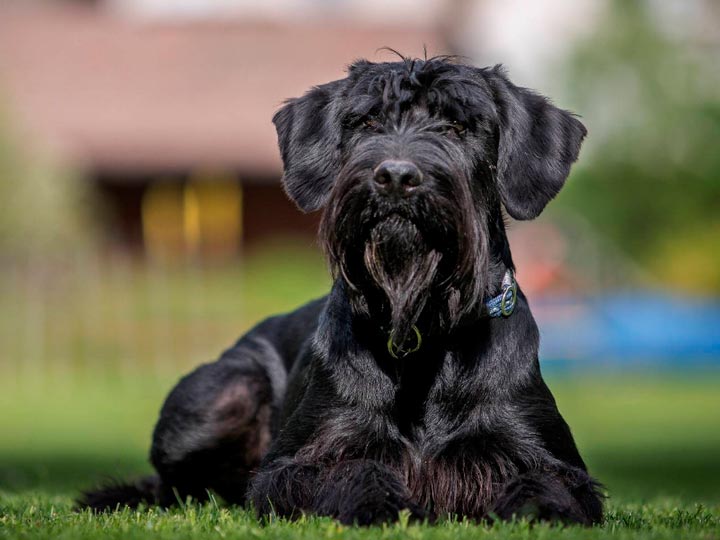
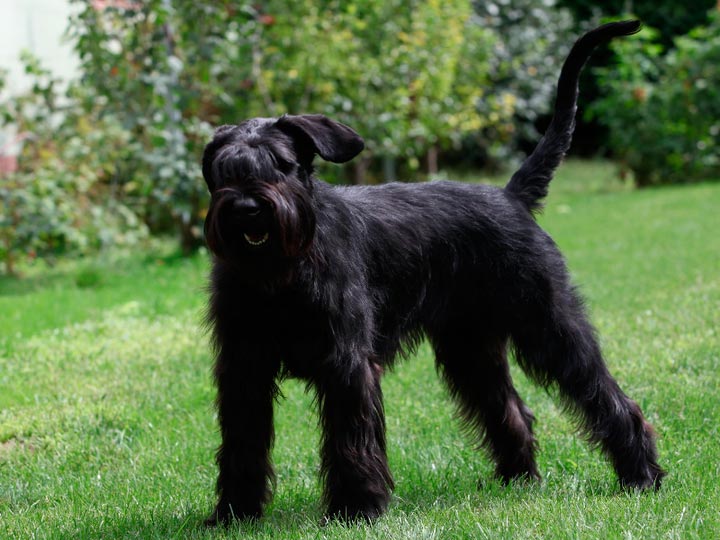
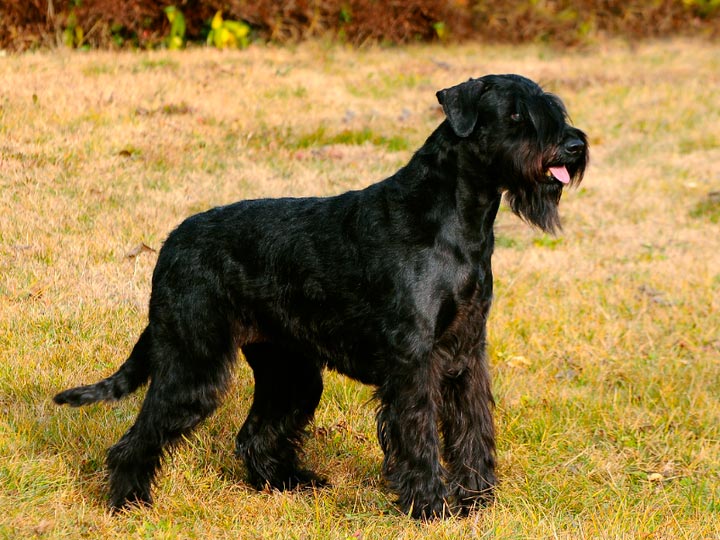
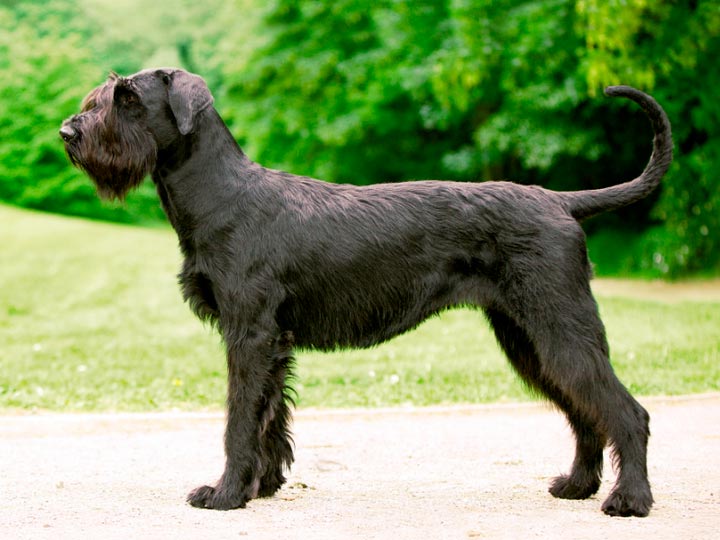
The Giant Schnauzer is a large, strong dog with a wiry coat that forms thick eyebrows, a mustache, and a beard on its head. It resembles a Giant Schnauzer in appearance. Russian Black TerrierSexual dimorphism is well expressed.
- Height at withers: 60-70 cm.
- Weight: 35-45 kg.
The head is proportional. The stop is clearly visible and accentuated by the eyebrows. The nose is well developed and black. The bridge of the nose is straight. The bite is scissor-like. The ears are set high and droop forward; according to the standard, they may be cropped. The eyes are set straight, dark, oval, and medium in size. The eyelids are tight-fitting and dry. The neck is slightly arched, blending smoothly into the withers.
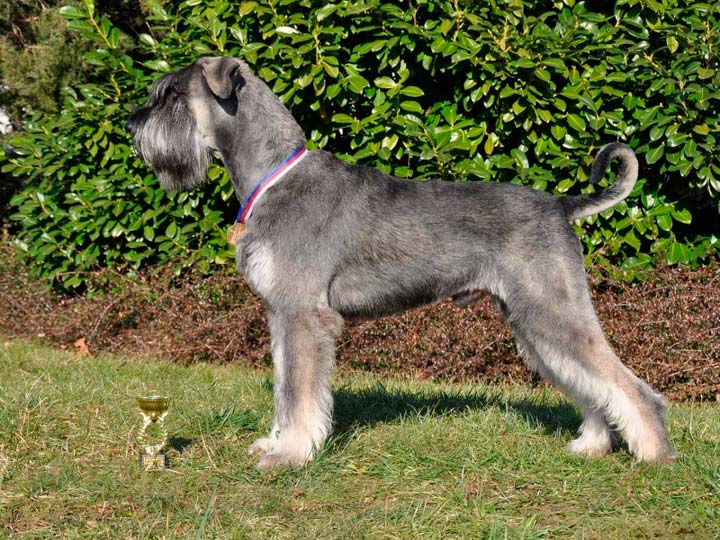
The topline is slightly sloping. The croup is rounded. The chest is moderately broad. The tail tapers to a point and may be docked to the third vertebra according to the standard. The forelimbs are strong and set moderately wide apart. The hind legs, when viewed from the side, are set back; when viewed from the rear, they are set moderately wide apart and parallel. The paws are short and rounded. The toes are well-knit. The nails are dark, and the pads are resilient. The gait is long, free, quick, and elegant.
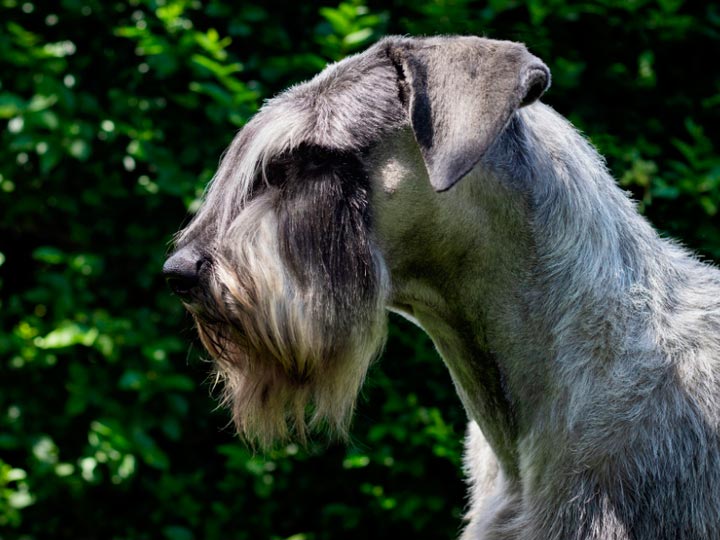
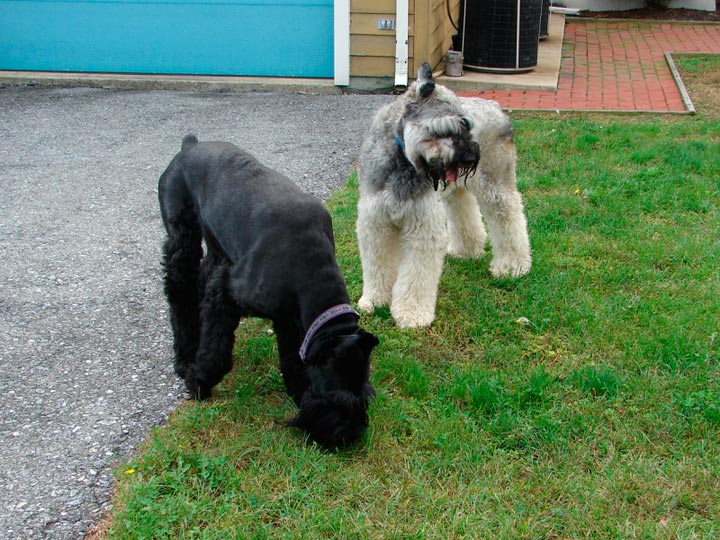
The coat is harsh, dense, and medium-length. The undercoat is thick. Longer hair on the eyebrows and beard is typical. The color can be pure black or pepper and salt. The latter requires a dark mask. Distinctive light markings are undesirable.
Ear and tail cropping for a Giant Schnauzer
In 2016, the FCI General Committee ruled that in countries where such procedures are legally prohibited, dogs with docked tails or docked ears cannot be shown at FCI shows. If there is no legal restriction in a country, dogs of breeds that have traditionally had their tails or ears docked can be shown without restrictions, along with dogs with natural-length ears and tails. Ear and tail docking are not prohibited in the CIS countries. The ruling is valid until 2014.
Riesens' ears are cropped at 3-4 months of age. Their tails are cropped at 3-5 days, so this should be discussed with the breeder in advance.
Character and behavior
The standard describes the Giant Schnauzer as a balanced dog, devoted to its owner, easily trained, quick and resilient, with an innate ability to handle stress, a calm self-confidence, and a pronounced leadership ability. All these qualities make it an excellent companion, sports dog, and service dog. However, for a Giant Schnauzer to grow up to the standard it's described as, it takes considerable time and effort to raise a puppy. Giant Schnauzers are among the most famous. bearded dog breeds.
The Giant Schnauzer is intelligent, patient, and adapts well to its surroundings. Very curious and intelligent, it can be incredibly cunning and stubborn at times. It is devoted to its owner and affectionate and friendly with other family members. With proper socialization, it gets along well with children of all ages. It is very sensitive to affection and care, requiring constant interaction. It can be offended by rudeness. It has an innate protective instinct and is very territorial. It is wary of strangers, but can almost always distinguish friend from foe. It barks only when it senses a threat, paying little attention to random noises. Owners note that Giant Schnauzers are very warm-hearted dogs with an almost human-like gaze. They are sensitive, reliable, devoted, and sociable.
Giant Schnauzers generally get along well with other pets, especially larger ones. They can sometimes be jealous. Owners should be aware that these dogs have a strong prey drive, which can cause harm to small animals, birds, or cats.
Training
Giant Schnauzers are easy to train, memorize commands well, and quickly follow them. Training begins early in life, with special attention paid to socialization and strict control over any undesirable behavior.
The Giant Schnauzer is a dog for an experienced owner or a person who is ready to study the issue of raising and training service breeds.
Giant Schnauzers have an innate protective and watchdog instinct, so they are prone to territorial aggression, which must be controlled. Dogs of this breed must undergo mandatory obedience training. It is also advisable to complete a specialized course, such as ZKS, under the supervision of a professional. After protection training, the Giant Schnauzer becomes more wary of others, but not aggressive. Without training, it is potentially dangerous. It often refuses to allow its owner to approach within arm's reach. If the emphasis in training the puppy is on friendliness towards others, it will be difficult to produce a good guard dog.
If a Giant Schnauzer isn't trained and socialized from puppyhood, it can grow up to be a powerful, completely uncontrollable dog with a strong guard instinct. It can be dangerous to others.
Maintenance and care
The ideal environment for a Giant Schnauzer is a private home with a large yard. A Giant Schnauzer can live outdoors year-round and occasionally in a crate, as long as it's not chained. They can easily adapt to city life, but it will be more challenging for the owner to provide sufficient exercise. A Giant Schnauzer sheds virtually nothing and doesn't smell when properly groomed. However, if the dog is rarely trimmed and bathed, odor and hair on the carpet are inevitable.
The Giant Schnauzer is a strong, active dog and requires appropriate exercise: long walks, vigorous exercise, and active play. Lack of exercise can lead to destructive behavior, disobedience, musculoskeletal problems, and, less commonly, excess weight.
The Giant Schnauzer is not suitable for weak or lazy people. It requires regular, vigorous exercise. It loves to run and swim, is constantly busy, and cannot sit still for long periods of time. Mental stimulation and regular interaction with its owner are also important.
Care
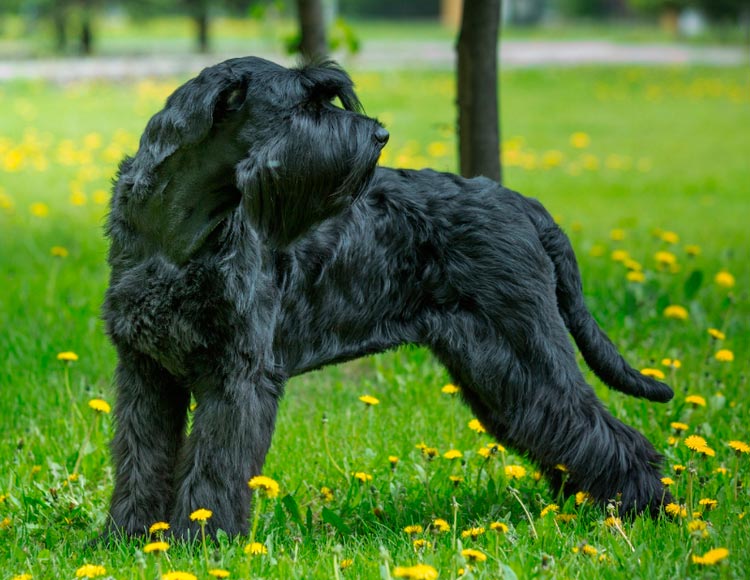
The Giant's wiry coat requires regular grooming. It grows to a certain length, matures, and dies, but it doesn't fall out completely on its own; it needs to be plucked or trimmed. Brushing with a hard-bristled brush should be done once or twice a week. After a walk in snow or rain, wipe the dog dry with a cloth, and comb and smooth the coat to prevent it from becoming ruffled.
If a Giant Schnauzer isn't trimmed, it looks unsightly and starts to smell. Old hair becomes tangled, matted, and interferes with new growth. This causes itching and can lead to skin conditions. This coat is no longer able to protect the dog from cold or moisture.
Trimming of the Riesen is conventionally divided into three types:
- Hygienic. Performed twice a year (spring and fall).
- Cosmetic. Maintaining the dog's appearance in line with the standard. This is done as the coat grows, approximately once a month.
- Show grooming. Like cosmetic grooming, it requires experience and skill and helps highlight the dog's features. It's performed in several stages.
Additionally, grooming a Giant Spaniel includes standard procedures: ear and teeth cleaning, nail trimming, and bathing as needed. It's recommended to wipe the dog's beard after each meal.
If the Giant Spaniel is not being shown, the hair on the head and muzzle can be trimmed, which will make the dog's daily grooming much easier.
Nutrition
Giant Schnauzers can be fed commercial or natural foods. They are not prone to overeating or gaining weight, but some dogs have sensitive digestion. Because of the breed's tendency to bloat, there should be a gap of about two hours between exercise and feeding. It is also important to strictly adhere to the established routine.
Health and life expectancy
Giant Schnauzers adapt easily to their surroundings; they are strong, resilient, and have a strong immune system. However, there are a number of illnesses to which they are more susceptible:
- Elbow and hip dysplasia;
- Ophthalmological diseases (keratoconjunctivitis dry, glaucoma, cataracts, retinal dysplasia, progressive retinal atrophy);
- Skin diseases (seasonal alopecia, follicular cysts);
- Diabetes;
- Hypothyroidism;
- Epilepsy;
- Oncology.
Some Giant Schnauzers are sensitive to sulfonamides and gold preparations.
The most common causes of death are old age, lymphoma, liver cancer, and heart failure.life expectancy is 11-14 years.
Choosing a Giant Schnauzer Puppy
Combining such qualities as reliability, calm, protectiveness, and friendliness in a Giant Schnauzer is possible, but it requires a great deal of work and depends on the puppy's personality. While protective abilities are almost entirely inherited, reliability and friendliness toward others, especially children, are instilled at a very early age. If you need a dog for a family with small children, it's best to avoid puppies from kennels, which haven't been socialized with children since birth. A guard dog is chosen primarily by its parents. The owner of a truly working dog will happily show them off even on a strange playground. If they avoid the request, the dog may not be as good. Gender also plays a role. Males are generally more dominant and require experienced leadership. Working qualities are not significantly affected by gender.
The optimal age to adopt a Giant Schnauzer puppy is 2-3.5 months. By this time, the puppies are independent enough to live with their new owner and old enough to appreciate their breed characteristics and temperament.
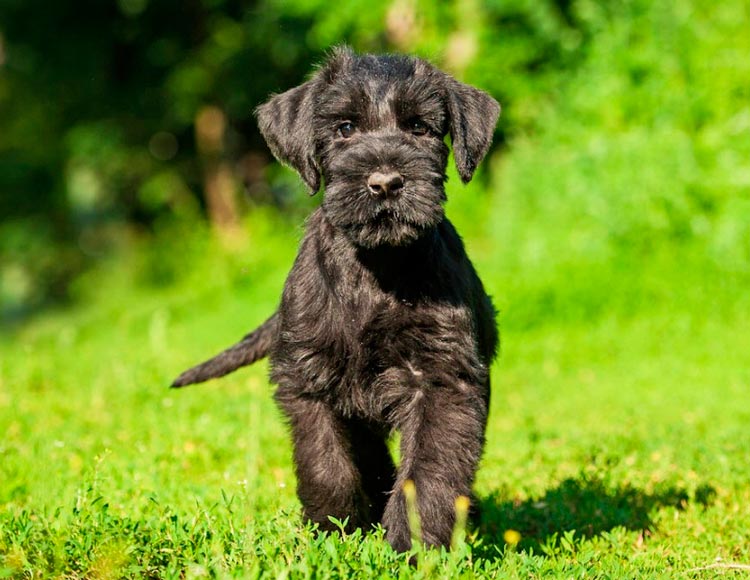
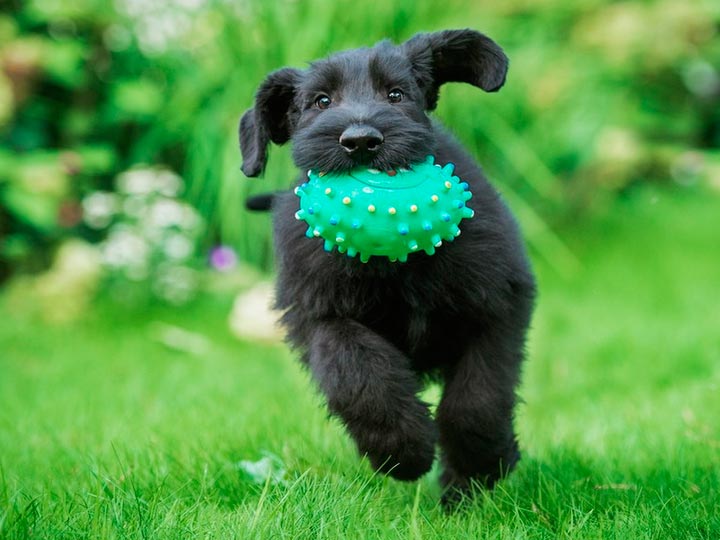
At the age of 1-1.5 months, the puppy weighs about 3-4 kg. The puppy should not be aggressive or cowardly. The dog's appearance is carefully examined. The coat should be clean, shiny, and wiry, with no bald spots. The eyes, ears, and nose should be clear. The back should be smooth and without a hump or arch. The intensity of a black Giant Schnauzer's color can be determined by the depth of pigmentation on the lips, eyelids, and paw pads; the darker these are, the blacker the dog will be as an adult.
Price
The price of a Giant Schnauzer puppy depends on many factors: class, prospects, achievements of the parents, and usually varies between 400 and 1000 USD.
Photos and videos
The gallery contains more photos of the Riesenschnauzer (Giant Schnauzer) breed of dogs.
Video about the Giant Schnauzer dog breed
Read also:


Add a comment