
Drawings of dogs by cells
Are you looking for a fun activity that will not only fill your free time but also develop creative thinking, attentiveness, and other useful skills? Try coloring by squares—it's a great way to diversify your time, develop concentration, hand-eye coordination while writing, and logical thinking. This activity is even included in preschool programs, but it's also beneficial for both children and adults, providing a relaxing way to unwind after a busy workday. Recently, many people with busy schedules have found it helpful to relieve stress and unwind by coloring pictures and coloring by squares.
You can use pencils or markers to draw anything you want on a piece of notebook paper, for example, drawing a dog using squares. You don't need any special skills; all you need is a regular school notebook and writing utensils.

Method one: lines by cells
These types of drawings are called graphic dictations. They involve drawing short lines on a piece of notebook paper in specific directions and sequences specified in the assignment. This activity is especially useful for preschoolers and younger schoolchildren, as it develops auditory and visual perception, attention, and motor coordination. Children often enjoy graphic dictations because they offer a touch of surprise—they won't know in advance what the final drawing will be.
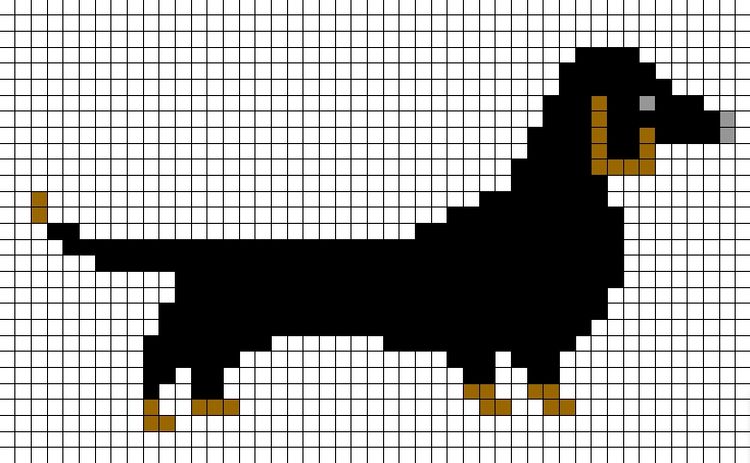
For younger children, you can start with simple, small pictures. For example, you could draw a cute dog in profile. Grab a piece of notebook paper and get to work. Follow the arrows from left to right, and you'll be fine!
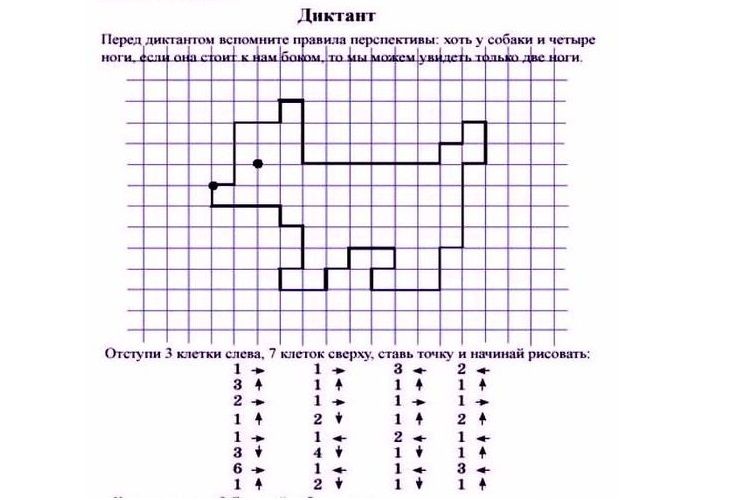
If you conduct such dictations with your child more often, they will help them quickly remember the directions "up-down", "left-right", learn to count the squares and connect them, developing hand motor skills.
The second method: copying from a sample
This method involves not only drawing simple lines but also coloring a specific number of squares. You can draw with a soft pencil only, creating monochrome images, or use colored gel pens, pencils, or markers. This will create vibrant and colorful drawings of a dog, square by square, in a notebook.
The main thing is to carefully count the squares and follow the chosen pattern precisely. Each picture fits on one sheet of paper, so they can be easily copied using the squares of a regular school notebook as a guide.
Drawings on cells can be simple, which can be offered to a child aged 4-6 years old.
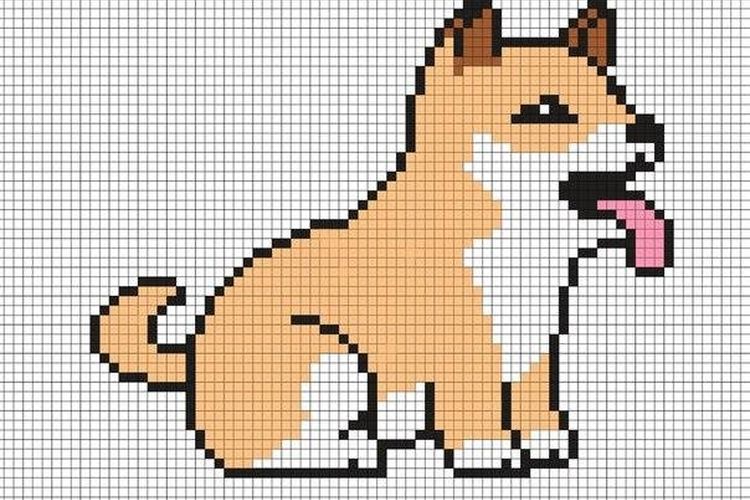
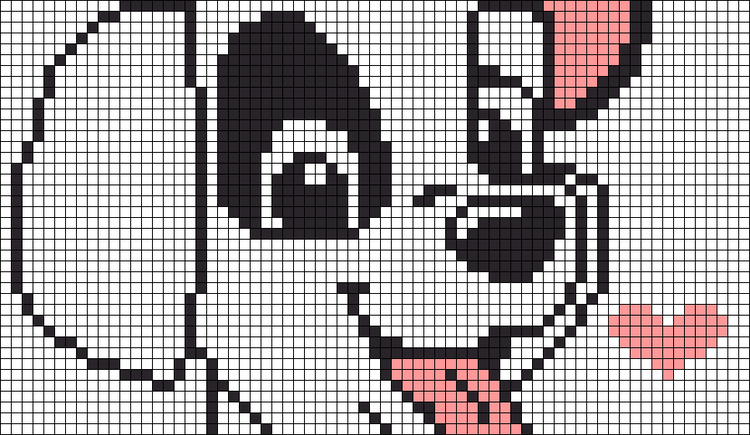
There are also complex images with many colors and elements that older students and adults can handle. These include cartoonish, schematic, and realistically rendered images of dogs.
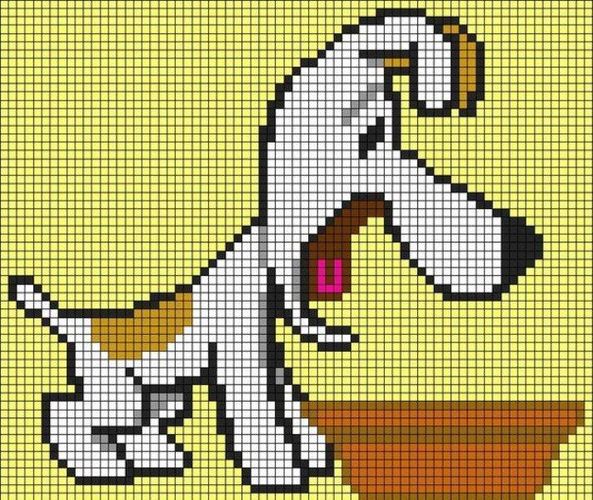
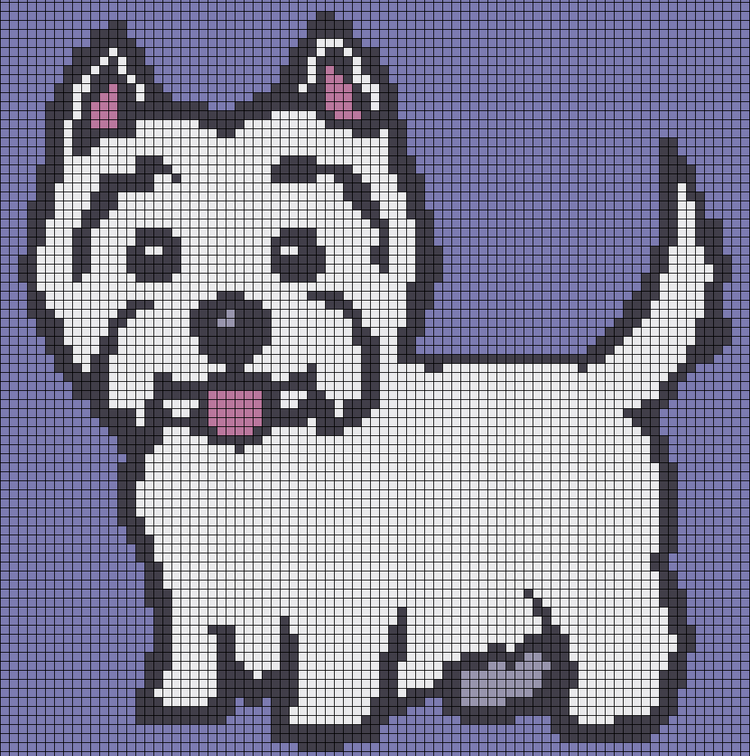

As for breeds, there is no need to even list them, since you can draw almost any one.
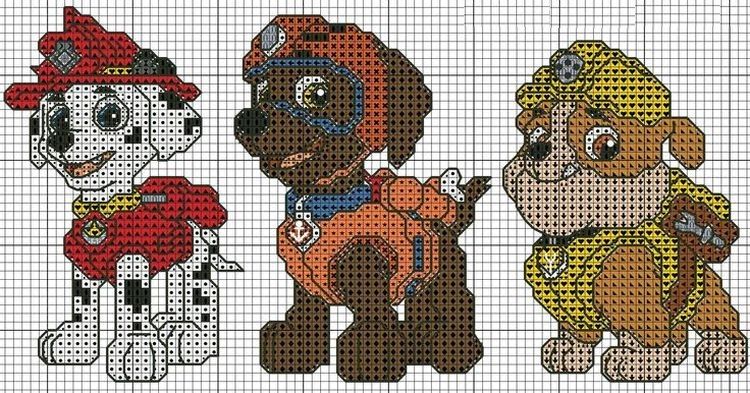
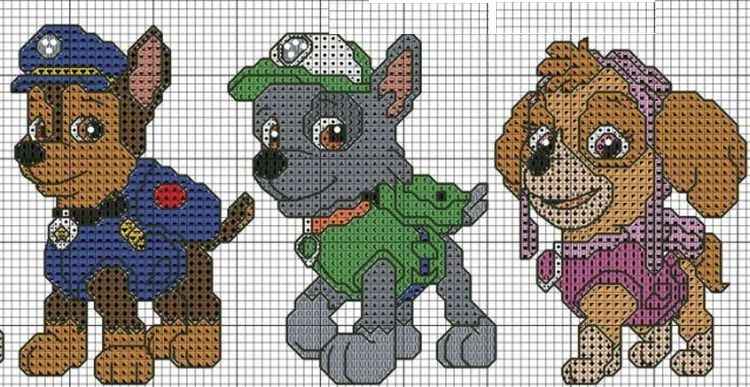
And what a delight it will be for a child to copy their favorite characters from Paw Patrol!
Read also:


Add a comment