
Rhinotracheitis in cats
Rhinotracheitis (feline herpesvirus) is an infectious disease affecting the upper respiratory tract and mucous membranes of the eyes in cats. This disease is species-specific, meaning it affects only felines, but cats of any breed and age are at risk. According to statistics, the incidence of FHV reaches 50%, with a mortality rate of 5 to 20%. Animals that recover from rhinotracheitis develop temporary immunity.
Pathogen and routes of infection
The infectious agent of feline rhinotracheitis is feline alphaherpesvirus, a DNA virus belonging to the genus Varicellovirus of the Herpesviridae family. This microorganism measures 150-225 nm. It is quite stable in the environment and remains viable for up to 1 month at room temperature; temperatures above 56°C (131°F) kill it within minutes. The virus is sensitive to substances with high or low pH, so disinfectants and antiseptic solutions (except for sports) inactivate it within 10 minutes.
The primary mode of transmission of the infectious agent is through the infected animal's secretions (from the nose, eyes, genitals, semen, urine, and feces). Infection can also occur through contact with humans. A cat can become infected by sharing a litter box, food bowl, or water bottle with an infected cat. Cats that have recovered from rhinotracheitis also remain carriers of the infection for 8-9 months. Pregnant cats can transmit the virus to their kittens in the womb through the placenta or infect them during birth.
Symptoms
The incubation period for viral rhinotracheitis ranges from three days to a week. The disease most often presents in an acute form. The cat develops a sharp fever, conjunctivitis, swelling and hyperemia of the nasal and pharyngeal mucosa, coughing, and sometimes vomiting caused by the accumulation of exudate in the larynx. Shortness of breath may be observed, and the swelling of the pharynx can make it difficult to eat and drink. Recovery typically takes one to one and a half weeks from the first symptoms.
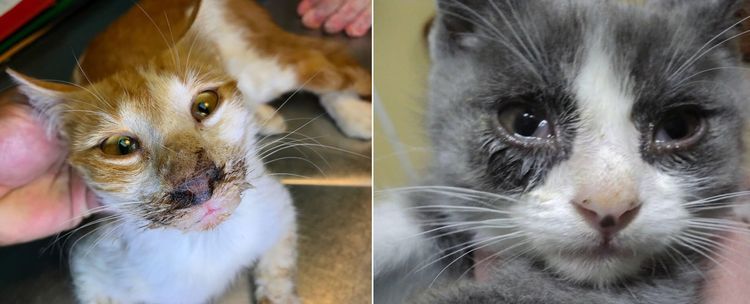
The chronic form of rhinotracheitis is less common and is characterized by a very long course with the development of complications: from the respiratory system (bronchitis, bronchiectasis, pharyngitis, pneumonia), gastrointestinal tract (gastroenteritis, gastroenterocolitis, intestinal atony), and nervous system (tremors, so-called "blind movements"). This form of the disease may cause ulcers on the skin and mucous membranes, miscarriages, or stillbirths.
Rhinotracheitis is considered a seasonal disease, with its acute form and chronic exacerbations peaking during the cold season. During this period, cats carrying the virus are especially dangerous to healthy animals.
Diagnostics
A preliminary diagnosis is made based on the signs found during examination: inflamed, watery eyes and copious serous discharge from the nose of a sick animal are clearly visible in photos posted online. However, since similar respiratory symptoms, in addition to rhinotracheitis, are also caused by other infections, such as rhinitis and calicivirus, bordetellosis, chlamydia - differential laboratory diagnostics are necessary.
The most common method used to confirm a diagnosis is PCR, which detects the feline herpes virus by identifying its DNA. Conjunctival and nasal swabs are taken from the cat for testing.

Treatment
If a cat is diagnosed with rhinotracheitis, it should be isolated in a clean, warm room. The sick cat's diet should be modified; a high-calorie diet should include vegetable soups with fish or meat broth, milk porridge, and boiled ground meat. Only wet prepared foods, such as pâtés and canned vegetables, should be fed.
Sometimes a cat with rhinotracheitis refuses to eat, so to prevent malnutrition, force-feeding can be attempted. At home, this is done by mixing pureed food with warm water and administering small amounts of it into the animal's cheek using a needleless syringe. If the cat is unable to feed this way for several days, a nasogastric tube may be inserted to administer food.
Medicinal symptomatic therapy for rhinotracheitis involves the use of antipyretic drugs, and rinsing the nose and eyes with a saline solution (usually 1% sodium chloride) several times a day.
Treatment of rhinotracheitis in cats: video from a veterinarian
The main goal of treatment is to eradicate the infectious agent. For this purpose, the cat is prescribed systemic antiviral drugs:
- Herpless Powder - manufacturer "Candioli Pharma", Italy;
- Maxidin - manufacturer "Micro Plus", Russia;
- Globfel-4 - manufacturer "Narvak" ("Vetbiokhim"), Russia.
To prevent a secondary bacterial infection, your cat may be prescribed antibiotics (Zoetis Synulox, Vetoquinol Clavaseptin, Bayer Baytril) and sulfa drugs (Norsulfazole, Sulfadimezine, Sulfacyl). When administering antibacterial medications, to prevent an allergic reaction, your veterinarian may prescribe antihistamines such as Clavaseptin, Allergostop, or Diphenhydramine.
Prevention
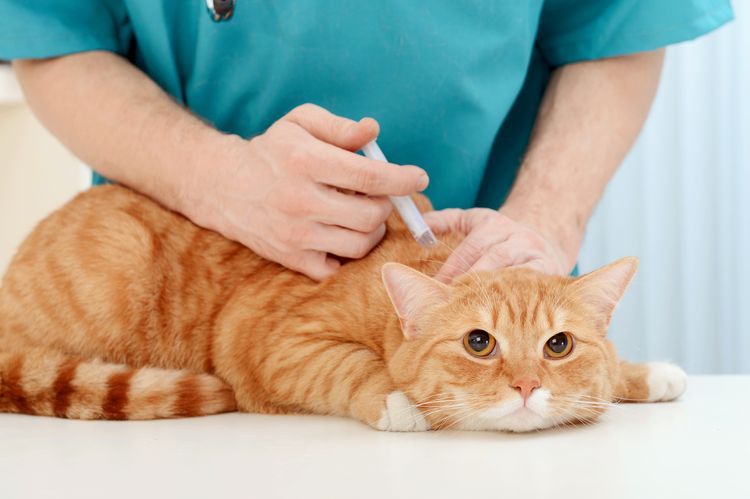
The main method of protecting cats from rhinotracheitis is timely vaccination. Many complex preparations for vaccination also contain a vaccine against rhinotracheitis. The most popular ones are:
- Nobivac Triquet Trio. Manufacturer: Intervet International B.V. (Netherlands)
- Multifel-4. Eurifel. Manufacturer: Vetbiokhim, Russia.
- Quadriquette. Manufacturer: Merial, France.
- Felovax. Manufacturer: Fort Dodge, USA.
When transporting a cat by any type of city or intercity transport, or when registering it for participation in an exhibition, the owner must have with him the animal’s veterinary passport with a note about the vaccinations given.
Cats can be vaccinated against FHV starting at 8 weeks of age. Vaccination is only permitted for healthy animals. The first vaccination is given two weeks later, then once a year. Two weeks before the scheduled vaccination, the cat should receive an antiparasitic treatment.
Preventive measures against viral rhinotracheitis also include following sanitary rules for keeping animals. If sick cats are identified, they should be immediately isolated, followed by disinfection of areas accessible to sick cats, and treatment of feeders, water bowls, and other cat accessories with a 1% sodium hydroxide solution or chloramine.
Read also:
- Rabies in cats
- Colds in Cats: Symptoms and Treatment
- Why does a kitten have watery eyes and what should I do?


6 comments
Dmitry
In a typical infection, virus replication occurs in the epithelium of the nasopharynx, nasal cavities, and tonsils. The epithelium of the upper trachea, mandibular lymph nodes, and cornea may also be affected. Epithelial cells slough off, forming foci of necrosis. The virus adsorbs to leukocytes, causing viremia. Upon crossing the placental barrier, damage to the brain, placenta, and uterus occurs. Experimental studies have demonstrated the virus's affinity for the growing skeletal structures of kittens. The disease is significantly complicated by the presence of secondary bacterial flora and by mixed infections with adenovirus and feline parvovirus. Death usually occurs as a result of secondary infections. The disease is most severe in young and immunosuppressed cats.
Dmitry
The mechanism of action consists of suppressing the reproduction of DNA and RNA-containing viruses in infected cells, increasing the resistance of healthy cells to viral infection, enhancing the phagocytic activity of macrophages, and enhancing the specific cytotoxicity of lymphocytes. Feliferon is recommended as part of a comprehensive treatment regimen for feline herpesvirus rhinotracheitis at a dose of 400,000 IU intramuscularly once daily for a treatment course of 5-7 days, depending on the disease progression. In severe cases, the dose and frequency of administration should be doubled.
Elena
After treatment for rhinotracheitis, the runny nose persists. The kitten is active, has a great appetite, and is growing well, gaining weight. Doctors recommended nasal irrigation and Maxidin or Anandin drops. We've been using both drops alternately, but it's not helping. When he sneezes, the mucus that comes out is thick and yellowish.
Daria is a veterinarian
Hello! Don't alternate medications. Complete the entire course with one medication. Add antibiotics (preferably intramuscularly). Thick, yellowish mucus isn't caused by a virus, but by a buildup of pathogenic microflora (bacteria). A viral infection simply weakens the immune system. You can add vitamin B12 as a hematopoiesis stimulant (it's also good for boosting the immune response)—catosal, phosphosal, uberin, and their analogs. Thoroughly clean and disinfect bowls, toys, and the floor.
Marianne
Good evening! I have two cats that have had renotracheitis for a year now. I've tried every medication imaginable. I live in Europe and am not allowed to administer medications, but the local vets can't cure my cats either; they say it's easier to euthanize them. My friend sent me Gamavit, Maxidin, and Fosprenil. I gave them injections twice a day: 1 ml of Gamavit, 1 ml of Fosprenil, and 0.5 ml of Maxidin—her vet recommended them. I treated them for about a month, as they were already in an advanced stage of the disease. The cats recovered, but about a month later they started getting sick again. Now I've started giving them injections again according to the same instructions, and the results were noticeable after three days; the cats are almost completely recovered. Am I using the medications correctly? And how long can they be used?
Dasha is a veterinarian
Hello! Gamavit is essentially water and water (read the ingredients to see what percentage of placenta it contains, and other ingredients). You need to use immunostimulants, antivirals, antibiotics, and symptomatic treatment (nasal and eye drops, probiotics/prebiotics due to antibiotic use). And why can't European veterinarians treat the animal if their level of training and practice is far superior to ours? I've spoken with many foreign colleagues, and they strive to protect the animal's health to the last. Euthanasia is an admission of helplessness and, unfortunately, a loss of a client (they rely more on money and the opportunity to make a profit).
Add a comment