
Rhinitis in dogs
Rhinitis in dogs is a fairly common condition and not very dangerous. However, it's still not worth neglecting. When your pet has a runny nose snot When a dog experiences difficulty breathing, a caring owner begins to worry. There are many causes for this discomfort. Let's discuss the symptoms of rhinitis in dogs and how to treat it.
Content
Definition and types of disease
Rhinitis is an inflammation of the nasal mucosa. We're all familiar with that feeling of congestion, when breathing is simply impossible. We humans can clear our nasal passages by blowing them out. But pets lack this ability. Therefore, without the help of an owner and a veterinarian, a pet's recovery is out of the question. If left untreated, rhinitis (like any other inflammation, especially purulent) will begin to spread. The frontal sinuses can quickly become affected. From there, it's not far to the brain, so in advanced cases, rhinitis in dogs can be complicated by inflammation of the meninges.
Regarding the course of the disease, inflammation of the nasal mucosa can be either acute or chronic. It's also important to remember the classification based on the nature of the discharge and the type of inflammation: rhinitis can be hemorrhagic, purulent, catarrhal, croupous, or follicular.
The origin of the disease is also discussed. In this case, we're talking about primary or secondary disease. Primary is when only the mucous membrane is affected, meaning rhinitis is the underlying condition. Secondary is inflammation that occurs as a result of another condition (for example, viruses or bacteria causing damage to the nasal mucosa, or an allergy). In this case, rhinitis is a clinical sign of something more serious, but not the "main problem."
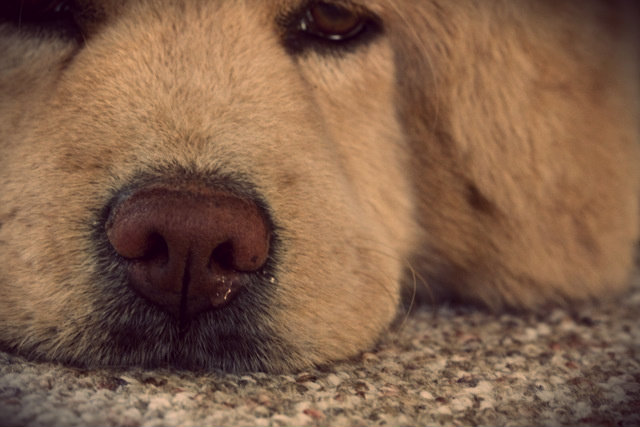
Causes of rhinitis in dogs
If you ask owners what can cause a dog's runny nose, almost everyone will unanimously say a cold (being in a draft or hypothermia). While this is true, it's far from the only cause of rhinitis in dogs. In fact, there are many.
- Decreased body resistanceOnce the immune system weakens, any infection "sticks" to the animal. All it takes is a slight draft, a walk in a light rain, or even a "harmless" microorganism. And literally instantly, the dog's nose starts to run like a stream.
- Viruses, bacteriaOwners don't vaccinate their pets against all diseases. Sometimes they even forget about booster shots (repeat vaccinations after a year). The immune system isn't prepared to deal with pathogens, which is why the whiskered cat gets sick.
- AllergyAllergic rhinitis in dogs is not uncommon. The irritant can be anything, from food to medication to dust. Some dogs are allergic to household cleaning chemicals. Houseplants can also be intolerant. Parasites are also a common allergen. Therefore, if your dog has a runny nose, it could be due to helminth infestation (but there will be many other symptoms besides rhinitis).
- Poor and unbalanced nutritionYes! That's right! If your pet's diet lacks vitamins A and C, there's a high risk of illness. Vitamin C helps strengthen the immune system, while vitamin A is essential for mucous membranes. If carotenoids are deficient, not only do the mucous membranes fail to renew themselves properly (after all, all cells age, die, and are replaced by new ones), but their resistance also decreases. This allows pathogens to easily penetrate the body.
- Poor conditions of detentionDampness, unsanitary conditions, drafts, cold floors. No immune system can withstand such a constant test. Sooner or later, the body will give in, and the first symptoms to appear will be rhinitis and conjunctivitis.
- Nasal irritants. Vapors, gases, dust, strong odors.
- Other diseasesFor example, stomatitis, pharyngitis, conjunctivitis, respiratory diseases and others.
Symptoms of rhinitis in dogs
As we already know, there are several types of the disease, and therefore rhinitis has several symptoms. We've divided them into three groups and included the most relevant photograph of the corresponding symptom.
Catarrhal rhinitis
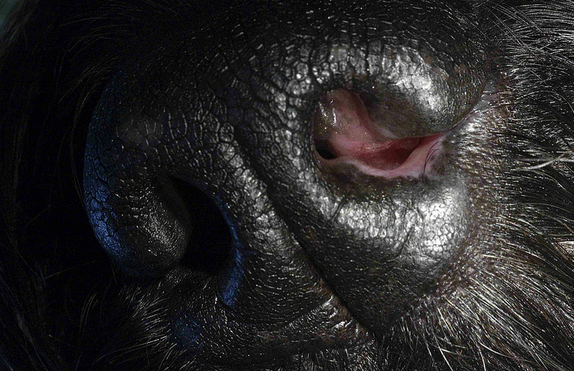
Symptoms of catarrhal rhinitis in dogs include a clear runny nose. Body temperature remains relatively stable (it may rise slightly, but if it does, microorganisms are likely to blame). Appetite decreases, and the pet becomes less active. Breathing is labored (the pet sniffles, snorts, and sneezes). The pet may even rub against objects around it, as if trying to clear its nose. Dried crusts may form around the nostrils. The skin on the nose may crack.
Purulent rhinitis
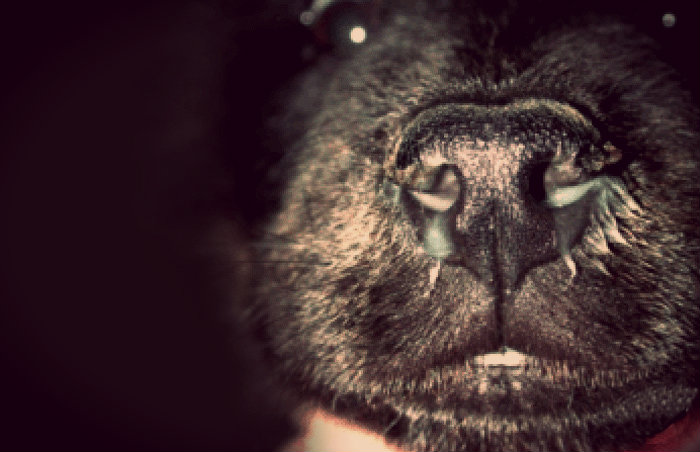
With purulent rhinitis in dogs, the following symptoms appear. Nasal discharge becomes yellow-green or white-green (generally purulent). Body temperature typically rises (this type of rhinitis in dogs is complicated by the presence of pathogenic microflora). Appetite is also reduced.
If a dog has chronic rhinitis, the animal not only loses its appetite but also noticeably loses weight. Severe weakness is also present. The mucous membranes become pale, and ulcers may appear, which eventually heal, leaving scars. The condition doesn't always progress unnoticed; exacerbations are quite common, then subside for a while. This occurs because the owner either self-medicates, doesn't follow the treatment plan and veterinarian's recommendations, or the underlying cause of the purulent rhinitis hasn't been identified and fully addressed.
Follicular and croupous rhinitis
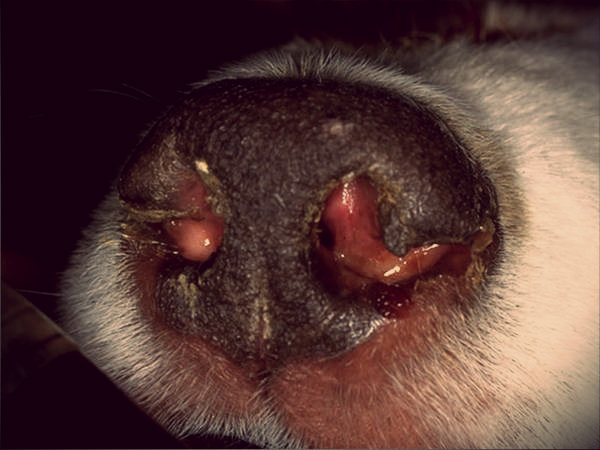
In cases of follicular or croupous rhinitis in dogs, the following symptoms are most often observed. The animal exhibits fever, severe depression, refusal to eat, and difficulty breathing. Gray or yellow plaques may be visible on the mucous membrane. If these "growths" are torn off, an ulcerated surface will be revealed underneath. Therefore, they should not be torn off, as this could open up additional entry points for infection. With treatment, the erosive surface beneath the plaques will heal, and the crusts will fall off on their own.
If rhinitis is follicular, grayish or yellowish nodules are visible on the nasal mucosa, with ulcers forming underneath. These two types of symptoms rarely last longer than three weeks in dogs. Knowing how and what to treat a dog with rhinitis will help your pet recover without any complications.
Treating a dog with rhinitis
Treating a dog with rhinitis always begins with eliminating the underlying cause. Without this, there's no point in using nasal drops or antibiotics. You'll agree that if your pet has allergies, antibiotics won't help. And if the cause is an infection, simple drops won't be much help either. Therefore, treating your dog for rhinitis requires a comprehensive approach.
Recommendations for home treatment
- It's essential to start by improving your pet's living conditions and diet. These measures are a small but necessary step toward recovery. Avoid drafts, cold, or dampness. And don't let them walk outside for long periods. If the weather is calm and the sun is warm, then a normal walk is fine. The main thing is to protect your pet from hypothermia and sudden temperature changes.
Enrich your diet with vitamins and minerals. Normalize their levels (and not just during treatment). Pay attention to vitamins A and C.
- If your pet has been diagnosed with catarrhal rhinitis, frequent use of special drops or herbal infusions (coltsfoot, chamomile, string) will help.
- If a dog has croupous, purulent, or follicular rhinitis, antibiotics are essential (nasal drops are prescribed for both acute and chronic cases). These types of inflammation inevitably involve pathogenic microflora. Therefore, antibiotics are always prescribed.
- If the rhinitis is purulent (and chronic), it's best to conduct a sensitivity test to the active ingredient. This will help you determine which medications will be most effective for your pet.
- If you have crusts in your nose that are interfering with breathing, you need to soften them. To do this, use a 3% hydrogen peroxide solution (just a couple of drops).
- Is your dog's nose cracked? Vaseline can help. Gently apply it to the skin to moisturize and soften it. The cracks will heal faster, and new ones won't appear. It won't hurt as much for your pet.
- But sometimes, on the contrary, you need to dry out the skin (if your nose is constantly running). For this, use streptocide powder (you can crush tablets with it). This will both dry out the skin and prevent infection from spreading on the soggy skin.
It is prohibited to use human drops to treat a dog. with acute rhinitis (or chronic rhinitis). Many substances are toxic to pets. The only exception is pinosol.
Prevention
The most important way to prevent rhinitis in dogs is to prevent the underlying cause! Avoid overcooling your pet, feed them a proper, balanced diet, and avoid drafts. Keep your dog up to date with vaccinations and avoid all contact with potential allergens. Never self-medicate. And don't let the condition run its course. After all, if the underlying cause isn't identified and addressed, your pet's runny nose may persist for months!
If you have any questions about rhinitis in dogs—how to treat it, etc.—please ask in the comments, and we'll do our best to answer!
Read also:


8 comments
George
Can rhinitis result in endophthalmos and third eyelid protrusion?
Daria is a veterinarian
Hello! If the condition is neglected or improperly treated, inflammation can escalate as a complication, affecting the eyes. The ears may also be affected (developing otitis). The eyes may also react to otitis. However, this would have to be very advanced, with the inflammation being bacterial or viral in nature (but bacteria are sure to accompany viruses). Furthermore, rhinitis could be merely a symptom. A protrusion of the third eyelid, for example, would be another symptom of the underlying condition (since it is often a consequence of third eyelid dysfunction).
Raisa
Singing from Vazatop. But it's suitable for us, we heart patients.
What to do? In this case, the opening in the nostril is blocked.
Allegrics from 6 years old.
Dmitry
I gave you a low rating for computer illiteracy. Forgive me, I'm a complete novice. The articles are good, clear, and easily understood by the owners. Thank you.
Olga Vyacheslavovna
Please tell me what tests should be done on a dog with rhinitis.
We have been receiving treatment since autumn, there was an improvement, but now it is very bad again.
The nasal discharge is clear, sometimes there is a little blood. Severe swelling.
Breathes through the mouth.
Blood tests and bacterial cultures were performed. Staphylococcus intermedius was detected in the range of 10-2 to 10-4 CFU. Baytril injections were given for 3 weeks, along with nasal washes. Nazivin was prescribed. Previously, other antibiotics were given. X-rays and ultrasounds were performed - no abnormalities.
There was a slight improvement, but after stopping the injections the condition worsened.
I would like to know what other tests can be taken to make an accurate diagnosis?
Thank you in advance for your reply.
Dasha is a veterinarian
Hello! Ideally, you should have a nasal mucus sample tested for PCR and ELISA for viral infections and rule them out. Also, rule out chlamydia and mycoplasma. Furthermore, staph is a fairly resilient microorganism, making it difficult to find an effective antibiotic. Is there any conjunctivitis? Did you run an antibiotic sensitivity test or prescribe the medication based on the list of susceptible microorganisms in the package insert? I agree that Baytril is a good antibiotic, but staph could be a secondary infection superimposed on a viral or obligate infection (chlamydia, mycoplasma, and others). If there are laboratories in your city that can perform these tests, then get tested to rule out a latent viral infection.
Olga Vyacheslavovna
Thanks for the reply! We still have mycoplasmosis, but no viruses were detected.
We did a bacterial culture for antibiotic sensitivity; Baytiril was chosen from the highly sensitive group. Roncoleukin was also administered. Conjunctivitis persisted. It disappeared during the injections, but has now returned.
I wanted to have my blood serum tested for antibodies, but they don't do it anywhere. Only PRP.
I decided to have a rhinoscopy on Sunday.
Do you think this will help to establish an accurate diagnosis?
Elena
Recommend a veterinary otolaryngologist in Moscow
Add a comment