
Ligament rupture in dogs: symptoms and treatment
Ligaments are anatomical structures composed of dense connective tissue—the protein fibers collagen and elastin. These fibrous bands connect the bones of joints and limit their range of motion. Sprains and ruptures of ligaments are a fairly common injury in dogs, as these animals are naturally very active and mobile.
Content
Causes of ligament rupture
Ligament injuries are most often diagnosed in large breed dogs and hyperactive puppies whose bodies are not yet accustomed to heavy loads. Causes may include:
- injuries - unsuccessful jumps, falls, being hit by a car and other types of damage.
- Excess weight. Obesity can pose a risk not only to internal organ dysfunction but also to musculoskeletal problems: ligament ruptures are much more common in these animals.
- Congenital or acquired skeletal abnormalities. Bone pathologies that develop during the prenatal period, or degenerative changes resulting from disease or injury, lead to uneven loading of the ligamentous apparatus.
- Deficiency in the dog's diet vitamins and microelements. A deficiency of these substances in the body reduces the strength and elasticity of fibrous fibers.
- Diseases accompanied by destructive changes in the articular-ligamentous apparatus (rickets, arthrosis, osteodystrophy).
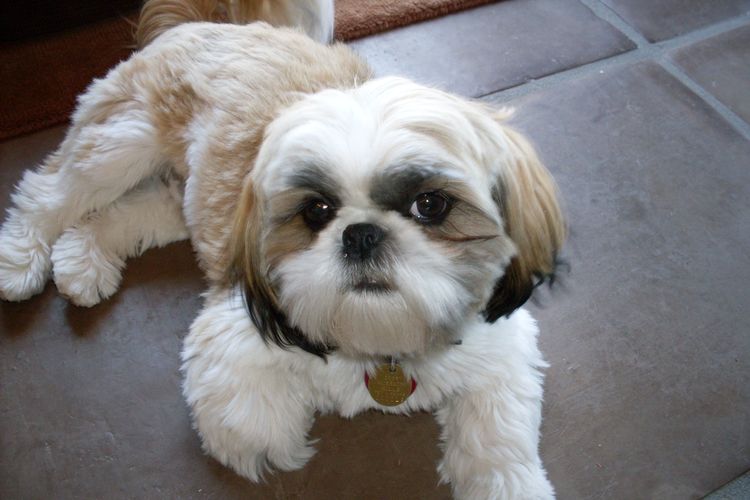
Often, ligament damage in dogs is caused by overly intense training, especially if the pet is not properly prepared. There is also a genetic predisposition to this orthopedic condition. At risk are German Shepherds, Great Danes, Basset Hounds, Bulldogs, and small breeds such as Bolognese, Toy Terriers, and Shih Tzus.
Types and clinical symptoms
Two-thirds of all joint injuries in dogs involve ruptures of the patellar ligaments. These are two fibrous bands located crosswise on either side of the joint. When they are damaged, the bony heads of the joint are displaced and deformed as a result of friction against each other. Ultimately, this leads to a rupture of the joint capsule, deformation of the meniscus cartilage, and the development of persistent inflammation.
When a cruciate ligament is torn, a dog experiences severe pain when moving. It won't let anyone touch the affected leg, whines, and displays aggression. When walking the dog is limping Or the dog walks on three legs and lies with the affected limb tucked under it. Swelling may be present in the joint area, and an elevated temperature may indicate inflammation. Torn knee ligaments in the hind legs are more severely affected, as these limbs are the weight-bearing limbs.
The hip joint is the second most common ligament rupture in dogs. It is formed by the acetabulum of the sacrum and the femoral heads. The fibrous ligament, consisting of external and internal elements, is shared by the right and left femoral heads.
A typical sign of a hip ligament injury is a wobbly gait and an "X"-shaped stance of the hind legs when walking: the injured limb periodically "falls" under the dog's belly. The animal often squats, extending the injured leg to the side, and when standing, it rests only on its toes.
Caution! It's difficult for a non-specialist to distinguish between a sprained ligament and a torn ligament. If your pet is limping and you suspect a ligament injury, do not attempt to treat it yourself; take your dog to the veterinarian. The only thing you can do yourself is provide first aid by immobilizing the injured leg and partially relieving the pain.
First aid
It may take several hours for your pet to see a veterinarian. Until then, the injured limb should be kept completely still. To achieve this, it should be immobilized in the position the animal is holding it; do not forcefully bend or straighten the paw.
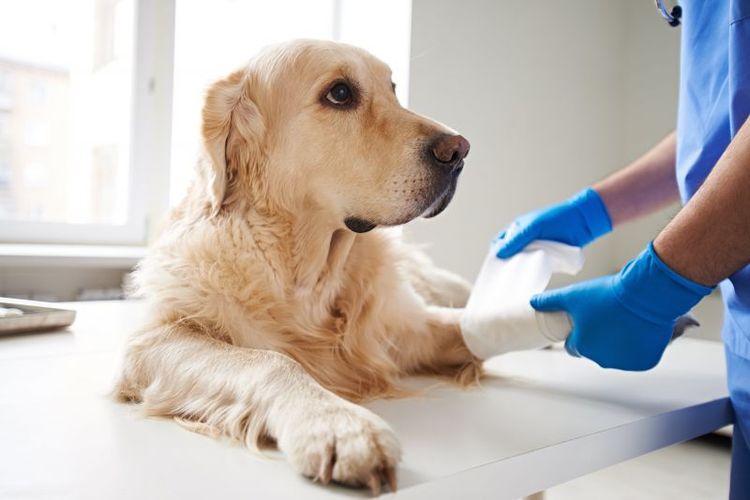
The front paw can be immobilized with an elastic bandage or thin foam. Applying a bandage to the hind paw is more difficult. If this is not possible, at least prevent the dog from walking and place food and water near where it lies. To partially relieve swelling and pain, apply ice wrapped in a cloth to the injured joint for 15-20 minutes.
Important! Giving your dog painkillers is not recommended for ligament injuries. If your pet stops feeling pain, they will actively put weight on the injured limb, worsening the injury.
Diagnostics
Diagnosis of a ligament rupture in a dog is based on a medical history and a clinical examination. This is usually performed under local anesthesia, and in larger dogs, the procedure is performed under general anesthesia. The examination involves several tests to determine the extent of the ligament damage. X-rays are prescribed to detect possible changes in the cartilage and bone structure. In some cases, the animal is examined using a CT scanner or arthroscope.
Treatment and rehabilitation
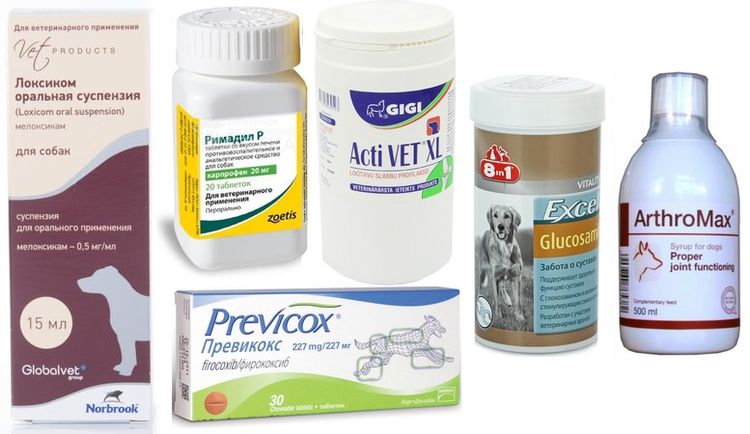
Conservative treatment of ligament injuries in dogs is possible for partial ruptures and is typically used for light-weight dogs. If the injured paw is kept completely immobile, the ligament tissue can quickly recover. To relieve pain and prevent inflammation, the animal is prescribed a course of treatment with NSAIDs (Loxicom, Rimadyl, Previcox). To accelerate the regeneration of fibrous tissue, chondroprotectors and glycosaminoglycans are used (Acti Vet, Excel Glucosamine, Canina Petvital GAG, Helvet Hondartron, Dolfos ARTROMAX).
Large dogs usually undergo surgery immediately, as the risk of recurrent ligament injury and osteoarthritis is too high. During surgery, the ligaments are augmented with implants. Postoperatively, the dog is prescribed painkillers, antibiotics, nonsteroidal anti-inflammatory drugs, and chondroprotectors.
Forecast
The prognosis for ligament ruptures in dogs depends on the extent of the fascial damage, the treatment method (therapy or surgery), the animal's overall condition, and its age. Prompt treatment is crucial. If a large dog suffers a complete ligament rupture without surgery, the chances of a full recovery are very slim. However, surgical treatment in most cases allows the animal to regain normal joint mobility.
Read also:
- Dislocation or sprain of the paws in dogs: symptoms and treatment
- Dog dragging its hind leg: causes and treatment
- Broken front and back legs in dogs: symptoms and treatment


Add a comment