
Dog Collar Size Chart by Breed
A collar is a stylish accessory and an important element of dog control. Beginning breeders often struggle to determine the correct collar size, as a collar that's too big or too small can cause significant discomfort for the animal. The chart in this article, by breed, will help you choose the right collar size for your dog (small, medium, and large).
Important! This is a classic walking collar that attaches to the dog's neck with a clasp.
Content
Taking measurements
The primary measurement used to select a dog collar is the neck circumference. Keep in mind that this measurement can change significantly with age (especially during the first two years of life, when rapid growth occurs).
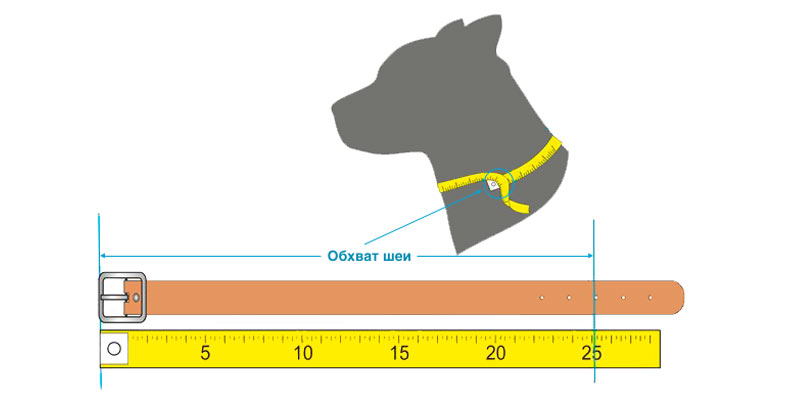
To determine the neck circumference, we will need a measuring tape (like a seamstress uses) or a ruler and a regular ribbon (even a piece of yarn or a scrap of fabric will do).
Measurement algorithm:
- Place the animal in a standing position or sit. If it's an active puppy, have a partner hold it still.
- Wrap a measuring tape (or a regular one) around the base of the neck, leaving a small gap between it and the animal's body. For small dogs, the gap should be 1 finger width, for medium and large dogs, 2 fingers.
- Look at the number on the tape measure. If you measured with a regular tape measure, place the resulting length against the ruler and find the number, which will be your pet's neck circumference.
Please note that the measurement results may not be accurate, so you should choose a collar in such a way that there is a small reserve in both directions.
As a rule, all sizes of dog collars are indicated by manufacturers in centimeters or inches.
1 cm ≈ 0.39 inches.
Conversion from one system of measurement to another can be done using this simple table:
|
Inches |
Centimeters |
Inches |
Centimeters |
|
1 |
2.54 |
11 |
27.94 |
|
2 |
5.08 |
12 |
30.48 |
|
3 |
7.62 |
13 |
33.02 |
|
4 |
10.16 |
14 |
35.56 |
|
5 |
12.7 |
15 |
38.1 |
|
6 |
15.24 |
16 |
40.64 |
|
7 |
17.78 |
17 |
43.18 |
|
8 |
20.32 |
18 |
45.72 |
|
9 |
22.86 |
19 |
48.26 |
|
10 |
25.4 |
20 |
50.8 |
So, we've figured out how to determine the collar size, now let's find out how to choose an accessory for a dog of a certain breed.
Size charts
All dog collar sizes (from the smallest to the largest) are contained in a standardized table, which is used by domestic and European manufacturers:
|
Designation |
Centimeters |
Inches |
|
XXS |
17.0 – 25.0 |
6.7 – 9.8 |
|
XS |
24.5 – 28.8 |
9.6 – 11.0 |
|
S |
27.0 – 34.0 |
10.6 – 13.4 |
|
M |
30.0 – 36.0 |
11.4 – 14.2 |
|
L |
37.0 – 46.0 |
14.6 – 18.5 |
|
XL |
46.0 – 58.0 |
18.5 – 22.62 |
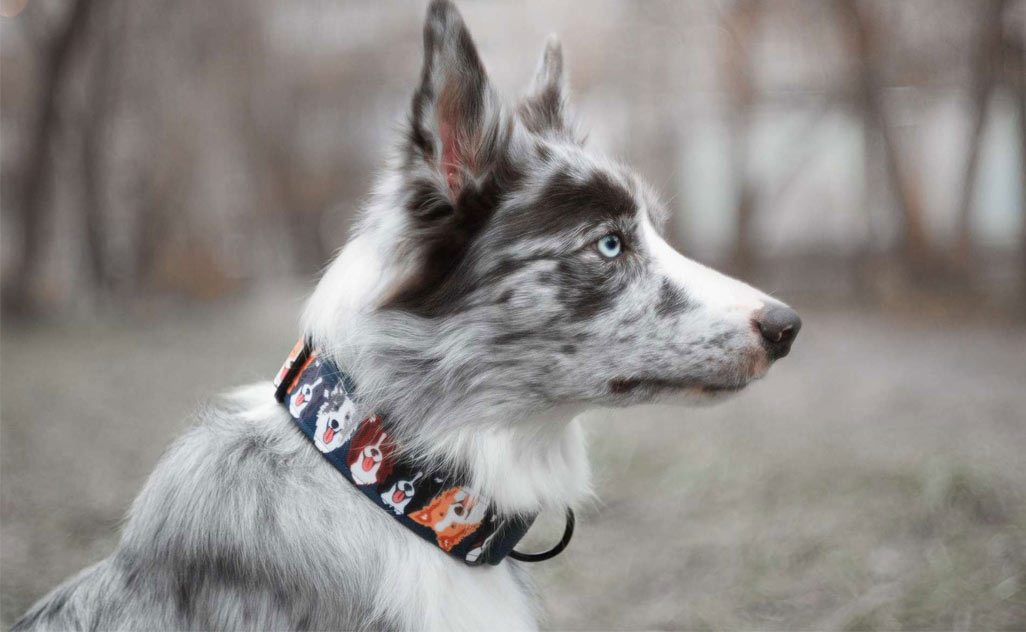
If you plan to order an accessory on Aliexpress, you should consider slightly different sizes.
|
Designation |
Centimeters |
Inches |
|
XS |
20 |
7.8 |
|
S |
23 |
8.97 |
|
M |
26 |
10.14 |
|
L |
29 |
11.31 |
|
XL |
32 |
12.48 |
|
2XL |
35 |
13.65 |
|
3XL |
40 |
15.6 |
|
4XL |
43 |
16.77 |
|
5XL |
45 |
17.55 |
|
6XL |
47 |
18.33 |
|
7XL |
50 |
19.5 |
|
8XL |
53 |
20.67 |
|
9XL |
56 |
21.84 |
The collar size listed in the chart is an average fit for dogs of a given size. To determine which collar size S, L, or XL is best for your dog, please see the approximate size chart by breed.
Small breeds
Breeders of small breeds have mixed feelings about collars as a means of controlling their pets during walks. Many prefer harnesses that fit around the animal's body rather than the neck. However, as a stylish accessory and a way to attach an identification tag, collars in the smallest sizes are quite popular.
Important! The neck circumference of small breeds can vary from 17 to 35 cm. This measurement will be smaller for smooth-coated breeds, and larger for those with thick coats.
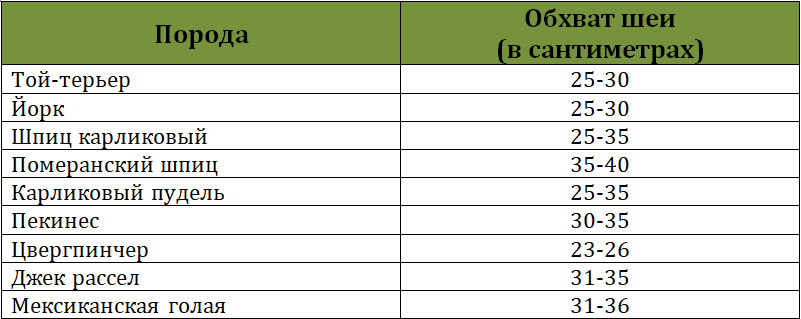
Owners of toy breed puppies often face the problem of choosing the right collar for a miniature dog. Experts recommend purchasing soft, lightweight nylon collars for these little ones, which are virtually imperceptible to the puppy and will ease the learning curve.
The optimal width for small breeds is a collar with a width of 1.0 – 1.5 cm.
Medium breeds
For those looking for information on how to determine the collar size for medium-sized dogs, we offer this universal neck circumference chart:
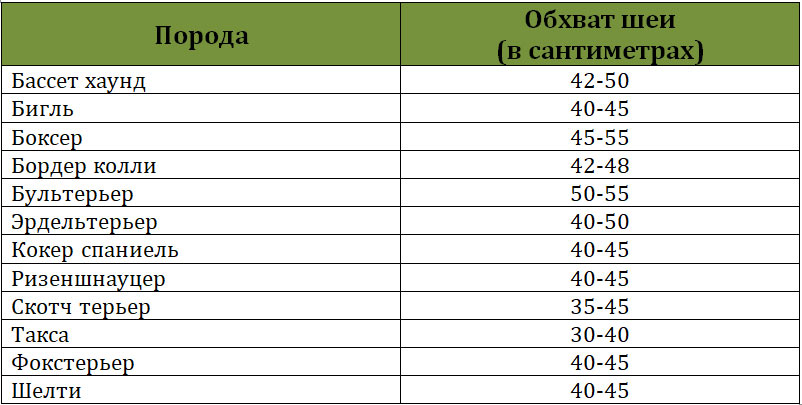
The optimal collar width for a dog weighing up to 7 kg is 2.0 cm. The heavier the dog, the thicker the collar should be. However, keep in mind that collars that are too thick are not suitable for dogs with thick coats. They will bunch up and compress the fur, causing discomfort to the dog.
Large breeds
For representatives of large breeds, the following neck girth parameters are accepted as average:
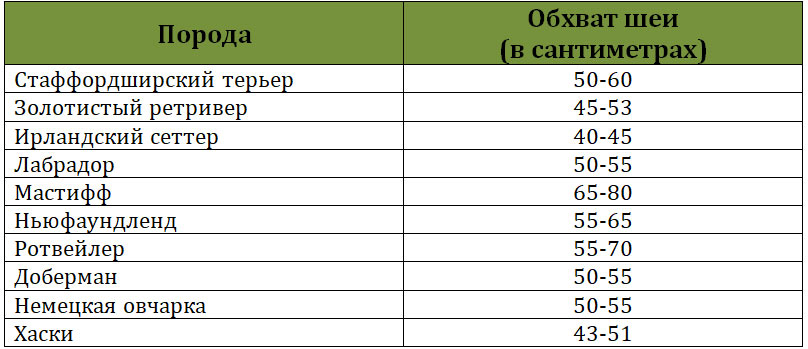
For dogs weighing 10-20 kg, we recommend choosing a collar with a width of 2.5 - 3.0 cm. For larger dogs, a model with a width of up to 4.0 cm is recommended.
Material
Once you've decided on the size, it's worth understanding the features and purposes of models made from different materials.
Genuine Leather
A classic leather collar looks stylish and can last a long time. However, when choosing one, make sure it's made with durable dyes (especially important for white dogs) and that the leather itself is soft enough.
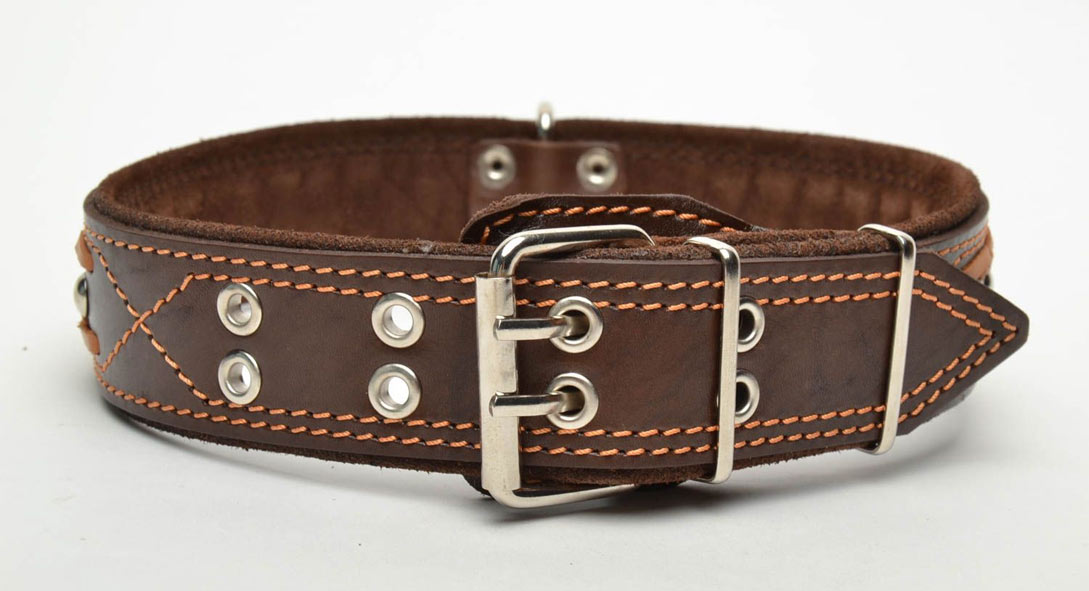
Such collars do not tolerate contact with water well and can quickly lose their appearance if dried frequently.
Sling (tarpaulin)
The cheapest, yet quite durable material. These models are often purchased for large breed dogs, as natural webbing can be too rough for smaller dogs.
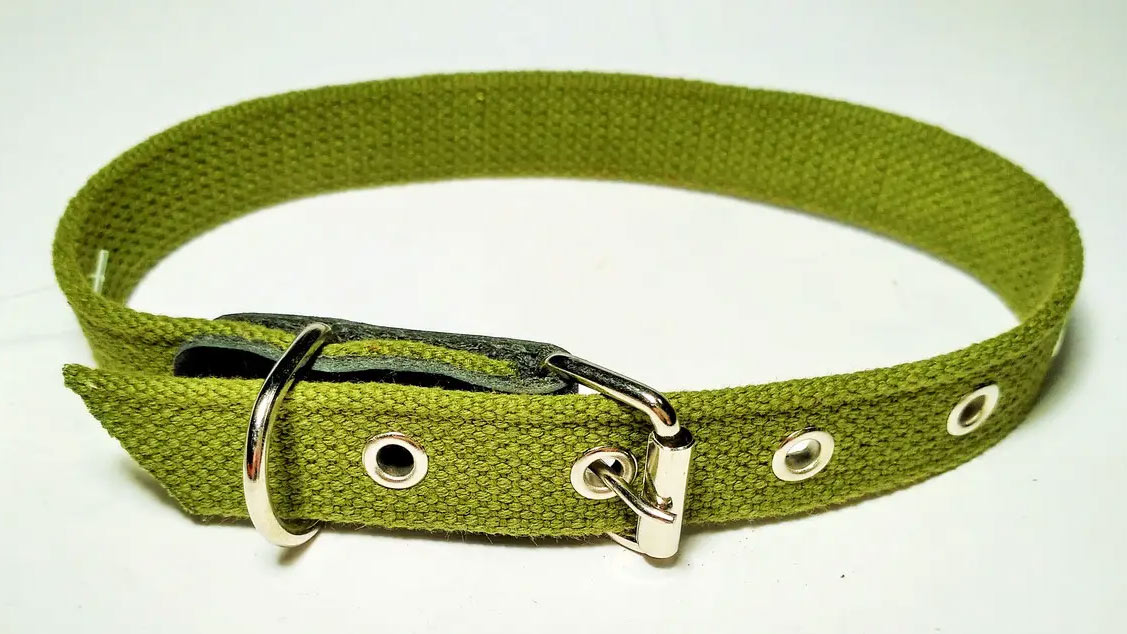
One of the disadvantages worth noting is the fact that such collars take a long time to dry, and without drying, a very undesirable process of fiber rotting may begin on a long-haired dog.
Nylon (and other synthetic materials)
A great option for summer. These accessories don't absorb moisture, dry quickly, and boast a stylish design. Many small breed owners prefer nylon models for their lightweight design and practicality.
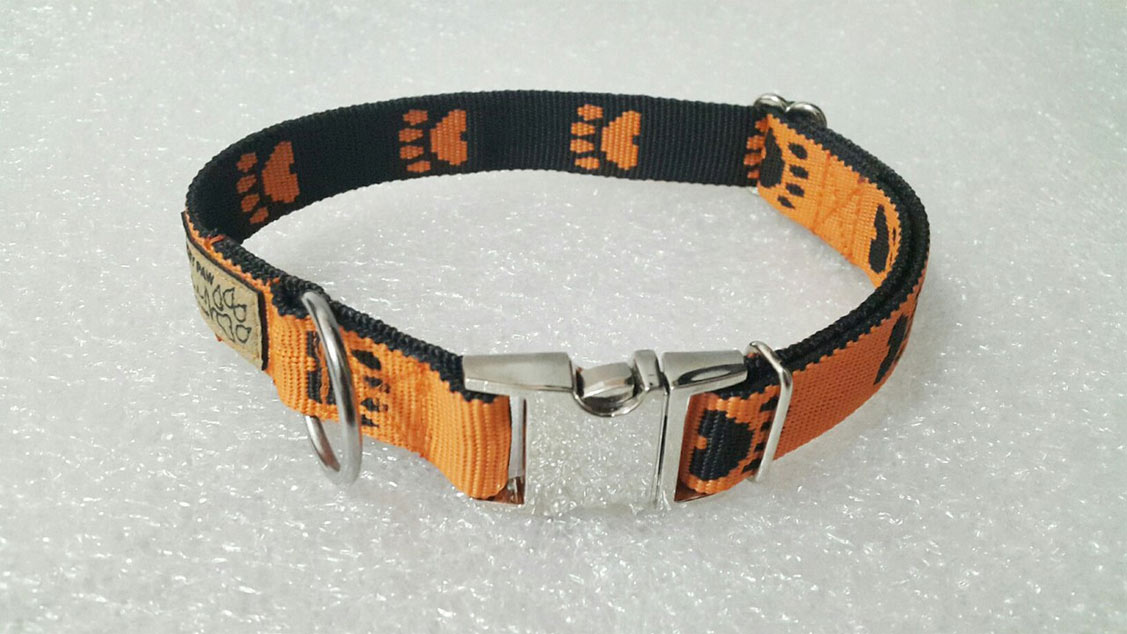
Among the disadvantages, it is worth noting the short lifespan and the lowest strength of all those listed.
Choosing a Prong Collar
Now that we've covered how to choose a classic collar with a snap for your dog, let's talk about how to choose the right size corrective prong collar, which is used for training medium and large breeds.
Important! While choosing a classic or decorative collar requires taking the measurement at the base of the neck, for a formal collar, you'll need to measure the circumference of the upper neck. The measuring tape should be placed just below the ears.
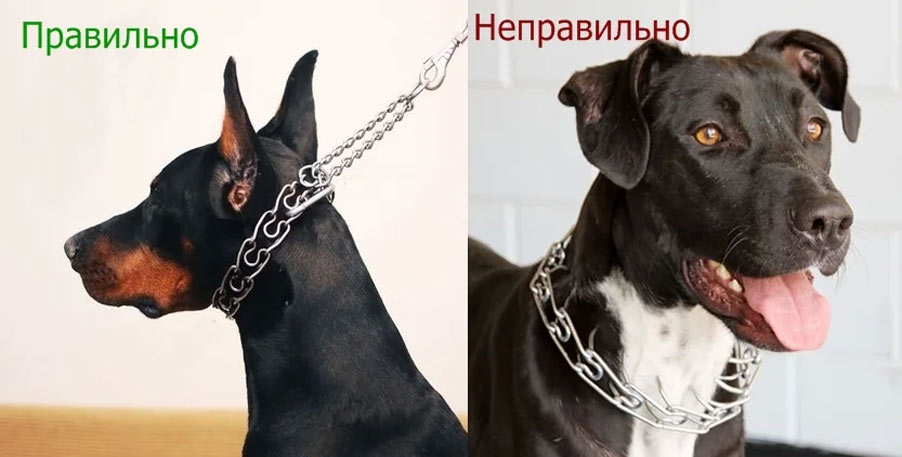
The optimal size of the parforce is +5 cm to the circumference of the animal’s neck.
The classic collar is made of links, allowing for a custom fit based on your dog's individual needs. The links are easily removed, so it's important not to buy a collar that's too small.
Read also:


Add a comment