
Breast cancer in cats
Mammary cancer is a disease that occurs in less than 10% of cats by the age of seven. Since survival rates for this dangerous cancer depend directly on the stage at which it is detected, owners must devote sufficient time and attention to regular checkups for their pets.
Content
Features of the disease development
Although cancer is most often diagnosed in females, males are also susceptible to developing cancer. Unfortunately, more than 90% breast tumors, identified in animals, are malignant. The prognosis in most cases is poor, as the disease is characterized by rapid metastasis.

In the early stages of development, a malignant tumor may be pea-shaped and feel like compaction of subcutaneous tissues.
It is necessary to take your animal to the veterinarian immediately after discovering an abnormal growth. Any lumps or bumps should raise concern. fistulas, pustules and even pimples.
A grade I tumor typically does not metastasize, allowing nearly 70% of animals to survive treatment. However, if the tumor is ignored, it will begin to grow rapidly. The animal's mammary glands will become very large and heavy. Eventually, the tumor will "break through" the skin, forming an open ulcer. If a grade II tumor is detected, surgery combined with chemotherapy is usually prescribed. Only 49-50% of animals will survive this complex treatment.
The most bleak prognosis is when a stage III tumor is detected. The final stage of mammary cancer in cats is characterized by the spread of malignant cells to adjacent organs, nearby and distant lymph nodes, the brain, and bone marrow. In most cases, treatment will be purely symptomatic, aimed not at eliminating the tumor and numerous metastases, but at improving the pet's quality of life.
Types of malignant tumors
The most common type of mammary cancer in cats is malignant carcinoma. The most dangerous subtype of carcinoma is glandular carcinoma (also known as adenocarcinoma). Initially, a small, dense nodule (papillary carcinoma) forms near the animal's nipple. Without medical intervention, malignant cells begin to invade surrounding tissue, and glandular carcinoma is diagnosed. Adenocarcinoma is dangerous because it can quickly metastasize not only to glandular tissue and lymph nodes, but also to other organs.
The anaplastic type of carcinoma is characterized by low differentiation (absence of a clearly defined tumor) and a high rate of metastasis.
Less common (but no less dangerous) forms of cancer:
- phyllodes fibroadenoma (a large, smooth tumor with well-defined borders; considered a presarcoma);
- sarcoma (the neoplasm has a tuberous structure; the affected mammary glands of the animal appear inflamed);
- papillomatosis (a non-neoplastic type characterized by blockage of milk ducts; the cells may initially be benign but quickly become malignant).
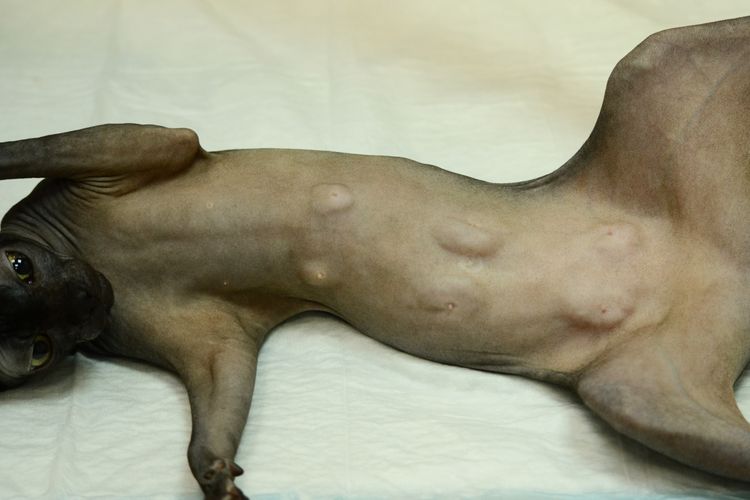
Mixed types of the disease are also quite common. However, it is impossible to determine the nature of the tumor without a biopsy. Therefore, it is impossible to independently diagnose mammary cancer in a cat based on photos online..
Causes and symptoms of the disease
Veterinary oncology specialists identify several factors that significantly increase the risk of developing cancer in cats. Malignant tumors are most often diagnosed in older females who have never given birth. To prevent the disease, it is recommended to allow the female to give birth to at least one litter before spaying. A direct link between hormonal therapy and the development of malignant tumors (including in males) has also been proven. Medications containing estrogen are particularly dangerous.
Short-haired breeds are most prone to mammary gland cancer (MC).
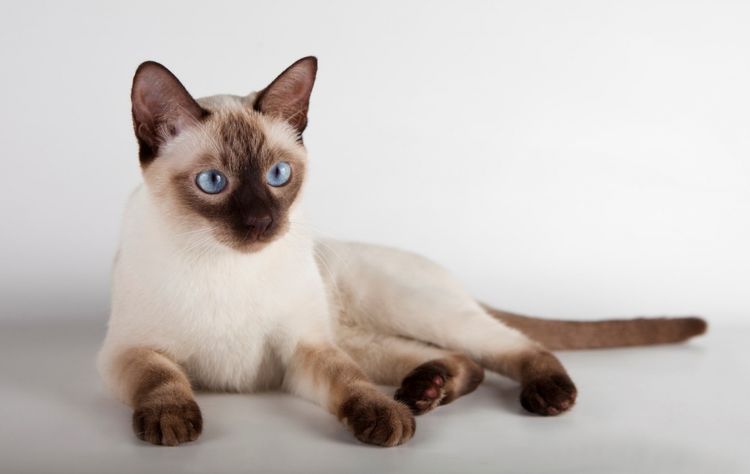
Any responsible owner should be alert to the following symptoms of mammary cancer in cats:
- swelling of the nipples;
- hard subcutaneous nodes in the abdominal area;
- abnormal nipple discharge;
- the appearance of ulcers on the skin of the abdomen;
- fever;
- rapid weight loss;
- refusal to eat;
- constant weakness.
It is very important to show your pet to the veterinarian in a timely manner, as any delay can lead to death.
Cancer diagnostics
The detection of even a millimeter-sized lump should prompt a visit to a specialized clinic. The veterinarian will perform a full physical examination, focusing on the area containing the growth. The doctor will also palpate the lymph nodes: enlarged lymph nodes may indicate the onset of metastasis.
However, to establish a definitive diagnosis and determine the stage and type of disease, a fine-needle biopsy, cytological examination, and a comprehensive blood test (which will assess the overall health of the sick animal) are mandatory. Additional diagnostic tests may include a urine analysis and blood clotting time.
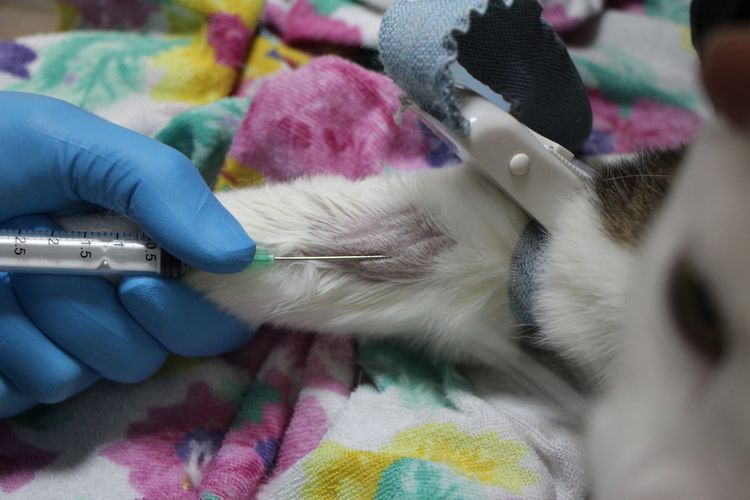
Next, you'll be referred for a CT scan. Only a 3D image can determine the size and precise location of the tumor, as well as the presence of metastases. If metastasis is confirmed, an abdominal ultrasound will be performed to detect the affected organs.
Treatment methods
Just a few years ago, the diagnosis of a malignant tumor in a pet meant a death sentence. But thanks to recent advances in veterinary medicine, cancer is no longer a "call for euthanasia." Treatment for mammary cancer in cats depends on the location, type, and stage of the tumor. The good news is that in the early stages of the disease (if a well-differentiated tumor without metastasis is detected), the survival rate is over 85%.
Surgical intervention
Surgery is the primary treatment for breast cancer. The type of intervention is determined based on diagnostic testing results. If the malignant tumor is small and clearly defined, a lumpectomy is performed, which removes only the tumor itself. In diffuse breast cancer (when the tumor grows in both the mucosal and muscular layers), the entire breast is removed. In later stages, when malignant cells have spread to surrounding tissues and lymph nodes, the following types of surgery may be indicated:
- unilateral mastectomy (all glands and regional lymph nodes on the affected side are removed);
- bilateral mastectomy (removal of paired glands);
- radical mastectomy (removal of all breasts, including nearby lymph nodes).
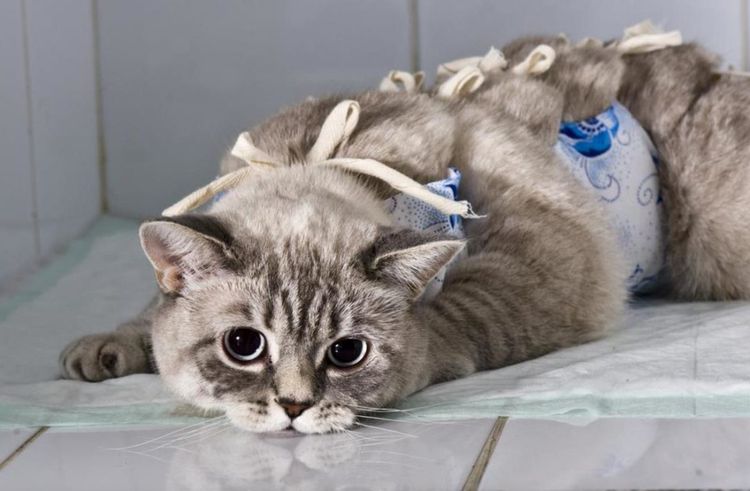
If the cancer is characterized by an active metastatic process, the surgeon may additionally remove distant lymph nodes (often inguinal and axillary), based on already known lymphatic drainage routes.
Many owners worry that their pet won't be able to lead a full life after this type of surgery. Although the procedure is quite aggressive, a successful outcome offers a nearly 90% guarantee of no recurrence.
Chemotherapy
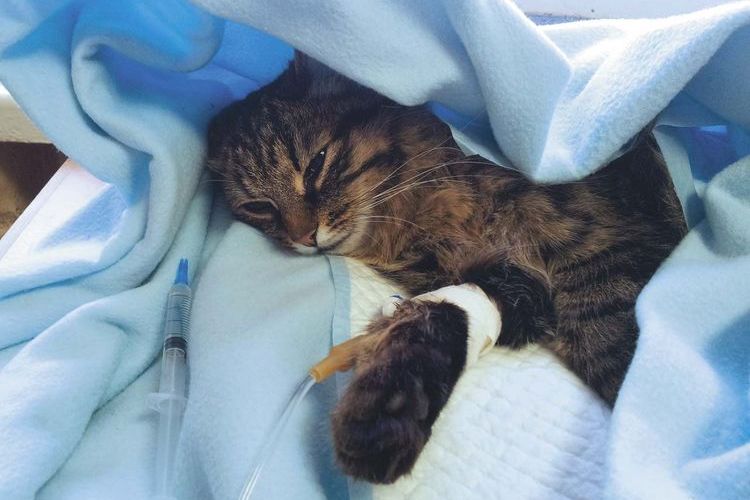
If surgical removal of mammary cancer in cats is not possible for certain reasons (for example, due to extensive metastasis, heart disease, or blood disease), chemotherapy is prescribed. A course of aggressive medications is unlikely to completely remove the malignant tumor, but it can help the pet live for a few more years. Chemotherapy may also be recommended to remove metastases, especially in animals that have successfully undergone tumor removal surgery.
There's no need to worry about your furry pet becoming completely bald after chemotherapy. Unlike people, who do lose their hair after a similar procedure, animals retain their fur.
Chemotherapy must be administered by a veterinarian at a specialized medical center. Be prepared for your pet to be constantly sleepy and refusing to eat for some time after chemotherapy.
Radiation therapy
Radiation therapy is rarely the first-line treatment for veterinary cancer. It is prescribed when surgery and chemotherapy have failed or are contraindicated.
The method is quite effective, but specialized veterinary equipment is only available in very large cities. Achieving a positive result requires at least three sessions, spaced several days apart. The final radiation program is developed by a veterinary radiologist based on the results of diagnostic tests and the animal's medical history.
Survival prognosis
The survival rate of a cat with mammary cancer depends on many factors. A veterinarian can only provide an approximate prognosis after performing a biopsy. When detected and treated at the earliest stages, the one-year survival rate is approximately 70%. Only 5% of animals survive more than a year after diagnosis in late stages.
A cancer diagnosis is a challenging experience for both pet and owner. However, don't immediately consider euthanasia. Modern procedures and medications can, if not cure your pet, significantly prolong their life.
You can also ask our website's staff veterinarian a question, who will answer them as quickly as possible in the comments box below.
Read also:


35 comments
Julia
Hello! I felt a lump in my kitten's mammary gland! Can you tell me what I should do (I'm not talking about going to the vet, that goes without saying): do a blood test? An ultrasound? An X-ray? So I can immediately figure out what it is?
Tatyana Shmonina - veterinarian
Hello! I need to get some blood tests and an ultrasound.
Anita
Hello, my cat is 13 years old and has given birth. She was spayed quite late. Three months ago, a lump-shaped mass appeared near one nipple. We immediately took her to a specialist, who told us we could only wait... that there was nothing we could do to save her. Meanwhile, we gave her "Fitaelita Metatop" tablets for two months straight. She's had this lump for three months now, and it's growing, but not quickly. Two months ago, she had a poor appetite, but now she's more or less fine. She's behaving normally, but she often hides behind the refrigerator. What should we do in this case? Should she be euthanized or should we take her back to the vet?
Daria is a veterinarian
Hello! We need at least an X-ray and basic blood tests to determine how bad the situation is. If there are no metastases, then it's worth fighting for the animal's life and performing surgery. Remove one or both mammary glands to prevent recurrence. If metastases have already occurred, euthanasia is the more humane option, as sad as that may sound.
Xenia
Hello. Is it possible to determine the stage of the disease and prognosis using this analysis? My cat is 11 years old and neutered. The sample tested showed clusters of atypical epithelial cells with signs of glandular differentiation.
Polymorphism and anisocytosis are expressed. The cells are arranged in groups, forming tubular structures. The cells of large
sizes, irregularly round, oval or cubic in shape, contain large eccentric nuclei, with an uneven outline
karyolemmas, forming invaginations and bends. Uneven, clumpy chromatin and 1-2 nucleoli are visualized in the nuclei.
The cytoplasm is moderate, basophilic, and heterogeneous. It often contains vacuoles. The microenvironment reveals
polymorphonuclear neutrophils, small lymphocytes, activated macrophages in moderate quantities. The background contains
red blood cells.
Conclusion: The cytological picture is characteristic of breast cancer.
Daria is a veterinarian
Hello! Unfortunately, it's best to consult a specialist—an oncologist—with this question. However, if a preliminary diagnosis of cancer has been made, the prognosis ranges from guarded to poor.
Evgeniya
Hello, my cat is 9 years old, she is not spayed, she has given birth once. About four months ago, her upper nipple began to fill with fluid and there was a small formation smaller than a pea under the nipple. We took her to the clinic, the doctors removed the fluid from the nipple and told her to observe it. The nipple began to fill with fluid again. We took her to another clinic and were also told to observe for two weeks and give 0.5 ASD-2. Only at the third clinic did they suggest collecting the fluid and sending it for histology. Today the result was positive: a mammary tumor, lymph nodes are not enlarged, the doctor confirmed during the examination. Tell me, how long can a cat live without surgery, is it necessary and is it better not to torment the stomach?
Daria is a veterinarian
Hello! How can I predict how long an animal will live? I'm not God to guess how long a living creature is destined. Nine years isn't that old, so it's best to have surgery to remove the mammary glands to remove both the tumor and the surrounding "susceptible tissue." Chemotherapy may also be suggested, but it's expensive and often difficult for the animal to tolerate. However, in the early stages, surgery and chemotherapy produce excellent results with a high survival rate (pets with prompt surgery live to old age). However, the longer you wait, the lower the chance of a successful surgery and the higher the risk of death or the tumor becoming malignant with multiple metastases to internal organs.
Marina
Hello! I have a 13.5 year old cat. She has been suffering from diabetes for over 2 years. Her diabetes is under control, she is on insulin, and is stable. She had surgery for pyometra two years ago. A year ago, during a routine ultrasound, I noticed that one nipple was red. When the doctor was shaving her tummy, he accidentally cut the nipple and it started bleeding. The doctor said it was nothing serious. Since then, the nipple has been turning red, then pale, then getting bigger, then getting smaller. In March, her weight halved, she was 8 kg, now she is 4 kg. I was completely focused on diabetes. I couldn't even think about mammary gland cancer. When I parted the fur on her tummy well, I saw a red nipple filled with fluid in the middle bag, and there were lumps around it, small and large, scattered, and a feeling of shyness. We took her to the clinic. The examination showed that her blood is good, except for AST and ALT, which we We changed our diet, but it didn't work. Her urine is good, except for the high protein, she's on a protein-rich, natural diet.
The ultrasound was normal, and the X-ray was also normal. The echocardiogram (ECHO) and ECG revealed hypertrophic cardiomyopathy, a stage 1 risk for anesthesia. The examination revealed a lesion parallel to the papilla, but much smaller, and the nipple was unchanged. Three doctors examined her in person, one insisted on surgery, and she consulted with three more in absentia, one of whom also favored surgery. She sent the test results to Biokontrol, and Shimshirt suspected small focal metastases. The doctor in Alushta also had doubts and said there were many small nodules under the skin, along the vessels, that it would be impossible to remove them all and there would be a large wound surface. She also said that she has diabetes, which would complicate recovery, plus her age, and she needs to eat six times a day on a regular schedule and take insulin twice a day. He said that with her test results, she should live a long time. She is strong, very independent, and proud.
She eats well and has all her instincts intact, but she sleeps more, so I can't always pet her belly. She's a stubborn creature, and she's on Turkish Van. We're currently taking Ursofalk, then Micardis, based on the examination results. I understand that we have a higher risk of complications after surgery because of diabetes! I also understand what awaits us without surgery! And in our region, we don't have the same options as in larger cities. Could you please tell me if there are medications to support my body's health or slow tumor growth? I'm afraid I'll lose it faster during surgery, and four doctors agree. I don't know what to do? Please advise.
Daria is a veterinarian
Hello! Yes, the situation is not pleasant. Diabetes greatly complicates matters. The mammary tumor may have developed not from a nipple injury, but from a late spay (the uterus was removed not long ago). Healing after the surgery will take a long time. Unfortunately, if there were such magical drugs that "slow" tumor growth, they would have been used in humans long ago. Chemotherapy only "slows" tumor growth, but then again, it causes too many health problems for the pet. And it's very painful afterwards (just like in humans), and very expensive.
Anna
Hello! My 18-year-old cat recently developed a lump on her left side near her nipple. We didn't pay attention to it because there was nothing unusual about her behavior. She ate well, ran around, and played. The lump quickly grew. When we realized it, they said it was too late. We consulted with a vet, explained the situation over the phone, and he said there was no point in bringing her in because she was too old and likely wouldn't survive the surgery. We applied bandages, disinfected her, and applied anesthetic ointment. Her appetite was normal, and she went to the bathroom normally. But for the second day now, she's barely eaten at all, lies on the cold floor, meows occasionally, and stops when petting her and starts purring loudly. The lump is red with purulent discharge. Is it really impossible to help a cat of her age with such symptoms?
Daria is a veterinarian
Hello! Based on the symptoms you described, your pet likely has cancer. If you had contacted us immediately, we likely could have helped (chemotherapy, if you live in a large city, or surgery to remove the mammary glands). It's possible it's an abscess, but no one can tell you anything without an examination. If it's a ruptured abscess, the prognosis is guarded (with a good chance of recovery, as it only requires cleaning the cavity of pus, rinsing, and antibiotic therapy). However, with cancer, unfortunately, the prognosis is unfavorable. Most likely, the most humane option is euthanasia.
Olga
Hello. I have a 16-year-old cat. She gave birth. She was spayed and her uterus was completely removed. Now a lump has formed on the right side of her chest. The lump has an opening, I apply bandages with hydrogen peroxide and Levomekol. It is 1.5 cm in diameter. A tumor has also formed below it, but it has not opened. The cat feels well and allows me to treat it. Three months ago, nothing happened, just like when I bathed her and thoroughly examined her. Today I took her to the vet, and after examining her, the vet said she has stage 4 cancer. He may suggest cosmetic surgery, which may prolong the cat's life a little. No tests were done. He advised me to continue applying ointment and disinfecting. I listened to her lungs and there were no significant wheezing. But he did not give any guarantees about the surgery, he said she might not survive. Please tell me what to do?
Daria is a veterinarian
Hello! Making such a diagnosis (especially specifying the cancer stage) without conducting an examination (including lab tests, such as a complete blood count) is quite presumptuous. And ruling out metastases simply by listening to the animal's breathing... Furthermore, metastases can develop not only in the lungs, but also in the liver, kidneys, lymph nodes, and anywhere else, really... The animal needs to be x-rayed to assess its overall condition. Then, after the x-ray, decide whether surgery is necessary or whether there's no point in doing anything else.
Aigul
Hello! I have a 14-year-old Siamese cat. Lumps have started growing near her mammary glands. We didn't notice them right away. We hardly ever handle her. Recently, she started having severe shortness of breath. The vet did an ultrasound and said she had hydrothorax. After a puncture, they did an X-ray. They said she has metastases in her lungs. They didn't prescribe any medications, only prednisone. They said there was nothing they could do. Is that really true?
Daria is a veterinarian
Hello! If your pet has already been diagnosed with cancer, especially with metastases, then, unfortunately, there's no help. Surgery won't help because of the metastases. Chemotherapy will only delay the inevitable. Prednisolone won't really help with cancer. But why did hydrothorax develop? And have there been any relapses? Has euthanasia been suggested yet?
Aigul
I've never had hydrothorax. The puncture resulted in 150 ml of reddish-brown fluid being drained. I've never had shortness of breath. I've always been very active, jumping around on the closets.
Daria is a veterinarian
Hello again! Pulmonary edema can develop instantly. Hydrothorexia is a fluid accumulation directly in the chest cavity, not in the lungs. The effusion in your case is hemorrhagic, which is very bad, especially since the volume of fluid is large. If there are relapses, then with a diagnosis like your pet's, life is unfortunately short. Even symptomatic therapy aimed at reducing the amount of effusion and constant fluid drainage will not save the situation. Cardiac and pulmonary failure may have begun to develop.
Lyudmila
Hello. My cat is 13 years old. I found a very hard lump on her belly, but it's not small, near her mammary gland. We saw a surgeon, got x-rays, and there are no metastases. He said that if we do surgery to remove the cancer, it will only be cosmetic. Chemotherapy is useless. And if all goes well, she'll only live five months at best. Should we see an oncologist? Or even do this surgery? My cat's behavior is normal; the tumor allows me to touch it and she's not agitated.
Daria is a veterinarian
Hello! A consultation with an oncologist is definitely necessary. Firstly, they are a highly specialized specialist who deals with a wide variety of tumors daily, so after seeing your pet in person and conducting additional tests (including a biopsy), they will be able to provide a prognosis. Secondly, a second opinion is always a good idea. The oncologist may suggest chemotherapy. Or they may perform surgery and then prescribe chemotherapy during the recovery period. In any case, a consultation with an oncologist will either give you hope or reassure you that your pet doesn't have long to live.
Olga
Hello. My cat is 15 years old. She had a mammary ridge removed. Three years have passed. Now she has a small lump again and something around it. I sometimes gave her Bifidumbacterin. Could this medication have triggered a relapse? Now she has lost weight, but she eats and sometimes plays. And today she became sad. She is spayed and eats Royal Canin Urinary. I read that I need to limit protein. What food should I feed her? I also started giving her one Metastop tablet. Please advise about food and what to do next. I am very worried.
Daria is a veterinarian
Hello! Bifidumbacterin couldn't have caused this, as it's just bifidobacteria (beneficial microflora for colonizing the intestines). Why are you feeding Urinary? Is it preventative, or was the animal at risk for urolithiasis or cystitis? Self-administration of medications like Metastop is not recommended. An in-person consultation with a veterinarian is always necessary. A relapse could also be due to age. An X-ray should be taken to determine how deep the lump is. Without lab tests (biopsy) and an X-ray, it's impossible to confirm or rule out a tumor recurrence. If there is a relapse, chemotherapy may be prescribed, as the animal may not be able to tolerate surgery at this age (the heart needs to be examined by ultrasound, complete blood count, and biochemistry profile).
Gulnara
Hello. My cat is 12 years old, not spayed, and has never given birth. She has a tumor on the left side of her upper nipple, approximately 15 mm in diameter, with clear borders. There are no changes in behavior, appetite, or other issues. After an examination at the first clinic, they said it was most likely malignant. They explained the future course of the disease and, among other options, suggested surgery, but no tests were performed. At the second clinic, they said it was most likely benign (due to the clear borders and the cat's normal health). They suggested surgery to remove the entire left mammary ridge, possible spaying (based on blood test results), and a tumor biopsy after surgery. Should I insist on an X-ray before surgery to detect possible metastases (if it is malignant)? The first clinic said they would not be visible on the x-ray at this point. In what cases is surgery not recommended to avoid unnecessary suffering for the animal? And can surgery provoke an increase in metastases?
Daria is a veterinarian
Hello! Definitely get an X-ray, a biochemistry panel, and a complete blood count (pay attention to platelets and white blood cells). Without an X-ray, it won't be clear how deep the tumor is (it might have spread), whether there are metastases, or whether there might be a tumor elsewhere. Surgery isn't performed if there are numerous metastases or the tumor is inoperable (sometimes this is discovered on the operating table, in which case the animal is euthanized during surgery). Surgery will only cause metastases if the MALIGNANT tumor is improperly removed (if it was damaged during surgery, if pieces of tumor tissue were left behind, or if the tumor is aggressive). Chemotherapy may be prescribed after surgery.
Gulnara
Thank you very much for your reply. One more question: my cat hasn't been vaccinated, and I've heard that such animals are more likely to contract an infection during surgery at the clinic (since they mostly take sick animals there). Is this true? And how can I minimize the risk?
Daria is a veterinarian
Hello! There are clean and "dirty" operating rooms. After surgery, every veterinary clinic that respects itself and its clients disinfects and quartzizes the operating room. If you're so worried, find a good, expensive clinic that only accepts animals from wealthy people (these clinics won't accept strays or found pets, which are more likely to get sick). In general, after surgery, the animal is still given antibiotics as a preventative measure. If the surgery isn't urgent, then deworming and vaccinating the animal would be ideal.
Angelica
Hello, my 7-year-old cat was diagnosed with mammary cancer. She had surgery and had the entire row removed on one side. We had cytology tests and the results showed anaplastic carcinoma. The stitches are healing well, she's eating and feeling fine. The doctor said chemotherapy is out of the question, saying cats don't tolerate it. Do you think chemotherapy is necessary? I really want to cure her, or at least prolong her life.
Olga
Hello, my cat is 14 years old, she is active, eats well. Last week, I injected a tight lump in her mammary gland and two more nodules nearby. I called the vet, who said that my cat had wheezing in her lungs and that it was late-stage cancer, so he suggested euthanasia. I refused, since the animal is active and does not show signs of anxiety. The next day, I called a veterinarian from another clinic. The diagnosis of cancer was confirmed, but at an early stage. They did not hear wheezing in the lungs. They recommended injections to slow the growth of the tumor. They said the tumor is small and should be operated on when it becomes the size of a quail egg. When I asked why not perform an ovarian removal to slow the growth of the tumor, they said that the cat may not tolerate anesthesia. What is the correct algorithm for treating a small mammary tumor in a cat?
Dasha is a veterinarian
Hello! How did they diagnose cancer just by listening to the lungs? Are X-rays necessary to rule out or confirm metastases? The lungs and liver may already be affected by tumor cells. In that case, surgery (removal of glands) will only prolong the animal's suffering—chemotherapy is also necessary. X-rays will help determine how deep the tumor has spread. A biopsy is ideal. The situation needs to be assessed in person. It may be necessary to remove nearby lymph nodes as well. An ovariectomy will no longer provide the desired result. Furthermore, tumor removal will also be performed under anesthesia, and the animal will remain under it significantly longer than for spaying (the surrounding tissue needs to be carefully cleaned).
To determine whether the animal will survive anesthesia, its heart should be examined (consult a veterinary cardiologist). As you can see, the first step is to conduct a comprehensive examination of the animal, and then, based on the results, decide which course of action to take: surgery, chemotherapy, waiting for death, or euthanasia (sorry for the harshness).
Olesya
Hello! My cat has a lump on her mammary gland containing a white, clear, water-like fluid. Next to it is a pea-sized tumor and several subcutaneous grains. I've been to several doctors, and everyone has different answers. Some say she's having false lactation and prescribed Halostop, others say she has a mammary cyst, and still others say she has a buildup of fluid in her mammary gland.
Lymphatic fluid. Fourth, they say that the cat's mammary gland is collecting fluid from a tumor located near the nipple. Can you help me figure out what kind of fluid is in my cat's nipple?
Dasha is a veterinarian
Hello! If the doctors who examined my pet couldn't reach a definitive diagnosis, how can I do so? I might have the same ideas, but I can't see the animal. Was an ultrasound or biopsy performed? How do you know what's in the lump? Do you squeeze it or does it just pop? Remember, don't squeeze anything from nipples, mammary glands, tumors, or lumps. You could provoke the growth of this growth (even malignant). For a more accurate diagnosis, you need to have tests and undergo additional examinations. Unfortunately, I can't tell you exactly what your pet has.
Anna
My 20-year-old cat is thin and has had lumps on her mammary glands for a long time. Now she's oozing blood and pus of unknown origin, with huge lumps, and she barely eats anything. There's no point in taking her to the vet. What should she be given? Certainly not morphine.
Dasha is a veterinarian
What do you mean, going to the vet is useless? The animal is suffering, dying. Don't you feel sorry for her? What are you planning to inject her with? Painkillers? Antibiotics? Could the cat have tumors? In such an advanced situation, the little whisker will have to be euthanized. She won't survive the mastectomy (or anesthesia, for that matter)—her heart won't be able to handle it. The most humane option is euthanasia. You can't do this at home. These medications are listed as List A, which are kept strictly under lock and key at veterinary clinics and are not given or sold to anyone, but are used strictly on-site.
Valeria
Hello, my 10-year-old Siamese cat was diagnosed with a stage 1 mammary tumor. She has small pea-shaped bumps on her belly, about 2-3 cm in size. She was scheduled for surgery on December 31st, but no tests, X-rays, or other procedures were scheduled. Is this normal? Will everything be okay with her in the future? Is there a chance she won't have any more tumors like this? Thanks in advance.
Dasha is a veterinarian
Hello! An X-ray would certainly provide a complete picture (to check for metastases in the case of a malignant tumor). A biopsy may be performed after surgery (if the chosen clinic has a lab capable of performing this procedure). Most likely, a preliminary diagnosis has been made. The mammary gland will be completely removed. Unfortunately, no one can guarantee against recurrence. Tumors are unpredictable, and their etiology is still unknown. The animal will need to be monitored for the rest of its life, but if the surgery is clean (all tumor foci are removed), the risk of recurrence is extremely low.
Add a comment