
Peculiarities of breeding "Germans"
In the German Shepherd world, the prevailing opinion is that "working" breeds are superior to their "show" counterparts. Are there really differences between these two breeding lines? Yes, and it's worth starting with the exterior.
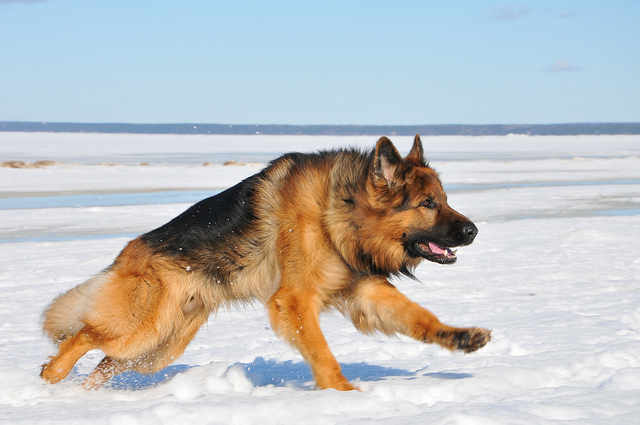
The original breed type required the following standard: a lean build, high hindquarters, a straight back, medium height, and a gray-shaded coat. Working-bred shepherds are precisely this. Show-bred shepherds are distinguished by a vibrant coat, typically black and red, a sloping croup, shorter hindquarters, and a taller stature. Show-bred shepherds also typically have large, expressive, "bear-like" heads, unlike the flat heads of GDR-bred dogs (working dogs). Fanciers of the latter claim that their dogs have a greater variety of colors. However, this is not true; show dogs are just as diverse as GDR-bred shepherds in the variety of colors: black and red, shaded, gray-shaded, saddle-backed, black, and so on. Therefore, disputes over color patterns between show-bred shepherds and their competitors—working dogs—are pointless.
Nervous system
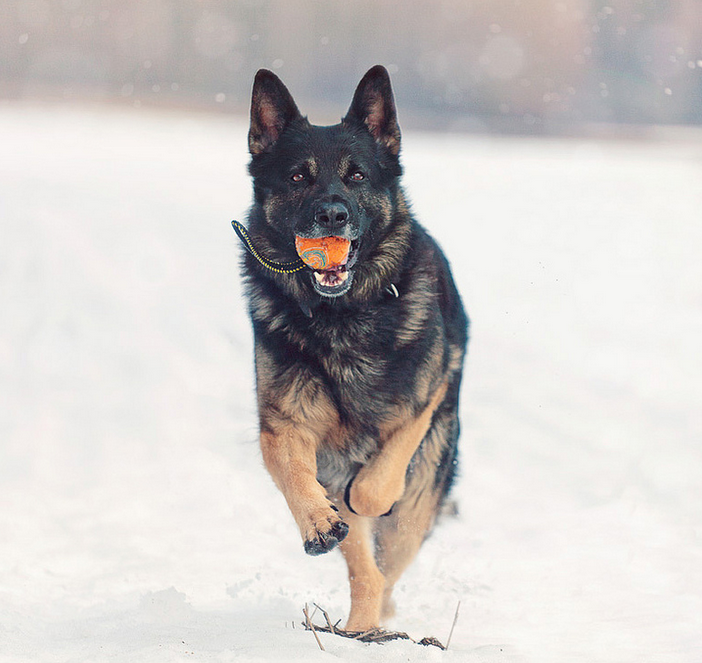
Yes, here the FRGs are losing to the GDRs. The thing is that the initial separation German Show-level shepherds were expected to have ideal anatomical characteristics. Nervous system and psychological stability were rarely considered. However, this doesn't mean that a show dog is a dumb couch potato. With proper, consistent training, stunning results can be achieved. In a mute test (biting test), such a show dog will outperform its working counterpart, and in everyday life as well. The key is to properly motivate the dog.
However, "working" dogs are much more physically active and show interest in working with their owner and training. They are more resilient than "show" dogs, both physically and psychologically. The latter lack drive; German Shepherds work for toys or treats. Working Shepherds are willing to serve their owner simply because they are their owner.
Genetic competition
Almost all modern show-quality dogs, if you peruse the breed database, will inevitably list Kanto (2nd line) and Quanto (3rd line) Wienerau in their pedigree. They gave birth to the two main bloodlines. There is also a 1st bloodline, whose progenitor is Mutz von Pelztierfarm. Today, the descendants of these males are widely used in show breeding.
The kennels "v.Haus Antverpa," "v.Salztalblick," "z Pohranicni Staze," "vom Isarland," "v.Weinbergerblick," "v.Haus Pixner," and "v.Schwarzen Milan" are all suppliers of working dogs. Once undeservedly forgotten, these dogs are now experiencing a renaissance. Among GDR dogs, the "father" of this breed is considered to be a male named Horand vom Grafrath. His children, grandchildren, and great-grandchildren carry on the worthy roots of their legendary sire.
The debate between working dog enthusiasts and show dog enthusiasts will likely be eternal. The advantage of working dogs is that they are direct descendants of the Max von Stephanitz standard. However, show dogs are much more striking in appearance. Comparisons are inappropriate; each breed enthusiast has their own type.
Read also:


Add a comment