
Puli (Hungarian Shepherd)
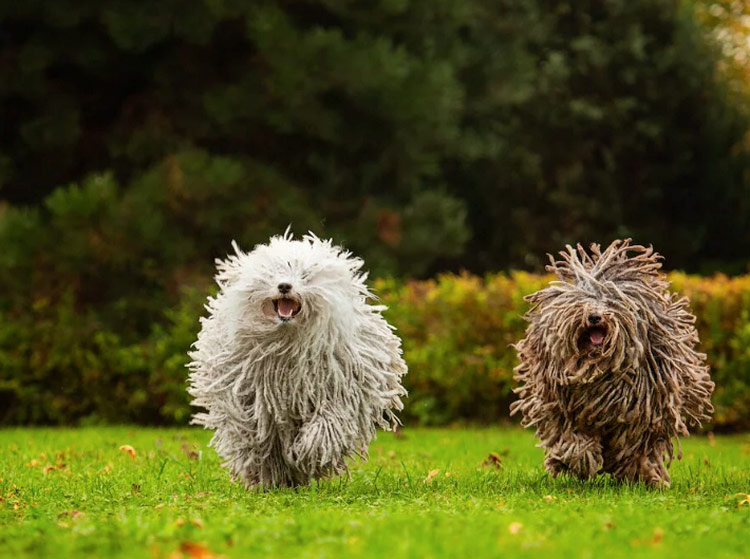
The Puli is a Hungarian breed of herding dog with a distinctive coat that intertwines and forms cords. Surprisingly, these dogs require little grooming and have a wonderful temperament. The breed is also known as the Hungarian Shepherd.
Content
History of origin
The Puli is a very ancient breed, so it's difficult to pinpoint its origins. It's believed that dogs of this type arrived in Hungary with nomadic tribes and their flocks. While larger dogs guarded property, smaller, agile dogs herded livestock. Incidentally, Puli herd sheep in a very unique way: they jump on the animals' backs or leap over them, rarely biting their heels, as other small "shepherds" do, such as the Corgi.
Today, Puli are rarely used as herders, but are mostly kept as companions.
Centuries of selective breeding have preserved traits such as extraordinary endurance, ingenuity, and hard work, while also refined their appearance and transformed their shaggy coat into an exquisite dreadlocked coat. American scientists analyzed the word "puli" and suggested that in ancient Sumerian usage, it meant "driven" or "attacking."
The targeted breeding of herding dogs in Hungary only began in the 18th century. In 1924, the first national breed club was established and a stud book was opened. The first description of the breed was made slightly earlier, in 1912. Since 1930, Puli have been actively exported to other European countries, as well as America and Japan. The breed appeared in Russia after the 1950s, but remains rare.
Video review of the Puli dog breed
Appearance
The Puli is a medium-sized dog with a strong build, somewhat lean but well-muscled. Visually assessing its build is very difficult due to its thick, corded coat. The Puli stands 36-45 cm tall and weighs 10-15 kg. Sexual dimorphism is pronounced, with males being somewhat larger and heavier than females.
The standard highlights several important proportions:
- Square body type (height equals body length);
- The depth of the chest is slightly less than 1/2 the height;
- The length of the muzzle is equal to 1/3 of the total length of the head.
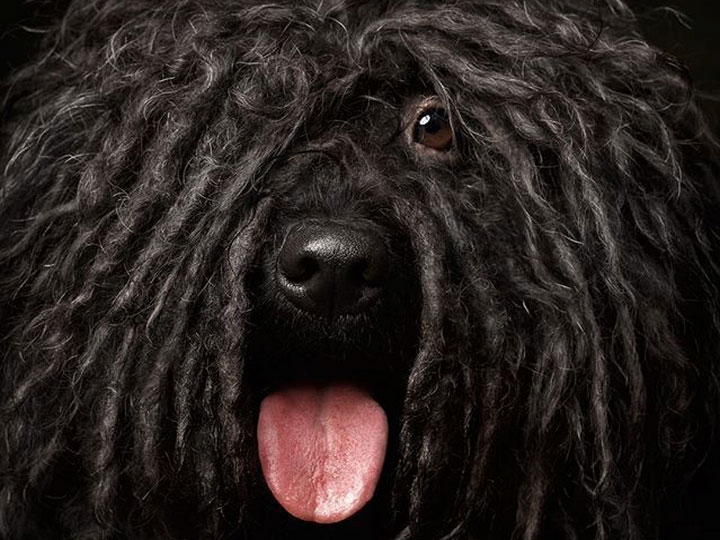
The head, viewed from the front, appears round and oval from the side. The skull is small and thin, with well-developed superciliary ridges. The stop is slightly defined. The muzzle has a straight, not pointed bridge. The nose leather is small and black. The lips are tight. The bite is a scissor bite. The eyes are dark brown, medium in size, set wide apart and slightly oblique. The ears are set moderately high, wide at the base. The pendulous part of the auricle resembles the letter "V" with rounded tips.
The neck is not long, set at a 45° angle to the horizontal. The topline is straight. The withers are slightly prominent. The croup is short and slightly sloping. The chest is deep and long. The underline rises smoothly to the rear. The tail is set high, curled tightly over the croup. The limbs are of medium length, slender, and well-muscled.
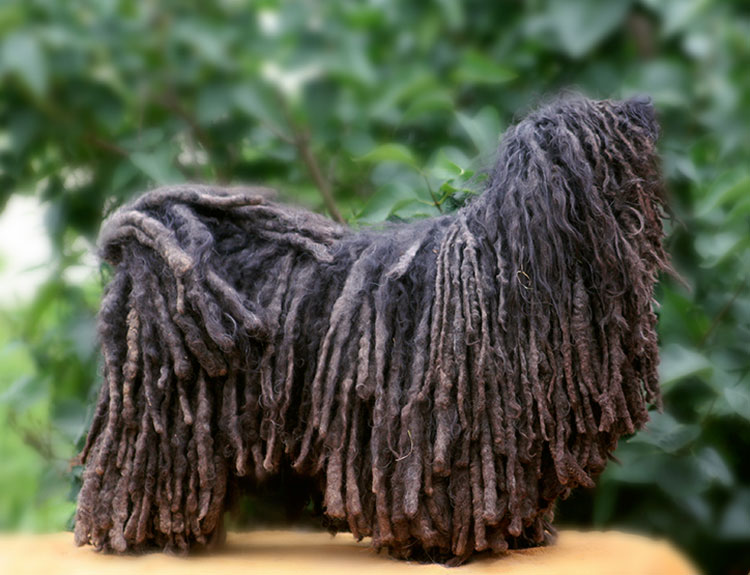
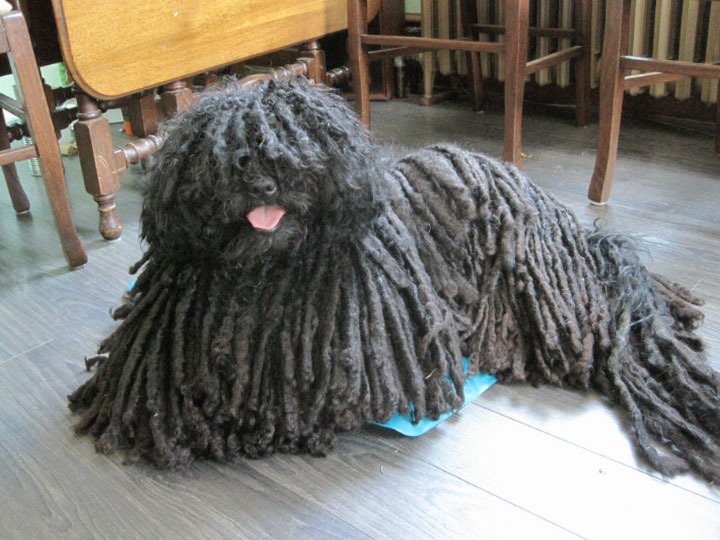
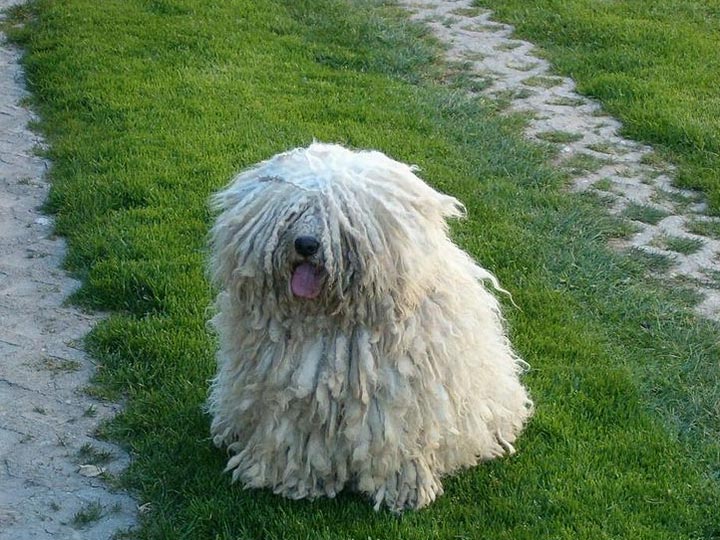
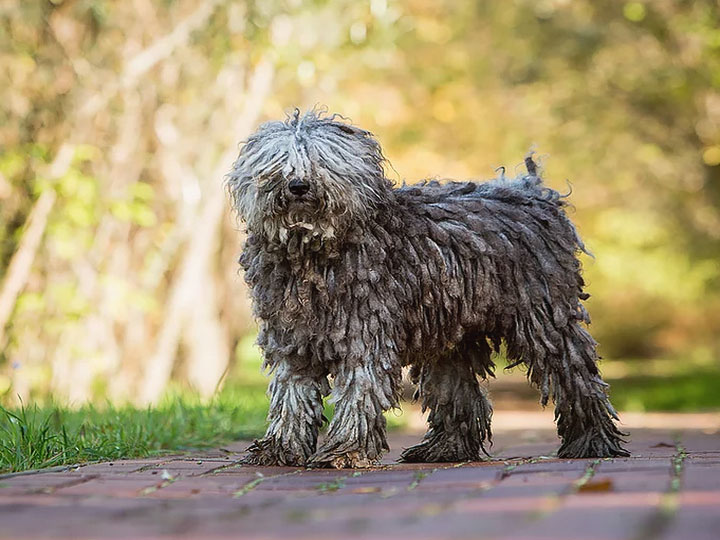
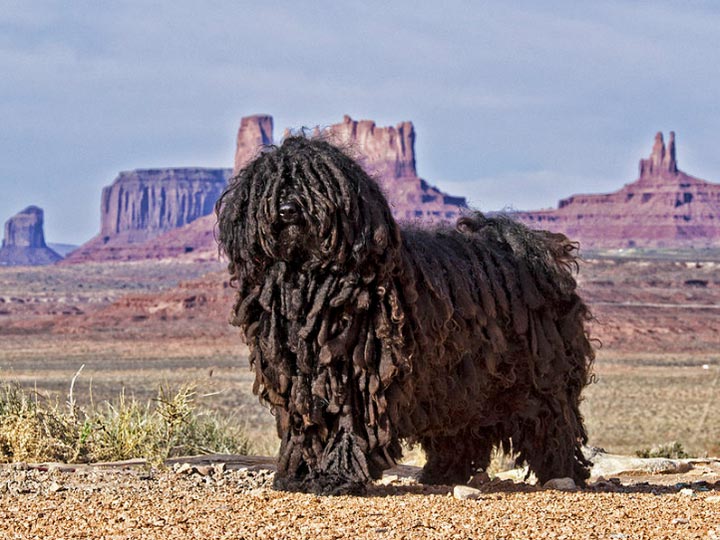
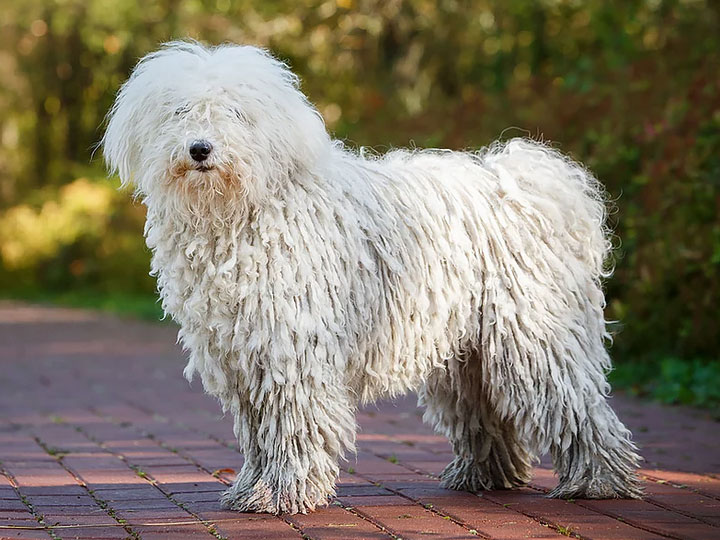
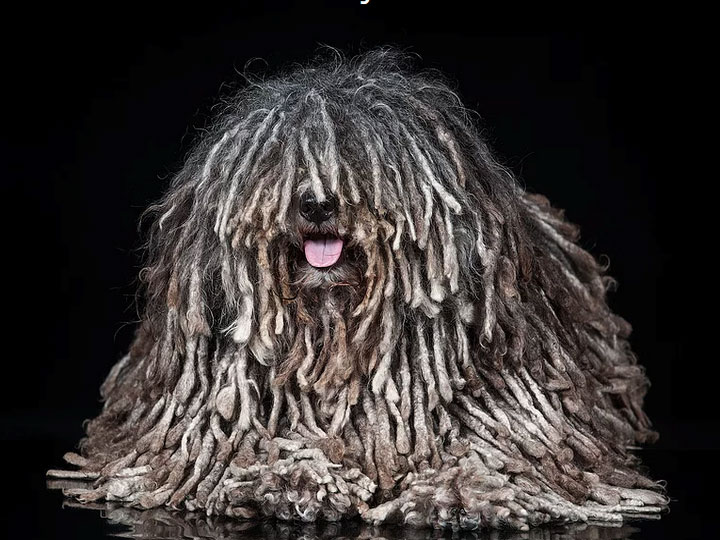
The skin is smooth. Areas of exposed skin are heavily pigmented. The coat consists of a guard hair and an undercoat, which curl and roll together to form cords (dreadlocks). The guard hair is coarser. The ratio of guard hair to undercoat is approximately 1:1. The formation of cords is completed by 2-3 years. In adult dogs, the longest cords (20-30 cm) cover the loins and croup. Several colors are permitted:
- Black;
- Black with a grey or rusty tint;
- Fawn with black mask;
- White.
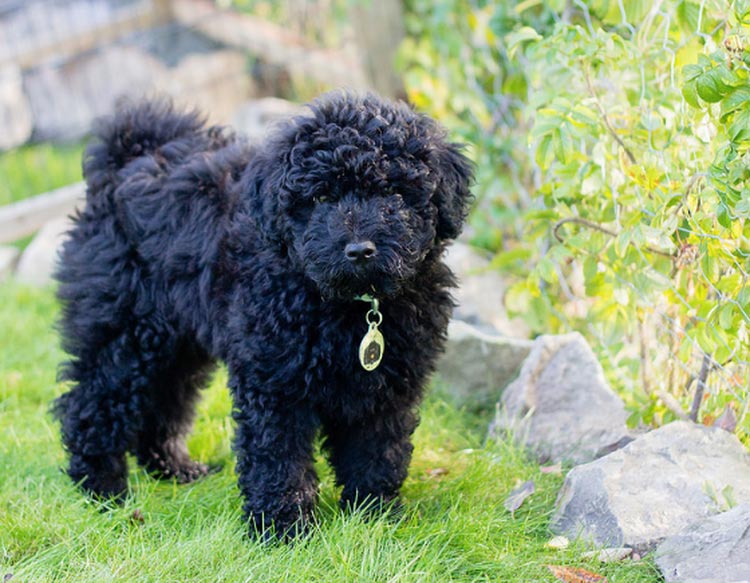
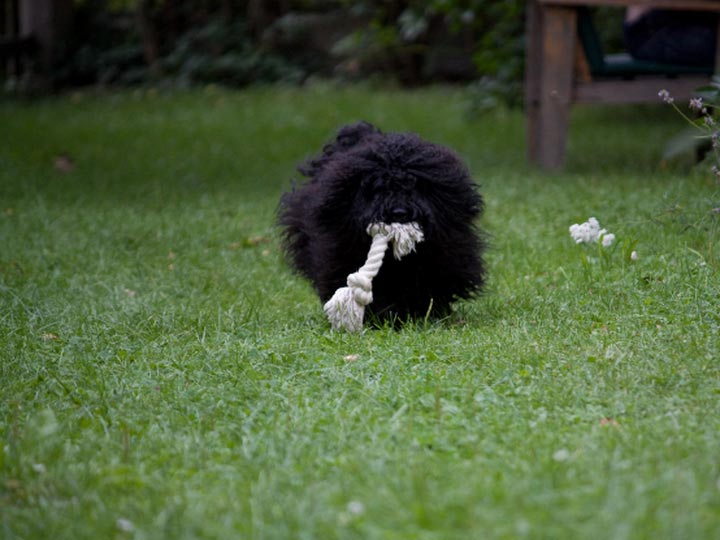
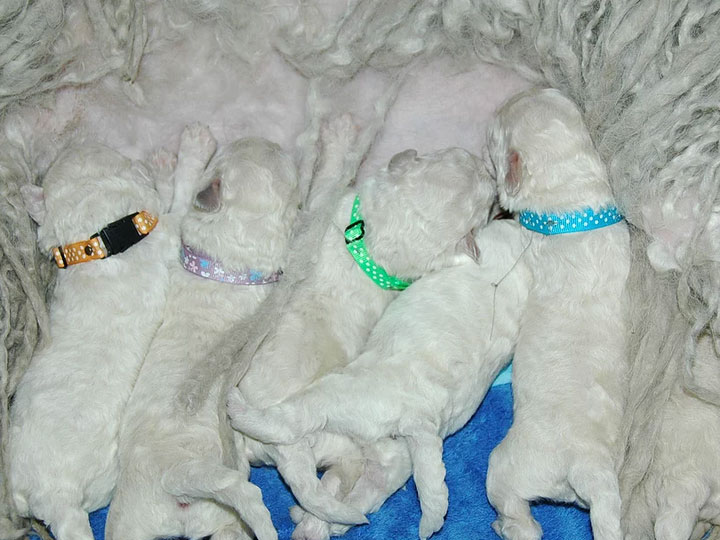
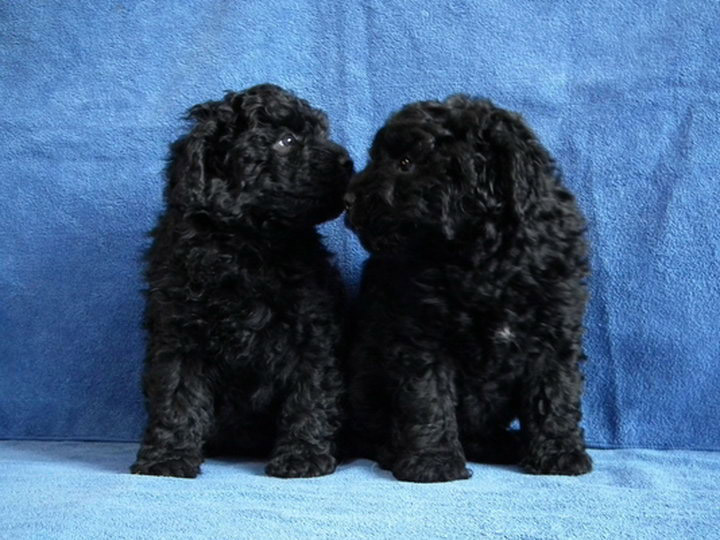
The coat's appearance doesn't fully develop until two years of age. Dreadlocks begin to form around one year of age. These dreadlocks grow throughout life, becoming longer and thicker with each passing year. Puppies don't typically have this style; they look like fluffy balls of soft, short, and curly fur.
Similar breeds
Puli has an external resemblance to dogs of the breed Komondor, also known as Hungarian wolfhounds. In terms of character and purpose, they are very different. The Puli is an active dog; it herds, gathers, and holds the flock. The Komondor's job is to periodically tend to the livestock and protect them from wild animals and intruders. While the Puli is working, the Komondor can lie somewhere in the shade and observe. In case of danger, the Puli will not rise to the defense, but will give a loud, slightly hoarse call.
Character
Puli have a lively, balanced temperament; they are energetic and friendly, very inquisitive, and sociable. They form strong bonds with all family members and are good with children. They are intelligent and obedient, and when necessary, they can make their own decisions, especially when it comes to work. They usually get along well with other animals.
As a companion dog, the breed is suitable for anyone who can devote enough time to games, walks, care, and active pastime.
They are wary of strangers, but not aggressive. They will bark to warn of intrusions on their territory. They are very protective of their flock, family, and owner. Puli are vigilant guard dogs who would like to be guard dogs, but their size prevents them from doing so.
Content Features
Puli adapt well to a variety of living conditions. Companion dogs are happy in any apartment size. Working dogs can live in barns with their charges and tolerate both heat and cold well.
Energetic Puli will participate in all household chores. In an apartment, dogs are more reserved than outdoors, but even in a confined space, their agility, maneuverability, and jumping ability can be appreciated. The undoubted advantages of the breed are the absence of odor and shedding.
Training and exercise
Puli dogs require a good amount of exercise, including regular, long walks, opportunities to romp with other dogs, and opportunities to run off-leash. Daily walks should be supplemented with games and training.
They are very easy to train and quickly remember commands. When training, it's best to prioritize rewards. Praising good behavior will be more effective than scolding for bad behavior. Puli are also very sensitive. Owners can participate in various sports with them, such as freestyle, agility, and dog dancing. It's important to remember that Puli require constant mental stimulation. Commands are easily forgotten over time.
Care
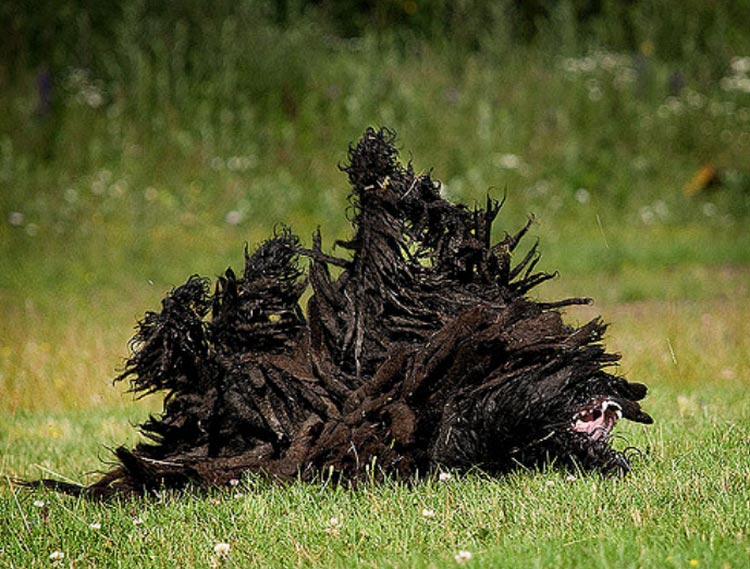
Grooming dogs with such unusual coats is surprisingly easy. At 8-12 months, the puppy's down coat reaches the required length and begins to curl around the guard hairs, disintegrating into strands. The strands form naturally, but the coat should be inspected periodically to ensure the strands don't tangle. If this occurs, they should be carefully separated. The coat's condition should be monitored especially closely between 8 months and 18 months. Brushing and trimming are not necessary. Bathe dogs every 1-2 months. Eyes and ears should be inspected weekly, and cleaned as needed. Nails should be trimmed every 3-4 weeks.
Feeding
A Puli's diet should be based on standard dog feeding guidelines. This can include natural food or prepared foods. Natural foods should be varied and balanced. Meat and cereals are the mainstays, with fruits and vegetables included, along with fermented milk products and eggs several times a week. A natural diet is usually supplemented with nutritional supplements, vitamins, and micronutrients. When choosing food, premium, super-premium, or holistic products are the first choice. Puli dogs should eat diets designed for medium-sized dog breeds. Feeding special dietary foods unnecessarily is not recommended.
Health and life expectancy
Puli are strong, hardy dogs with excellent genetics. The breed is free of serious genetic diseases. Dermatitis and ear infections are common with poor care. Like any other dog, Puli require regular veterinary preventative care, including vaccinations, deworming, and treatment for external parasites. Their lifespan is 12-14 years.
Choosing and pricing a puppy
In Russia and the CIS, single-breed shows are not held due to the breed's small numbers, but a few specimens can occasionally be seen at major shows. Reputable breeding facilities exist in many major cities, with the majority of the population concentrated in Denmark, Finland, and, of course, Hungary. Puli puppies from abroad will cost much more, but true breed lovers will have the opportunity to choose a good puppy of the desired color.
Puli puppies have short, soft fur, which begins to actively grow only after three months and ends by three years. This significantly complicates the task of choosing a show dog. Young puppies are often purchased for shows and breeding, but they are significantly more expensive than younger puppies. When choosing a dog, it's important to consider the living conditions and the appearance of all puppies and parents; all puppies should be active, well-fed, and healthy.
Prices for puppies vary greatly, depending on geography, pedigree, and demand. Puppies in kennels cost from 500 to 1,000 euros. Advertisements for the sale of a Puli without documents are very rare, which is an undoubted advantage for the breed, but a disadvantage for those who are not interested in the breed, but are only interested in external similarity and low cost.
Photos
Photos of puppies and adult dogs of the Puli breed are collected in the gallery.
Read also:


Add a comment