
Pudelpointer (poodle pointer)
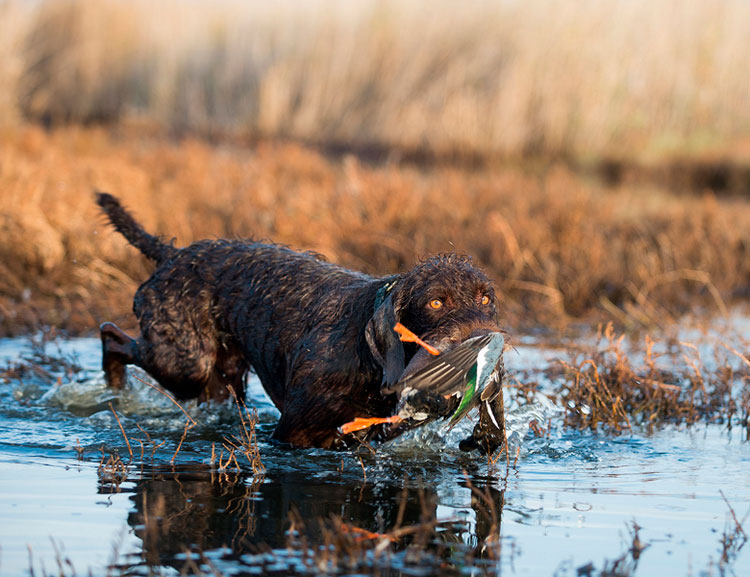
The Pudelpointer is a breed of hunting dog developed in Germany in the 19th century by crossing English pointer and the German hunting poodle. This dog has a friendly nature, is intelligent, hardworking, and easily trained. It is used for tracking, pinpointing, and retrieving game.
Content
History of origin
Why the breed is called a pudelpointer usually goes without saying. The downside is that many people associate the name with designer breeds—mixed breeds like puggles, labradoodles, Maltipoo or cockapoo.
The Pudelpointer has been known in Europe for nearly 100 years. Baron von Seydlitz is considered the creator and inventor of the breed. He used seven German hunting poodles and over 100 different pointers in his breeding program. Thirty years of painstaking work have resulted in a virtually universal gundog. It's worth noting that the breed has developed differently in Europe and North America.
The Pudelpointer arrived in North America in 1956. Bodo Winterhelp, former secretary of the German Pudelpointer Club, brought several dogs with him to Canada. The goal was to create an even more stable and versatile hunting dog breed with traits that would be preserved from generation to generation. Only two of the ten imported Pudelpointers were good enough to participate in the breeding program. Soon after, Winterhelp opened the Winterhelp kennel and founded the Pudelpointer Club of North America (PCNA).
The Pudelpointer was recognized by the International Cynological Association in 2004. Breed standard No. 216 was published. The breed is not recognized in the United States, partly because breeders don't want it. They believe it would lead to a division between show dogs and working dogs, which would negatively impact the breed as a whole.
Breed standards are maintained by clubs. In Germany, this is the Verein Pudelpointer, and in America, these are the NAPPA, PCNA, and VPP-GNA.
Purpose
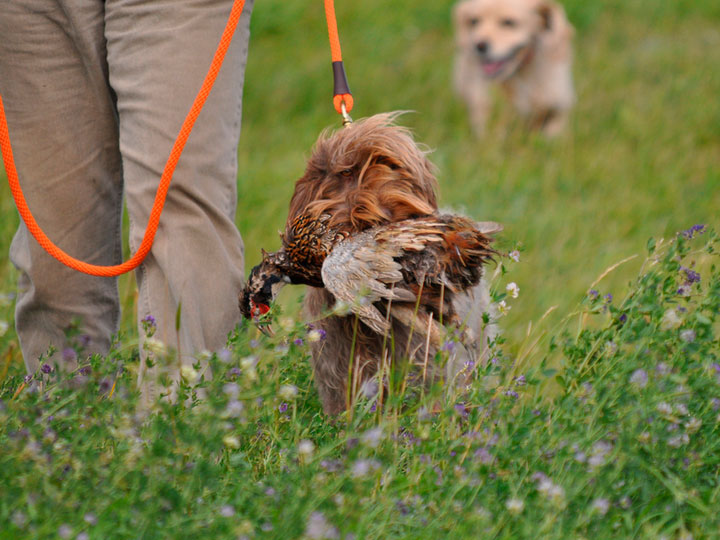
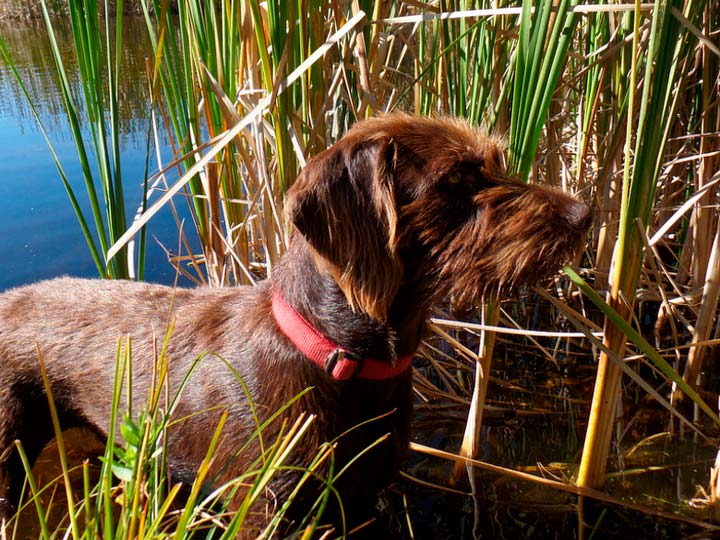
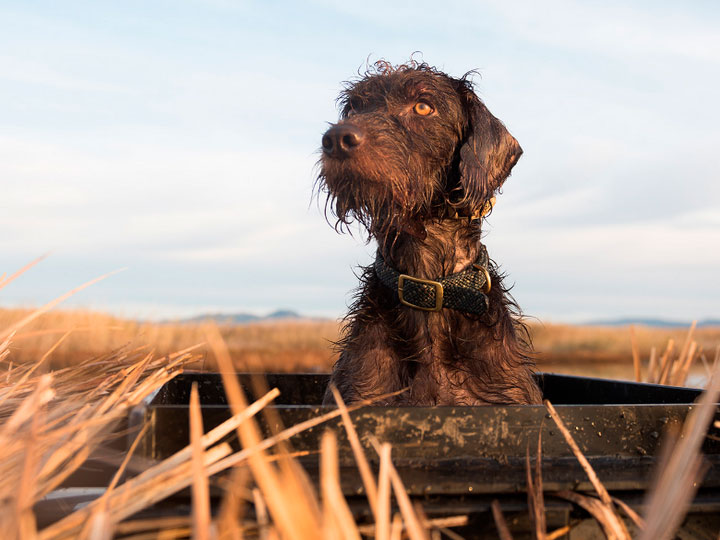
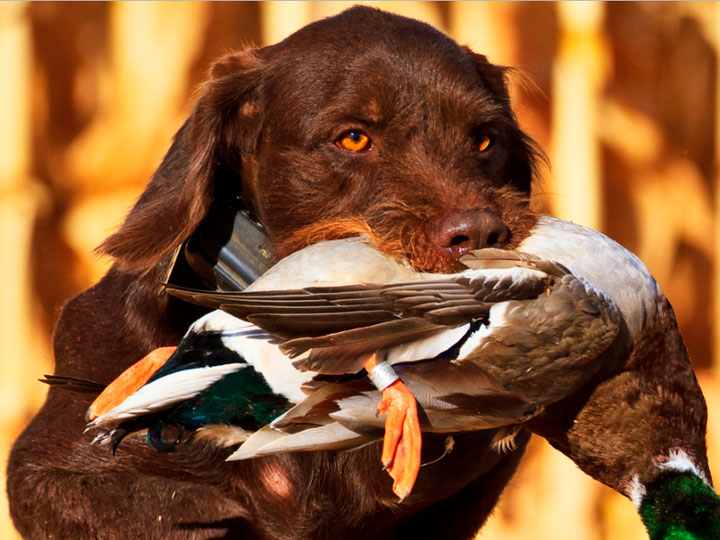
The Pudelpointer is a dynamic hunting dog bred for working trials. It is practically universal in its application. With proper training, it can work both in the field and on water. They have a fast and wide search range, an excellent sense of smell, and a firm stand. Pudelpointers are primarily used to hunt birds, small game, and ungulates. American cynologists have proven that Pudelpointers are capable of retrieving not only downed game but also live game without harming it.
Appearance
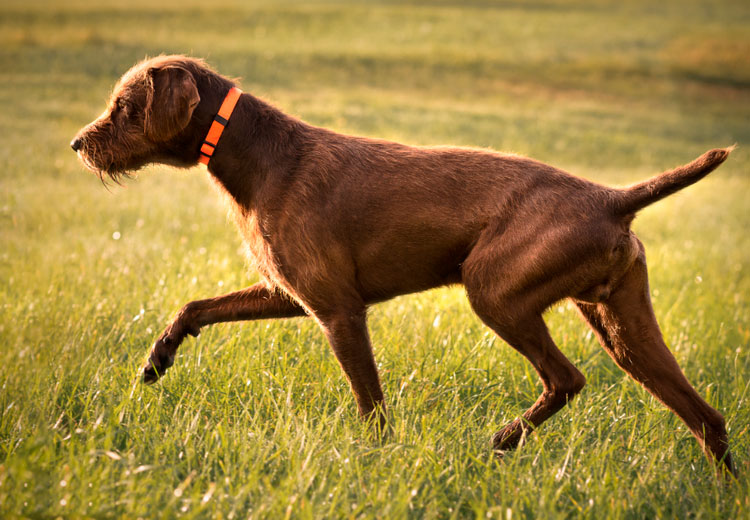
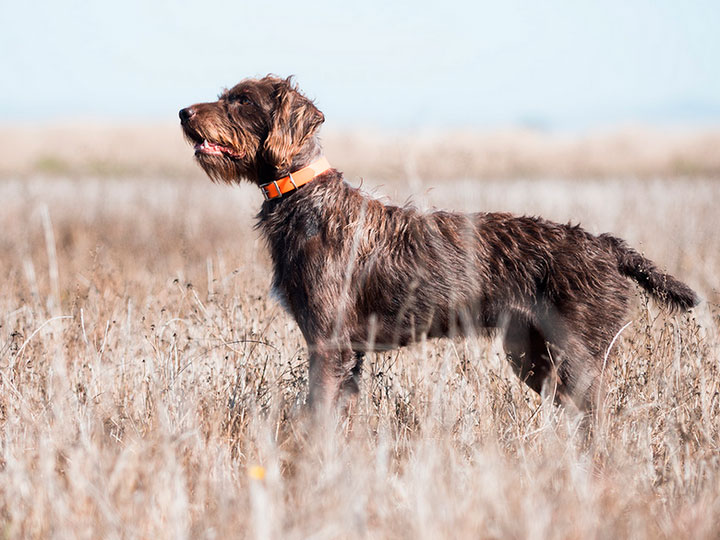
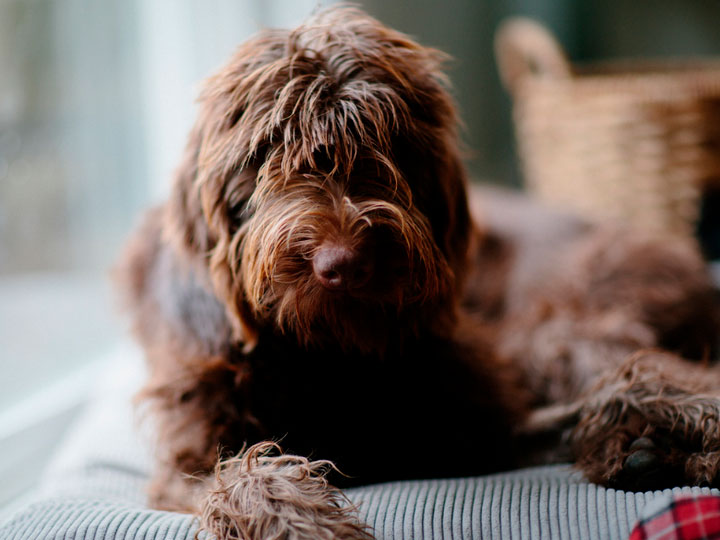
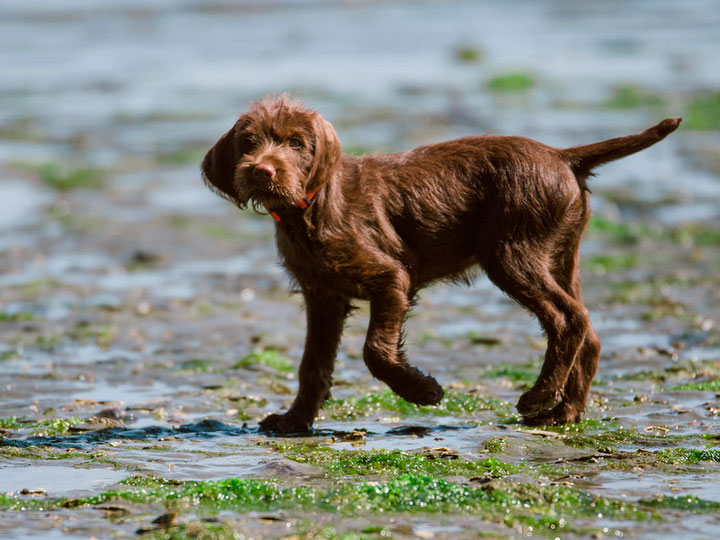
The Pudelpointer is a large, heavy-built dog with a coarse, not very long coat. The height at the withers for males is 60-68 cm, and for females, 55-63 cm.
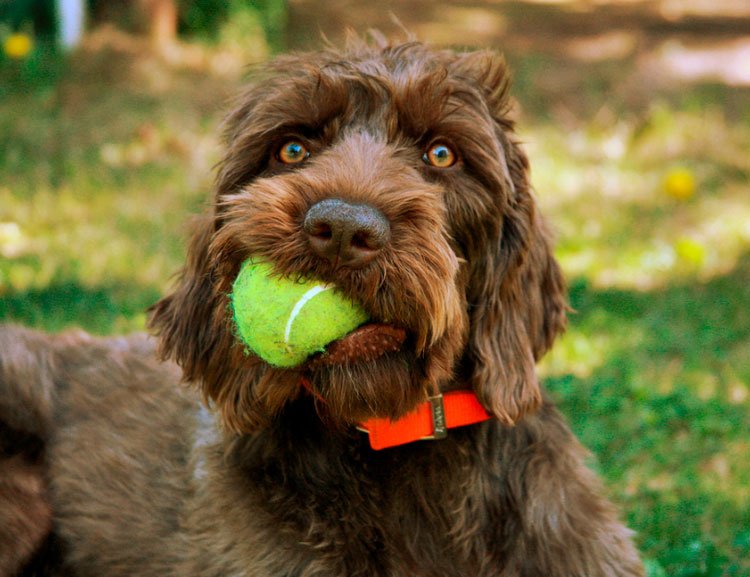
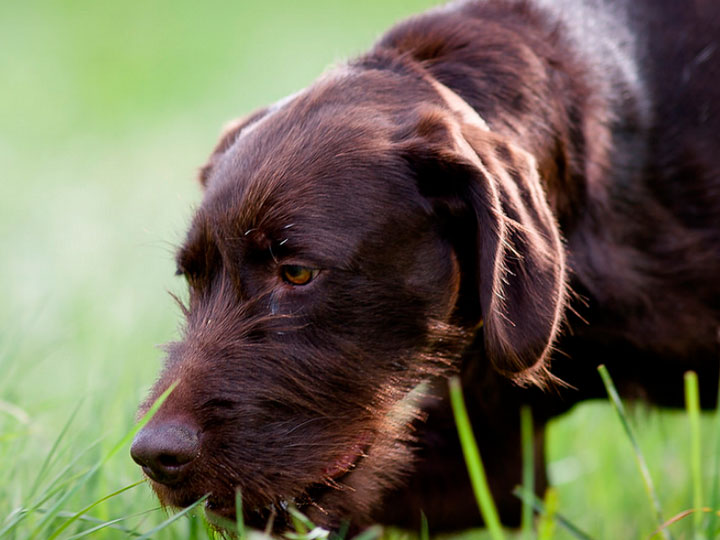
The head is proportionate, the skull is slightly rounded and moderately broad. The length of the skull from the occiput to the stop is equal to the length of the muzzle from the stop to the tip of the nose. The muzzle is balanced, the bridge of the nose is straight. The nose is pigmented according to the coat color, with well-open nostrils. The lips are tight. The jaws are powerful with a scissor bite. The eyes are large, set at the sides, with a lively expression. The iris is dark amber. The eyelids are well-fitting and covered with hair. The ears are set high, hanging, medium in size, with rounded tips.
The neck is very muscular, slightly arched, and of medium length. The body is strong. The ratio of body length to height is 10:9. The topline is straight. The withers are pronounced. The back is strong and short. The croup is of medium length, slightly sloping. The chest is deep and wide, with well-sprung ribs. The belly is elegantly tucked up. The tail is a natural extension of the croup, reaching the hocks. Carried straight or sabre-shaped, covered with rough hair without fringe. In countries where this is not prohibited, the tail may be docked. The limbs are straight, parallel, set under the body, with strong bones and joints. The paws are rounded or oval, well knit. The pads are hard and durable.
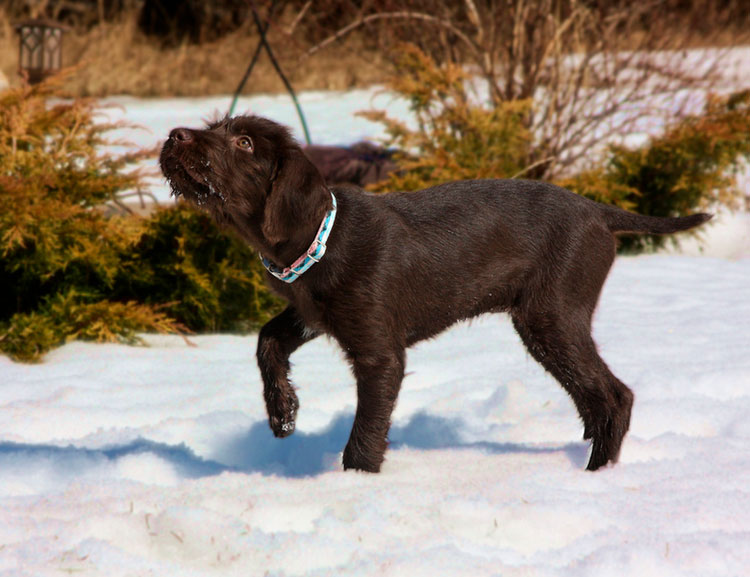
The coat is close-lying, harsh, coarse, and medium in length. The undercoat is well-developed and dense. The coat length at the withers is 4-6 cm. On the head, the hair forms a beard and forelock. The belly coat is dense. Color: brown in various shades; small white markings are permitted.
Character and behavior
The Poodlepointer's personality is reserved, calm, non-aggressive, and balanced. While they may sometimes appear overly serious at work, at home and with family they are always cheerful and happy, full of energy and enthusiasm. They are very hardworking and resilient. They are responsive and sociable. They form strong bonds with their owners and love other family members. They get along well with children and are relatively calm in everyday life.
The Pudelpointer's primary passion is hunting. This is reflected in its character and behavior.
The Pudelpointer is intelligent and obedient. When properly socialized, it responds appropriately to changes in its environment. It is indifferent or wary of strangers, but never timid or aggressive. It will bark when approached, but is not suited to guarding. The Pudelpointer is not a dominant breed, but requires a reliable leader.
Education and training
The Pudelpointer is a very intelligent dog and relatively easy to train. It has a natural desire to please its owner. Consistent training using positive reinforcement produces good results quickly. Work with the puppy begins from the first day it comes home, beginning with socialization and short training sessions.
Content Features
The Pudelpointer is suitable for both kennel and indoor living. It adapts to apartment living in both the city and the countryside. It requires long daily walks. If kept in a private yard, the area should be well-fenced. It is crucial that the dog's life includes outdoor training, hunting, and tracking, which will help develop its natural talents. A Poodlepointer kept in a kennel without proper owner attention will quickly develop bad habits.
Care
The Poodlepointer doesn't require complex grooming. It sheds moderately, with a heavy undercoat shedding during the seasonal shedding period. Grooming consists of regular brushing and occasional bathing. Grooming also includes standard hygiene procedures: ear and teeth cleaning, eye cleaning, and nail trimming.
Health and life expectancy
The Pudelpointer is considered a healthy breed. Owners note a slight tendency toward ear infections due to the structure of the auricle. Breeding dogs are tested for hip dysplasia, but no other health issues have been identified. The expected lifespan is 11-14 years. To keep a Pudelpointer healthy and active, it is important to adhere to veterinary preventative measures, such as vaccinations and deworming.
Where to buy a Pudelpointer puppy
The majority of Pudelpointer breeders are concentrated in Germany and Canada. This is where the majority of kennels and breeders of these versatile hunting dogs are located. A few breeders exist in other Central European countries and the United States. In Russia and the CIS, the number of Pudelpointers can be counted on one hand. These are mostly imported dogs. There is no information on breeders or kennels.
Price
In Europe, the average price of a Pudelpointer puppy is 1,500 euros. In America, a good puppy from working parents costs $1,500-2,000.
Photos and videos
The gallery contains photos of poodlepointer dogs.
Video about the Pudelpointer dog breed
Read also:


Add a comment