
Poodle
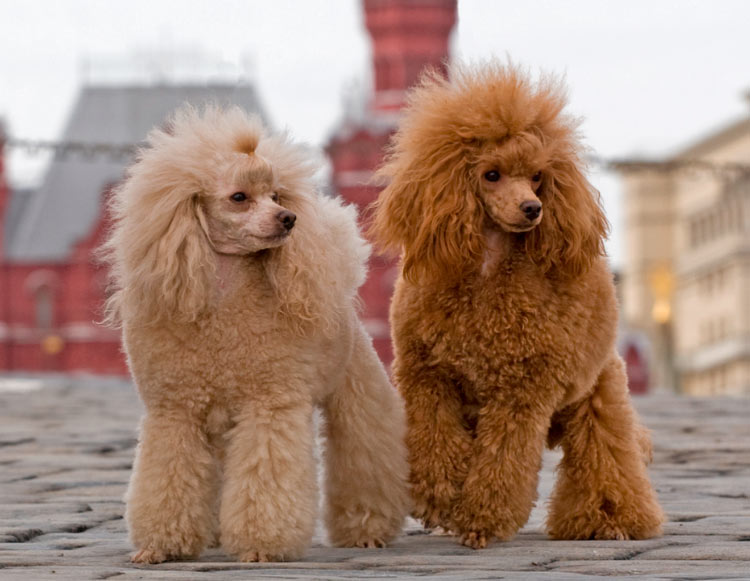
The Poodle is a well-known and popular breed worldwide with many advantages: the ideal companion character, exceptional trainability, lack of shedding, and a wide variety of sizes and colors. A well-groomed and trimmed Poodle is a real eye-catcher. The British say of them, "Not yet a man, but no longer a dog." But there are also some drawbacks that should be mentioned.
Content
History of origin
The origins of the poodle are still debated. Just 100 years ago, it had no homeland, and the French, Germans, Belgians, and Italians all vied for the right to claim its country of origin. Until 1936, the poodle was a pan-European continental breed, then declared a French descendant. barbettes.
The breed's name probably comes from the German word pfudel - "puddle", "swamp" or puddeln — "to splash." The English call it poodle, which is very similar to English puddle - "puddle". In France, a poodle is caniche, from the fusion of words: canard chien, which means "duck hunting dog." Italians call it barboncino - "bearded man".
Poodles have been known in Europe since approximately the 15th century, as evidenced by written records and works of art. In 1743, the name "la caniche" (poodle) was officially introduced in France, distinguishing it from the Barbet. This version of origin also explains poodles' love of water and herding ability. In the 19th century, the breed became so popular among the nobility that it even acquired the unofficial name "royal poodle," not because of its size. Breeders, in turn, did a great deal to establish height variations and solid colors.
Purpose
The Poodle is a toy dog, a companion, an excellent nanny, and a playmate for children. It can shine in the show ring or compete successfully in various canine disciplines. It has a natural hunting instinct and a talent for retrieving. Charming, playful, and affectionate, yet also a courageous and vigilant guard dog, capable of defending others when necessary.
The poodle can be trained to perform a variety of tricks. It readily entertains spectators and thrives on attention.
During the war, they were used in the medical service, as signalmen, and as mine detection dogs. With proper training, standard and medium-sized poodles can perform guard and guard duties and are trained to work as guide dogs. Today, they are also used as rescue dogs. In France, they are trained to search for truffles and work in customs.
Poodles are recognized as a decorative dog breed throughout the world, but there are clubs where they are bred as hunting dogs.
Appearance
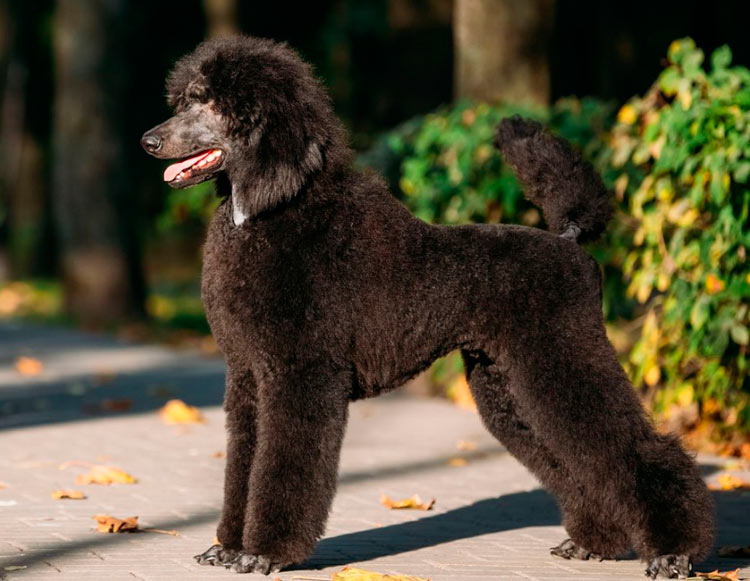
The Poodle gives the impression of being an energetic and intelligent dog with a distinct sense of self-worth. Its body type is harmonious, moderately elongated, and sexual dimorphism is well-defined. There are four height variations in the breed. The standard only specifies height; there are no strict weight restrictions.
- Large: height ― 45-60 cm; weight ― 15-23 kg.
- Average: height ― 35-45 cm; weight ― 8-15 kg.
- Dwarf: height ― 28-35 cm; weight 5-7 kg.
- Toy: height ― 24-28 cm; weight: no more than 5 kg.
The American Kennel Club (AKC) standard lists only three size variations: standard, miniature, and toy poodle.
The head is proportionate to the body and well chiselled. The width of the skull is less than half the length of the head. The stop is slightly pronounced. The muzzle is straight and appears strong. The earlobe is well developed, with open nostrils. The lips are of medium thickness, dry, moderately developed, the upper one lies on the lower one, but does not overlap it. The bite is scissor-like. The eyes are set at the same level as the stop, the eyelids are almond-shaped. The color is black or dark brown; in brown poodles, it is dark amber. The eyelids fit tightly. The ears are fairly long, hanging along the cheeks, set just below the outer corner of the eyes. The neck is strong, slightly arched, of medium length, oval in cross-section, somewhat shorter than the head, which allows the head to be carried high and proud.
The body is well proportioned, moderately elongated. The back is straight. The croup is rounded, not sloping. The ribcage reaches to the elbows, and the ribs are oval. The belly is tucked up. The tail is set high and may be long, shortened to 1/3 or 1/2 its natural length. When at rest, it hangs down, but rises when moving. The forelimbs are perfectly straight, with good bone and muscle. The hind legs, viewed from the rear, are parallel, with well-developed and visible muscles. The paws are small, close together, forming a short oval. The pads are thick and hard, and the nails are strong.
The poodle has a distinctive, eye-catching gait: effortless, confident, springy, with a short stride. It resembles the trot of the Arabian horse, the most elegant of horses.
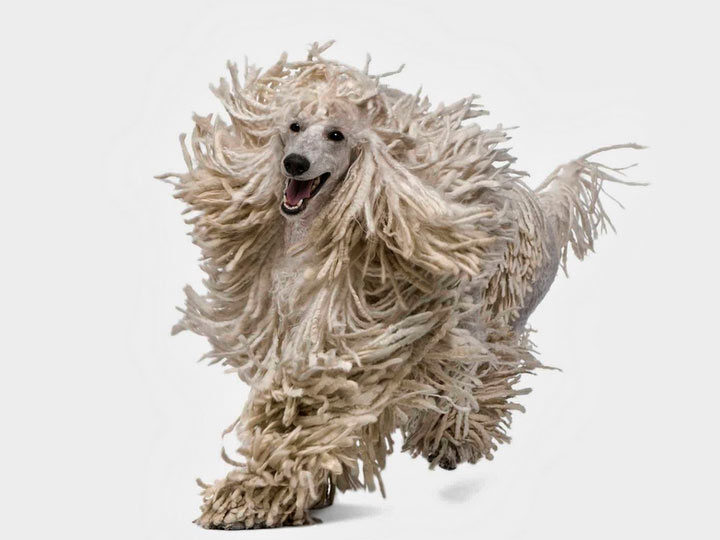
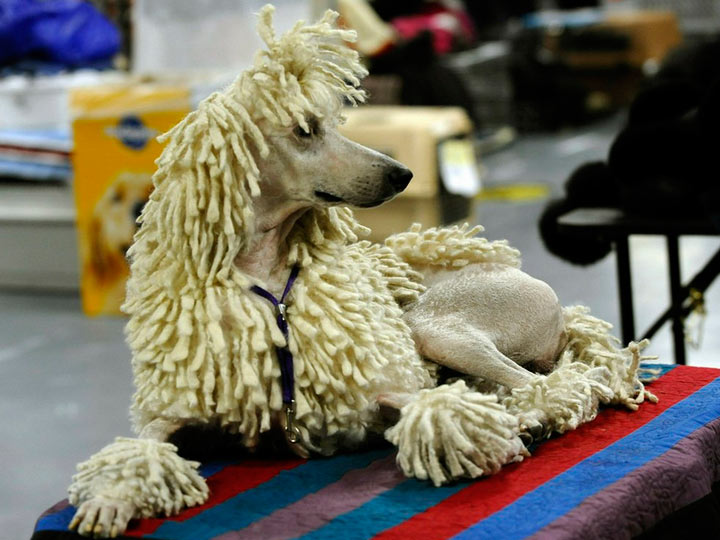
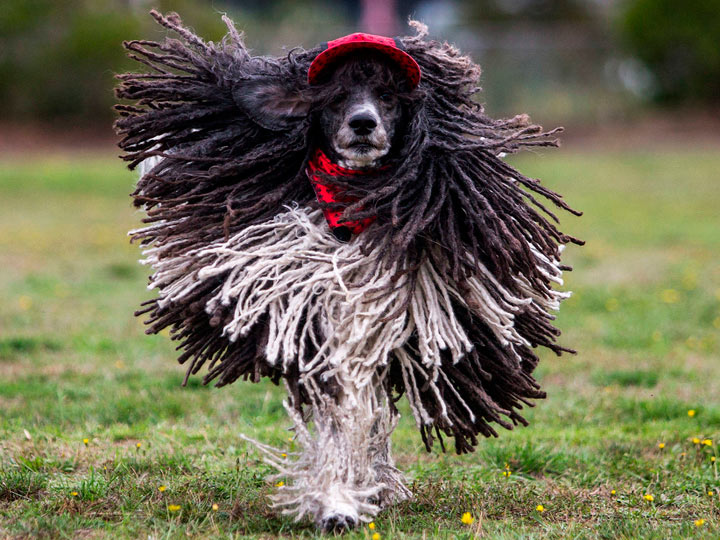
The coat is curly up to a certain length. As it grows, it forms cords.
- The curly coat is abundant, fluffy, well-curled, and springy. The hair is of uniform length and forms curls.
- Corded wool is thick and fluffy, forming cords of approximately the same length.
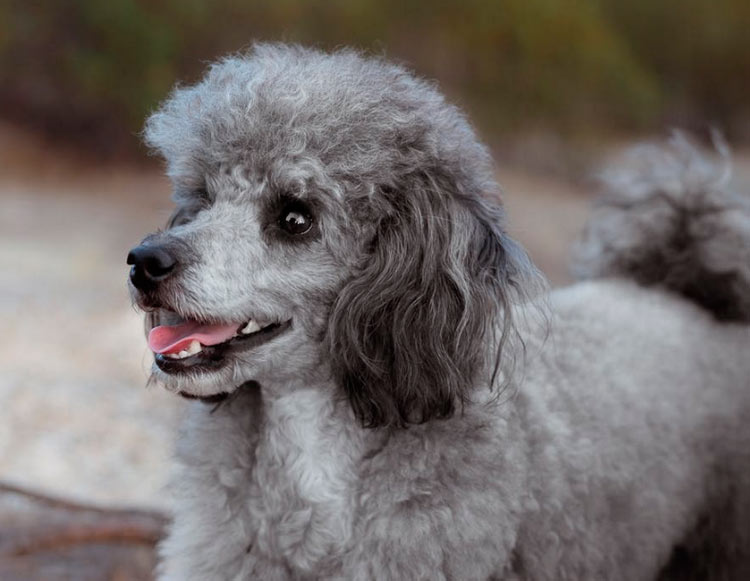
The color is even, monochromatic, not weakened: brown, black, white, gray, fawn (Fawn).
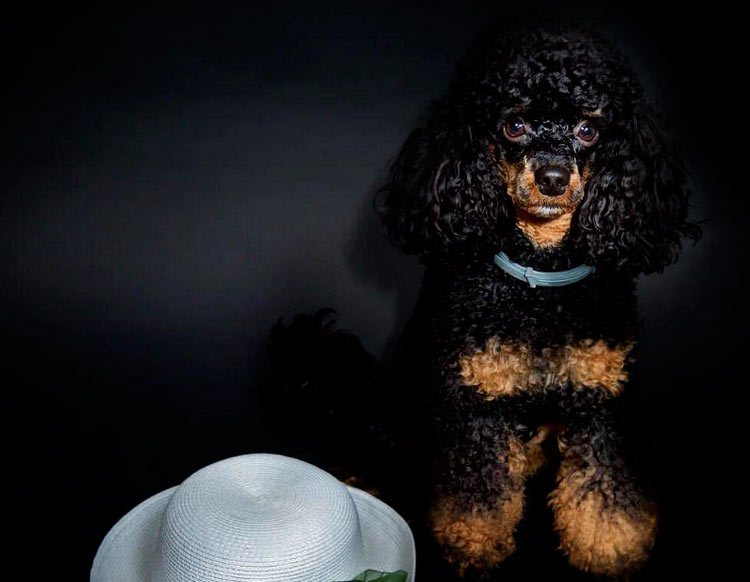
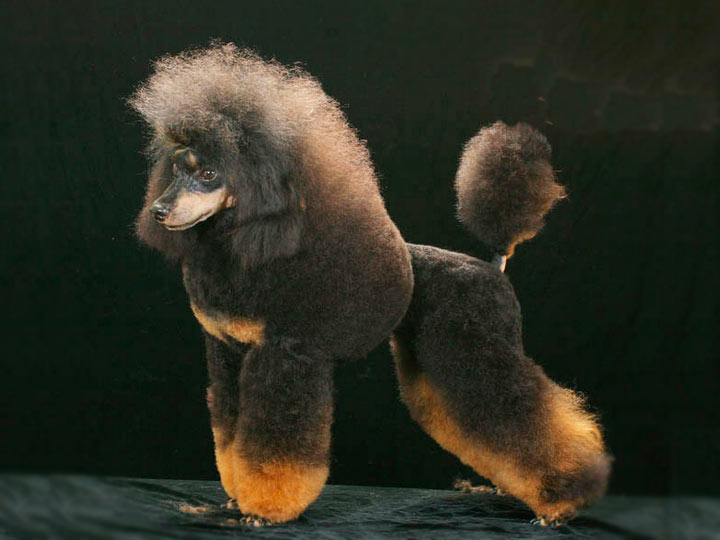
Non-standard colors: phantom, harlequin and others
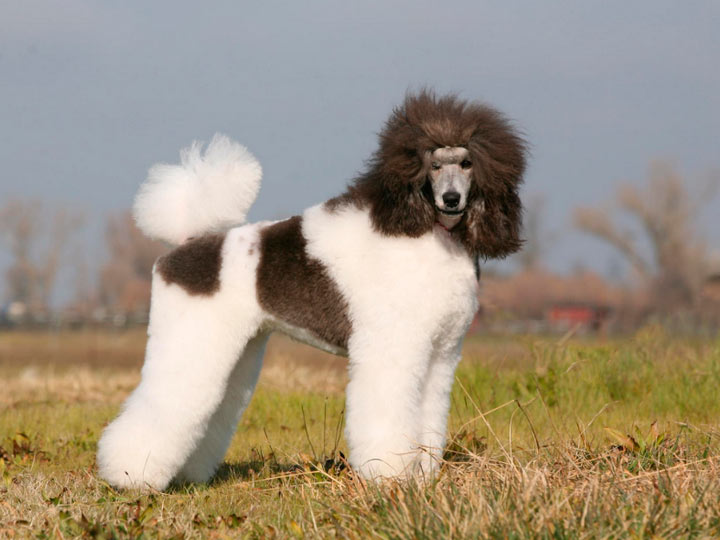
In addition to the standard's recognized colors, other poodle colors exist. Black and white poodles are called harlequins, while the even rarer black and tan poodles are called phantoms. Separate standards have been developed for these dogs, which were recognized by the RKF in 2011 but are not recognized by the FCI. At CACIB shows, harlequins and phantoms are exhibited in Group 11, "unrecognized breeds."
Some breeders specifically breed harlequins and phantoms, and sometimes "non-standard" puppies are born to purebred solid-colored poodles. Both varieties can come in any height range.
There are other poodle colors that are becoming increasingly popular every year: sable, blue, brindle, white and brown, and others. If such puppies are the result of a planned mating, they receive a birth certificate like other poodles, but with the note "rejected." The certificate can be exchanged for a pedigree, but such a dog is not allowed to show or breed.
Character and behavior
The Poodle is sociable, affectionate, and playful, extremely devoted to its owner, friendly, and gets along easily with other animals. It is distinguished by its versatile behavior, attentiveness, and curiosity. It is tolerant of various human weaknesses but does not tolerate rough handling. It can be jealous.
They possess exceptional intelligence, which is frequently mentioned in literature and tirelessly lauded by their owners. This applies not only to their trainability, but also to their ability to observe and remember, make decisions, assess their surroundings, and anticipate their owner's wishes. Furthermore, poodles have a keen sense of smell and are adept at navigating their surroundings.
In Stanley Coren's ranking of the smartest dogs, the poodle takes an honorable second place.
If you analyze reviews of poodles, most owners note traits such as intelligence, loyalty, cheerfulness, and the ability to adapt to a family lifestyle. Vicious dogs prone to excessive barking are also mentioned. These are most often related to miniature and toy poodles. In defense little dogs It's worth noting that these are the types of dogs that owners are most often "afraid" to discipline, and overindulgence leads to behavioral problems. Regardless of size, a poodle requires proper training, socialization, and a human leader.
The poodle is an emotional and impressionable animal. It's cheerful and sociable in company, but doesn't cope well with loneliness. If left alone for long periods, it will cry, whine, and become agitated. Stress can also cause damage. Poodles are suitable for both young and old, families with children, those with an active lifestyle, and those who prefer to relax on the couch. They are relatively calm, cherish attention, are affectionate, and always nearby. They are good listeners and learn to help. Poodles are known to be trained as guide dogs, but even without such specialized training, they can, for example, bark at a ringing phone (which some older people can't hear well) or watch children to ensure they don't wander outside.
Training
Poodles are exceptionally trainable. They can be taught anything with just a few explanations and reinforcement with praise or treats. They seem to derive great pleasure from following commands and enthusiastically perform for the crowd. It's no wonder poodles were so popular in circuses. Today, they can be seen competing in agility, Frisbee, dog dancing, and other events.
The poodle is quite patient and forgiving, but it will not tolerate cruelty. In response, it will show strength of character and stubbornness.
Content Features
The poodle is ideal for house or apartment living. It doesn't shed or produce an odor. It's neat and clean around the house and isn't prone to damage. It may chew on things when young, but this is usually due to a lack of toys or attention. Theoretically, it could be kept in a kennel with an insulated kennel, but this is highly discouraged. Poodles don't tolerate being left alone for long periods of time; they'll become very lonely and may become ill. At home, they'll always try to be close, but appreciate having their own space, such as a playhouse or a bed with toys.
A poodle needs to be walked daily, two to three times a day. During walks or playtime, it is very active, and its agility and jumping ability are astonishing. However, forcing the dog to log miles is not advisable. It's better for a poodle to expend its energy playing with its owner, other dogs, or training.
The poodle is a hypoallergenic breed. But it is worth remembering that a specific reaction can also be caused by special proteins that are present on the skin, in saliva and other secretions.
Care
The poodle requires regular grooming to maintain its neat appearance and health.
- The coat doesn't fall out; it grows constantly, so it needs to be trimmed occasionally. If the dog isn't shown, it can be trimmed once a year, before summer, to allow the coat time to grow back before winter.
- Regardless of age, it's recommended to bathe a poodle every 6-7 weeks. Use only special dog shampoo. After bathing, the coat should be thoroughly dry, especially corded hair. Residual moisture inside dreadlocks is a perfect breeding ground for fungus.
- Brushing is necessary at least once a week. The coat needs to be combed very thoroughly, as it is prone to matting.
- The eyes should be examined daily and discharge from the corners should be removed with a gauze pad. Poodles are prone to excessive tear production, caused by the unique structure of their tear ducts.
- Once a week, carefully examine the ears and clean the surface of the auricle with a cosmetic wipe.
- Instead of plucking the hair in the ear canal, groomers recommend pulling the hair out with tweezers during cleaning and trimming the part that sticks out of the canal.
- Teeth are a weak point for poodles. It's advisable to clean them daily. Any dirty plaque that has formed can be removed with a cloth. If tartar has formed, it's best to schedule an ultrasonic cleaning at the clinic as soon as possible.
It's important to monitor your teeth during the period of teething (5-7 months). Small baby teeth sometimes become lodged in the gums next to permanent teeth, which negatively impacts the development of the bite.
Poodle haircuts and hairstyles
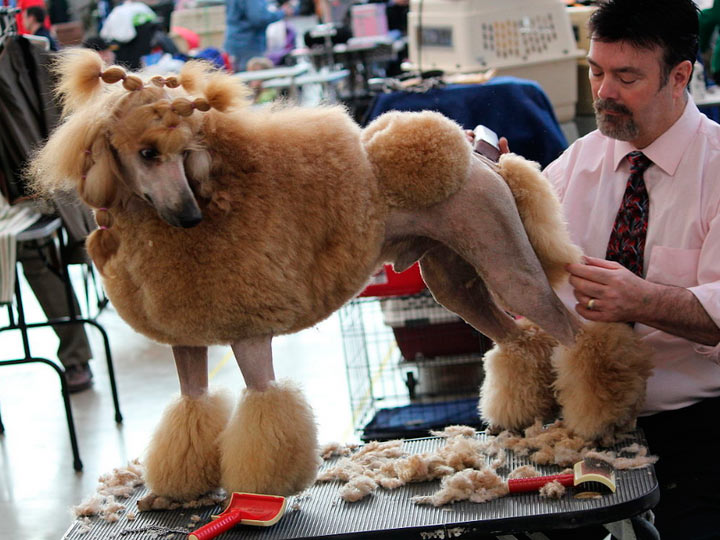
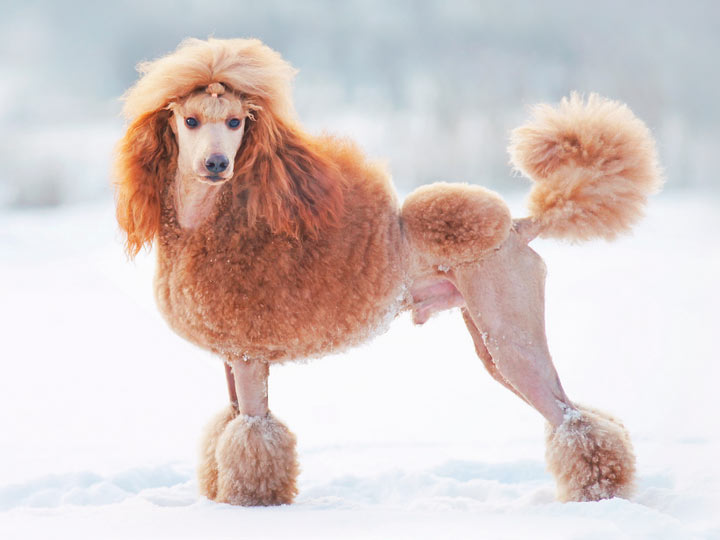
The poodle's coat offers a wealth of creative possibilities, but not for show dogs. According to the standard, poodles with lion, modern, English, and puppie cuts (considered a preparatory stage for one of the above) are allowed for show. If a show ring isn't planned, the options are much wider. However, the image shows the silhouettes and names of only the most popular.
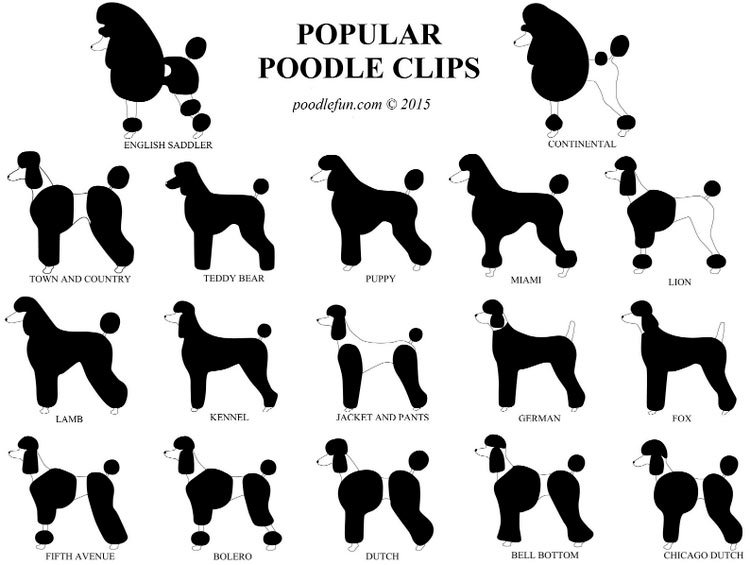
No other breed can boast such a huge number of different haircuts and hairstyles.
Interestingly, poodles, after several centuries of living alongside humans, have become so accustomed to grooming that they enjoy it. They often don't even need to be restrained on the groomer's table. Their special coat isn't damaged by any manipulation. Furthermore, without brushing and trimming, it cannot maintain its attractive and healthy appearance. It's not customary to give poodles short haircuts in winter. Show dogs with bare skin will need clothing appropriate to the weather.
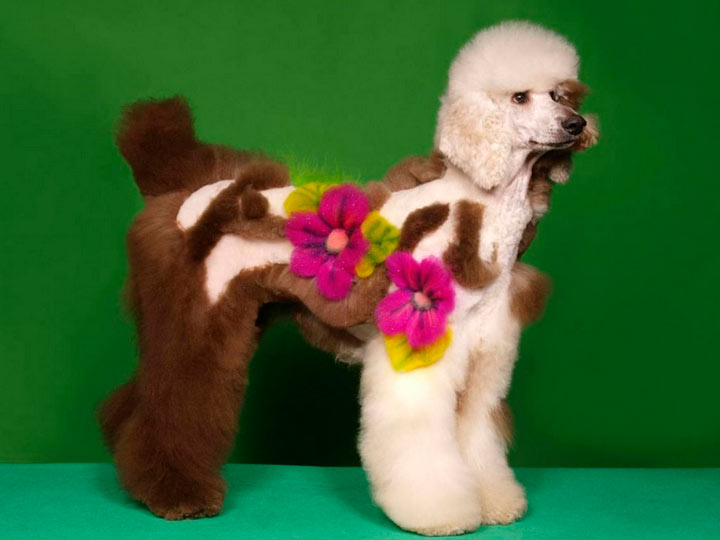
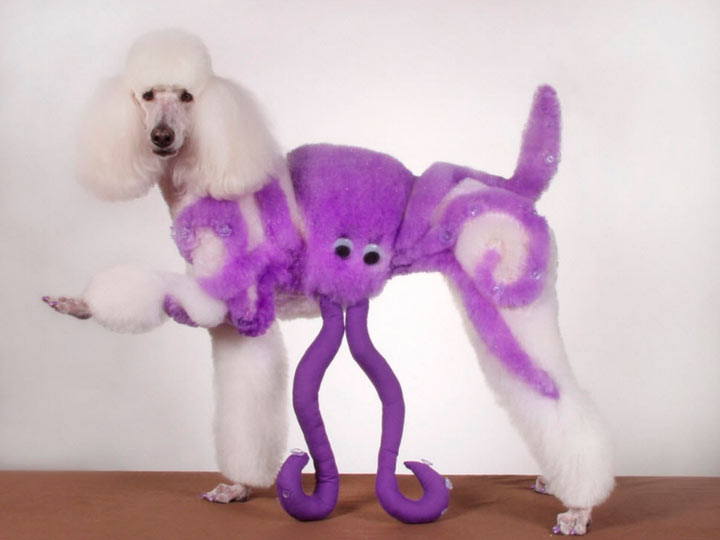
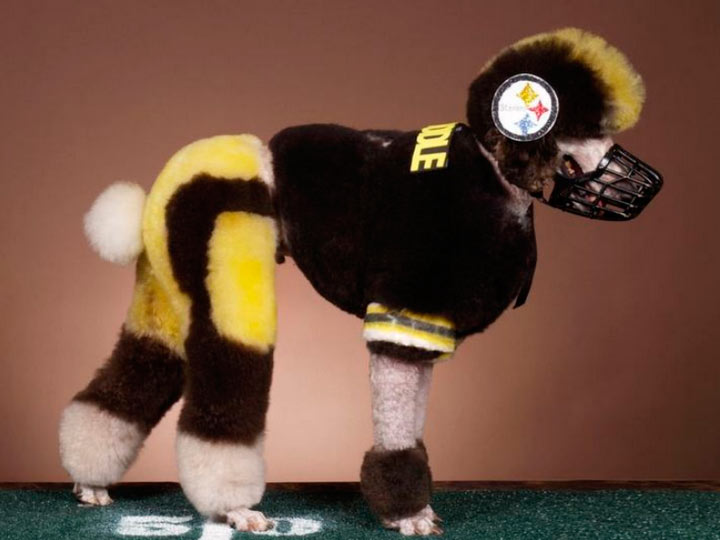
Owners of white poodles sometimes dye their fur. In America, there are even exhibitions of creative haircuts, where poodles excel. Several photos of dogs with creative haircuts can be seen in the gallery below.
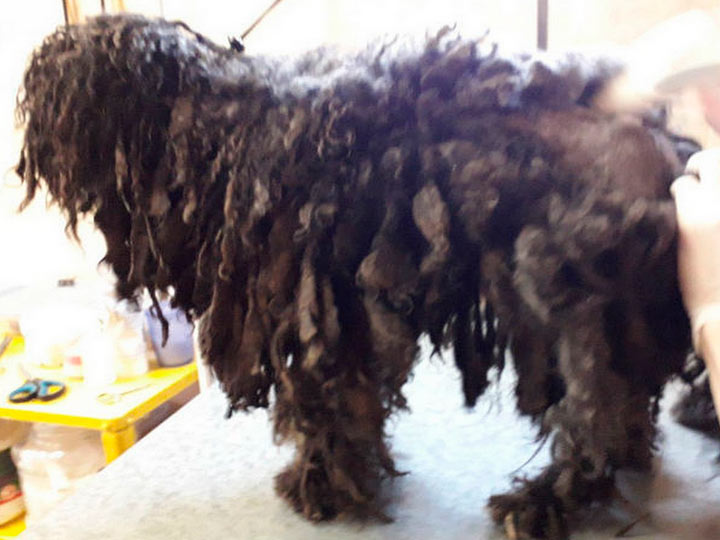
Is it possible to leave a poodle without a haircut? Yes, it is. But soon, it will look like a sponge. And this will have a negative impact on the dog's health.
Corded wool
Forming the cords is a labor-intensive process that requires experience or the assistance of a qualified instructor. It takes about six years for a standard poodle to grow full-length cords. The cords form naturally after an adult dog is washed without brushing or combing. Subsequently, they must be manually sorted, separated, and trimmed.
A corded dog is very difficult to wash well, but even more difficult to dry.
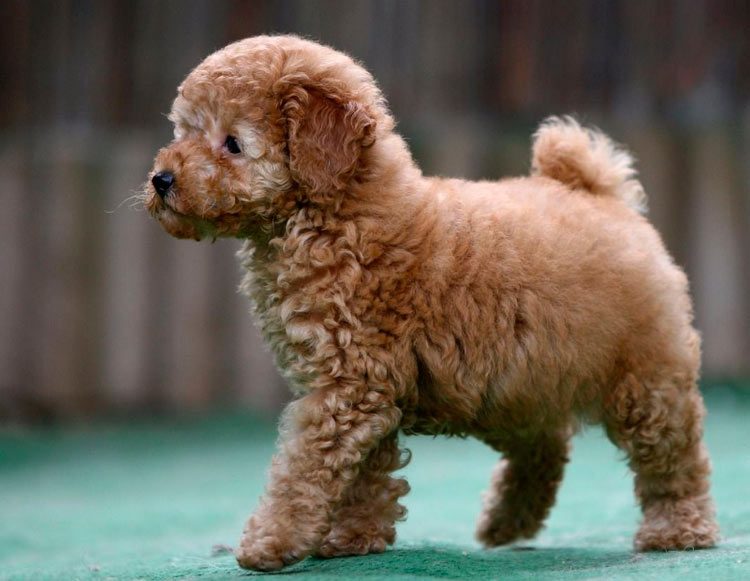
Health and life expectancy
Unfortunately, most modern poodles are not considered healthy or problem-free. The breed has a genetic predisposition to a number of health problems. Most of these are not fatal, but require attention and preventative or therapeutic measures. Of course, this doesn't mean every poodle will suffer from all of these issues; these are merely a list of potential problems that have been previously reported by breeders and owners.
- Abnormal structure of the lacrimal canals.
- Atypical eyelash growth.
- Progressive retinal atrophy.
- Pathologies of the structure of the heart and coronary vessels.
- Deafness (more common in white dogs).
- Epilepsy.
- Otitis.
- Dermatitis caused by skin sensitivity to external irritants (parasites, cold, heat, ultraviolet) or bacterial inflammation of the hair follicles.
- Allergy.
- Disorders of metabolic processes associated with the pancreas (diabetes, pancreatitis).
- Urolithiasis.
- Adrenal cortex insufficiency.
- Hydrocephalus (more common in miniature poodles).
- Subluxation of the knee.
- Hip dysplasia.
- Predisposition to dental diseases (delay in tooth replacement, early tooth loss, tartar formation).
It is important for poodle owners to pay attention to disease prevention: timely treatment for external and internal parasites, strict adherence to the vaccination schedule, and annual medical examinations.
Life expectancy is 13 years or more. There are many long-lived poodles, but in old age many of them almost completely lose their hearing, sight and teeth.
Choosing a Poodle Puppy
Those wishing to get a poodle should decide on a few things in advance.
- Is the family budget calculated for additional expenses (care products, equipment, groomer and veterinarian services, etc.)?
- What gender? Males are usually more challenging. They are more demanding in terms of training, are interested in "brides" year-round, and are ready to fight. Females are more docile and calm.
- Color is a personal choice. It's best to choose the color you like.
- Size should also be a matter of personal preference, but it's worth considering that the smaller the dog, the more objective problems (both psychological and physiological) it can pose. A large poodle requires more space and longer walks, while a fragile toy isn't the best choice for families with very young children.
When choosing a breeder or kennel, it's important to objectively evaluate the puppies' parents. It's likely that some personality traits and behavior will be passed on to the puppies. It's also worth noting the dangers of "unscheduled matings" and purchasing puppies without papers. Matings are not formalized for various reasons: dogs of questionable origin, non-standard colors, close relatives, sick dogs, or dogs born to parents with genetic defects, etc. Another possibility: the father is unknown, and it's not a given that he's a poodle.
If you're looking for a show dog, the puppy is strictly assessed for compliance with the standard. It's best to trust an expert in this matter. If you're looking for a pet, consider buying a good puppy with a pedigree but with a flaw, such as a color defect. The puppy should be absolutely healthy, playful, and well-fed.
A puppy should be taken to a new home no earlier than two months of age. Ideally, this should be done after its first vaccination. This should be noted in the veterinary passport (not to be confused with the birth certificate, a document certifying the puppy's origin, which is exchanged for a pedigree).
Price
Poodle prices start at "free" and go up to 70,000 rubles. On average, a good puppy costs 30,000 rubles.
Photos and videos
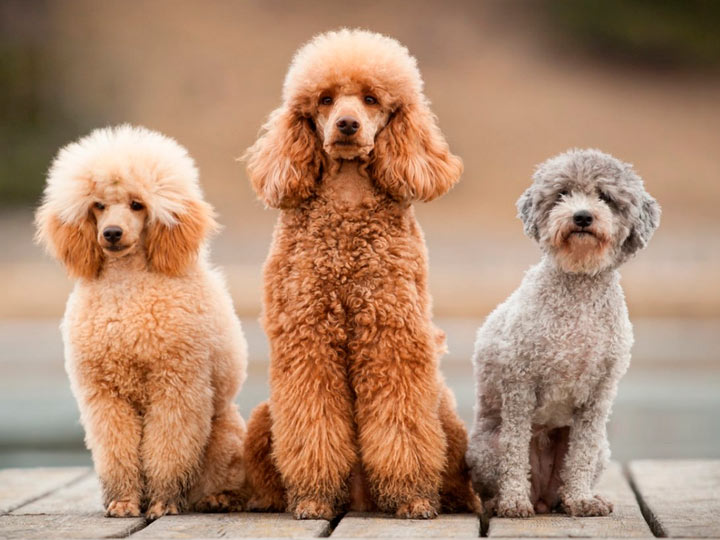
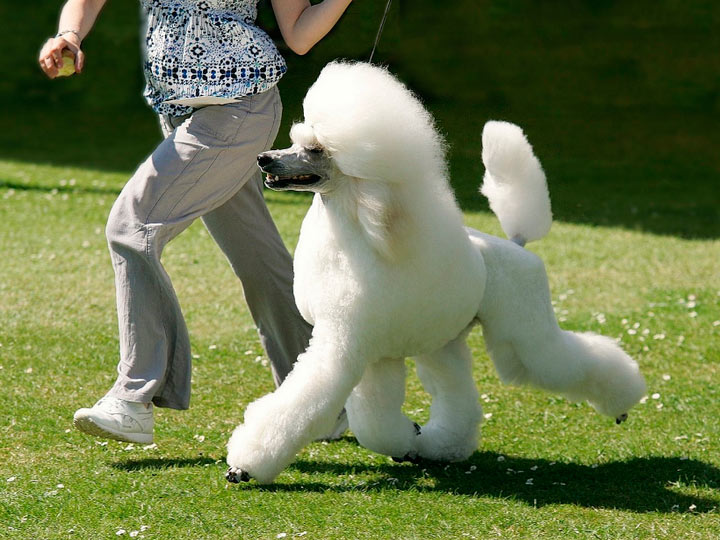
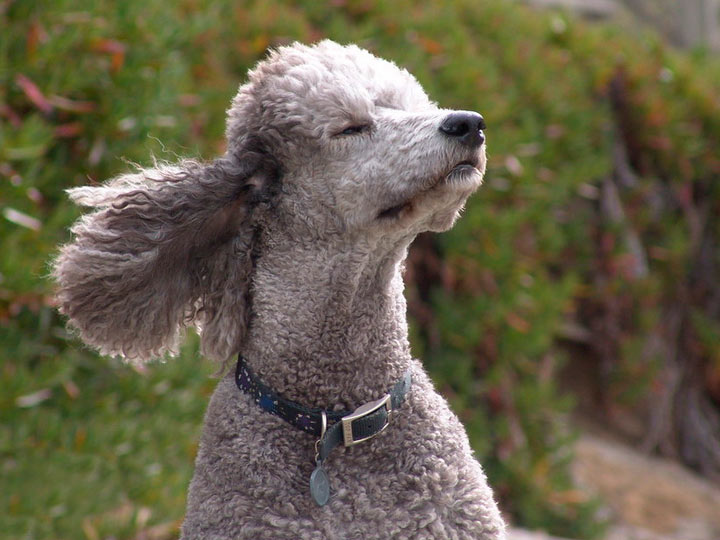
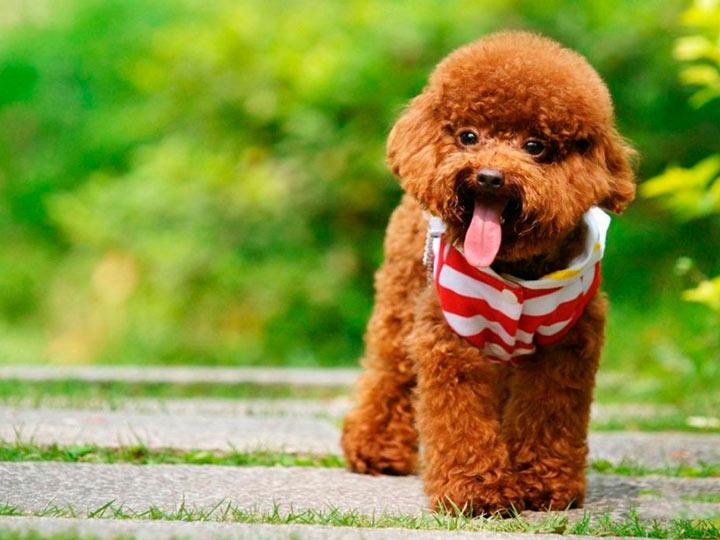
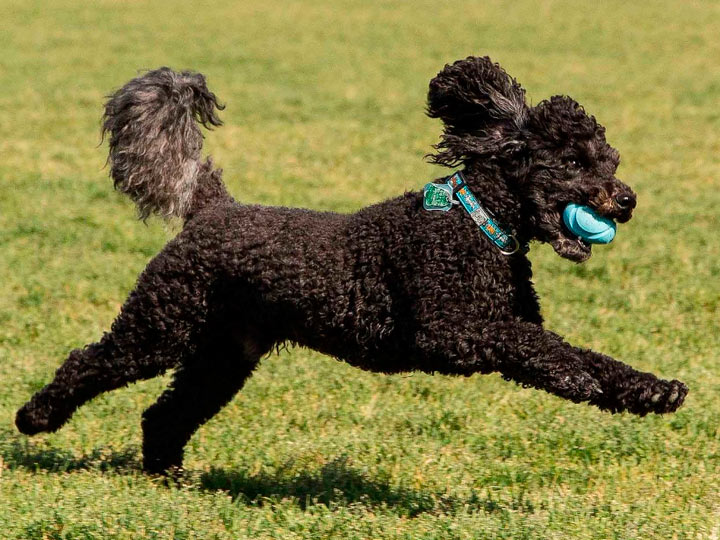
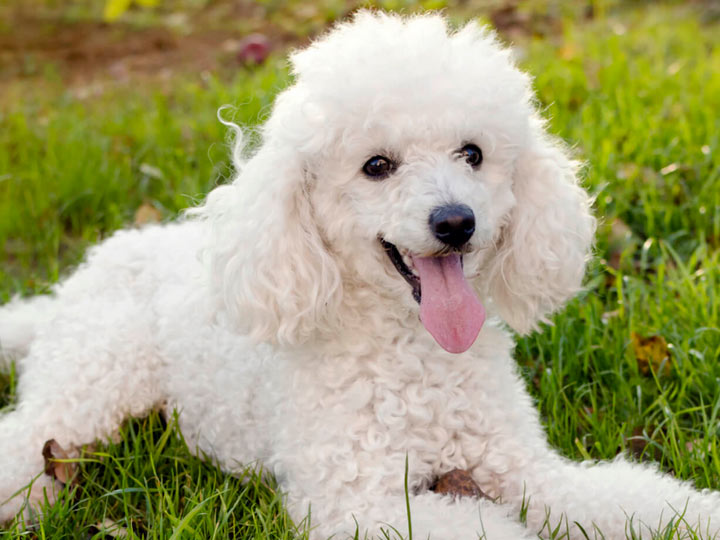
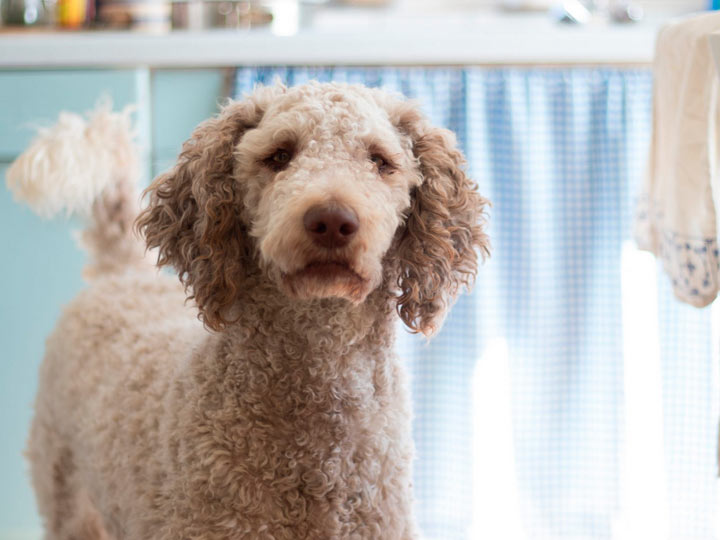
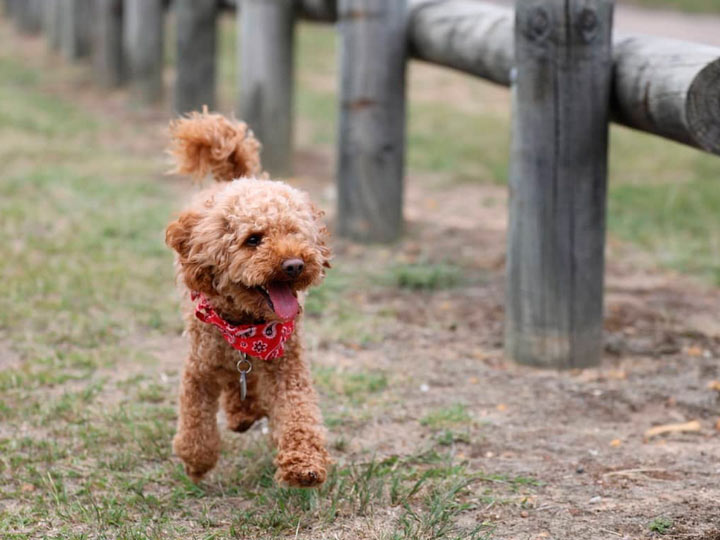
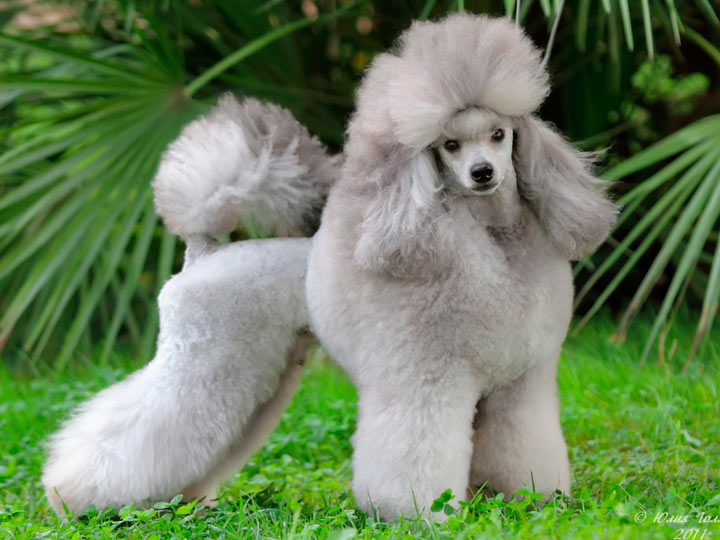
The gallery features more photos of poodles. The photos feature dogs of various sizes, genders, ages, and colors, including harlequins and phantoms. There are also photos of three competitors from the International Creative Grooming Show, corded poodles, and a dog that hasn't been groomed for a long time.
Video about the Poodle dog breed
https://youtu.be/wfBZIBHe7pU


Add a comment