
Flat-Coated Retriever (Flat-Coated Retriever, Flat)
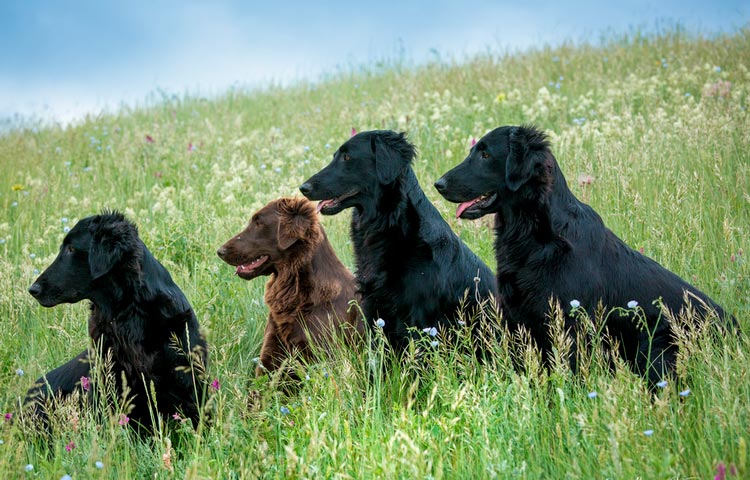
The Flat-Coated Retriever (also known as the Flat-Coated Retriever) is a breed of gundog primarily used for retrieving game from water and on land. Flat-Coated Retrievers are intelligent, friendly, playful, and sociable, forming strong bonds with their owners, making them excellent companions and family dogs for active people.
Content
History of origin
The Flat-Coated Retriever originated in Great Britain. It is also known by its English name, the Flat-Coated Retriever, but is more commonly referred to simply as the Flat. It is a direct descendant of the Wavy-Coated Retriever, which in turn descended from the St. John's Water Dog. By the mid-19th century, as a result of careful breeding, the Flat-Coated Retriever, as intended, had become a virtually universal hunting companion with excellent retrieving abilities and an elegant appearance.
According to surviving records, many breeds were involved in the development of the Flat-Coated Retriever: Irish Water Spaniel, Bloodhound, Foxhound, Scotch Collie, as well as Bulldogs and Terriers. The new breed was introduced in 1860 under the name Wavy-Coated Retriever. The most prominent examples were the dogs of breeder R. Braysford, who became the founders of the first lines.
Further selective breeding brought about some changes to the breed, including a coat that became impermeable to water and lost its curl. The breed's name was changed. In 1898, the dogs were first listed in the stud book of the Kennel Club of England under the name Flat-Coated Retriever. Over the next several decades, the breed remained among the most popular in Britain. In 1923, the Flat-Coated Retriever Association was founded. In 1935, the breed was officially recognized by the FCI.
Purpose and hunting with a flat-coated retriever (flat)
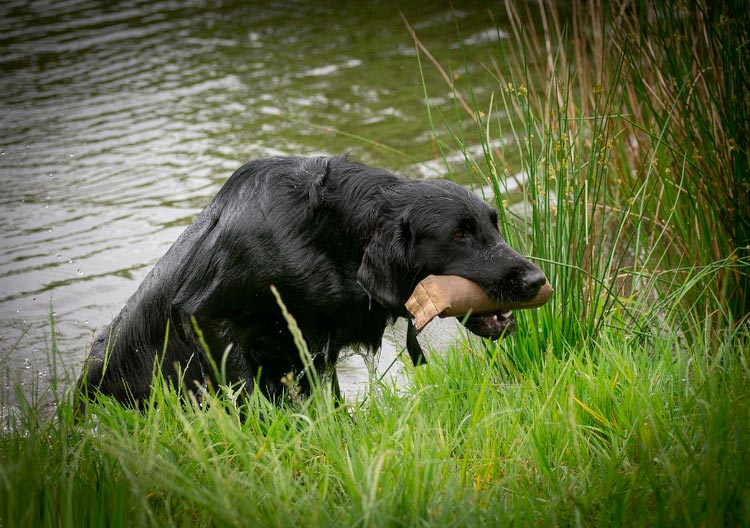
The Flat-Coated Retriever has all the qualities and abilities of a gundog. Compared to goldens If compared to a Labrador retriever, he's faster, more agile, and more resilient. As befits a retriever, he simply adores water and is a skilled swimmer and diver. Intelligent and alert, he can skillfully flush birds within shooting range. Furthermore, his keen sense of smell and resourcefulness allow him to quickly locate game on land and in water. He quickly adapts to changing circumstances and will work equally well with an owner, trainer, or guest.
The Flat-Coated Retriever is a tireless, passionate hunter, an unrivaled retriever and tracker, who is always ready to work.
It's worth noting that Flathead retrievers are more versatile than other retrievers when it comes to hunting. They are easily trained to follow a blood trail, strive to be first everywhere and always, but their most important quality is their complete absorption in their owner. A versatile breed, Flatheads can be athletes or service dogs. The most suitable obedience and agility disciplines are: agility, obedience, flyball, and dog dancing. In service dog training, he's suited to work as a search and rescue dog or guide dog.
Video about the Flat-Coated Retriever (Flat-Coated Retriever):
Appearance
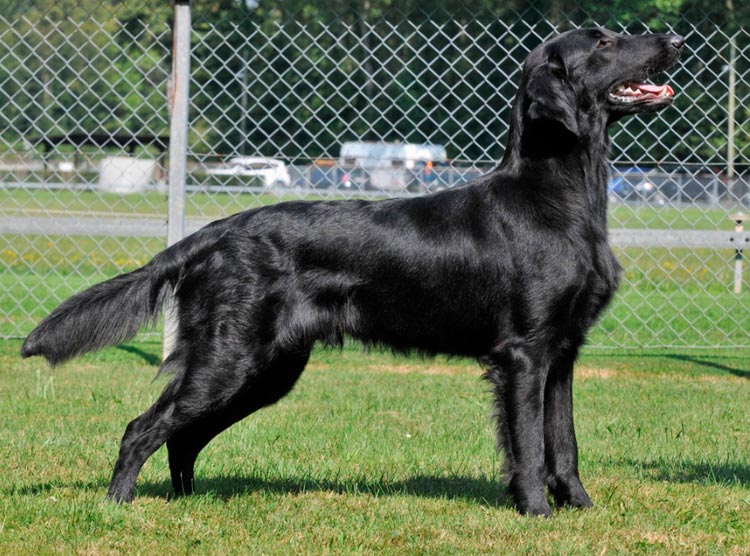
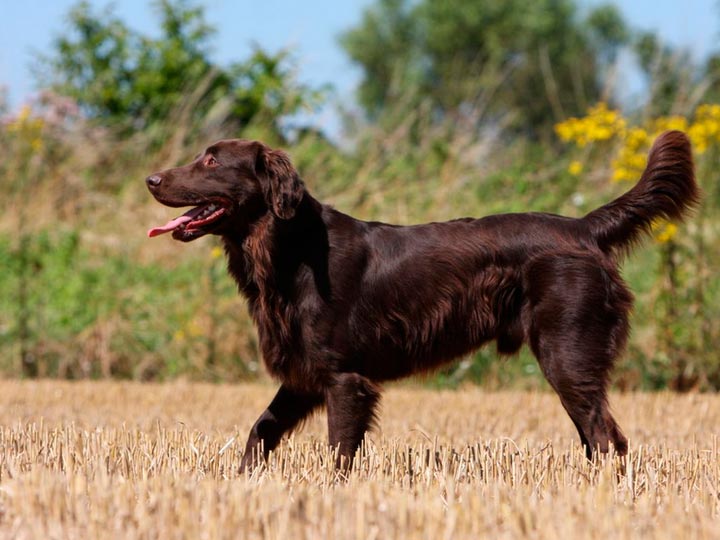
The Flat-Coated Retriever is an active, medium-sized dog whose overall appearance exudes power and agility without being heavy or overly lean. Sexual dimorphism is well-defined. The preferred height for males is 59-62 cm (23-24 in) and weighs 27-36 kg (98-136 lbs); females are 56-59 cm (22-23 in) and weigh 25-32 kg (55-60 lbs).
The head is solid and elongated. The skull is moderately broad and flat. The stop is smooth. The nose has open nostrils and is of good size. The jaws are strong, elongated, with a full scissor bite, well suited for retrieving hare or pheasant. The teeth are healthy and strong. The eyes are dark brown, medium in size, with an intelligent and friendly expression. The ears are well set, lying close to the sides of the head, and relatively small.
The neck is fairly long, without dewlap, set slanting toward the shoulders, and blends smoothly into the back at an angle that allows the dog to track. The body is proportionate. The chest is broad and deep, with a well-defined sternum. The loin is square and short. The straight tail is never carried above the level of the back and is very energetic and mobile. The limbs are straight and well boned, the paws are round, the toes are well-knit, and the pads are strong and thick. The legs are firmly positioned and parallel, allowing for smooth, free movement, straight and parallel front and rear.
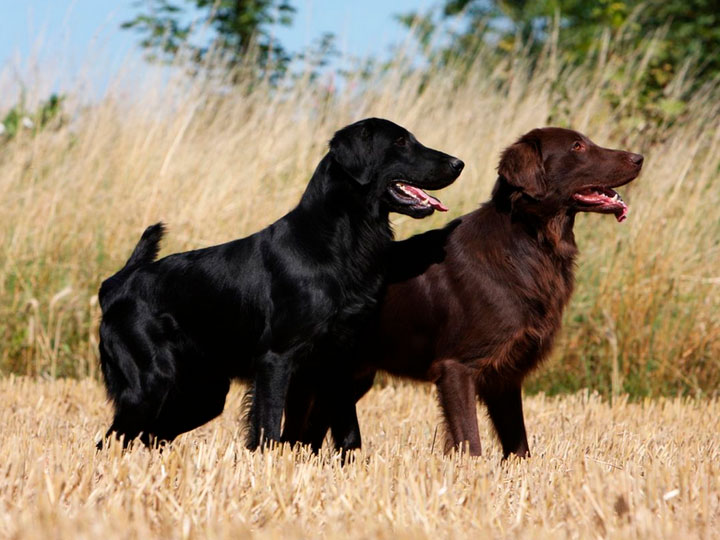
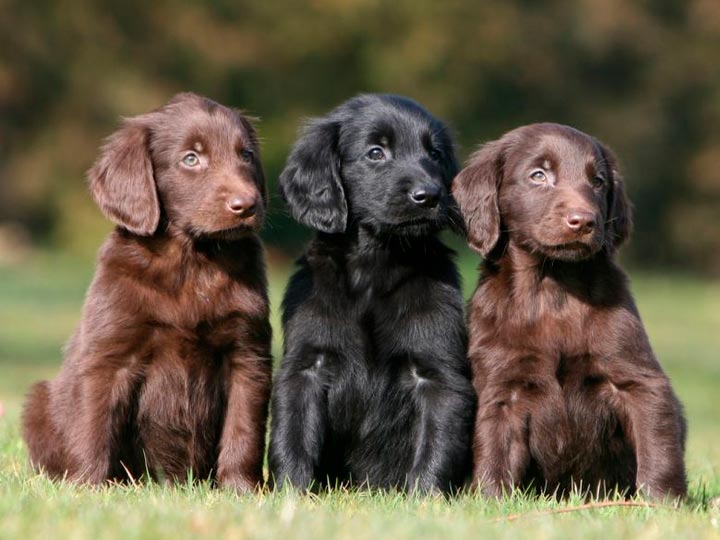
The coat is fine to medium thickness, as straight as possible, and dense. It is longer on the legs and tail. It fully develops at maturity. Two recognized colors are black and liver.
Yellow (fawn) flat-coated retriever
The breed standard clearly states that the color can only be black or brown. However, crossing with Labradors In the post-war era, efforts to increase the gene pool resulted in some breed members carrying the light-colored gene. If both parents carry this recessive gene, there is a chance that a litter will produce yellow puppies, and some of them will be black carriers. Yellow Flats are excluded from breeding and are considered a breeding defect, but in other respects they are in no way inferior to black and brown dogs. They are registered with kennel clubs with the note: "Not for breeding."
Character and behavior
The Flat-Coated Retriever has a friendly temperament. He's even-tempered and dignified, yet playful and energetic, with a strong need for social interaction and exercise. He loves everyone around him and always wants to be at the center of things. He has an optimistic outlook on life and often seems somewhat carefree, yet his love for all family members is boundless. He matures somewhat more slowly than other dogs and retains his playful energy into old age, making him an engaging companion but somewhat challenging to train. He thrives on being part of the family and is very people-oriented, responsive, and sensitive.
At home, he's quite calm and can lie next to his owner for long periods watching TV. However, once outdoors, he's ready to spend hours chasing a ball, rolling in puddles, and jumping headlong into a pond. No matter what he does, the Flat-Coated Retriever's tail wagging level is always off the charts. He's a great companion and playmate for older children. He can be overly energetic and persistent for younger children and older adults who lead a more sedentary lifestyle. Owners should have a good sense of humor to understand and tolerate the antics of this cunning and resourceful Flute, as well as plenty of free time and the desire to spend it with the dog.
Flat needs a purpose in life. He loves to work and needs regular exercise for his mind and body, such as sports or hunting.
If strangers approach the house, the Flathead will bark. However, it cannot be relied upon as a protective or guard dog. When encountered close by, it often greets intruders with a cheerful wag of its tail. It gets along well with other dogs. It will attempt to dominate, but achieves this tactfully, without bullying its fellows or engaging in violent confrontations. It usually lives peacefully with cats. It can be trained to ignore neighborhood and stray cats. It can cohabit with small animals, but has a soft spot for birds.
Education and training
The Flat-Coated Retriever is a very intelligent and quick-witted dog, with a strong nervous system and high intelligence, making it highly trainable. It responds easily to gentle training without resorting to harsh punishment or force. It is very owner-oriented and eager to please, so training difficulties are rare.
The minimum required is OKD coursePuppies can be challenging due to their boundless energy and curiosity, but patience and consistent work will certainly pay off. By the age of 2-3 years, a retriever will develop into an obedient, problem-free dog. In most cases, a treat is the best motivator for a Flatiron. Cruelty, lack of attention, and roughness cause them to withdraw and refuse to work. Early socialization is essential, especially if the dog lives in the city. Training is usually easy and effortless, thanks to the Flatiron's innate talent. Bird training begins around one year of age. From an early age, feather dolls and other equipment are provided, and games simulating hunting are encouraged.
If you demand repeated exercises, a Flat will quickly become bored. But if they're engaged and constantly given new tasks, they'll work wonders. Sometimes it takes some effort to correct undesirable behavior. Flats enjoy being distracted from the task at hand or tackling it with their own creative approach.
Content Features
The Flat-Coated Retriever adapts well to life in a house or in an apartmentKeeping a Flatiron in a cage is possible, but not recommended due to the dog's need for close contact with its owner. Left to its own devices, it can develop bad habits. Flatirons love space and freedom, and a private home outside the city is ideal for them. However, it's worth noting that some Flatirons thrive in large cities if the owner spends a lot of time with the dog in a dog park or near a body of water.
Black Flat-Coated Retrievers are susceptible to heatstroke. Cold tolerance varies from dog to dog. Some dogs can swim in ice-cold water, while others refuse to go for walks at -10°C.
The Flat-Coated Retriever is very energetic and active. Imitating hunting behavior during play and walks will help it develop fully physically and psychologically. Walks around the house aren't enough for the Flat-Coated Retriever. It needs free running, swimming, and playing with other dogs. The total daily walk time should be approximately 90 minutes.
Care
The Flat-Coated Retriever doesn't require complex grooming. Grooming consists of brushing the coat once or twice a week, weekly ear and teeth cleaning, monthly bathing, and trimming claws As needed. It's also a good idea to dry the ears thoroughly after bathing or swimming in water. When brushing, pay special attention to the fur on the legs and tail, as well as under the arms, where it's most prone to matting.
Nutrition
Flatheads eat relatively little and adapt easily to the diet offered. This can be natural food or prepared dry food. The owner chooses the optimal option, keeping in mind that the diet should be complete, appropriate for the dog's age, physical activity, and physiological condition. It is highly recommended to adhere to portion control and feeding schedule.
Owners should be aware of the risk of gastric torsion in Flat-Coated Retrievers and take all measures to prevent this pathological condition.
Health and life expectancy
Overall, the Flat-Coated Retriever is considered a healthy breed. This is largely due to careful breeding. Today, it is recommended to test dogs for known breed-specific pathologies and diseases:
- Hip and elbow dysplasia;
- Luxation of the patella;
- Ophthalmological diseases;
Flat-Coated Retrievers have a high incidence of cancer in adulthood and old age.
Owners of Flat-Coated Retrievers are recommended to have an annual ophthalmological examination and a one-time gonioscopy. At 24 months of age, X-rays are taken to check for dysplasia. Breeding animals are tested for the fawn gene. Dogs should be vaccinated against major infectious diseases annually and treated for external and internal parasites according to the schedule. Life expectancy is on average 11-12 years.
Choosing a Flat-Coated Retriever Puppy
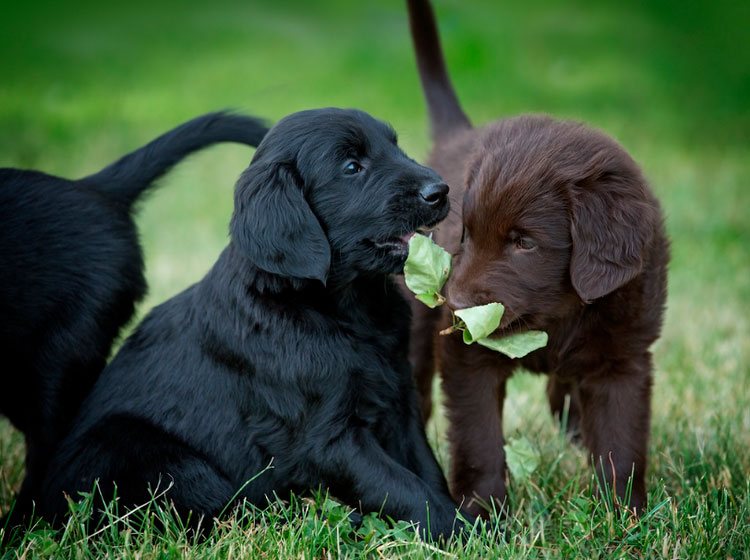
Fortunately for Flat-Coated Retriever lovers, the breed hasn't been divided into working and show dogs. This means that if you adopt a puppy from good parents, you'll likely train it to work according to testing standards and become a true hunting companion. Flat-Coated Retrievers are much less popular than Golden Retrievers and Labradors, but those looking for a good puppy will have no trouble finding a kennel. Another issue is that there may not be any available puppies. Puppies often have to be reserved before the planned mating. The National Breed Club can help you find a purebred puppy.
It's best to pick up a puppy no earlier than 8 weeks of age, after it has been treated for external and internal parasites and received age-appropriate vaccinations. When inspecting the litter, the dogs' living conditions, temperament, and health of the parents are also assessed. The puppy should largely meet the standard. At 2-3 months of age, attention is paid to ear set, bite, eye expression, nose color, and coat color. The puppy should be strong, reasonably well-fed, and healthy.
Price
Flat-Coated Retriever puppies from kennels not for breeding cost an average of 30,000 rubles. The price of a dog without papers usually does not exceed 10,000 rubles. Promising show-class puppies, which are highly likely to become show champions and breeders, typically cost from 45,000 rubles.
Photos
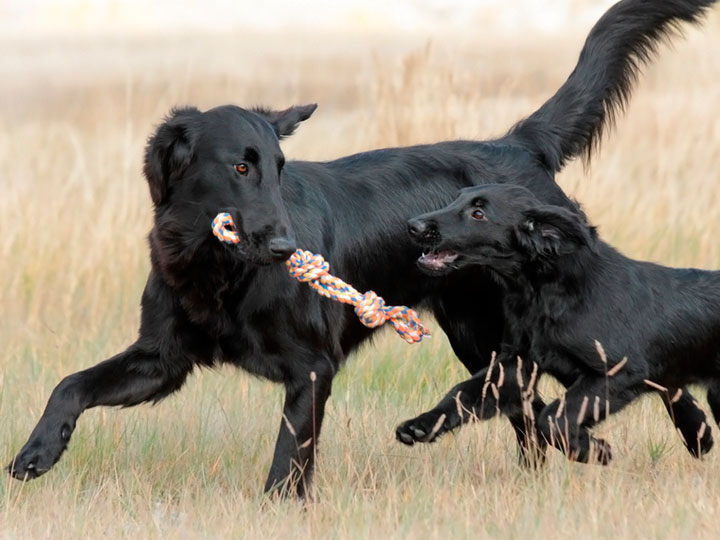
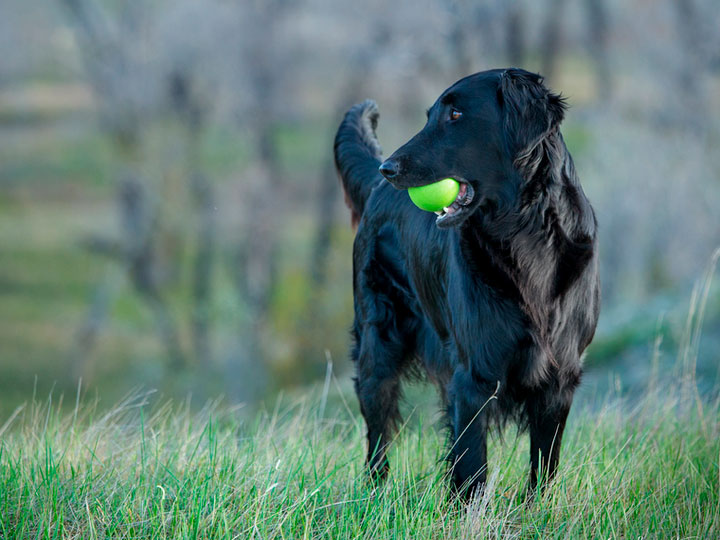
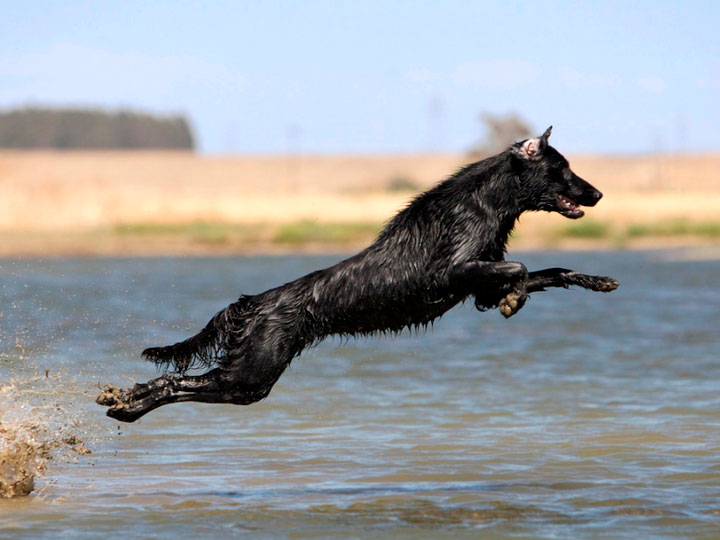
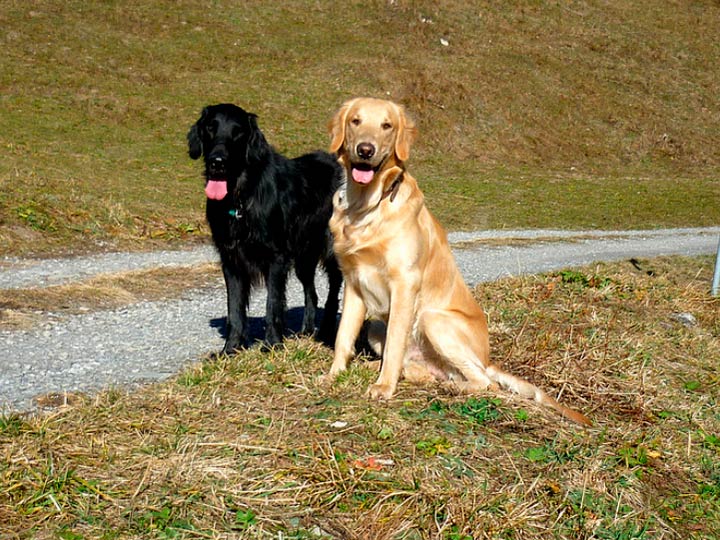
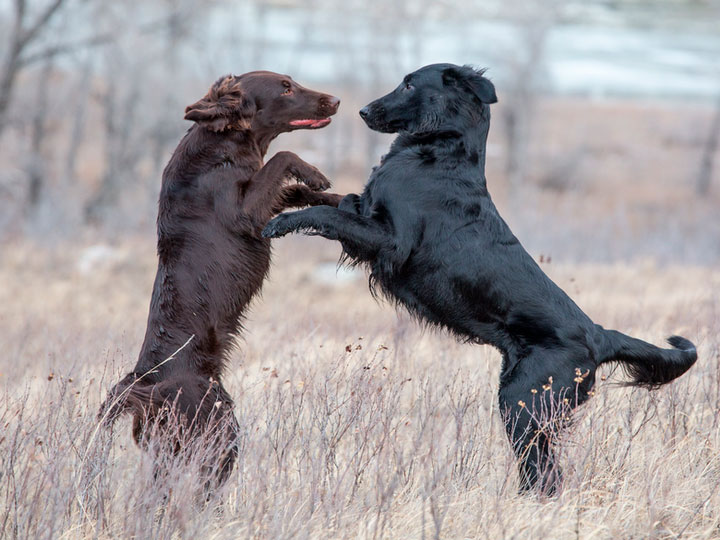
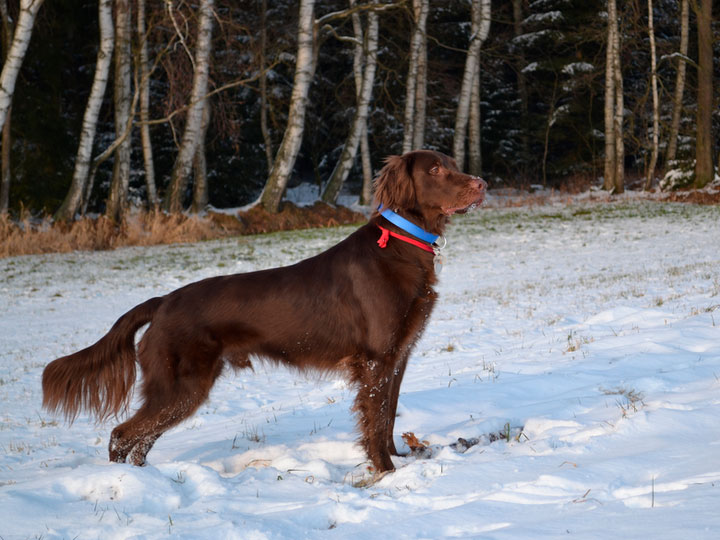
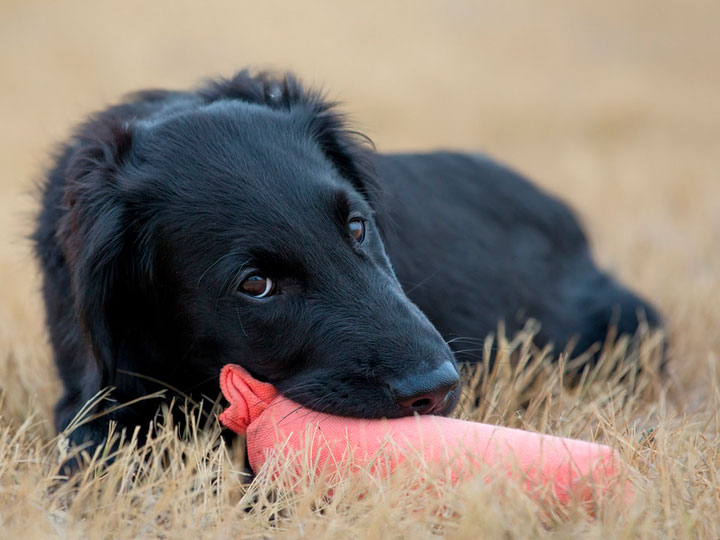
The gallery contains photos of dogs of the Flat-Coated Retriever breed (flat-coated retriever).
Read also:


Add a comment