
Anthelmintic medications for dogs: reviews, prices
Anthelmintic medications for dogs are used both to treat internal parasites and to prevent their occurrence. These medications are essential for both outdoor and apartment pets. Worms can be transmitted during walks, by eating raw meat, and through parasite eggs brought into the home on shoes or clothing.
Content
Composition and action
Veterinary pharmacies offer a wide range of anthelmintic medications. They differ not only in their dosage form but also in their composition. When producing antiparasitic medications, pharmaceutical companies most often use the following active ingredients:
- praziquantel;
- ivermectin;
- febantel;
- abamectin;
- pyrantel pamoate;
- fenbendazole;
- albendazole.
Broad-spectrum anthelmintics typically combine the action of several active ingredients. This allows them to kill various types of roundworms and tapeworms.

The concentration of active ingredients often depends on whether the medication is intended for adult dogs or puppies. When choosing a medication, pay attention to the intended use and do not exceed the recommended dose.
The principle of action of antiparasitic drugs is that the active components:
- interfere with the transmission of nerve impulses;
- increase the permeability of cell membranes;
- promote muscle contraction;
- disrupt metabolism.

The effectiveness of modern antihelminthic medications is due to their ability to target parasites at all stages of development. Therefore, a single dose is usually sufficient to eliminate worms.
Release form
Anthelmintics are available in various dosage forms:
- Tablets. Deworming tablets are most commonly used for dogs. The correct dosage is easy to calculate. Tablets can be administered forcefully, mixed with food, or hidden in your pet's favorite treat (chicken, ground meat). This convenient form is suitable for medium and large dogs, but not always suitable for puppies.
- Suspension. Can be mixed with a favorite food. For puppies, it's best to force-feed the suspension directly into their mouths using a syringe. This dosage form is more suitable for puppies and small dogs. Larger pets will require a larger dose, which may complicate administration.
- Drops. They're easy to use because they're applied to the withers, eliminating the need to force tablets or suspensions into the animal. Furthermore, they kill not only worms but also external parasites.
When choosing an antiparasitic medication, consider your pet's age and the desired treatment goals. For prevention, it's best to choose a broad-spectrum medication, while for treating a specific infestation, a more targeted medication is recommended.
The most popular drugs
The vast array of anthelmintic medications often makes choosing the right one difficult. Below are the most popular medications used to kill parasites.
Pills:
- DrontalThe bone-shaped tablets with meat flavor contain praziquantel, febantel and pyrantelEffectively used to kill nematodes and cestodes. One tablet is sufficient for 10 kg of body weight. Scores are provided for precise dosing for small breed pets.
- MilbemaxAvailable in two versions—for small and large dogs. The active ingredients are praziquantel and milbemycin oxime. It is used not only for the prevention of helminth infestations but also for the prevention of heartworm disease.
- HelmimaxThis medication from a domestic manufacturer contains a combination of praziquantel and moxidectin. The tablets are available for puppies and small breeds, as well as large dogs. They are scored for easy breaking. They are non-habit-forming.
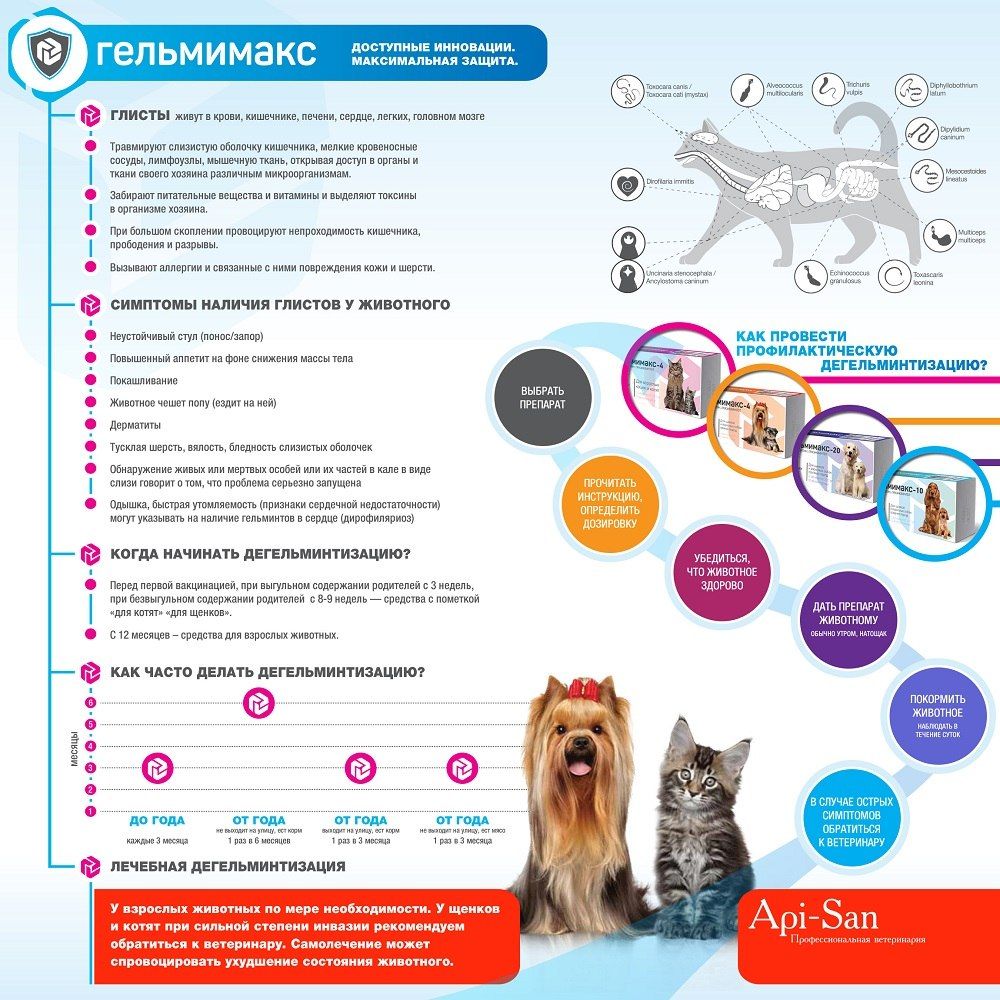
- AzinoxDeveloped using praziquantel. Used to kill tapeworms. One tablet is sufficient for 10 kg of tapeworms.
- CaniquantelContains fenbendazole and praziquantel. It is gentle on animals and rarely causes side effects when used correctly.
- CestalThe drug's broad action is due to its three active ingredients: praziquantel, fenbendazole, and pyrantel embonate. It effectively kills roundworms and tapeworms. When calculating the dosage, consider one tablet per 10 kg of body weight.
- FebtalThis fenbendazole-based medication is effective against nematodes and cestodes at all stages of development. Thanks to its pleasant taste, the tablets are swallowed by the animal, although they can be mixed with food. When used on puppies, a single dose is divided into three doses.
- DironetContains pyrantel pamoate, ivermectin, and praziquantel, and can therefore be used to treat and prevent roundworms, tapeworms, and mixed infestations.
Suspension:
- PrazicideThe suspension is available in three variations: for puppies and small breeds, for medium breeds and large breed puppies, and for large breeds. Suitable for puppies aged 3 weeks and older.
- PrazitelCan be used for deworming adult dogs and puppies from 2 weeks of age. Available in several formulations (each with a different concentration of active ingredients). The dosage is easy to measure: 1 ml per 1 kg of body weight.
- Celandine anthelmintic. It has a broad spectrum of action and can be used for both adult and small pets.
Drops:
- AdvocateDrops are typically used to kill external parasites (lice, fleas, ticks), but the active ingredients also target worms, so a single treatment can eliminate all types of parasites or prevent their recurrence. Droppers come in various sizes, making it easy to find the right dosage.
- StrongholdIt's applied to the withers and has a broad spectrum of action. It's capable of killing both internal and external parasites.
- InspectorUsed for the treatment and prevention of external and internal parasites. Like the previous medications, it is applied to the withers.
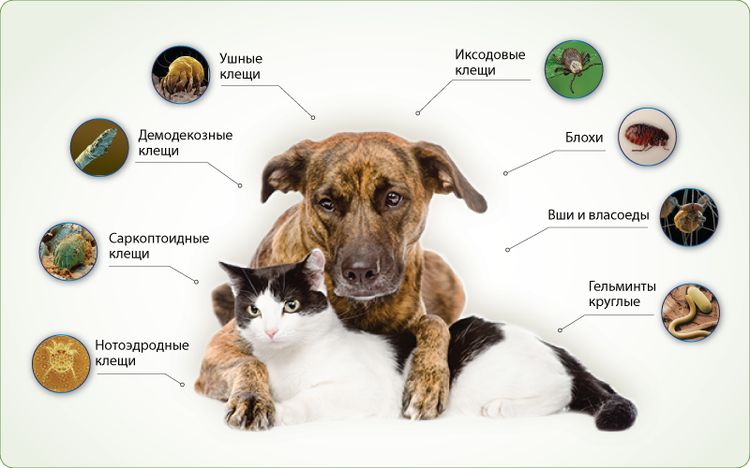
Regardless of which medication you choose, consult your veterinarian before use. They will help you calculate the correct dosage.
When to use
Antiparasitic medications are used to destroy cestodes, nematodes and mixed infestations, as well as for preventive purposes.
Anthelmintic drugs are given to dogs in the following cases:
- before vaccination (10 days);
- quarterly (required in the spring, when parasites are active);
- before mating.
For puppies, medications are started at two months of age. Sometimes, treatment can be started earlier if helminths are detected or there is a high risk of infection. In such cases, the appropriate medication should be prescribed only by a veterinarian.
Features of application
To properly administer deworming medication to a dog, you should follow a few simple guidelines:
- The medication should be administered in the morning. It is usually given on an empty stomach, and no special diet is required. Topical medications can be used at any time of day.
- If a medication is used to kill internal parasites, the animal must first be treated for fleas, ticks, and lice.
- To reduce the negative effects of the medication, the animal is given a hepatoprotector before deworming.
- After taking the anthelmintic, puppies are given an adsorbent to remove excess toxins from the body and an immunomodulator to boost their immune system.
- After taking the medication, ensure the animal has free access to water, as some medications can cause dehydration.
- If the dog spits out or vomits the medicine, the dose should be repeated, but after 10-14 days.
- If an anthelmintic is used prophylactically, it is given as a single dose. When used therapeutically, the medication is repeated after 1.5-2 weeks if parasites are detected during repeat testing.
Read the instructions carefully before use and do not exceed the dose.
Contraindications and side effects
Anthelmintic drugs are poisonous not only for parasites, but also for dogs, so they are contraindicated in the following cases:
- for weakened animals that have undergone surgery or serious illnesses;
- for pregnant women;
- for lactating bitches;
- for small puppies (up to 2 months of age).
Medicines should be used with caution in dogs with hypersensitivity to the components.
Sometimes anthelmintics cause the following side effects:
- vomit;
- nausea;
- diarrhea;
- skin allergic reactions (redness, itching, rash);
- dilation of pupils;
- unsteadiness of gait;
- apathy, etc.
If such reactions occur, give your pet an adsorbent and, if necessary, an antihistamine. Take your pet to the veterinarian.

How to choose deworming tablets for dogs
Dogs should be dewormed regularly and in accordance with specialist recommendations. According to veterinarian Alexander Gaidamaka, preventative deworming is performed comprehensively once every three months. For young animals, deworming is performed twice during their first vaccination, and for outdoor dogs, such procedures are mandatory. It's important to keep in mind that laboratory tests aren't always 100% accurate: parasites aren't always detected the first time, even if they're present, so repeat testing is sometimes necessary.
Most anthelmintic medications available in veterinary pharmacies are highly effective. They often contain similar active ingredients and differ in the degree of purity of their components. Experts recommend choosing imported products. If no changes in the animal's feces are observed within 14 days of treatment, deworming is recommended to be repeated.
It is important to understand that drugs for humans and animals, as a rule, differ not so much in the active substances, but in their concentration and level of purification.
For example, human medications typically have a higher degree of purity, while veterinary equivalents have a lower dosage of the active ingredient. Despite the similarities between mammalian organisms, each species has its own characteristics that must be taken into account during treatment.
Most deworming tablets are synthetic or semi-synthetic. Herbal remedies also exist, but veterinarians often prefer synthetic options due to their predictable effectiveness.
Particular attention should be paid to the animal's age. Deworming tablets are not recommended for puppies under four weeks of age. Also, avoid combining deworming with treatment for ectoparasites (fleas and ticks). Any antiparasitic treatment puts stress on the body, so there should be at least a five-day interval between treatments. If a puppy was found on the street, it's important to determine which treatment to administer first to avoid harming its health.
How much do they cost?
The price of anthelmintic drugs depends on the manufacturer, form, and packaging volume:
- Cestal 1 tablet – 80 rubles;
- Azinox 6 tablets – 120 rubles;
- Milbex 2 tablets – 330 rub.;
- Caniquantel 1 tablet – 140 rubles;
- Prazitel suspension 10 ml – 180 rubles;
- Febtal combo suspension 10 ml – 140 rubles;
- Praziquantel drops – from 170 to 230 rubles;
- Inspector drops – from 270 to 410 rubles.
The prices shown are approximate and may vary from pharmacist to pharmacist.
Owner reviews
Polina, the owner of a shepherd dog:
"I regularly use Febtal to deworm. My dog tolerates it well. I force-feed him, as he doesn't want to eat on his own. The medication is effective. We've had several tests done, and everything is fine."
Alexander, owner of 3 puppies:
"I used Praziquantel suspension for small puppies. There were no side effects, although I've seen negative reviews about it online. I find the dosage form convenient. It's just what you need for small animals."
Veterinarian Reviews
Antonina, a veterinarian with 9 years of experience:
"For deworming, I recommend using Cestal, Dronal, or Caniquantel for dog owners. I don't trust domestic medications because they often cause side effects. I believe it's not worth skimping on your pet's health."
Vladimir, a veterinarian with 12 years of experience:
"Milbex is a good medication. Although other foreign medications are just as effective, they're more expensive than their domestic counterparts, but animals tolerate them better. Follow your veterinarian's recommendations."
Read also:


Add a comment