
Diseases of elderly cats
What diseases do older cats begin to develop? In our article, we'll discuss the problems that owners of cats over six or seven years of age may encounter. And, of course, we'll also discuss the signs of illness and various symptoms that owners of older cats should pay attention to first, which may prompt a visit to the veterinarian. What diseases affect older cats?
Content
Cases of diseases and their symptoms
Older pets suffer from a wide range of illnesses. Here are some of them:
Diabetes mellitus
Have you noticed your cat drinking more and urinating more frequently? Has your pet started losing weight but is still eating their usual amount, or has their appetite increased? These symptoms may indicate that your cat has diabetes mellitus, or problems with the thyroid gland (hyperthyroidism).
Kidney problems in cats
When kidney problems develop in older cats, similar symptoms may be present, but they will be accompanied by poor appetite or a complete loss of appetite. These symptoms don't necessarily appear suddenly. Often, symptoms will be quite mild in the initial stages of the disease and will develop gradually over several months before you realize your pet is experiencing problems, and that it's not simply age-related and time to consult a veterinarian.
In late-stage cases (often when the animal is already severely emaciated and has not eaten for a long time), doctors are forced to prescribe supportive or palliative therapy, as there is no other option. This primarily applies to animals diagnosed with chronic renal failure, which is more effectively treated in the early stages of the disease.
I would also like to draw the attention of owners who attribute their pets' poor appetite to dental problems (tartar, gingivitis, periodontosis) that it is highly undesirable to carry out sanitation of a cat under general anesthesia without conducting a preliminary examination of the animal (biochemistry and general blood and urine tests, ultrasound of the abdominal cavity, etc.).
Without these tests, you may end up with a pet with clean teeth, but end-stage renal failure.
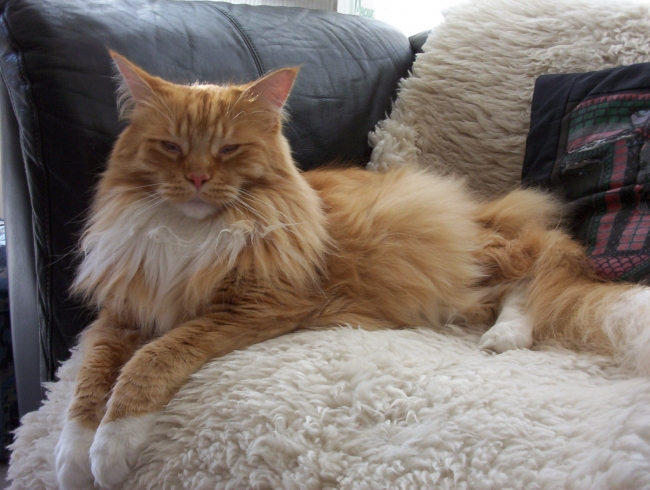
Problems of "fat people"
For older cats and kittens, suffering from obesityThere's a fairly high risk of developing lipidosis, which manifests clinically with sudden weight loss and temporary starvation. External symptoms of this disease include discolored urine, yellowing of the mucous membranes and skin, lethargy and depression, and the cat being fussy or refusing to eat altogether.
Reproductive system
For unsterilized cats at this age there is a high risk of diseases of the reproductive system - endometritis/pyometra (purulent inflammation of the uterus). Its main symptoms are:
- Lethargy;
- Oppression;
- Partial or complete cat's refusal to eat;
- Purulent or hemorrhagic discharge from the genital tract.
In the latent (large) stage of pyometra, there may be no discharge, making it difficult to make an accurate diagnosis without further examination (such as an ultrasound). Symptoms of this extremely dangerous disease in older cats also include an enlarged abdomen, high fever, and changes in blood count.
Lumps on the pet's skin
And, of course, it is very important to pay attention to the appearance of various kinds of “bumps”, “balls” and other types of seals in the area of the mammary glands and abdomen in your pets. These seals and subcutaneous formations may indicate oncological processes, such as cancer mammary gland (a disease that affects both male and female cats). A needle biopsy of such a lesion can often be uninformative, as the sample collected for examination may miss the tumor, thereby failing to provide the owner with reliable information about their pet's health.
If you notice these formations on your pet’s body (cones (and various compactions), a consultation with an oncologist is recommended. Purulent or hemorrhagic discharge on the mucous membranes, especially on one side, can also be considered a possible oncological process.
The older the animal, the higher the risk of reactivation of chronic viral infections associated with feline leukemia and human immunodeficiency viruses. These risks arise because cats at this age have a weakened immune response, so it's advisable to detect viruses at a young age.
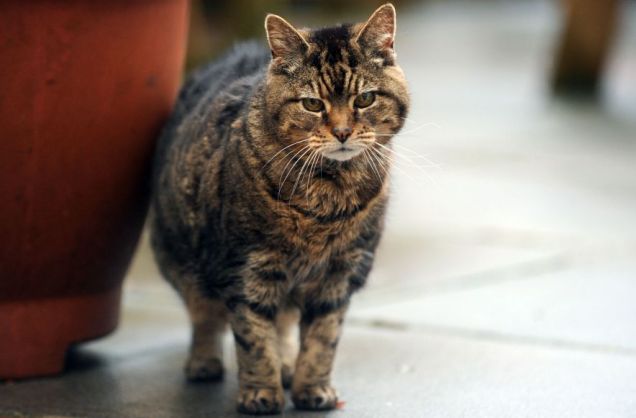
Tips for Owners of Senior Cats
It's all quite simple, just like with humans. Any disease is easier to prevent in its early stages than to treat, even illnesses in older cats. That's why veterinarians recommend that owners have their pets examined regularly.
Even if there are no complaints, it is recommended to regularly visit a veterinarian, take blood and urine tests, and conduct ultrasound examinations. Perhaps this will help you and your pet avoid the problems described above.
Any questions? You can ask our website's staff veterinarian in the comments below, who will answer them as quickly as possible.
Read also:
- Polycystic kidney disease in cats
- Chronic renal failure in cats: symptoms and treatment
- Mastopathy in cats: symptoms and treatment


8 comments
Olga
Hello! Our Persian cat is 17 years old and neutered. He was inherited, and for the past eight months, we've been having sleepless nights: he practically sleeps during the day, and at night he wanders around and meows loudly. He wakes up and goes to the bathroom, meowing, and then goes to eat (he eats little and often), meowing. A few days ago, he started having a poor appetite, lost weight, has terrible breath, and is drooling. I switched him to baby meat food; he eats half a jar at a time. He drinks a lot and loves milk (baked).
Daria is a veterinarian
Hello! Your pet needs to be examined by a veterinarian, specifically for a blood test and an ultrasound to assess the condition of its kidneys. At this age, there's a high risk of kidney problems. This explains the sudden loss of weight and the odor. Drooling is most likely a sign of nausea (they may also lick their skin frequently). It's possible that their coat has also deteriorated significantly. Based on the results of the kidney examination, a decision will be made: treatment, a change in diet, or the more humane option of euthanasia, as the animal is suffering from intoxication (the kidneys can't cleanse the blood properly).
Lana
My cat is 18 years old, pacing, not drinking, and barely eating. What do these symptoms indicate?
Daria is a veterinarian
Hello! It looks more like a central nervous system lesion (in this case, the brain). Whether it's toxins, an infection, the aftermath of an injury, or a problem specifically related to age (poor blood supply, poor impulse transmission, etc.) needs to be determined during an in-person consultation. There's no information about the animal (its housing, feeding, care, how long it's been there, temperature, medical history, and illnesses). Even tentative diagnoses are difficult to come by (there should be 3-5, not 15 or more, as in this case).
Lyudmila
Hello! My cat is about 13 years old (I've had her for 12 years). She is spayed. She is overweight - 6 kg. In the last year, she has started drinking more often, but generally not that much (200-250), urinating more often too (up to 5 times), the volume of litter lumps is normal (only more in the morning). Her appetite is normal (not increased), she is active, sociable, could run and play. She feeds Royal Canin Senior Consult, Stage 2. But in the last two weeks she has changed. At first, she began to eat less. She drinks well. She also urinates. She does not fuss when urinating. She has become inactive, reluctant to communicate. On January 17th, she stopped eating completely, lies near the radiator, does not communicate, is lethargic. She drinks and urinates enough. She has not had a bowel movement since the 17th.
During this period, she "coughed" three times, whistling, arching her neck and leaning forward. She didn't vomit during the entire day, although she used to vomit quite often (sometimes bile, sometimes gastric juice mixed with food). After deworming, the regurgitation became less frequent.
She's sniffling (she always has been), I measured her breathing - 80, her temperature is 39 (I think that's normal for cats), and she's hot to the touch (maybe I didn't measure it correctly). Her posture is normal, but she seems to be listening for something. She doesn't let me touch her stomach and sides. I listened to her (I'm a doctor), and she heard wheezing in the front of her chest (possibly coming from her nose). She's lost 200 grams in a week.
I called the doctor to the house. She examined the cat (without auscultation, of course). She took some tests. She gave her analgin, diphenhydramine, dexamethasone, and cefazolin. She prescribed antibiotics for 3-4 days, desamethasone for 3 days, and Gamavit for 3-4 days. Presumptive diagnosis: chronic renal failure?
I gave the cat: Sinulox 100 mg twice a day for 5 days (I finished today), desamethasone 0.3 ml for 3 days, and Gamavit 1-2 ml for 4 days. We switched her to Monge Crain vetsolution renal food.
The cat became more lively, began to eat better, but a little and reluctantly. She had a stool twice, softer and black. Today she only sleeps again, does not communicate, does not eat, does not drink. Her posture is calm. She allows herself to be stroked, even her belly. There is no stool. She urinates enough. There is no temperature. Breathing is 28-30. The tests, considering that the cat has not eaten at all for 2 days, are without significant deviations (from my point of view): urea-10.3; creatinine-146.7; glucose-2.8; cholesterol-1.66; amylase-2135; AST-66.5; ALT-31.4; alkaline phosphatase-29.7; calcium-2.35; phosphorus-1.19; protein-52.4; albumin-16.5; globulin-36.4; bilirubin-1.9.
P.S. I have several soft, mobile, painless growths along my spine, sometimes larger, sometimes smaller. Doctors aren't giving any information. I'll keep an eye on them.
Today I palpated my cat's belly; there were small balls rolling around under the skin. The cat didn't react and was lying relaxed.
Dear Doctor! What should I do next? I have doubts about chronic kidney disease. I might be wrong. Should I deworm her? Isn't it dangerous for her, given her condition and age? What additional tests should I run, if necessary, of course.
Sorry for such a long message! She means a lot to me! Thanks in advance for your reply!
Dasha is a veterinarian
Hello! Let's start with biochemistry. A significantly elevated AST level may indicate the following pathologies: liver cell damage (hepatitis or hepatosis, even toxic damage due to medications, and in the worst case, liver metastases), heart failure (I think heavy physical exertion and burns are excluded). Assessing the ALT/AST ratio, one can assume liver pathology (since it is less than 1).
Decreased albumin levels indicate both chronic liver failure (hepatitis, cirrhosis) and kidney failure (nephrotic syndrome). Decreased albumin levels may also indicate tumors and acute or chronic inflammation.
Glucose is also reduced, but this could be due to hunger, or again due to a developing tumor, or in case of severe poisoning with liver damage (both heavy metals and medications), or damage to the pancreas.
Slightly elevated cholesterol. This also occurs with liver disease, hypothyroidism (underactive thyroid), coronary heart disease (atherosclerosis), and hyperadrenocorticism.
But the amylase is really alarming. It's significantly higher than normal (almost twice as high)! The pancreas needs to be examined. This enzyme can be elevated with inflammation of the salivary glands, peritonitis, gastric or intestinal torsion, and diabetes (but the glucose is below normal, so we're ruling that out), so pancreatitis is more likely.
However, the urea/creatinine ratio is 0.07, which indicates kidney failure (since lower than 0.08, kidney problems can be suspected)
The biochemical analysis clearly indicates liver and pancreatic problems (especially since there's a history of vomiting and bile, often after meals), as well as kidney problems. If possible, retake both the biochemical analysis and a complete blood count. It would be helpful to monitor the progression of these problems to assess how quickly the failure is progressing.
Valentina.Manakova
Our cat (18 years and 7 months) developed a tumor on her nipple two years ago. The doctors refused to operate on her because of her age, as she might not tolerate anesthesia. The tumor is growing, constantly leaking, and we can now feel growths on her chest and under her front paws. I've always treated the wound and trimmed the surrounding fur to prevent the tumor from closing. Now she's unwilling to tolerate these procedures, isn't eating well, and has become irritable. Can you suggest any way to alleviate her condition?
Elena
My father's cat had a terrible outcome. She couldn't take it anymore and simply chewed it out of her belly. No one was home... blood, guts, and a corpse.
I understand that this is a beloved creature. I have an old lady just like her. But in your case, I would put an end to the animal's suffering out of pity.
Add a comment