
Signs of rabies after a dog bite in a person
Rabies is a dangerous infectious disease that affects the central nervous system and almost always results in death in animals or humans. Transmission is most often through the saliva of an infected domestic or stray dog. If you suspect contact with an infected animal, seek medical attention immediately, as treatment is virtually ineffective once the first symptoms appear. Let's look at the main signs of rabies following a dog bite in humans.
Content
General information
Rabies is an acute viral disease transmitted through the bites of infected animals. The virus attacks the central nervous system, causing severe inflammation of the brain (encephalitis), which almost always results in death for the animal or person.
Although rabies was second only to plague, smallpox, and cholera in terms of death toll, for centuries people dreaded the disease because of its inevitable death.
Until the 19th century, Europe regularly experienced massive outbreaks of rabies in foxes, dogs, and wolves. For example, in 1851 in France, an infected wolf bit 46 people and 82 cattle in a single day.
At that time, the pathogen was unknown and diagnostics were nonexistent, so prevention was limited to mass extermination of animals. In mid-18th-century Britain, the price for killing a stray dog was two shillings—a significant sum at the time. In the early 19th century, entire packs of purebred hounds were exterminated to reduce the risk of spreading the disease.
How can you become infected?
Dogs and other domestic animals (cats, rodents, livestock) become infected with rabies after being bitten by an infected wild animal. Hunting and guard dogs, which may wander the home and be left unattended, are particularly at risk. Therefore, it is crucial to prevent any interactions between pets and stray animals. Preventive vaccinations for pets are also essential. Depending on the manufacturer, the vaccine provides protection against the disease for 1-3 years. If your pet lives in an area with a high incidence of rabies, a booster shot is required every year.
Humans become infected with rabies when an infected dog's saliva enters the body through a wound or mucous membrane. This most often occurs after a bite. The virus can enter the body when saliva comes into contact with broken skin (scratches, abrasions, burns, etc.), the face, or hands. Therefore, after contact with an animal, it is necessary to treat the skin with antibacterial soap or antiseptic.
The rabies virus penetrates the peripheral and central nervous systems through neural pathways, where it causes degenerative, dystrophic, and necrotic processes. Cells in the spinal cord and brain cease to function and gradually die, leading to significant disruption of brain function and eventual death.

Symptoms of rabies after a dog bite
Signs of rabies in humans may appear 10 or more days after a dog bite. The average incubation period is one to three months. In rare cases, the virus can develop asymptomatically in the body for one or more years. The appearance of rabies symptoms in humans indicates that the disease has significantly progressed and serious pathological processes are already occurring in the central nervous system.
Important to know! Treatment for rabies in humans is most effective before symptoms appear. Otherwise, the disease is virtually impossible to cure and is fatal. Therefore, it is vital to seek medical attention immediately after being bitten by a suspected infected animal.
The disease has three stages of development, each of which is characterized by certain symptoms:
- The first stage is the prodromal (early) period. It lasts 1-3 days. The wound itself is the first to become bothersome, even if it has long since healed. Pain, burning, and itching occur. Redness and swelling may develop. A rise in body temperature to subfebrile levels (37.1-37.5°C), depression, anxiety, poor appetite, and insomnia are observed.
- The second stage is the acute stage. It lasts 1-4 days. Aggression, excessive agitation, and increased sensitivity to any stimuli (bright light, loud sounds, unpleasant odors, and touch) develop. Frequent muscle spasms are observed. Hydrophobia develops, where the person experiences a spasm of the larynx when attempting to drink a small amount of water. The spasm can interfere with breathing, and later even develops when looking at water. Aerophobia, auditory, visual, and olfactory hallucinations appear. Salivation increases significantly.
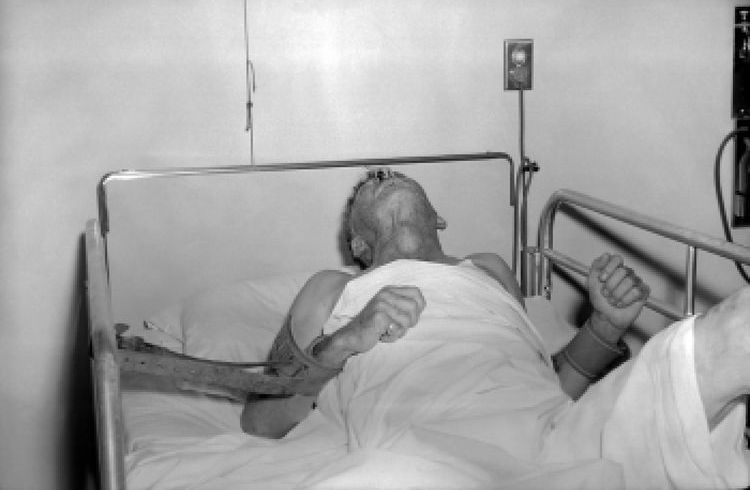
- The third stage is the period of paralysis. It lasts 1-2 days. The patient becomes visually calmer. Paralysis of the limbs, eye muscles, and facial muscles (drooping jaw) develops. Death occurs as a result of paralysis of the heart muscle or respiratory organs.
On average, after the first symptoms appear, the illness lasts 5-10 days. The duration and rate of progression depend on the location of the bite, the extent of the wound, and the person's overall health. Bites to the head and face, as well as to the hands, where a large concentration of nerve fibers is found, are considered the most dangerous.
Rabies in dogs: symptoms
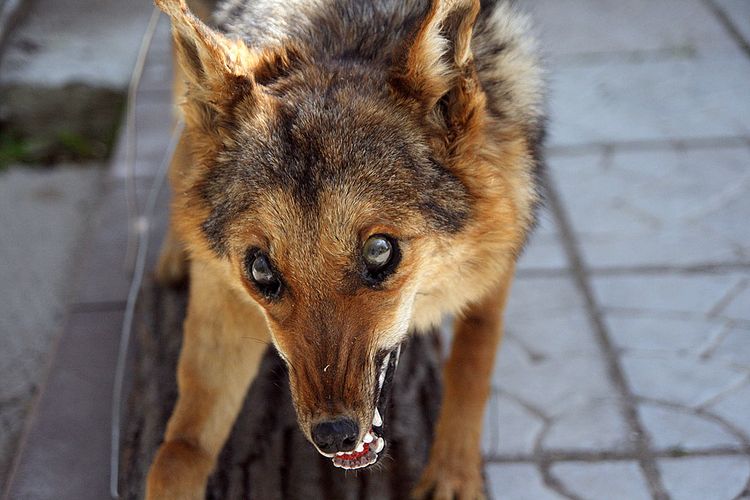
To suspect rabies in a dog, it's important to pay attention to its behavior. Certain symptoms may indicate a danger to humans, meaning contact with the animal should be avoided. If the animal is a stray, it will be boisterous, aggressive, and avoidant of people. It will salivate profusely and have a hoarse bark.
A domestic dog becomes infected with rabies after contact with another animal. In this case, the owner may notice bites or abrasions on the pet. Over time, behavioral changes are observed, including aggression and loss of appetite. One of the key signs of the disease is a refusal to drink water. The dog experiences laryngeal spasm, unable to swallow, and salivates excessively. If signs of the disease appear, consult a veterinarian immediately.

Prevalence of rabies
Rabies poses a global threat to human and animal health. Natural foci of the virus are found almost everywhere in the world, with the exception of Oceania and Antarctica. The infection appeared in Australia relatively recently, with the first cases recorded in 1996.
Bats are long-term carriers of the virus. They themselves do not become ill, but serve as a reservoir for the spread of the infection in nature. The primary vectors are warm-blooded animals; humans are only an incidental link in the transmission chain and do not influence the circulation of the virus in natural conditions.
There are two types of rabies: urban rabies, which affects domestic and farm animals, and sylvatic rabies, which occurs in wild animals. In Russia, the sylvatic variety predominates. The highest number of cases among wild animals is recorded in the Siberian, Ural, Central, Southern, and Volga Federal Districts, where 77% of all infections are registered. Among humans, over 85% of cases are reported in the Central, Southern, North Caucasus, and Volga Federal Districts.
Rabies kills up to 70,000 people worldwide each year—approximately two every 15 minutes and about 200 per day. Approximately 95% of deaths occur in countries in Asia, Africa, and Latin America. Experts believe that a significant portion of cases remain undetected due to poor surveillance and limited diagnostic testing.
What to do if a person is bitten by a dog
Not every dog that bites a person is a carrier of the rabies virus. If a person is bitten by a domestic dog that is regularly vaccinated and has not previously come into contact with stray animals, there is no need to worry, but you should still seek medical attention. If a person bitten by a stray dog, especially with rabies symptoms, you should go to the emergency room immediately. A doctor will examine the wounds and prescribe appropriate treatment. The standard treatment and prevention for rabies in humans after a dog bite is vaccination.
The drug is administered six times according to a schedule: day 0 (the day of the first doctor's visit), then days 3, 7, 14, 30, and 90. Therapy will be most effective if treatment begins on the first day after the injury, but no later than day 14. Adults are injected into the deltoid muscle, and children are injected into the thigh. If the biting animal's behavior can be observed and no signs of illness are seen within 10 days, further vaccinations are discontinued. After the vaccination course, a person develops immunity that lasts for one year. If there is repeated contact with an infected animal after this period, the course is repeated.

If there are multiple deep bites, immunoglobulin may be used before vaccination. This is a preparation containing ready-made antibodies that is injected directly into the affected area. Immunoglobulin blocks viral penetration, but has more severe side effects than vaccination. Therefore, its use is determined by the treating physician on an individual basis.
Read also:
- Quarantine after rabies vaccination for dogs
- Rabies in dogs: symptoms and treatment
- What to do if a dog is bitten by a viper


Add a comment