
Previcox for dogs
Previcox is a medication with anti-inflammatory, analgesic, and antipyretic properties. It is typically prescribed by a doctor for inflammatory conditions, postoperatively, and for joint and other conditions. Before using Previcox in dogs, carefully read the instructions. The medication is considered safe, but it does have contraindications and may cause side effects.
Content
Composition and action
Previcox is a nonsteroidal anti-inflammatory drug with gentle effects on the digestive system. Its main active ingredient is firocoxib. Tablets are available in 57 or 227 mg concentrations. The lower concentration is used for small dogs. Tablets containing 227 mg of firocoxib are given to pets weighing over 22 kg.
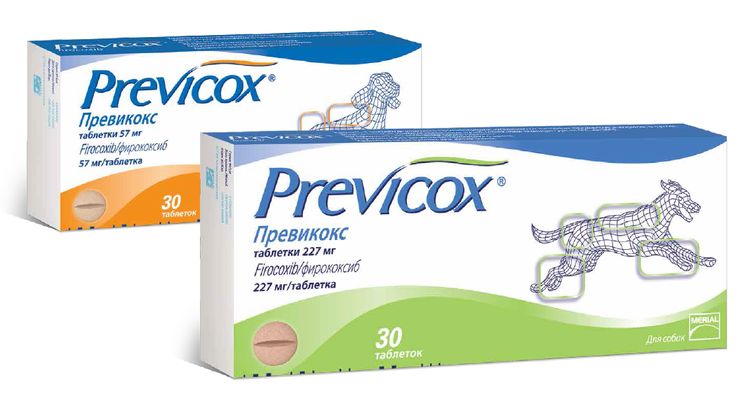
The auxiliary components of Previcox are:
- Lactose monohydrate.
- Colloidal silicon dioxide.
- Red and yellow iron oxide.
- Cellulose.
- Meat flavoring.
Previcox for dogs comes in small, brown tablets. They are slightly convex and have a dividing line down the middle, making them easy to cut in half. The medication has a distinctive meaty flavor, so dogs are usually eager to consume it. It can be mixed with food if needed.
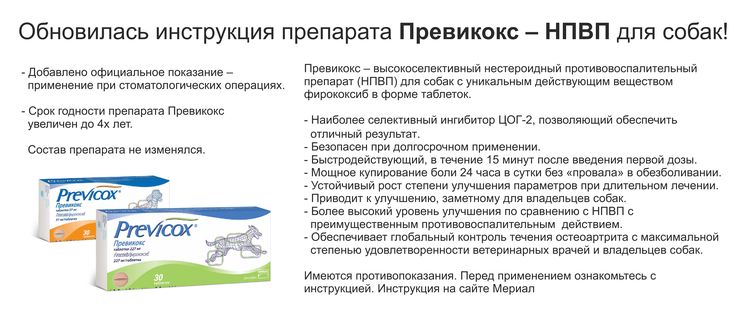
The main component, firocoxib, inhibits the production of prostaglandins, which are involved in inflammatory processes. This results in complete suppression of inflammation over time. The medication also reduces elevated body temperature and has an analgesic effect.
This medication is classified as moderately toxic, but poses no danger to dogs if used according to the instructions. It begins to work within 15-20 minutes, reaching maximum concentration in the body within 1-1.5 minutes. It accumulates in the liver and is excreted in the bile within 8 hours. The medication's effect lasts for 24 hours.
Indications for the use of Previcox for dogs
The drug is used in the following cases:
- For pathologies of muscle tissue and the musculoskeletal system, which are accompanied by fever, pain and inflammation.
- For joint diseases – osteoarthritis, osteoarthrosis, osteochondrosis, hip dysplasia and other ailments.
- For tumors.
- During surgical intervention.
- When performing dental procedures.
- For joint injuries, bone fractures, soft tissue damage.
Although the medication is quite gentle on the gastrointestinal tract and the entire body, it should only be used on pets under medical supervision. Unsupervised use and failure to follow instructions may lead to exacerbation of chronic diseases and deterioration of the dog's health.

Instructions for use
Previcox for dogs has more affordable alternatives, but following the instructions ensures safety and high effectiveness. The dosage depends directly on the pet's weight:
- Dogs weighing 3-5.5 kg should be given half a 57 mg tablet.
- Pets weighing from 5.6 to 10 kg should take 1 tablet of the same concentration.
- Animals weighing between 10 and 15 kg should be given 1.5 tablets with a firocoxib concentration of 57 mg.
- For dogs weighing from 15 to 22 kg, 0.5 tablets of 227 mg are sufficient.
- The dosage for animals weighing from 22 to 45 kg is 1 tablet of 227 mg.
- For pets weighing from 45 to 68 kg, 1.5 tablets of the same concentration of the active substance are sufficient.
- Larger dogs (68-90 kg) should take 2 tablets of the higher strength.
The medication should be administered once daily. The duration of treatment is determined by a doctor and typically ranges from several days to a week. Long-term use requires veterinary supervision, as the medication can cause kidney and liver problems. For surgery, a single dose, depending on the patient's weight, is administered before surgery, followed by a further dose once daily for three days.
Previcox should be taken within 24 hours. If a dose is missed for any reason, it should be resumed as soon as possible and treatment should be continued as prescribed, i.e., once daily.
Unlike similar medications, Previcox has a meaty flavor, so animals consume it without problems. If animals refuse to consume it, the tablets can be added whole or crushed to their food.
Contraindications and side effects
Despite its effectiveness and high safety, Previcox has its contraindications. The drug should not be taken in the following cases:
- during pregnancy and lactation;
- puppies up to 10 weeks;
- weighing less than 3 kg;
- in blood diseases (for example, poor clotting);
- in hemorrhagic syndrome;
- if you have a tendency to gastrointestinal bleeding;
- in case of renal failure;
- in case of liver failure and other severe pathologies of this organ;
- in case of individual intolerance to the components of the drug.
Previcox should not be taken with corticosteroids, antibiotics, or other nonsteroidal drugs.
Even if you strictly follow the instructions for Previcox for dogs, side effects may occur, as confirmed by reports on dog breeder forums. Although rare, the following may occur:
- vomit;
- indigestion;
- increased salivation;
- depressed state;
- apathy;
- refusal to eat.
If side effects occur, discontinue the medication. These side effects usually resolve on their own within a few days. If this doesn't happen, consult a veterinarian. If blood is detected in the stool, a visit to the vet should be urgent, as should any noticeable weight loss.

Storage and precautions
To preserve the drug's pharmacological properties, store it away from sunlight in a dry, dark place. Tablets must be in the manufacturer's packaging. Storage temperatures should be between 0 and 30°C. Previcox should not be stored near food, feed, or household chemicals. Keep the medication out of the reach of children and animals.
When working with the medicine, the following precautions should be taken:
- While taking the drug, animals should not drink or eat food.
- Smokers should refrain from smoking.
- After handling the medicine, wash your hands thoroughly with running water, always using soap.
- Individuals with hypersensitivity should avoid direct contact with the medication. Rubber gloves should be worn.
- If you experience any allergic reactions or feel unwell, you should immediately go to the hospital, taking the packaging of the tablets with you.
Following simple precautions is key to your safety, so don't neglect them.
Price
This anti-inflammatory and pain-relieving medication isn't exactly cheap compared to similar products, but dog owners' reviews confirm it's worth the money, as it rarely causes side effects while effectively relieving pain, reducing inflammation, and lowering fever. If you're planning to purchase Previcox for dogs, the price depends on the concentration, number of tablets per pack, and region:
- A pack of 57 mg tablets containing 10 pieces costs 700-800 rubles, a pack of 30 pieces costs 2300-2500 rubles.
- A blister pack of 10 tablets of 227 mg costs about 1,500 rubles, a blister pack of 30 tablets costs 3,500-3,800 rubles.
Previcox Reviews for Dogs
It's not difficult to find reviews on dog-related forums and websites. Most people note the positive aspects of the medication, although there are also those who are dissatisfied with its use.
Oksana, Kemerovo:
"My six-month-old Asian Shepherd's immune system weakened while teething. This resulted in not only gastrointestinal issues but also joint inflammation, particularly in one front paw. A severe swelling developed, and the dog refused to move, whining and lying down all day. The vet prescribed Previcox and a vitamin supplement. The dog took the pill without any problems, and within four hours, she was walking. The swelling subsided slightly, and the next day, it had shrunk by 50%. She started playing, eating on her own, and going to the bathroom. Although the medication is quite expensive, I'm glad we were prescribed Previcox. It really helps. I recommend it to others!"
Anastasia, Moscow:
"I have negative associations with the drug. After my dog was diagnosed with a herniated disc, the veterinarian prescribed Previcox. He said to take one tablet at a time. After the first dose, the animal began vomiting severely and had diarrhea. The gastrointestinal problems persisted the next day, even though we stopped administering the drug. We went to another clinic, and the doctor said the dosage was exceeded (the dog weighs 6 kg) and all the side effects were caused by this. It's difficult for me to judge the drug's effectiveness, since the overdose didn't help us; it only worsened the dog's condition. I advise other dog owners to carefully read the instructions and compare them with the doctor's prescribed dosage. I regret not doing this myself. Perhaps such consequences could have been avoided. It's sad that incompetent specialists are treating animals."
Read also:


Add a comment