
Prednisolone for dogs
Prednisolone is a hormonal anti-inflammatory drug used in dogs for allergies, shock, post-surgery, and other conditions. In some situations, this drug can be lifesaving, so it should be included in every veterinary medicine cabinet. Consult a veterinarian beforehand, as improper use and overdose can have serious consequences for your pet.
Content
General description
The human version has long been used in veterinary medicine, particularly for treating dogs. Its main component is prednisolone sodium phosphate. The concentration of the active ingredient varies depending on the dosage form. The medication is available in pharmacies in the following forms:
- pills;
- injection solution;
- ointment;
- eye drops.

For animals, tablets are typically used because the active ingredient concentration is low, making it easy to calculate the correct dose. For emergency treatment, such as anaphylactic shock, injections are used. When administered intramuscularly, the drug begins to act much faster, although peak blood concentrations only reach their peak after several hours.
Prednisolone drops and ointment are used less frequently in dogs. It's easy to find a suitable alternative among veterinary medications. Regardless of the dosage form, hormonal medications should not be used on animals without prior consultation with a veterinarian.
How it works
The active ingredient, prednisolone, is a synthetic analogue of cortisone, a hormone secreted by the adrenal cortex. Therefore, it has a broad spectrum of effects on the body:
- Anti-inflammatory action This is due to the fact that the medication inhibits the synthesis of substances involved in inflammatory processes and slows the movement of leukocytes to the problematic area. It reduces the permeability of blood vessels, thereby preventing the formation of edema.
- Antiallergic action This is caused by Prednisolone's ability to suppress the immune system. Simply put, the immune system stops overreacting to irritants, and therefore allergy symptoms disappear.
- Anti-shock effect This is due to two factors. On the one hand, the medication increases the sensitivity of the shock absorbers and raises blood pressure. On the other hand, the medication makes the blood vessels more responsive to antishock medications.
- Antitoxic action caused by stimulation of liver cell synthesis, as well as improvement of the functionality of this organ.
The hormonal agent increases glucose synthesis, which ultimately leads to increased insulin production. Furthermore, the drug affects fat metabolism, which can lead to excess weight gain. Calcium absorption is impaired during treatment. Calcium is lost from bones, leading to bone fragility and the development of pathological processes.
Please note! Long-term use of Prednisolone in dogs can cause adrenal cortex atrophy. In other words, the animal's body will stop producing cortisone, a hormone involved in many biological processes.
When is it applied?
Prednisolone is prescribed to dogs for the treatment of various pathologies:
- allergic dermatitis;
- urticaria;
- Quincke's edema;
- toxicoderma;
- arthritis;
- arthrosis;
- synovitis;
- bursitis;
- other inflammatory processes in the joints;
- lupus erythematosus;
- autoimmune diseases of various types;
- leukemia;
- eczema and other skin pathologies;
- rheumatism, etc.
The drug is also used to treat Cushing's disease, which is characterized by a deficiency in hormone production by the adrenal cortex. It is often used to prevent inflammation and swelling after surgery. The medication can also be used in pets who have suffered serious injuries, such as being hit by a car. It is sometimes used for colitis, kidney disease, and liver disease.
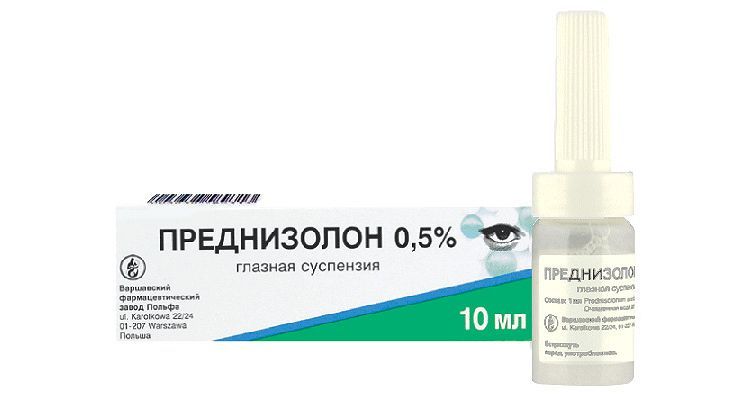
Eye drops are prescribed for the treatment of conjunctivitis, blepharitis, and inflammation of the eyeball membrane, unless the condition is caused by an infection. The ointment is intended for external use and is therefore used to treat dermatological conditions, in particular eczema and allergic dermatitis.
How to apply
The instructions for use are designed for humans, so when using Prednisolone in dogs, follow your doctor's recommendations. The dosage is 0.5-1 mg per animal's weight. The exact dosage should be determined by your doctor, taking into account several factors:
- pathology;
- severity of existing symptoms;
- presence of chronic diseases;
- age, etc.
The medication is usually administered once a day, or twice a day for severe illnesses. Injections are given intramuscularly, and tablets are mixed with food or administered forcefully, depending on the pet's needs.
If an ointment is used to treat dermatitis or eczema, it is applied in a thin layer to the affected area. The duration of treatment and frequency of applications throughout the day are determined by the doctor. Eye drops are administered one drop in each eye for 3-7 days, although the exact duration should also be determined by the doctor.
Please note! With long-term use, the hormonal dosage should be gradually reduced by at least half before completing the course of treatment. This helps prevent adrenal cortex atrophy.
When a drug is banned
Hormonal medications are strictly prohibited for use on animals without prior examination and consultation with a doctor. The medication has a number of contraindications:
- osteoporosis;
- diabetes mellitus;
- excessive secretion of cortisol;
- high blood pressure;
- disorders of the nervous system;
- gastric ulcer or duodenal ulcer;
- severe kidney disease, including renal failure;
- viral diseases;
- fungal pathologies.
If your pet has chronic heart, kidney, stomach, or other diseases, a comprehensive examination is necessary. Regular testing is also necessary to monitor your pet's health.
Prednisolone should not be used in dogs during the growth period, as it promotes the leaching of calcium from the body, which will interfere with the proper formation of the skeletal system.
Please note! This hormonal product is prohibited for use in pregnant and lactating females.
Side effects
The instructions list an impressive list of possible side effects of Prednisolone, most of which also apply to dogs. Long-term and uncontrolled use of this hormonal drug can cause the following health problems:
- osteoporosis;
- diabetes mellitus;
- pancreatitis;
- behavioral disturbances (depression or aggressiveness, refusal to eat or increased appetite);
- increased blood clotting;
- decreased immunity, high sensitivity to pathogenic microorganisms, viruses and fungi;
- excess weight gain;
- disturbance of the menstrual cycle;
- disruption of the digestive system (vomiting, colic, bloating, etc.).
Overdose can cause nausea and vomiting, extreme anxiety, seizures, and behavioral changes. In this case, the drug should be discontinued completely and symptomatic therapy should be used.

Please note! Combined use of hormonal medication and nonsteroidal anti-inflammatory drugs increases the risk of developing gastric ulcers.
Price
Prednisolone for dogs can be purchased at any regular human pharmacy, and the price depends on the dosage form:
- ointment, 10 g – from 30 rubles;
- tablets, 100 pcs. – from 80 rubles;
- solution, 3 ampoules of 1 ml – from 45 rubles;
- drops, 10 ml – from 100 rubles.
Owner reviews
Svetlana, owner of a French bulldog:
"Our Frenchie lived on Prednisolone for three years. She had cancer and skin problems. Overall, the dog tolerated the medication well, but towards the end of her life, swelling and other problems began to appear. I think I joined Cushing's, but overall I was satisfied with the drug. It extended our dog's life."
Maria, the Labrador's owner:
"Our dog has a chronic autoimmune disease, so we periodically take courses of Prednisolone. To avoid digestive side effects, we combined it with Quamatel. We also took calcium supplements. No side effects were observed, and we had regular blood tests."
Veterinarian Reviews
Lyudmila, a veterinarian with 10 years of experience:
"Prednisolone is one of the most popular hormonal medications used for pets. Of course, it shouldn't be used without a doctor's prescription. However, for some animals, it has been a real lifesaver. At our clinic, it's prescribed for life for cancer and certain other conditions. When used correctly and at the correct dosage, it can extend a pet's life for several years. The advantage is its low cost and availability in regular pharmacies. The disadvantage is the side effects."
Grigory, a veterinarian with 9 years of experience:
"Although hormonal medications for animals are now available, Prednisolone is successfully used in veterinary medicine. It's a time-tested drug that's highly effective. However, it's not suitable for self-medication. Incorrect use can even be fatal. It should only be prescribed by a doctor."
Read also:




48 comments
Evgeniya
Hello! My pug is 8 years old and spayed. A year ago, she had an ear infection in one ear. After treatment, tests, and a CT scan, she was diagnosed with otitis media. As always, she ate with gusto and didn't appear sick. To treat the otitis media, the doctor suggested either surgery or dexamethasone drops in her ears every 4-5 days for life. I chose the drops, as it seemed the lesser of two evils. For a year now, I've been putting half an ampoule of prednisone in each ear every 4-5 days. I also periodically apply Preotic AV lotion before cleaning. She's in good health, but a small amount of purulent discharge from the affected ear sometimes appears on a cotton swab during cleaning. She eats, sleeps, and goes for walks happily. However, in recent months, I've noticed significant hair loss on her tummy, armpits, hind legs, and thighs.
QUESTION: Does prednisolone affect the dog's coat, or is it just aging? How harmful is topical prednisolone in this regimen? Considering the dog could live another 7 years, would surgery be better? Although I really don't want to. Thank you.
Daria is a veterinarian
Hello!
There's a discrepancy at the very beginning of your message. You were prescribed dexamethasone drops, but you're using prednisolone drops.
First, could you tell me if you've had a follow-up examination during the year of treatment? Otitis media is very uncomfortable for animals, and if your dog still had it, I think you would have noticed.
Purulent discharge from the outer ear (what you write about a cotton swab) is in no way connected with otitis interna; it is a separate disease.
Prednisolone can cause changes in hormonal levels, it affects the adrenal glands, and this can cause hair loss.
I recommend you see a specialist again. It's better to see two or three specialists, not just one, so you can get multiple opinions. I'd also recommend seeing a qualified endocrinologist regarding long-term use of prednisolone. I can't say for sure whether prednisolone in the ear can have this effect (I simply don't prescribe it for that purpose), but it's worth checking to rule out the possibility.
Wishing you a speedy recovery and only competent doctors on your path to health.
Andrey
Hello, I need urgent advice and medication recommendations. Problems have been piling up for a month. My Yorick is a mini-mini (1.2 kg). Everything was fine at 9.5 years old. She had periodontal disease. She had her teeth removed. At the same time, during an ear cleaning, a 1 cm wax plug was removed. I fed her soaked dry food with a syringe, thinking she wasn't eating because of the extracted teeth. It later turned out that her jaw was broken during the extraction. A couple of weeks passed, and everything seemed to be back to normal. But suddenly, she stopped blinking her left eye. The clinic diagnosed dry eye and facial nerve inflammation. We treated her for a couple of weeks without success. We went back to the clinic, and that's when they discovered a jaw fracture. They also told us about a tumor near the attachment of her left jaw. A few days later, the dog stopped seeing, despite having a great appetite. What should I do? How can I help her? (Of the medications recommended at the clinic, we took Sinuksol, Ciprovet, Kornegel, and the last one, Prednisolone)
Daria is a veterinarian
Hello!
I'm very sorry this happened to your pet. I'll try to help you.
During a tooth extraction, especially if the inflammation is severe, it's possible to fracture the jaw (if it's the lower jaw), especially if the bone is very thin. Dental X-rays are necessary in such surgeries to assess the likelihood of such complications. Has the dentist performed such diagnostics? If not, they should be performed to assess the condition of the jawbone and bone fragments due to the fracture.
Regarding the eye, your description does indeed suggest inflammation of one of the facial nerves. In this case, prednisolone is the drug of choice. However, it requires long-term treatment, possibly lasting several months. To minimize eye damage, maximum hydration is essential. Kornegel works well for this purpose, but it must be applied every two hours, and all discharge must be washed out with 0.9% sodium chloride (available at regular pharmacies) beforehand. This medication can be used on a regular basis.
The tumor you're told you're experiencing requires confirmation, ideally a CT scan. This will also more accurately reveal the condition of the jaw.
Natalia
Please advise, my male pit bull is 1.3 years old and weighs 54 kg. He started itching at the beginning of spring, with odorless sores appearing in places. His hair is falling out, and he has dandruff. I stopped feeding him chicken and beef. I cook buckwheat porridge with millet, rice, and pearl barley. I give him boiled fish. I've tried dry food, but his stool is sometimes loose and mushy. He was prescribed Prednisolone: 4 tablets for 3 days, 3 tablets for 3 days, 2 tablets for 3 days, and 1 tablet per day.
One tablet for three days and half a tablet every other day for three days. Everything went away, but after two weeks it came back even worse. The diagnosis was allergic dermatitis.
Olga
Good evening.
We have a French bulldog, about two weeks ago he had an ear infection and was scratching his ear like crazy.
We went to the veterinary clinic, they prescribed doxycycline 1.5 tablets per day and prednisolone 2 tablets 2 times a day, after 5 days it was necessary to give 1 tablet 2 times a day.
We took it for 3 days, during which time the dog lost a lot of weight, became too lethargic, and slept a lot.
We were really worried about him and decided to stop giving him all those pills. After a day, he started having trouble walking, swaying from one side to the other. Today, it got even worse; he practically stopped walking. We went to the doctor and they said we needed to monitor his condition. If it gets worse, we should go to an appointment and decide what to do.
I have a question. Was it possible to stop giving him these pills so abruptly? And why did he start having such problems with his gait?
Daria is a veterinarian
Hello!
We're so sorry we didn't see your message in time. We really hope your little tail is healthy now.
But since prednisolone is a drug that is prescribed quite frequently and sometimes, even when needed, we will examine your request.
If I understand correctly, you took prednisone for only three days and then abruptly stopped. If so, that's okay. However, long-term use of prednisone, over two to three weeks, requires a gradual reduction in dosage.
In any case, using prednisolone always carries a risk of side effects. The safest course of action is to discontinue the medication, which is what you've done.
Most importantly, if you're concerned about your pet's condition and your doctor suggests simply observing, it's time to get a second opinion from a different doctor. If the problem is related to gait, you should consult a neurologist.
Prednisolone, like other hormonal drugs, requires only justified use!
If you have any doubts about the appropriateness of medication use, consult another doctor for a second opinion and also consult with specialists. General practitioners, unfortunately, have less comprehensive knowledge.
Good health to your little tail!
Dina
My spaniel, 12 years old and weighing 10 kg, has joint pain. Can I give him prednisone and in what dose? Thanks in advance!
Daria is a veterinarian
Hello!
Prednisolone is not the drug of first choice for all diseases, including musculoskeletal diseases.
If you have any problems, always consult a specialist, in your case, a veterinary orthopedist. After examination and diagnosis, they will be able to prescribe the correct treatment.
Self-medication can lead to deterioration of health.
Only long and pleasant walks for your pet!
Elina
Good afternoon! Toy Terrier, female, 6 years old. Nephrotic syndrome. Can prednisolone be used and in what dose? Weight 5 kg.
Irina
Good afternoon! Our 10-year-old Chihuahua has heart failure and tracheal stenosis. Six months ago, she developed a severe cough. We were advised to lose weight. They prescribed digoxin, vitamins B1 and B6, prednisone, and furosemide. We followed all the recommendations. We took the vitamin injections and lost weight. We only give her digoxin and calcium. She no longer has a cough, but she has begun to shortness of breath, and her front paws have become deformed. She also has occasional seizures. Could you please tell me if we can restart the prednisone regimen?
Daria is a veterinarian
Hello! Prednisolone is a hormone. Long-term and inappropriate use can lead to adrenal suppression, leading to the development of pathologies requiring lifelong treatment. Furosemide is a drug for emergency treatment, most often for edema. This should only be done under a doctor's supervision. It removes potassium, which the heart needs, in the urine. It's a different matter if your biochemistry results indicate excess potassium in the blood and require lowering. Your pet should be examined by both a neurologist and a cardiologist! These specialists are essential. A cardiac ultrasound is essential, and if possible, an X-ray should be performed. Assess for free fluid in the chest cavity and pericardium.
Julia
Hello, we have a 3-year-old Rottweiler. He's had diarrhea for a year now. We've had various tests and an abdominal ultrasound. They've prescribed a bunch of different pills and given him antibiotics. Nothing's helping. The ultrasound just showed intestinal inflammation. Could you suggest the right treatment, or at least a starting point?
Daria is a veterinarian
Hello! You need to start with a medical history. At least with diet. And it's important to distinguish between diarrhea and loose stools. They're different things. What happened before the dog started having loose stools? Was he sick with something? Is he eating any flowers in the house, or is someone feeding him food from the table? Are there any regular medications? Vitamins? Food supplements? Probiotics or prebiotics? Has the animal's condition improved at any point over the past year? Without a complete medical history, it's impossible to make even a rough diagnosis.
Oksana
Daria, good afternoon! I really need help. Exactly a week ago, my 4-year-old Frenchie had soft palate removal surgery. She was given prednisone and ceftriaxone for the first three days, then antibiotics for two days only. Today at 3 a.m., she had a seizure in her sleep: she couldn't breathe, and we barely brought her around. At 9 a.m., she had another seizure. We rushed to the vet this morning. They didn't help much; they gave her a sedative and an oxygen chamber. We left, and at home, she had another seizure in her sleep. We rushed back to the clinic. I'm already asking them myself if it could be swelling. They gave her prednisone. Can you tell me how long it can be given? In what doses? What's the maximum time? How do I stop taking it? Help, my heart is breaking.
Daria is a veterinarian
Hello! It's all individual. Long-term use of hormones is not recommended for anyone; you should gradually taper off by reducing the dosage by half every 3-4 days. Stopping abruptly carries the risk of developing withdrawal syndrome. There are contraindications for taking hormones (it's important to monitor the adrenal glands to avoid damaging them). Edema can occur if there's an inflammatory process. Brachycephalic patients already have a hard time with constant breathing problems, even those who haven't had surgery. It's possible that heat and stuffiness triggered the attacks, as well as excessive physical exertion.
Alexandra
Good evening, my dog has staph, we were prescribed vancomycin, but there are no results, they said that other drugs showed that they do not work on her, because the dog was previously treated for the wrong thing, they made many diagnoses and the dog was injected and treated, after tests they prescribed only this drug, but to no avail, pus flows from the ears as it was flowing.
Daria is a veterinarian
Hello! Staphylococcus aureus, especially Staphylococcus aureus, is highly resistant to antibiotics. However, the initial antibiotic administration should not have occurred without titration! The animal was vaccinated with antimicrobial medications, and I don't rule out the possibility that the treatment course, frequency of administration, and correct dosage (based on the pet's weight, not based on eyeballs) were not always strictly followed. This could have led to the bacteria developing resistance to a wide range of medications. Even similar antibiotics, although much more potent, will not help in this case. It's important to know everything the animal was treated with: the medication, the dose, the number of administrations per day, and the course of therapy.
Elena
Hello! Could you please tell me which corticosteroid is best for allergies? My 6-year-old dachshund weighs 15 kg. He's allergic to grass, itchy all over, and has a rash in his groin, armpits, and ears. We tried Exekan, but it's not helping. Dexamethasone also only provides relief for a week. What should I do? Maybe prednisone? But what's the dosage and how many days should I take it, if I'm getting injections? Thanks in advance.
Daria is a veterinarian
Hello! Prednisolone is weaker than dexamethasone. Dexamethasone is injected no more than once every 7 days, but! There's a so-called "withdrawal syndrome," when you suddenly stop taking glucocorticoids, and the symptoms not only return, but also bring on new ones. Also, keep in mind that prolonged and reckless use of steroid anti-inflammatory drugs can lead to the development of Cushing's syndrome in animals—an adrenal gland disorder—which will require lifelong treatment with other medications (and due to sanctions, supplies are inconsistent, and endocrinologists are searching for suitable alternatives). I suggest switching to Apoquel. It's a bit pricey, but it helps dogs with atopic dermatitis. Review the diet! At least try to alleviate the condition. What about flea and tick treatments? Is there a certain shampoo you're using?
Svetlana
Hello, Daria! We don't know what to do. It looks like our Labrador has lymphoplasmacytic rhinitis. Veterinary services are very limited in our city. A definitive diagnosis is impossible. The dog can't breathe through his nose at all, his muzzle is deformed, and he has nosebleeds every other day, unexpectedly. We read online that steroids and prednisolone can be used. Start with high doses, then gradually reduce the dose. He weighs 40 kg. How can we develop a prednisolone schedule? Are there any other drops we can use? Please advise. He's really crying out for help, he's suffering so much! Help!
Daria is a veterinarian
Hello! Unfortunately, I'm not an oncologist. I'm not qualified to recommend treatment for animals with tumors. It's best to consult an oncologist in person (chemotherapy may be necessary).
Alena
Good evening! We have a 6-year-old Westie who was diagnosed with chronic kidney disease. We've changed his food several times, now he's on Monge hypoallergenic. We've been giving him Sinulox and Apoquel for six months now, but there's no improvement. We're using Akriderm, Cortovance spray, and chlorhexidine shampoo. He's constantly itchy, his skin is red, and flaky. Is prednisolone recommended? Is it not used in these cases?
Daria is a veterinarian
Hello! Have you listed everything your pet is taking? Why isn't there a therapeutic dietary regimen if your pet has been diagnosed with chronic renal failure? Everything you've listed is more for itchy skin. What's the dosage for Apoquel? Prednisolone is a hormone, and long-term hormonal therapy is not recommended. It suppresses endocrine gland function, specifically, it can damage the adrenal glands, and your pet has kidney problems... Get a biochemistry test and consider a diet to help the kidneys (protein levels are reduced), as many foods for sensitive skin are low in carbohydrates, and high protein can damage the kidneys.
Alexandra
Hello! We've had this problem for a year and a half. We adopted a dog from a shelter. She ate well and adapted gradually. Then, six months later, she started vomiting and had loose stools. We've had a ton of tests done during this time. We've had five ultrasounds and x-rays. We've been undergoing treatment for two months, and everything's coming back. We went to an oncologist and were treated with one. Now they've prescribed prednisone for us. It's kind of scary to give her that.
Daria is a veterinarian
Hello! What was your diagnosis? What are your test results? What's the oncologist's report? Why were you prescribed prednisone, and what treatments have you had so far?
Olga
Hello! Is it possible to use prednisone if you don't know exactly what's causing your pet's itching? Our vet prescribed a short, 5-day course.
Daria is a veterinarian
Hello! It is not recommended to prescribe steroids without a definitive diagnosis. As an emergency measure, yes, it is suitable. But it is important not just to suppress the clinical signs, but to find and eliminate the cause. Have you tried revising the diet (what exactly you feed)? Parasite treatments (including flea treatment)? Have you done a biochemistry test? Skin scrapings? Are there any wounds? Age? Gender? Is the animal spayed? What are the living conditions? Have there been any illnesses (especially chronic ones)? Are there any other signs? Have you given any supplements or vitamins? Is the itching constant or intermittent?
Olga
Hello! My puppy is 4 months old and weighs 9.5 kg. We adopted him from a shelter. He's itching for an unknown reason. He's been treated for fleas and worms. Initially, he had scratches on his chest and withers. We washed him with chlorhexidine shampoo, and the sores disappeared, but he still itches periodically. We also gave him Symparic, which the vet prescribed. Now he's prescribed prednisone. I'm not sure if it's worth it, since we don't know the diagnosis. The vet prescribed a dosage based on his body weight and said it's completely safe to give him five days. The vet communicates with us online. We can't see him in person. What do you recommend?
Daria is a veterinarian
Hello! Prescribing steroids without consulting a doctor is a very bold decision. How are the skin rashes? What about the groin area, the armpits, the belly? Is there any itching, redness, or hair loss? Let me repeat: please describe the entire diet (down to treats, supplements, vitamins, supplements, etc.).
Marina
Hello! We have a German Shepherd diagnosed with atopic dermatitis. We've been taking a course of Apoquel, eating a therapeutic food, and taking Bravecto flea tablets. The itching has partially cleared up. Her belly is black and oozing again. Should she take a course of prednisone?
Daria is a veterinarian
Hello! What specific food were you feeding your dog? I'm interested in the manufacturer and brand name, as some so-called "medicinal" foods for sensitive skin still contain chicken protein and soy. Were they added to the diet? Don't put your dog on hormones right away. Further exposure to the allergen won't improve the condition, and overdosing your pet with hormones will lead to much more serious health problems (hyperadrenocorticism will develop over time, damaging the adrenal glands). Stopping the hormones abruptly is also not recommended, as it can lead to withdrawal syndrome (when symptoms not only return but intensify, bringing on new ones). Start with a normal diet! Atopic dermatitis should subside within a few months. However, the therapeutic diet should be lifelong!
Natalia
Hello. We have a recurrence of flea dermatitis. We were prescribed prednisolone a year ago and it helped a lot. Now we can't go to the vet. Could you tell me if we can use a minimal dose of prednisolone, since he's just starting to wake up? The dog is 5 years old, weighs 14 kg, and has no diagnoses. How should we administer it?
Daria is a veterinarian
Hello! If you're sure your pet has flea allergy dermatitis, why put them on hormones? The easiest way to get rid of flea allergy dermatitis is to remove the fleas! Wash them with a special shampoo, use a collar, or use drops for extra protection. Give them regular antihistamines (even something like Suprastin) for a couple of days, and that's it. Why give them hormones right away? The itching won't go away if the fleas are still there!
Tatiana
Hello, my 10-year-old Yorkie, weighing 2.3 kg, was diagnosed with aortic collapse and prescribed prednisolone tablets: 1/2 tablet twice daily for 3 days, 1/2 tablet once daily for 3 days, and then tapered. He also takes Omeprazole for his stomach. Is the dose too high?
Daria is a veterinarian
Hello! The average dosage for dogs is 0.4-0.5 mg of active ingredient per 1 kg of body weight, twice daily or once daily (depending on the severity of the disease). Then, gradually decrease to 0.25 mg/kg per 1 kg of body weight (every other day). This is used as an anti-inflammatory. As an immunosuppressant, 1-2 mg per 1 kg of body weight once daily. So, a lot depends on the tablets you choose (how much active ingredient they contain). Based on this, you should consider whether you need half a tablet, a third, or a whole tablet.
Olga
Tatyana, did the medicine help you? How is the dog?
Olga
Good afternoon. I'm a 7.5-year-old female Bullmastiff weighing 60 kg. She's suffered from pododermatitis for three years, with a sore developing between her toes. Three years ago, my doctor prescribed prednisolone as follows: 3 days, 1/2 tablet, 3 days, 1 tablet, 3 days, 1.5 tablets. Then, tapering off. The treatment helped temporarily, for about six months. Today I read that the dosage should be 1 mg per 1 kg of body weight. How many tablets should I give her then? Please tell me.
Daria is a veterinarian
Hello! The dosage for a dog depends on the desired treatment. If it's an anti-inflammatory, give 0.5 mg/kg every 12-24 hours, gradually reducing the dosage to 0.25 mg/kg every 48 hours. If it's an anti-allergic, give 0.5-1 mg per kg of body weight every 12 hours (at the very beginning of therapy), then reduce the dosage once the animal's condition has stabilized. If it's an immunosuppressant (to suppress the immune system), give 1-2 mg per kg of body weight every 24 hours, gradually reducing the dosage. Let's assume you've chosen human tablets, which contain 5 mg of the active ingredient. This would be 1 tablet per 50-100 kg of body weight, depending on the stage of therapy you're at. Moreover, pododermatitis is a polyetiological disease (there are many possible causes, ranging from food to bacteria and fungi. In the latter case, prednisolone will only worsen the situation, as the immune system will be weakened, and bacteria and fungi will begin to multiply without specific treatment). It's important to address the underlying cause, not simply pump your pet with glucocorticosteroids because that once helped.
Tatiana
I'm confused about the requirement for one 5 mg tablet of human prednisolone per 50-100 kg of animal weight. You wrote 0.5 mg per kg of body weight above. How do you calculate the dosage if the tablet is 5 mg and the dog weighs 5 kg?
Daria is a veterinarian
Hello! The dosage of the drug depends directly on the desired effect: anti-inflammatory, anti-allergic, or immunosuppressive (immune suppression). It also depends on the stage of therapy (the longer the treatment, the lower the dosage. As recovery approaches, similar medications are tapered). This explains the different dosages. If you need an anti-inflammatory effect, calculate a dosage of 0.5 mg per 1 kg of body weight. If your pet weighs 5 kg, then 0.5 mg/kg * 5 kg = 2.5 mg. That's half a tablet. Half a tablet in the morning and half a tablet in the evening, UNLESS OTHERWISE PRESCRIBED BY YOUR DOCTOR! Self-medication with such drugs is extremely dangerous to your pet's health!
Elena
Hello. Has anyone else experienced prednisolone side effects such as skin peeling and ulcers? My dog has three tumors, all metastasized. I was prescribed prednisolone, 50 ml, 10 tablets daily. I can't reduce the dose, as a secondary tumor on a lymph node immediately becomes inflamed. Ulcers have appeared on the skin in various places, and the skin is peeling off in chunks. We treat one area, but more appears in another. What's the most effective way to heal these ulcers? Thanks for your reply.
Marina
Hello! We have a 9.5-year-old Yorkie. His primary condition is lymphocytic plasmacytic gastroduodenitis. After 1.5 years of suffering, the vet decided to treat him with prednisone. The dose is 1/4 tablet (1.25 mg). Is this the correct dose? He weighs 2.5 kg. Another question: we've been on a natural diet. But he's had bloating for a month now, and nothing seems to be helping. What's the best food to feed him?
Daria is a veterinarian
Hello! Yes, the dosage is correct. 0.5 mg of active ingredient per 1 kg of live weight. For your pet's body weight, 1.25 mg is needed. Regarding feeding, add Fortiflora (a prebiotic), and you can also switch to dry food like Seri Gastrointestinalis (for animals with gastrointestinal problems). You can also add enzymes (at least Creon) to aid digestion.
Tatiana
After a one-time prednisolone injection (by an experienced veterinarian), my dog had severe allergies (prescribed medications weren't helping), was itching terribly and losing her hair (she was on antiallergenic food), and was allergic to flea bites (also treated). She began gaining weight rapidly and hasn't been in heat for 9 months. All her undercoat has fallen out. An ultrasound revealed no abnormalities (uterus, ovaries, adrenal glands). How can I bring her back to normal? Or is this a lifelong condition? Can you advise me on how to correct the consequences? The injection was given in October, but there's no scratching and the dog has calmed down. She's a Scottish Terrier crossbreed.
Daria is a veterinarian
Hello! A SINGLE use of prednisolone won't cause such side effects. It's not that strong. It's not dexamethasone, which, while it quickly relieves all symptoms, can have very specific effects on the animal's body. You need to get your blood tested for hormones, have your biochemistry profile done, and also have your thyroid checked. An animal with such an allergy shouldn't reproduce (they won't be healthy and might also be prone to allergies)—it's best to spay them. Check their diet—are you overfeeding them, and what exactly are you feeding them? But overall, a full physical examination and examination is necessary. I would check their hormone levels first.
Ivan
Could you please tell me if it can have the opposite effect on a dachshund, i.e., cause it to go into heat prematurely?
Daria is a veterinarian
Hello! Prednisolone is a glucocorticoid—a semi-synthetic hormone produced by the adrenal cortex. Glucocorticoids not only have anti-inflammatory and anti-allergic properties, but also reduce the production of sex hormones, which results from direct inhibition of their synthesis and decreased production of luteinizing hormone by the pituitary gland. The only thing that could have triggered the early onset of heat was abrupt discontinuation of the medication! Abrupt discontinuation of glucocorticoids causes a so-called "withdrawal syndrome," in which everything the medication was suppressing suddenly increases. This could be why heat began earlier, as the hormones are no longer being "suppressed."
Add a comment