
The right bowl for a cat: what should it be like?
A pet's failure to eat its full portion of food can be caused not only by personal preferences or the quality of the food, but also by inappropriate bowls. Sometimes, purchasing the right bowl for your cat can solve the problem. What shape, size, and material should the bowl be so that each meal brings pleasure and avoids stress?
Selection of material
The following materials are commonly used to make cat dishes:
- Plastic. One of the most common and inexpensive materials, it's also fragile. Cheap plastic dishes quickly warp and crack, can have an unpleasant odor, and emit toxic substances (especially when heated). More expensive, high-quality options still suffer from the porous structure of the material and microcracks: odors are quickly absorbed and difficult to remove, creating a breeding ground for pathogenic bacteria. Furthermore, plastic can accumulate static electricity, which is definitely not to the liking of long-haired cats.
- Stainless steel. The advantages of metal utensils include health safety, ease of cleaning, and (in most cases) a rubberized base for slip resistance. However, such products are often expensive. A minor drawback is the increased noise level of metal: dry food will rustle against the metal during feeding, which can irritate the pet, and the container itself makes noise when moved or when it comes into contact with other objects (such as a nearby bowl).
- Ceramics, glass, porcelain. Good materials are nonporous, easy to clean, hypoallergenic, microwaveable, and safe for pets. However, these dishes are prone to breakage (unlike metal or plastic) and rarely have special feet or bases to prevent slipping. They are also often more expensive than dishes made from other materials. However, you can save money by choosing a saucer or plate of a suitable size from regular household dishes.
Shape and size
The shape and size of the bowl are even more important than the material it's made of. An oval or round bowl, tailored to the pet's size, is ideal. Unusual shapes (like a fish, a cat's head, etc.) are more pleasing to the eye for owners, but they can be uncomfortable for cats because food gets trapped in tight corners, making it difficult to reach.
Your pet should have at least two bowls: one for food and one for water. If you feed both dry and wet food, it's recommended to have separate bowls for each.
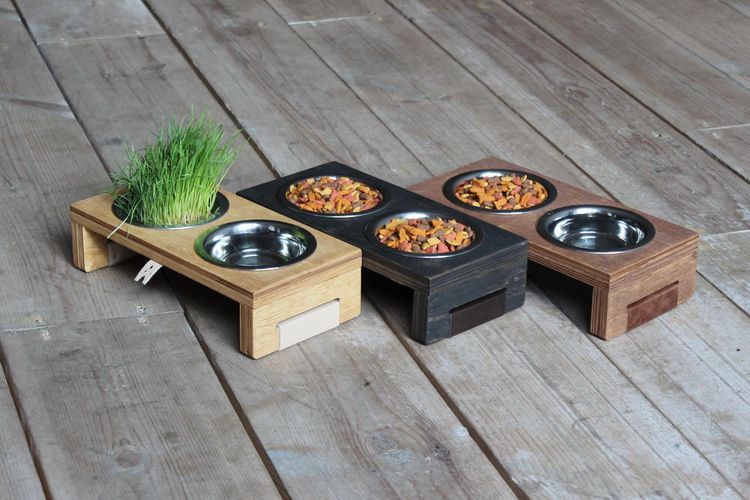
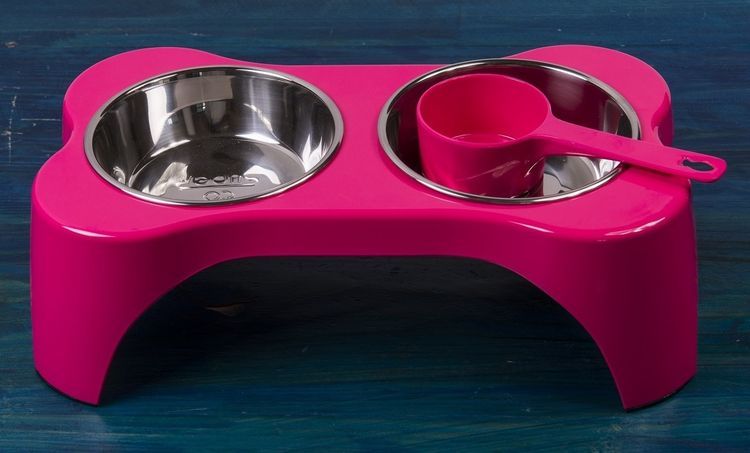
Double bowls are inconvenient to use. Firstly, food will end up in the nearby water, so it will always be get dirty. Secondly, if you need to clean one compartment, you'll have to empty the other as well. An alternative is two removable containers on a shared stand, which can be easily washed separately as they get dirty.
When choosing which bowl is best for your cat, you should also consider the following parameters:
- Width (diameter). Pets experience discomfort if their whiskers bend when they touch the bowl while eating. Cats' primary "locators" are particularly sensitive, so excessive handling can cause irritation and even stress. To select the optimal size, it's recommended to measure the span of your pet's whiskers—the right bowl should be at least as wide. For those with particularly long whiskers, wide, rectangular bowls are best.
- Depth. It is selected taking into account the type of food: a bowl with low sides is suitable for natural or wet cat food, while a deeper container is better for dry food and water.
When choosing the depth, you should also consider your pet's individual needs. For animals that prefer to eat in a reclining position, a bowl with high sides will be uncomfortable. This option is also unsuitable for breeds with flat faces (Persians, Exotics, etc.).
Additional details
For additional convenience of your pet, and sometimes its owner, the following attributes may be useful:
- Stand. These devices were originally developed for dogs who might experience spinal problems when feeding from the floor. Due to their greater flexibility, this is not a problem for most cats. The exception is for larger breeds (Maine Coons, Savannahs, etc.) and animals with joint problems. In these cases, a more stable design is recommended. The best option is a kind of podium with recessed niches into which the utensils are recessed.
- Rug. Placing it under the bowl can prevent it from sliding on the floor. Cats also sometimes tip over dishes or like to scoop out individual food and eat it nearby on the floor. In this case, a mat will protect the floor from contamination and make it easier to clean up any traces of your pet's meal. Regular plastic placemats designed for human use can also be used for this purpose.
Read also:


Add a comment