
Do dogs sweat?
Thermoregulation is crucial for all warm-blooded animals, including canines. But after returning from a vigorous walk with their dog, the owner finds their dog's fur completely dry, while their own clothes are soaked with sweat. And yet, their pet was running and jumping more... The same thing happens in hot weather: a person is drenched in sweat, while their dog is completely dry, only breathing faster and with its tongue hanging out. So, do dogs really not sweat at all? It turns out they do, but in a different way than humans, due to their anatomical differences.
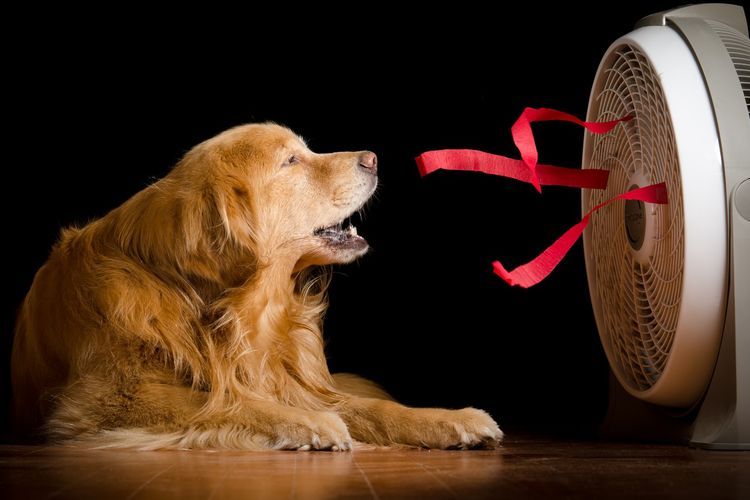
Principles of thermoregulation in dogs
Experiments prove that dogs can tolerate temperatures ranging from 40 to -40°C. For large breeds body temperature 37.5-39°C, reaching 38.5-39.5°C in small breeds. Therefore, the risk of overheating is higher in small dogs than in large ones. Compared to humans, dogs have a somewhat more difficult time in hot weather—their physiological mechanisms for removing excess heat from the body are much less developed. Canines have sweat glands only on their paw pads and in their ear canals, but the latter play a minor role in thermoregulation. These animals primarily lose heat through their respiratory system.
The canine tongue is laced with numerous blood vessels. The tongue, as well as the mucous membranes of the cheeks and palate, contain the ducts of the parotid, submandibular, sublingual, and buccal salivary glands. When breathing, the liquid secretion of these glands evaporates, cooling the blood circulating in the vessels.
As is well known, dogs inhale through their nose and exhale through their mouth. This natural "countercurrent mechanism" ensures efficient air circulation: passing through the moist nasal passages, the air enters the lungs already cooled. At the same time, at the interface between warm and cold air currents, condensation of water vapor during breathing ensures stable mucous membrane moisture.
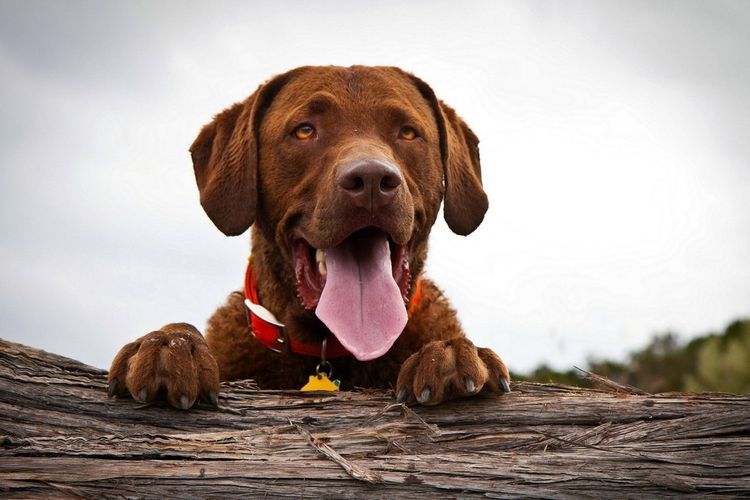
Dogs automatically exchange heat through respiration, depending on their body's needs. At normal temperatures, without warming-up physical activity, a dog breathes 30-40 times per minute; in hot weather, this number can reach 300-400.
As for sweat glands, their presence in the paws is easily confirmed. Dog tracks left in hot weather are damp, indicating that your pet has sweated. In the paw pads, arterial and venous vessels are located close to each other. Venous blood, cooled by the contact of the paws with the ground, lowers the temperature of the arterial blood. This helps cool the animal's body.
In northern wolves, whose habitats do not experience extreme heat, the sweat glands on their pads are partially or completely atrophied due to their uselessness.
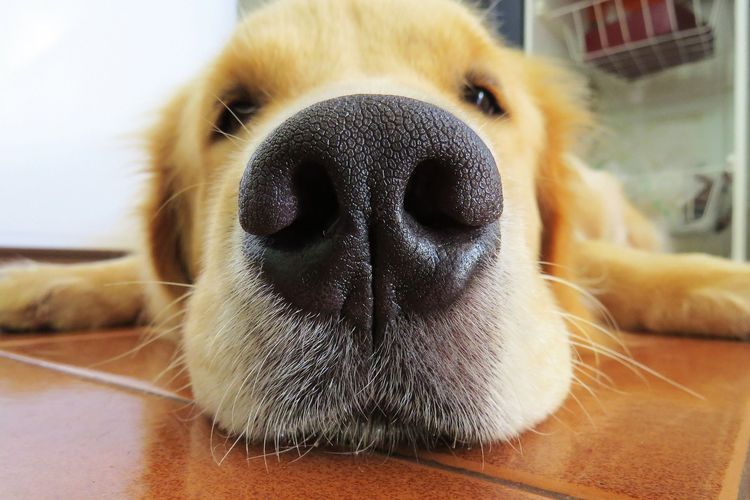
Canines also rely on a large gland located in the nasal cavity to supply moisture. Humans lack such a gland. Its sole purpose is to moisten the animal's nose to cool the inhaled air. It can be said that the nasal gland performs the same function as sweat glands.
So, a dog covered in thick fur doesn't need sweat to evaporate from its body surface. Its heat exchange mechanism occurs through other means. A dog heated up by a vigorous walk or suffering from heat exhaustion opens its mouth and lolls its tongue to increase the evaporation of the "coolant"—saliva. It increases its breathing rate and decreases its depth, and sweats only through its paws.
Read also:
- How to cool down a dog in extreme heat
- Why does a dog stick out its tongue in hot weather?
- What is the significance of a dog's tail?


Add a comment