
Portuguese Podengo (Portuguese Greyhound, Rabbit Dog)
The Portuguese Podengo is a hunting dog breed used for centuries to hunt rabbits and other game. It is the pride and national treasure of Portugal, and is also the symbol of the Portuguese Kennel Club. The breed comes in three sizes: large, medium, and small. Podengos can also be smooth-coated or wire-coated. This dog is hardy, energetic, and intelligent, and is easy to train and requires little grooming. Other names for the breed include the Portuguese Rabbit Dog, Podengo Portugues, and Portuguese Greyhound.
Content
History of origin
The Portuguese Podengo is a primitive hunting dog breed with a centuries-old history. It is generally accepted that they descended from dogs brought to the Iberian Peninsula by the Phoenicians and ancient Romans in ancient times. Their hunting dogs, in turn, were descendants of Egyptian greyhounds. Through crossbreeding with local dogs accompanying the Moorish people, as well as environmental influences and human demands, the Podengo type we know today had evolved by the 8th century.
Translated from Portuguese, “Podengo Português” means “Portuguese hunting dog”.
The Podengo's morphological diversity and functionality contributed to its widespread use. From the 15th century onward, they served as ratters on Portuguese ships, and on land, they were primarily seen as companions and hunting dogs for rabbits, deer, and wild boar.
Large podengos were typically kept by members of the nobility and used for hunting large game. In the mid-20th century, their numbers declined significantly due to changes in hunting laws. Small and medium-sized podengos were the dogs of commoners, hunting rabbits, exterminating rats, and guarding homes; their numbers have always remained relatively stable.
In 1902, Portuguese Podengos were shown at the first dog show in Portugal. In 1954, the breed was recognized by the Fédération Cynologique Internationale, a year earlier than Portuguese Water DogIn 1978, the wirehaired variety was included in the standard.
Appearance
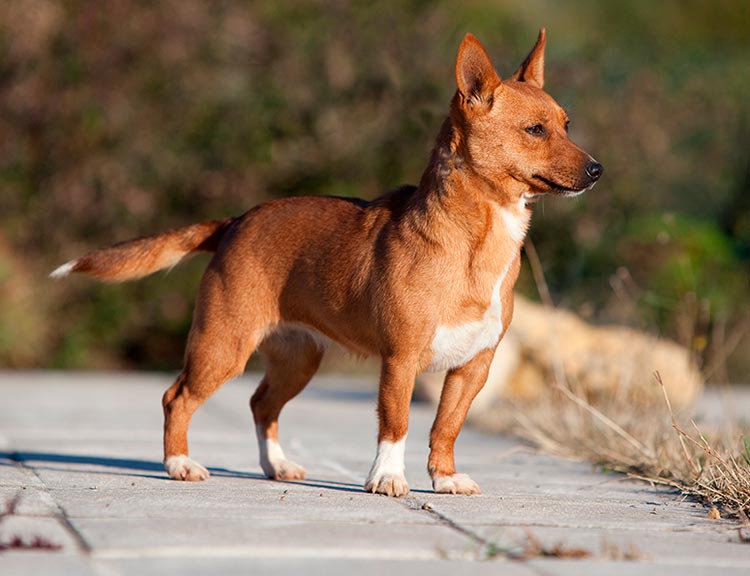
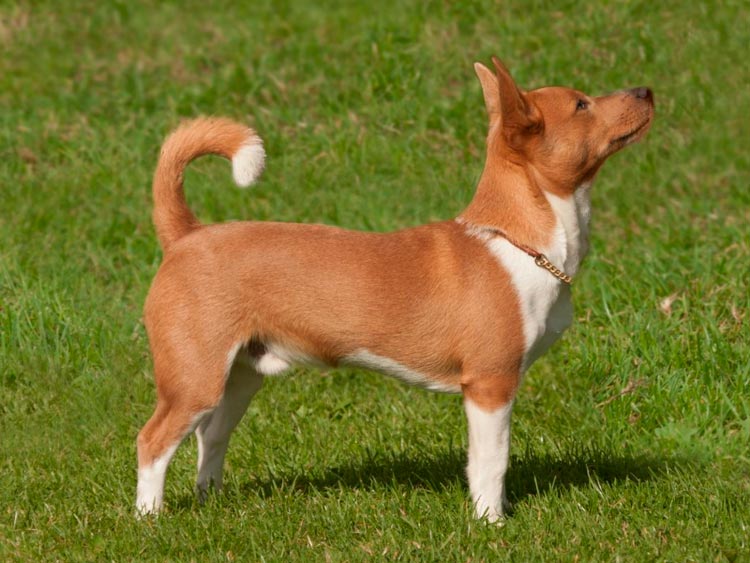
The Portuguese Podengo is a primitive-type dog, almost square in build, with a strong, harmonious frame and well-developed muscles. The breed is divided into three sizes: large, medium, and small, and two coat types: smooth-coated and wire-coated.
- Large: height ― 55-70 cm, weight ― 20-30 kg;
- Average: height ― 40-54 cm, weight ― 16-20 kg;
- Small: height ― 23-39 cm, weight ― 4-6 kg
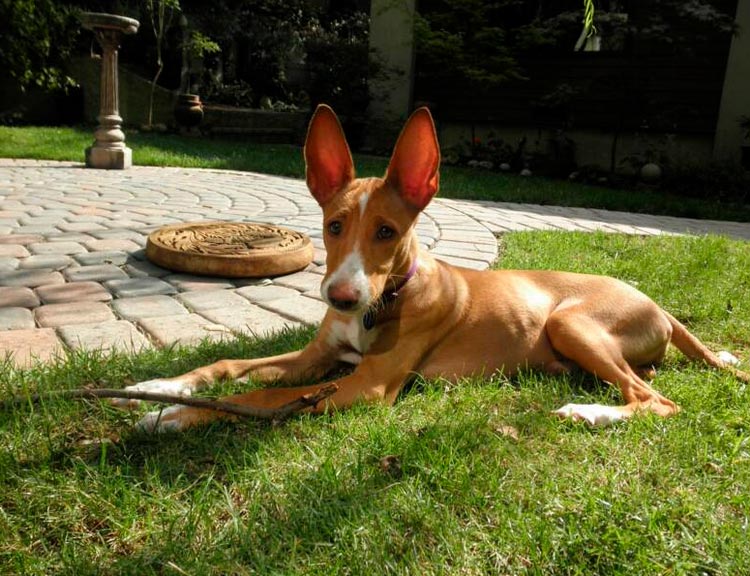
The shape of the head resembles a tetrahedral pyramid. The muzzle is pointed, the upper lines of the muzzle and skull diverge. The skull is flat, almost straight in profile. The forehead is flat between the ears. The occipital protuberance is clearly visible. The stop is weakly defined. The muzzle is shorter than the cranial part, wide and pointed at the base, the bridge of the nose is straight. The nose leather is conical, truncated obliquely, small in size, any color, but darker than the main color. The lips fit tightly, dry, thin, the edges are well pigmented. Scissor bite. The jaws are well developed. The cheekbones are moderately protruding, dry. The eyes are small, set obliquely, color from light to dark brown. The eyelids match the tone of the nose leather. The eyes have a lively expression. The base of the ears is at the level of the upper corner of the eyes. The ears are mobile, straight, erect. They are in a vertical position or slightly tilted forward. The auricle is thin, pointed, and triangular in shape. The ears are longer than they are wide.
The neck is straight, proportional, dry, long, without dewlap. The body is strong. The topline is horizontal and straight. The back is long and straight. The loin is wide and straight. The croup is slightly sloping or straight, of medium length, and wide. The chest is of moderate width, reaching to the elbows, the ribs are sloping and slightly rounded. The underline is slightly tucked up. The tail is set high, strong at the base, tapering to the tip, and of medium length. When at rest, it is usually carried between the hindquarters. When excited or in motion, it is raised horizontally and carried in a sickle shape. The limbs are vertical, straight, dry, and have well-defined muscles. The paws are rounded, with long, strong toes. The claws are strong, usually dark in color. The pads are dense.
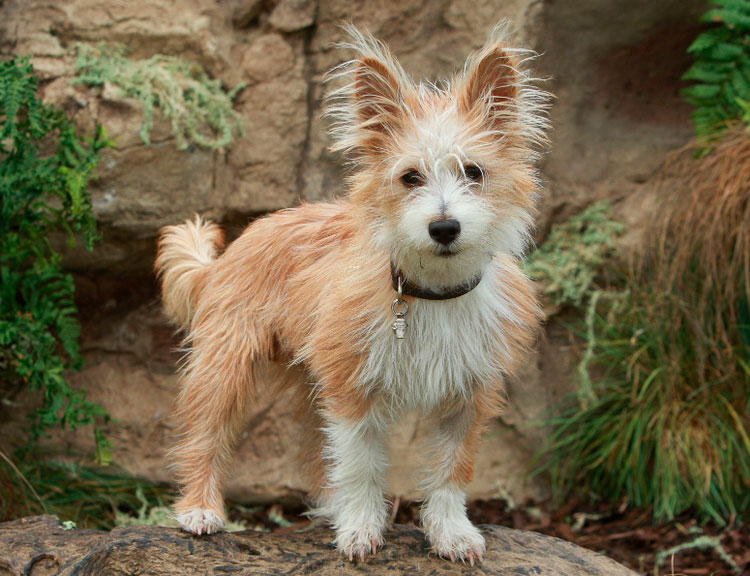
The skin is dense and thin. Regardless of coat type, the hair texture is medium thick. There is no undercoat. Smooth-coated dogs have a thicker coat. Colors:
- Fawn and yellow of various shades with or without white markings;
- White with yellow or fawn spots;
- For small podengos, brown and black with or without white spots are also considered standard.
Character and behavior
The Portuguese Podengo is a very active, energetic dog with a balanced character and a strong pursuit instinct. Intelligent, cheerful, and guileless, they are not without a sense of humor. Owners often report their pets' antics and pranks in breed reviews. Among family members, they are affectionate and friendly. Shyness is a serious fault. The Podengo should be bold, curious, and behave appropriately in all situations. Shyness and aggression are disqualifying factors.
They are wary of strangers, alert, and cautious, making them excellent watchdogs. Large Portuguese Podengos are capable guard dogs. Smaller ones also have a guarding instinct, but they are unlikely to scare off intruders. Large Portuguese Podengos are generally calmer than medium and small ones, and they bark less.
Portuguese Podengos are known for their agility and jumping ability. They are extremely hardy, fast, and maneuverable dogs. At the same time, they are obedient and highly trainable. These qualities combined make them well-suited for a variety of sports, including rally racing, tracking, coursing, frisbee, agility, obedience and others.
Podengos get along well with other dogs and livestock. They may perceive cats and small animals as prey. They learn to live peacefully only with those they have grown up with.
Purpose
Portuguese Podengos are primarily hunting dogs, but their specialization is related to their size.
- Greater podengos were used to hunt large game, including deer and wild boar.
- Mayflies are known as rabbit hunters and can work in packs or alone.
- Lesser podengos search for rabbits in burrows and rocks.
The American Kennel Club classifies the small Portuguese Podengo as a hound, while the medium and large Podengos are classified as miscellaneous, which includes mixed breeds.
Large and medium-sized podengos track prey using sight and scent, like greyhounds. They then follow the scent with vocalization, like hounds. The trophy is retrieved by the hunter. Small and medium-sized dogs often stand on their hind legs while working to improve their field of view. All podengos are very strong. A small variety, when entering a burrow, can retrieve game and deliver it to the hunter, even if the animal is the same size as the dog.
The Portuguese Podengo is the most popular hunting breed in Portugal. Most dogs are used for their intended purpose. Even some show dogs are used for hunting. Almost all breeders are also hunters. This helps preserve the Podengo's type and functionality.
Education and training
The Portuguese Podengo is highly trainable, and most dogs have a strong food responsiveness. Early socialization is essential. Training begins early, with positive reinforcement being preferred. Podengos are not overly sensitive dogs, taking offense at the slightest raised voice, but they are sensitive to unfair treatment and physical punishment.
Content Features
The Portuguese Podengo is not suitable for outdoor or aviary living in temperate climates. It does not tolerate cold well and is sensitive to frost, so it should be kept indoors or in an apartment. It adapts easily to city life with good socialization, but retains a strong desire to chase animals, including cars. It should spend a lot of time with its owner. It requires a lot of exercise, long walks, and regular training. It is easygoing and calm at home. It sheds little, and with regular brushing, it's practically unnoticeable.
Care
Grooming the Portuguese Podengo is simple. It involves regular brushing, occasional bathing, and basic hygiene procedures: wiping the eyes, cleaning the ears, teeth, and trimming the nails. Wire-haired dogs require trimming every 2-3 months or less frequently.
Health and life expectancy
The Portuguese Podengo is considered a healthy breed. Most dogs are healthy and have strong immune systems. Illnesses are usually caused by old age, poor living conditions, or diet. The average life expectancy is 12 years. Large podengos typically live no more than 14 years, while small and medium-sized ones sometimes live up to 16-17 years.
The Portuguese Podengo may be predisposed to the following health conditions:
- Dermatitis of various etiologies;
- Hip dysplasia;
- Perthes disease;
- Patellar dislocation;
- Hypothyroidism;
- Deafness.
Where to buy a Portuguese Podengo puppy
In Portugal, the most popular variety is the medium-sized Podengo. Outside the country, it's the small rabbit dog. The population is small, but not endangered. From 1984 to 2001, 4,834 dogs were registered with the Portuguese Club. Most of these dogs are show dogs, but there is also a significant population of exclusively hunting dogs, used for their intended purpose and not registered anywhere. Thanks to them, new bloodlines are constantly being introduced and the gene pool is expanding.
The first Portuguese Podengos were brought to the United States in the early 1990s. These dogs are common in Central and Southern Europe. Some specimens of the breed exist in Russia. There is no information on breeders. Those seeking a purebred Portuguese Podengo puppy will have to consider purchasing them abroad.
Price
The price of a Portuguese Podengo puppy in its homeland varies greatly, depending on the dog's class and status, its working ability, and its pedigree. Puppies born to unregistered hunting dogs are cheaper, while promising show dogs are significantly more expensive. The average price for a Portuguese Podengo in its homeland is 1,500 euros.
Photos and videos
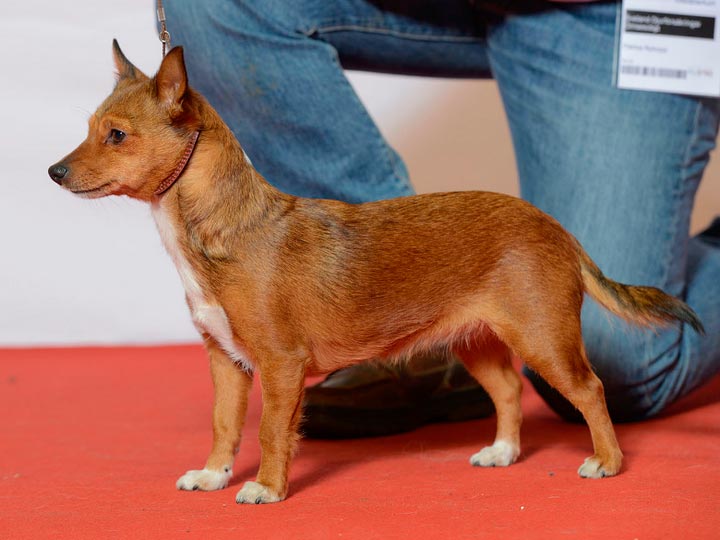
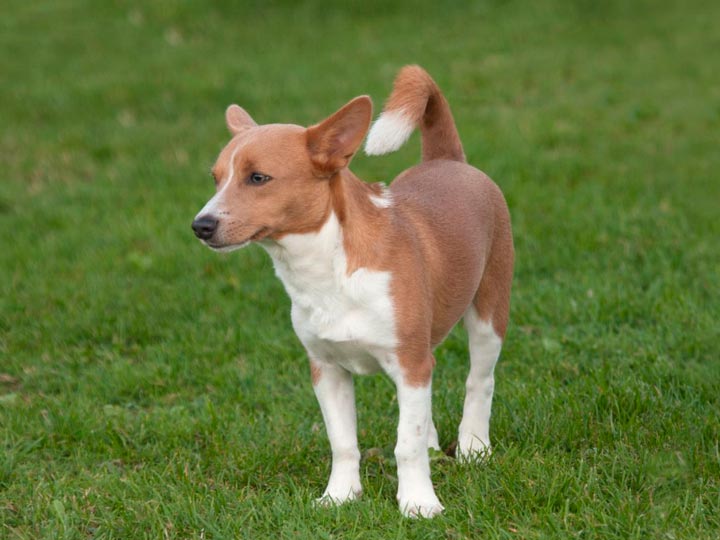
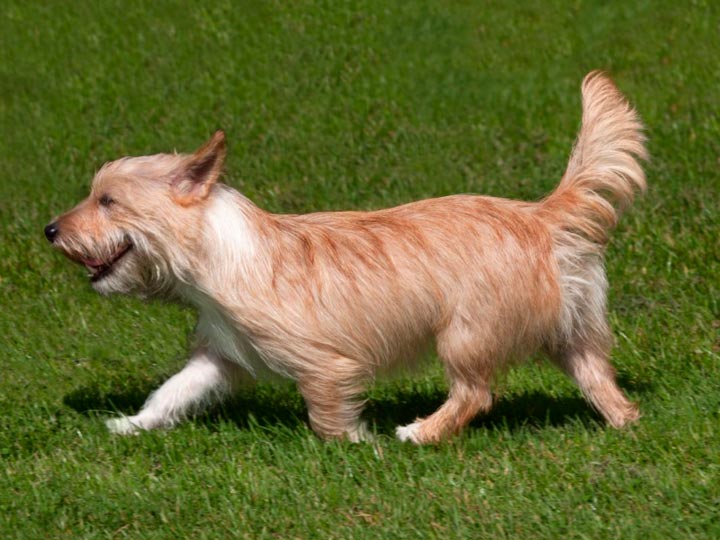
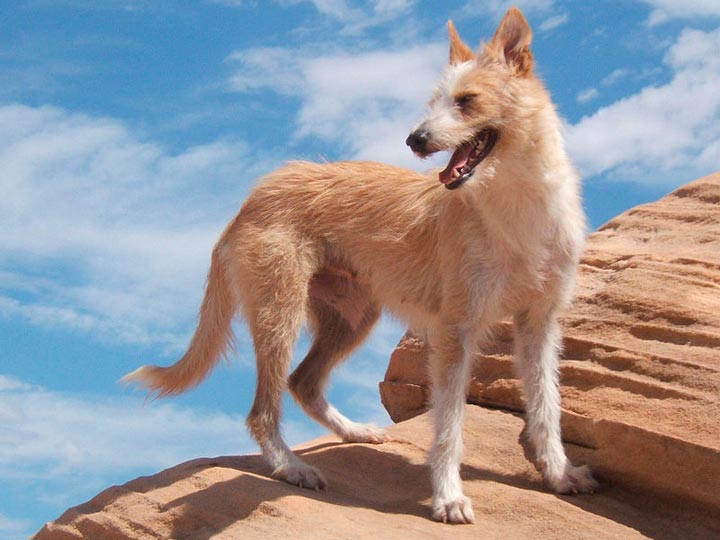
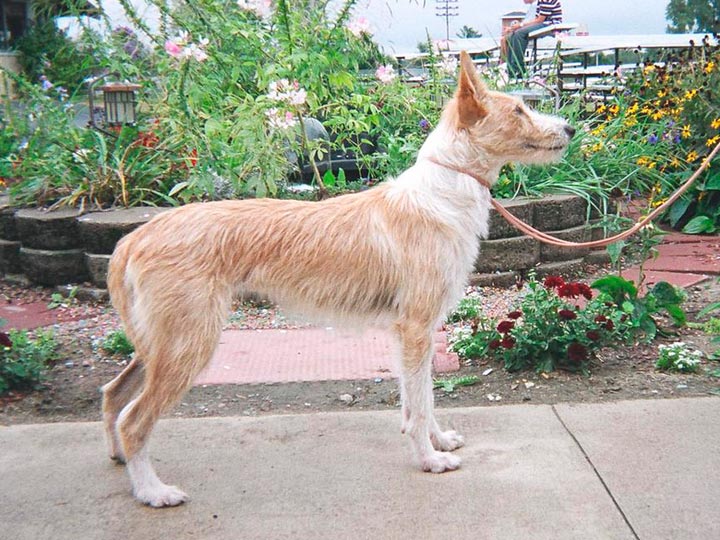
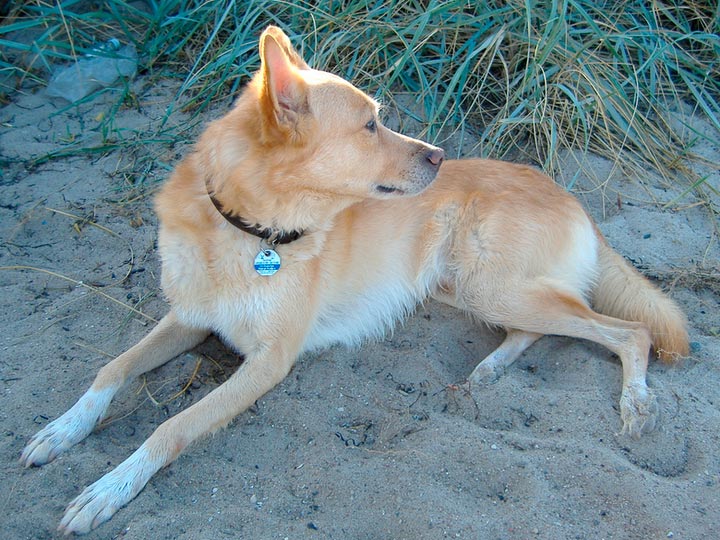
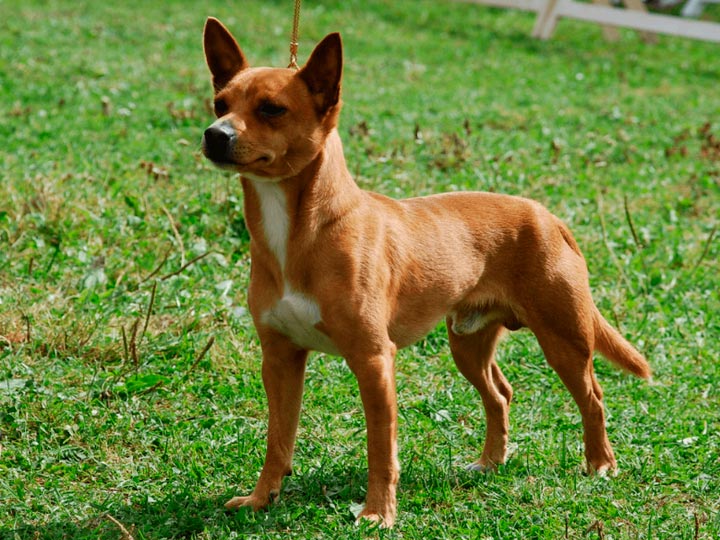
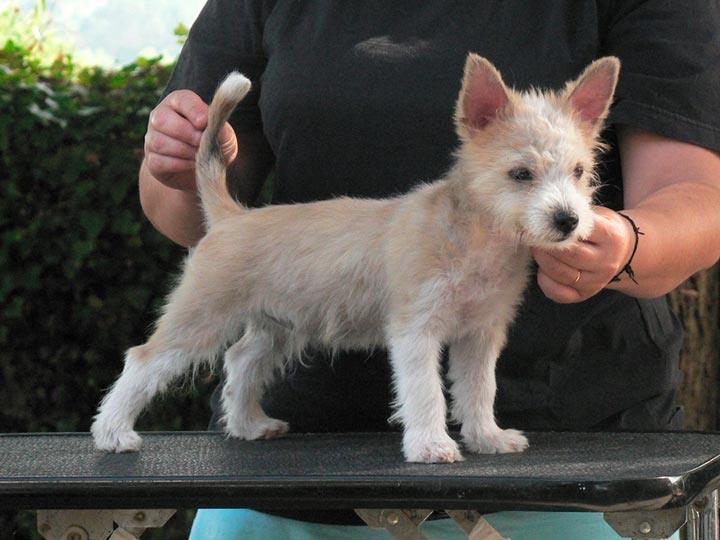
This gallery is dedicated to the Portuguese Podengo dog breed. The photos feature specimens of various sizes, with both wiry and smooth coats.


Video about the Portuguese Podengo dog breed
Read also:


Add a comment