
Portuguese Water Dog
The Portuguese Water Dog has been an indispensable companion for fishermen for centuries. Today, it has proven itself as a companion. Intelligent, obedient, clean, eager to please, and with a hypoallergenic coat that does not shed, it does require grooming.
Content
History of origin
The Portuguese Water Dog is an ancient dog breed that was on the brink of extinction in the 20th century, but was revived thanks to the work of Portuguese and American breeders. The oldest known reference to the breed dates back to 1828. It is an engraving depicting a very similar dog swimming toward a boat. However, it is believed that they originated much earlier, sometime between the 5th and 7th centuries. Historian Manuel Fernandes, in his book "The Water Dog" (1938), states that the breed was already known to the ancient Romans, who called it "lion's dog" because of its distinctive haircut.
Portuguese water dogs were essential companions for fishermen. They were renowned as excellent swimmers and divers, could catch fish just off the hook and retrieve gear from the water, passed messages between boats at sea, helped maintain communication with the shore, and were responsible for the safety of the vessel and gear. Owners sometimes rented their dogs to long-distance vessels to earn extra income.
The water dog was an indispensable attribute of fishing boats until the Industrial Revolution came to Portugal. Over time, the breed, which was widespread along the entire coast, survived only in the Algarve, where old fishing traditions were honored. In the 1930s, Backo Bensaude, a fishing fleet owner and founder of the National Portuguese Water Dog Club, began reviving the breed. He collected specimens from across the country and developed a breeding program. By the 1960s, the number of purebred Portuguese Water Dogs did not exceed 100 individuals. In 1966, a standard was written. In 1981, the Portuguese Water Dog (Portuguese: Cão de agua português) was recognized by the American Kennel Club, and that same year, the Guinness Book of World Records named it the rarest breed in the world.
Animal Planet's video about the Portuguese Water Dog breed:
Appearance
The Portuguese Water Dog should be agile, flexible, and hardy. It is medium in size, balanced, proportionate, and well-muscled. It bears some resemblance to Spanish water sprites dogs and French barbettesThe height at the withers of males is 54 cm, weight is 16-23 kg; the height of females is 46 cm, weight is 19-27 kg.
The skull is slightly longer than the muzzle, the forehead is broad with a central furrow, the occiput is well defined, and the stop is distinct. The muzzle tapers noticeably toward the nose. The nose is wide with well-opened nostrils, black or brown in color depending on the coat color. The lips are thick, well pigmented, and match the color of the nose. The bite is scissor-like. The eyes are medium in size, set slightly obliquely, rounded, and dark brown. The eyelids are well pigmented. The ears are set above the line of the eyes, thin, heart-shaped, and carried close to the head, except for a small area at the base.
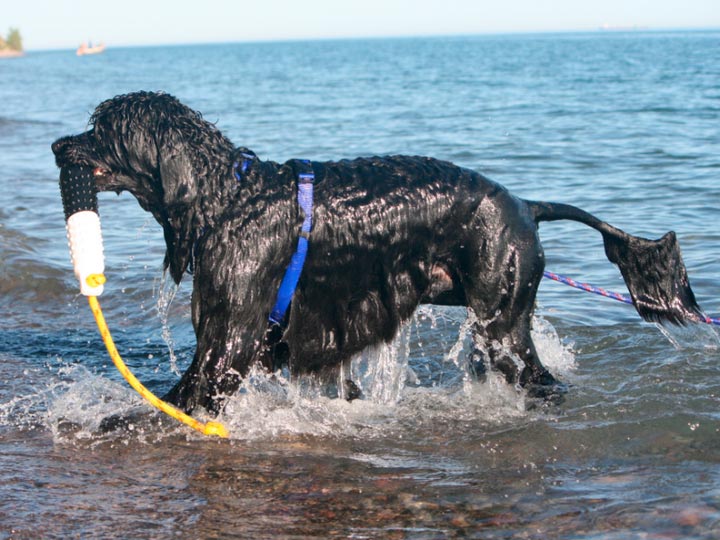
The webbing between the toes helps the Portuguese swim well, and their ability to hold their breath before diving helps them dive.
The neck is short, high, and rounded, without dewlap. The body is slightly elongated. The chest is deep and wide, reaching to the elbows. The ribs are long and well sprung. The belly is well tucked up, and the loin is broad and muscular. The croup is short and slightly sloping. The tail is thick at the base, tapering to a point, set just below the line of the back, and carried in a slight arch. The legs are strong, straight, well-angulated, and dry. The paws are rounded and fairly flat. The nails are slightly arched and may be any color. The central pad is very dense, while the other pads are of moderate thickness.
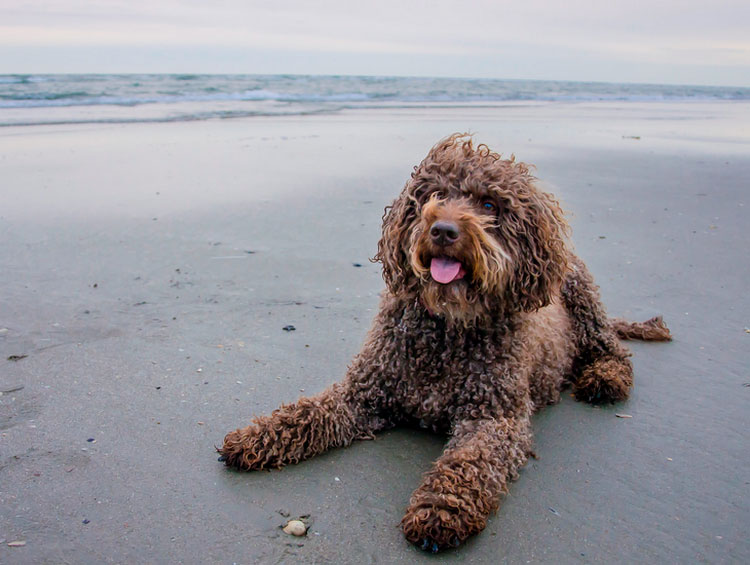
The coat is very dense, evenly covering the entire body except for the groin area, where it is thinner and sparser. There is no undercoat. There are two varieties of the breed, based on coat type:
- Curly - the hair is shiny, forms compact cylindrical curls, the hair on the ears is wavy.
- Wavy - the coat falls in soft waves and does not curl.
The coat color can be black, white, and various shades of brown, as well as any combination of black or brown and white. White is not a sign of albinism, provided the nose, eyelids, and lips are black. The skin has a bluish tint.
Character and behavior
The Portuguese Water Dog is energetic, friendly, curious, and attentive. It loves to work and be the center of attention, always enjoys baths, and is resistant to fatigue. It dislikes loneliness, and is obedient and responsive. Prolonged neglect can lead to the development of destructive behavior patterns.
The Portuguese Water Dog forms a strong bond with its owner, becoming a discreet shadow. It treats other family members with care and affection. It gets along well with children of all ages, but is best suited for families with older children who can become playmates. The Portuguese Water Dog's sociability extends to other animals: dogs, cats, small rodents, and birds, but only if it has been well socialized or raised with them. At a young age, especially if it lacks physical and mental stimulation, Portuguese Water Dogs are prone to damage.
It's worth noting that the Portuguese Shepherd Dog possesses a courageous and strong spirit. Generally sweet and easygoing, it is wary of strangers. It is a good watchdog and will bark if there is a suspicious noise or approaching the house. Its guarding abilities are less developed and not always evident.
Education and training
The Portuguese Water Dog is highly intelligent and easy to train, but it's important that training be consistent and based on positive reinforcement. Intersperse training with play to avoid irritating or tiring the energetic puppy.
The Portuguese Water Dog's desire to please its owner and its trainability make it suitable for participation in various obedience sports, such as agility or obedience.
Content Features
The Portuguese Water Dog is completely unpretentious in terms of care. It can live in a kennel, a large private home, or a small apartment. It will thrive anywhere, as long as it has close contact with its family and gets plenty of exercise. At home, it is quiet and unobtrusive, clean and tidy. Furthermore, its coat is virtually non-shedding, odorless, and suitable for allergy sufferers.
The Portuguese Water Dog is a hypoallergenic breedsIt has no undercoat and sheds little. Owners who suffer from allergies to dog fur report that living with a Portuguese Shepherd causes no problems. Before getting a puppy, ensure there are no individual reactions by closely interacting with adult specimens of the breed and puppies.
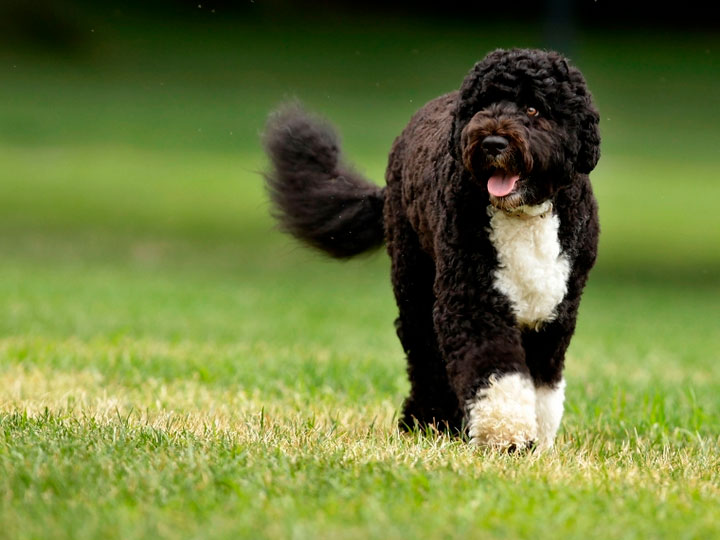
Former President Obama's family has a Portuguese Water Dog (first photo in the gallery). The puppy was named Bo. The choice of pet was made because his daughter Malia suffers from allergies.
The Portuguese Water Dog requires ample physical and mental exercise to stay in shape. This includes daily, long walks with varying levels of exercise. It's essential to allow it to swim at least once a week, except during colder months.
Care
The Portuguese Water Dog's coat grows slowly and evenly over the entire body; seasonal shedding is not pronounced, so it needs to be brushed regularly with a natural bristle brush to remove overgrown hairs. Ears are cleaned About once a week. Remove accumulated wax from the ear canal and pluck the hair. Drying the ears after swimming is recommended. Bathing is recommended every 7-10 days. Use shampoos and conditioners to make the coat even silkier and more pleasant to the touch. Weekly teeth cleaning will help prevent extremely unpleasant dental diseases.
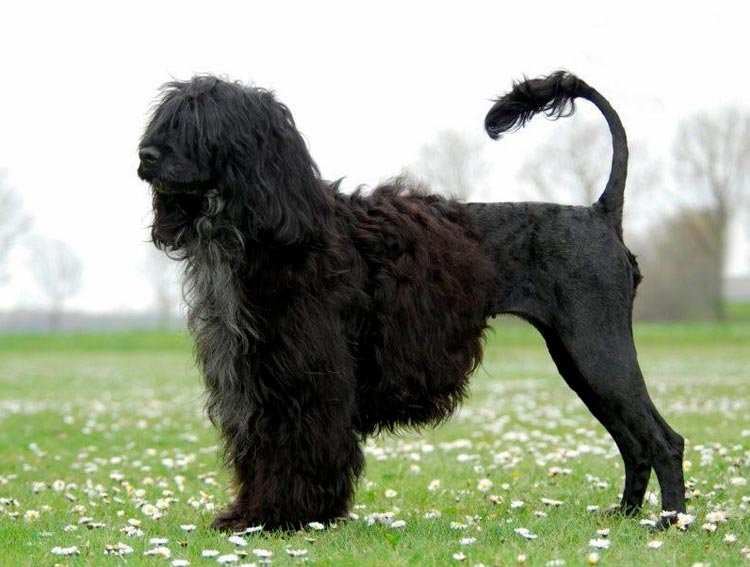
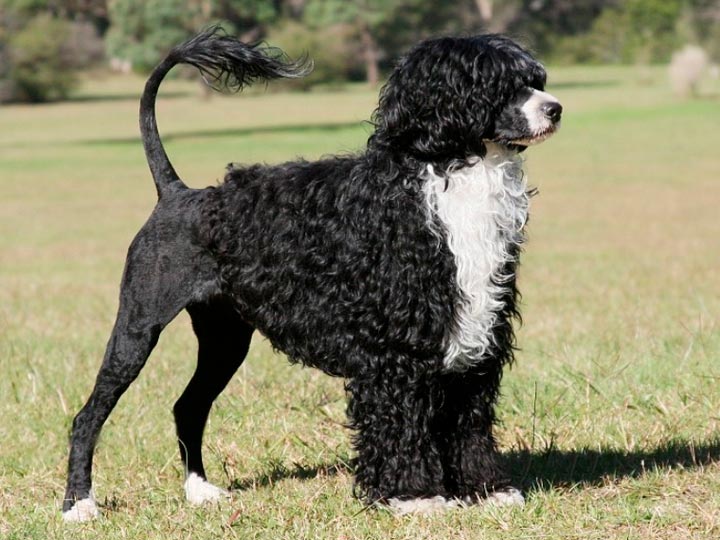
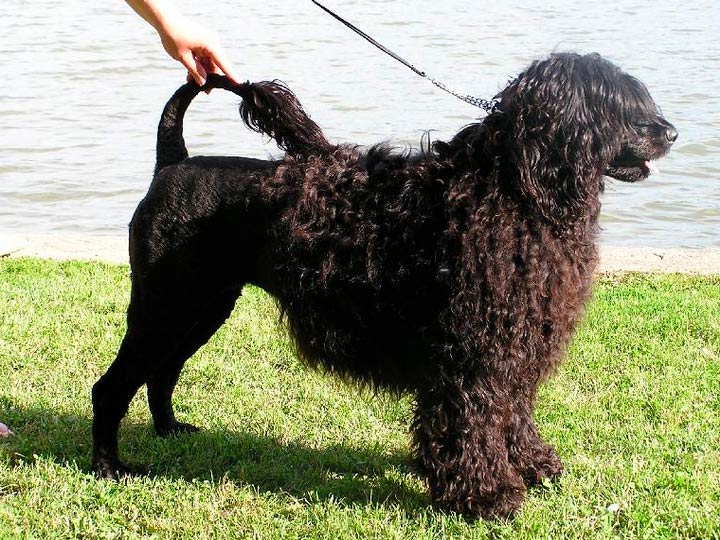
The Portuguese Water Dog has a distinctive profile thanks to the breed's signature "Lion" cut. It's believed to have been originally developed by fishermen to free the dog's legs for swimming while still keeping its vital organs warm.
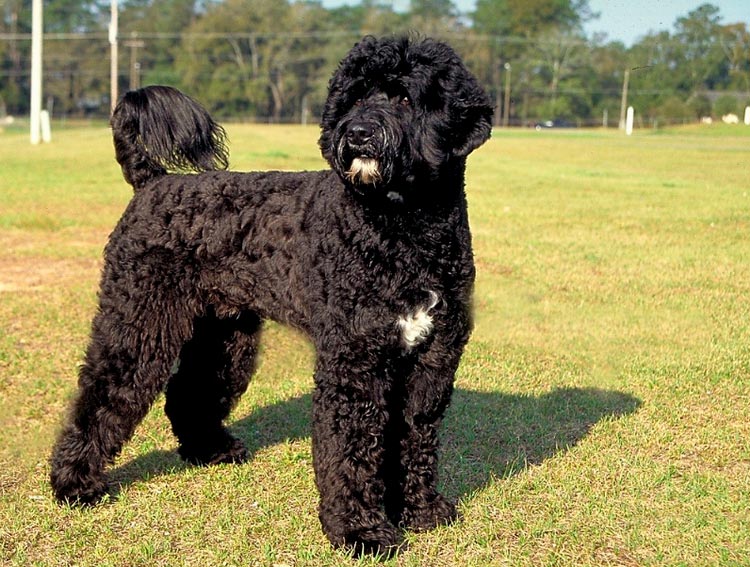
Many owners clip their Portuguese dogs to make grooming easier and simply for variety. Pets can wear any haircut. At dog shows, however, dogs are shown only with the Lion or Working haircut.
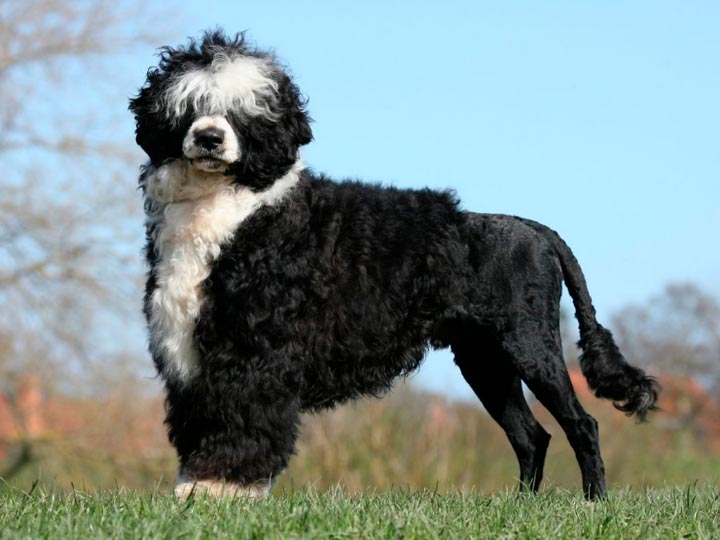
- Lion: The hair on the midsection and back of the body, as well as on the face, is completely shaved. The tip of the tail is left at a natural length. The hair on the head, neck, and front of the body remains long but is trimmed, emphasizing the harmonious build.
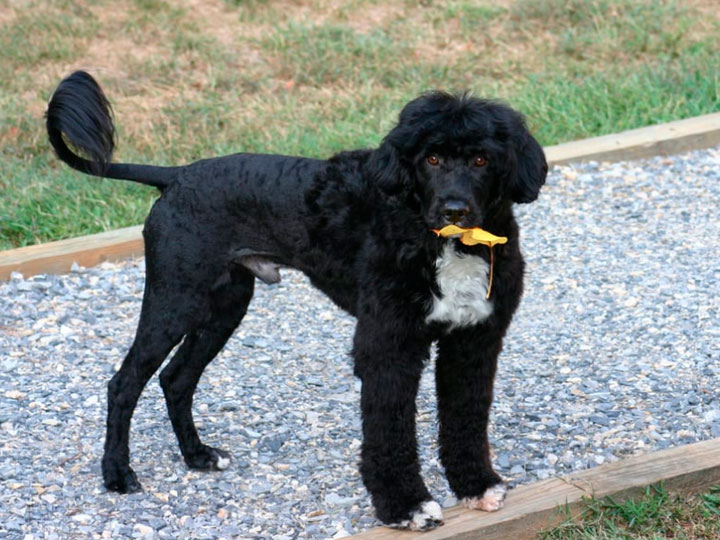
- Working hair—the forelock is trimmed short enough to allow the dog to see clearly. The hair is trimmed to a uniform length all over the body, approximately 2.5-3 cm. It should reveal a natural beauty while also highlighting the dog's athletic build. The hair on the tip of the tail is left at a natural length.
Nutrition
To maintain health and well-being, it's important for your Portuguese Water Dog to receive a well-balanced diet. This can include high-quality pet food or homemade meals. In any case, the diet should be appropriate for the dog's age, physiological needs, and physical activity level.
Some Portuguese are prone to weight gain. Owners of these dogs should monitor calorie intake and treat amounts during training.
Health and life expectancy
Portuguese Shepherds are healthy, resilient, and have strong immune systems. They are free of a number of hereditary diseases common in other breeds, but are prone to ear infections, dental disease, and gastrointestinal problems if not properly cared for and maintained. The breed club recommends testing dogs for hereditary ophthalmological diseases and hip dysplasia.
To maintain the health of the Portuguese dog, it is important to promptly treat it for parasites and vaccinate it against major infectious diseases. Life expectancy is usually 11-13 years.
Choosing a Portuguese Water Dog Puppy
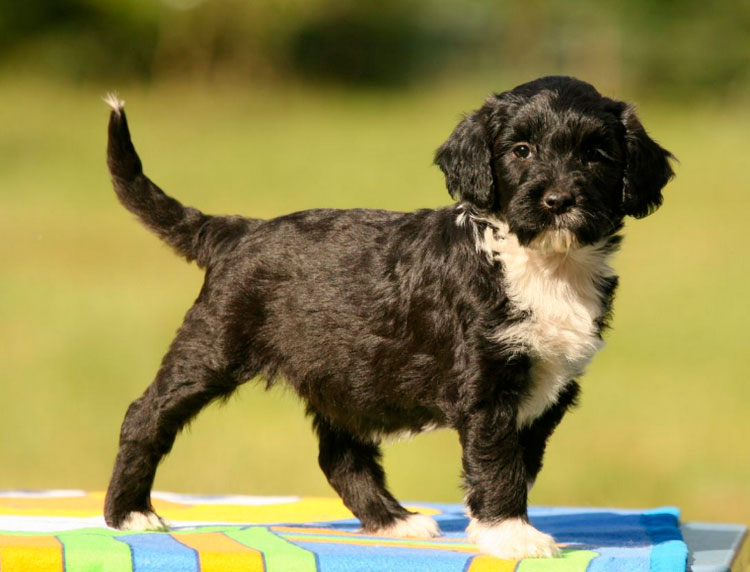
The majority of these dogs are currently concentrated in Portugal and the United States. In Europe and the CIS, only a few breeders are involved in breeding them, but finding a puppy is quite possible if you're looking for one. The only proof of breeding quality should be the puppies' documents of origin and the parents' pedigrees. It's recommended to take puppies to a new home no earlier than 8 weeks of age, after they've been dewormed and vaccinated. It's also important to pay attention to the puppies' character and appearance; they should be healthy and meet the standard.
Price
The price of a Portuguese Water Dog puppy in breeders ranges from 50,000 to 85,000 rubles. The price is influenced by the quality of the sires, the puppy's prospects and gender, the breeder's geography and status, and other factors.
Photos
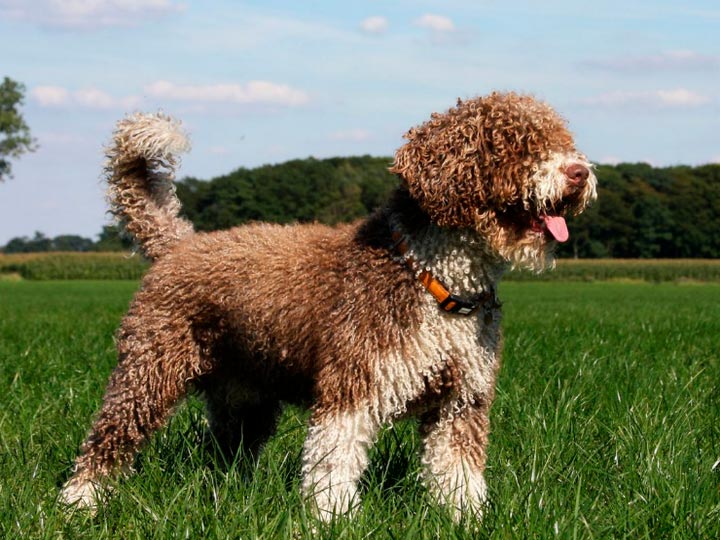
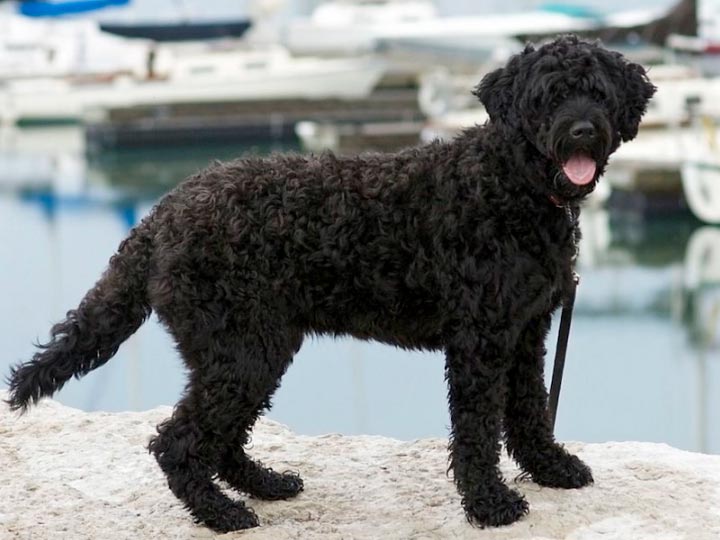
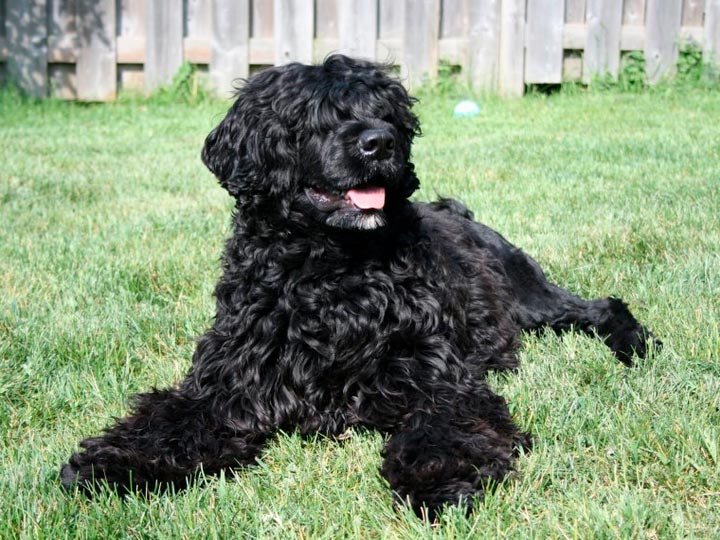
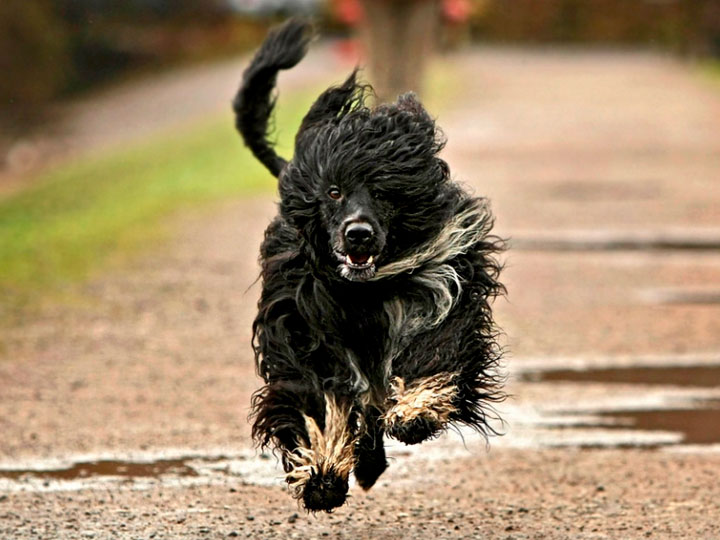
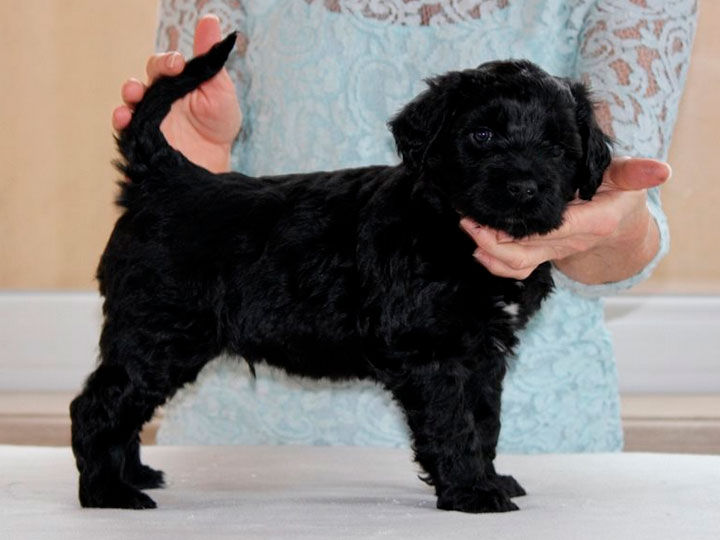
This gallery features photos of Portuguese Water Dog puppies and adults. They show how the breed looks in the classic show cuts of the "lion" and "working" dogs.
Read also:


Add a comment