
Porcelain Hound
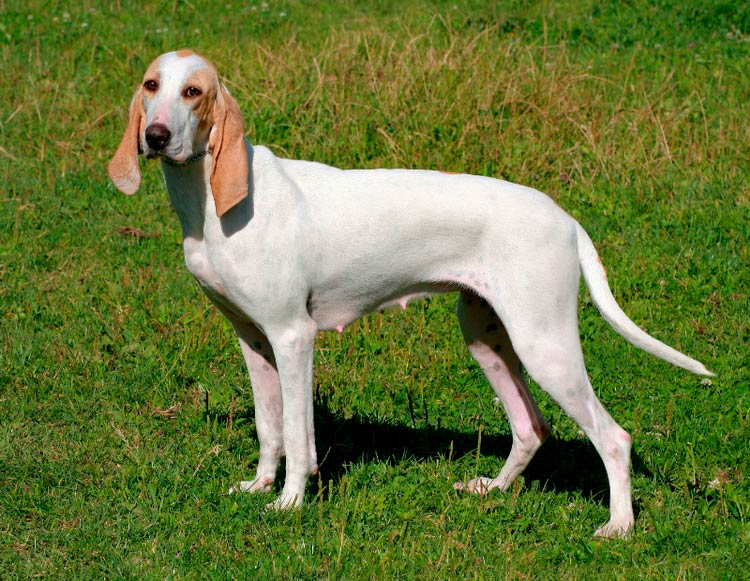
The Porcelain Hound is a medium-sized, short-haired dog that exemplifies the typical French hound. This energetic and passionate hunter is primarily used to hunt hare, roe deer, and wild boar. Another name for the breed is the Porcelain Hound.
Content
History of origin
The Porcellan is considered one of the oldest French hunting breeds. It was developed in the 15th century to hunt hare and other small game in the abbeys of Luxeil and Cluny. The foundation dogs were the Saint Hubert dogs (their ancestors). bloodhound) white in color. They were mixed with the blood of other outstanding hunting dogs.
In France, the breed is known as the Chien de Franche-Comte, named after its region of origin, which is located on the border of France and Switzerland.
During the French Revolution, the porcelain hound was nearly lost, but was revived by the end of the 19th century through the efforts of Swiss and French hunter-breeders. French, Swiss and English hounds. The first Porcelain Hound club was founded in France in 1971. In 1975, the Porcelain Hound was recognized by the FCI.
Purpose
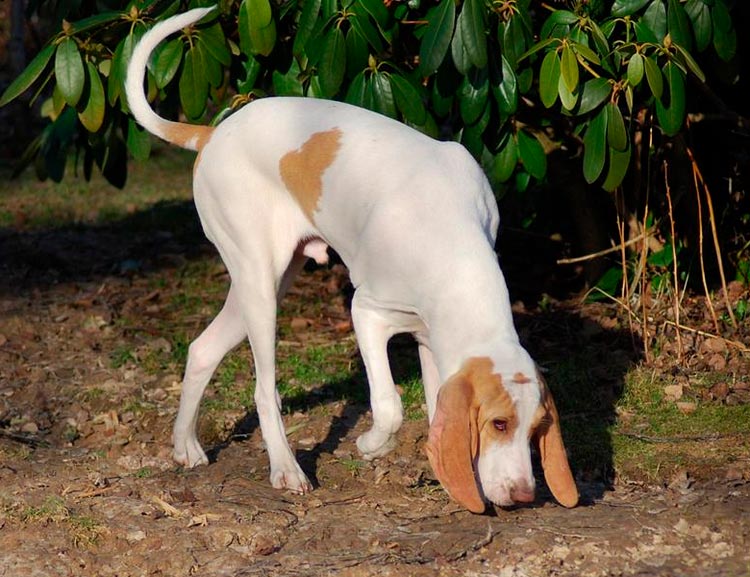
The Porcelain is used for hunting small game, deer, roe deer, and wild boar. It can work alone or in a pack. It is bred for working qualities. It has a very good sense of smell and is persistent, eager, and impulsive when hunting. It drives with a loud, resonant bark. Strong and resilient, it can run long distances and work in steep, rugged terrain.
Today, porcelain dogs can be found in other fields as well. They are used in police and customs duties, as well as in search and rescue operations. They can excel in various sports and at dog shows, and are excellent family dogs and companions for active people.
Appearance
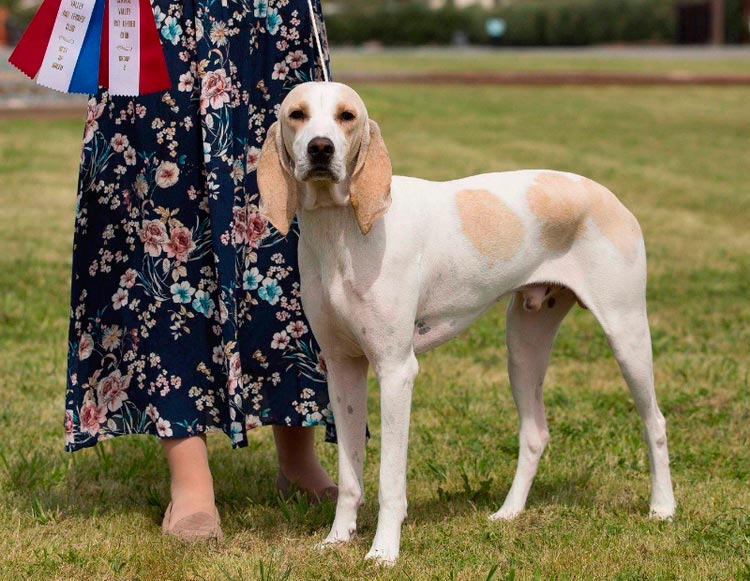
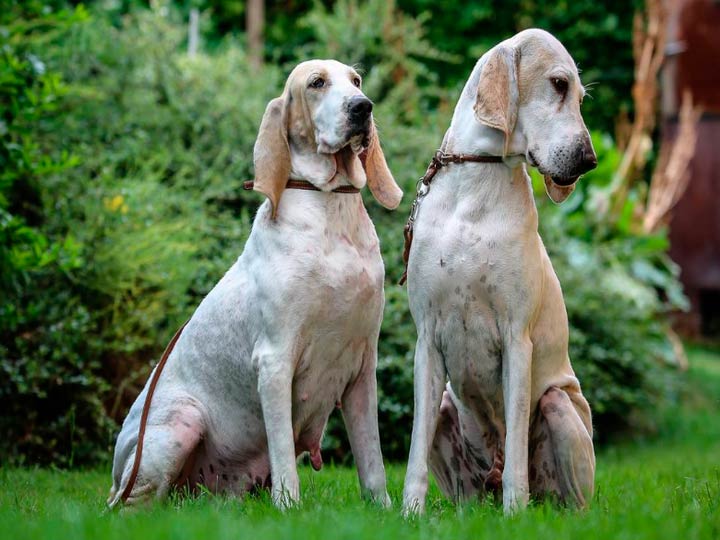
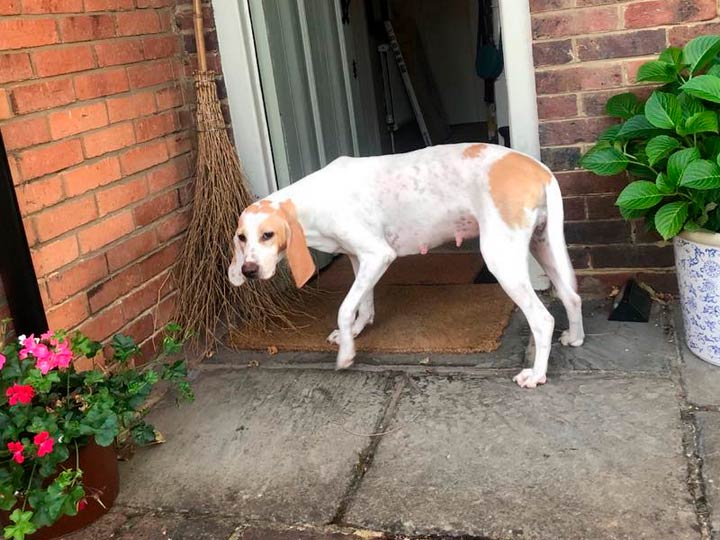
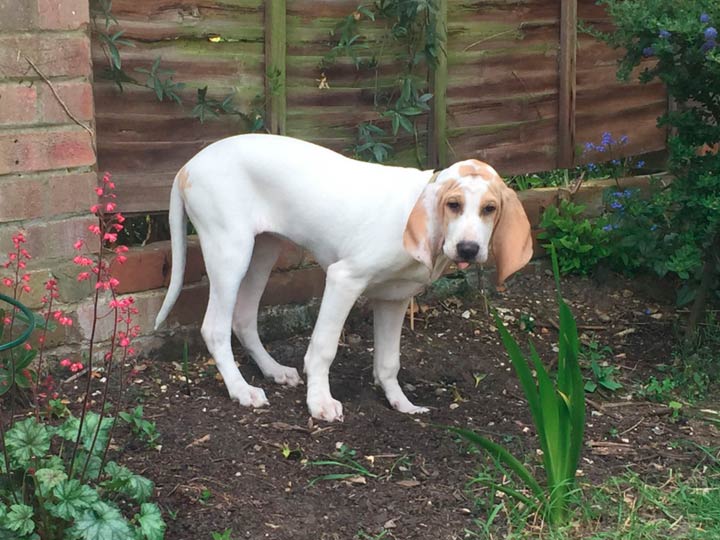
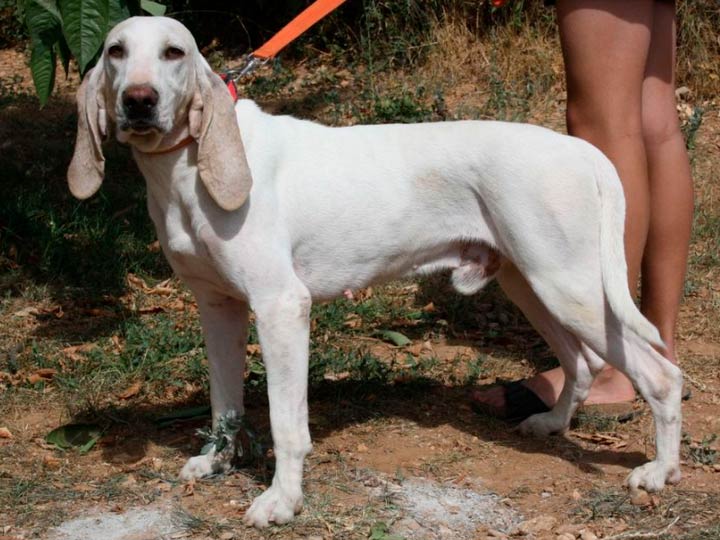
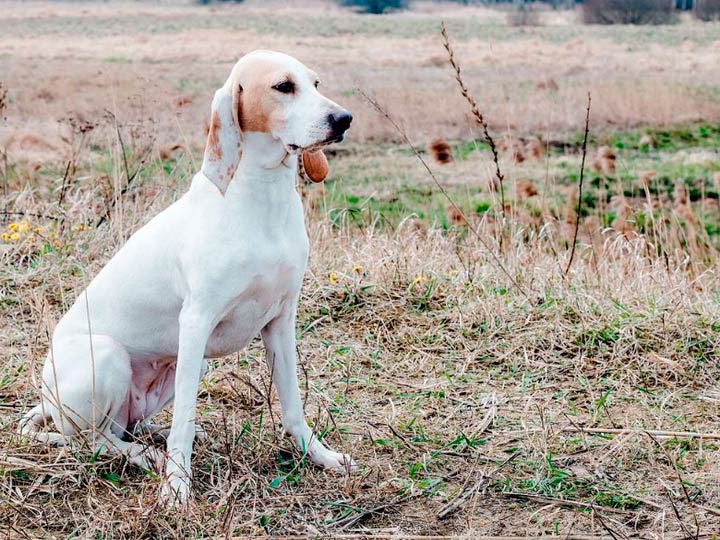
The Perseline is an elegant, well-proportioned, medium-sized dog with a beautifully chiseled head, long ears, and slender, strong legs. Its main distinguishing feature is its short, red-and-white coat, through which dark patches of skin can be seen. Sexual dimorphism is moderate.
- Height at withers: 54-58 cm
- Weight: 25-28 kg cm
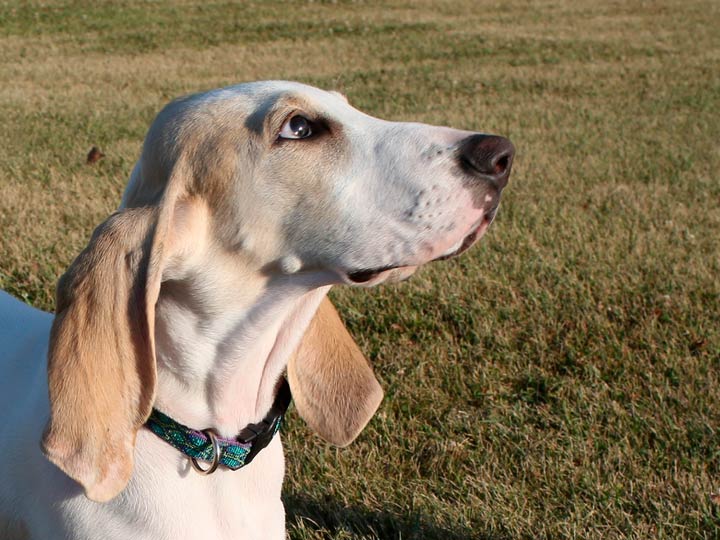
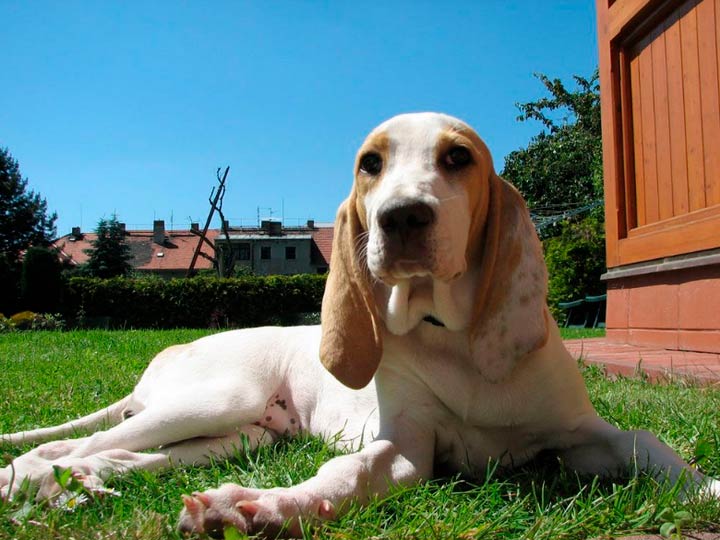
The head is dry and chiseled. The skull is wide between the ears and rounded. The stop is moderate. The muzzle is long, the bridge of the nose is straight or slightly humped. The nose leather is developed and black. The upper lip slightly covers the lower lip, without drooping. The mucous membranes are black. The eyes are dark and medium in size. The ears are long, thin, twisted inward, and set below the line of the eyes. The neck is long, a slight dewlap is allowed.
The body is proportionately built, square in format. The back is broad and straight. The loin is arched. The hip bones are slightly prominent. The chest is moderately broad and deep. The belly is tucked up. The tail is thick at the base, tapering noticeably toward the tip, and is of medium length. The limbs are strong, fairly long, and lean.
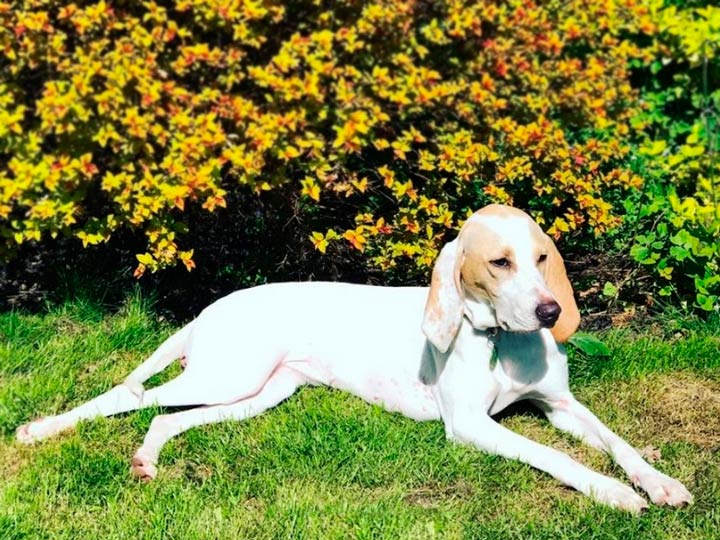
The skin is elastic and thin, called "marbled" due to its numerous black spots on a white background. The coat is fine, smooth, and shiny, lying flat. The coat is white with orange spots that do not blend into a coat.
Character and behavior
The Porcelain is primarily a hunting dog, with a pronounced desire to follow its nose and a keen disposition toward small game. It is gentle and affectionate with all family members, including children. It is friendly toward guests. It is unafraid of strangers and has watchdog qualities, but is not aggressive. At home, it is quiet, fairly calm, and orderly. It barks little.
Porcelain hounds are obedient and devoted to their owners. They are sensitive to lack of attention and unfair treatment.
The breed was bred to work in a pack, so it gets along well with other dogs when properly trained, but prefers to be the sole object of its owner's affection. Its trainability is average. It is important to focus on socialization from an early age and train it with a mindful eye for the hound's temperament.
Content Features
The Porcelain is best suited for indoor living. It is not well suited to year-round outdoor living, but can be kept in a separate, warm room with access to a spacious enclosure. It is not a good choice for an apartment unless the owner can provide sufficient exercise.
The Porcelain Hound needs the opportunity to burn off excess energy, develop its hunting skills, and maintain good physical fitness. Daily walks should last at least 2-3 hours. Free roaming in nature is essential. The Perseline can be a good running or cycling companion.
Care comes down to simple hygiene procedures: regular brushing with a brush for short-haired breeds, washing, periodic cleaning of ears, teeth, and trimming of claws as needed.
Health and life expectancy
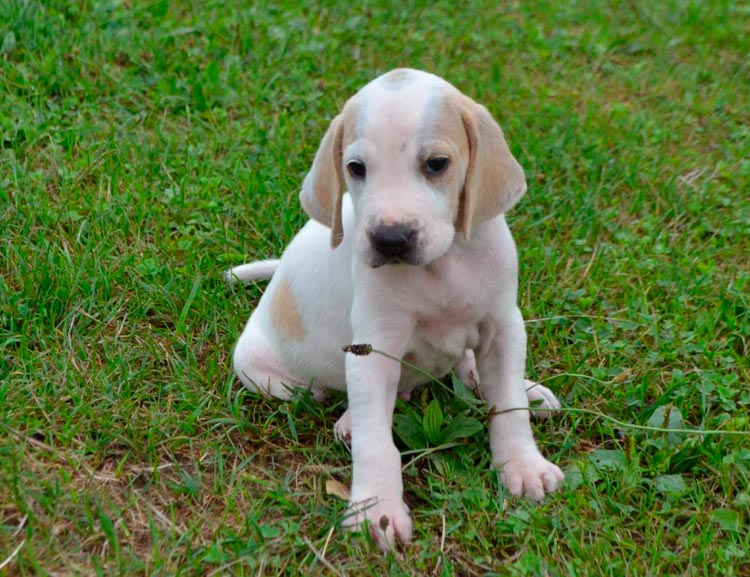
The Porcelain is a healthy breed. Reported illnesses are usually caused by infections, poor housing conditions, or poor nutrition. A predisposition to joint and eye problems has been noted. Life expectancy is 13-15 years.
Where to buy a puppy
The Porcelain is a relatively rare breed. Most of the population is concentrated in France, Italy, and Switzerland. There are also breeders in Germany, the Czech Republic, Serbia, Denmark, the UK, several other European countries, and the USA. When abroad, it's best to look for a breeder, information about planned matings, or puppy availability through breed clubs.
Porcelains were brought to Russia relatively recently, but have already become a favorite among many dog lovers. Every year, the breed is replenished with dogs that are excellent show dogs and also possess hunting talent.
Price
The average cost of a Porcelain Hound puppy in Europe is 700 euros.
Photos and videos
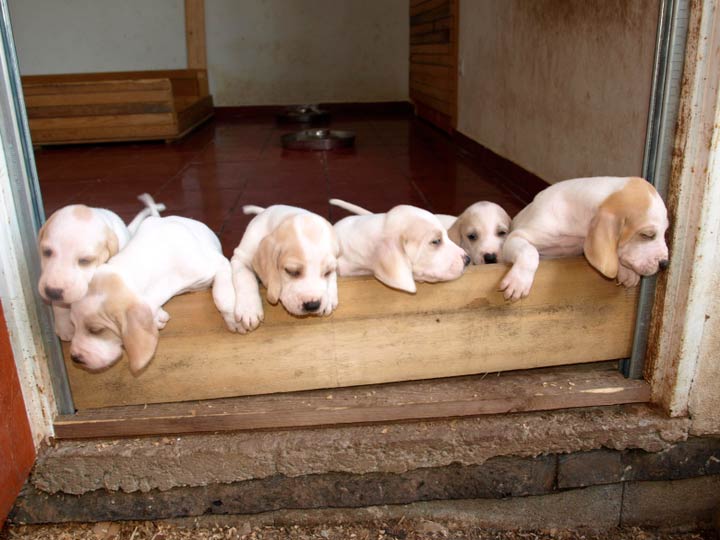
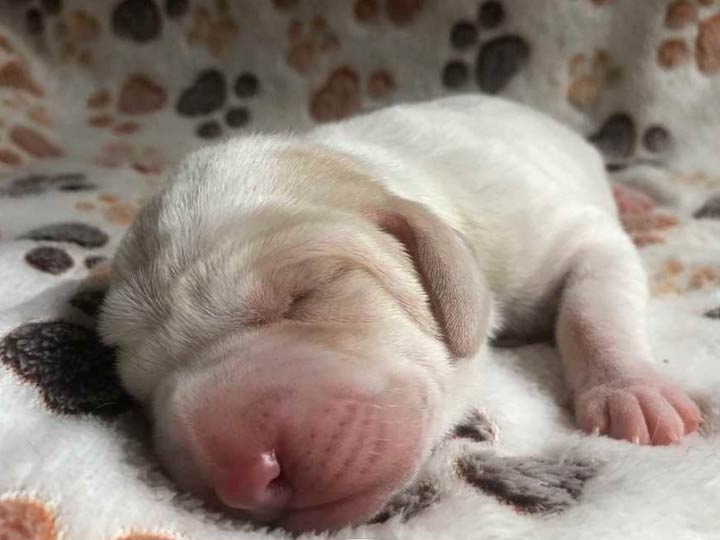
You can see what French Porcelain Hounds look like in the photos in the gallery. The photos show Porcelain Hounds of different sexes and ages.
Video about the Porcelain breed
Read also:


Add a comment