
Cat breeds with short tails
Few people know about short-tailed breeds, as they aren't as common as their long-tailed counterparts. What makes these cats unique is that their tails aren't docked, as with some dogs, but are a genetic trait. Many are willing to pay good money for this unique aberration of nature, acquiring an unusual pet. So, which cat breeds have short tails?
Content
Bobtails
The most famous representatives of the tailless cat breed are the bobtails. There are several varieties of this breed, among which the most well-known are the following:
Kurilian Bobtail
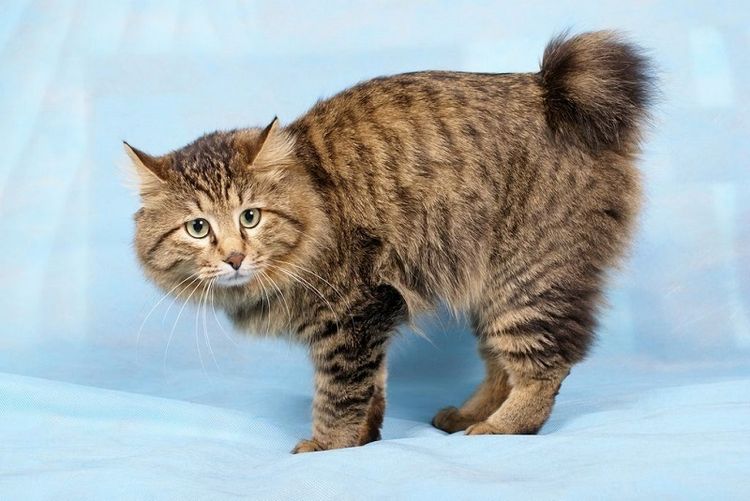
They have a slightly arched back, resembling an arc, and distinctive ear tufts. Because their front legs are shorter than their hind legs, these cats have a very distinctive gait—they seem to always walk in a semi-crouch. Their coloring can range from tortoiseshell to brindle and marbled.
Despite their harmless appearance, short-tailed Kurilian Bobtails They are very active and have a willful nature. They are excellent hunters, testing their skills not only on rats, mice, and other rodents, but also on various insects and even fish. The unique structure of their ears allows them to dive without fear of getting water in their ears.
Cats are known for their friendliness not only toward people but also toward other pets living in their home. They get along well with children, are loyal, and sociable with their owners, yet wary of strangers. They are unobtrusive and gentle, but they never miss an opportunity to get some extra affection.
Japanese Bobtail
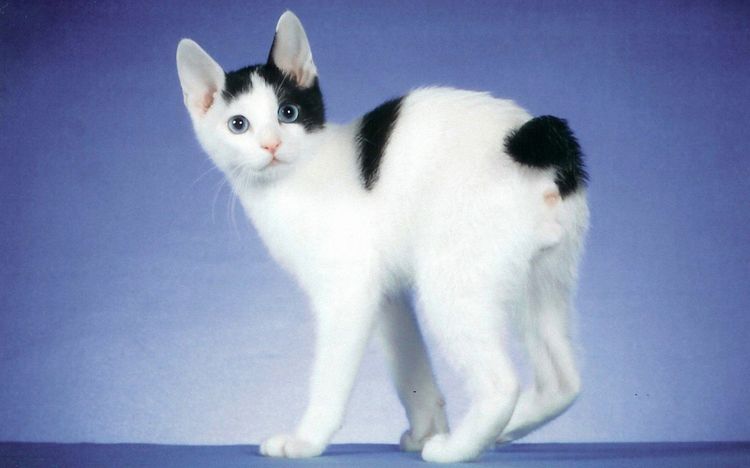
Graceful cats with soft, silky fur, a beautiful build, and unique coloring. Most often, they are white with tortoiseshell "spots" on their heads and backs. Their short, fluffy tail is somewhat reminiscent of a hare's tail, giving them an even more "toy-like" appearance.
The absence of a thick, mat-prone undercoat gives these cats a neat appearance. Furthermore, they don't require regular brushing, especially during shedding season. They are very active, capable of jumping high, and extremely curious. This combination of traits means they can quickly learn to open interior doors, drawers, and access cabinets and other household items.
Their natural stubbornness does not prevent them from being loyal to their owner, being trainable, and interacting with other pets. Japanese Bobtails They are characterized by excellent health and a lack of genetic diseases. They live a long life and are easy to care for.
American Bobtail
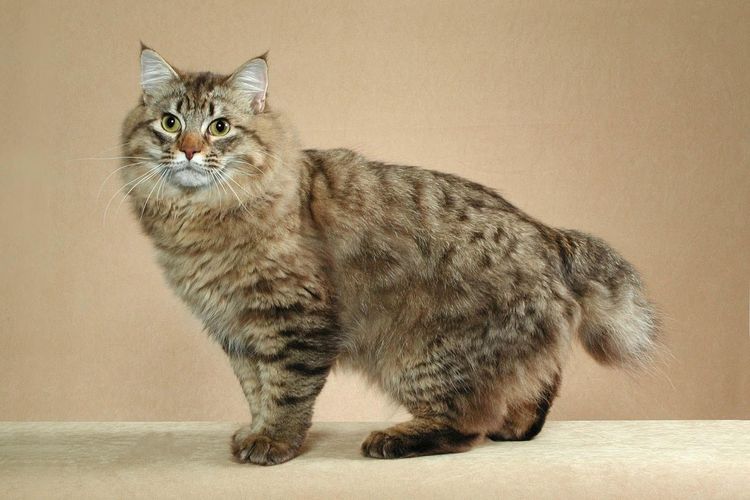
These are fairly large, short-tailed, purebred cats with a strong build and a short, tufted tail. Unlike other members of the breed, Americans They are able to move their fur. Bobtails come in short-haired and long-haired varieties, so there are certain grooming nuances. The former don't require frequent brushing, while the latter, on the contrary, require a lot of attention, especially during shedding season.
The most common coat pattern is spotted, giving these cats a lynx-like appearance. Their personality traits include sociability, energy, easygoingness, and emotionality. They are highly attuned to people's moods and adapt to situations. They are easy to train and are exceptionally clean. They love being the center of attention and dislike being alone.
Thai Bobtail
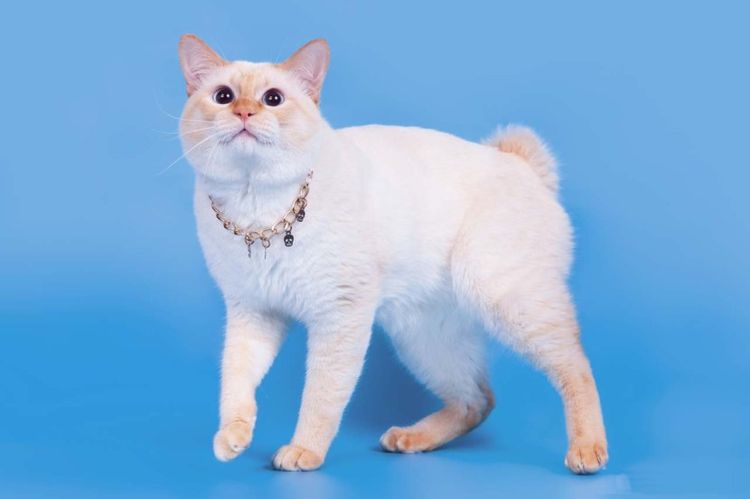
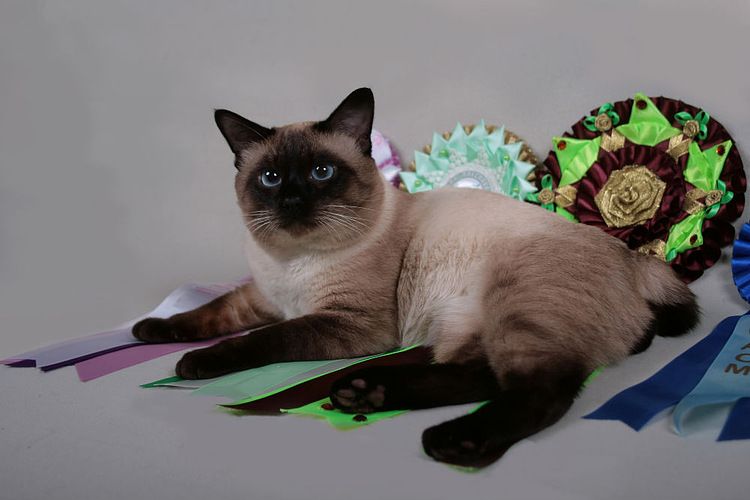
These short-haired beauties with blue eyes and a "chopped" tail resemble Siamese cats in appearance. The cream coloring on the face, paws, and tail gradually fades to a chocolate shade, giving it a satiny sheen. Because the hind paw nails do not retract into the pads, a silent gait is not the Thai Bobtail's strong point.
The cats' personalities are very similar to those of dogs. They are easygoing on a leash, responsibly guard their owner's belongings outside, obey various commands, and don't like to scratch. When attacking during play, Thai cats don't extend their claws, but bite immediately. They are not vindictive and get along well with children.
Due to their natural curiosity, they often get into funny situations, trying to stick their noses into everything they can. They are very loyal to their owners, following them everywhere. They get along well with other pets, but only in a leadership role. They boast enviable health and longevity.
Karelian Bobtail
They have a strong build, an upright posture, and powerful legs, with the hind legs noticeably longer than the front. Their fur is thick and long, and their tail has a curved "trajectory." Their eyes usually match their coat and can be a variety of colors—yellow, green, gray, or blue.
Cats of this breed are known for their quiet natures. They tend to make their presence known through touch rather than vocalization. They are highly sensitive to people's moods and are friendly and affectionate. They are not particularly active and will always prefer lounging on a cozy sofa or windowsill to active play.
Because cats' ancestors lived in cold climates, their ability to tolerate freezing temperatures remains intact today. They are undemanding eaters, quickly adapt to new living conditions, and are not stressed by long-distance travel. They are clean, peaceful, have strong immune systems, and are not predisposed to genetic diseases.
The Aborigines of the Isle of Man
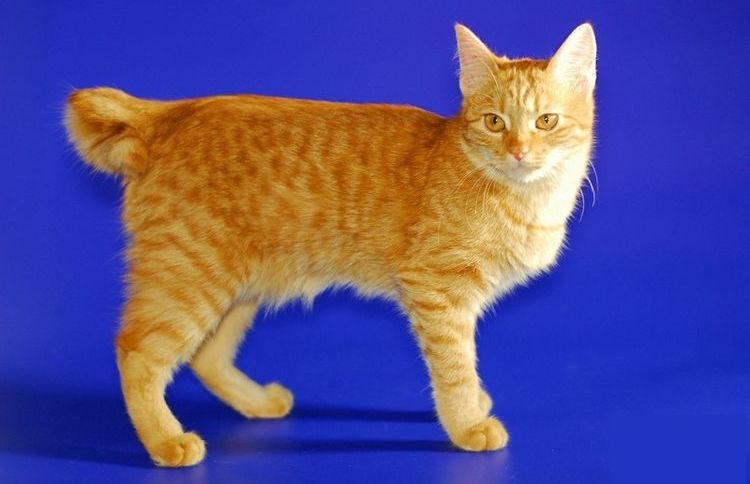
This is roughly what they call cats Manx breed, who settled on the Isle of Man in the Irish Sea. How they got there is unknown, although there are many theories, from biblical to modern scientific.
Today, there are four distinct varieties of Manx cats. Depending on the length and shape of their tail, they are classified as:
- Rumpy (sacral). The tail is absent altogether.
- Riser (growth). Instead of a tail, there's just a small protrusion a couple of vertebrae long. -9
- Stumpy (short). A small tail measuring 4-8 vertebrae.
- Long (long). A fairly long tail, almost identical to the "classic" length.
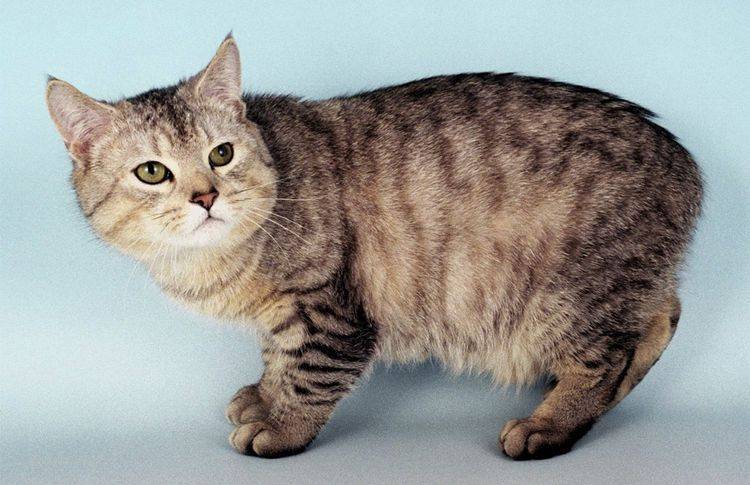 Rumpy
Rumpy
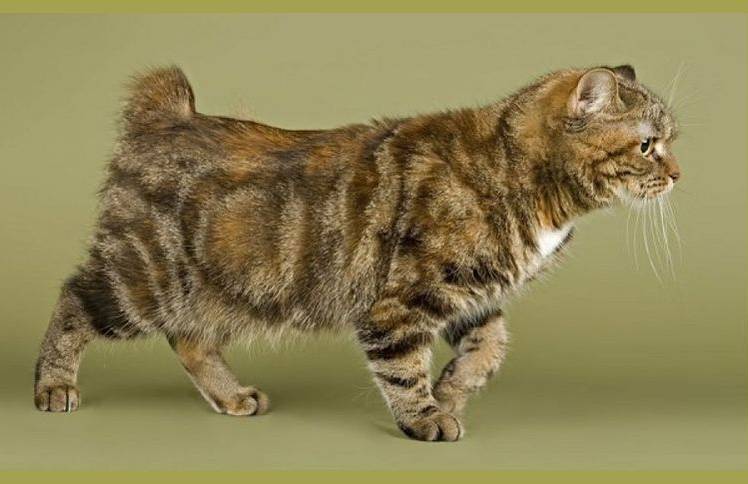
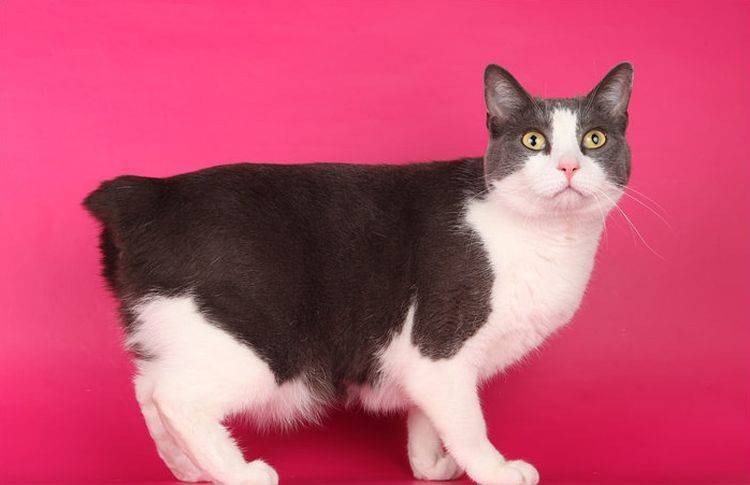
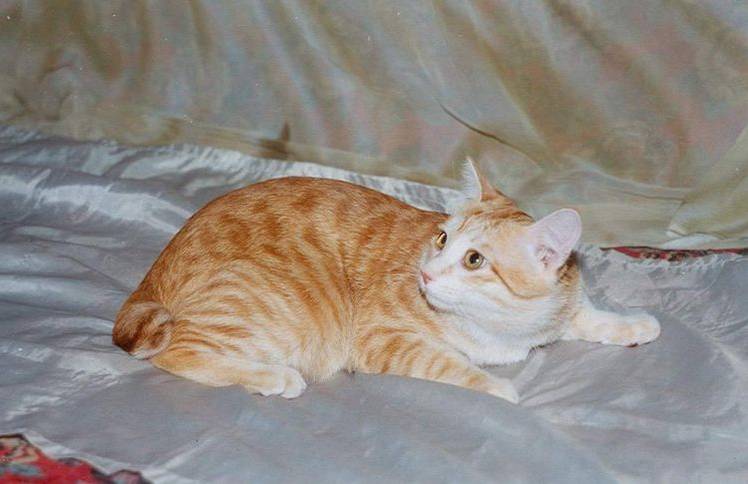
In terms of personality, these cats are known for their cheerfulness and energy. They enjoy active play, adore climbing trees, and are known for their remarkable jumping ability. Their behavior is somewhat similar to that of dogs, particularly when it comes to learning various commands. Because Manx cats are so sociable, they are not recommended for people who are rarely home.
Another distinctive trait of this breed is their excellent hunting skills. Owners of these pets should be comfortable with the idea of bringing mice, rats, moles, and other garden and cottage "fauna" into the house. Manx cats are always good with children, even if the child is overly affectionate and torments the cat with intrusive petting.
Hybrid breeds
Through selective breeding, several more breeds of cats with short tails were developed.
Pixiebob
Pixiebob The Pixiebob is a cross between a wild lynx and a shorthaired cat. These animals are very talkative, so be prepared for constant purring, purring, and chattering. These cats love to be the center of attention and follow their owners wherever they go and whatever they do. They thrive outdoors, taking their family on picnics or long trips. They can walk on a leash and obey certain commands. Pixiebobs are highly intelligent, which gives them an edge in many games, both active and static. They get along well with children, but care must be taken to ensure they treat the cat with due respect and do not bully them.
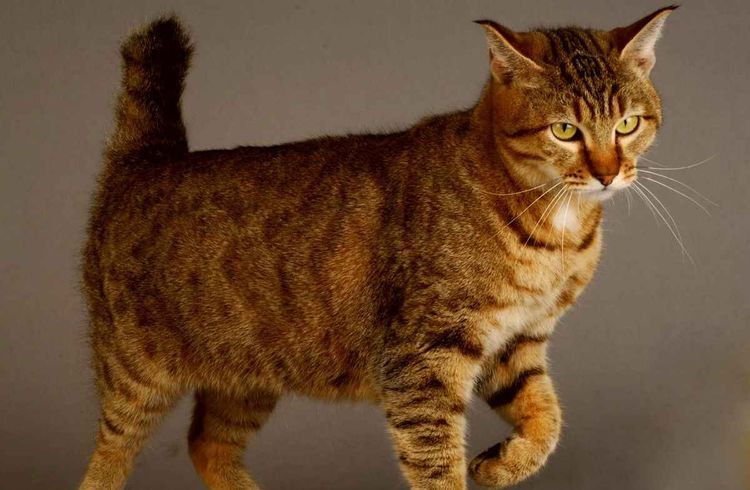
On average, animals live 13-15 years and are not predisposed to hereditary diseases.
Read also:


Add a comment