
Black cat breeds with photos and names
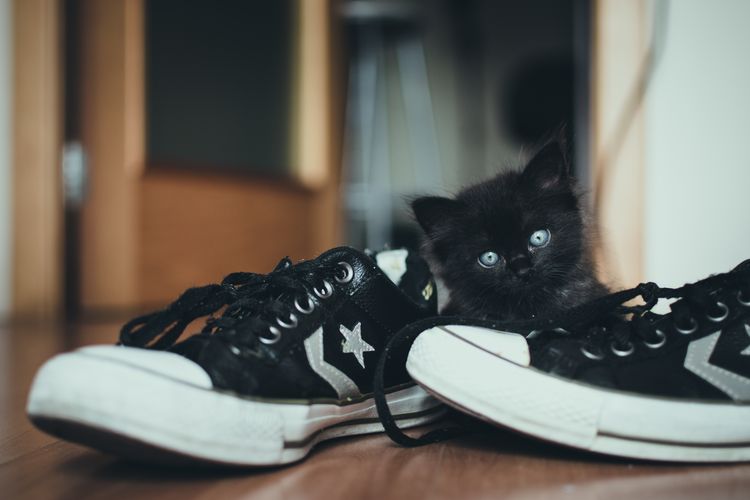
Black cats aren't a distinct species, but a color pattern found in various breeds. In the wild, black fur is an advantage, as it makes a hunter virtually invisible at night. Attitudes toward black cats remain mixed. Some, remembering the superstitions, will avoid them, while others will be drawn to the aura of mystery that surrounds black cats. What breeds of cats are there with black fur?
Content
Bombay
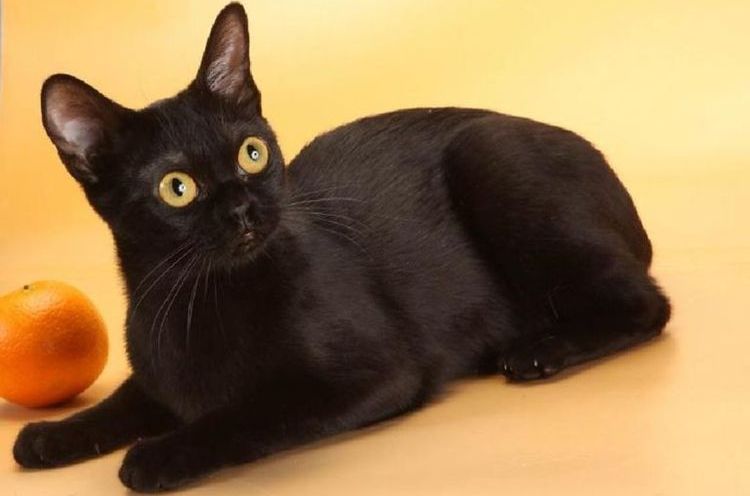
This is perhaps the only breed whose standard only allows for black fur, with all other colors considered faulty. These cats appeared in the United States in the 1950s.
The breeder was trying to produce a black cat that would resemble a panther. These predators live in the Bombay area, hence the name. Distinctive features include a neat head and paws, and an elongated, graceful body. Eye color changes with age: from gray and blue in kittens to amber in adults.
Bombay cats get along well with children and are eager to interact with their owners, but they don't bother them with meowing. Friendliness is a hallmark of these little panthers.
Devon Rex
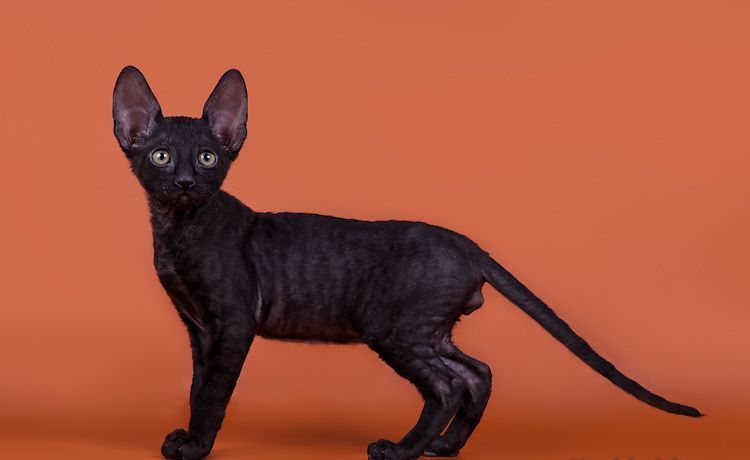
Large eyes, elfin ears, and wavy fur make this breed unique and captivating. Black is one of many color variations. Other variations include marbled, brindle, and silver-black coats.
The breed originated and was registered in the UK. It is relatively young, having existed since the 1960s. Devon Rexes Friendly and affectionate in nature, they are energetic, curious and thrive in urban environments.
Fact! Devon Rexes can be kept by people with cat hair allergies, as their fur is hypoallergenic.
Oriental
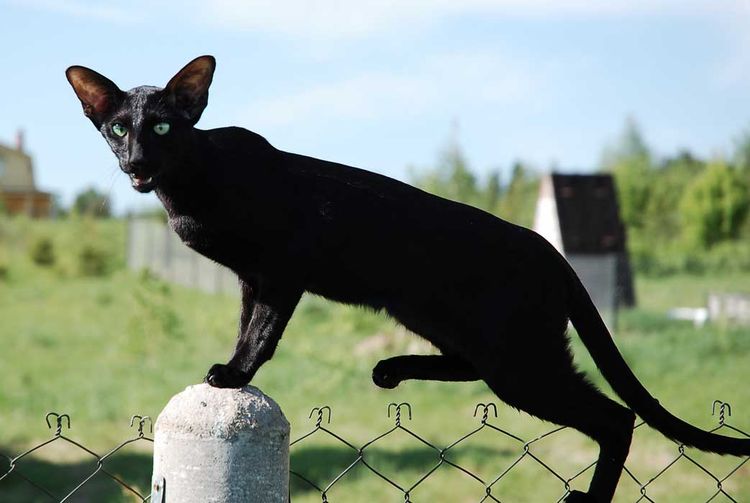
In the mid-20th century, the British registered another breed – the Oriental. It was created by crossing shorthaired cats with Siamese cats. The result was small, slender, yet muscular cats with large ears and a shiny, dense coat.
Even the paw pads of Orientals are black. Their coloring ranges from a deep blue-black to patches of this color in other patterns, of which there are 42 in total.
Oriental cats are incredibly loyal, affectionate, and friendly, but they're not a good choice for those with limited free time. They require a lot of care, playtime, and interaction; otherwise, they'll get bored.
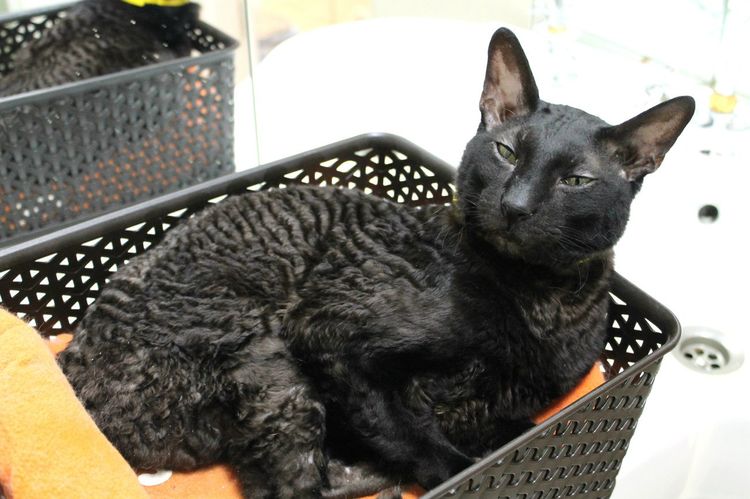
Cornish Rex
Another feline whose coat can be not only black but also wavy. Their dense, thick fur is very warm. The shape of their head and ears gives them a bat-like appearance. Representatives of this breed are distinguished by their gracefulness, flexibility, and lean, muscular build. But their most distinctive characteristic is their adoration of their owners, who can spend long periods in their arms, cuddle, and show affection. They dislike shouting, noise, and large groups. In turn, they don't meow much and are not aggressive.
The breed was developed in the United States by crossing Orientals with curly-coated cats, the first of which appeared on an English farm in the first half of the 20th century. Initially, the English themselves attempted to develop the new breed, but the curly-coated gene is recessive, so it was difficult to establish for a long time.
Japanese Bobtail
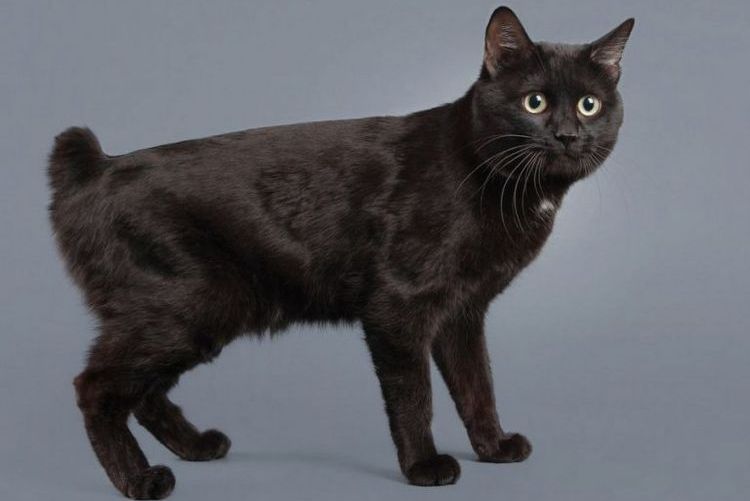
This is a remarkable breed, as its representatives have a very short tail, which can be shaped like a ball, a hook, or straight. It should not exceed 12-15 centimeters in length.
They can be of various colors: black, white, tortoiseshell, marbled. Cats are snow-white with small spots of black, red, or gray.
Interestingly, to produce healthy kittens, a short-tailed or tailless cat must be bred with a long-tailed cat. Otherwise, the offspring will be sick or will not survive.
Cats are intelligent and playful. They have a thirst for exploration, so they can spend long periods exploring new territories. They are very talkative, making a wide variety of sounds. They are suitable for families with children, as they are not at all aggressive, readily socialize, and welcome new members into their "pack."
Siberian
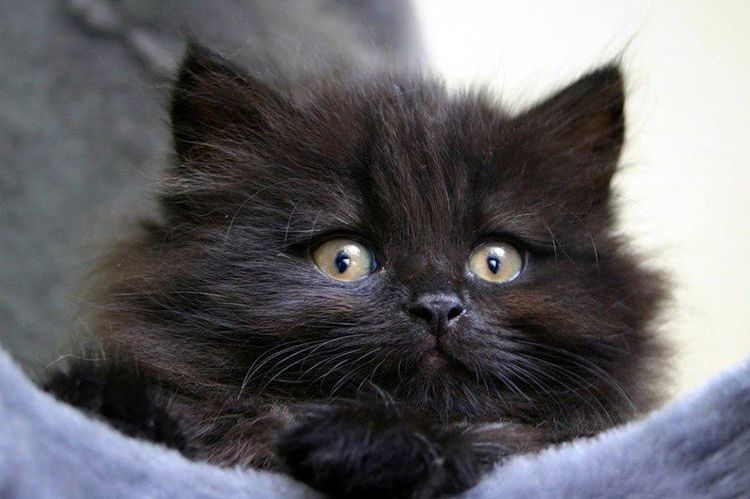
This Russian breed, which easily tolerates cold and frost, is easy to care for, and is an excellent rodent hunter. Siberians have water-repellent fur, a thick double undercoat, and a luxurious, fluffy tail.
Black Siberian cats are very beautiful, with beautiful eyes with light rims. White Siberian cats often have blue eyes, but this can sometimes indicate deafness.
Siberian cats are intelligent and trainable. They can learn several tricks for a tasty treat. They are trainable and quite capable of obeying certain commands. They love their family, including small children, but are wary of strangers and are willing to protect their owners from visitors, showing their distrust.
Norwegian Forest Cat
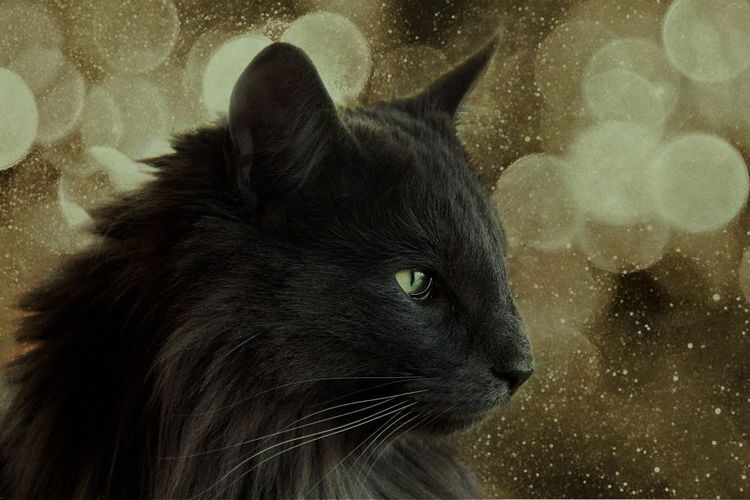
An ancient variety developed in Europe. The coat is dense, thick, and lies close to the body. This is a semi-longhaired breed. It's no wonder this is a "forest" cat: sideburns on the cheeks, tufts on the tips of the ears, and "trousers" on the hind legs. By winter, Norwegian Forest Cat a thick collar appears.
They can be completely black or mixed with black. They require little grooming: just brushing them once a week or a little more frequently during the off-season when they shed.
Cats are intelligent and friendly. They tolerate children's antics and are generally equally affectionate with every family member, without showing a favorite. They are suspicious of strangers, but not aggressive.
LaPerm
LaPerm This also applies to cats with curly fur. The standard allows any color, including black. These cats have a luxurious, fluffy tail and a ruff around their neck. The fur is curled into spirals.
Cats are very friendly and sociable. They get bored when alone and require regular walks. Their distinguishing characteristic is curiosity.
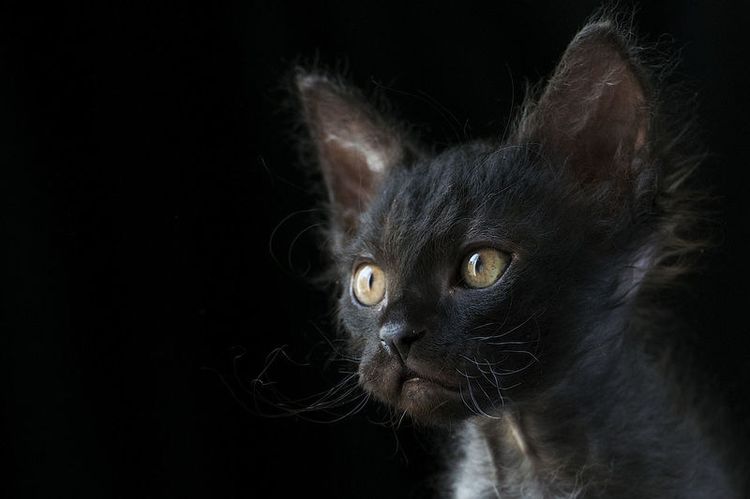
American Bobtail
Their tails are no more than 2.5-8 centimeters long. This short-tailed breed was developed by American breeders. They weigh no more than 7 kg. These cats are intelligent and trainable. They enjoy long walks with their owners. They have a hard time being alone, so they appreciate any company. These cats require a lot of time.
The most popular color American Bobtail - Tabby. These are darker markings in the form of medallions or stripes. However, there are also different shades of black: jet black, ash black, and blackish brown.
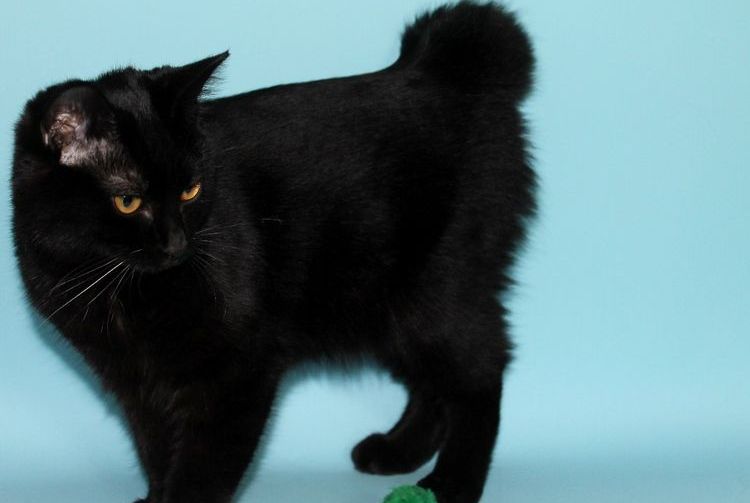
Turkish Angora
Although the breed is very ancient, it was officially registered about 40 years ago. Initially, only the white color was officially recognized. Now, Angora cats are widespread throughout the world and come in a variety of colors, including solid black.
Turkish Angora Small and graceful. The tail is characteristically fluffed at the tip. The coat is very silky, without undercoat.
The Angora cat's character is similar to that of a dog: it can open doors, turn on lights with its paws, and loves to fetch various objects.
Interesting! Turkish Angoras can "talk" with their mouths closed. When this happens, they make guttural, rumbling sounds.
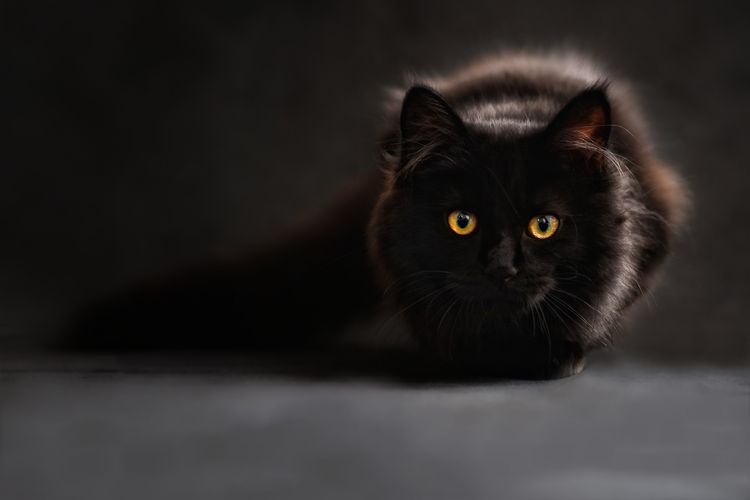
American Curl
Cat breeds American Curl Curls are easily recognized by their distinctive ears, which are turned outward and backward. They have a playful nature, so they especially love to play with children.
Ear inversion develops with age and only affects two-thirds of all kittens. The breed standard allows both shorthaired and longhaired cats. The most popular color is colorpoint, but silver, smoke, tabby, black, or mixed-black colors are also available.
Read also:
- The cutest cats in the world: breeds with photos
- The most unusual cat breeds
- Rat-catching cats: the best breeds


Add a comment