
Chihuahua Dog Breed: A Complete Review with Pros and Cons
If you dream of having a small Chihuahua, we suggest you first read the full review, in which we will tell you how and when the breed appeared, what are the pros and cons of dogs that are officially recognized the smallest in the world, as well as how to choose the right puppy for a show or "for a pillow".
Content
Breed characteristics
The Chihuahua is a playful, mischievous companion with a Mexican temperament and a striking exterior.
|
Original title |
Chihuahua |
|
Country of origin |
Mexico |
|
The first mention of the breed |
1904 |
|
Weight |
K (1.2 – 2.9 kg) C (0.5 – 2.2 kg) |
|
Height (at withers) |
K (17-25 cm) C (15-23 cm) |
|
How long do they live? |
11-14 years old (sometimes up to 18-20 years old) |
|
Price (with pedigree) |
15,000 – 95,000 rubles |
|
Price (without pedigree) |
5,000 – 15,000 rubles |
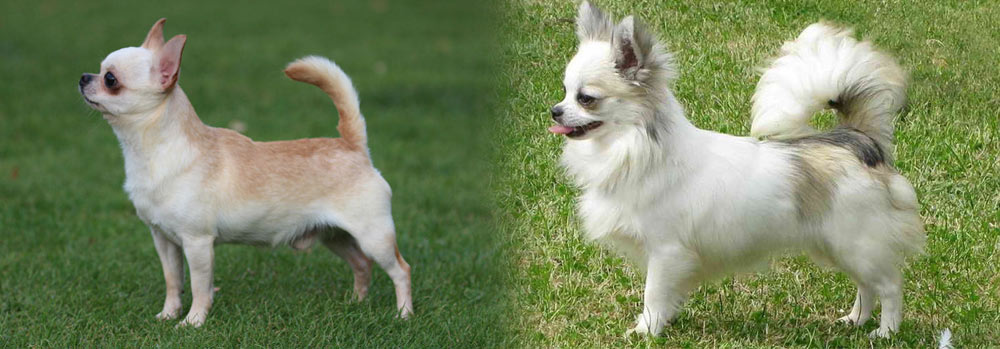
By analyzing reviews from owners and breeders, as well as expert opinions, we've compiled a brief description of the Chihuahua breed to help you decide whether this dog is right for you.
|
Characteristic |
Level |
Points |
|
Size |
|
1 of 5 |
|
Intelligence |
|
3 out of 5 |
|
Training |
|
2 out of 5 |
|
Noisiness |
|
4 out of 5 |
|
Health |
|
4 out of 5 |
|
Picky eating habits |
|
4 out of 5 |
|
Activity |
|
3 out of 5 |
|
Aggressiveness |
|
2 out of 5 |
|
The need for communication |
|
4 out of 5 |
|
Molting |
|
2 out of 5 |
|
Attitude towards children |
|
3 out of 5 |
|
Attitude towards strangers |
|
4 out of 5 |
|
Price |
|
4 out of 5 |


Origin
The Chihuahua dog breed got its name from the American state of Chihuahua, which is written in Spanish as Chihuahua.
Researchers believe that the smallest dogs on the planet originated a very long time ago in the territory of modern-day Mexico, once inhabited by Mesoamerican civilizations. While studying the origins of the Chihuahua, scientists have determined that they are direct descendants of the miniature Techichi breed. These little dogs were bred by the Toltecs, although some scholars believe the first Techichi breeders were the Mayans, and the Toltecs inherited the pets, as well as many of their ancestors' religious practices. Archaeologists have found artifacts depicting these small dogs dating back to 300 BC. Hernán Cortés wrote a description of Toltec pets in 1520, and later Francisco Hernández (a Spanish explorer) described the Techichi in detail in 1578.
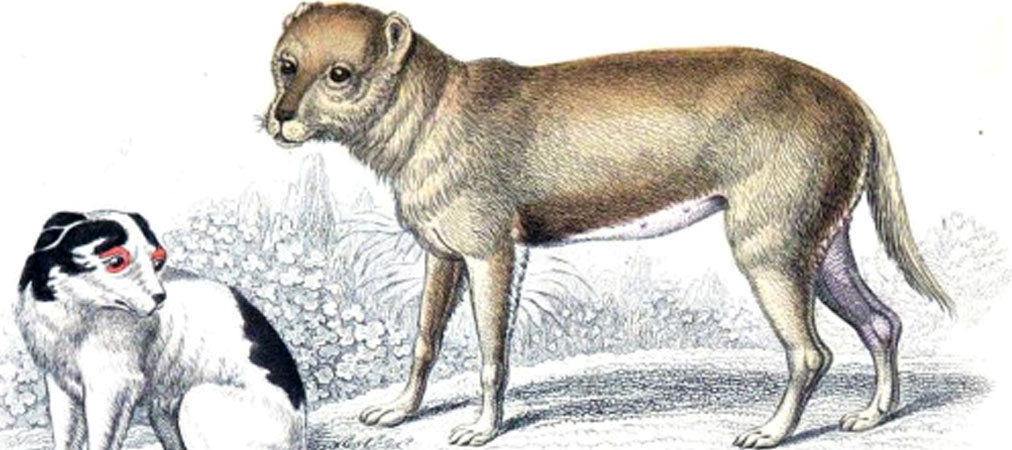
Important! The Techichi's relationship with the Chihuahua has been confirmed by DNA testing, while this reliable modern research method has refuted the supposed links between modern representatives of the breed and ancient dogs from Europe and Asia.
Exterior (breed standards)
If you search online for photos of Chihuahuas, you'll find many images of dogs that are very different from each other, as the breed's appearance, even within recognized standards, is quite varied:
- Height at withers can vary from 15 to 23 cm, although it is not uncommon for even excellent producers to produce puppies that grow to 30 and even 38 cm.
- Weight of exhibition representatives should vary from 1.5 to 30 kg, although real photos show that the Chihuahua breed can be both much smaller (there are babies under 1 kg), and much larger.
- Head With large eyes and large, high-set ears. 80-90% of puppies at an early age have a small, unclosed area of the skull (fontanelle, also often called a "molra").
Head type
The official breed description indicates that two skull types are recognized as the norm for Chikhovs:
- "deer" (Deer type) – have an elongated head and an elongated muzzle, a light back, as well as thinner legs and a long tail.
- "apple" (Cobby type) – have a round head with a short muzzle, wide-set eyes, a massive neck, a wide chest and a shorter tail compared to the first type.
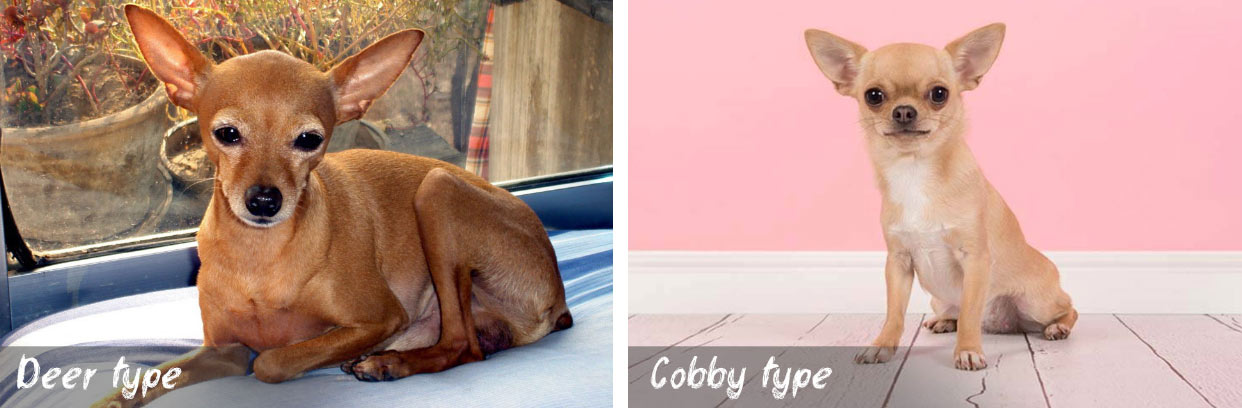
It is quite easy to distinguish representatives of different types visually:
|
Parameter |
Deer type |
Cobby type |
|
Head |
small, elongated |
large, round |
|
Ears |
large, elongated |
short, wide at the base |
|
Rib cage |
narrow |
wide |
|
Paws |
long, thin |
short |
|
Wool |
rare |
thick |
|
Neck |
long, thin |
short, massive |
|
Tail |
long, thin |
thick |
Don't think that a Deer-type can be purchased inexpensively. Each Chikhov variety has its own admirers, and a healthy puppy with papers, obtained by breeders from award-winning producers, is a priori not cheap.
Mini, supermini, standard
Every Chihuahua owner has, at some point in their puppy selection, considered what kind of dog they want, as so-called "mini" and "supermini" breeds are very popular today.
Important! The official standard does not recognize such a division, specifying only the recommended weight of an adult animal (1.5–3.0 kg) and the acceptable weight (0.5–1.5 kg).
The terms "mini" and "supermini" emerged as a result of increased demand for the smallest representatives of the breed. The division is arbitrary:
|
Supermini |
0.5 – 1.0 kg |
|
Mini |
1.0 – 1.5 kg |
|
Small standard |
1.5 – 2.2 kg |
|
Standard |
2.2 – 3.0 kg |
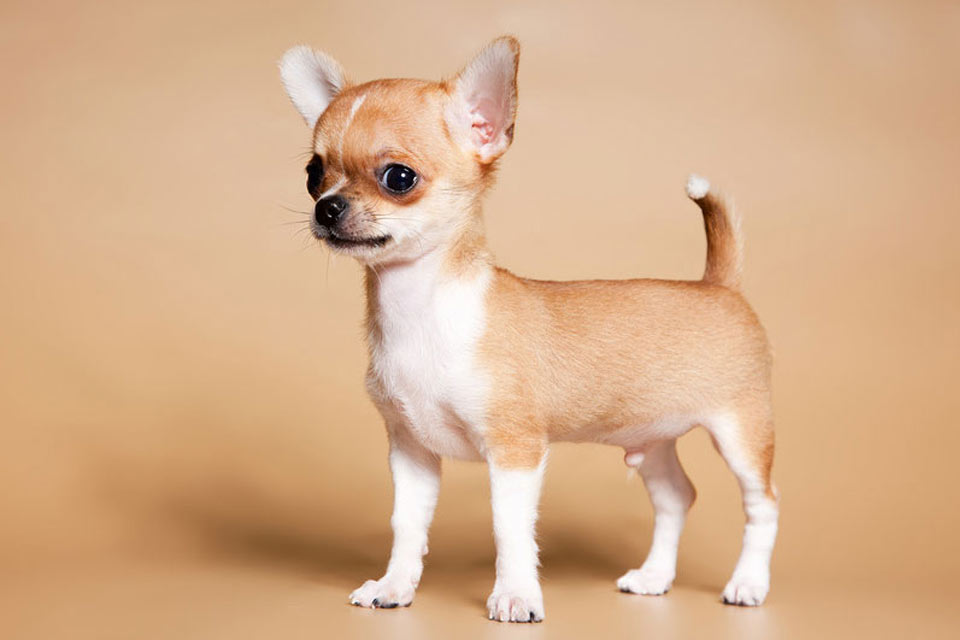
As you can see, even a standard-sized Chihuahua is quite compact, but many people strive to buy a puppy that will grow into an adult and be as small as possible, not realizing that such animals require special care and living conditions.
The advantages of miniature dogs begin and end with their size, weight, and cuteness. Essentially, they are simply dogs that have inherited the dwarfism gene, so they often suffer from poor health and a whole host of health problems.
Important! Breeders recommend only those with experience caring for small breeds to adopt "mini" or "supermini" dogs. Furthermore, most responsible owners would not sell such a puppy to a family with small children.
When buying a miniature, it is important to clearly understand the characteristics of such a dog:
- high bone fragility (a simple jump from a sofa can end tragically);
- weak digestive system;
- tooth loss (often as early as 3 years of age);
- high percentage of children with nervous system disorders;
- inability to give birth to puppies on your own;
- According to statistics, the smallest dogs live much shorter than standard ones.
It's important to understand that miniature dogs are born to standard parents, while mini dogs can produce puppies that exceed the standard as adults. Therefore, a dog can only be considered a mini dog after 8 months, when its skeletal development is complete. Don't trust a breeder who promises a "mini" puppy while showing you a 2-month-old puppy!
Hair length
The breed includes both short-haired and smooth-haired dogs. Each variety has its own pros and cons, as well as specific maintenance and care requirements.
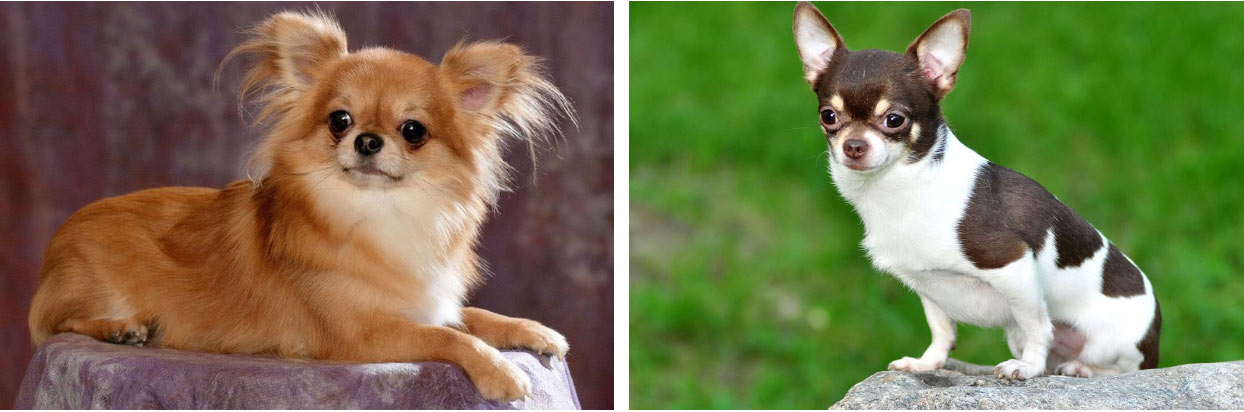
At first glance, it might seem like grooming a smooth-haired dog is much easier than grooming one with a longer coat, but in reality, both types of Chihuahuas require regular brushing. Clothing will also be necessary for both breeds, as long-haired dogs will also feel cold in the colder months, and in damp weather, it's much easier to wash a jumpsuit than to clean a puppy after a vigorous walk.
When it comes to the amount of fur in an apartment during shedding season, many breeders note that with regular brushing, long-haired representatives of the breed shed less hair, and it is easier to clean the fur from a carpet or car than from short and coarse hair.
Variety of colors
Our review of the Chihuahua breed would not be complete without touching on the variety of colors that make these little ones so unusual, giving each Chihuahua its own unique character and charisma.
Important! Puppies get their coat color from a specific set of genes, and scientists have long noted that certain coat colors are often associated with serious health conditions.
Merle
Let's begin our review with this seemingly beautiful color variant, which is not only common but also highly valued in many other breeds, which may mislead those who have not thoroughly studied the characteristics of the Chihuahua breed.
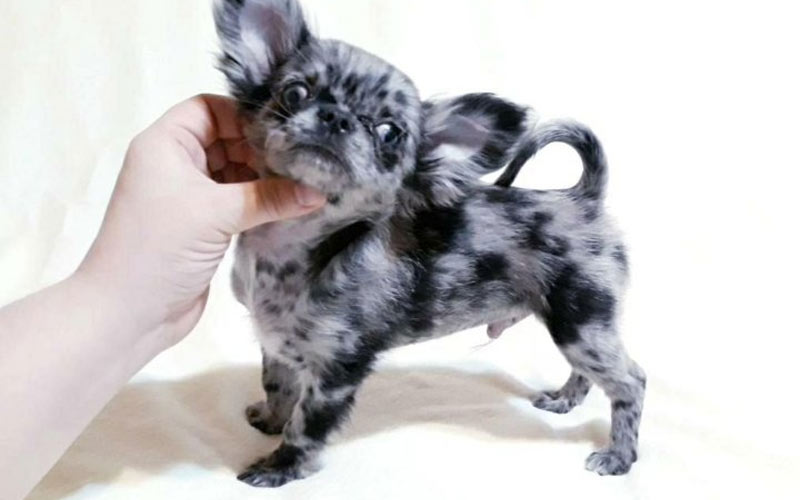
Indeed, such a puppy looks very interesting and adorable, but a less-than-private breeder might fail to mention that genetically merle babies can also inherit deafness, blindness, and cardiovascular and bone problems from their parents. The saddest fate is that of so-called "double merle" babies, where both parents carry the merle gene.
Of course, such dogs are also worthy of love and should find their owner, but when accepting a marbled puppy into the family, the owner must be aware of the possible consequences of such a choice and understand that the animal cannot participate in breeding.
Solid color (different colors)
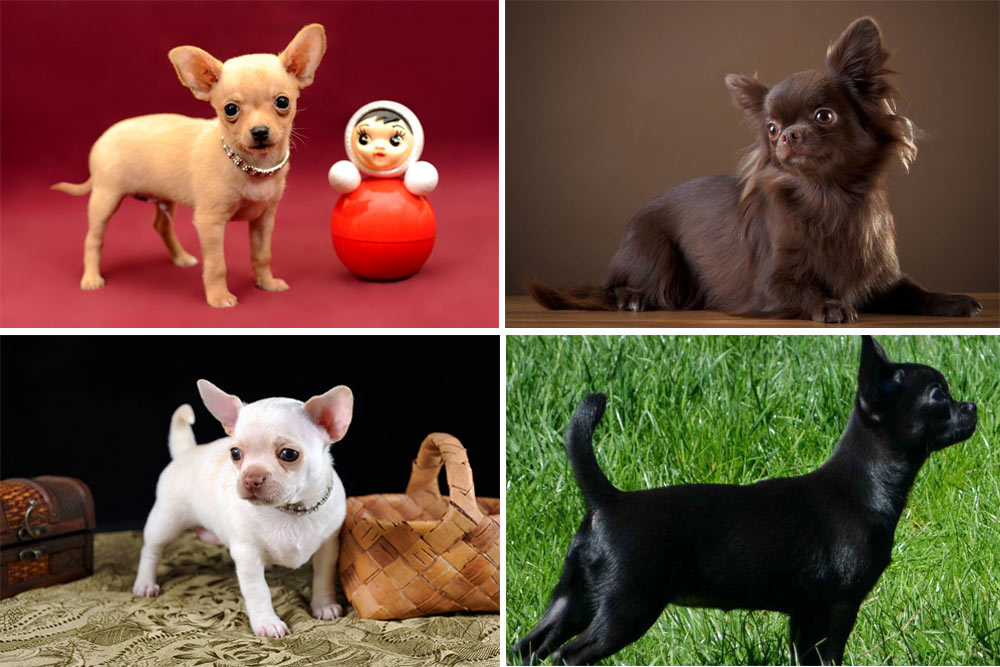
Purely black, white, red, or chocolate-colored Chihuahuas are rare. They typically have at least some contrasting markings on the chest or paws. Since the Chihuahua breed specifications recognize almost all variations of bicolor patterns, this is not considered a fault.
However, among breeders, babies of pure white, black, red, cream or chocolate shades are especially prized.
Blue
Ash, gray, or blue shades are not separate colors, but are merely variations of black when combined with the corresponding color and the gene responsible for smoothing it out.
The highest price will be for a blue puppy with a minimal amount of white patches (bib and tips of paws) or an almost solid color, which is very rare.
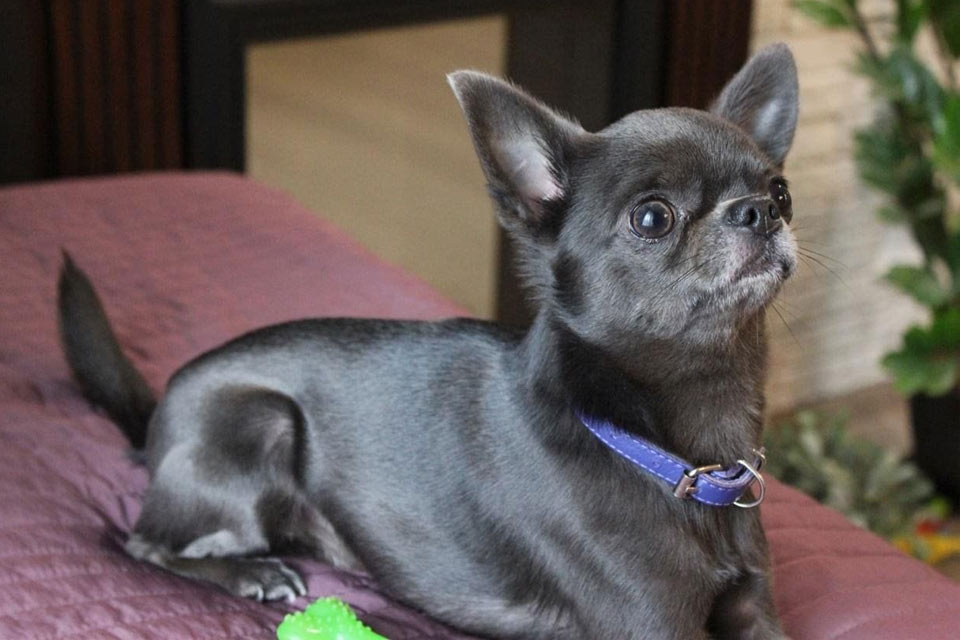
However, other combinations are also the norm, with a predominance of gray or white shades in different proportions, including speckles.
It is worth noting that the intensity of the colors can vary from light ash to rich gray, both in the classic version and with a particularly valuable blue tint.
Purple
A very interesting color, which can also have its own nuances. The following varieties of lilac are possible:
- mono-shade;
- with a pink tint;
- with white spots of any size and location;
- with specks.
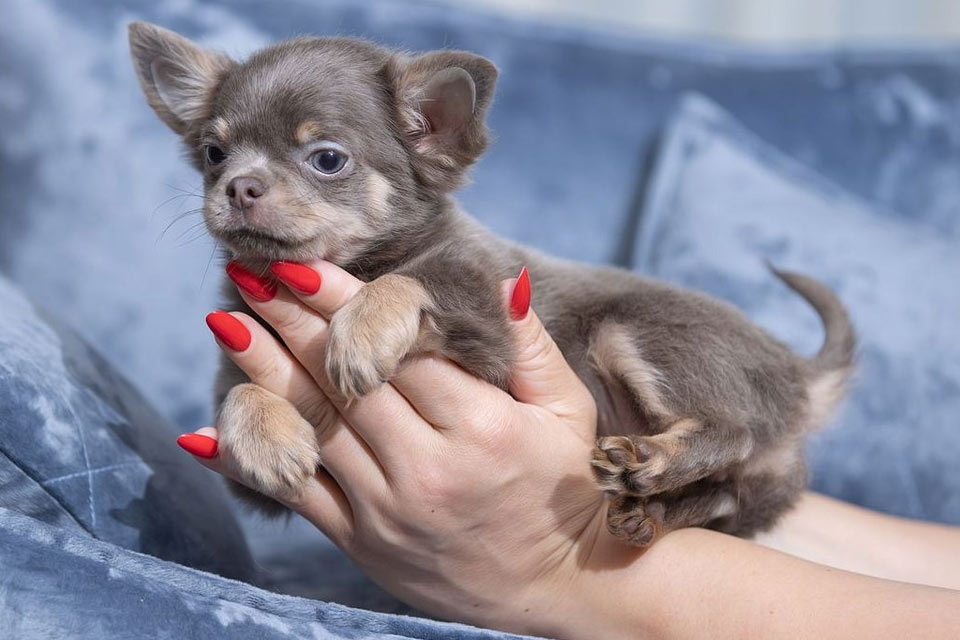
Sable
Sable Chikhovs are characterized by a soft, black, light-brown coating on the ends of their hairs. The dark hairs are typically found on the muzzle, ears, and along the back, as shown in the photo.
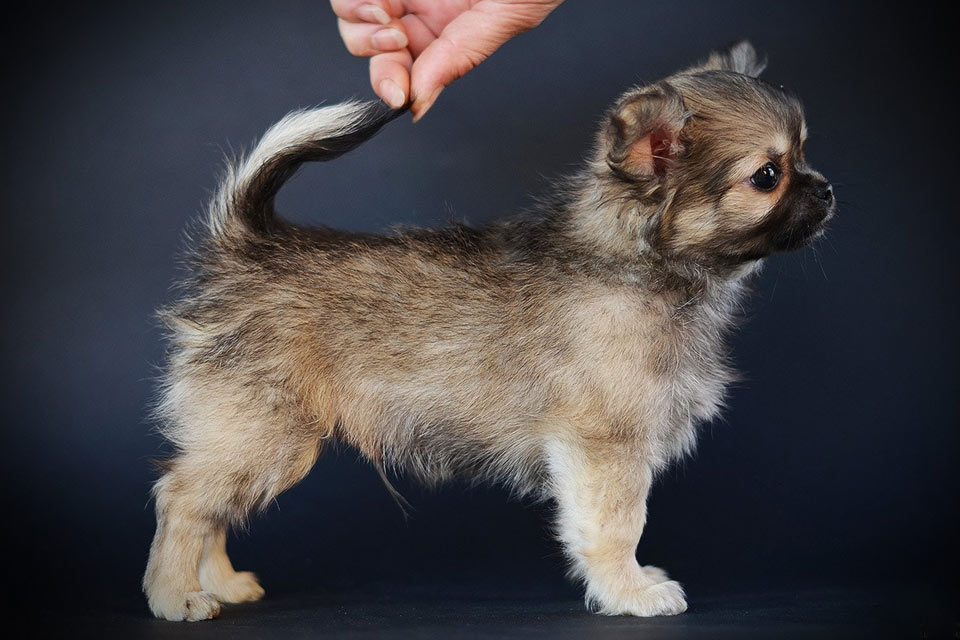
Pale yellow
This color variety is characterized by a combination of a sandy base tone (with a possible pink or blue tint) and a dark brown shade localized on the muzzle and tail.
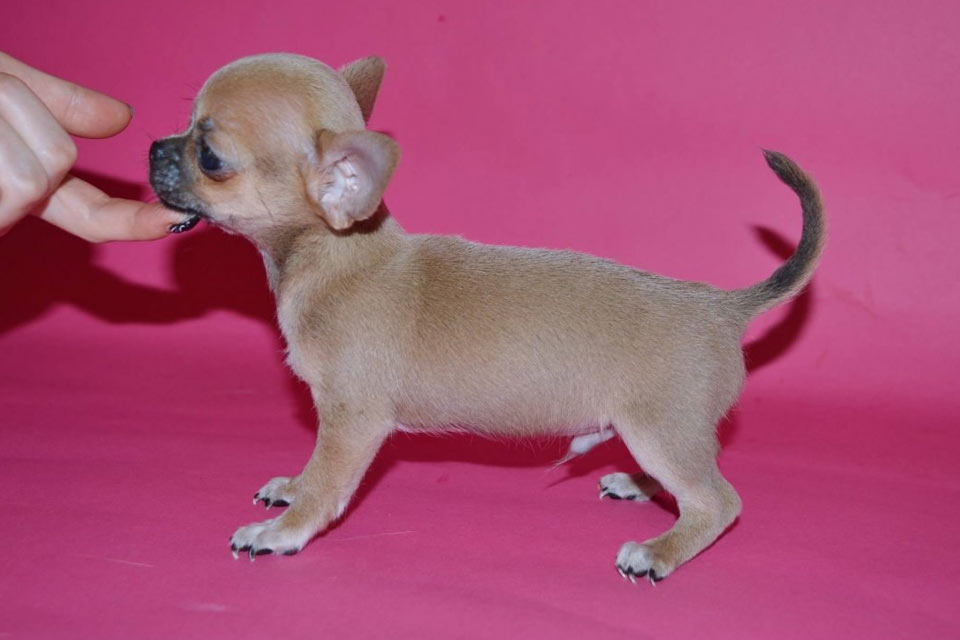
The standard also allows for variations with interspersed white markings and more extensive fawn areas.
Tan
The classic variant is dogs with a black or brown coat and bright red tan markings.
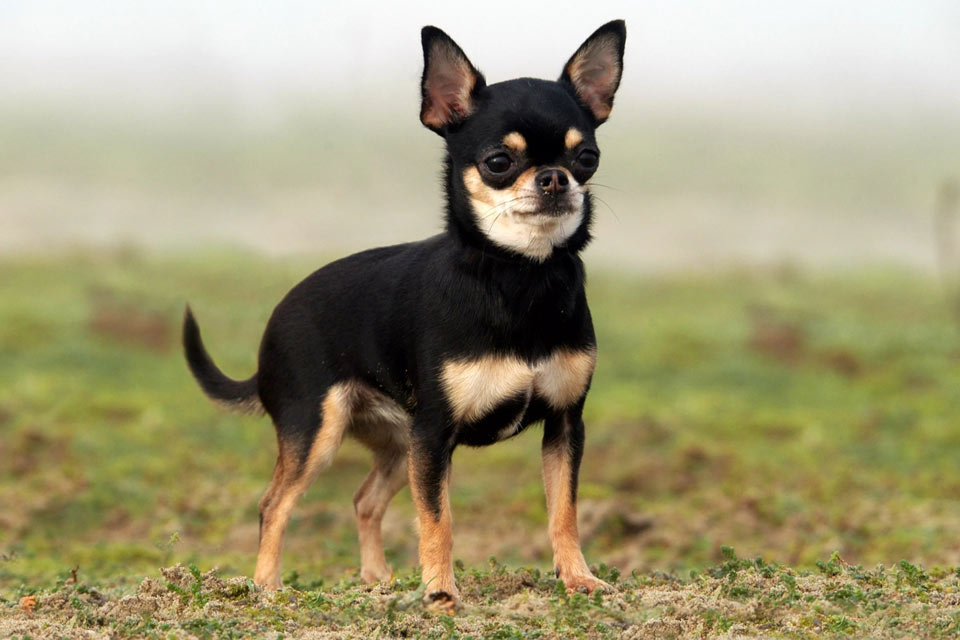
Chocolate with light red tan looks no less impressive in the photograph.
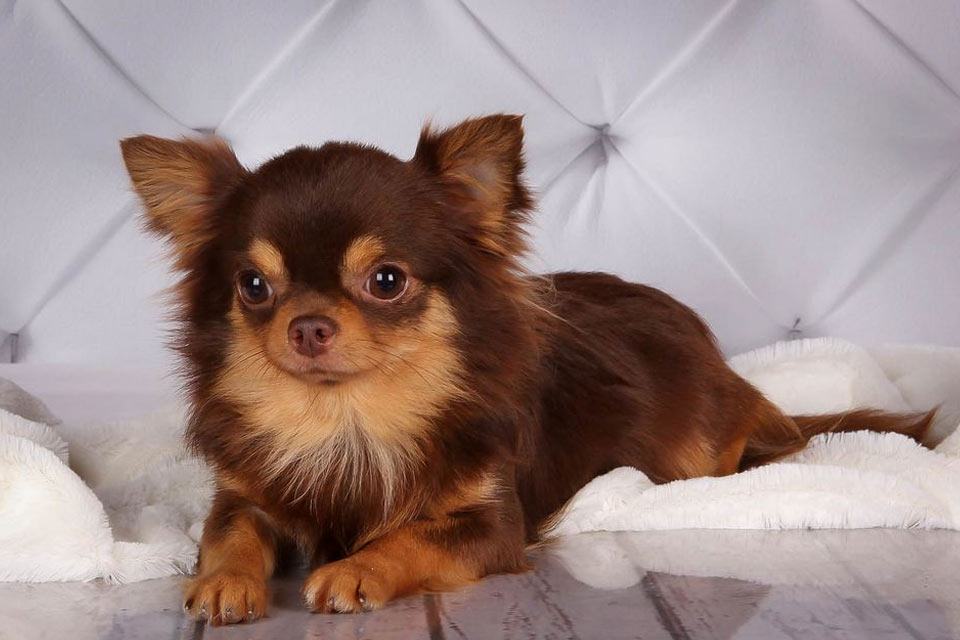
Blue and lilac Chihuahuas also come in tan colors. However, white markings are not only permitted but even encouraged in all variations.
Tricolor
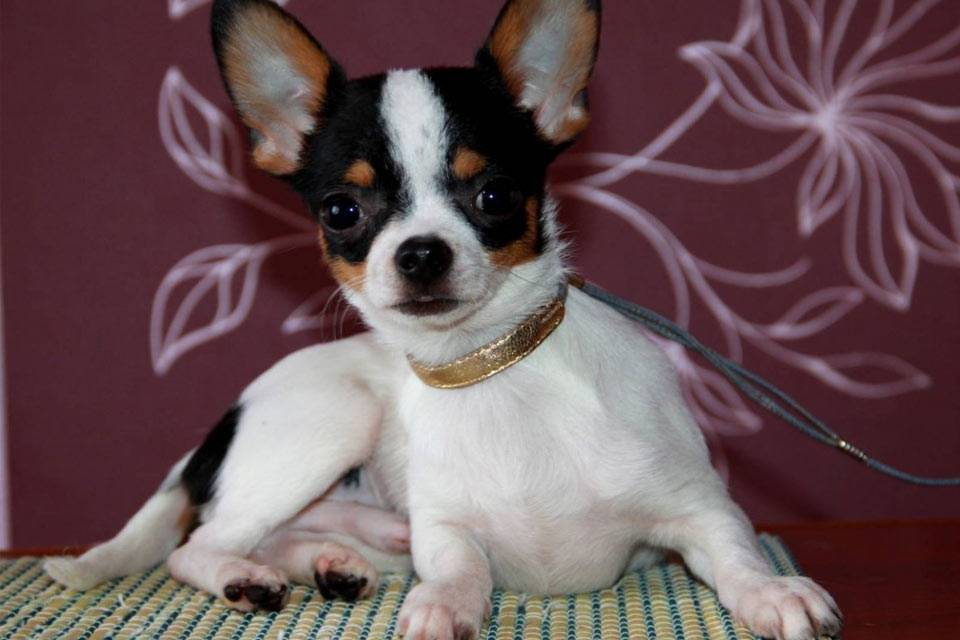
Although these varieties are called tricolor, the predominant color will always be white, with the other two colors creating the spotted pattern in various combinations. It's worth noting that the spotted pattern can include any of the colors described previously, including blue and purple.
Tiger
It is important not to confuse the tiger merle color, described above, because it is not a harbinger of health problems and does not prevent such an animal from participating in breeding.
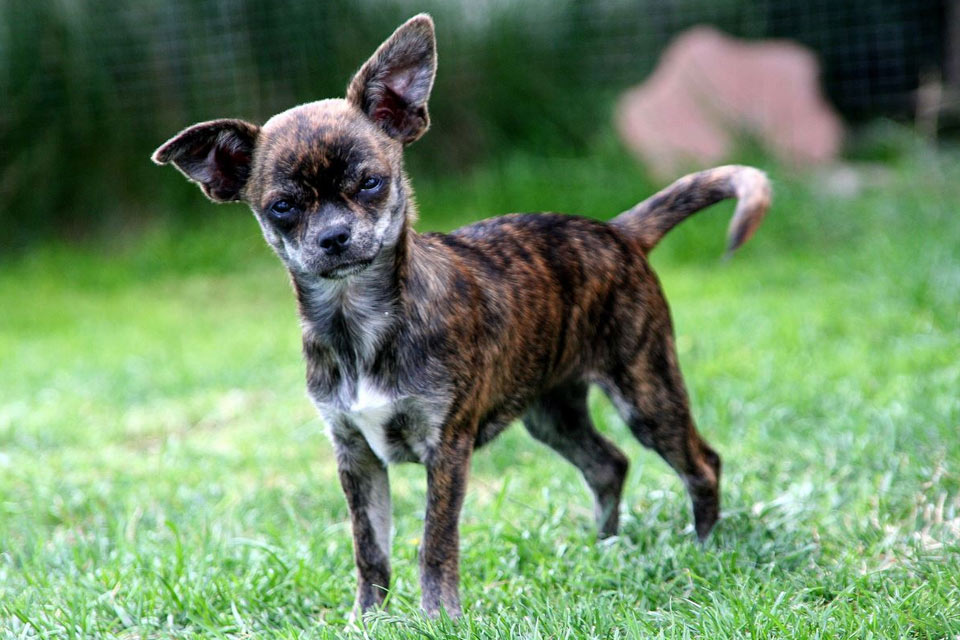
The intensity of the brindle color can vary from soft tones to rich and contrasting ones, as in the photo.
Marriage (appearance defects)
If you dream of having a puppy to take to shows in Moscow or St. Petersburg, as well as participate in breeding to improve the breed's gene pool, it's important to know what flaws are unacceptable in the exterior of Chihuahua show dogs.
The following are considered defects (appearance defects):
- very prominent eyes;
- open fontanelle on the head (unhealed skull bones);
- neck too short;
- pointed or too short ears;
- elongated (stretched) body;
- small head size combined with long legs;
- marle color (marble);
- deviations from the height and weight norms specified in the standard.
Such puppies are quite common for sale. Reputable breeders and kennels immediately warn that the puppies are being offered "as a pillow," often with the condition that they be spayed or neutered. Naturally, prices for dogs that are ineligible for shows and breeding are significantly lower.
Character
The Chihuahua's personality is as multifaceted as its appearance. Some believe that this breed can be overly noisy (barking) and prone to aggression toward other animals and strangers.
In fact, an animal's character depends on more than just genetic predisposition. Its development is influenced by the dog's environment, as well as the owner's involvement or inaction in shaping a particular behavior pattern.
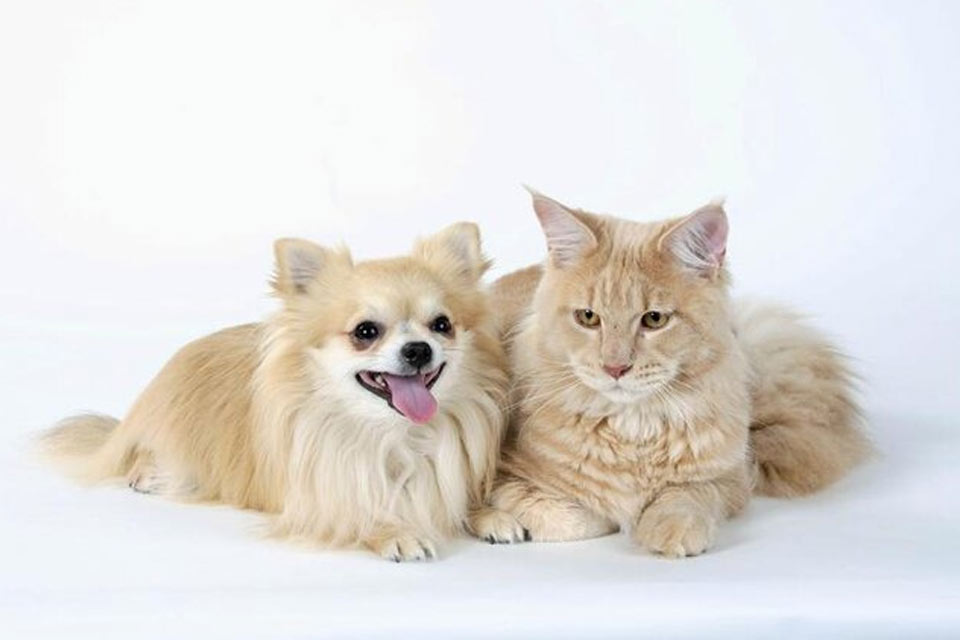
Even within a single litter, you can distinguish between puppies who are inclined to a quiet and calm life, taking infrequent walks and spending hours on a pillow, and restless ones who are ready to engage in active play for hours and show an interest in everything new and unfamiliar. Therefore, before deciding to buy a puppy, it's worth observing the puppies, their play, and their behavior.
Analyzing owner reviews, we can conclude that long-haired representatives have a more docile and peaceful character, while the most aggressive and aggressive ones are found among the smooth-haired "minis."
Nutrition
One of the factors that many people consider choosing a Chihuahua is the ease of feeding. Small dogs don't eat much.
Depending on activity level, the daily requirement for an adult dog ranges from 50-80 grams of food per 1 kg of body weight. This means that a 3-kg "Sneezer" will consume approximately 150-240 grams. This amount should be divided into 3-4 feedings.
Important! Standard-sized dogs can survive on two or three meals a day, while smaller dogs require more frequent feedings. Their body processes significantly faster, and prolonged deprivation of food can cause a drop in glucose levels, which can lead to serious problems and even death.
Care and maintenance
Most miniature breeds enjoy walking, interacting with other dogs outside, and accompanying their owners everywhere. However, if owners don't have the opportunity to take their Chihuahua for frequent walks, the space and playtime of a city apartment are perfectly adequate for the puppy's physical activity.
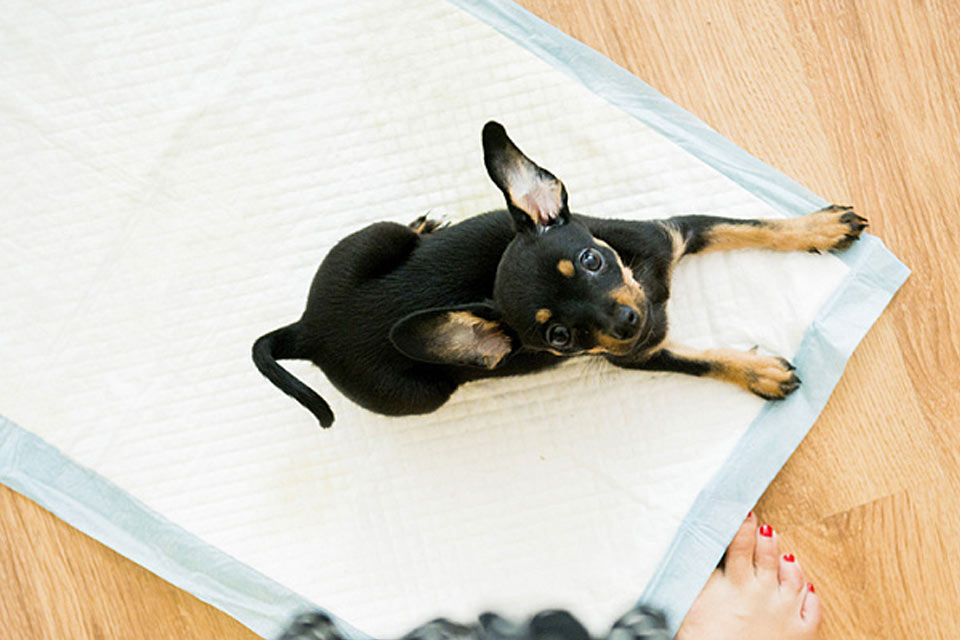
A representative of such a small breed can easily use a litter box to go to the toilet, but training the baby to use the toilet indoors can require a lot of time and patience.
For more information on how to potty train a puppy, and why an adult dog may still make mistakes, read a separate article on our website.
Regular hygiene procedures your baby will need include:
- bathing (not often);
- combing (regardless of the length of the coat);
- ear cleaning;
- clipping nails;
- brushing teeth (especially for mini-type dogs).
Important! Short-haired representatives of the breed may lack an undercoat, so when the temperature drops, dogs will feel cold even in an apartment.
Health
The breed is not prone to hereditary cardiovascular or musculoskeletal diseases. These conditions are generally much less common than in other miniature breeds and primarily affect dwarf breeds.
One of the most common problems in small Chikhovs is hydrocephalus, which is quite difficult to recognize at an early age. Also, due to disruptions in the development of the nervous system, "mini" children may develop epilepsy.
The second common problem that owners face is tartar, which quickly leads to caries, resulting in early tooth loss.
Training
Many sources describe the Chihuahua breed as a positive trait, highlighting the puppies' ability to follow commands and the potential training difficulties that many owners encounter as a negative. This is not to say that Chihuahuas are incapable learners. Most are eager to engage in the process of following commands, as they enjoy spending time with their owners and receiving treats. According to dog experts, the majority of problems associated with undesirable behavior in this breed stem from owners acquiring puppies as "toys for children" or "pretty decorations for the sofa" and rarely engage in training until a problem arises that interferes with their comfortable coexistence.
Important! Training is essential for dogs of any size! Begin training within the puppy's first week in your home! For more information on how to achieve obedience and which commands to begin training your puppy with, read our materials.
Also watch the video for training tips:
Price and selection of a puppy
After reviewing the information on this page, you now have a clear idea of the type of puppy you want to bring into your family. The next step is choosing a puppy, and here it's important to be able to spot any significant flaws and find a worthy representative of the breed at a reasonable price.
The price of a purebred baby with good genes and an impeccable pedigree, which will allow for a further exhibition career, may vary from 15,000 to 95,000 rubles, while the cost of a puppy with a defect or "without documents" significantly cheaper – from 5,000 to 15,000 rubles.
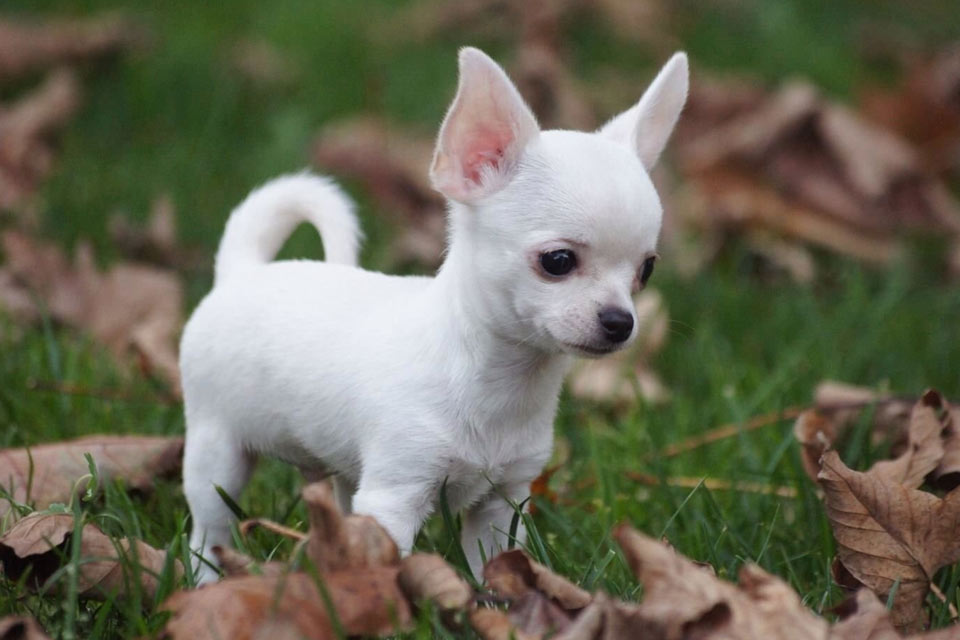
Important! Remember that when buying a puppy without papers, you can't be sure it's a Chihuahua, and not just a similar-looking mongrel, which by the age of one year can look completely different from other breeds and weigh up to 5 kilograms or more.
You can choose and reserve a puppy from a nursery or a reputable breeder shortly after the kittens are born, but you should not take the little one to a new home until they are 3 months old, because:
- the formation of the skull in babies is completed by 3-4 months;
- up to 3 months, the dog's socialization and self-determination occurs, and during this period, mother's upbringing and playing with brothers and sisters are extremely important;
- By this age, babies receive basic puppy vaccinations and will be more protected;
- the puppies will completely switch to feeding without mother's milk;
- The breeder will teach the puppies to use a diaper (this is much easier when the puppies have an example from their mother, as well as brothers and sisters).
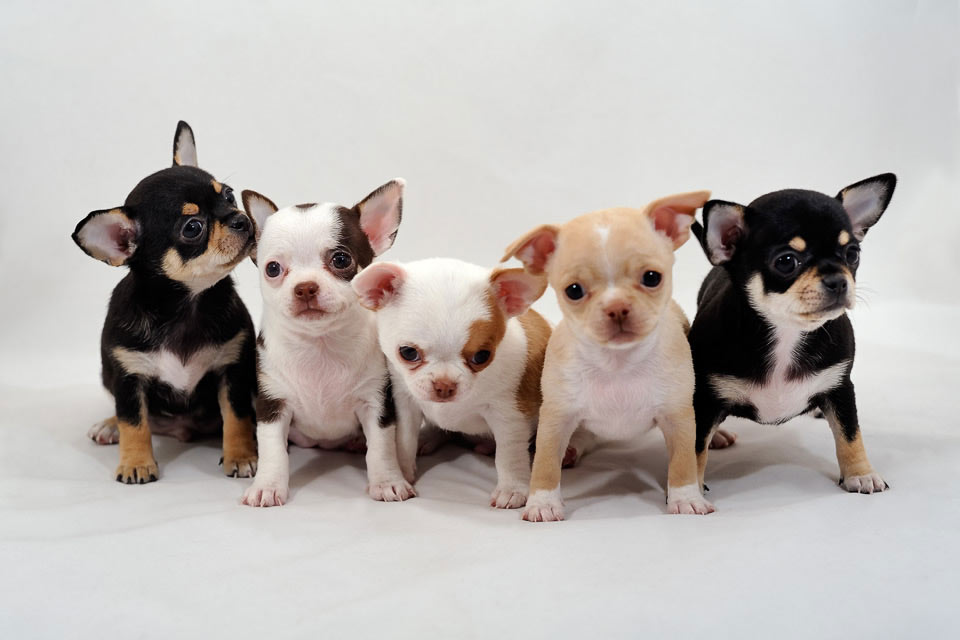
Please note that, according to statistics, most problems new owners have with puppies that were adopted at the age of 1-2 months.
If you are determined to buy only "mini" or "supermini", then it is better to buy older babies (8-10 months), since by this age the "minis":
- the fontanelle should close (or at least it will be clear that it will remain open);
- underlying health problems, if any, will become apparent;
- the skeleton will be formed and it will be possible to say exactly what the dog will be like in adulthood.
Let's sum it up (pros and cons)
In conclusion, let's highlight all the pros and cons of keeping a Chihuahua:
|
Pros |
Cons |
|
|
Also watch the breed overview in the video:
Read also:
Add a comment