
A breed of cat with tufts on its ears
A cat breed with tufted ears is currently enjoying great popularity. This may be due to the animal's resemblance to a lynx.And it turns out that the house is home to a miniature, "real" predator.
This characteristic can be observed in many longhaired cats. It is expressed to a greater or lesser degree depending on the breed. There are several of the most common domestic cat breeds with tufted ears, descriptions and photos of which are presented in this article.
Content
Chausie
Chousie cats have lived alongside humans since ancient Egypt. It is believed that the breed arose from crossbreeding between wild jungle cats and domesticated Abyssinian cats.
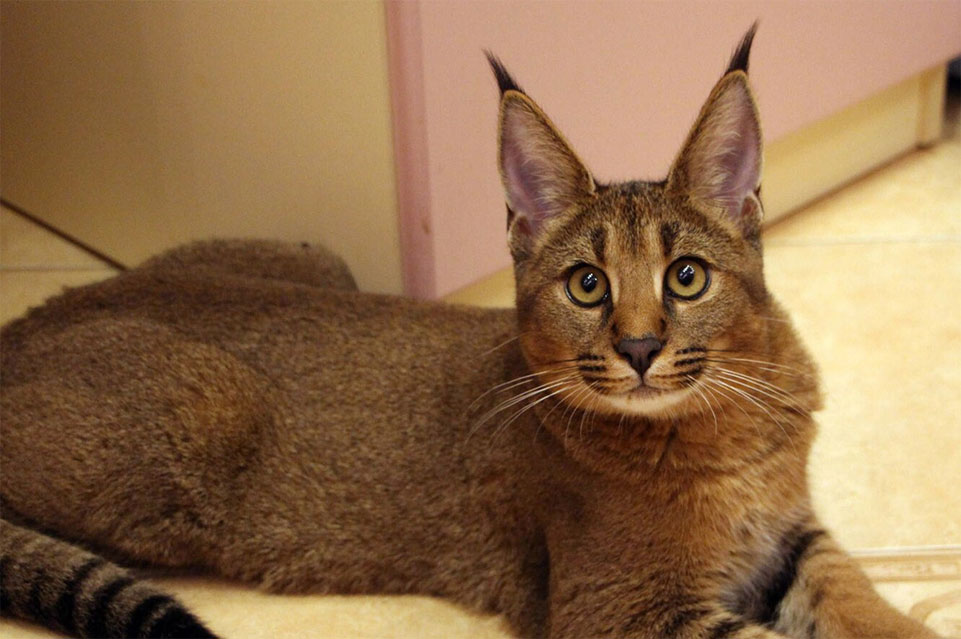
Interest in the Chausie began to grow rapidly in the 1920s. The work of American breeders resulted in the breed's current appearance, which combines the appearance of a wild predator with the friendly nature of a domestic cat.
Chousie cats may have rather long, dark brown tufts on the tips of their ears, which stand out against the lighter coat, giving them a distinctive look. However, some members of the breed do not have this characteristic.
Maine Coon
These large, tufted-eared cats are believed to have originated in North America (New England, Maine). They primarily lived on farms and had a reputation for being excellent mousers. They were even taken on board ships on long voyages. Today, Maine Coons are the official state cat of Maine.
These are large, beautiful cats with tufted ears. They have long, thick fur, which comes in a variety of colors. They are often seen with a striped coat, which, incidentally, has given rise to the myth that this breed originated from crossing a cat with a raccoon.
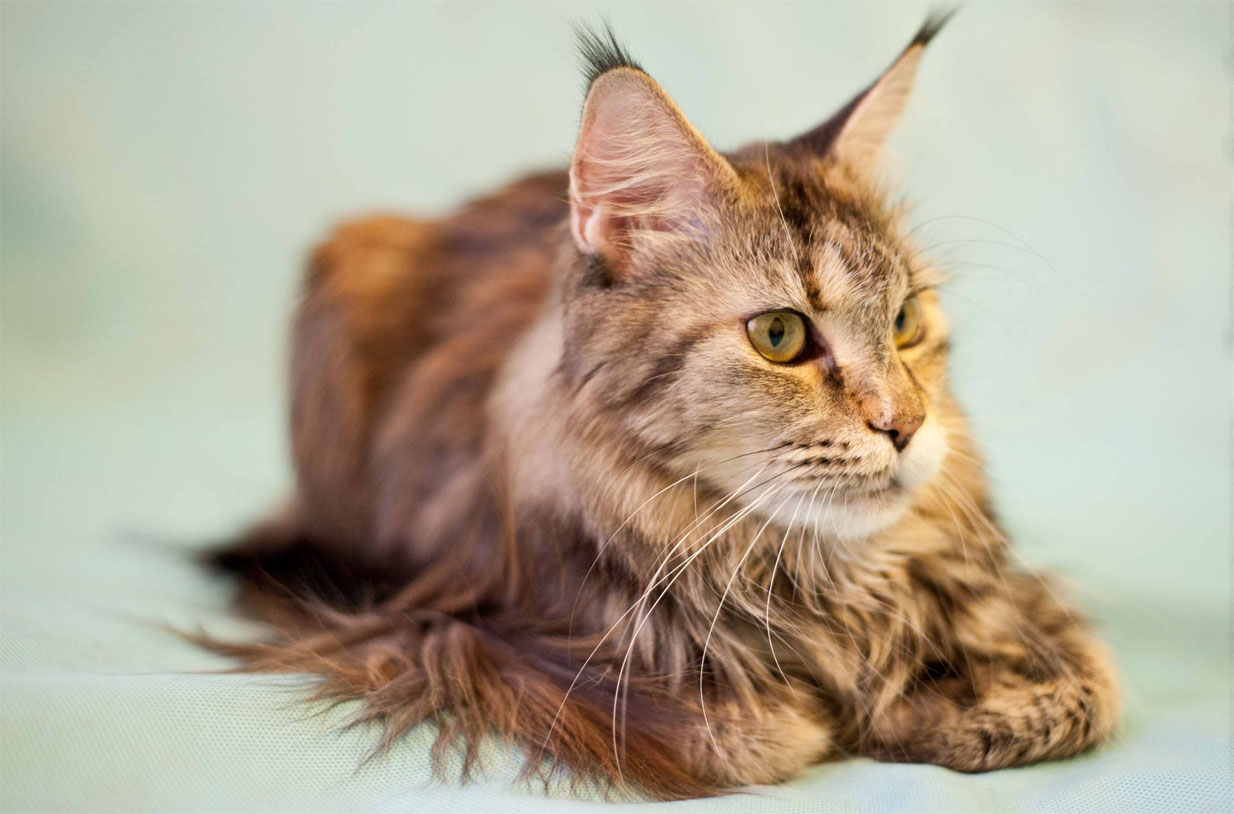
These pets are distinguished by their large size: males can weigh up to 15 kg, with an average weight of 7-10 kg. Despite their impressive size, they are graceful animals with a playful, non-aggressive nature.
Due to its large size, it's best to get a Maine Coon if you have a large living space. This will make both the cat and its owners feel more comfortable.
They get along well with children but are wary of strangers. They can be taught a few tricks and even leash-trained. They are not mischievous and are easygoing with other pets in the house.
Maine Coons don't require any special grooming. Regular brushing is sufficient: at least once a week, and daily during shedding season. It's best to feed them a specialized food for this breed or a diet based on natural ingredients.
Siberian cat
The cat with tufted ears pictured above is a representative of Siberian breedThe Siberian forest cat is a naturally occurring wild cat species that has inhabited Russia since ancient times. The animal's exact origin is unknown, but the Trans-Urals region is considered its homeland.
The breed received official status relatively recently, in the late 1980s. During this period, active selective breeding began to produce a variety of colors. In 1990, the Siberian first appeared at shows in the United States. However, despite its popularity, it is rarely seen outside of Europe. This is due to the bureaucratic difficulties involved in transporting the animal.
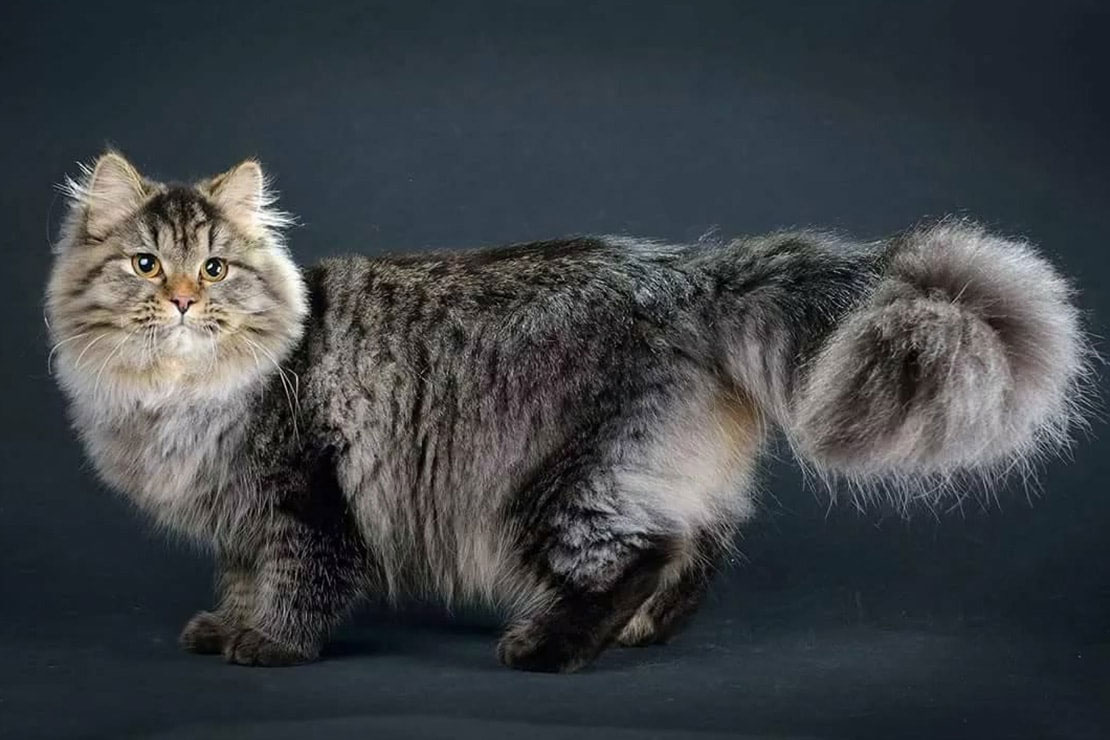
The Siberian cat has long, thick fur with a soft undercoat, and the special structure of its coat makes it waterproof.
The ear tufts of this breed are less pronounced and are not formed by elongated strands, but rather by a simple fringe of hair around the ears. Some dogs have striking long strands, while others have ears that, unlike the rest of their body, are covered with shorter hair.
Despite the increased fluffiness, brushing the coat too frequently is not recommended. Brushing 2-3 times a month is sufficient. During shedding season, more frequent brushing is required: 2-3 times a week.
Siberians are considered hypoallergenic. They produce low levels of the protein Fel d 1, which is secreted by the salivary and sebaceous glands of cats. Research conducted by several non-profit organizations showed that Siberians have lower levels of Fel d 1 compared to other breeds. Therefore, the risk of developing allergies to these animals is reduced.
Important! Despite their hypoallergenic properties, Siberian cats, like other cats and dogs, can cause allergic reactions in humans. Therefore, if you have severe animal allergies, consult an allergist before getting a pet.
Siberians are very active. They retain their hunting instincts from their ancestors. They can hunt mice and even catch rabbits. Their hind legs are slightly longer than their front legs, making them incredibly agile and nimble.
These pets get along well with people and are not afraid of strangers. However, their respect must be earned. Siberians are not known for being overly affectionate or docile. They are independent and willful. Furthermore, Siberians are noted for their longevity: the average lifespan is 15-20 years.
Norwegian Forest Cat
This tufted-eared domestic cat is popular in Norway, Iceland, and Sweden. The breed Norwegian Forest Cat It's natural, adapted to cold climates. The outer coat has long, glossy hairs, while the undercoat has a thick undercoat. The wool is water-repellent and provides reliable protection from low temperatures.
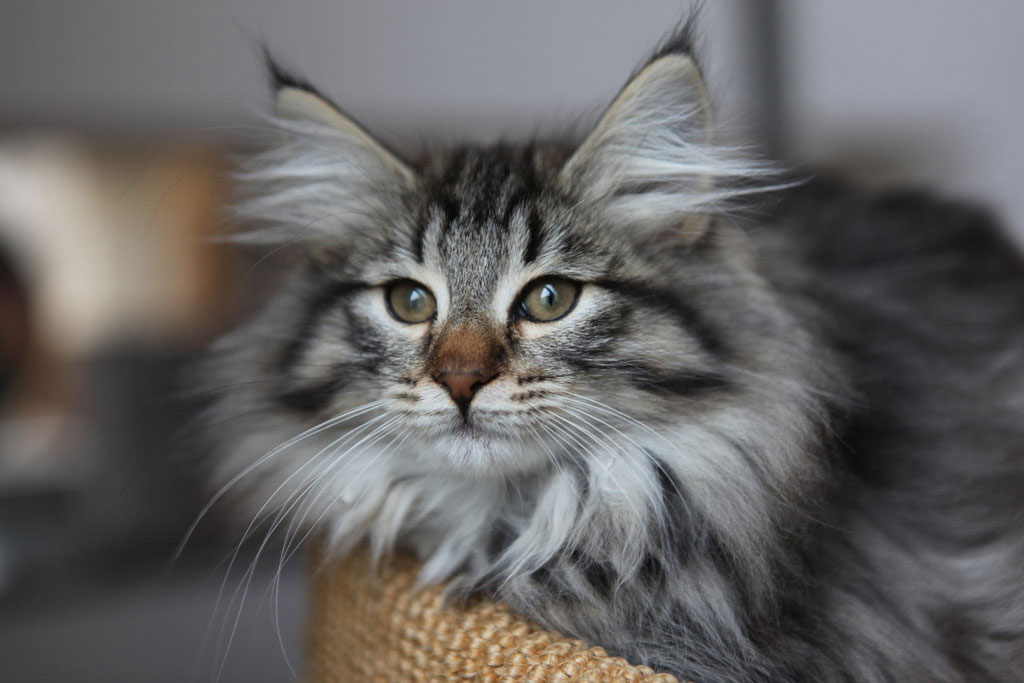
Interestingly, this breed virtually became extinct during World War II. Only the efforts of the Norwegian Forest Cat Club made it possible to revive the breed by creating a dedicated breeding program.
Norwegian rhinoceros are large and strong. On average, males weigh 5-7 kg, while females weigh 3-4 kg. They have a long, sturdy body and long legs. Their strong claws even allow them to climb rocks.
They are friendly, get along well with people, and love affection. Active and inquisitive, they love jumping, climbing, and perching on high shelves, cabinets, and other objects. Outdoors, they can quickly become excellent hunters. But they also adapt easily to apartment life.
Pixie-bob
This breed of cat with tufted ears was artificially bred in the United States. Its name translates as "short-tailed elf." History of its origin pixie-bob The story of Pixie began in 1985 in Washington, when professional cat breeder Carol Ann Brewer bought an unusual cat with a short tail and six toes. Around the same time, she rescued a stray cat who was large (about 8 kg, despite being starved) and also had a short tail. A year later, they had a kitten with a short tail and a lynx-like face. They named her Pixie. A year later, the breeder decided to seriously pursue a new breed—the Pixie-Bob.
These animals are large: males weigh up to 10 kg, females up to 5 kg. They have a massive body with well-developed muscles. Their paws are long, and the number of toes can reach seven. A distinctive feature of the breed is its short tail.
Ear tufts are not a mandatory element of the breed's exterior, but are present in many of its representatives, giving the muzzle a particularly cute expression.
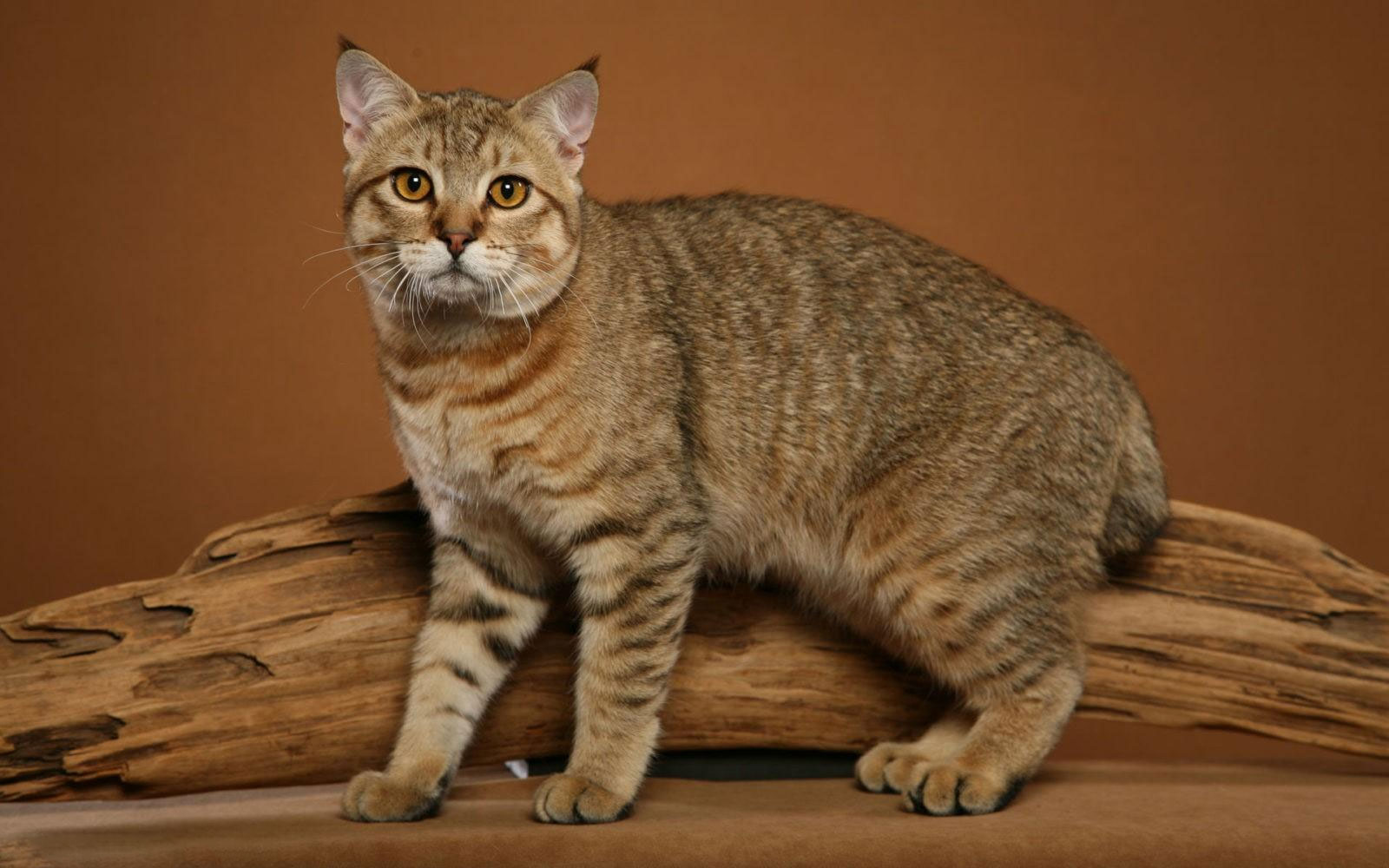
The coat is soft and thick, and there are both long-haired and short-haired specimens. There are different colors, brown, red, grey, but a characteristic pattern must be present:
- dark spots of small or large size that cover the entire body;
- paw pads and tip of tail are dark;
- there is a light ring around the eyes;
- there is a pattern in the shape of the letter M on the forehead;
- dark stripes on the cheeks.
Pixie-bobs are very loyal, love affection, are obedient, and train well. They get along with all family members and other pets. They are active and playful.
Caracal
Caracal The Eurasian Shorthair is a true wild cat, naturally endowed with luxurious, long tufts of hair on the tops of its ears, which can reach 5 cm or more. In the wild, it is found in Africa, the Middle East, Central Asia, and India. However, it is easily domesticated, and kittens born in catteries are not at all aggressive or dangerous to humans.
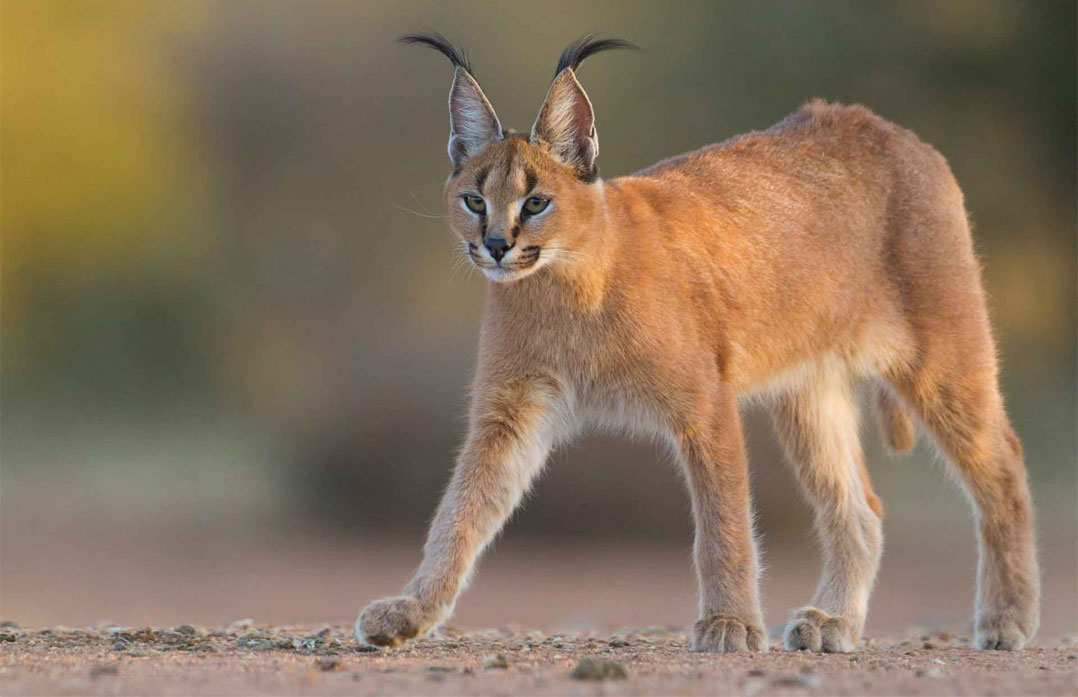
The caracal has short, dense fur. Its coloring is sandy or reddish-brown, with a lighter belly. Its face has distinctive black stripes that can accentuate the shape of the mouth, nose, and eyebrows.
The cat has powerful muscles and long, graceful legs. Their height at the withers can reach 40-50 cm, and they weigh up to 20 kg. Caracals are excellent jumpers, capable of leaping up to 4 m. In the wild, they hunt small mammals, rodents, and birds. Therefore, in captivity, they require a diet rich in protein.
The caracal gets along well with people, is sociable, and playful. It requires regular outdoor walks and can even be walked on a leash, like a dog. This pet is not suited to an apartment. It requires plenty of space for play and other activities.
Karaket
A young experimental breed, which is a smaller version of the Karkal, more suitable for keeping at home.
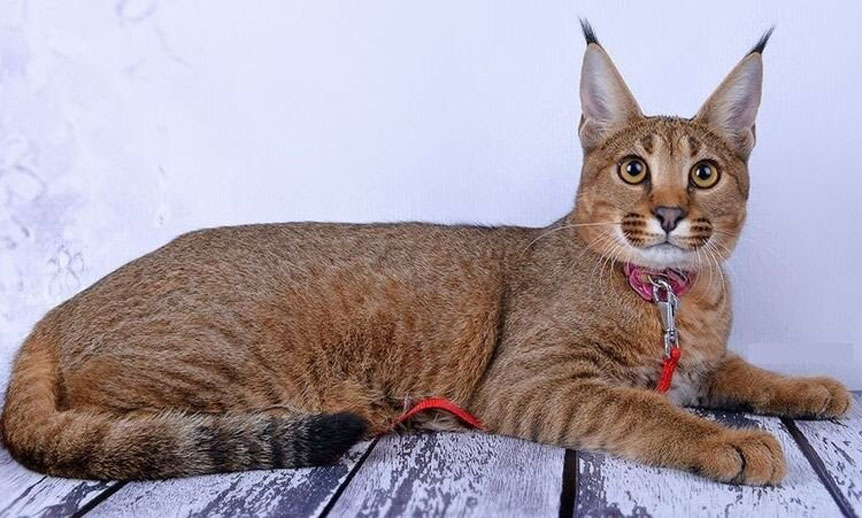
By crossing Karkalov with domestic cats, breeders have achieved a significant reduction in size. Second-generation specimens do not exceed 50 cm in height and weigh between 10 and 15 kg.
Externally, the breed has retained some elements of the exterior characteristic of its large wild ancestors, but overall, in terms of the shape of the muzzle and constitution, it is now more similar to a domestic cat.
Domestic lynx
A breed bred for domestic keeping and largely retaining the appearance of its wild ancestors – representatives of the Canadian lynx breed:
- muscular body;
- short tail (about 10 cm);
- tassels on the tips of the ears.
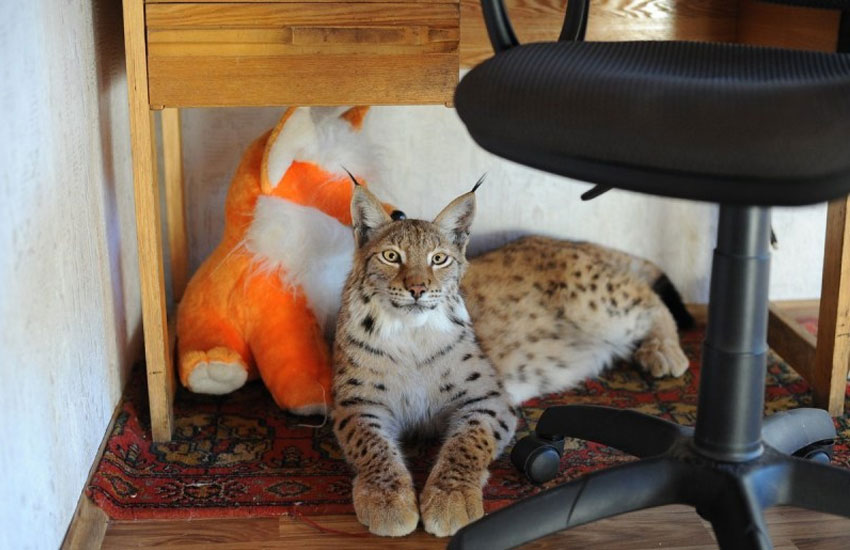
Although domestic lynxes are significantly smaller than their wild ancestors, they are giant cats. Domesticated animals can reach 50-70 cm at the withers, and weigh between 15-25 kg. Breeders are working to reduce their size and have successfully produced animals that weigh no more than 8 kg in adulthood, but this figure is not yet set in stone.
This pet has a fairly independent character, as it is closely related to wild predators. Despite its growing popularity, this young breed, like other giant cats, is not suitable for everyone.
Read also:
- Black cat breeds with photos and names
- The most unusual cat breeds
- The cutest cats in the world: breeds with photos


Add a comment