
DIY cat blanket for post-operative use
All pets already have their own "fur coat," but sometimes they require a special blanket that serves various purposes and functions depending on the situation. Most often, a cat blanket is a post-surgical bandage. Also called a bandage, it is used after various abdominal surgeries, such as sterilization or gastric or intestinal surgery.
Content
Why do you need a horse blanket?
A cat blanket after spaying or any other procedure is necessary to protect the surgical scar from dirt and licking. This bandage (also called a corset) is essential because cats instinctively try to heal their wounds themselves. If the scar is left uncovered, the animal may strain so hard that the stitches break and the suture comes apart.
The blanket also prevents the cat from ingesting the medications applied to the incision, ensuring it heals as quickly as possible. The bandage also prevents the animal from licking substances that could be very harmful if ingested.
Shorthaired cats can get cold in winter. Canadian Sphynxes sometimes need indoor clothing to keep them warm and prevent them from soiling furniture, as this breed tends to sweat due to its accelerated metabolism. In this case, a bandage is a hygiene aid.
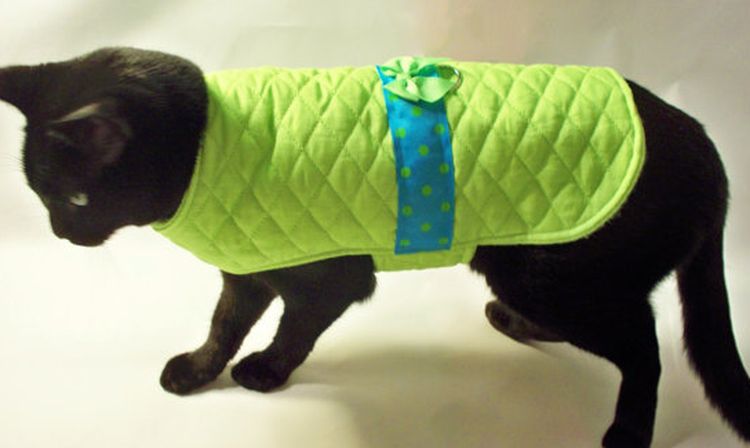
In addition to house blankets, there are also rain blankets. These are essential for those who walk cats or have cats who enjoy going outside. They protect them from wind, dirt, and subsequent licking. After all, cats are very clean creatures.
Sew or buy?
Which blanket is best for a cat after spaying? A ready-made one or a homemade one?
Advantages of a ready-made bandage:
- Factory accessories are environmentally friendly and biologically neutral;
- strong and durable, do not tear;
- they allow air to pass through well, which promotes faster healing of the wound;
- The fasteners are often Velcro, which is more convenient than ties.
- “Purchased” accessories are often fastened with Velcro – this is convenient.
Pros self-sewing:
- If you know how to sew, then a custom-made blanket will be extremely comfortable;
- the pattern can be saved to make several bandages;
- If you used your old clothes to make the bandage, even after ironing, they will retain a bit of your scent, and your pet will feel more at ease.
Price
So, how much does a post-operative blanket cost for cats after castration or sterilization?
Ready-made blankets for sterilized cats are sold everywhere. It's rare that you can't find one. You can find this accessory at a fairly affordable price—around 100-150 rubles—at both veterinary clinics and any nearby pet store.
Recommendation: It's best to buy two or more bandages at once. After all, anything can happen after surgery.
- The bandage will become contaminated with the preparations that need to be used to treat the suture.
- The cat may wet the material while going to the toilet.
Pet blankets are not sold in one size fits all. Manufacturers usually take into account that cats come in different sizes. Therefore, you'll find blankets in sizes S, M, and L. The sizes are the same as for humans: small, medium, and large.
Don't buy a blanket as if it's "too big." Although it can be adjusted with ties, it's still best to measure the length of the body first to avoid making a mistake.
Usually, blankets with ties of sufficient length are available for sale, and they can be adjusted depending on the size of your cat.
Read about it, How long does it take for a cat to walk? in a bandage after sterilization.
How to make a blanket yourself?
Cat blankets aren't always available, and sometimes they seem prohibitively expensive. No problem: you can make your own cat blanket. Here's a diagram:
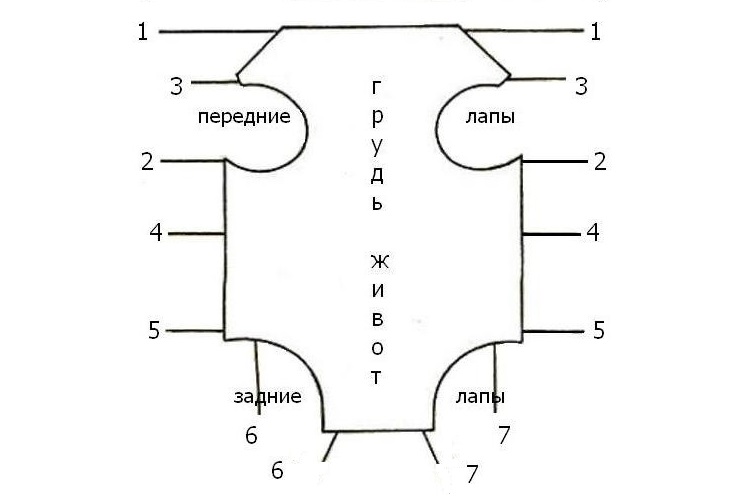
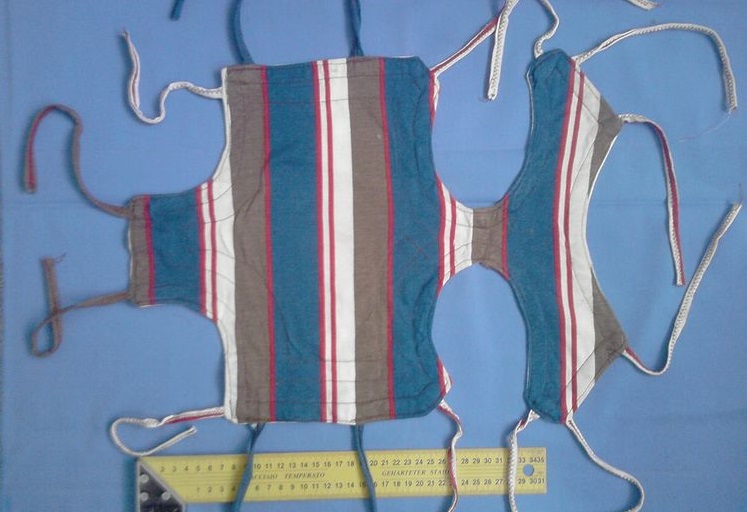
If you look closely, the product isn't all that complicated. It's a single element with ties attached. Of course, there's a specific system for these ties, so take a look at the photo of the cat blanket.
Before making a cat blanket yourself, you need to determine the dimensions. Make a pattern: measure the abdominal circumference in centimeters and the length of the cat's body—from neck to tail—since this is where the post-surgery bandage will be positioned.
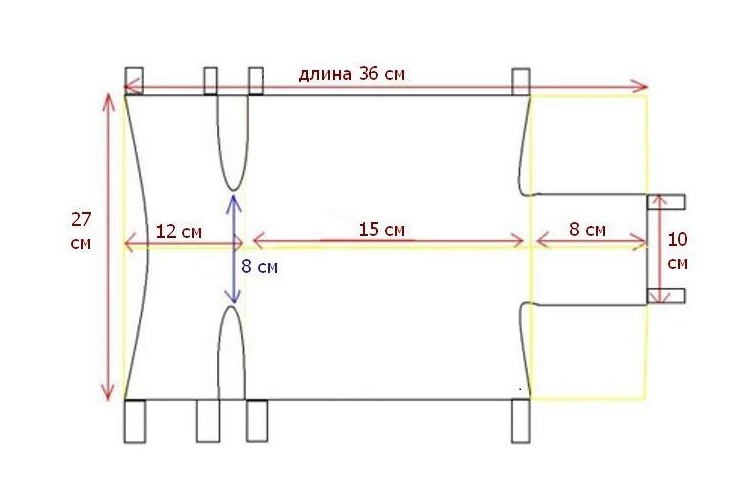
One option for a bandage. To sew one yourself, you'll need thick, clean fabric. Cotton is preferable. However, you can also make it from a soft fabric; flannel, for example, is best.
Recommendation: If you decide to sew a blanket yourself, choose a dense, solid-color fabric that shows signs of soiling. If you see traces of blood, this should be a signal to visit a veterinarian immediately, as this is a sign that the stitches have come undone.
Avoid choosing a blanket material with unstitched areas. Even a small thread caught in the seam can cause suppuration and inflammation.
A square piece is cut out, leaving a small seam allowance. Then, notches are made in the square material to allow the animal's paws to be threaded through, both front and back.
Important: you need to leave a little material in front of the front paws so that after putting on the blanket it does not slide down to the belly.
A ribbon or rope is sewn to each outer corner. It's best to choose ribbon because, unlike rope, it won't cut into the animal's body and cause additional discomfort and pain. These elements are needed as ties.
The ties shouldn't be too tight. Make sure you can easily fit two fingers between the blanket and the cat. Otherwise, the bandage may rub, requiring additional assistance. Your pet will also feel uncomfortable.
Sometimes, if you don't have any regular fabric on hand and need to make a blanket quickly, other improvised items can be used. For example, you can use some spare leggings or tights of sufficient thickness, a piece of a turtleneck sleeve, or a pant leg. Of course, it's important that this item fits your cat's body length. You can also make the holes for the front paws yourself. The knot around the neck shouldn't be too tight or constricting.
Sometimes the seam is cut too low. In this case, a makeshift bandage can ride up, making it of little use. In this case, it's worth cutting holes in the blanket for the hind legs as well.
Incidentally, this product will be easier to put on and take off, without the hassle of tying ties. It will also be more comfortable for the animal. It won't constantly slip off and will fit snugly.
How to properly put a blanket on a cat
If the animal is anesthetized, applying a bandage is fairly simple. Another situation is when the cat is resisting. In this case, it's not recommended to attempt this alone. It's best to ask someone else to help.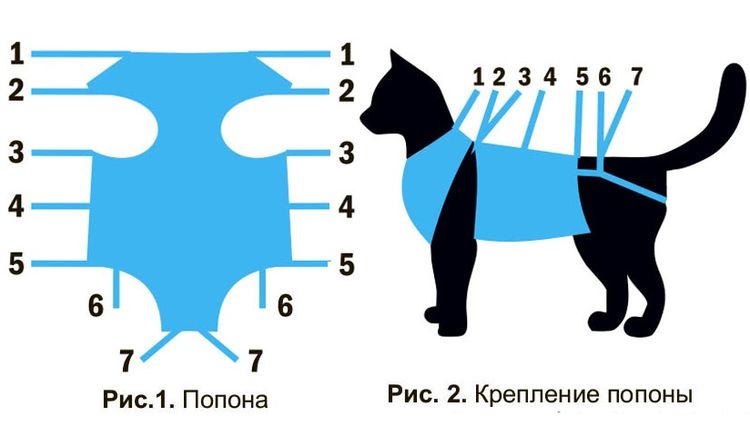
Caution: Avoid squeezing the cat too tightly, as this may cause the incision to come apart. If you need to place a blanket on a cat that has already recovered from anesthesia, use gentleness rather than force.
Those who are planning to put a bandage on their pet for the first time and feel unsure should practice on inanimate objects, such as toys, before approaching the cat.
Sometimes a cat will resist strongly, refusing to let you put the blanket on it. After a while, you can try again, as the animal will eventually get used to this procedure. The same goes for, for example, rubbing its eyes.
Step-by-step instructions:
- First, tie the laces closest to your neck. Wrap them around your head, but gently.
- Now tie the ones between the neck and the front legs.
- Tie each pair of laces towards the tail.
- The last two ribbons must be tied around the cat's croup in a crisscross pattern.
Don't forget to leave the anus and urethra open. Otherwise, your pet won't be able to use the toilet properly and will become restless or soil the bandage. Also, make sure the blanket doesn't cover or get too close to the urethra, or that it doesn't become wet from urine. If this happens and your cat gets some of the material wet, it's best to replace the bandage. Sometimes a bandage gets wet when it's too long. Simply trim the excess with scissors to shorten it. You can also simply tuck it in.
Sometimes, a cat can't move freely after being bandaged. In this case, it's best to loosen the bandages to prevent the animal from suffering, as it needs to recover from the surgery anyway.
Cat care
Sometimes it's necessary to apply gauze bandages to the scar and regularly treat the wounds. In this case, don't remove the entire bandage each time. Simply untie a couple of the bottom straps to expose the wound. Removing the entire blanket and then putting it back on will only irritate your pet and delay the healing process. The bandage should not slip or bunch up, which will also expose the suture.
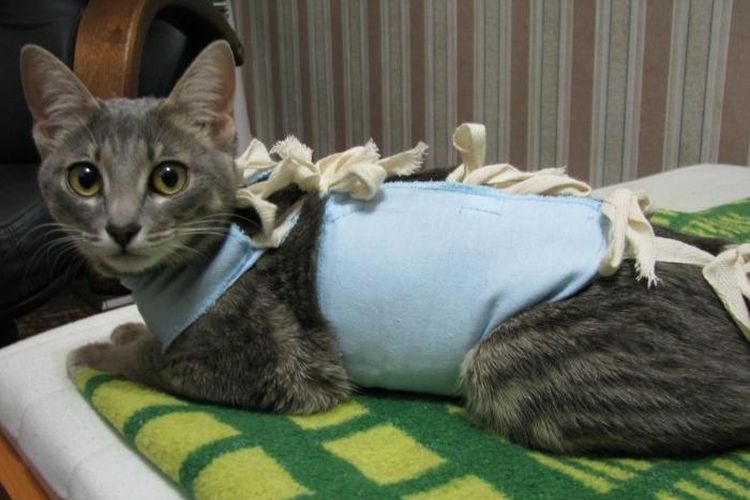
Sometimes the blanket needs to be removed completely. For example, to wash and dry it. In these cases, the cat should not be left unattended. Make sure it doesn't lick the wound. It's a good idea to have an extra bandage on hand for this occasion. If not, ask a family member to keep an eye on the pet.
Some cats resume their normal activities quite quickly after anesthesia. For example, they actively run and jump, jumping onto furniture and curtains. It's important to monitor the animal for two reasons. First, try to limit excessive movement to prevent the stitches from coming undone. Second, make sure the blanket doesn't get caught on protruding furniture, or the animal might get caught on protruding parts when jumping.
After sterilization, external stitches are usually removed on the seventh or tenth day; the bandage can also be removed at that time, as the cat may get tired of wearing it constantly.
Reviews suggest cat blankets are comfortable after sterilization. Both pharmacy-bought and homemade options are praised. The bottom line is simple: if you know how to sew, go for it. If you're unsure, it's better to go for a ready-made option.
Read also:
- Sterilization of a cat
- The cat does not go to the toilet after sterilization.
- The cat is shaking after sterilization


Add a comment