
Do cats understand human speech?
Do cats understand human speech? Every pet owner has probably asked this question. Unlike dogs, felines are virtually impossible to train, don't respond to commands, and not all of them even respond to their own names. But any cat owner will confidently tell you that their pet behaves according to what they hear from their owner. So can pets truly understand human speech, or do we just attribute this knowledge to them? Let's look at the science behind it.
Content
Can cats understand human speech?
Before answering this question, let's break down what we mean by speech. Beyond specific words and the meanings ascribed to them, human speech consists of a combination of sounds and intonations, and is also supplemented by nonverbal cues—facial expressions, gestures, and accompanying actions.
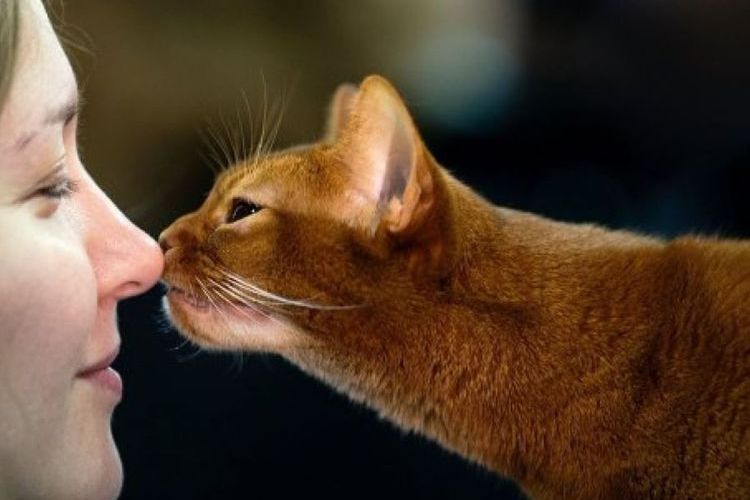
According to animal psychologists, specially trained cats can "understand" an average of 10-15 commands. Regular pets have a much more limited repertoire and respond either to their name or to the food command. It's important to note that trainers reinforce their words with specific gestures, while owners use actions (for example, banging a bowl or heading toward the kitchen).
Science reports
American biologist John Bradshaw, who has devoted many years of his life to studying the linguistic system of animals, particularly cats, argues in his work that cats, although they are pets on par with dogs, are essentially a much more wild species.
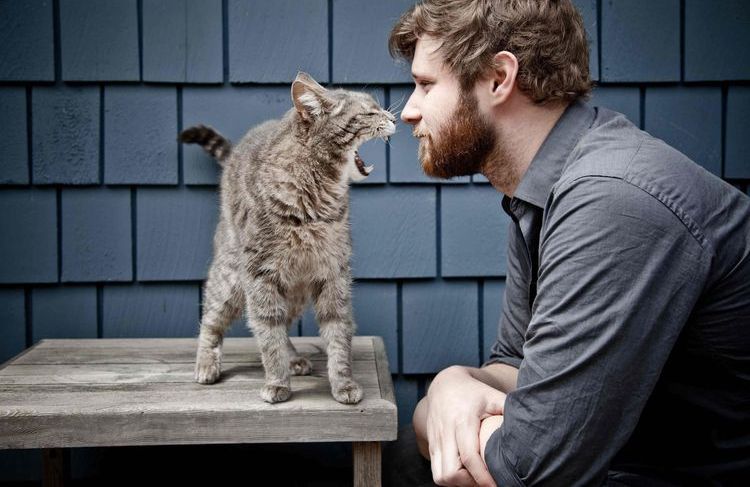
During the domestication process, cats were required to interact with humans much less and obey commands. The descendants of lions and tigers were quite autonomous and left to their own devices. Even today, the vast majority of cats mate with stray members of their own species. Therefore, obeying commands and recognizing words are not things cats excel at.
However, the answer to the question of whether cats understand human speech is not so straightforward. To compensate, cats are remarkably able to discern microscopic movements and vocal nuances. They are adept at guessing their owner's mood and intentions, adjusting their behavior accordingly. This can lead to the impression that a cat understands speech addressed to it, when in fact, it only perceives the nonverbal part.
Experiments with training
To experimentally test whether cats understand human speech and how advanced they are in this area, animal psychologists turned their attention to trained felines. A key factor in the specialists' conclusions is that each individual cat listens to only one trainer, and commands are carried out only after they are spoken with a specific intonation and accompanied by gestures.
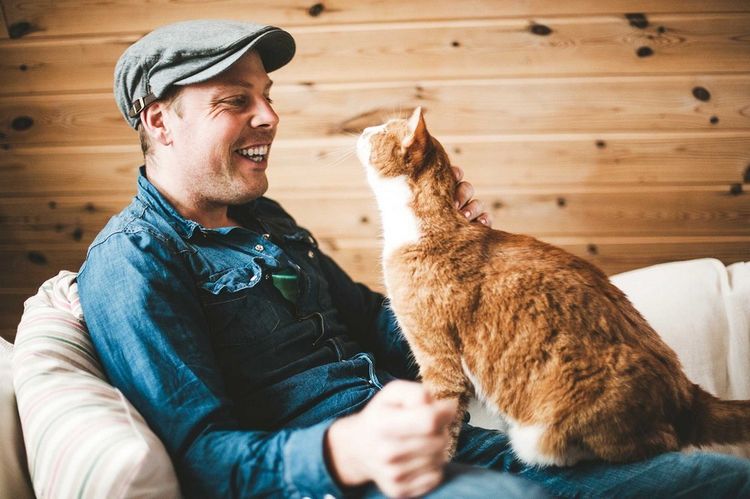
For example, Lilly Forbes, a cat researcher, describes a case from her practice: her cat reacted very strongly to the phrase "We're going to the vet," running away and hiding from its owner. However, when Lilly repeated the same phrase with a completely different intonation, in a singsong voice, as she usually does when giving praise, the cat didn't react and remained completely calm.
Another case that confirms the feline family's reliance on nonverbal cues was when the author of the book brought her cat to a friend's house, to whom she had previously praised his trainability and command skills. However, when the friend began giving the cat commands, he remained completely unresponsive, while he eagerly obeyed her.
Can cats talk?
Many pet owners cite meowing or purring in response to spoken words as evidence that cats understand human speech. Indeed, scientists have concluded that meowing was developed by cats as they adapted to living with humans—in the wild, felines primarily communicate through gestures and also secrete pheromones.
However, trying to teach a cat to imitate sounds is pointless. As mentioned earlier, felines are more focused on nonverbal communication, and meowing is merely a means of attracting attention. Furthermore, cats' vocal apparatus is structured differently than humans', and articulation (the production of individual sounds) is incapable of their use.
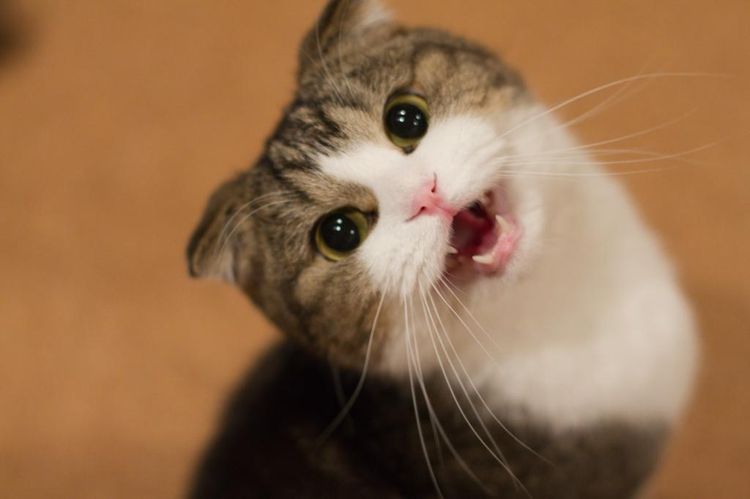
However, cats can communicate a lot through their body language. The position of their tail and head, the size of their pupils, and their movements around the room—all of this communicates their pet's emotional state. An experienced owner can easily recognize what their cat is communicating—for example, when they're hungry, afraid, or want to play.
Thus, the question of whether cats understand people can be summarized as follows: a pet almost certainly understands its owner's actions and desires, senses their mood, and remembers frequently repeated actions, but it lacks the ability to distinguish specific speech patterns. And do cats really need this? After all, they've been accompanying humans for 10,000 years, providing comfort and reassurance.
Read also:
- Are cats like people?
- Sleeping on their owner: why do cats do it?
- Why do cats trample us with their paws?


5 comments
Vladimir
A cat (a male cat), like the devil, has convinced people it doesn't exist! In the case of a cat, it doesn't understand words 😉
They understand everything, they just skillfully manipulate their people)
Veronica
I love my cat Shustrik, and he loves me. We spend all our time together. I don't know if he understands me, but to tell the truth, I recently began to understand the language of animals. I don't know how it began and I don't know how it will end. I've had many cats. But Shustrik is my favorite, although he is not the first one I have. Shustrik's breed is "Scottish Straight." He lives with us in the village. He catches mice in the bathhouse. Thanks to all the cats, we have much fewer rats on the streets than in 2013. The village is Bogorodskoye. It's very small. Children come here somewhere from summer to autumn. Our street consists of 8 houses. There are lots of cats! Especially our neighbor's. She already has 5 cats, including 3 females, and 6 kittens born to Toska. Apparently, this year there will be 3-4 more kittens. But it's always interesting here, and it's all thanks to the cats!!!
Svetlana
In fact, cats understand a few more words than experimentally recorded. It's just that most feline intelligence manifestations can't be replicated in a lab. I'll never forget: my mother was talking on the phone, and our half-British cat, Anton, was sitting next to her. When a friend asked, "What are you doing?" she replied, "I'm going to give the cat a bath." Instantly, the cat bristled, yelped, and hid under the bed! We, of course, always knew that Anton understood the word "bathe," but only when it was addressed to him. How could he distinguish the words "bathe the cat" in ordinary conversation? That's completely unscientific. Teaching a cat to "speak" is actually easier than it seems: you just need to reward it when it makes sounds similar to the word. Almost all cats easily learn to say "mama," and many pronounce "meat."
Lelya
They understand spoken language and even read forums... I complain on a cat forum that the cats don't sleep with me - that same night, all three of them, on me))
She once told me that my cats were the wrong kind—they'd never even soiled my slippers! Guess what happened next? That was the only time in my life that slipper was soiled. Since then, I've been careful what I say around cats.
Akakiy
I have a 16-year-old cat, she understands everything. I call her name, and she comes running. I tell her it's time to eat, and she comes running. And I understand her, how and why she meows.
Add a comment