
Pomsky: Siberian Spitz or Pomeranian Husky?
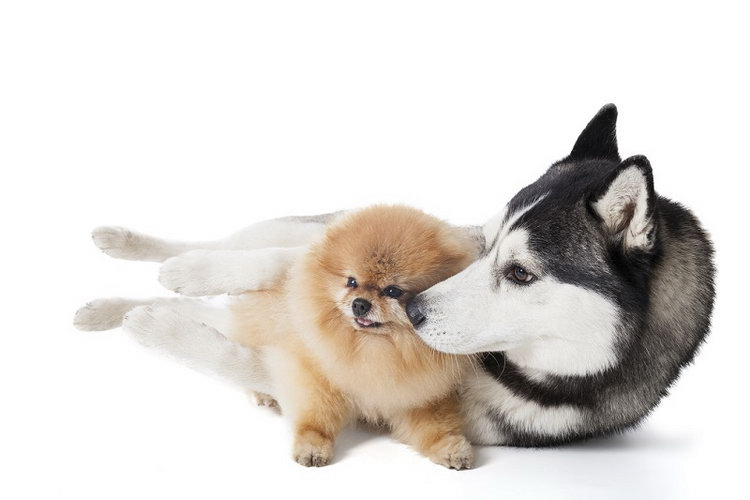
The Pomsky, a cross between a Pomeranian and a Siberian Husky, is one of the most famous and expensive designer breeds. Pomskies are often referred to as mini huskies. While small dogs with fluffy fur and distinctive markings are prized, these puppies can also look nothing like their parents in appearance or personality.
Content
History of origin
On December 17, 2009, a user named Tammy asked on Justanswer.com what health and personality issues might a Husky-Pomeranian hybrid his family was considering adopting from a shelter have. Dr. Scott, the veterinarian who answered the question, questioned the possibility. similar mestizos, but agreed that the traits of these two breeds are certainly visible in the appearance of the dog in the photo.
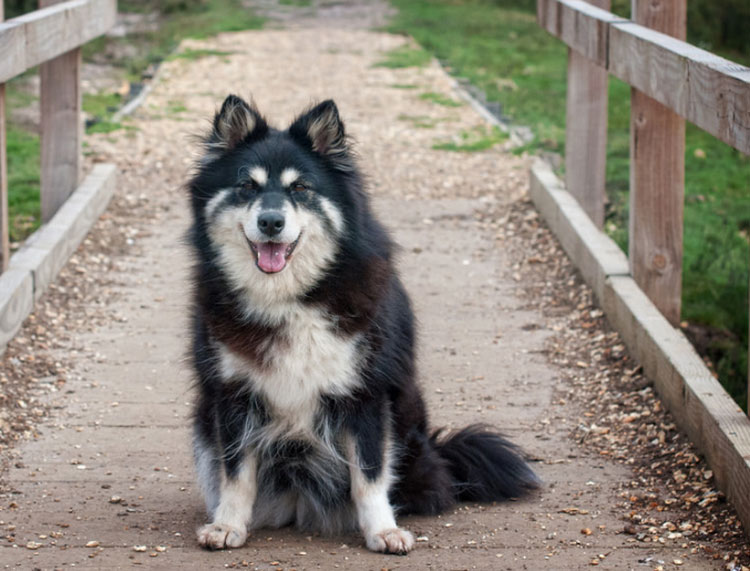
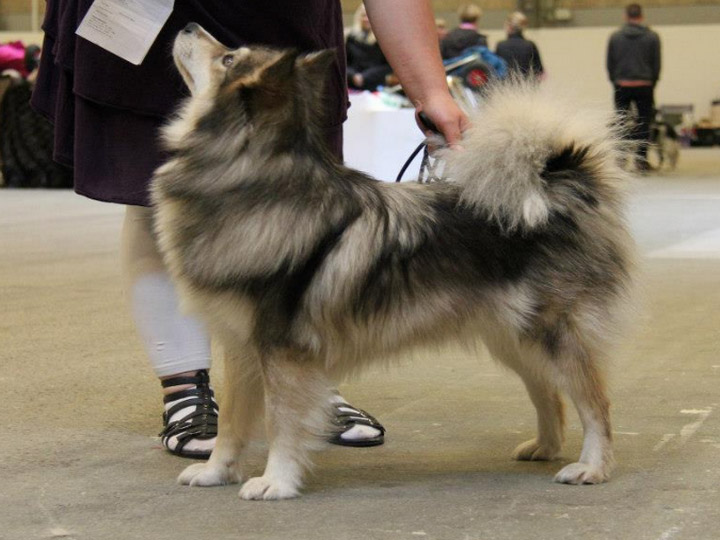
Apparently, it was then that the idea of creating the Pomsky was born. Internet users took up the idea, and began racing to post photos of similar dogs with the "Pomsky" tag. Among them were mixed breeds, mongrel dogs, and some purebreds. For example, a photo of a Finnish Lapphund by Swedish photographer Tommy Olson was widely circulated online as a photo of a Pomsky.
In 2011, Buszzfeed editor Peggy Wang published an article with several photos titled, "Pomsky – A Pomeranian-Siberian Husky Mix: The Cutest Designer Breed." Interestingly, none of the five photos featured a Pomsky. At the time, there were no registered breeders or litters, and the breed was more internet myth than reality. The article quickly went viral, with thousands of people eager to buy Pomskies, but no one could tell them where to buy them.
The name Pomsky comes from the combination of the names of the original breeds: Pomeranian and Siberian Husky.
Then, in 2011, Teresa Peterson, a well-known dog breeder, became interested in the possibility of breeding Pomskies and began pursuing the idea. On March 5, 2013, the first officially registered litter was born. Other breeders followed suit. A veritable Pomskie boom began, with demand hundreds of times greater than supply.
The emergence of numerous breeders created a pressing need for an organization to oversee their activities. Therefore, in early 2013, the American Pomsky Club was founded. Today, its main goal is to maintain high-quality breeding and do everything possible to ensure that the Pomsky becomes a fully-fledged breed with its own standard.
Designer dogs, also known as hybrids, are crossbreeds of two specific breeds. Therefore, the appearance, size, and temperament of the puppies are not as predictable as those of purebred dogs.
Pomsky is not recognized by any international canine community; its breeding is supported only by clubs and organizations for crossbreeding and developing new breeds: the American Canine Hybrid Club (ACHC) and the Pomsky Club of America (PCA).
Videos about Pomsky dogs:
What do Pomskies look like?
Pomskies are not exactly small dogs, weighing at least 5 kg, and their height at the withers usually ranges from 30-40 cm. Pomskies are often confused with other breeds, including Kli Kai, Finnish Lapphund, German Miniature Spitz.
The number of different Pomsky variations is practically endless; for convenience, breeders have divided the dogs into five groups:
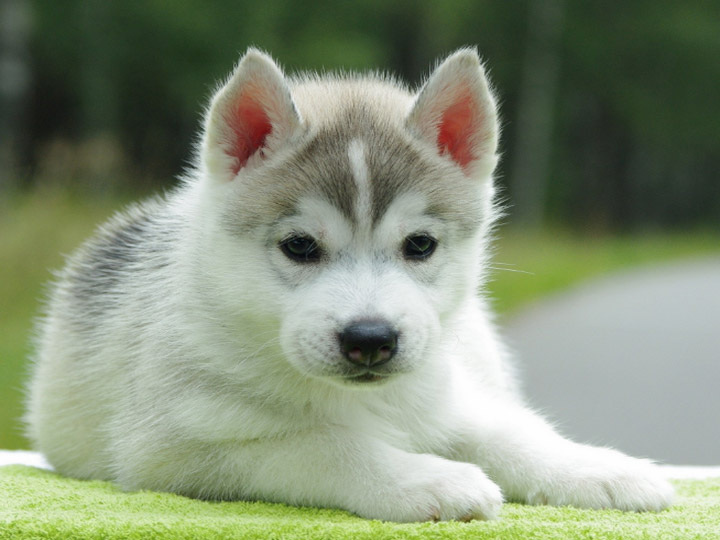
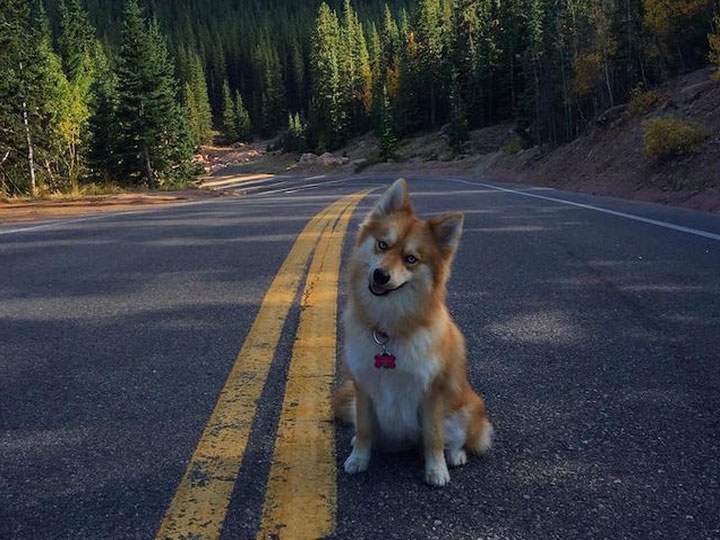
- The Fox Pomsky has the elongated body of a husky with the fine bone structure of a Pomeranian. The coat is medium-length and smooth. The pointed nose, ears, and reddish coloring give these dogs a fox-like appearance.
- The Plush Husky is a dog with the compact build of a Pomeranian, long, soft fur, and a husky coloring. This small, soft ball of fur has a short muzzle and a thick, curled tail.
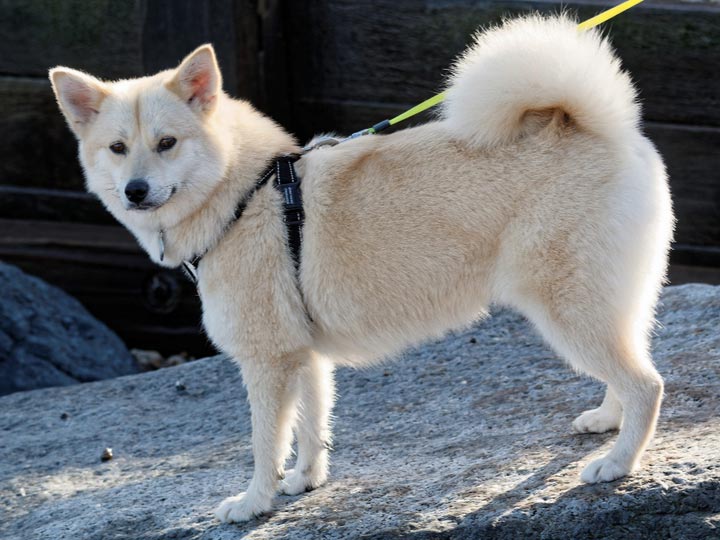
- White is the least common variety. The most obvious feature is the solid white color. Additionally, this type is typically characterized by a fairly large size, short hair, and a finely defined muzzle.
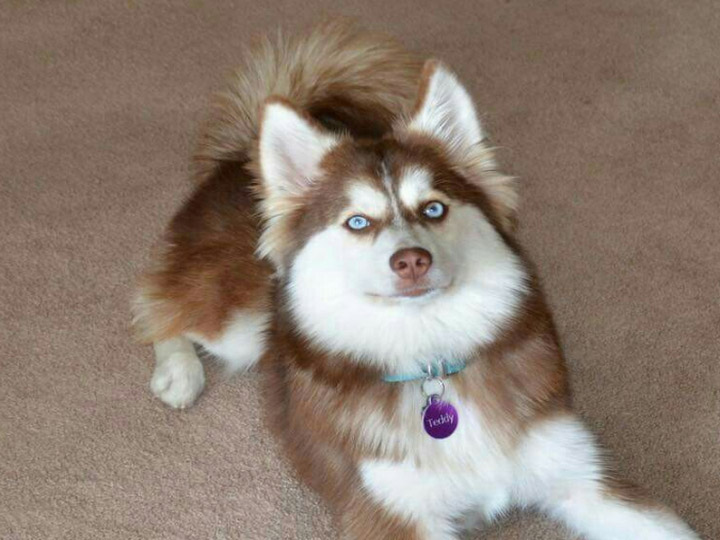
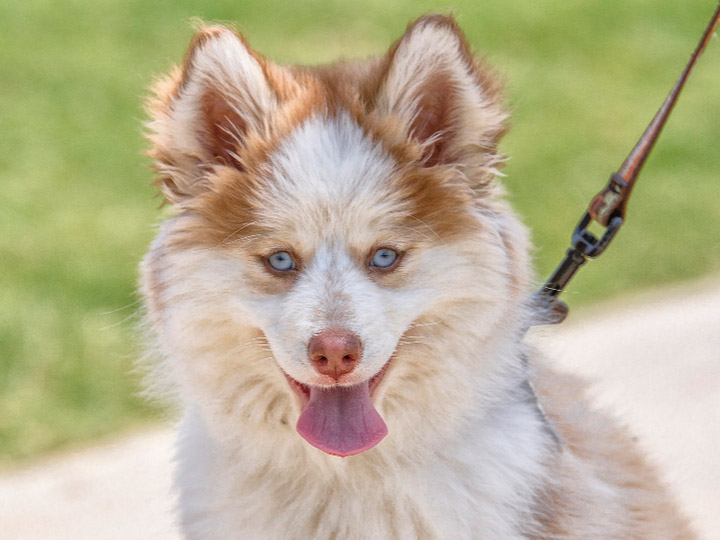
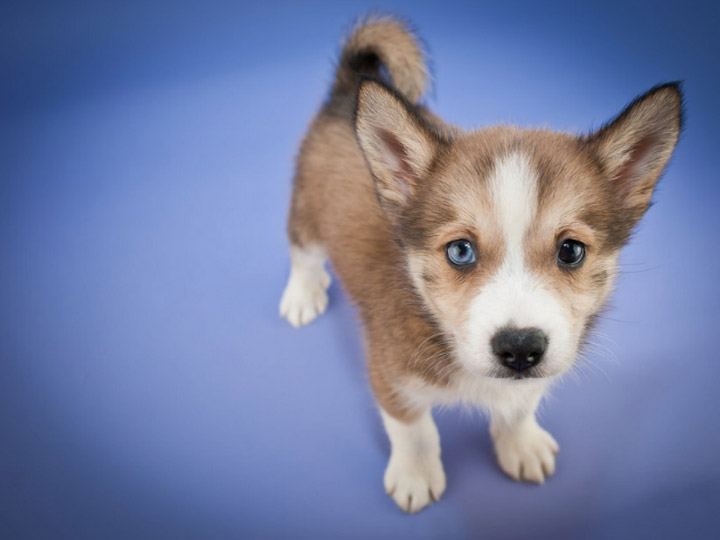
- The brown Pomsky with blue eyes is a very rare and beautiful variation, with bright blue eyes contrasting with the brown coloring. Other characteristics of this type include a semi-long double coat, strong bones, a moderately long muzzle, and a brown nose.
- The short-haired Pomsky is primarily determined by its coat type. The coat is short and fairly coarse, similar to a husky's. These dogs are the least sought after because they lack the distinctive features expected of a Pomsky.
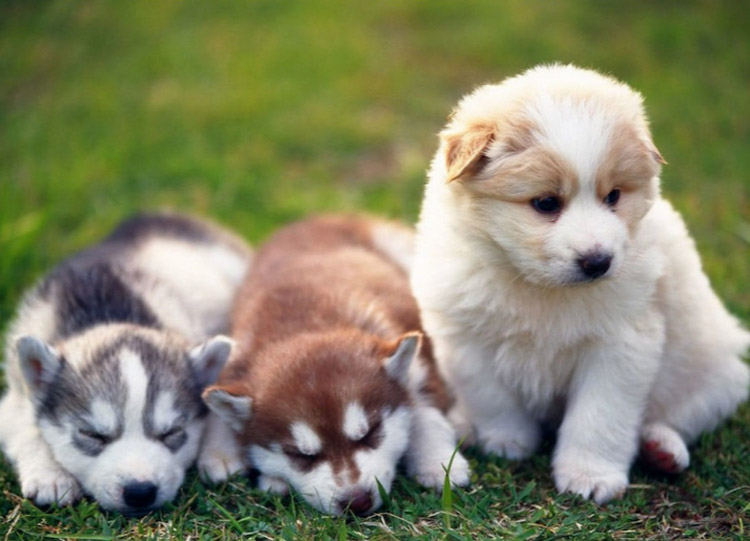
Pomskies come in a variety of colors. The most popular is the husky color, which can be black, gray, brown, red, copper, blue, or white. Solid and merle colors are less common. Eye color can be blue, green, amber, or brown. Heterochromia (eyes of different colors) is common. Partial iris coloration, where splashes of another color are present against a background of one color, is also common.
Character
First and foremost, Pomskies should be friends and companions to humans. It's worth noting that they largely meet the requirements placed on them. Huskies are renowned for their energy and friendliness, but they don't form particularly strong bonds with their owners. These qualities are mitigated by the loyal, moderately active Pomeranian. Pomskies are attached to their family and thrive on attention. Moderately calm and energetic, confident and alert, they are willing to follow their family on any adventure. Aggression or shyness are uncommon. Pomskies are often very talkative. They typically choose one person within the family who they consider their owner, and they get along well with other cats and dogs, especially if they were raised with them.
Since the Pomsky is not a breed, it is impossible to talk about set qualities and character traits. Dogs can inherit individual traits from their sire and dam, as well as develop their own.
It's important to read up on the personalities of Huskies and Pomeranians separately. Any trait can manifest in a Pomsky puppy. If none of the above concerns you or raises any doubts, then you can consider buying a mixed breed. While it's best for Pomsky puppies to always have the desired temperament, unfortunately, they can also inherit undesirable traits, such as destructiveness or digging, a tendency to escape, aggression toward strangers, and so on.
Education and training
Pomskies are quite difficult to train, and training them is a very lengthy process that requires patience from the owner. Often, behavior correction requires the help of a dog trainer. During training, it is important to use only positive reinforcement. Highly sensitive Pomskies can become withdrawn or irritable if scolded for prolonged periods. They are also often stubborn and willful.
Content Features
Thanks to its small size, the dog can be kept in an apartment. It's best to have its own sleeping area, bowls, and a few toys. The Pomsky enjoys being the center of attention and being close to its family, but feels uncomfortable around strangers, and prolonged alone time can cause anxiety and nervousness. A great deal of time must be devoted to socialization and training. Pomskies adapt to new environments and people fairly quickly, but during adolescence, it's best to protect them from stressful situations and noisy groups.
Pomskies are equally well suited for young families with children and older people who prefer a quiet lifestyle.
Care
Pomskies are not a hypoallergenic breed and shed quite heavily, so they will need regular brushing: two to three times a week and daily during the shedding season. Bathing is recommended no more than once a month. It's also important to keep their ears and eyes clean. Their nails should be trimmed as needed, every three to four weeks.
Equally important components of care are exercise and a nutritious diet. Pomskies can be fed either natural food or commercially prepared foods, selected based on their age, activity level, and physiological state. It's recommended to walk the dog two to three times a day for about an hour. In bad weather, playing outdoors can be replaced by learning a new command indoors.
Health, life expectancy
Pomskies generally don't inherit the diseases common to their parent breeds. This is largely due to the heterosis effect, also known as hybrid vigor. In other words, this is the increased viability, fertility, and health of first-generation hybrids compared to their parent breeds. While Pomskies can suffer from illnesses, they are most often caused by poor care or nutrition. They also frequently suffer from allergies, and as they get older, special attention should be paid to their eyes. Routine vaccinations, deworming, and treatment for external parasites are essential. The Pomskie's lifespan is typically 13-14 years.
Breeding Features
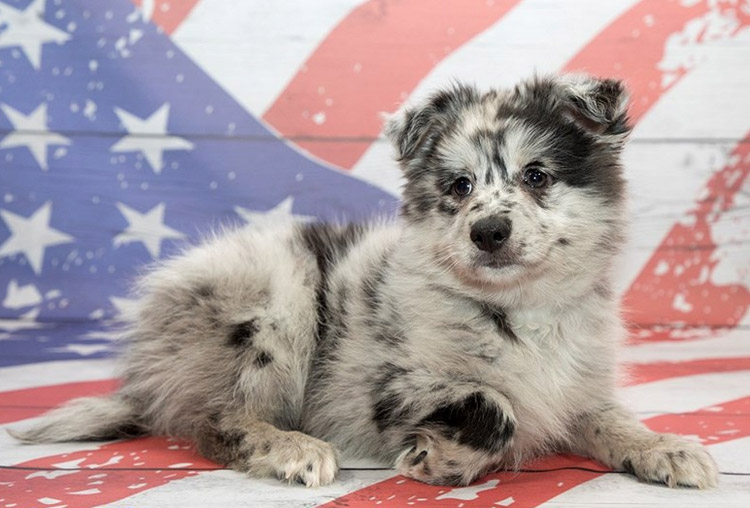
One of the most debated questions is how miniature Pomeranians and larger Huskies mate. Internet users have a plethora of theories on this matter. In fact, breeders don't use any stools or tie up dogs; Pomsky puppies are produced by artificial insemination of a female Husky with the sperm of a male Pomeranian. Never the other way around! A small Pomeranian won't bear puppies that are very large for their size. Pregnancy in Pomeranians after mating with individuals of their own size often ends in a Caesarean section, to say nothing of situations where the puppies are two to three times larger than normal. First-generation hybrids are most in demand; subsequent matings between two Pomskies can be done naturally, but this is primarily practiced in America, where breeders strive to achieve a uniform standard. Pomskies are a genetic lottery. While the dogs' appearance and character are still relatively predictable in the first generation, the number of possible variations in the second and subsequent generations is virtually limitless. This factor greatly complicates the development of the Pomsky as a distinct breed with its own standard.
It would be wrong to say that hybrids combine the best of two breeds. Genetics doesn't always work that way; gene expression isn't subject to breeders' control.
It takes breeders a lot of time, experience, research, and investment to select the right breeding stock, the pairs that will produce Pomskies in the form they are most in demand—small dogs with a husky-like coat.
Choosing a breeder and a puppy
In the United States, you can find a good puppy through the Pomsky Club of America. In other countries, such clubs are rare due to the small number of dogs and the low popularity of hybrids. Choosing a breeder requires different criteria. Never consider dubious offers. Reputable breeders usually have waiting lists for their puppies, so there's no need to take them to a bird market or sell them to resellers.
A good breeder takes full responsibility for the care of both adult and puppy dogs, devoting considerable attention to their training and socialization, providing comfortable living conditions, and taking a wise approach to nutrition and disease prevention. A Pomsky breeder who truly knows a lot about hybrid breeding will never guarantee weight, coat quality, or temperament, as these and many other characteristics are unpredictable.
Price
Unlike other dogs of this breed, the price of a Pomsky is not cheap. Puppies cost between $2,500 and $5,000. The price is influenced by the breeder's status, the value of the parents, and the puppies' appearance: color, coat quality, and estimated size.
Photos
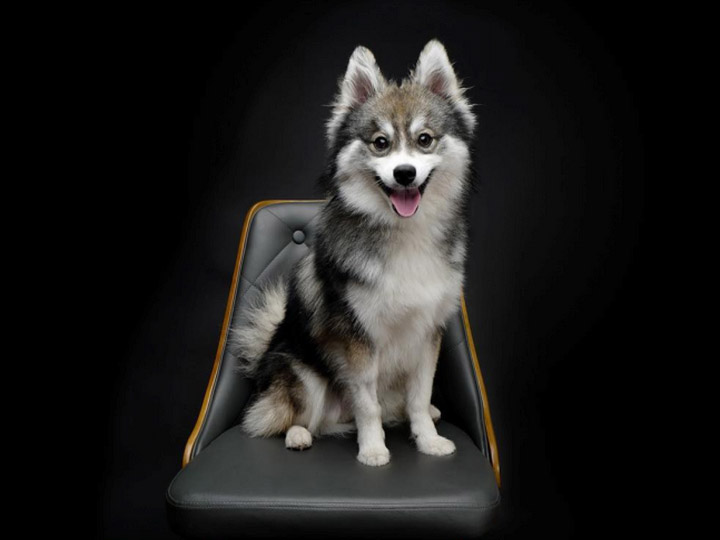
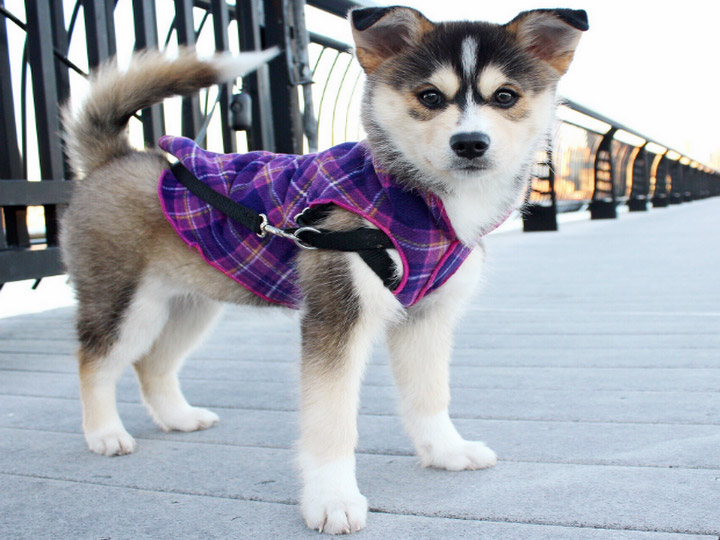
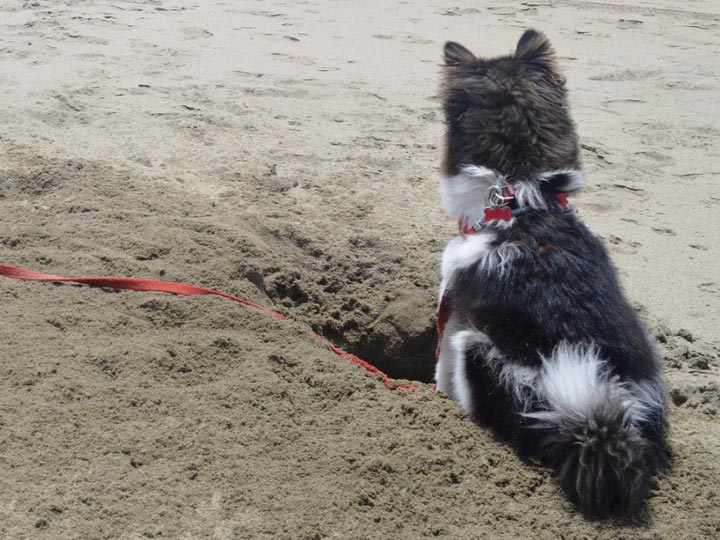
This gallery features photos of Pomsky dogs, clearly demonstrating how diverse these mixed breeds can be in terms of build, coat length, and color.
Read also:


Add a comment