
Polish Hound
The Polish Hound is a gundog with excellent working qualities and a good temperament. Energetic, agile, and easy to train, it is primarily used for hunting foxes, hares, deer, and wild boar, and for following blood. It can be used as a sporting dog and companion.
Content
History of origin
The first mention of Polish hounds dates back to the 13th century. They likely evolved from French, Italian, and Asian hunting dogs that arrived in the territory of modern-day Poland at various times. From the 14th to the 17th centuries, hound hunting was very popular among the gentry, and therefore these dogs are frequently mentioned in chronicles. The description of hounds by Ignacy Bogatynski (1823-1825) can be considered the prototype for the modern standard.
The first Polish hounds were brought to Russia by soldiers returning home after the Patriotic War. These dogs became very popular among landowners, counts, and princes. In the late 19th century, they were actively used for hunting "in the French style," with rifles. Renowned cynologists wrote extensively about Polish hounds, noting their exceptional tenacity.
After World War II, purebred Polish hounds, like many other breeds, were virtually extinct. Colonel Józef Pawlusevich played a key role in their recovery, gathering the surviving dogs in the Carpathian region and beginning targeted breeding. He soon registered his breed under the name "Polish Ogar." At the same time, cynologist Piotr Kartawik worked on his own saddle-colored hounds, also known as "Ogars." When the breed was registered with the FCI, Kartawik's dogs were recognized under the name "Polish Ogar," and Pawlusevich's were excluded from breeding. For a long time, the colonel's hounds were overlooked, but they were not forgotten and continued to be bred in the Western Beskids and Bieszczady Mountains.
The Polish Hound and the Polish Hound are two different dog breeds, each with its own standard. The Polish Hound was bred by Józef Pawlusiewicz and recognized by the FCI in 2007. Piotr Kartawik began working on the Polish Hound. The breed was recognized by the FCI in 1965.
It wasn't until 1983 that the Polish Kennel Club authorized the registration of Pawlusevich's dogs under the name Polska gonczy. In 2017, the breed was permanently registered with the Fédération Cynologique Internationale (FCI) as the Polish Hound.
Hunting with the Polish Hound
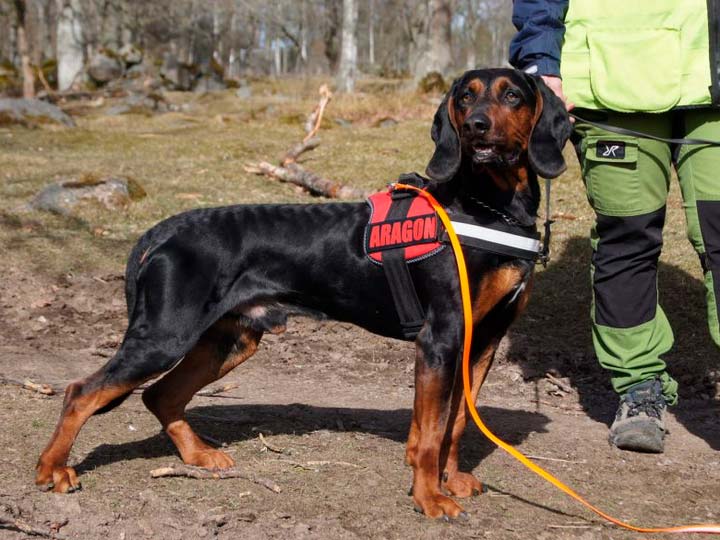
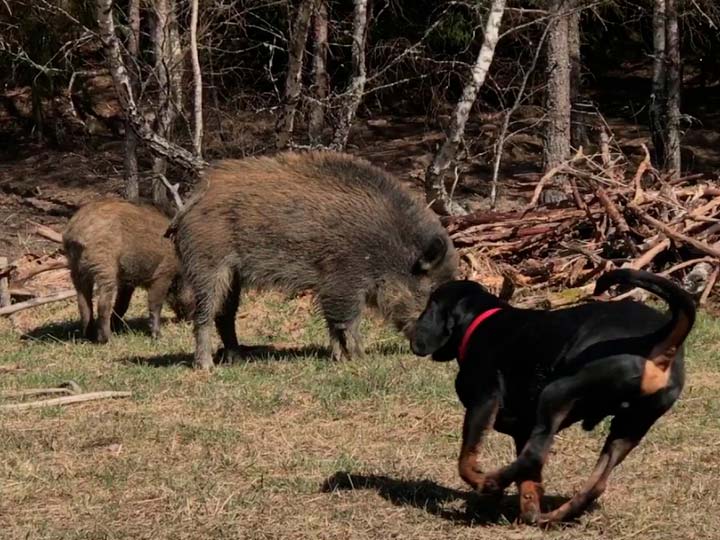
The Polish Hound is used for hunting in virtually any terrain. It excels at following a blood trail. Its natural instinct is to locate wounded game without vocalization. It pursues mountain game with a loud bark. It tries to hold larger game in place, barking at the animal and evading attacks. Polish Hounds have a clear, melodic voice, varying in pitch depending on the species.
Working tests are carried out using blood trails and a wild boar.
The Polish Hound is a slow-moving dog, making it ideal for hunting on foot with a gun. During the chase, it is active and tenacious, possessing excellent scenting and a keen eye for prey. It rarely loses its prey. It has excellent navigation and endurance. It can work in a pack. It is quite independent and self-sufficient, yet obedient and owner-oriented. Many dogs are good swimmers.
Appearance
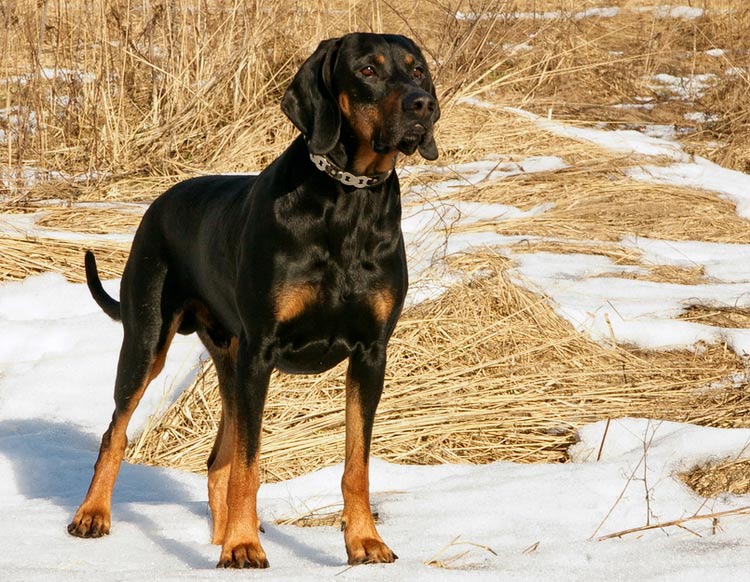
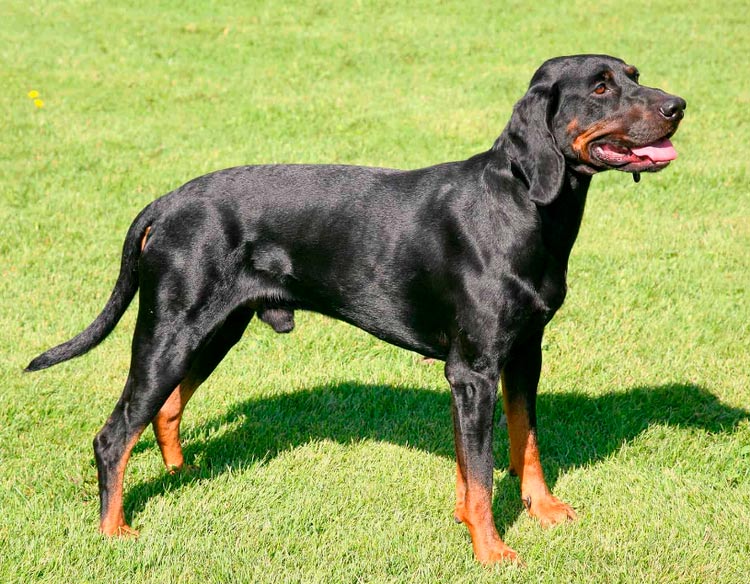
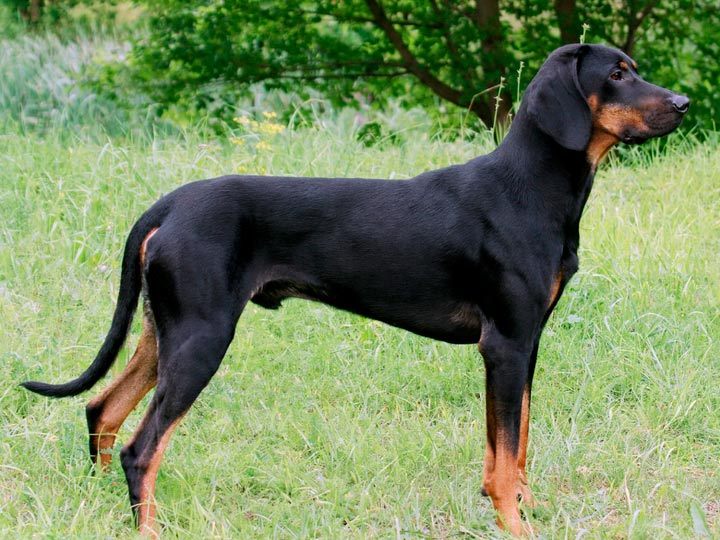
The standard describes the Polish Hound as a sturdy, compact, and powerful dog of medium height, with a solid build and strong bone structure. Its appearance should convey strength and endurance, though less so speed. Its voice is persistent, clear, medium-toned, and variable. Vishnevskys are slightly higher-pitched. Sexual dimorphism is well-defined.
- The height of males is 56-65 cm, weight is 25-32 kg;
- The height of female dogs is 55-60 cm, weight ―20-26 kg.
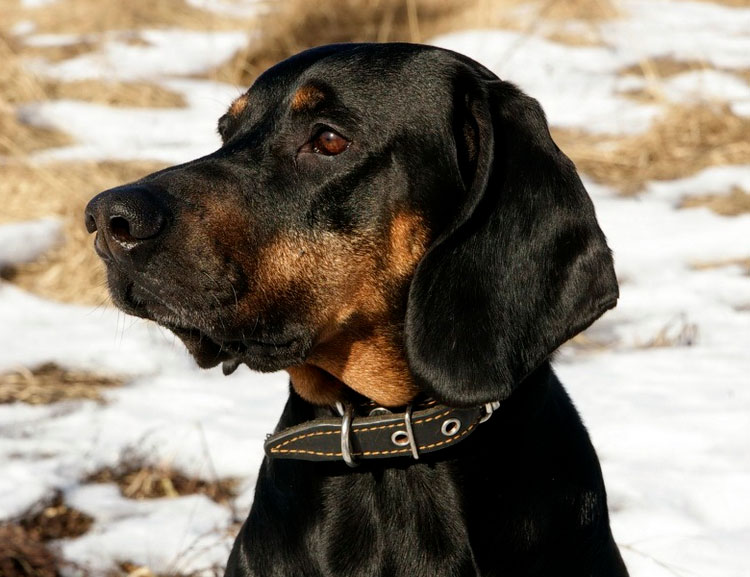
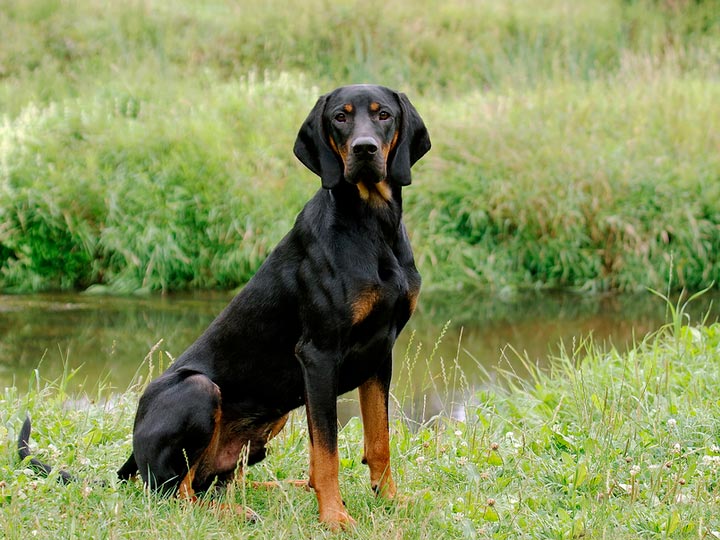
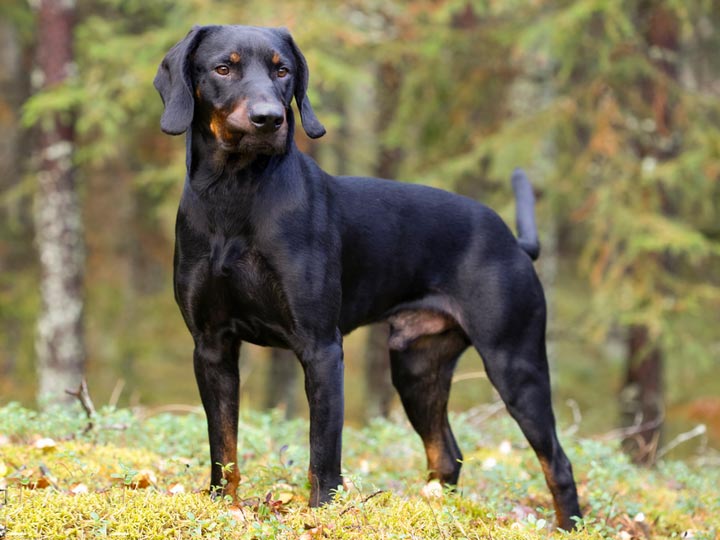
The head is rectangular and rather heavy. The skin on the forehead forms folds. The muzzle is long and blunt. The nose is large, wide, and black. The lips are pendulous, and the flews are thick. The bite is a scissor. The eyes are set obliquely and are dark brown. In older dogs, the lower eyelids droop. The expression is soft and serene. The ears are fairly long, hanging, and set low. The neck is powerful, thick at the base, of medium length, with a forked dewlap.
The body is strong, proportional, and elongated. The back is broad and long. The croup is wide, almost straight. The chest is proportionally deep and wide, with ample space. The ribs are well sprung and long. The belly is slightly tucked up. The tail is set low, reaching to the hocks. The limbs are strong, sturdy, of medium length, with well-developed muscles, strong bone structure, and strong joints. The paws are tightly closed. The nails are short and thick. The pads are dense.
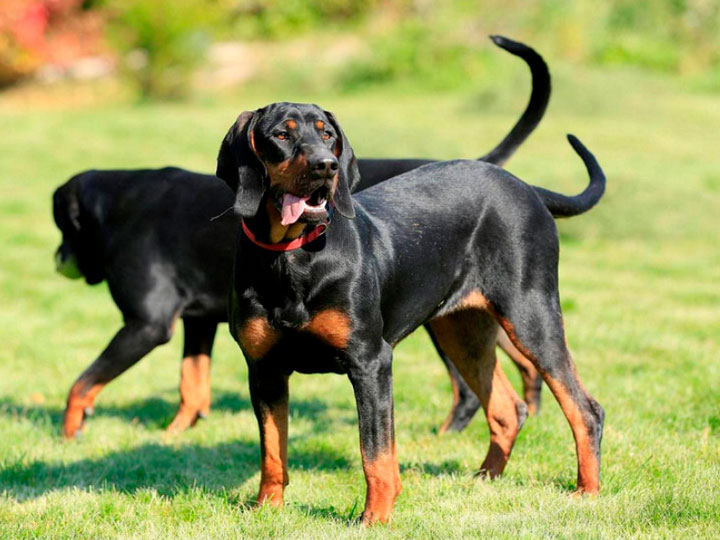
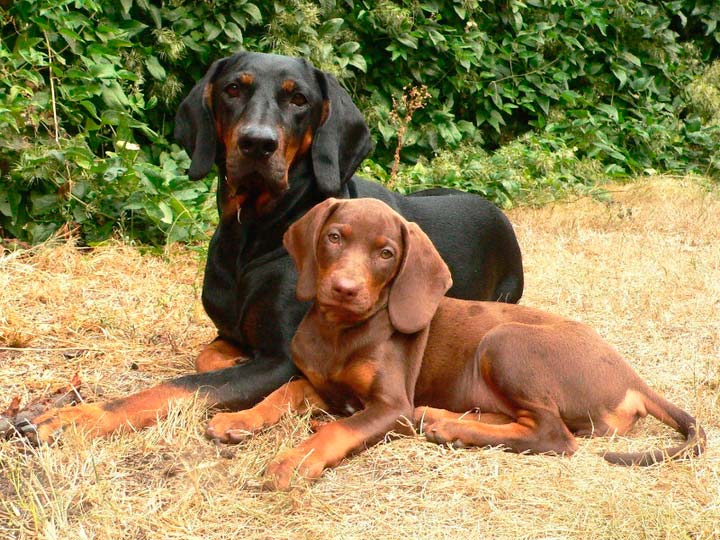
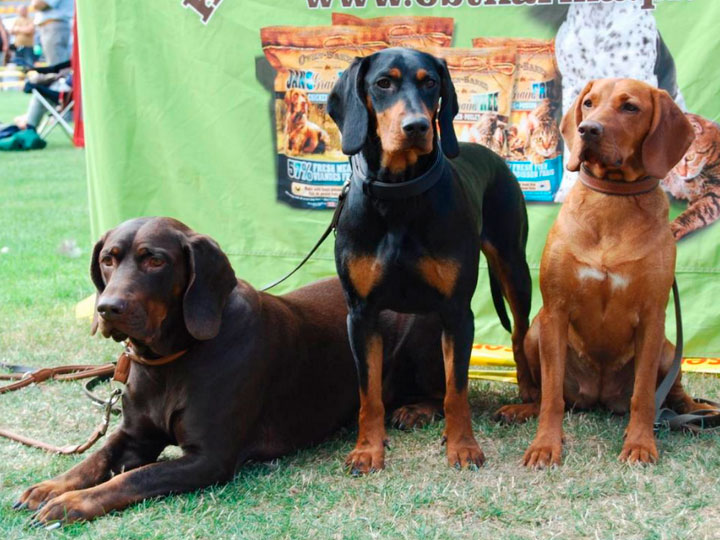
The coat is double, consisting of a straight, medium-length topcoat and a dense undercoat. Three possible colors are available:
- black and tan;
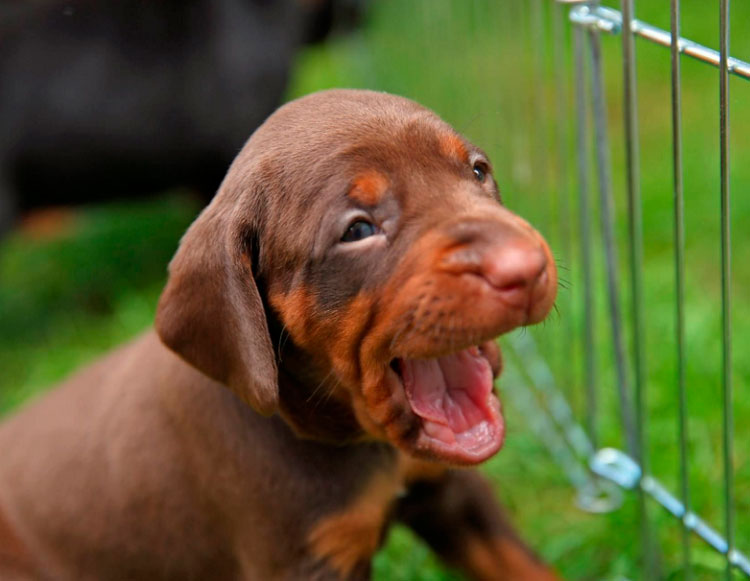
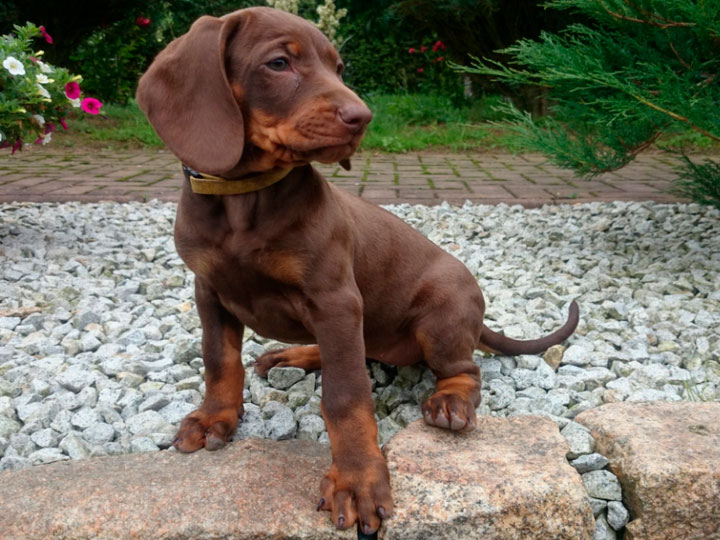
- brown and tan (rare);
- red (very rare);
Tan markings are located on the eyebrows, cheeks, muzzle, under the throat, chest, inner thighs and shoulders, metatarsus, pasterns, paws, underside of the tail and under the tail. White markings on the toes and chest are allowed. The Polish Hound's appearance is similar to Lithuanian And Austrian Brandl Brack.
Character and behavior
The Polish Hound is a balanced, energetic, and active dog with a calm, firm character. It is fearless of animals. While not aggressive, it is wary of strangers and territorial enough to be a good guard dog. It barks little, only when necessary. It is an obedient and devoted companion to its owner.
The Polish Hound is fairly independent and self-sufficient, especially when hunting. A properly trained and socialized dog gets along well with other pets. It forms strong bonds with all family members. It is patient with children, but should not be considered a companion for them.
Polish Hounds don't like excessive pressure during training. They are fairly easy to train. They respond best to positive training methods and play training. Polish Hounds are not suited to couch potatoes; they need an active lifestyle. For this reason, they are not suitable for the elderly or those with low activity levels. If bored, they can become destructive, aggressive, and unruly.
Features of maintenance and care
First and foremost, the Polish Hound is an energetic and resilient hunting dog with outstanding working qualities. Apartment living is possible only if the dog receives adequate exercise: long walks, jogging alongside its owner, running behind a bicycle, playing sports, swimming, and so on. A more suitable option is living in a private yard. Running around the yard does not eliminate the need for regular training outside. Year-round outdoor living is also possible, in a pen with an insulated kennel. The Polish Hound thrives in the company of other dogs.
As practice shows, the owner of a Polish Hound does not necessarily have to be a hunter, but he or she must be a person willing to engage the dog in any other work: agility, canicross, flyball, trekking, and the like.
The Polish Hound is well adapted to life in a temperate climate. It's not picky about food and doesn't require any special grooming. It only requires occasional brushing, somewhat more frequently during shedding season, and bathing as needed, usually several times a year. Its ears should be inspected weekly and cleaned if they become dirty.
Health and life expectancy
After many years of observation of Polish hounds, no predisposition to any diseases, including mental disorders, was found. Life expectancy is 12-15 years.
Where to buy a Polish Hound puppy
Today, over 6,000 dogs are registered in the Polish pedigree database. Most kennels are located in Poland. Over the past 5-10 years, dogs have been increasingly imported to other countries. Polish hounds are popular with hunters in France, the Czech Republic, Germany, Hungary, Lithuania, Georgia, Italy, Norway, Portugal, and even Africa. They have also been imported to Ukraine and Russia, where the first litter from two imported dogs was born in 2015.
It's best to look for a dog through the Polish Club of Polish Hound Lovers. They provide comprehensive information about puppies, planned litters, and representatives of the breed in the country and abroad. Many ads can be found on the Polish marketplace OLX, but they are very rare on similar sites in other countries.
Price
The price of a puppy ranges from 1200 to 3000 zlotys (approximately 20,000 to 50,000 rubles).
Photos and videos
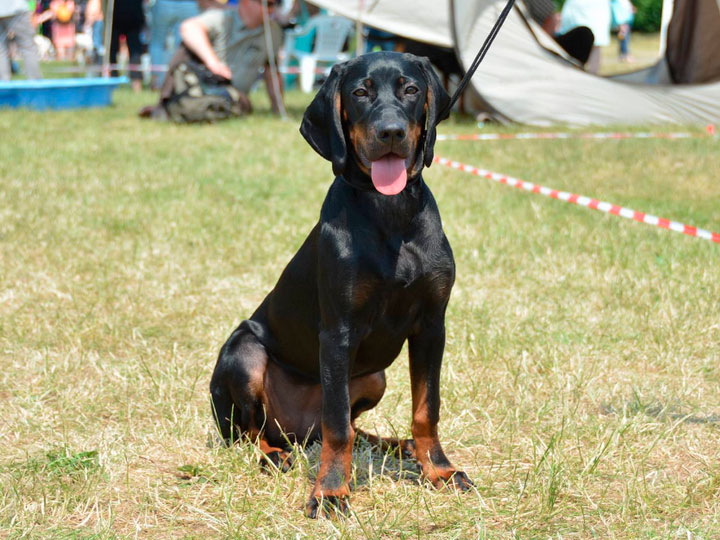
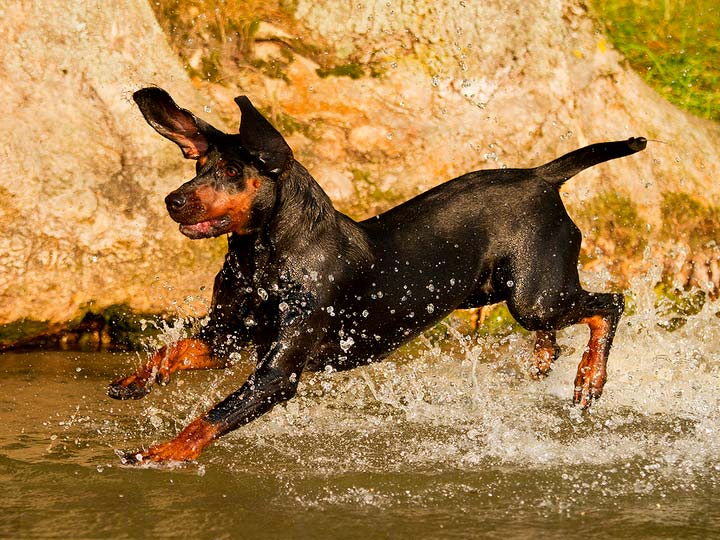
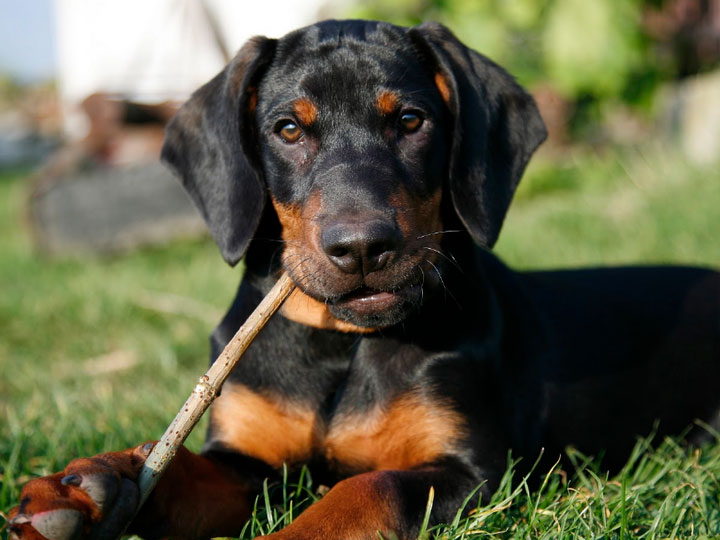
The photographs collected in the gallery show what Polish hounds of different sexes, ages, and colors look like.
Video about the Polish Hound dog breed
Read also:


Add a comment