
Subcutaneous mites in dogs: symptoms and treatment
Dogs have more sensitive skin than humans, so they are much more susceptible to any skin conditions. These unpleasant symptoms are often caused by subcutaneous mites—parasites that feed on the blood and epithelial cells of their host. Subcutaneous mites, whether active within the body or invading from outside, can cause diseases such as demodicosis or scabies. Parasitizing under the skin, ticks actively reproduce and poison the animal's body with waste products, which is accompanied by unbearable itching, hair loss and can cause a severe allergic reaction. Furthermore, some species of subcutaneous mites can be transmitted to humans.
Content
Signs of the disease
If a dog develops a subcutaneous mite, the symptoms and treatment of the disease depend on the type of pathogen:
- Demodicosis is caused by the opportunistic mite Demodex, which constantly lives in the sebaceous glands and hair follicles of animals, but wakes up and begins active life when the immune system is weakened;
- Scabies is an infectious disease that develops when a dog becomes infected scabies mites - sarcoptosis or notoedrosis (they are collectively called scabies mites), which gnaw characteristic paired tunnels in the skin.
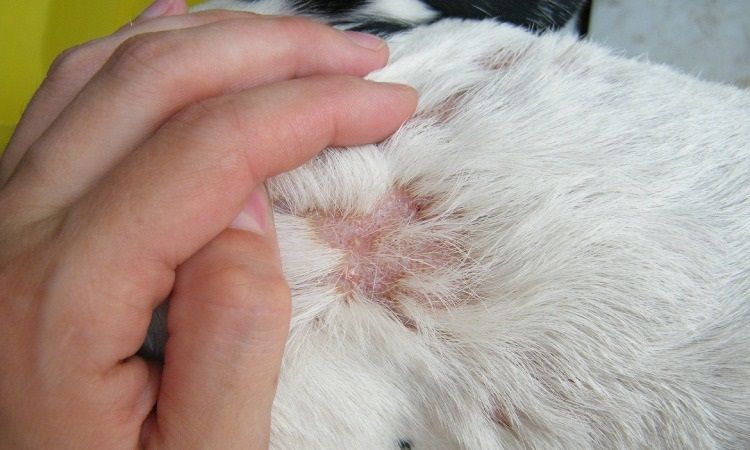
Both pathologies have similar signs by which one can recognize the subcutaneous mite:
- very severe itching, causing the dog to scratch the affected areas until they bleed;
- hair loss, which first becomes noticeable on short-haired parts of the body (belly, groin, face, paws), and then bald spots appear everywhere;
- increased nervousness caused by incessant, excruciating itching;
- weakness, loss of strength, indifference to what is happening;
- significant deterioration of general condition, appearance of concomitant diseases.
The main difference is that the demodex mite manifests itself as point inflammation, while the scabies mite forms paired passages.
But since other symptoms of subcutaneous mites in dogs are typical for most cutaneous parasitic infestationsTreatment should only be prescribed after testing and determining the type of pathogen. To reduce itching until you see a veterinarian, you can give your dog an antihistamine.
Important! Demodicosis, scabies, and other skin diseases have largely similar symptoms, but require completely different treatments. Therefore, it makes no sense to attempt any treatment on your own without a proper diagnosis.
Types of subcutaneous mites
There are several types of mites that can infect dogs. However, in Russia, the most common are Demodex, Sarcoptic mange, and Notoedric mange.
Demodex
The Demodex mite inhabits the sebaceous glands and hair follicles of all mammals (animals and humans). However, dogs are genetically predisposed to developing demodicosis, so it is quite common in them. The disease develops when the dog's health deteriorates, caused by factors such as:
- disruptions in the immune system;
- hormonal imbalances;
- severe physical or mental stress.
Demodex mites show no symptoms if the dog is otherwise healthy. When triggered by these factors, the mite becomes active and begins to secrete toxins, which cause itchy, inflammatory patches in the form of red bumps. Particularly severe inflammation develops in areas where dead parasites accumulate. This inflammation quickly spreads throughout the body, usually accompanied by hair loss. If bald spots are absent, demodicosis is often mistaken for allergic itching.
Important! It is recommended to spay or neuter dogs that have recovered from demodicosis. Since the cause of the mite reactivation cannot be determined, it is important to rule out the influence of hormonal imbalances on the health of the offspring.
The disease has two forms: juvenile (in dogs under 2 years of age) and adult. However, only juvenile demodicosis has a favorable prognosis.
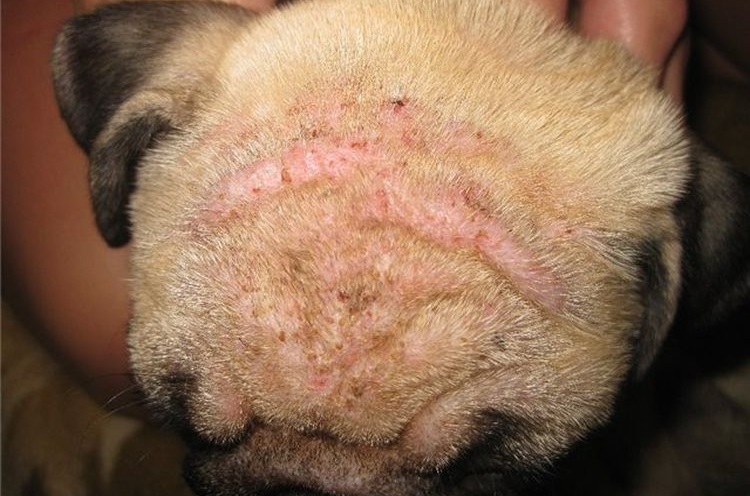
In addition, the pathological process can have 2 development options:
- Localized is the most common form, accounting for 90% of diagnosed demodicosis cases in dogs. The lesion appears in a single, clearly defined area, with irritation, redness, and rapid hair loss. There are no secondary symptoms. It may resolve spontaneously without treatment within 15–20 days.
- Generalized – the disease has multiple lesions. It rarely resolves without treatment, only if there are no complications.
In turn, localized demodicosis is of 2 types:
- pustular - occurs with the formation of purulent pustules, which are scratched by the dog, which can lead to infection entering the blood and its further spread throughout the body;
- scaly - causes the formation of small red spots covered with dry scales, which are also very itchy and the dog can introduce an infection into them when scratching, but it will manifest itself locally.
Generalized demodicosis combines both types simultaneously. You can see a photo of what a subcutaneous mite looks like in dogs with all types of demodicosis – the difference is very noticeable.
Scabies mites
The scabies mite penetrates the dog's skin from the outside and lives within it, feeding on epidermal cells. While a healthy immune system can prevent the disease from developing for a certain period, the animal is a carrier of the parasite and can even infect humans. However, symptoms are mild and resolve quickly, as these mites do not survive on human skin.
There are two types of scabies mites, depending on which one develops different types of scabies:
- Classical mange is caused by the sarcoptic mange mite and is characterized by the same symptoms as demodicosis, but with the formation of inflammatory lesions early on. Chronic mange leads to keratosis, patches, and scarring.
- Ear infection is caused by the notoedric mite, which infects the outer part of the ears but can spread to the croup and tail if the dog is used to sleeping curled up. The animal will vigorously hit its ears and head to relieve the itching, sometimes causing serious injury.

In general, the external manifestations of scabies in dogs are very similar to those of demodicosis. Therefore, distinguishing between the two without specialized testing is very difficult. To identify the pathogen, a scraping of the upper epithelial layer is taken under local anesthesia.
Treatment of subcutaneous mites in dogs
Treating demodicosis is much more difficult than scabies. To "deactivate" the demodex mite, the animal's entire body must be completely restored. However, to eliminate the scabies mite from dogs, treatment should only target the parasites, and then focus on boosting the pet's immunity.
Treatment of demodicosis
The difficulty of getting rid of Demodex is compounded by the fact that its cause is virtually impossible to determine. Therefore, it's essential to strengthen the dog's immune system and restore the organs affected by the parasite. The treatment plan should be as follows:
- to boost immunity – “Immunoparasitan” intramuscularly for 1 week in a dosage corresponding to the animal’s weight;
- for treating the affected areas - bathing and ointments with acaricidal action, which are selected depending on the severity of the lesion (at least 7 procedures with a repeat course after 1 week);
- to restore the liver - take Karsil tablets according to the instructions (other hepatoprotectors are not recommended, as they can have a positive effect on the tick’s condition, especially Essentiale);
- To relieve itching, take antihistamines and switch to a hypoallergenic diet (premium dry food and probiotics to prevent dysbacteriosis).
If the animal's condition is critical, Detomax is prescribed. It should be noted that these injections for subcutaneous ticks in dogs are very effective, but highly toxic and quite dangerous. Their use is appropriate when the benefits outweigh the existing risks to the dog's weakened body.
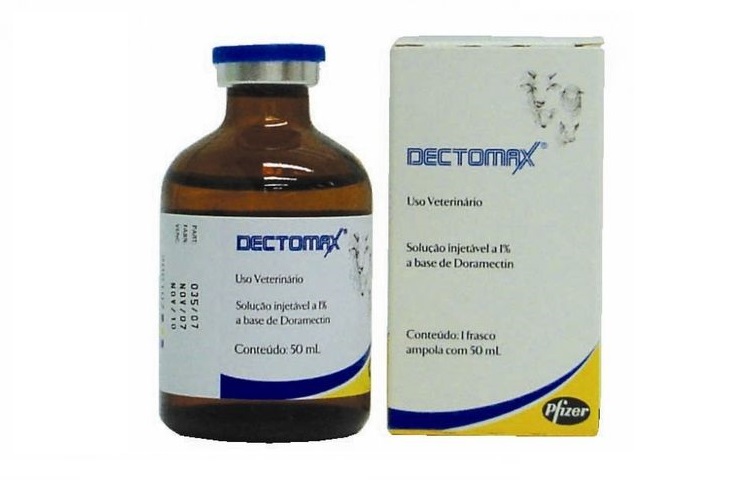
There are no other medications for demodicosis, including preventative ones. If there is a genetic predisposition, even with proper care, dogs may not be protected from the disease. Therefore, after recovery, such animals are removed from breeding.
Treatment of scabies
Scabies mites are eliminated using special acaricidal drops, which simultaneously kill the parasites and provide antifungal and antibacterial effects. Treatment is quite simple:
- the pathogens are destroyed by applying drops to the withers of the sick animal;
- in case of severe skin damage, the affected areas are additionally treated with antimicrobial drugs;
- In parallel, liver support (preferably with Karsil) and strengthening of the immune system are carried out.
Symptoms of a scabies mite infestation, such as itching, hair loss, and increased excitability in dogs, are also typical of allergic reactions. Moreover, they may be somewhat reduced by antihistamines if the owner chooses to treat the dog's allergies. However, this won't cure the scabies, and it will waste time—mites reproduce rapidly, and treatment is much more effective at the initial stage.
To know exactly how to treat subcutaneous mites in dogs, it's important to correctly identify the type of tick, as each type only responds to a specific type of medication. Therefore, a diagnosis should only be made by a doctor after conducting at least 2-3 scrapings if these symptoms appear.

For mild cases of scabies or early in the illness, you can alleviate your dog's condition with folk remedies. The following recipes are suitable:
- Garlic tincture: Pour crushed garlic cloves into almond oil at a 1:2 ratio and let sit in a dark place for 3 days. Apply to the skin no more than once a day, as garlic is harmful to dogs.
- Kefir tincture of black sulfur: dilute sulfur with kefir (1:3) and leave in a warm place for several hours. Apply to painful areas once a day, as the sulfur component is extremely drying to the skin, causing a severe burning sensation. For the same reason, do not leave the solution on the skin; rinse it off after application.
- Sulfur ointment is a pharmacy product that is applied to the affected areas twice a day without rinsing. The ointment also causes a burning sensation.
- Lavender oil – the skin is first lubricated with the oil, and after it has been absorbed, it is rubbed with chalk powder. This procedure is performed 4-5 times a day.
Despite the simplicity and effectiveness of home remedies, they should not be overused. These products can dry out your dog's skin and cause significant discomfort.
To prevent infestation of scabies mites, treat your pet with anti-mite drops twice a year. It's also important to provide your pet with a balanced diet and periodically administer immunomodulatory medications.
Subcutaneous mites are a very unpleasant and dangerous disease for dogs. Necessary measures should be taken at the first sign or even suspicion of the development of such pathologies. In the early stages, getting rid of parasites is much easier, as they have specific life cycles. If the disease is advanced, skin lesions can become very severe and painful for the animal, and treatment can last for many months. Furthermore, only a personalized, comprehensive approach to getting rid of subcutaneous mites in dogs, including treatment and overall health, can yield positive results.
You can also ask our website's staff veterinarian a question, who will answer them as quickly as possible in the comments box below.
Read also:
- How to remove a tick from a dog at home
- Tick drops for dogs: which are the best?
- Demodectic mange in dogs


56 comments
Marina
Good evening, please tell me what's wrong with my dog, he scratches himself to the scalp.
Alina Veterinarian
Hello!
There could be a huge number of reasons, from any skin/intradermal/subcutaneous parasite to allergies not only to food but also to dust, synthetics, and so on.
First, you need to treat your dog for parasites (fleas, ticks). This treatment is performed three times, 25-30 days apart.
If there are visible lesions on the skin, then wound treatment may be required (for example, chlorhexidine 2 times a day), or a full wash of the dog with shampoo containing chlorhexidine.
Ideally, of course, it is better to consult a veterinary dermatologist who will conduct an examination, take scrapings and/or skin cytology and tell you the reason why your dog is itching.
Sergey
Hello. My dog is 7 months old and I've noticed this behavior for a while now: he often circles, chases, barks, and grits his side. What should I do?
Alina Veterinarian
Hello! Your first step is to treat your dog for parasites (fleas and ticks). This treatment is performed three times, 25-30 days apart.
If there are visible lesions on the skin, then wound treatment may be required (for example, chlorhexidine 2 times a day), or a full wash of the dog with shampoo containing chlorhexidine.
Ideally, of course, it is better to consult a veterinary dermatologist who will conduct an examination, take scrapings and/or skin cytology and tell you the reason why your dog is itching.
Olesya
Good afternoon)
Please advise, my 8-month-old female Yorkie is itching a lot, scratching her armpits, biting her paws, hitting her ears, and scratching them. What could this be? She's currently on hypoallergenic food for two months, and we've started using Selaforte neck drops (twice already in the last month). We've given her Simparik once, and the second time will be on December 2, 2024. What do you recommend? We've made an appointment with a dermatologist.
Daria is a veterinarian
Good afternoon
I hope the dermatologist was able to help you and you found the cause of your pet's itching.
You did the right thing by seeing a dermatologist in person. When itching occurs, the first thing you can do at home is comprehensively treat all external parasites that can cause itching (SelaFort and Simparica are excellent options).
If there's no response, an elimination diet (or switching to a hypoallergenic diet) is prescribed to rule out food allergies. However, there are many nuances to this, so I recommend consulting a dermatologist at this stage.
But if you have switched to a hypoallergenic diet on your own and there are no nutritional errors on your part (only food and water) and the symptoms persist, then there is only one option: an appointment.
Please do not self-medicate. It's easier to resolve the problem at the very beginning of the illness than when it's aggravated by additional pathologies.
I hope your dog no longer itches, good health to you and your pet!
Daria is a veterinarian
Good afternoon
I hope the dermatologist was able to help you and you found the cause of your pet's itching.
You did the right thing by seeing a dermatologist in person. When itching occurs, the first thing you can do at home is comprehensively treat all external parasites that can cause itching (SelaFort and Simparica are excellent options).
If there's no response, an elimination diet (or switching to a hypoallergenic diet) is prescribed to rule out food allergies. However, there are many nuances to this, so I recommend consulting a dermatologist at this stage.
But if you have switched to a hypoallergenic diet on your own and there are no nutritional errors on your part (only food and water) and the symptoms persist, then there is only one option: an appointment.
Please do not self-medicate. It's easier to resolve the problem at the very beginning of the illness than when it's aggravated by additional pathologies.
I hope your dog no longer itches, good health to you and your pet!
Sergey
Good afternoon! My dog has started itching a lot. The itching is localized around the tail and ears. There are no bald spots. She's been itching since late spring. There are no visible scratches. Could the heat be a factor?
Daria is a veterinarian
Hello!
It's a pity we didn't notice your question earlier.
Since summer is coming, perhaps this question and answer will be relevant for someone.
Heat may not cause itching. However, it can trigger the development or exacerbation of skin conditions such as dermatitis (skin inflammation) and unspecified otitis (especially in dogs with floppy ears). Such exacerbations are possible due to bathing, insufficient drying afterward, or dense fur (when the undercoat cannot completely fall out, creating a greenhouse effect).
Therefore, if symptoms appear, it is necessary to consult a veterinary dermatologist for an in-person examination to determine the exact cause of the itching and prescribe the correct treatment.
Good health to your little tail!
Svetlana
Good day! Is it possible to treat a female dog that has had subcutaneous mites (her fur has completely fallen out, she's been injected several times, and the fur is starting to grow back a little)? The female is 3 years old.
Daria is a veterinarian
Hello!
These questions are very popular, but they require clarification.
In general, if the dog is currently healthy, there are no symptoms, and all skin lesions have healed, then there are no contraindications to mating.
But if the body has not yet recovered, then it is better to postpone such moments.
Pregnancy for dogs, as for all species, is a very resource- and energy-intensive process. And while everyone wants healthy offspring, it's essential that the expectant mother is healthy and fully recovered from any illnesses.
And always assess the animal's overall condition. I also recommend a medical examination before mating.
Good health to your furry friend!
Aurora
Hello. I have generalized demodicosis. Pieces of tissue have started to fall out from my paws (on the pads and nose). They appeared as sores. My nose started bleeding from them. I was given Ivermectin (the first injection was 2 ml) and am now giving Carsil. My condition is not improving.
Daria is a veterinarian
Hello!
A very important question and a rather serious diagnosis, especially if it is confirmed.
I really hope that you have already managed to cure this disease, and now your friend is cheerful and happy.
I'm sorry we didn't see your question in time, but I'll give an answer now for those who may have encountered the same problem.
If this diagnosis is indeed made, the fastest and most reliable treatment is to treat the dog with Bravecto or Simparica. A Bravecto analogue, Tixfli (produced in Russia and China), has now appeared on the market. While it's not widely available, dermatologists across the country are successfully using it to treat many parasitic diseases.
These drugs in tablet form are safer than using the injectable drug Ivermectin.
But! Such symptoms can also be associated with other skin conditions, and some of them may not even be related to parasites. Such manifestations can also be associated with hormonal disorders or immunodeficiencies. Therefore, if you've undergone antiparasitic treatment but the symptoms haven't improved, it's imperative to consult a dermatologist-endocrinologist for further examination and to determine the cause of this condition.
Please do not self-medicate.
Victoria
Good day. Could you please tell me my pug is due today, she's terribly itchy, and shampoos aren't helping. My hands itch after touching her, too. What should I do and how can I protect the puppies?
Daria is a veterinarian
Hello! First, we need to understand the cause. Was the animal treated for ectoparasites before mating? How long ago did this develop? What other symptoms did you experience? How did you experience them? I'd like to rule out sarcoptic mange (in humans, it causes pseudomange, because the canine parasite cannot fully survive and reproduce in human skin, but itching and a small number of blisters appear after contact with an infected animal). Perhaps your itching symptoms are psychosomatic if there are no visible changes in the skin. Unfortunately, almost all tick medications are harsh and should not be used by pregnant or lactating women. Check to see if the shampoo you've chosen only works on fleas and mites.
Irina
Hello! 4-month-old Russian Cocker Spaniel puppy. Hair has fallen out around his eyes, he's itchy and whining a lot, and he has no fleas. His skin is clean and free of any lesions. He hasn't been outside for a couple of weeks, and only in the yard.
Daria is a veterinarian
Hello! A comprehensive diagnosis is necessary to rule out mites, allergic reactions, and inflammatory processes. Prescribing treatment without a definitive diagnosis is pointless and ineffective.
Christina
Hello, my puppy has a subcutaneous mite. How do I treat it?
Daria is a veterinarian
Hello! Could you please clarify what kind of mite it is? There are several species. And the treatment approaches vary. In some cases, it's topical drops or injections. In others, it's boosting the body's natural resistance so the immune system can fight it off (as with demodicosis, which can develop in puppies).
Galina
Hello. My male Toy Terrier, 7.5 years old, rolls around in the grass, biting his back paw. He keeps asking to be picked up. I found three scabs on his back that crumbled under my hands. He has no scratches. I noticed the rugs in the bathroom are bunched up. He doesn't roll around much at home. I thought he might have a tick. I haven't noticed any other symptoms. He also coughs, burps, and swallows something immediately.
Daria is a veterinarian
Hello! When was the last time the dog was treated for fleas and intestinal parasites? What medications were used? What's in the dog's diet? Are there any anal gland inflammations?
Nastya
Take him to the vet, it's definitely inflammation of the anal glands, don't put it off! If fistulas develop, they're very difficult to treat later.
Lyudmila
Good afternoon! Could you please tell me if I should be concerned about my 3-year-old Yorkshire Terrier's back becoming very hairless. He weighs 2 kg, but his behavior hasn't changed and he's not itchy.
Daria is a veterinarian
Hello! Yes, your pet needs to be examined. A consultation and examination by a dermatologist and endocrinologist is necessary. First, we rule out parasitic diseases (including mites) and problems with the endocrine glands (thyroid, adrenal glands). The dermatologist will take a skin scraping, and the endocrinologist will check the blood for hormone levels. An allergic reaction (to food, makeup, vitamins, medications, etc.) cannot be ruled out. In short, we need to observe what's happening to your pet, examine it with our eyes, and touch it with our hands.
Love
Good evening! Could you please tell me what this could possibly be? A one-month-old puppy was separated from his mother. He has clumps of fluff stuck together on his lower back (he's fluffy). They're barely noticeable. We initially assumed he was covered in porridge. The clumps are small, but they come out when pulled. They're stuck together at the base in a dry, light-colored mass. There aren't many of them, and the puppy is small, so you wouldn't notice them right away. There are no other negative symptoms. Could this be a simple B vitamin deficiency? There's no itching or redness, his appetite is good, his stool is normal, he's active, and he's eating natural food. We want to switch him to dry food. But! The puppy has had this problem before, with "clumps," and he was fed a mixed diet, as we were told (he sometimes ate adult dry food).
Daria is a veterinarian
Hello! Did I understand correctly that the month-old puppy was not only separated from its mother but also given to someone else (i.e., to you)? So, a month-old puppy is taken away from its mother and placed on full-time food? What kind of food are you feeding? It needs to be "baby" food, not adult food! If these are the conditions of keeping and weaning, it would be a good idea to rule out skin parasites (lice and other pests). Maintaining a calcium-phosphorus balance is essential, otherwise rickets or parathyroid problems will develop (followed by "brittle bone syndrome," lameness, and even complete inability to walk, seizures, and spinal curvature). An in-person examination by a veterinarian is essential.
Love
My small dog is over 15 years old. She scratches her groin area until it's red. I used Levomekol and Stop Itch (which helped temporarily).
Daria is a veterinarian
Hello! What kind of food are you feeding? What exactly? How are things going with deworming and parasite treatment? Vaccinations? Do you give vitamins? Is the redness and itching only in the groin area or elsewhere? Have you seen a vet? Have you had a blood test? How long has this health problem been going on?
Julia
Please tell me, we have a Spitz, he walks and sits as if he wants to pee and defecates very often, small amounts. He has lost his appetite.
Daria is a veterinarian
Hello! Your cat needs a bladder ultrasound. If it's a female, we'll also check her uterus. We'll first rule out cystitis and urolithiasis. Then, a gynecologist should check her. Ideally, a urine and blood test will be necessary to definitively determine whether there's an inflammatory process in her body.
Svetlana
We're looking to get a Nemezdrozh puppy, but our neighbors have a male Nemezdrozh dog living through the fence with a tick...he's constantly sick and lethargic. What should we do to prevent the puppy from getting infected?
Daria is a veterinarian
Hello! If you're concerned about your pet's safety, you should avoid using a chain-link fence. Use a solid fence on the side facing your neighbor, or consider making a run with a solid wall or moving the kennel to the other side. Avoid direct contact (remember, your dog scratches itself, and skin particles containing ticks can fly off). Otherwise, you could infect your dog. Don't forget about vaccinations. Avoid contact with other animals (especially if they're sick or have clearly recovered) for 14 days after the booster vaccination.
Anastasia
Good afternoon! We have three dogs, and one day they started scratching their ears and front paws until they bled. The mongrel and two huskies changed their food. We bought them hyperallergenic shampoo. I gave them Suprastin, but it was no use. Their hair is falling out, and the dogs aren't gaining weight. What could be wrong? We regularly treat them for ticks and fleas.
Daria is a veterinarian
Hello! If all three dogs have the same symptoms, then contagious diseases are the cause. I doubt all three developed food allergies at the same time. Subcutaneous mites should be ruled out first, followed by bacterial and fungal skin infections. Take at least one of them to the vet to have a skin scraping (at the border of the affected and healthy areas) done to confirm or rule out a parasitic skin disease caused by mites. A treatment plan will be developed based on the results of the examination.
Svetlana
Hello, my 13-year-old dog has a rash on her skin. At first, it looks like a small bump, like a pimple, then it becomes larger, about the size of a 50-kopeck coin, and it contains pus. If you tear it open and wash away the pus, a small hole appears that oozes ichor and may also leak pus. This has happened before, but was treated with diet. Now, with a small child at home, it's impossible to protect her from everything. The condition has dragged on, and I'll only treat it in one spot. Then the rash appears in other spots, first on her entire stomach, then on her back, and so on. We're giving her Suprastin or Zodak, treating the pimples with Furacilin, peroxide, and Levomekol. Can you tell me what this could be and how to properly treat it?
Daria is a veterinarian
Hello! It looks like your pet has developed pyoderma (a purulent skin infection). It's quite possible this is an allergic reaction to food (some foods, the menu needs to be carefully analyzed). She needs a lifelong therapeutic diet. Constantly giving her antihistamines is not recommended, as it can put strain on her kidneys. There are special dry foods for allergy sufferers. A course of antibiotics is also necessary, as pus is a clear sign of bacteria in the body. Antihistamines can also impair the immune system's ability to fight the bacteria.
Elena
The puppy is about two months old. We found him in the woods. At the veterinary clinic, they diagnosed him with a subcutaneous mite. They prescribed Delcid—dilute it in one liter of water and bathe him, repeating the procedure in ten days. A week has passed, but there's been no improvement. They refused to give him an injection, saying he's small and could die. Is there anything else they can do to treat him? He's itching a lot (until he's bleeding).
Daria is a veterinarian
Hello! If your puppy is over 7 weeks old, you can use Advocate (and similar products like Inspector, Stronghold, and Frontline) on the withers. Bravecto is also available, but you should be careful with it (especially if the animal weighs less than 2 kg). Aversectin ointment can also be applied topically. Ivemectin injections should only be used in minimal doses (we even inject it into cats). Was the diagnosis made visually or did you take a scraping? You can also give a little suprastin (1/4 tablet in the morning and the same amount in the evening, for 2 days, maximum 3) to help relieve the discomfort. There's also a product called "Stop-itch," which is also an adjunct to the main treatment regimen. Wipe scratches with chlorhexidine to prevent infection when the puppy scratches with dirty (they're not sterile, after all) claws.
Julia
Hello, my 2.5-year-old male Spitz has a skin irritation that nothing seems to help. We did a skin scraping and nothing was found. The vet said it was an allergy. Now there are black spots under the dried crust. What are they?
Daria is a veterinarian
Hello! What exactly did you use for treatment? What do you feed your pet? An allergic reaction doesn't just develop. An allergen must be introduced into the body. This could be a food product, a medication (vitamins, supplements), a cleaning product (perhaps floor cleaning, shampoo), or many other things. Is there itching? What else is causing the pet's reaction besides blackheads and crusts?
Victor
Hello, my 4-year-old Samoyed has been struggling with redness on his paws for a year and a half, along with a slight discharge from the red areas (between his toes and around his pads). It goes away, then the redness returns. We had blood work done last year for pancreatitis, which was cured. We forgot about the paws for a while. Then we developed sores on his butt and then his paws returned. We had a test and found Staphylococcus aureus, followed by a course of antibiotics. Two months later, we tested again and found Pseudomonas aeruginosa, and then more antibiotics. We completed the treatment, and the symptoms improved for a month, but then his paws started reddening again. Another test showed allergies. We started eliminating certain foods for two weeks. By elimination, we've eliminated rice for now and very rarely give him beef, but now the problem is back. We feed him natural food, and even then, we don't have a wide selection. He's noticed a lump above his pad on his right hind paw, and a sore appears periodically. He's been treated for fleas and ticks and dewormed. What else should I check, what tests should I take to find out the cause?
Daria is a veterinarian
Hello! My dog appears to have pododermatitis. There are actually a multitude of possible causes. Subcutaneous mites (demodicosis, sarcoptosis) and secondary infections due to a weakened immune system should be ruled out. Helminthiasis can also cause pododermatitis: Pelodera strongiloides, ancylostoma, uncinaria, strongyloides stercorallis, dracunculus sp., anatrichosoma sp. Systemic diseases can also cause pododermatitis: hypothyroidism, autoimmune diseases, drug reactions (to medications, supplements, vitamins), zinc-sensitive dermatitis, and necrolytic migratory erythema. We should also rule out a local reaction to chemicals, a thermal burn (if grooming was involved), and allergies (but these most often affect the front paws). Have you noticed any improvement in symptoms with antihistamines? 1/3 of a Suprastin tablet twice a day for no more than 3 days. Prednisolone may help. If the situation improves after prednisolone, it's definitely an allergy. If not, look for another cause. If so many different bacteria were cultured, consider the animal's immune system and a thorough examination.
Elena
Good afternoon! Our dog is 9 years old, a female, mixed breed. Two months ago, I discovered black scales on the tips of her ears, like dry earth. I applied antifungal ointment. For the last week, her fur has become matted, especially on her belly, and falls out in clumps when touched. Please help. We live in Africa.
Dasha is a veterinarian
Hello! What are you feeding her? Where does she live and in what conditions? Why apply ointment if you don't know what disease she has? Are there any skin parasites? Do you give her any extra vitamins? Is she spayed? I'd start by looking at her diet and living conditions.
Elena
Thank you, Daria, for your reply! I don't give vitamins. My dog eats boiled chicken, beef, and liver. I tried giving her something else, but she refuses. Yesterday I discovered what looked like fleas. I've never had this before. We got another male dog (he's spayed), and he runs away periodically. I think he brought the fleas with him. The dogs wear collars, and I use drops and special shampoos. I realized it's skin parasites. We'll have to fight them. We don't have a lot of resources in Zambia.
Dasha is a veterinarian
Please =) But it would be a good idea to supplement the diet with grains and vegetables. Meat alone isn't a good idea (high-protein feeding is hard on the kidneys). Avoid chicken for a while (it often causes allergies). Collars and drops wear off toward the end of their "lifespan," and skin parasites can settle in "remote" areas of the body: the tail, hind legs, groin, and, less commonly, the face. Anything that looks like dirt could be excrement from skin parasites—their digested blood. It's easy to check. Take some white paper, shake the "grains" onto it, examine their color closely, and then literally drop a drop of water on them. The blood will dissolve when stirred.
Irina
Hello, my Rottweiler is a 2.5-year-old female. She eats natural food (beef, rice, and buckwheat). When touched, she scratches, chews, and chews herself until she develops eczema. She also has patches of bald spots around her tail, buttocks, and spine. The vet said she has a protein allergy and prescribed Exekan, antihistamines, and zinc oxide. The patches have healed, but why is her entire skin peeling so much? How long should she take Exekan? She's been on it for 4 months.
Dasha is a veterinarian
Hello! So why continue taking the medication if the allergen has been eliminated and the symptoms have subsided? Stop the medication. Monitor the condition. Feed properly. Antihistamines should also not be given for a long time. If symptoms appear, we'll need to take a more detailed approach to identifying the allergen. Deworm according to a schedule and treat for fleas as well. And since the dog is prone to allergies, it's important to be extremely careful when choosing medications, food, and skincare products.
Anna
Hello! My 2-year-old female Golden Retriever was itching a lot this hot summer. We used flea treatment. There are no fleas now, but she's losing hair in patches with pigmentation. She's completely brushed, with about three bald spots in total. She's losing a lot of hair. She's on a natural diet, so we're not ruling out allergies. She was refusing her regular food, so we started giving her table food, and she's started eating with appetite again. She can't take me to the vet for another week, as she lives in the countryside and her car is broken. I want to help her; she's suffering from severe itching.
Dasha is a veterinarian
Hello! Skin scrapings should be done to rule out subcutaneous mites. Blood tests should be performed for biochemistry and a complete blood count. What flea treatment did you use? Please name the medication. Change the diet. Switch to a hypoallergenic food, or cook buckwheat, meat, rice, and vegetables separately (not from your own table!). You can give suprastin (half a tablet twice a day) for 2-3 days. Do not give more than this, as this can damage the kidneys. Have the animal examined as soon as possible.
Svetlana
Good afternoon! My Samoyed started losing hair on her sides. We took her to the vet, and they diagnosed fleas. The vet said they were the cause. We gave her a Bravecto flea and tick pill. She's currently free of fleas, but she's still losing hair. Her skin is clear, with no wounds or redness. How can I tell if she has a mite?
Dasha is a veterinarian
Hello! Firstly, ticks are identified by skin scrapings and microscopic examination of the scrapings. Secondly, after using Bravecto, the ticks would begin to die, and in some cases, the itching would intensify. You would also notice spots on the skin. I have a few questions: did you wash the dog after giving Bravecto? Could the dermatitis be caused by flea feces? Secondly, what are we feeding it? Is there any itching or discomfort? Have you ruled out food allergies? Is the diet balanced? What is the dog's age?
Elena
Hello! My dog has a subcutaneous mite. She was given an Aversect injection, but the itching has gotten worse and she starts screaming when she goes to the bathroom. What should I do? There's no significant behavioral change, except that after she eats, she immediately goes to the toilet and starts screaming.
Dasha is a veterinarian
Hello! It's unlikely that this reaction was caused by the injection. Has constipation been ruled out? What are you feeding your pet? What does the stool look like (dry, hard, bloody, mucus-laden, or anything else abnormal)? When should I see a veterinarian (a single injection won't eliminate subcutaneous mites; a long course of treatment is required)? The itching has intensified—this is a reaction. The mites have started to crawl out, and many are dying, which is causing the intense itching. Don't forget to see your veterinarian!
Tatiana
My dog has alopecia, I scratched him until he bled, injected him with Ivermectin and treated him with Dectomax spray, and his fur started growing back. Now I've noticed that the skin is peeling off in a thin, dry layer, and in some places there are yellow or brown flakes.
Dasha is a veterinarian
Did you decide to administer Ivermectin yourself? What was the dose and what was the course? What was the animal's diagnosis? I need to rush to the veterinarian for an in-person examination. A diagnosis and treatment are urgently needed. What are you feeding the animal? Did you do a blood test? Were allergies ruled out from the start?
Add a comment