
Subcutaneous mites in cats: symptoms and treatment
Pets often suffer from various diseases, including subcutaneous mites in cats. This parasitic disease, called demodicosis, can affect cats of all breeds and ages. It occurs through close contact with an infected animal, resulting in skin lesions.
Demodicosis isn't dangerous for humans, but it's a very unpleasant condition for cats, causing them considerable discomfort. Subcutaneous mites, which lay eggs in the hair follicles, are harmful to the animal's health. What symptoms should you pay attention to? What is the correct treatment? Can you use folk remediesWhat's the best way to prevent the disease? Let's take a closer look at these questions.

Content
Varieties
The parasite that infects an animal's skin is called Demodex, and it can't even be properly considered a mite. It's more accurate to say that it's a microscopic organism, resembling a worm in appearance, but it's impossible to see with the naked eye, requiring a microscope. And if you look at a photo of a subcutaneous mite on a cat, you'll see just how disgusting this parasite is.
There are two types of demodicosis: localized and generalized. In the former, only one area of the body is affected (e.g., ears, eyes, neck, etc.), while the latter type is more severe, affecting multiple areas of the body. If a cat has had the generalized form of the disease, it should be spayed to prevent the transmission of demodicosis. In any case, at the slightest sign of subcutaneous mites, it is recommended to immediately take your pet to the veterinarian.
Symptoms
Demodicosis is dangerous primarily because it develops gradually, so it's not always immediately apparent that a subcutaneous mite is present on an animal. Owners may not immediately recognize that their pet has demodicosis, and if there is any suspicion of the disease, it's essential to take the pet to the vet as soon as possible. The longer the demodex infestation persists, the more dangerous it becomes in terms of weakening the animal's immune system. What are the signs of a subcutaneous mite?
- The coat loses its original healthy appearance;
- Around the eyes appears dandruff, the skin turns red and peels;
- In some places, hair loss is observed, sometimes in clumps;
- The pet is tormented by itching, he often scratches certain parts of the body with his teeth;
- Hard and slightly convex growths appear on the animal’s body;
- The affected areas become bald and pustules form on them;
- The wounds that appear on the cat's body bleed with ichor.
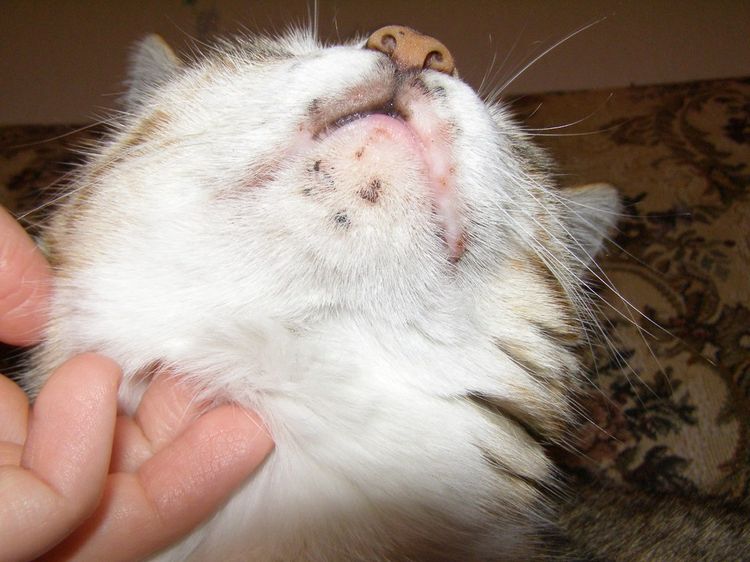
To accurately diagnose demodicosis, several tests are required. For this, scrapings are taken from animals and carefully examined under a microscope. Only after diagnosis, depending on the type of disease, does the doctor prescribe treatment.
Treatment of localized form
The first treatment for this type of disease is bathing the pet with a special product; veterinarians recommend "Doctor" and "Elite" shampoos. This is necessary to cleanse the animal's fur and skin. Afterward, treat all wounds and scabs with chlorhexidine solution (you can substitute hydrogen peroxide if necessary), then allow the affected areas to dry.
After cleaning the pet's skin from scabs, treatment of subcutaneous mites in cats in the localized form is carried out using the drugs "Tsipam", "Perol", "Ektodes", "Ivermectin", "Neostomazan", "Mikodemocid", "Amit", as well as sulfuric and avermectin ointmentsIn addition to shampoos, solutions and ointments, your pet needs to be given products to boost immunity, these includeGamavit", "Immunol", "Gala-vet", "Maxidin".

Treatment of the generalized form
When asked how to treat subcutaneous mites in cats, if the disease has already progressed to a more severe stage, the answer is clear: this form is more difficult and takes longer to treat. After all, demodicosis has spread over almost the entire animal's body, and treatment is challenging. Doctors recommend first clipping the pet's hair to make it easier to treat with medications. The initial treatment uses the same methods as for localized cases.
This type of disease typically presents with complications, so a course of injections with Cydectin solution is prescribed. The animal should also be given antibiotics such as Betamox, Kamazidin, Baytril, or Amoxicillin. Ligfol, as well as a vitamin and mineral supplement, will help restore immunity. Treatment for this form of the disease should be carried out under the supervision of a specialist.
Folk remedies
Please note: self-treating for subcutaneous mites without consulting a veterinarian can be life-threatening for your pet! Cats' skin is much thinner and more sensitive than humans', so it must be handled with extreme caution. Folk remedies for demodicosis are only acceptable if the veterinarian has found no contraindications. Therefore, each option should be discussed with a specialist. What treatments can a veterinarian suggest for demodicosis?
- Bathe your pet every three days using a special shampoo, and after each bath, treat the wounds with a strong decoction of chamomile or sage.
- In the same way, bathe the animal every three days, but with soap based on birch tar, and after the procedure, lubricate the affected areas of the skin with calendula tincture.
- In some cases, doctors allow treating wounds with kerosene, but the pet should not be bathed for three days afterward to allow the pustules on the skin to dry out.
Preventive measures
To avoid future symptoms and treatment of subcutaneous mites in cats, it's important to take preventative measures in advance. First and foremost, regularly treat your pet with antiparasitic medications (for fleas and ticks), deworm, and ensure a balanced diet. Your cat's diet should be rich in all essential vitamins and minerals.
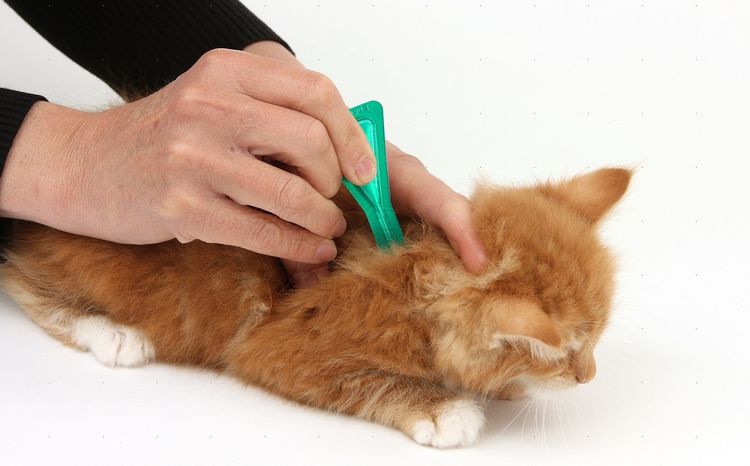
Avoid allowing your pet near animals whose health you're unsure of. It's better to be safe than to discover your cat has demodicosis. Also, try to support your pet's immune system; your veterinarian will prescribe the necessary medications.
Although there are many medications available today for treating demodicosis, it's best to avoid this condition altogether. This isn't just because it takes a long time from diagnosis to recovery. It's the cat that suffers the most, as demodicosis causes a great deal of discomfort. However, if you take preventative measures, your pet will always be healthy.
Helpful tips
- Never wash your cat with antiparasitic medications intended for dogs! These products contain a completely different and more toxic composition. Ingredients that are harmless to dogs are extremely dangerous to cats, even fatal.
- If you have to handle an animal with demodicosis, remember to wear a cape and gloves. While demodex mites are harmless to humans, you could accidentally bring the parasite into your home, thereby infecting your pet.
- Even if your pet has already been infected with a subcutaneous mite and has recovered successfully, preventative measures should still be taken. This is especially true since the cat will continue to feel unwell for some time after the infection. This is because the medications used to treat the skin are absorbed into the bloodstream and are not eliminated for three months.
- With your veterinarian's approval, periodically administer an antihistamine as a preventative measure. This will prevent infection, eliminate possible itching, relieve discomfort, and reduce allergic reactions. A specialist will prescribe the medication.
- Remember that parasites, including demodex, don't survive in dry environments. If you notice a sore on your cat's skin, it should be dried immediately (for example, with hydrogen peroxide, which is safe for animals), and then take your pet to the veterinarian immediately.
- Try to regularly inspect your pet for affected areas, especially if your cat begins scratching frequently. Using a magnifying glass, carefully look for even the slightest signs of subcutaneous mites: raised bumps, bald spots, pustules, redness, dandruff, ichor from wounds, ulcers, and bald spots.
- At the slightest suspicious sign, such as lethargy, fever, refusal to eat or drink, aggression, changes in the mucous membranes, etc., take your pet to the vet immediately. It's possible your pet has become infected with a subcutaneous mite.
- Whatever medications you use, whether for prevention or treatment, always read the instructions carefully to avoid inadvertently harming your pet. Study the ingredients, indications, use, purpose, dosage, contraindications, and expiration date.
You can also ask our website's staff veterinarian a question, who will answer them as quickly as possible in the comments box below.
Read also:
- What types of parasites are there in cats and how to remove them?
- Why does my cat constantly scratch itself?
- Ear mites (otodectosis) in cats: symptoms and treatment


42 comments
Natalia
My cat has small, dense, invisible bumps almost all over her body, but mostly near her tail on her spine. I have 7 of them and I don’t have the money to treat them, but I can’t watch my cat suffer and constantly scratch. Please advise me on something.
Daria is a veterinarian
Hello! It's impossible to diagnose a pet remotely, without seeing it, without additional examination and tests. It's even more impossible to prescribe treatment. If you say you don't have the funds for treatment, then even if you somehow managed to "guess" the diagnosis (perhaps only with a crystal ball), where would you get the money for the medications? No one will give them away for free (especially if it turns out to be a contagious dermatological disease and all seven pets need to be treated). There's too little data to make even a tentative diagnosis!
Marina
Hello. Can I give my cat human amoxicillin? Does it have to be human? The 0.5 tablets are a human dose, but for cats, 1/8 of a tablet, or what? My cat weighs 4 kg. I forgot to mention that it's for skin inflammations and other bacteria. Can I use human amoxicillin in tablets?
Daria is a veterinarian
Hello! Amoxicillin is given orally to cats at a dose of 10 mg/kg of body weight, so a 4 kg cat requires 40 mg. If you have 500 mg tablets, that's 1/12-1/13 of a tablet. You can't split it that way! If the dosage were 250 mg, that's 1/6 of a tablet. Give the dose every 8-12 hours, or 2-3 times a day.
BUT! USING ANTIBIOTICS WITHOUT A VETERINARY EXAMINATION AND SUPERVISION IS NOT RECOMMENDED! Self-medication is dangerous! First, it's important to get a diagnosis, not just rely on the fact that your pet has previously suffered from skin infections. Amoxicillin may not help.
Raisa
My cat is 13 years old, spayed, but hasn't had any vaccinations (he was picked up in the yard at about a month old). Until he was 3, he was fine, eating economy-class food. Then he started scratching himself intensely and licking himself. We thought he was allergic to dry food. We changed food and switched to Hills. But he scratched himself so much that he had bloody wounds on his neck. The collar we put on him didn't help, so I made him a special pair of their jeans made of four layers. At the clinic, they took a scraping for subcutaneous mites and injected him with ivermectin. But to no avail. And now, in addition to the itching, he has polyposis (we suspect), sleeps with his mouth open, snores, and grunts. But despite all this, he plays and eats well. We are afraid to operate. Royal Canin food 12+. Please tell me what to do with this unbearable itching? He has some kind of bumps on his lower back and dandruff around it. When I scratch him there, he chews his paws. I need your invaluable advice!!!
Daria is a veterinarian
Hello! So, did they find a tick when they examined the scraping at the veterinary clinic? Or did they give you an ivermectin injection for "prevention"? Was it a single injection or a course of treatments? Were there baths? Did it make things any better? What "flavor" does your pet's food have? Sometimes so-called "hypoallergenic" foods contain chicken or turkey (the same birds that also cause allergies). Even rabbit and lamb can trigger an attack. Are your eyes watering? Is there any conjunctival edema (including the third eyelid)? Have you tried a 24-hour fast with free access to water and antihistamines (suprastin, tavegil, or diphenhydramine are all options, but not for more than 3 days)? Is there any hair loss? Are you giving any vitamins or supplements? How is your pet's weight? Endocrinological issues should also be ruled out. And kidney and liver function tests (a biochemistry panel would be a good idea). Is there any vomiting or stool changes? We need to find which organ is "sounding the alarm," rather than focusing on ticks or allergies.
Daria is a veterinarian
What Hill's food did you give her? The only one that worked for my elderly cat was Hill's z/d (two weeks on it, and the itching went away even without medication). Surprisingly, she eats it with pleasure, even though she's a picky eater. Then she's either on d/d or on a diet for spayed cats, but with tuna (if the medicated food suddenly disappears from the market). But even on "fish food," a little itching can appear after 2-3 weeks (though not always), and then I switch her back to the medicated diet. It's possible that the issue isn't the protein, but the carbohydrates in the food, which is why z/d and d/d are perfect because they have "lightweight" and readily broken down proteins and carbohydrates. Don't get me wrong, this isn't an advertisement, but of all the diets I've tried, this is the only one that worked, and only this brand. I saw the effect quickly, and my cat eats it with pleasure.
Nikolay
The vet diagnosed my cat with ear mites and he's also scratching himself more and more. The vet cleans his ears every week and my daughter wears him every Tuesday. He prescribed an ointment (Levomekol) for the scratched wounds. Is this correct or not? Please answer. I feel sorry for the cat.
Daria is a veterinarian
Hello! Levomekol for subcutaneous mites? Are you sure you're not mistaken? Perhaps Levomekol is used to prevent infection and reduce inflammation? Perhaps I'm over-scratching? For ticks, you need medications that have ACARICIDAL properties, not antimicrobial ones! The easiest way is to inject Ivermectin. Alternatively, there are plenty of specific treatments available at veterinary pharmacies: Frontline, Strongold, Inspector, Advocate, and many, many others. You can apply them to the withers once a week, or in particularly severe cases, a drop directly into the ear, which should be carefully cleaned first.
Catherine
Hello. Please help me with some advice. My cat is acting very strangely: she's scratching herself, twitching her ears, and her fur. Something's bothering her. There are no fleas, I've checked her, but I don't know what it could be. Her behavior is making me scratch myself. If she has a mite, can it spread to humans?
Daria is a veterinarian
Hello! In most cases, subcutaneous mites in pets pose no threat to healthy humans. However, no one can give you a 100% guarantee. If your immune system is weak, you can become infected. However, you didn't mention that your cat is losing hair, has signs of severe scratching, blood, or crusting on the skin. There is no rash (at least, you didn't mention anything like that). Therefore, rule out stress or an allergic reaction in your pet. Inspect the ears for abnormal discharge. What are you feeding? How long has it been since you dewormed your pet (intestinal and skin)? Has your pet been recently stressed? Have you given any vitamins, medications, dietary supplements, or anything else?
Larisa
Hello. Three weeks ago, my cat started licking herself very frequently and thoroughly, sometimes biting herself and pulling at her fur. A tuft of fur remains in her mouth. She also scratches several spots. Her ears and eyes are clean, and there are no bald spots. I treat her for parasites every three months; the last time was on October 14th. I took her to the vet, who said everything is normal and that it could be due to stress. I'm asking for your advice.
Daria is a veterinarian
Hello! There are actually several possibilities. The first is persistent itching that bothers the animal. This rules out mites, allergies, and dermatitis of various etiologies (including deep skin lesions, which is why it's not immediately visible). The second is genuinely nervousness. Cats experience plenty of stress. The third is internal pain, which is the cat's way of attracting attention to a specific area. Look closely to see if the licking is confined to one spot or all over its body. If it's a single area that's bothering you, take it for an ultrasound.
Alla
Hello. My cat has serious health issues—his fur is covered in sores, dirty, and he's constantly scratching himself. We had a tick test done, but it was negative. Another clinic said that tick tests aren't always accurate, so they prescribed Stronghold drops three times a month. They also prescribed fish oil and brewer's yeast. Could my cat have a subcutaneous mite or dermatitis? He also has a large ulcer on his tongue that hasn't healed for over six months.
Daria is a veterinarian
Hello! Yes, to check for subcutaneous mites, you need to take a swab several times and from different points: at the border of healthy and affected tissue, until the first drops of blood appear. What does it mean if the fur is covered in sores? Maybe dandruff or dried crusts? You need to know what the skin itself is like: scratches, abrasions, pustules, pimples, or something else? Has the cat been washed? What are you feeding it? Has the ulcer never healed? Has it been there for six months, and no doctor has noticed it? Has the cat been vaccinated? Instead of applying drops to the withers, you could at least inject it with ivermectin-based medications. They quickly kill subcutaneous and ear mites, and even intestinal parasites.
Anya
We got a British Shorthair kitten. After a while, the fur on his hat started to fall out. The vet said it was a subcutaneous mite and gave him a shot of Vakderm-F and Fungin Forte, a topical medication. He examined the cat in the dark under a lamp. I read online that these medications are prescribed for fungal infections. What do you think?
Daria is a veterinarian
Hello! You're definitely confused here. If they shone a Wood's lamp (purple glow) in a dark room, then they were definitely checking the animal for a fungal infection (Microsporia). If they glowed green, they could have prescribed antifungal therapy. Based on the medications you mentioned, it's clear they were treating the animal for fungi, not for mites. To determine if a mite is the cause of the animal's hair loss, you need to scrape the area between the affected and healthy skin and examine it under a microscope. Has this been done?
Daria is a veterinarian
Vaccination is practically useless anymore (without it, with proper comprehensive therapy, an animal recovers in the same number of days). So, there's no point in giving your animal three live vaccines. Bathe your pet in antifungal shampoo (available at human pharmacies), trim the hair at and around the affected area, wipe the affected area with fungin, apply an antifungal ointment (like clotrimazole, or it comes in a spray), and also take the antifungal medication itraconazole orally. The course of treatment lasts about a month. Wet clean the house DAILY. Wear gloves when handling your pet. Strengthen your pet's immune system and give them vitamins and minerals.
Tatiana
The doctor prescribed the cat Aversek injections and Aversectin ointment, examined it and said it was a subcutaneous mite.
Daria is a veterinarian
Hello! Was the diagnosis made visually or did they take a scraping? Aversectin-based medications are used to treat animals with subcutaneous mites. The treatment regimen, although old, still works. Just protect your cat from licking the areas treated with the ointment (use a special collar around the neck until the ointment is fully absorbed).
Svetlana
Hello. My stray cat started losing fur in clumps, leaving bald spots. First, it was on one side of his neck, then on the other. We thought he'd gotten into a fight, but now the fur is falling out on both sides of his ribs. He's itchy and constantly licking himself. I found a tick behind his ear. We thought it was ringworm and applied Yam BK ointment to the affected areas, but it didn't help. The fur is still falling out. What could it be?
Daria is a veterinarian
Hello! Cats shouldn't use Yam BK ointment! It contains phenol, which is contraindicated for our meowing furry friends. If you're really trying to treat ringworm, you should administer antifungal medications orally for four weeks, and at least apply clotrimazole to the affected areas. There's also Zoomikol spray, which also treats fungal infections. Before applying the ointment, you can bathe your cat with an antifungal shampoo (you can buy any at a human pharmacy). It's also a good idea to apply drops of Advocate, Inspector, Frontain, or Nexgard (any choice) to the withers, repeating after 1-2 weeks – these help with scabies mites and skin parasites, which can also cause itching and hair loss.
Olga
Hello. Could you please advise? My cat has been scratching his neck for a year and a half and wears a collar all the time. We've been to two clinics and two veterinarians, and they all came up with the same diagnosis: a food allergy. They've prescribed antibiotics and special diets, but the results only last a week at most (until injections to relieve the itch are effective). I suspect he has a mite, as he scratches everything around his head: his neck, around his ears, and around his eyes. If he had a food allergy, I think it would have gone away long ago. We've tried so many different foods and even switched to a natural diet, but to no avail. He still scratches. We asked for a scraping, but unfortunately, the city we're taking him to doesn't accept scrapings. Is it possible to treat a cat for a mite without a scraping?
Daria is a veterinarian
Hello! Well, in a year and a half, if there were mites, the infestation would have been very large (it's clearly spread from the neck and face). Is the fur falling out? Are there any rashes on the skin? I wouldn't recommend trying to treat it by trial and error. You can "risk" an ivermectin injection (but under a doctor's supervision). As for the food, switch to Hills d/d (you can use z/d for the first two months, then d/d for life). This food contains only one type of protein and one type of carbohydrate, which are already broken down so much that they are digested almost immediately when they enter the body. Therefore, the body doesn't have time to "react" to them, and allergies don't occur. But with this food, you should forget about all treats and table food! Otherwise, it won't be of any use.
Elena
I discovered a stripe of hairless fur on my fluffy cat's tail. The skin was pink and clean. After a while, I noticed the tail was dirty. I looked closer and saw black spots. The fur had thinned. What could it be? It doesn't itch. There's no dandruff. There are no wounds either.
Daria is a veterinarian
Hello! First of all, we need to rule out fungal infections, which can only be done at a clinic. Then, ticks/fleas/lice. Perhaps he accidentally caught a clump and tore it out? How long ago did it fall out, and how big is the strip? It could be an endocrine gland issue if the hair loss is all over the body. It could also be a vitamin deficiency or mineral deficiency. You haven't provided any information about the animal's age, living conditions, feeding, treatments, or past illnesses. Perhaps there are some chronic illnesses or other symptoms of a disease, but you don't associate the thinning hair with it.
Elena
Good afternoon. A year ago, bald spots suddenly appeared behind my ears and on my forehead above my eyebrows. They said it was ear mites. We treated them. Now I have dandruff, like little peas, on my chin, neck, ears, scruff, and scalp. We started looking for a darker color and some sores. We thought my older cat was being mean, but something was suspicious. Something was alarming.
Daria is a veterinarian
Hello! Ear mites are called ear mites because they live in the ear, not on the skin near the eyes. Subcutaneous mites should be ruled out. A scraping is necessary. Have skin parasites (fleas, lice) been ruled out? How and when did you treat them? How did you treat the cat for the mites? Are the mites embedded in the skin or on the surface and can they be easily removed?
Tanya
I received 4 Imervek injections against subcutaneous mites, and I missed 3 bottles of Fungin. Seven days have passed without treatment, and now the mites have appeared around my eyes. I'm desperate, what should I do?
Daria is a veterinarian
Hello! Are you sure it's a tick? Have you had it diagnosed? It's strange that the tick didn't die after Ivermectin. Have a scraping done at the clinic to confirm the tick is the problem. Should I look for something else? Have fungi, allergies, or vitamin deficiency been ruled out?
Kalimat
After three days of weakness, something burst near my cat's left front paw, and a bloody, purulent fluid leaked for a long time. There's a round hole where the wound was. What could it be?
Daria is a veterinarian
Hello! It looks like a ripe and burst abscess. Rinse the wound cavity (with aqueous furacilin, chlorhexidine, or hydrogen peroxide as a last resort). Apply Levomekol if the wound is very wet, then apply antibiotic powder (streptomycin, streptocide, bicillin, or others). There are also special sprays that contain antibiotics (Chemi-spray, for example). Give intramuscular antibiotics for 5-7 days. Monitor the wound's healing. If it worsens, take it to the vet. Improve the animal's living and feeding conditions, and avoid exposure to dirt and dust. Don't cover it with a bandage. It will dry faster in the open air. If the wound is large, take it to the vet to get stitches to speed up the healing process.
Sergey
Good afternoon!!! Our cat has a subcutaneous mite, but we don't have a vet, and there's nowhere to buy cat ointment. Can you tell me how to get rid of this infection? Maybe we can buy something at the pharmacy?
Dasha is a veterinarian
DO NOT USE GLUCOCORTICOID MEDICATIONS! IF YOU HAVE SCABIES, THEY WILL NOT REMOVE THE ITCHING, BUT THEY WILL PROLONG THE RECOVERY PROCESS. In cats, demodicosis often disappears as suddenly as it appeared. In dogs, however, it lingers for 6-8 weeks. Treatment may be without ointments; bathing, injections/water treatments, and sprays can be helpful. Therefore, an accurate diagnosis is necessary to adjust the treatment regimen and select the correct dosage.Hello! I don't have a veterinarian, but have they confirmed the presence of a subcutaneous mite? What kind of mite? Does the cat have demodicosis, sarcoptic mange, notoedric mange, or something else? Otodectosis and notoedric mange are more common in cats, but that doesn't mean they can't have other arachnoses. Has pyoderma been ruled out? It's impossible to cure it without veterinary medication. There are no folk remedies that truly help. Ivermectin solutions (Ivomek) are effective, as are vitamin therapy to boost the body's resistance. Antibiotics are used for secondary pyoderma, and amitraz and mitaban are also added for demodicosis. DO NOT USE GLUCOCORTICOID MEDICATIONS! IF YOU HAVE SCABIES, THEY WILL NOT REMOVE THE ITCHING, BUT THEY WILL PROLONG THE RECOVERY PROCESS. In cats, demodicosis often disappears as suddenly as it appeared. In dogs, however, it lingers for 6-8 weeks. Treatment can be achieved without ointments; bathing, injections/water treatments, and sprays can be helpful. Therefore, an accurate diagnosis is essential for adjusting the treatment regimen and selecting the correct dosage.
Lyudmila
Hello. We found a kitten, he's about 2 months old, and we treated him for fleas and worms. He's active, eats well, and his skin is clear, but his hair is very sparse, and there's practically no hair on his belly or at the base of his tail. He doesn't scratch. What do you recommend? We started giving him DOCTOR ZOO vitamins, but so far there's been no effect.
Dasha is a veterinarian
Hello! Take your pet to the vet. Rule out skin problems or dermatitis (allergic, for example). Also, remember that your pet has been eating poorly for a long time. Adjust the diet (use high-quality super-premium or holistic foods to replenish trace elements and vitamins). This diet can last from three to six months. The vitamins you've chosen are more of a placebo and are unlikely to produce visible results. It's better to administer high-quality injectables (Vitamin, Multivit+Minerals, Oligovit, and other veterinary medications) intramuscularly.
Lina
My cat developed an allergy to food and a collar. We took her to the vet, and it seemed to be cured. After that, she was constantly scratching. I took her to another vet a couple of days ago, and they said she had a subcutaneous mite. She has sores and bald spots all over her body. We're giving her Ivermectin. Is this the right treatment?
Dasha is a veterinarian
Hello! The injections could be replaced with Inspector or Advocate drops applied to the withers. Aversectin ointment. Ivermectin is quite toxic, so the dosage needs to be adjusted carefully. It would be advisable to take a scraping at the border of healthy and affected skin to look for a parasite. It might not be a tick at all, but the animal you're "treating."
Yarik
I adopted a cat: in winter, near the basement (the pride wouldn't let him in). A dog ran up to him and tried to kick him, but then ran away (it realized he was sick and better not to approach him). I took him by taxi because I live in a different neighborhood (the cat was trying to escape). The taxi driver was also terrified and wanted to run away in my arms, but I managed to grab the door handle. At home, the cat couldn't believe his luck. I kept him isolated, and the next day, the girls from the cat shelter arrived. They diagnosed him with subcutaneous mites. They gave him an injection, and I gave him another shot after 10 and 20 days. He's an amazing cat; kinder cats are better than domestic ones (they're not arrogant, they're grateful).
Dasha is a veterinarian
Now all that's left to do is observe the animal. Ask the vet what exactly was injected and whether it eliminated intestinal parasites. If not, deworm and vaccinate the animal (assuming it's healthy). Newly brought animals should be quarantined for at least 30 days (!). This will reduce the risk of infecting existing pets (the incubation period for diseases varies from a few days to several weeks).
Anna
Hello, my cat has an advanced case of subcutaneous mites. The vet prescribed Yam ointment. I read your reply above that it's contraindicated for cats. I've been applying it to him for three days now. On the second day after using it, he lost coordination and started acting erratically, eating nonstop. Could this be related? Thanks for your reply in advance.
Daria is a veterinarian
Hello! Is my cat getting a subcutaneous mite? Veterinary ethics prevent me from expressing my thoughts on this treatment regimen. There are simple combination drops for worms, fleas, and ticks. Apply to the withers, then repeat twice more at equal intervals according to the instructions. And there won't be a trace of the mite left. However, if you're diagnosed with demodex, the pathogen is present even in perfectly healthy animals (even humans have it on their skin), but it all depends on the immune system. If it's notoedric mange, then drops will help.
Add a comment